Edited by Briana Olson
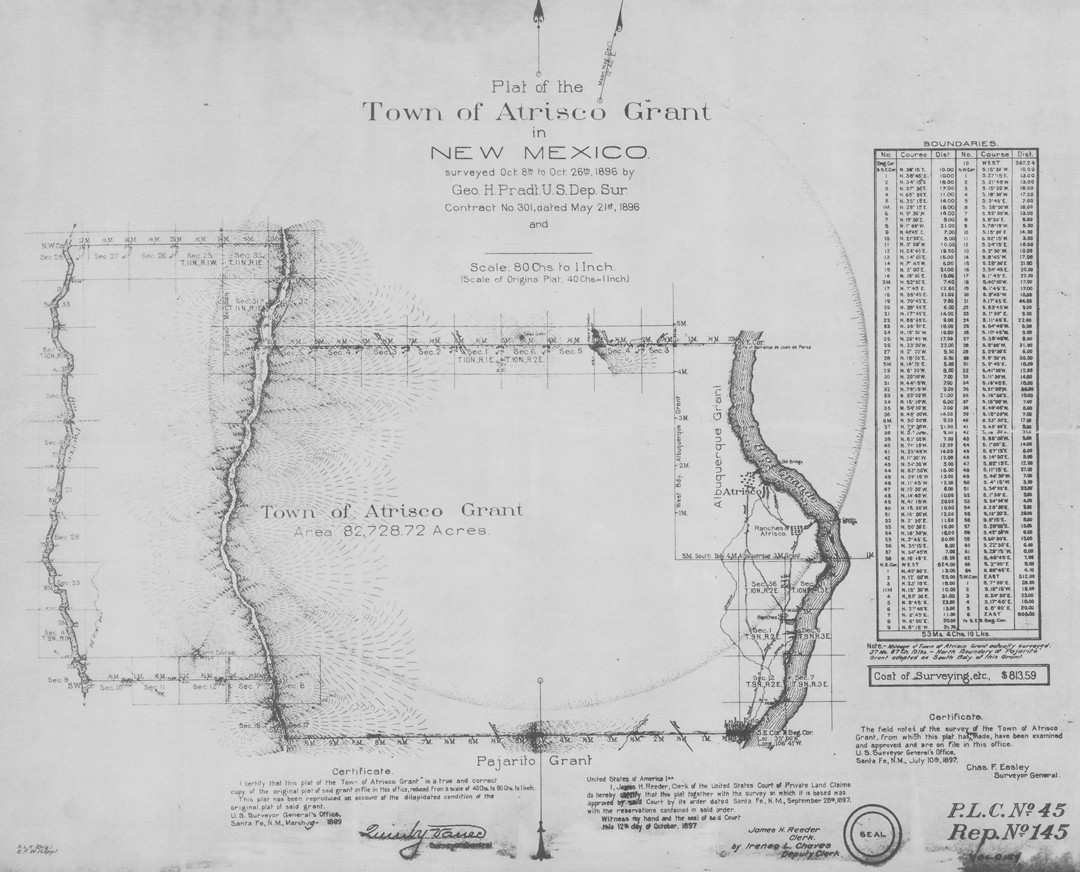
“That’s critical that we maintain these arteries and veins that crisscross the valley and actually make the valley great,” said Santiago Maestas of the South Valley Regional Acequia Association at a kickoff event for the Atrisco Acequia Madre Project in 2021. In a survey by students exploring the Pajarito Acequia for a Critical Cartography course at the University of New Mexico in 2022, nine of thirteen respondents said they were concerned about a loss of historical and cultural spaces and the traditions surrounding acequias.
Here, we’re sharing reports on a few of the many ways that citizens and community leaders are working to preserve both the acequias themselves and what poet and professor Levi Romero calls “the acequia cultural ecosystem.”
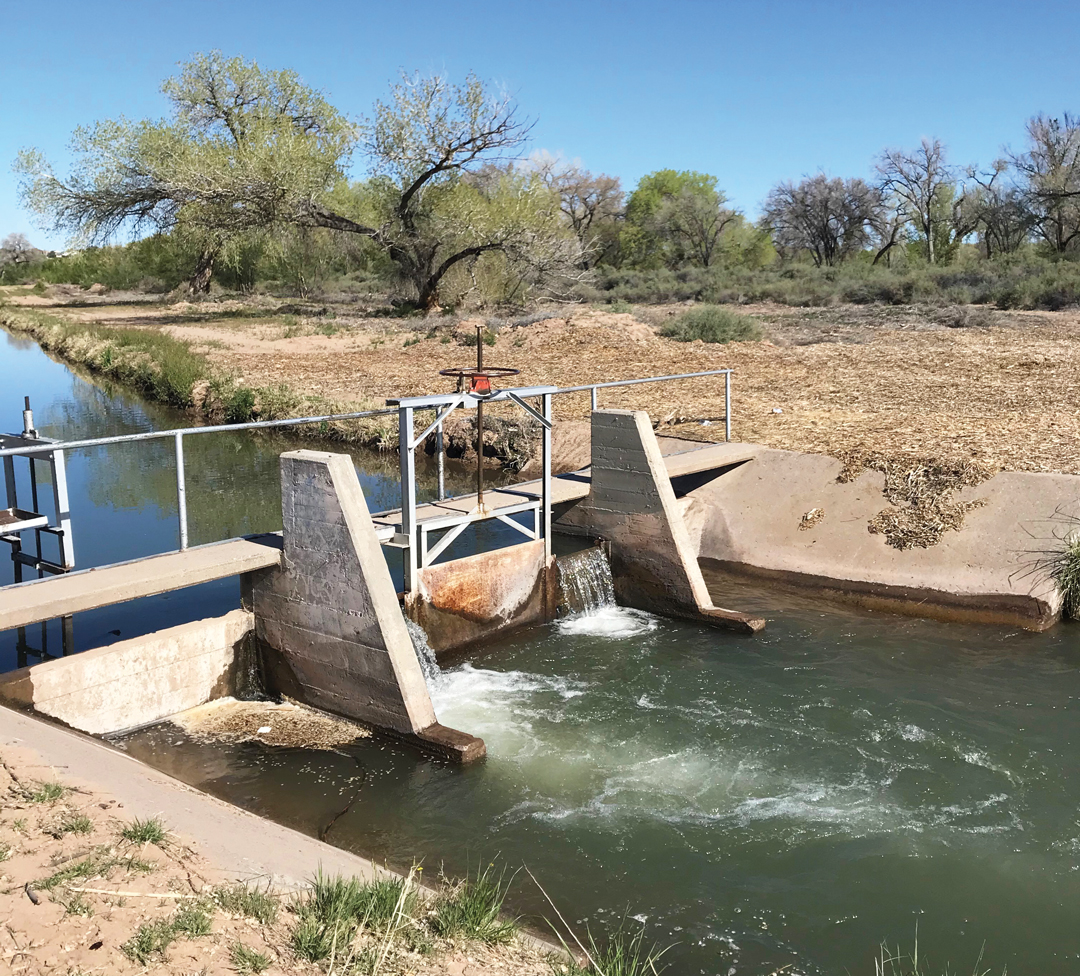
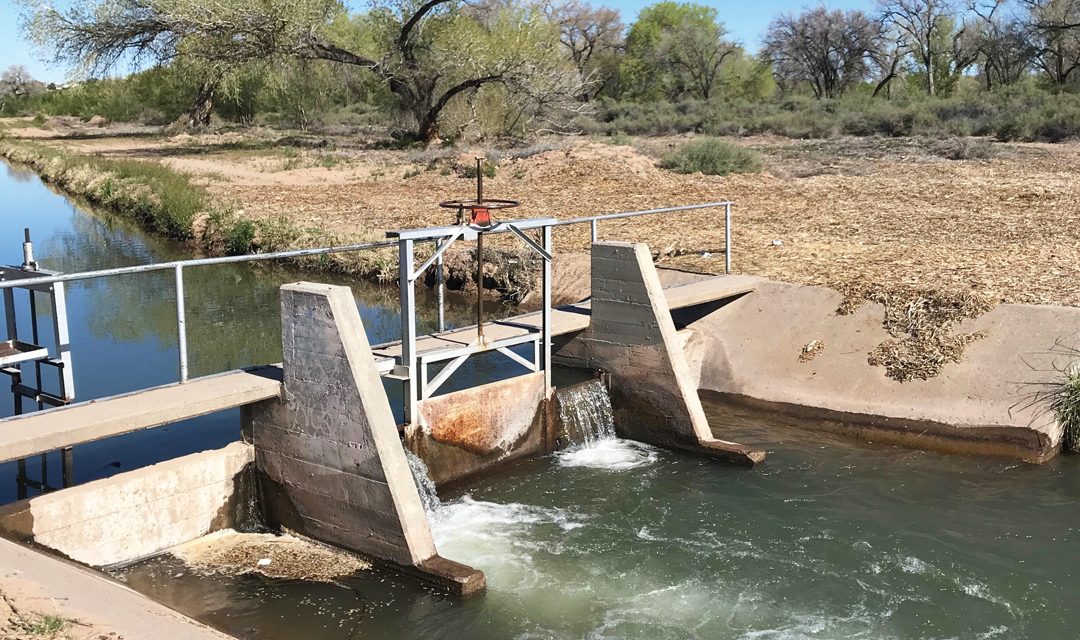
Existing conditions near the headgate for the Atrisco Acequia, photo courtesy of MRGCD.
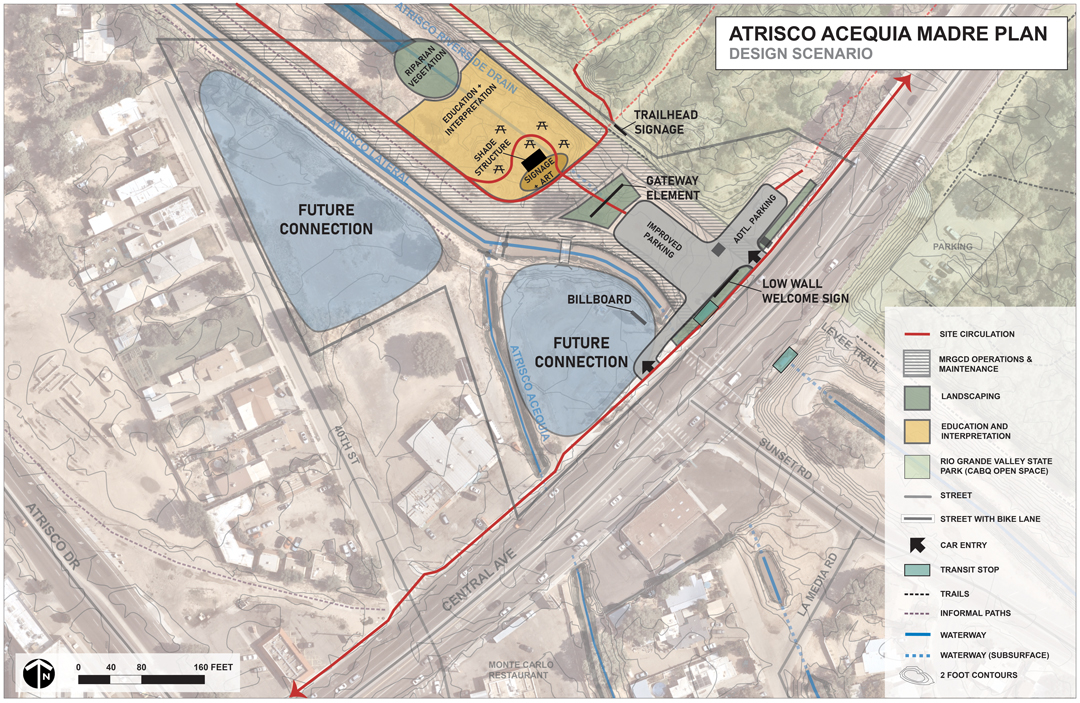
Conceptual plan courtesy of Sites Southwest. The project is a collaboration between Bernalillo County, the City of Albuquerque, the Albuquerque Bernalillo County Water Utility Authority, and MRGCD.
Trail Work: The Atrisco Acequia Madre Project
By Briana Olson
To someone speeding down Central Avenue just west of the Rio Grande in Albuquerque, the site of the Atrisco Acequia’s head-
waters might seem inconspicuous, another dirt lot next to a ditch in a town full of both. But the Acequia Madre de Atrisco, dug to support the Atrisco Land Grant founded in 1692, is one of the oldest irrigation canals in the United States. For some, it still provides irrigation. For others, its banks are a place to walk, a means to connect to trails in the bosque, and a link to water and a vital sense of place.
Long managed cooperatively, the Atrisco Acequia was taken over by the Middle Rio Grande Conservancy District (MRGCD) in 1934. The acequia’s headgate was moved from the river to the nearby Atrisco Lateral. Nearly seventy-five years later, South Valley acequia associations reorganized, adopting acequia bylaws and committing to promote conservation and beneficial use. Since then, they’ve worked alongside the Center for Social Sustainable Systems to honor and steward the South Valley acequias, hosting spring limpias and summer acequia walks that have brought renewed attention to the cultural and ecological value of these historic ditches.
“The purpose is to uplift acequia culture,” says Mari Simbana, open space manager for Bernalillo County, of the Atrisco Acequia Madre Project. Grassroots partners and community members have had some opportunities to share input on the agency-led project, including at a community design workshop in January 2022 where participants advocated for better bike route connections, an education site and gathering space, and emphasis on food and water sovereignty, among other ideas. In addition to amenities like parking and shade structures, the master plan for the site near the acequia’s headwaters features improved connections to existing trails and educational signage meant to “celebrate and educate the public about acequia history, acequia culture, and irrigated agriculture in the South Valley.”
Read Other Acequia Case Studies From This Issue

Tending the Seeds of Land-Based Leadership in Northern New Mexico
Poet and Taos native Victoriano Cárdenas talks acequias, farming, and genízaro identity with Dixon grower and mayordomo Joseluis “Agua y Tierra” Ortiz y Muñiz.

The Tradition of Acequias in Corrales
Jacob White reports on the acequia infrastructure of Corrales.

Prototypes: Tending to the Acequias
Emily Vogler experiments with non-concrete alternatives to acequia erosion that could also support the many interconnected functions of the ditches.

Story Riders
The Story Riders program combines bicycles, the natural beauty of the bosque and a sense of community to enrich the lives of young people.

Briana Olson
Briana Olson is a writer and the editor of edible New Mexico and The Bite. She lives in Albuquerque.