“Farm & Table buys fresh chicken. If you’re there on a Saturday night, the bird was probably harvested on Wednesday. There might not be another restaurant in the country where the poultry is fresher,” says Grant Wilson, who should know—he and his crew at Lotus Farms are the ones raising and harvesting those chickens.
When I visited in early July, I was served a nutty, Japanese-inspired take on fried chicken, drizzled in orange-infused black garlic sauce, and I admit that I’d been looking forward to once again tearing off a bite, wrapping it in lettuce and cilantro, and plunging it into the small bowl of nuoc cham perched at the edge of the plate. But this is a kitchen that embraces change.
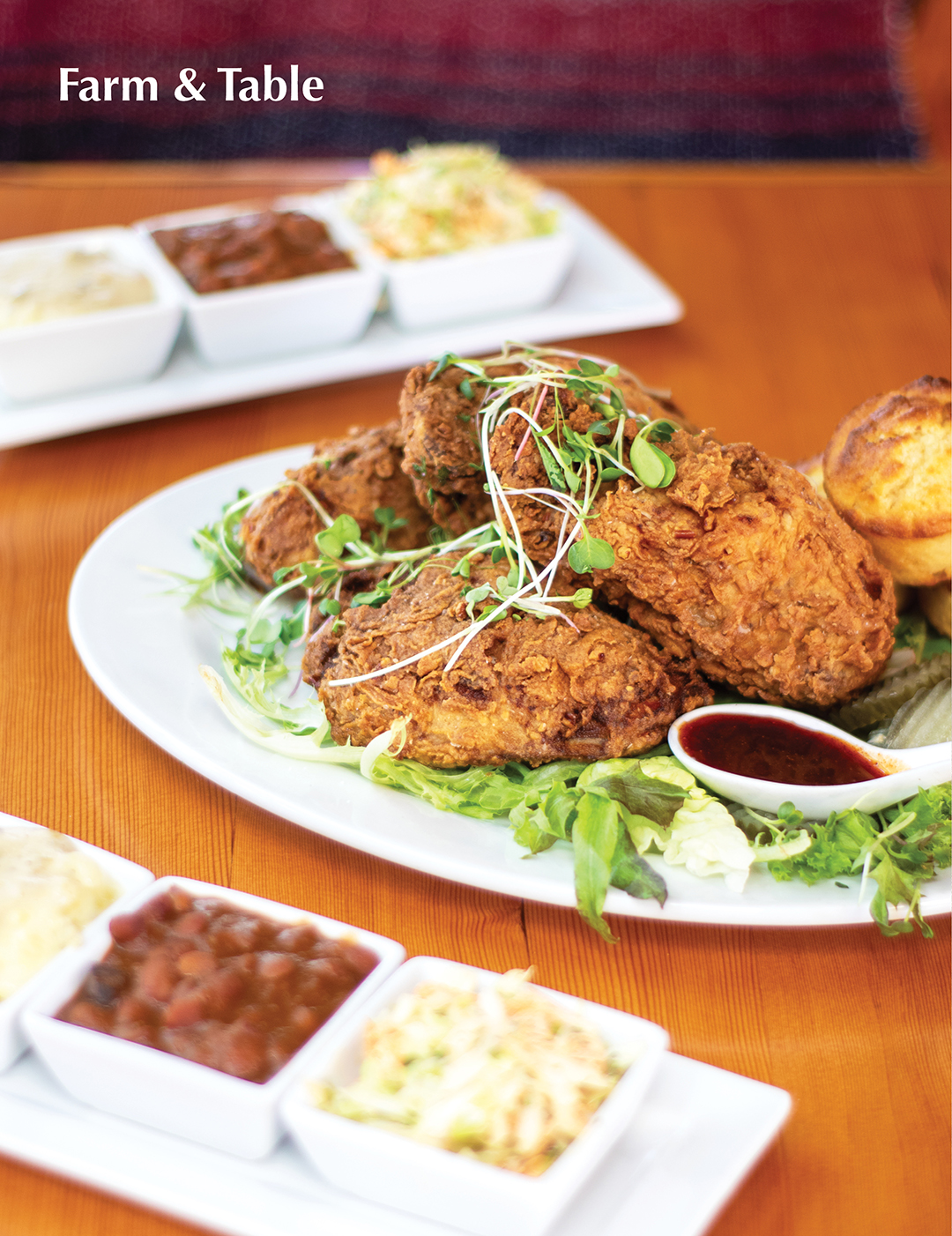
“Right now, we’re in big bird season,” Chef Jens Peter Smith says just two weeks later, walking Stephanie and me through the dish he’s about to add to the menu: chicken for two. If the kitchen can recalibrate, so can I; and who’s to argue with Southern-style fried chicken served with classic sides full of local flair? I don’t know if the key is the buttermilk, the pecan breading, or the citrus-jalapeño brine, but the chicken, as it should, steals the show.
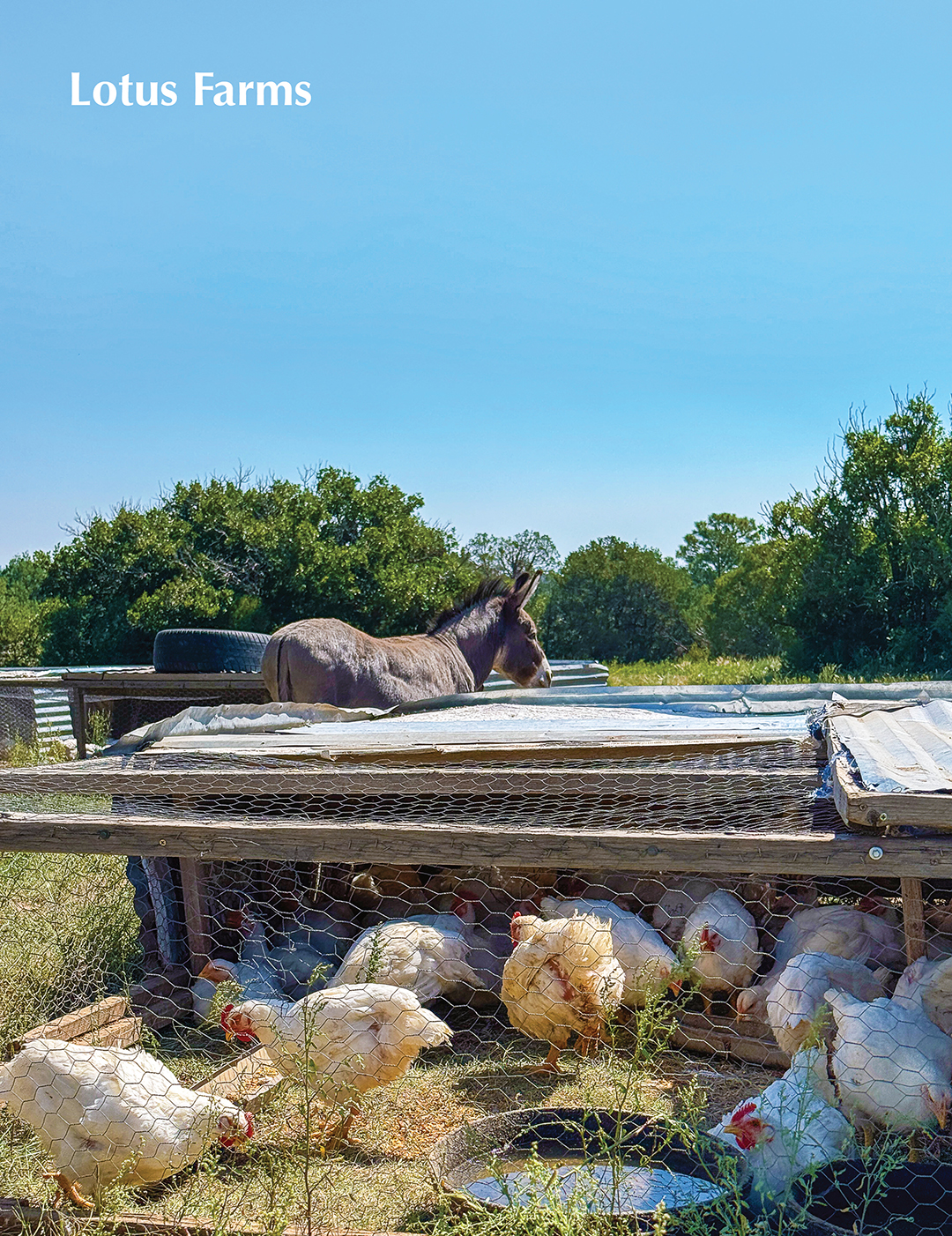
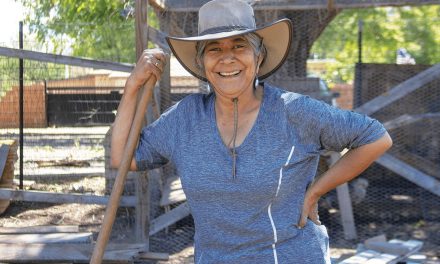
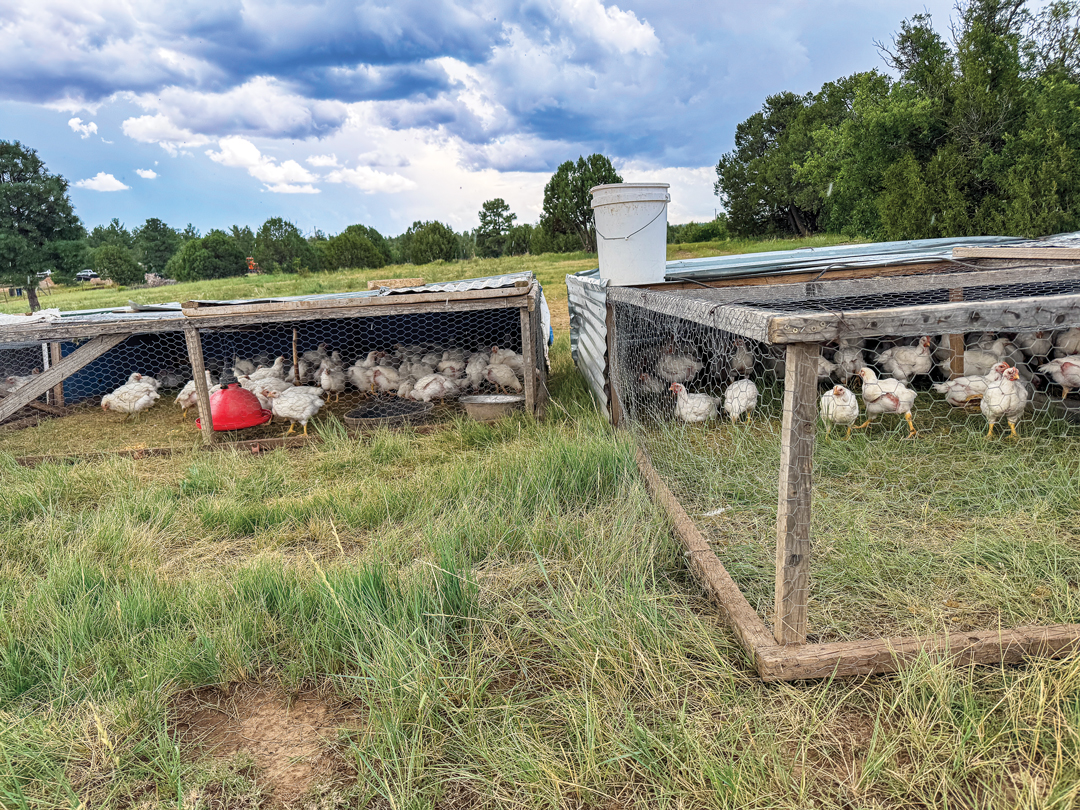
“This pasture, when we got it, was just a hodgepodge,” Grant Wilson says as we walk the periphery of the mountain meadow that’s home to the chickens of Lotus Farms. Storm clouds crown the mountain, and in moments they’ll unleash a downpour, prompting us to run for cover in a nearby shed. But for now, we stand and watch the chickens hopping and pecking in a long row of movable wood-framed shelters, known as tractors. “Running birds has created this great soil diversity,” he says.
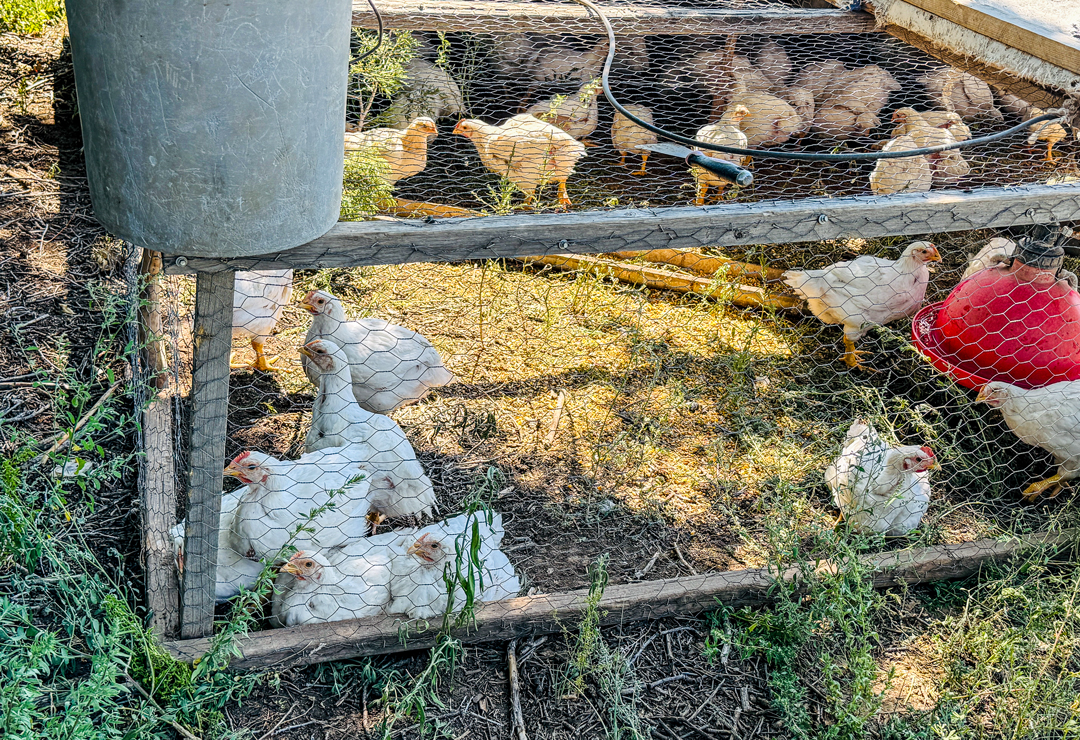
Lotus Farms uses the pastured poultry model championed by Joel Salatin. Grant and Val Wilson started with one tractor, raising birds for family and friends, then moved to five. Now they raise between two and four thousand chickens a year. The tractors, each housing about seventy-five birds, are moved daily, bringing the birds to fresh pasture. It’s important not to crowd them; they need room to move, to kick and peck, micro-tilling the pasture as they pick out bugs and blades of grass. All the grass they eat is native to this meadow—hence their dark yellow fat, high in omega-3 proteins. They also eat grain from Embudo Valley Organics, an organic blend including corn, soybean, and alfalfa that, Val says, “smells like granola.”
Raised in small-town Arkansas, Grant was exposed early to the financial devastation and emotional detachment of the contract farming model that dominates the US chicken industry. No one, in his view, should enter into such a contract, but like other small-scale chicken farmers I’ve talked with, he’s quick to suggest his approach as an entry point—and not only because the resulting meat is delicious. “Chickens are minimally impactful on the environment. They build the soil, and you don’t have to go into debt,” he says. “You don’t have to be a millionaire to start a poultry farm.”
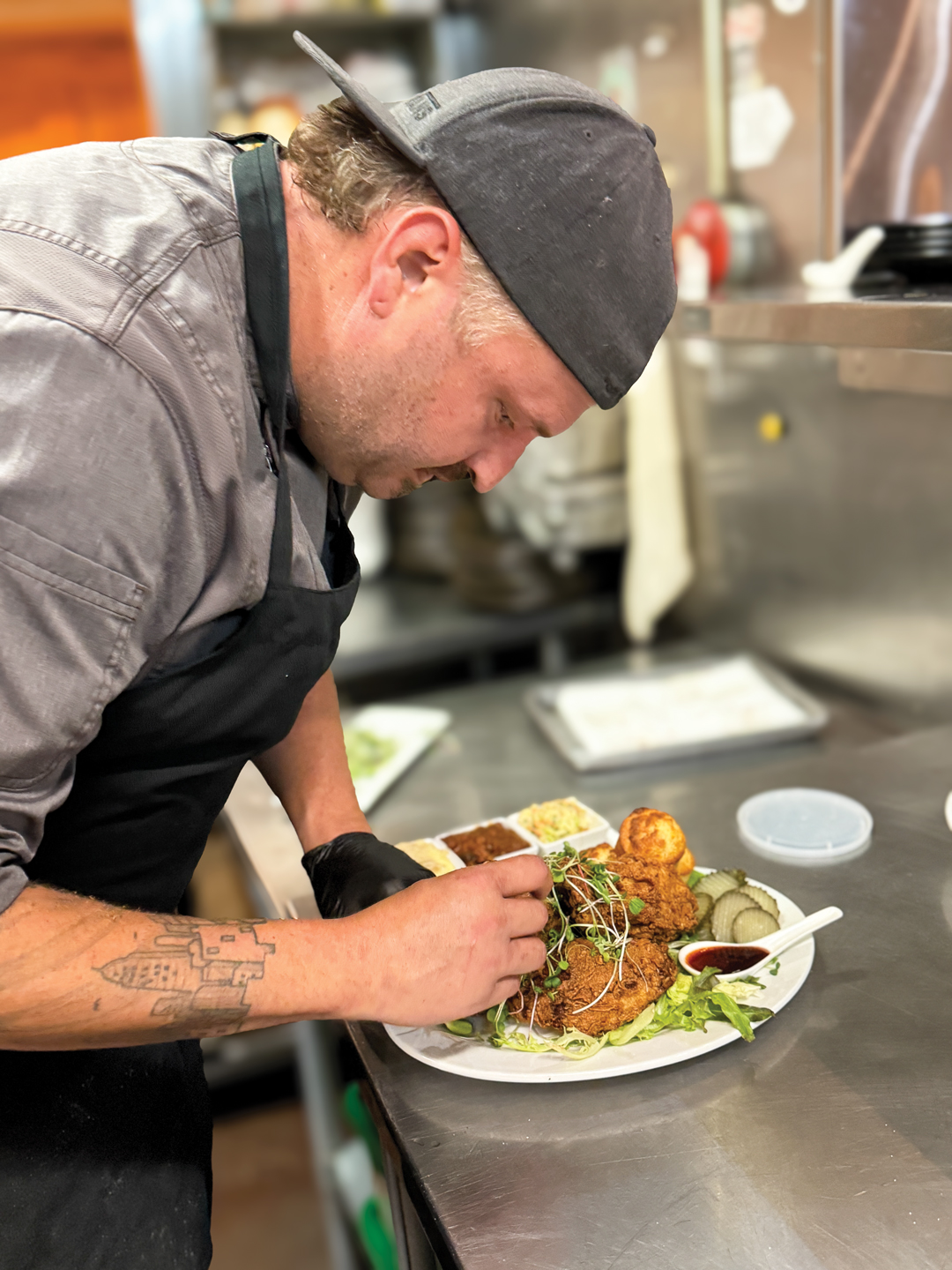
“I know Grant; I can directly see the impact on his life, his family,” Chef Jens Peter Smith says. For two years now, Farm & Table has sourced only New Mexico–raised chicken (in addition to duck and pork), all from Lotus Farms.
“I don’t do hard seasonal changes,” Smith says, because keeping a dish on the menu for a fixed period of time often leads to having to source elsewhere when a farmer’s supply runs out. Instead, he works with the flow of farmers, whether that means changing the way chicken is portioned or getting creative to showcase asparagus during its short season. “I feel like it’s our duty to do as much as we can with what we’re given.”
Lotus Farms
Location: Tijeras
Elevation: 7,460 feet
Acres: 33
Animals: Chickens, turkeys, ducks, pigs
Team: Grant Wilson (manager and co-owner), Val Wilson (OG chicken harvester/parter and co-owner), Jessica Kellam (farm manager), Maverick Martinez (facilities manager), Ashley Martinez (senior farm technician), and Val’s parents, Catherine and Abel Alvarez
Direct sales: Every Saturday and the first Tuesday of every month at the Santa Fe Farmers’ Market; Polk’s Folly Butcher Shop and Farm Stand in Cedar Crest
“I’m absolutely present with every one of those birds,” Grant Wilson says as we talk about the benefits and challenges of being able to harvest on-farm. “Sometimes I get emotional about it, and that’s okay. We want their journey, how they get to here, to be the best.”
Reflecting on his crew’s roles in harvesting and parting chickens, their intrepidness in winter and their passion for the animals as well as their communities, he tells me, “All of our team is family, and without them the farm wouldn’t exist.”
“I’m absolutely present with every one of those birds,” Grant Wilson says as we talk about the benefits and challenges of being able to harvest on-farm. “Sometimes I get emotional about it, and that’s okay. We want their journey, how they get to here, to be the best.”
Reflecting on his crew’s roles in harvesting and parting chickens, their intrepidness in winter and their passion for the animals as well as their communities, he tells me, “All of our team is family, and without them the farm wouldn’t exist.”
Lotus Farms
Location: Tijeras
Elevation: 7,460 feet
Acres: 33
Animals: Chickens, turkeys, ducks, pigs
Team: Grant Wilson (manager and co-owner), Val Wilson (OG chicken harvester/parter and co-owner), Jessica Kellam (farm manager), Maverick Martinez (facilities manager), Ashley Martinez (senior farm technician), and Val’s parents, Catherine and Abel Alvarez
Direct sales: Every Saturday and the first Tuesday of every month at the Santa Fe Farmers’ Market; Polk’s Folly Butcher Shop and Farm Stand in Cedar Crest
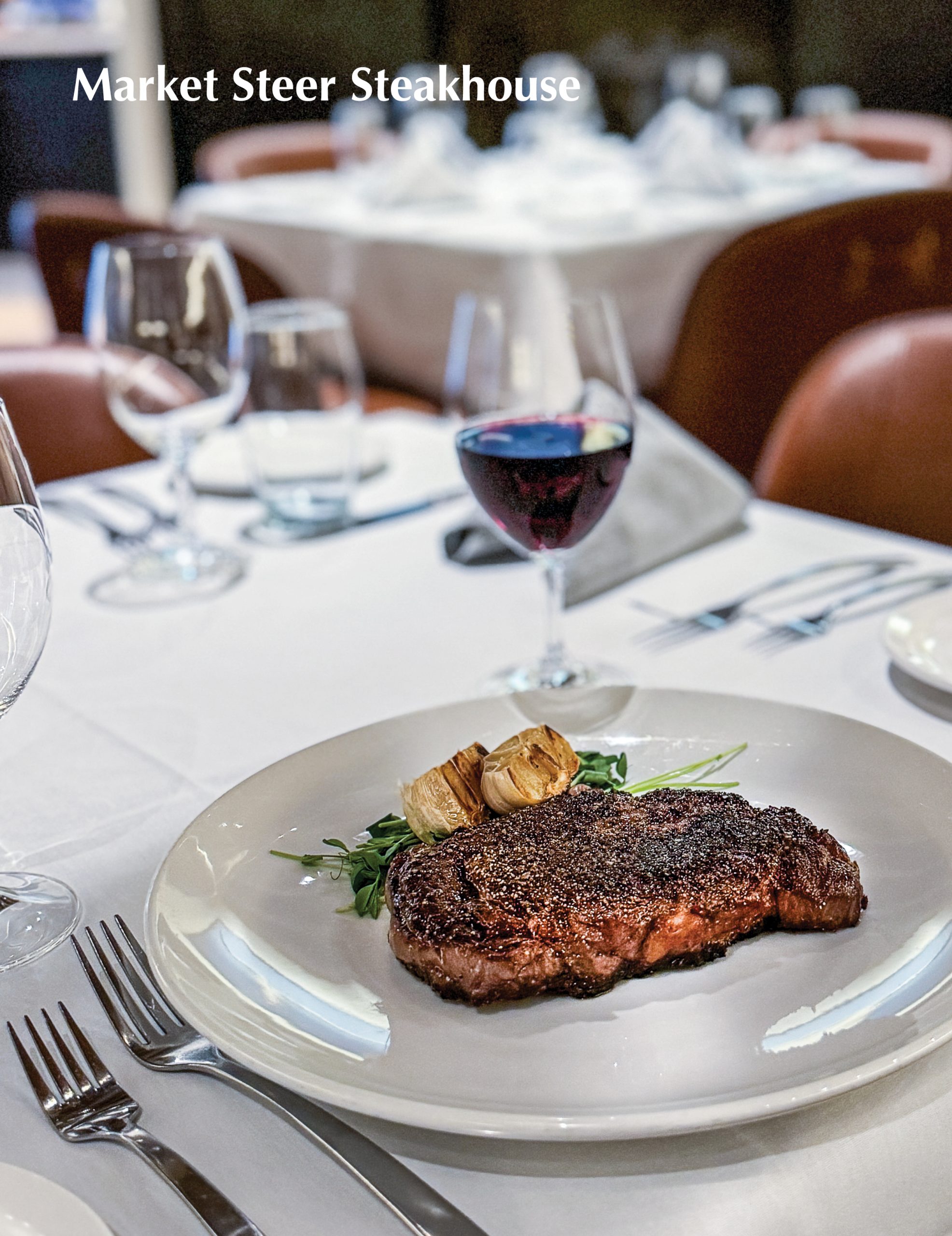
“Is that the New Mexico cut?” the woman seated to my left asks admiringly, eyeing the rather glorious steak I’ve just been served. Indeed, it is: a sixteen-ounce Lone Mountain Wagyu rib eye cut that afternoon by Chef Kathleen Crook and prepared, with perfect timing, in the overfired broiler at Market Steer. “It runs about 1,800 degrees,” Crook tells me later. “I have plenty of scars to prove how hot it is.”
The sear, the seasoning, the temperature—all is precise, I daresay flawless. To call this meat earthy would not be quite right, but the umami notes taste as layered and complex as the marbling of the beef.
“I use only kosher salt and black pepper,” says Crook, who grew up ranching in Artesia. “You kind of let the quality of the ingredients speak for themselves. I’m a bit of a purist when it comes to food, and I think that has to do with how I was raised as well.”
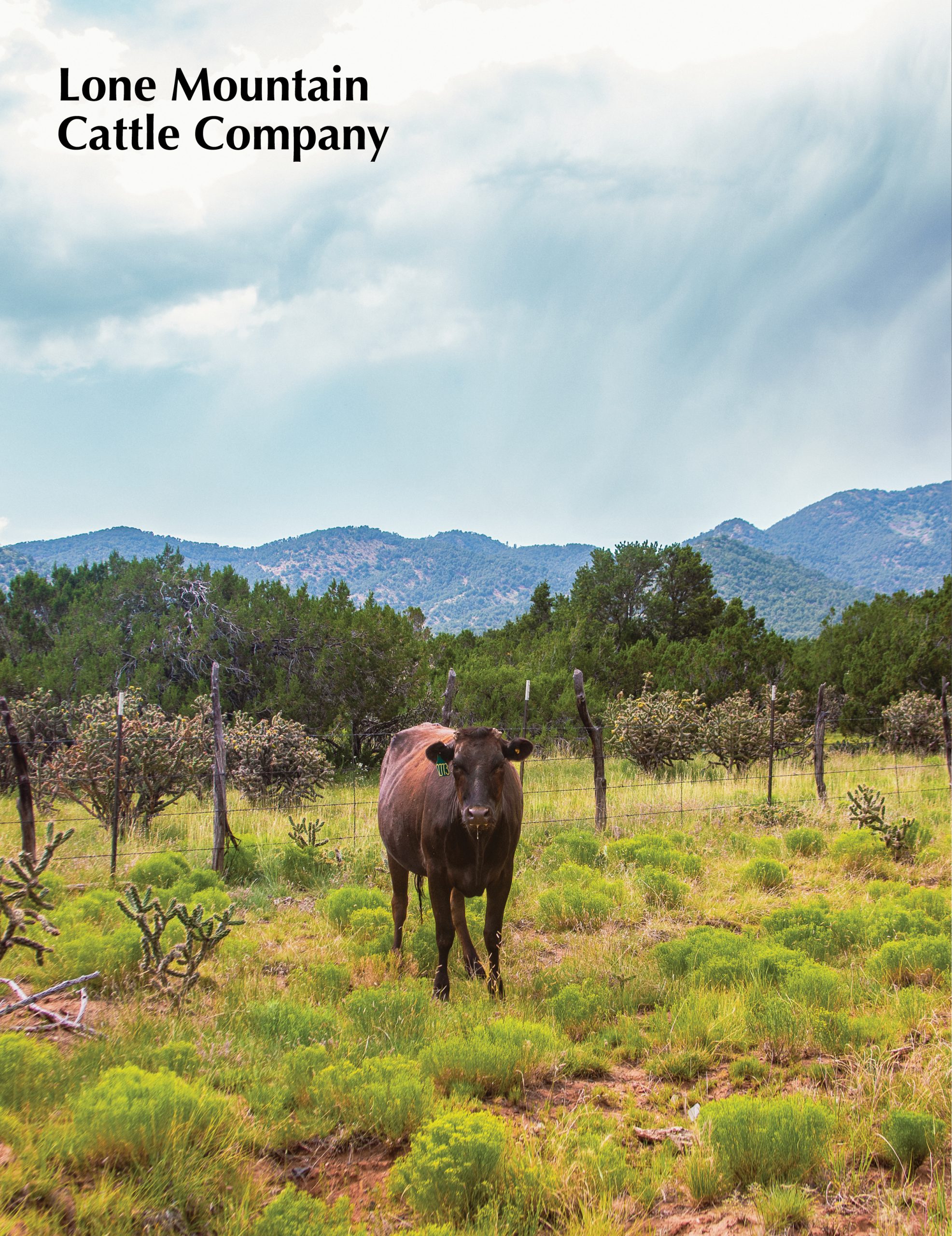
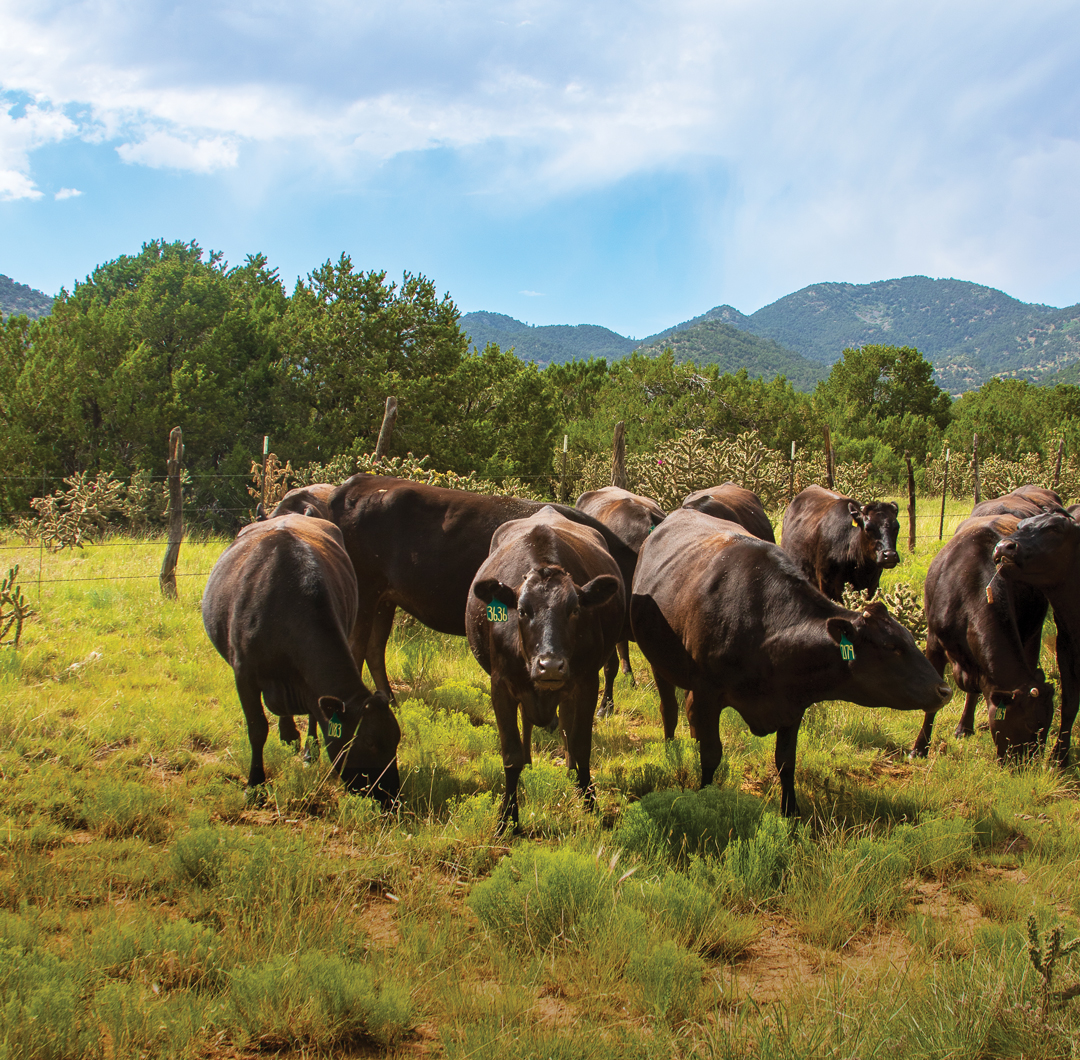
The cows eye us skeptically when we clamber down from the farm cart, even though we’re traveling in the company of Rio DeWitt, the resident ranch manager, who tosses shovelfuls of cake—a high-energy protein block made from distillers’ grains and minerals—at their feet. One of the cows is branded “WILD” but not because she’s a wild one; rather, she hails from a family ranch in North Carolina whose name is Wilders. In summer, DeWitt says, the cake is more like a snack, a supplement to the plants the cows graze on as they rotate through fourteen unirrigated pastures on the ranch.
“You’d be surprised,” he says when I presume that they probably don’t eat much cactus. On top of grasses, they do eat some desert plants, including the yellow buds that sprout on the ubiquitous cholla. The cows stop short of munching on salt cedar, which has encroached some as a result of the ongoing drought. Invasive brush aside, DeWitt says the ranch team’s management for pasture health has been pretty successful.
Owner Bob Estrin’s in-laws bought the ranch in 1965, and for decades it was a conventional cattle ranch. Twenty years ago, Estrin converted it to Wagyu, purchasing full-blood Wagyu cows and using artificial insemination to convert completely to Wagyu beef. It’s a business that requires intensive quality control, from tracking the genetic lines to using a special camera to measure the marbling in the thirteenth rib of every animal harvested.
“Most Wagyu producers in the US are in the Northwest and Midwest,” says Lone Mountain’s chief operating officer, Reid Martin. “So Kathleen [Crook]’s commitment to sourcing Wagyu from Lone Mountain is distinctive—and she’s visited the ranch several times.”
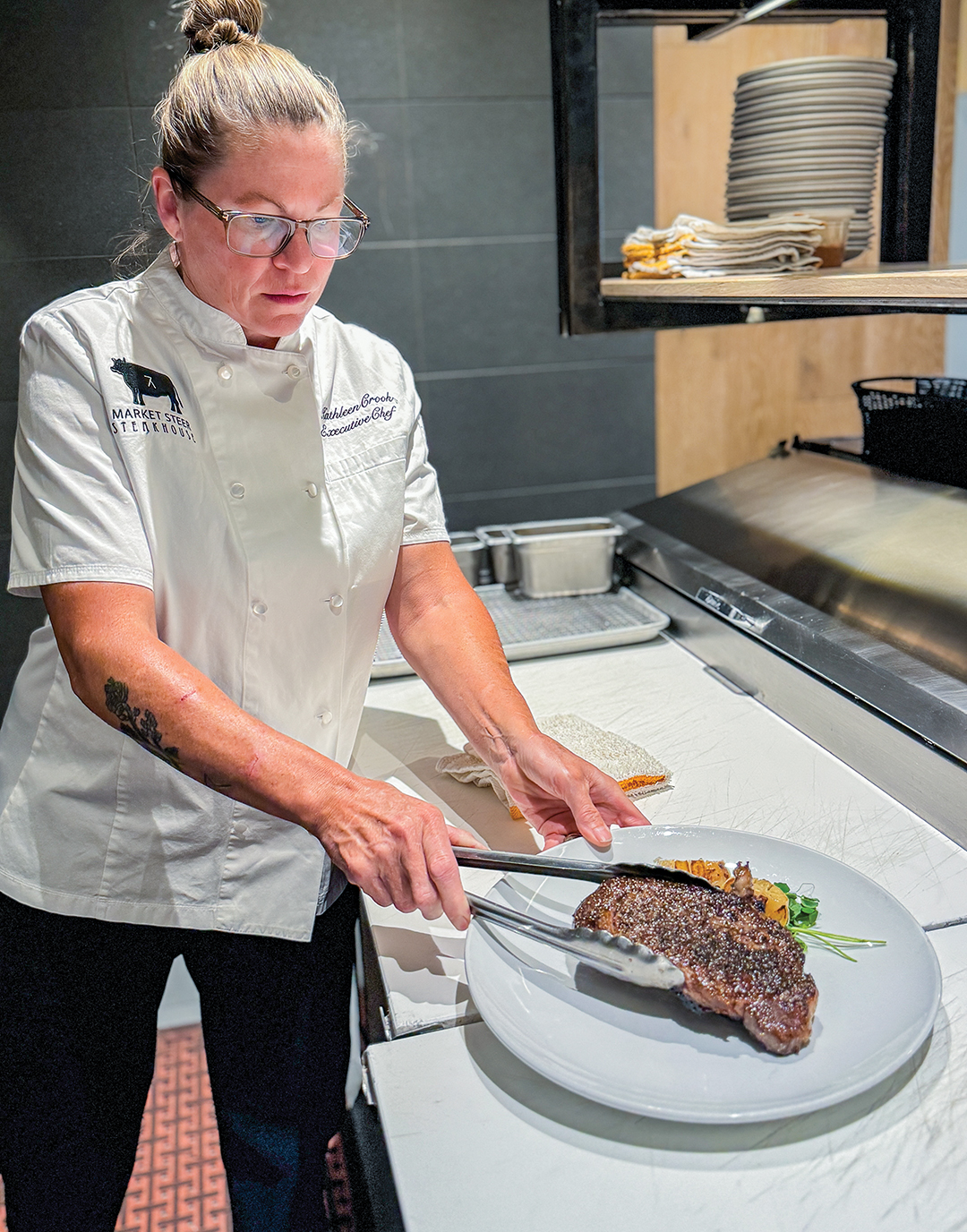
How does Kathleen Crook’s background in ranching influence her as a chef? “Having the knowledge on how cattle are actually raised, versus what proprietors are telling you. Most chefs don’t have that.” While Crook won’t tell me precisely which ranches she sources the rest of her beef from—that’s proprietary—she’s quick to share that she doesn’t buy from JBS or Tyson’s IBP. “All my beef is never-ever beef: no growth hormones, no antibiotics.”
“I use some offcuts from [Lone Mountain],” she says, “things you don’t see on other menus, like coulottes, bavettes, that are really great, that I’m able to highlight from their ranch to our plates.”
Lone Mountain Cattle Company
Location: Golden
Elevation: 6,400 feet
Acres: 27,000
Animals: Cattle (400 head)
Ranch team: Rio DeWitt (ranch manager), Daniel Nieto and Dan Montaño (ranch hands)
Direct sales: Online at lonemountainwagyu.com; Beck & Bulow in Santa Fe
What I learn about Wagyu on our visit to Lone Mountain: They’re smaller than Angus, and they’re finished more slowly. After about a year on the ranch, they move—always in the cooler months—to a feed yard in Atlantic, Iowa, just thirty or forty-five minutes from a small, family-owned slaughterhouse in Omaha, Nebraska. While their diet is supplemented with hay in winter, Lone Mountain Wagyu are strict vegetarians—range and grain fed.
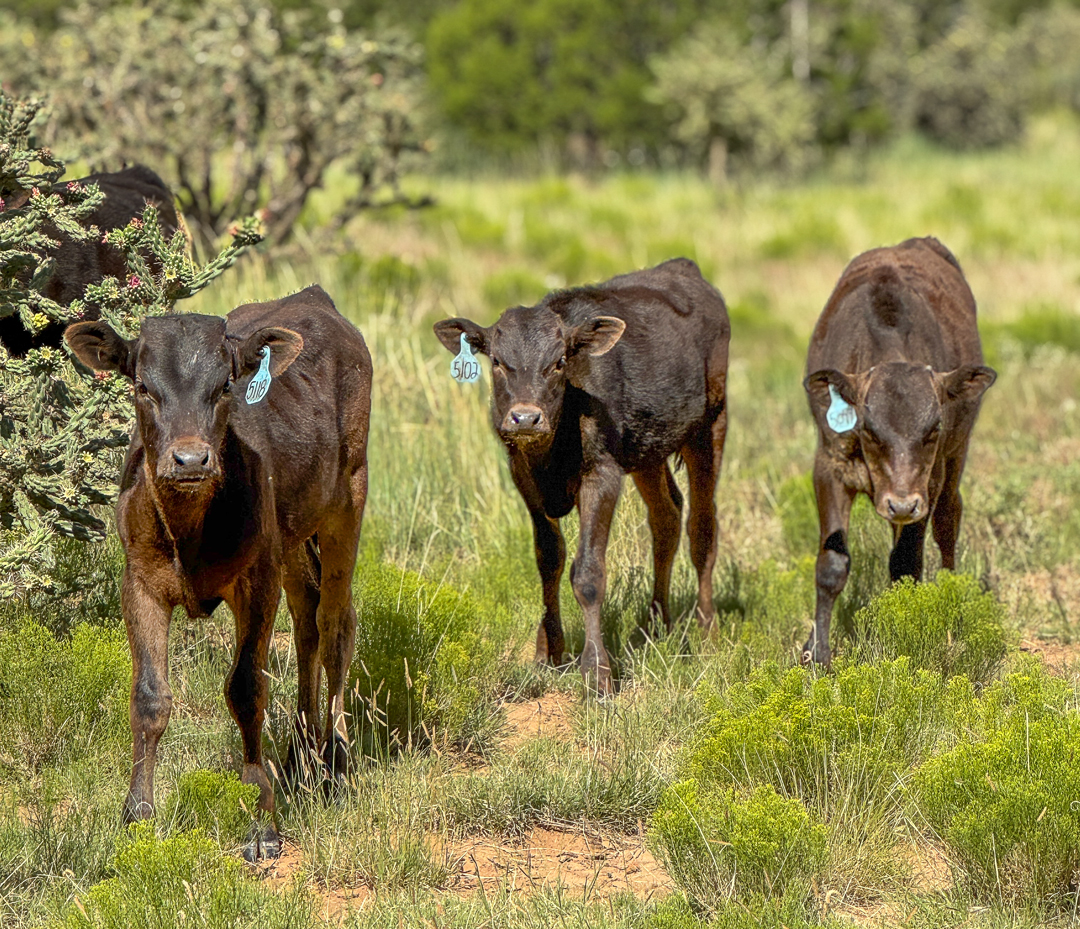
What I learn about Wagyu on our visit to Lone Mountain: They’re smaller than Angus, and they’re finished more slowly. After about a year on the ranch, they move—always in the cooler months—to a feed yard in Atlantic, Iowa, just thirty or forty-five minutes from a small, family-owned slaughterhouse in Omaha, Nebraska. While their diet is supplemented with hay in winter, Lone Mountain Wagyu are strict vegetarians—range and grain fed.
Lone Mountain Cattle Company
Location: Golden
Elevation: 6,400 feet
Acres: 27,000
Animals: Cattle (400 head)
Ranch team: Rio DeWitt (ranch manager), Daniel Nieto and Dan Montaño (ranch hands)
Direct sales: Online at lonemountainwagyu.com; Beck & Bulow in Santa Fe

Briana Olson
Briana Olson is a writer and the editor of edible New Mexico and The Bite. She lives in Albuquerque.