A Conversation with Ariel Greenwood
By Briana Olson
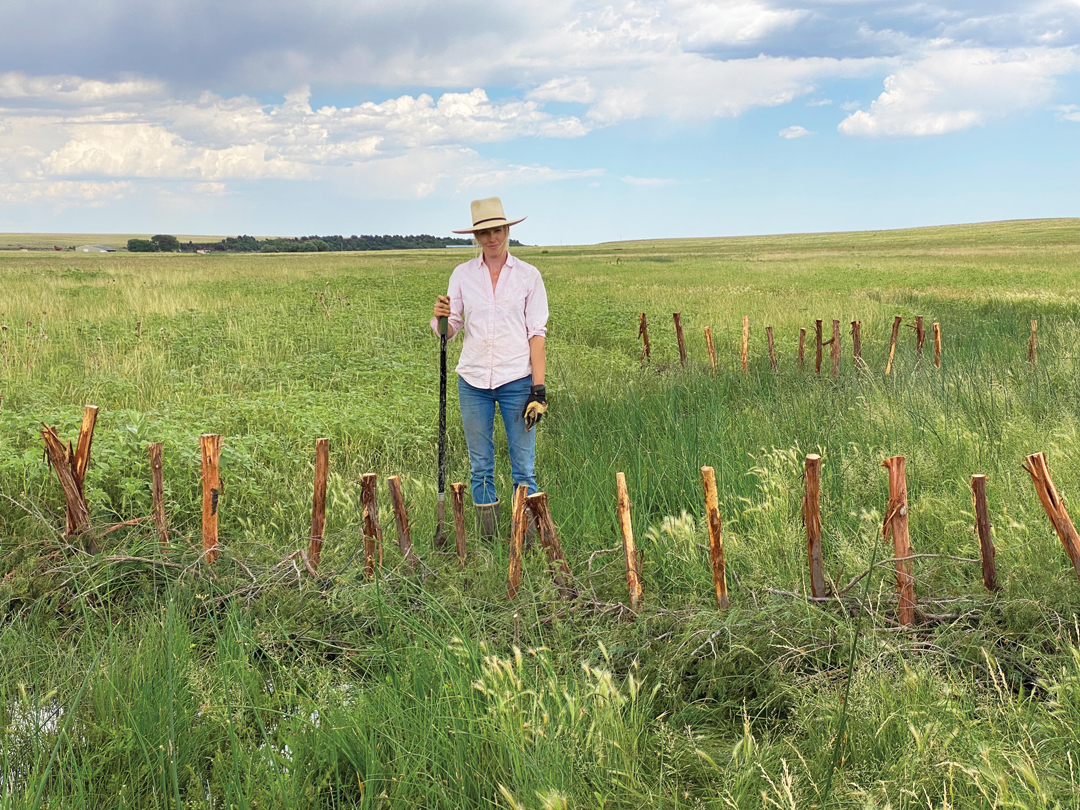
Photo by Sam Ryerson.
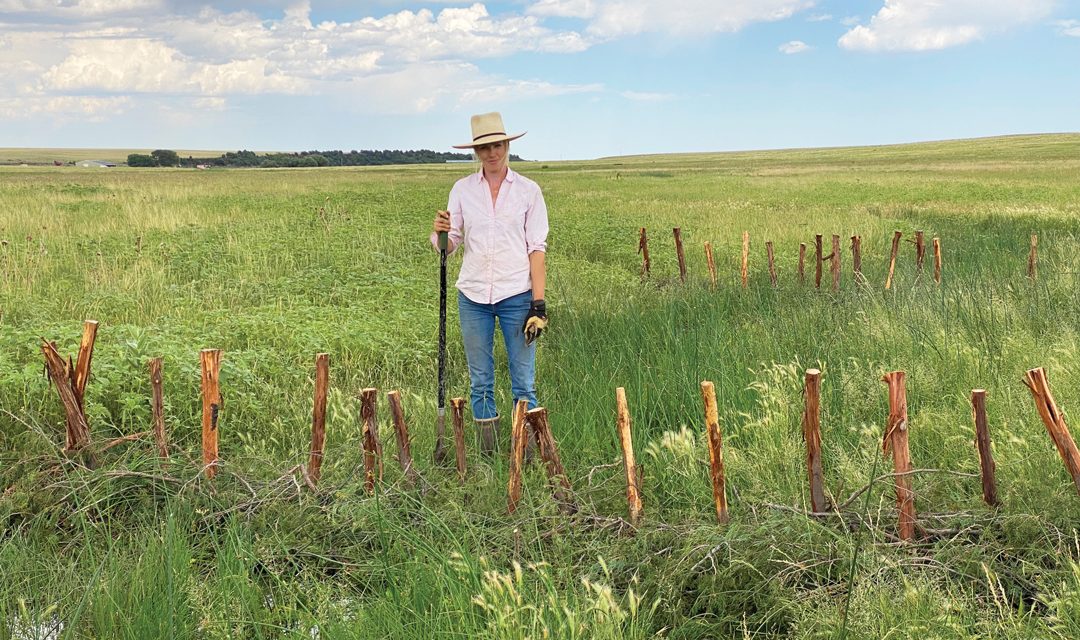
As Grass Nomads, Ariel Greenwood and Sam Ryerson manage a cow-calf operation for Triangle P Cattle Company on 120,000 leased acres in Mora County.
I sleep pretty much every night in the same bed, in the same house, in the same camp on the east end of our lease. And that feels like home. But it’s hard to separate that from the whole ranch; I feel at home pretty much anywhere I am on it. And I think what makes me feel like I belong to a place is if there are problems I can help solve. Ranches that are perfectly set up and kind of polished don’t appeal to me as much as ones where I feel like my skills can be applied in a way that makes for positive change.
Our crew is pretty much three people. I work currently forty to fifty hours a week, because I have [our daughter] Helen a little more than Sam does, and then our apprentice, Gillian, and Sam work more than that. That’s our core crew, and neighbors help some when we need it, and we reciprocate. But it’s a lot of cattle, and it’s a lot of land to cover for so few people. To get a thousand cows where they need to be, when they need to be there, in a way that feels fine to the cattle to where they’ll just get to grazing, we have to be able to handle them effectively. And so much of that depends on us being in the right frame of mind.
I think a quality about cows that a lot of people don’t appreciate is how sensitive they are, emotionally and physically, to our energies. They are a reflection of how peaceful or unsettled we are with ourselves and how clear or confused we are about our objective. Some of the best cowboys I know, I’ll try to watch them work; I’ll try to notice what it is that they’re doing that makes cattle respond to them so well. More often than not, there’s very little to see. They’re just content with themselves. They’re clear with what they want to do. They’re confident, so they don’t impart any anxiety into the herd.
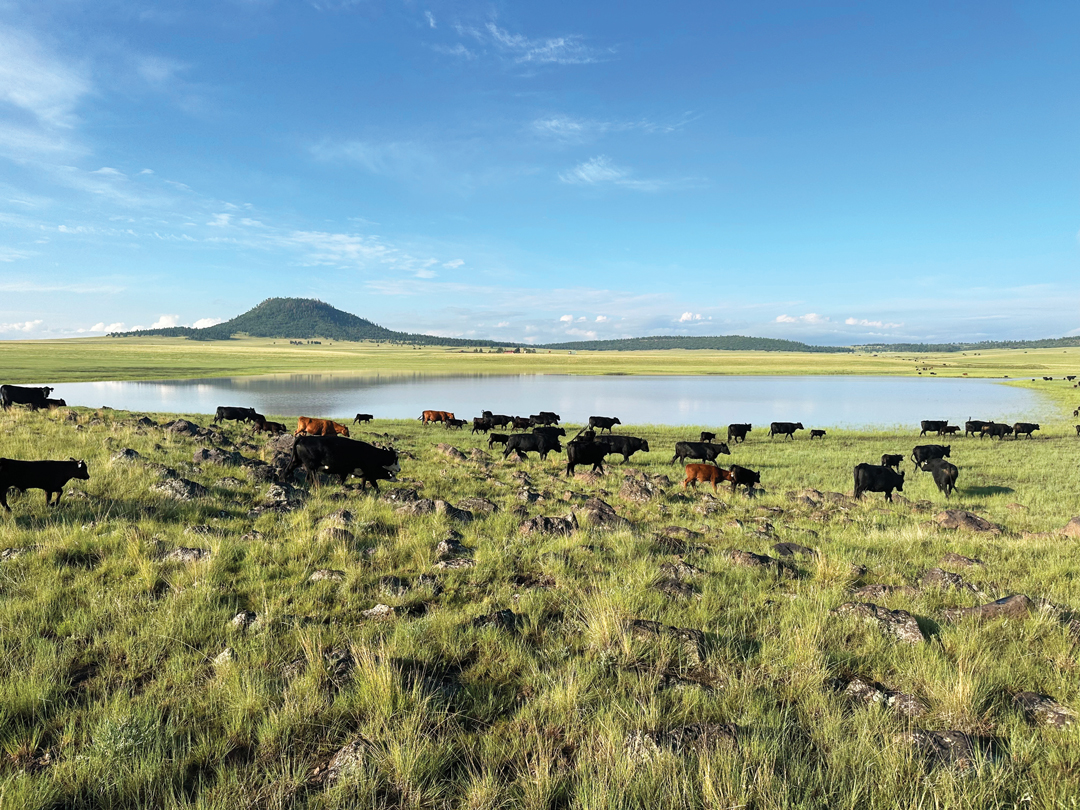
Photo by Ariel Greenwood.
We’ll be out here with our cow dogs, moving a group of cattle from one pasture to the next, and all of a sudden, a herd of fifty or five hundred elk will poke their heads over a nearby mesa and stand sentinel. I get the feeling sometimes that they are sort of amused by us and by these ruminants in front of us, which in many ways are so like them, but ultimately psychologically very different. The cows accept our presence, and they look to us for direction. Meanwhile, there are these wild animals up on the hills that do what they want, but they’re still influenced by our fences. They’re influenced by where we have water and salt and mineral, so the boundaries between our domesticated herds and the surrounding wild animals are more porous than one might think.
A lot of people think that wild animals are necessarily going to facilitate positive ecological change, but elk and any other grazing animal can overgraze or over-impact an area. They like to eat all the new willow that’s trying to grow, or new cottonwood seedlings . . . Elk don’t like to eat old or thick grass. They like to eat fresher, finer-bladed, more vegetative grass. And so cattle, being a lot bigger, having bigger rumens, bigger mouths, bigger feet, and being more under our influence, they can help knock down those old grasses and stimulate new grasses to grow in a way that really benefits the elk. There’s an old adage that elk follow the cattle, and that’s been my experience here.
Sound, effective stock handling is often the difference between a range that is improving all the time and is storing carbon, storing water, [serving as] spectacular habitat to a growing number of plant species and invertebrates and birds—or, range that’s over-trampled and overgrazed in certain areas and underutilized, under-impacted in other areas.
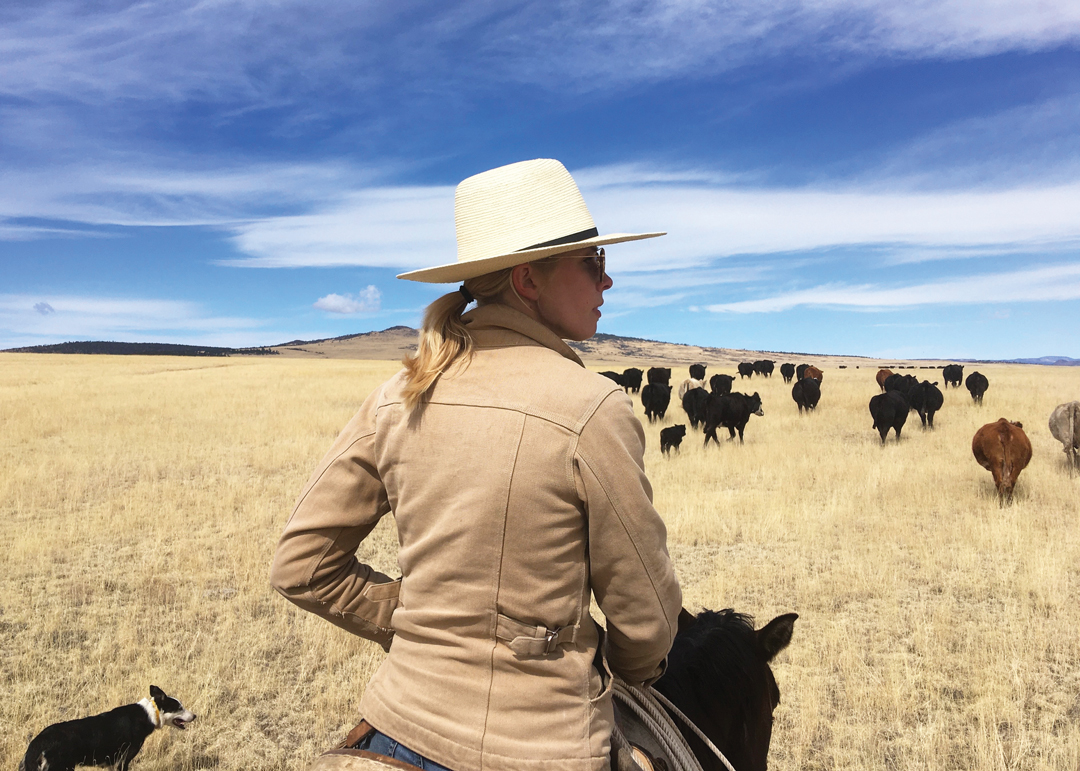
Photo by Sam Ryerson.
Lately, I have been dipping back into some Bill Zeedyk books that I have on hand to inform some of the erosion mitigation and wetland work that we have been doing. His books are simple and easy to understand only in hindsight. I’ll read them for a while, then I’ll go do the thing. I’ll go look at the work that we’ve already done, and only once I’ve done that can I reread the same passages and think, Oh yes, of course, I know exactly what he’s talking about.
One of my favorite things to make is some beef shank in the Crock-Pot, where you can scoop out the marrow with a butter knife afterward. Lately, [for braising], I’ve been using the leaves from the California Bay nut tree, a tree that I really love, and the leaves have amazing flavor.
This spring, we’ve been eating a lot of lamb’s quarters. It grows in wet ground and disturbed soils around here, and as nonnative plants go, it’s a pretty benevolent one. It can help heal the soil where there’s bare ground and it’s just great to eat. I don’t even really bother growing many edible greens in our garden, because the lamb’s quarters just go for so long.
If I could recommend a writer [on ranching in the American West], it’d be Gretel Ehrlich. She is able to speak to so much of the work and the ecology and the poetry and, to some degree, the econo-mics that inform that work, all from personal experience. She has a way of putting things where I just think, Yeah, that’s exactly how that is.

Briana Olson
Briana Olson is a writer and the editor of edible New Mexico and The Bite. She lives in Albuquerque.