THE ART OF BROKEN ARROW
By Briana Olson · Photos by Stephanie Cameron
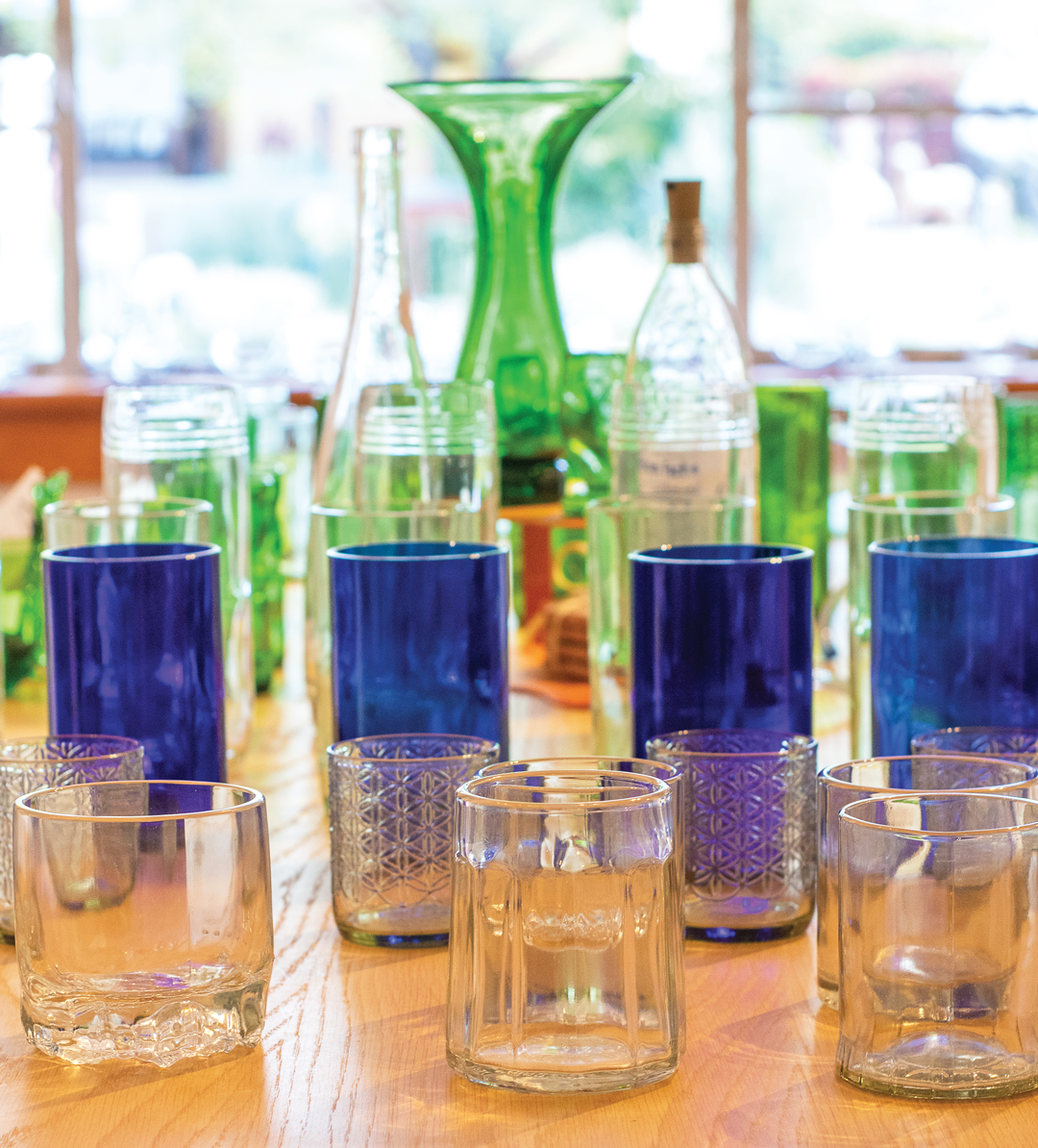
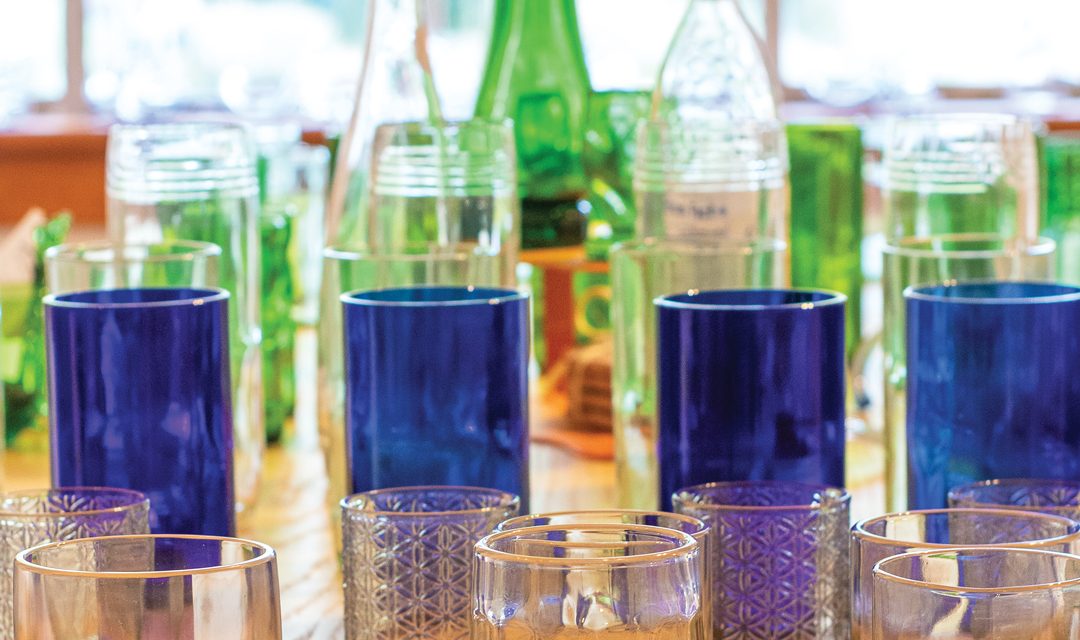
Upcycled glasses at Broken Arrow’s art gallery, Two Twenty Two Contemporary.
Sandwiched between Barelas Railroad Park and the Paseo del Bosque, a crowd disperses across barren mounds of glass-filled earth—known alternately as the glass garden or the glass graveyard—while five or six sound artists drag amplified sticks through the glass and dirt. A radiant, shimmering static is threaded with the hum of voices, footsteps, and the delicate chink of glass shards being stirred. This is “Glass Graveyard,” one of twenty movements in Albuquerque artist Raven Chacon’s musical composition Tiguex, and the site of the performance is a place not unlike the ultimate destination of most used glass: the Closed Old River Landfill.
The glass at this old-school dump—shards of sea green and cobalt, brown and clear—dates from eighty or more years ago. But what’s demonstrated here remains true even at modern landfills, with their complex protocols for linings and coverings: Glass does not break down. Walking across the field of glass on a site where, per the city, “all decomposable material has degraded,” feeling the crunch under foot, dispels any last trace of a fantasy, generated who knows how or when, of old glass quietly, peacefully, dreamily morphing back into sand.
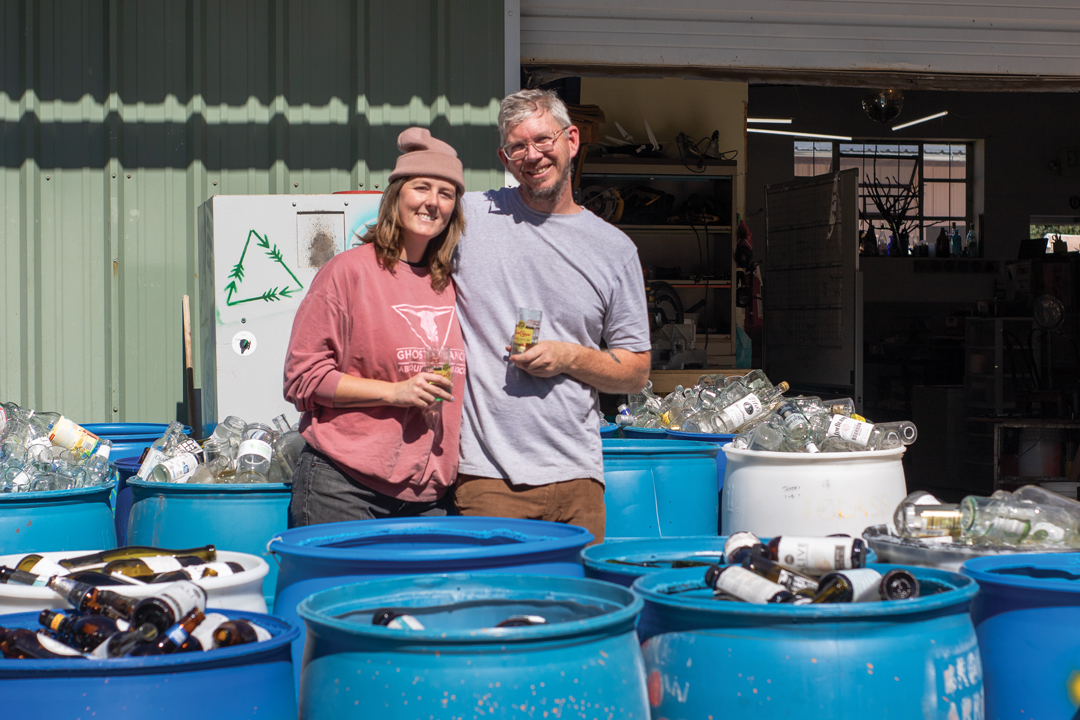
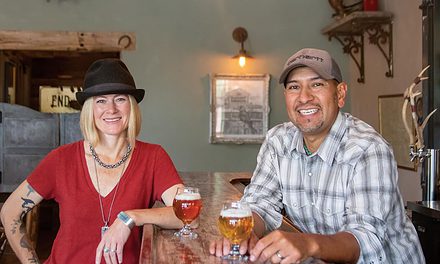
Shelby Kaye and Chris Bogle in the glass yard.
Approximately seventy-seven miles northeast of the glass graveyard, in Cuyamungue, glass artists Shelby Kaye and Chris Bogle take a more functional, but no less magical, tack to making art out of used glass. The words “Art Station,” emblazoned on an old gas station canopy on an otherwise empty stretch of frontage road, signal both the spirit and location of Broken Arrow Glass Recycling’s studio and processing facility. Driving by, you might notice a few sculptures adorned with handblown glass ornaments, but you won’t see the polished crushed glass in the landscaping beds or the glass sparkling in the concrete walkway until you’ve parked and walked through the gates.
“Glass is infinitely recyclable,” Kaye tells me within minutes of my arrival. Unlike other materials, she explains, and so long as care is taken, glass does not lose its quality when it’s recycled. This fact, along with their skills and training in glasswork, underpins the artists’ inspiration to move from an idle “What if we turned our empty kombucha bottles into votives and sold them?” to “What if we limited ourselves to working only with recycled glass?”
Kaye has a BFA in sculpture from NYU; Bogle has a BFA in glassblowing from the Appalachian Center for Craft at Tennessee Tech. They met in 2014 at the renowned Pilchuck Glass School (Dale Chihuly was a founder) in Stanwood, Washington, then lived in a bus, traveling around to different glass schools and studios and fortuitously breaking down almost every time they were in Santa Fe—one of a few signs that the city should be where they put down roots. Over the past six years, they’ve slowly but surely evolved from upcycling kombucha bottles in their kitchen to running a recycling business that, each month, turns roughly fifteen tons of glass into handblown glasswork, crushed glass for landscaping, terrazzo housewares, and drinking glasses.
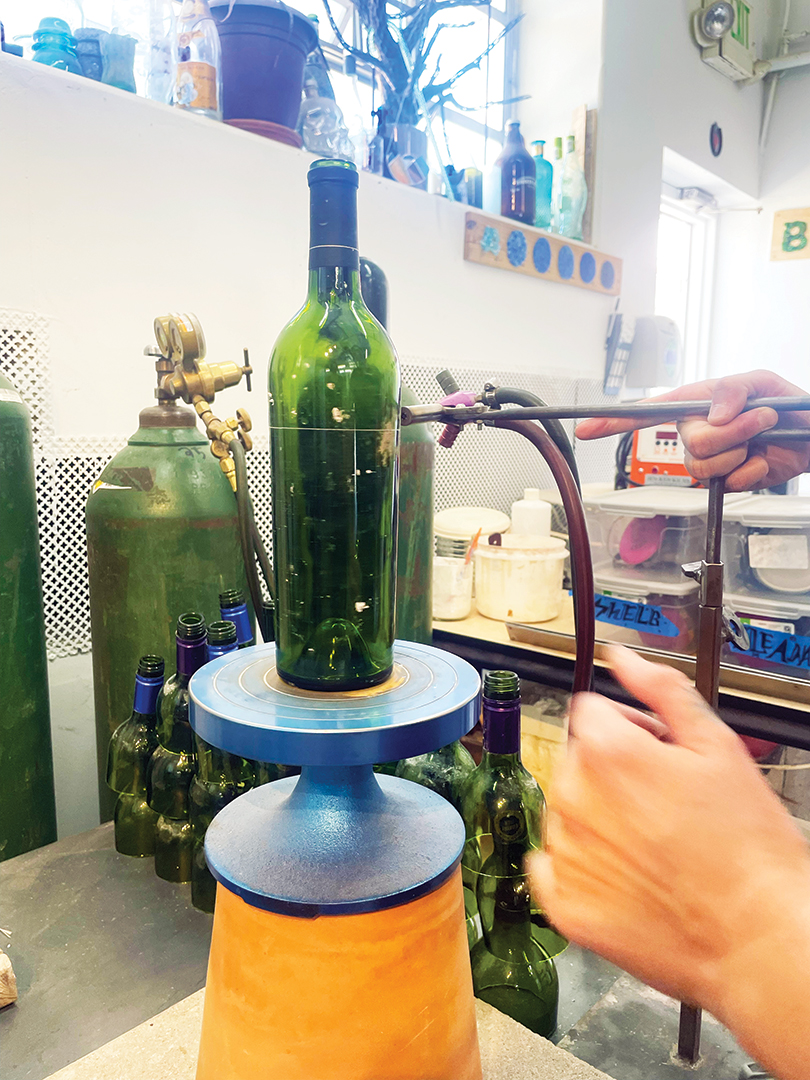
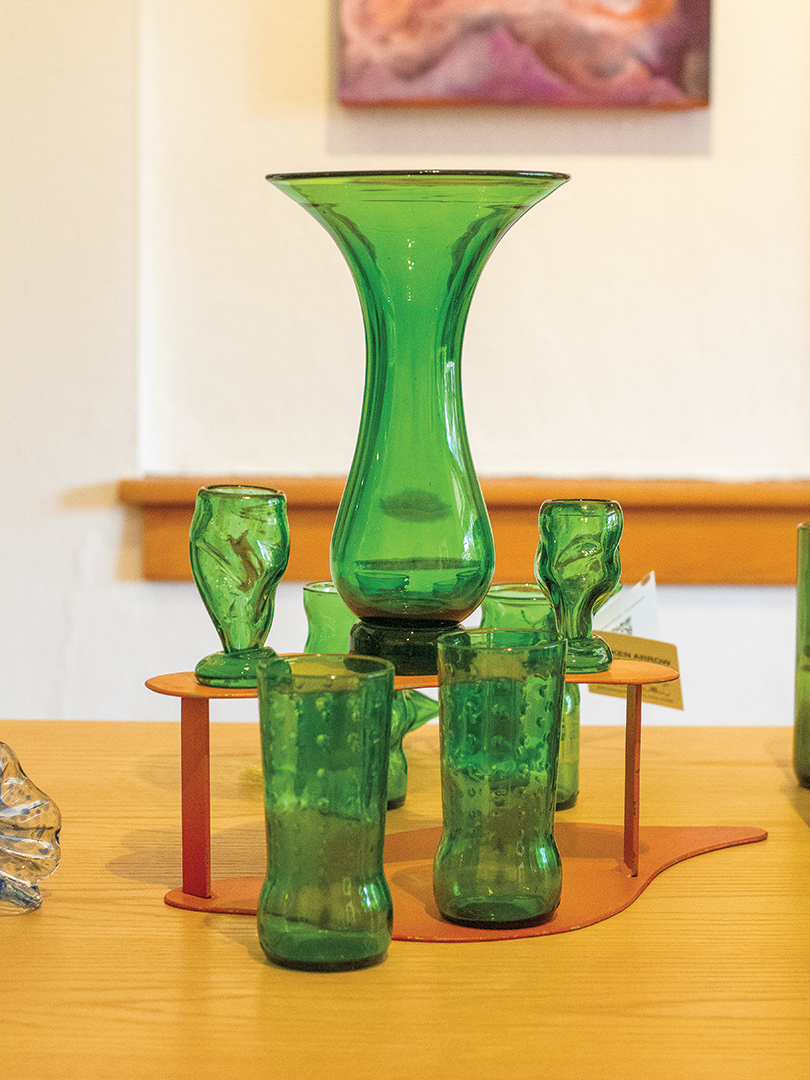
Empty bottle being scored for glassware at Broken Arrow’s studio. Photo by Briana Olson. Green glassware at Two Twenty Two Contemporary.
When I visit, they’re preparing samples for La Reina. I already knew that the Santa Fe bar was a recycling customer, separating bins of emptied glass bottles for pickup; what I’m surprised to learn is how many of Broken Arrow’s commercial recycling customers also purchase glassware fashioned from their own would-be trash. One contender for La Reina is hefty, made from glass with the faintest tinge of green; another is thinner, lighter, clearer. Both are, frankly, cooler than 80 percent of the glasses in which I’ve ever been served a cocktail.
“We’re interested in small local impact, using that as a model for growth,” says Kaye as she walks me through the upcycling process, from soaking the bottles to hot popping (where a torch applied to a score line causes the top to cleanly pop off) to polishing the rim with lapidary equipment and firing the finished glasses. Santa Fe Wine & Chile Fiesta buys these glasses, and the Museum of New Mexico Foundation is a longtime customer; Bogle chimes in that the Modern Elder Academy’s first order was for several hundred glasses.
Yes, there’s a pandemic element to this story: While residential waste surged, the City of Santa Fe, like many others, closed their recycling dropoff stations. After posting to a local Buy Nothing group, Broken Arrow grew from recycling their own bottles to picking up glass from twenty homes, using a garbage disposal (the kind of hand-me-down only a glass artist would think to repurpose in this manner!) to crush the leftover material for landscaping products. By the end of 2020, they’d graduated to a crusher the size of a vending machine. Three years later, they purchased an industrial crusher from the City of Los Alamos. Around the same time, they acquired a glassblowing furnace with ten times the capacity of the crucible they’d been using to melt down glass.
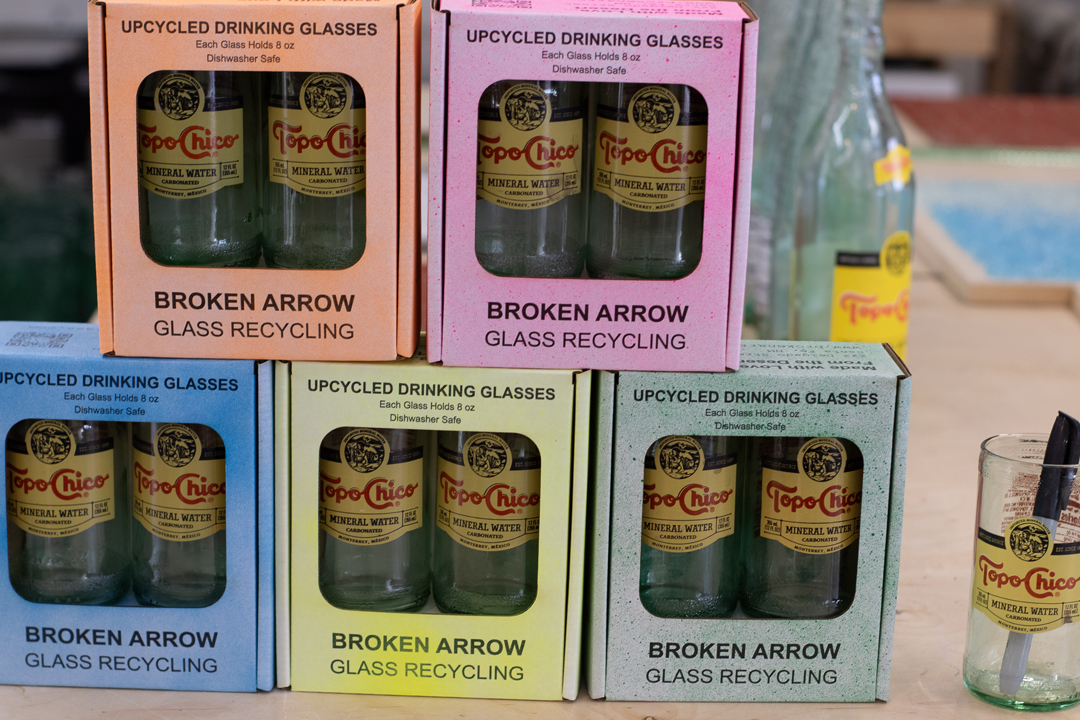
“I stopped using the term ‘zero waste,’” Kaye tells me later, because the truth is that there will always be some waste. But from the start, they were asking, “How do we use the whole bottle?” Handing me a glass made from a Topo Chico bottle, Kaye comments on their durability—“a lot of these bottles are produced for shipping,” she says—and as I consider the assortment of scored bottles and finished glasses at the studio, I start to notice other design decisions: textural elements, curves, degrees of clarity. Suddenly, it seems a shame not only to waste the glass of the bottles but to so swiftly dispense with the creativity that went into designing them.
Even the most obvious of design decisions—color—becomes briefly dazzling as Kaye rattles off the colors of commercial glass, leading me outside to pore over bins of sorted bottles and study distinctions I’ve never much considered: light olive vs. dark olive vs. light green and dark green; clear vs. the transparent-with-a-touch-of-seafoam that Kaye calls “sea glass.” Amber is abundant; cobalt is so precious that they use the small crusher to avoid losing any of the glass to splatter. Bombay, as the pale blue gin bottles are called, is also relatively scarce. Separating the colors, like cleaning the glass, is crucial not only to their line of upcycled glassware but for the newest—and oldest—part of their business: blowing glass.
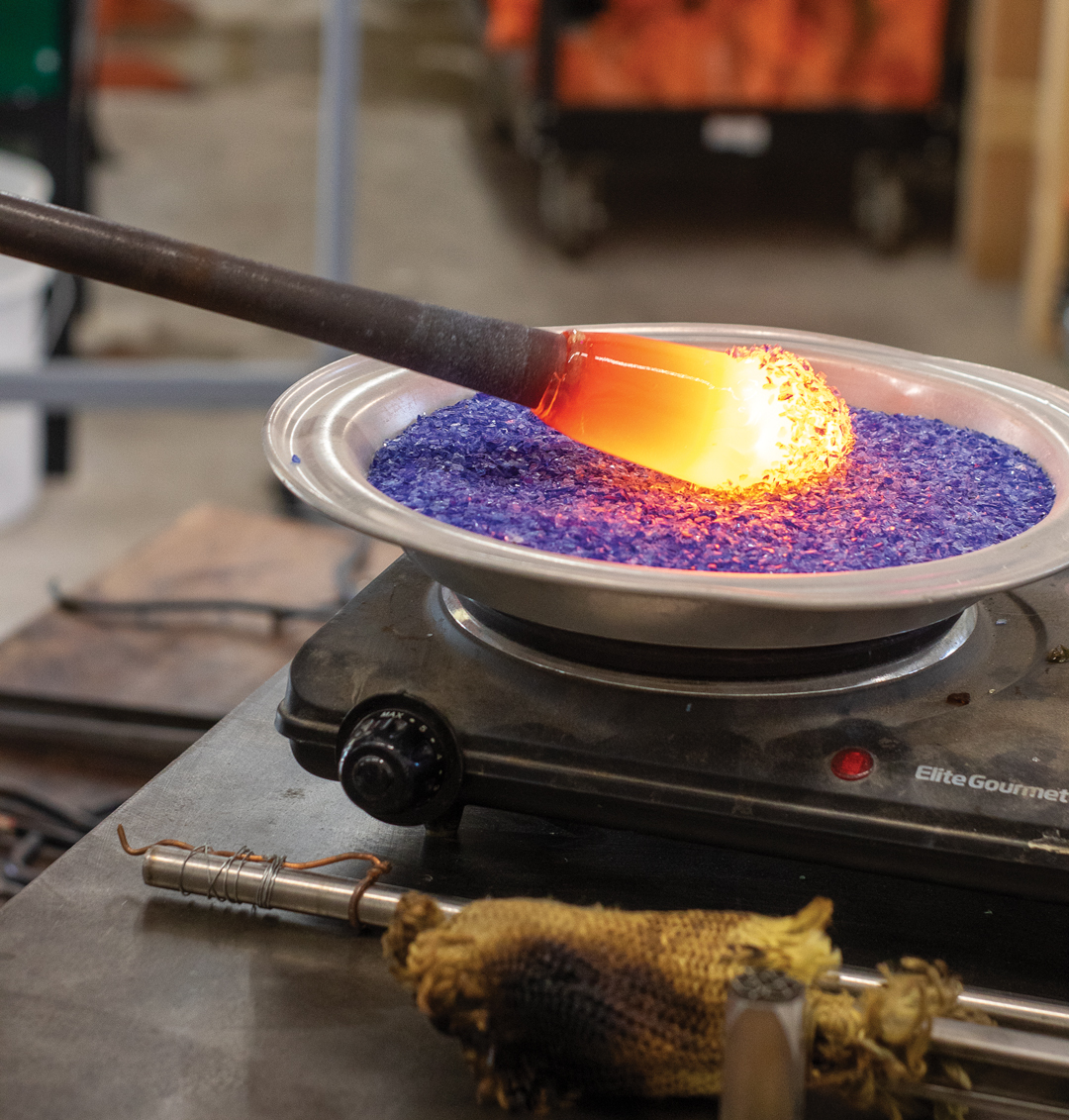
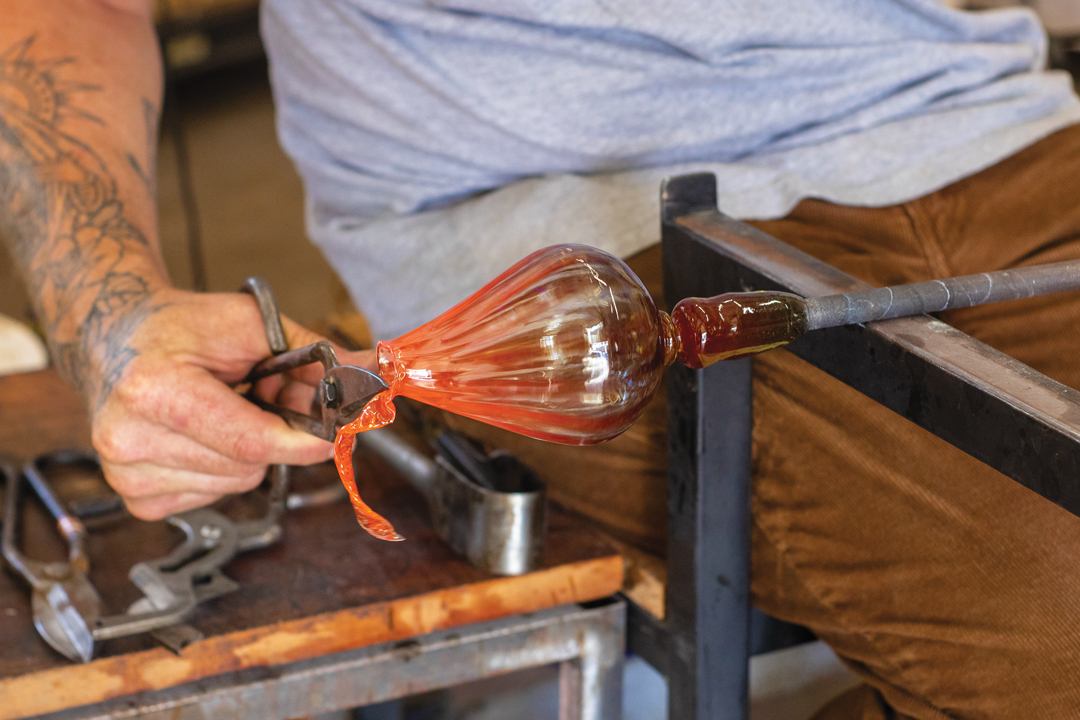
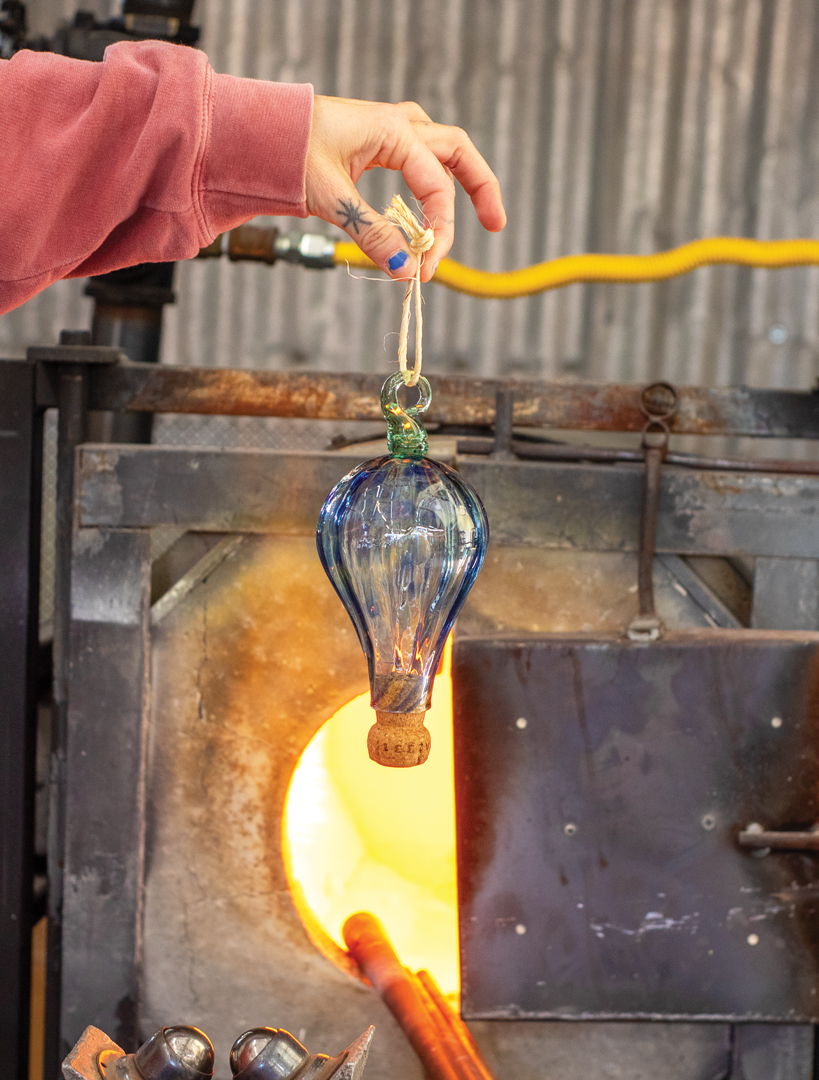
Chris Bogle forms handblown glass balloon from recycled glass.
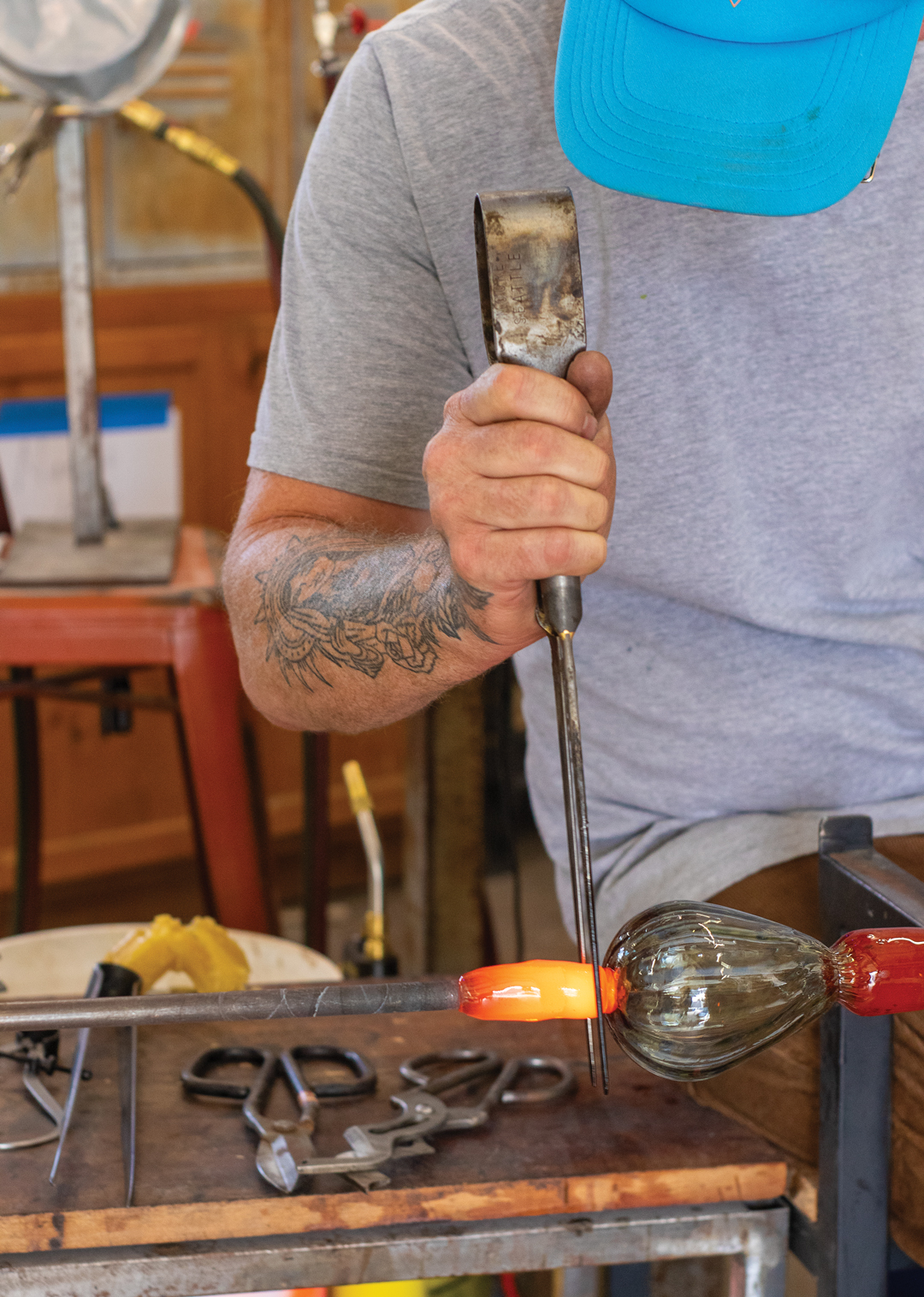
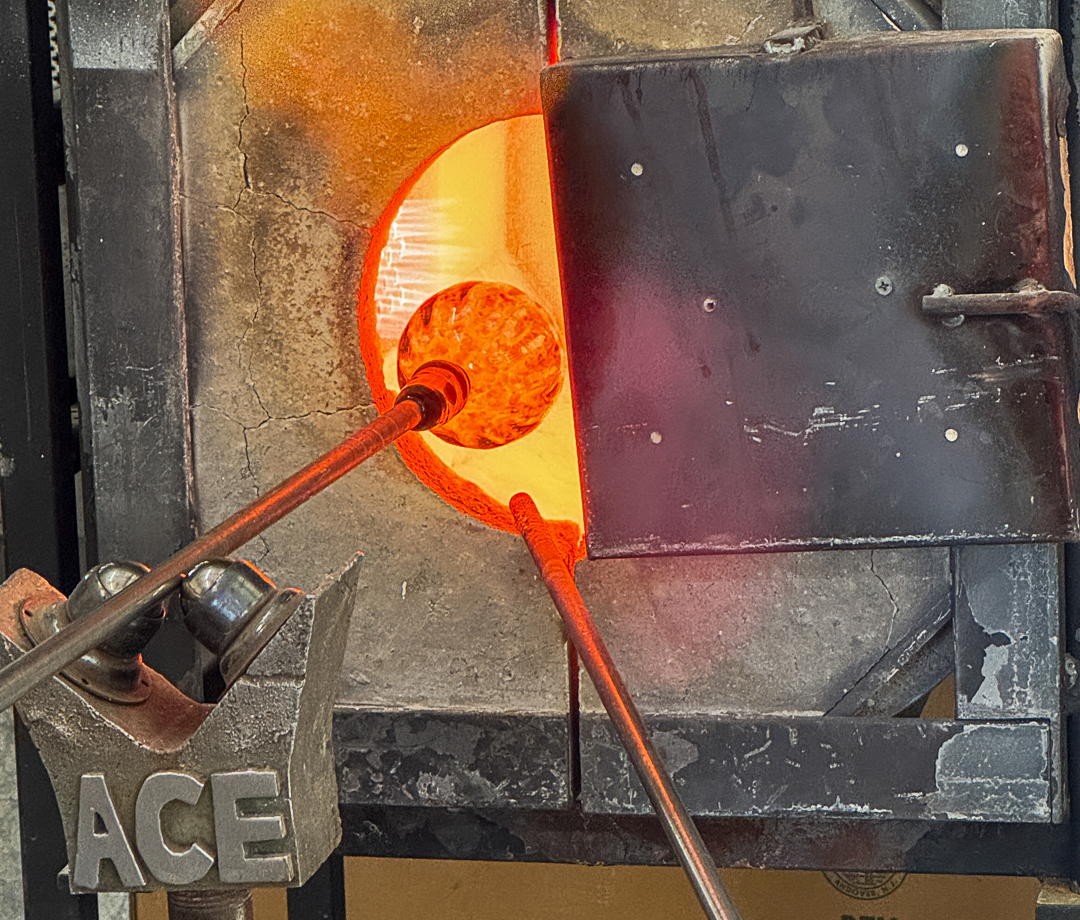
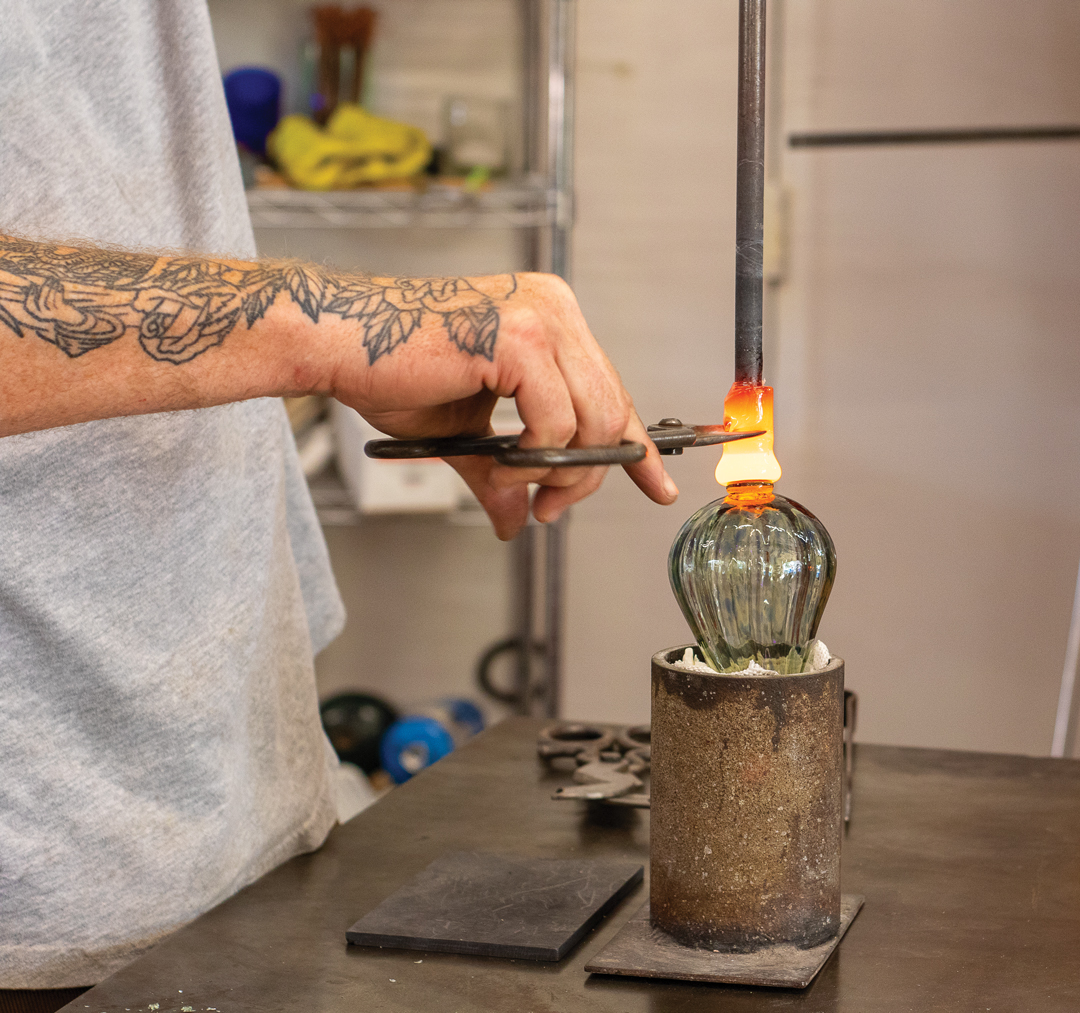
This brings us to the hot shop, where Bogle is working with a new apprentice. The forty-pound furnace in the corner is filled with crushed sea glass; once the furnace is charged, the glass melted down to a uniform—and terrifyingly high—heat, Bogle gathers glass with a long steel rod, then rolls the gather, as the molten orb is called, in a bowl of cobalt frit before using a pincerlike tool to give form to the blob. The language of glassblowing feels old, and so it is, although as Kaye mentions, the art form was adopted later in North America than elsewhere. It’s an art that has always seemed a bit like alchemy to me: the way pressing into the hot melted glass creates openings that, swirled, form the petals of a flower—part of their commission for this year’s Blossoms & Bones festival at Ghost Ranch.
“I’ve probably made fifteen of these in the hour you’ve been here,” Bogle says while I watch him work. We talk about his past experience in glass production, once working in a facility that produced ten thousand glasses a day. Does the repetition, or the utility of the end results, make Broken Arrow’s work “not art”? While he acknowledges that it’s not necessarily his favorite way to work, he says, “Until we started Broken Arrow, I spent my career making art for other artists, other people. For me, the art of Broken Arrow isn’t the pieces we’re making, it’s the social impact. That’s the real art.”
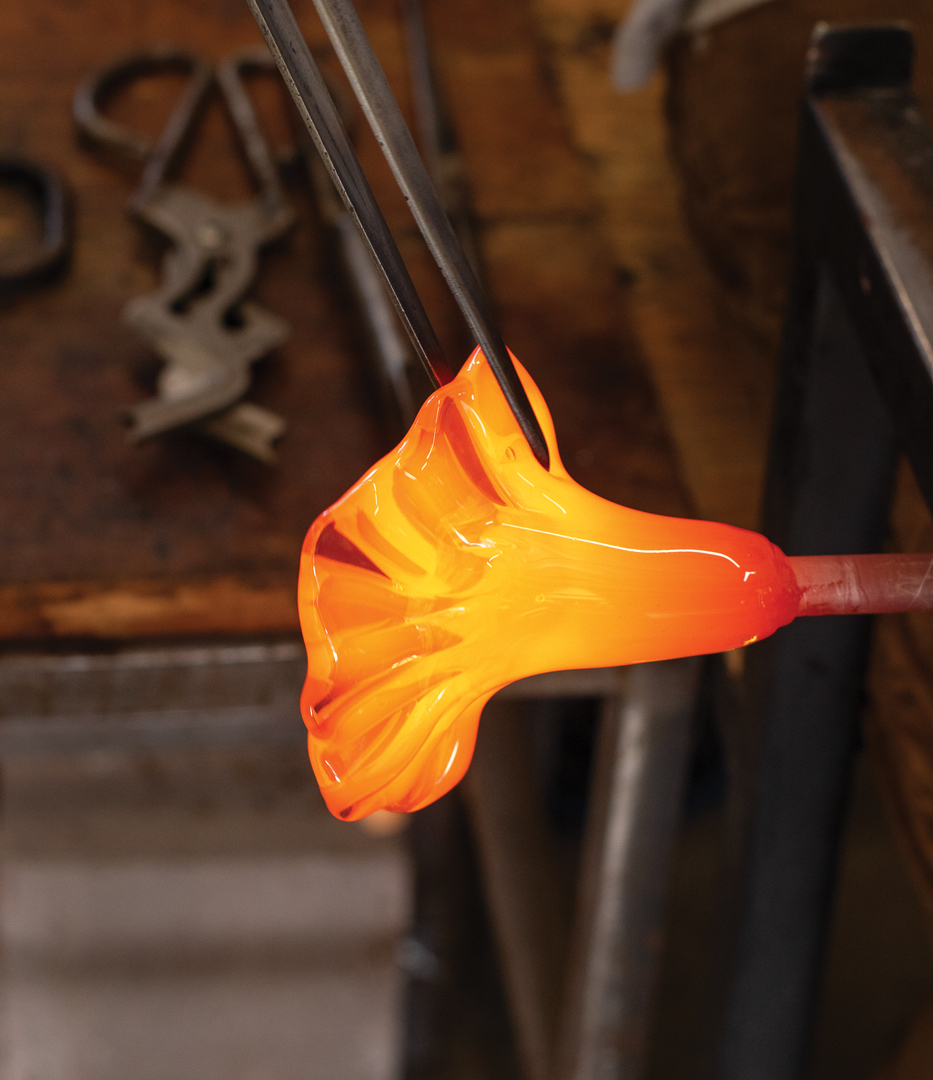
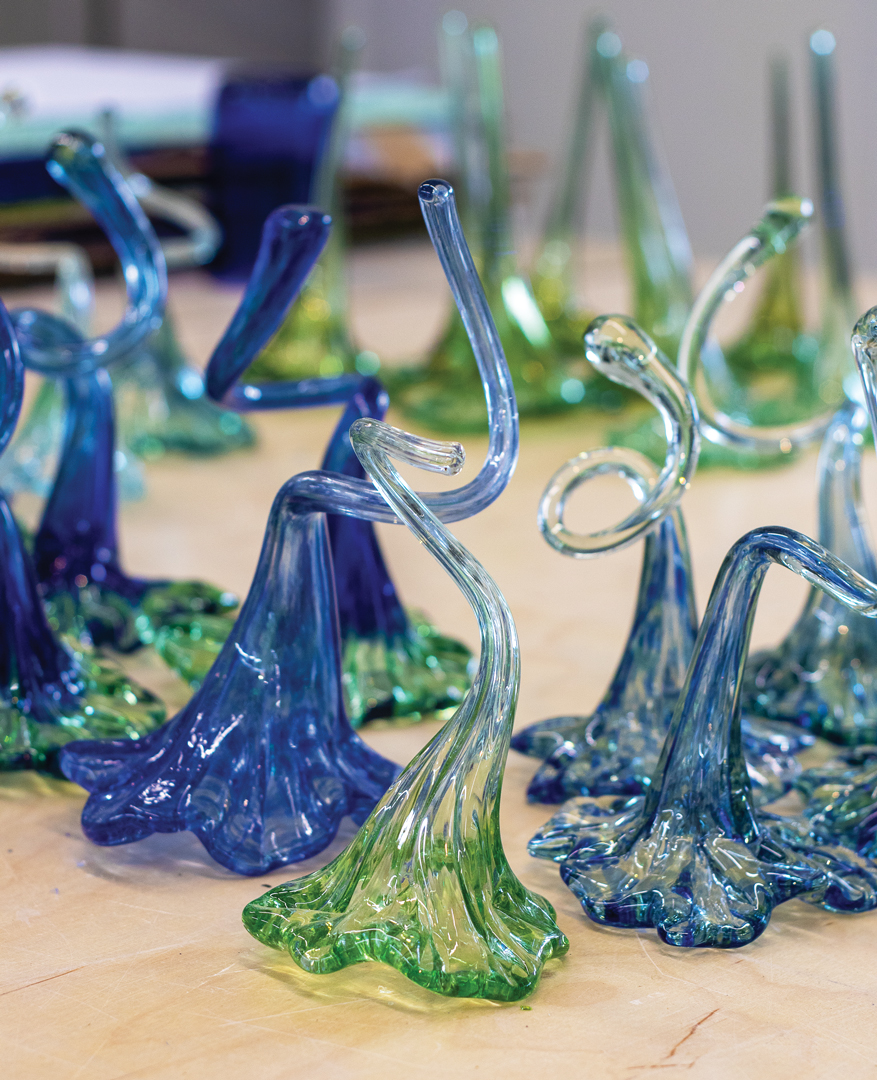
Handblown glass flower being shaped and finished glass flowers.
As of fall 2025, this art can be found at Broken Arrow’s Two Twenty Two Contemporary, a gallery located just off Canyon Road, and, thanks to the Ascend ABQ program, at a kiosk at the Albuquerque Sunport. Rather than massive Seussian sculptures accessible to only the very wealthy, they make housewares and art objects—to include, now that they have the gallery, their own one-of-a-kind pieces—that their residential recycling customers can afford to buy as gifts. “Some people recycle with us because they want to know that it’s being reused locally,” Kaye says. And even those of us who live beyond their Santa Fe service area can buy some stylish glasses knowing that they might be made from the bottles that poured the whiskey we sipped at Taos Ski Valley, Broken Arrow’s largest commercial recycling client. “It’s a little microcosm of circular economy,” says Bogle with the satisfaction of someone who cares.
222 Delgado, Santa Fe, 505-699-8680

Briana Olson
Briana Olson is a writer and the editor of edible New Mexico and The Bite. She lives in Albuquerque.