Words and Photos by Ungelbah Dávila
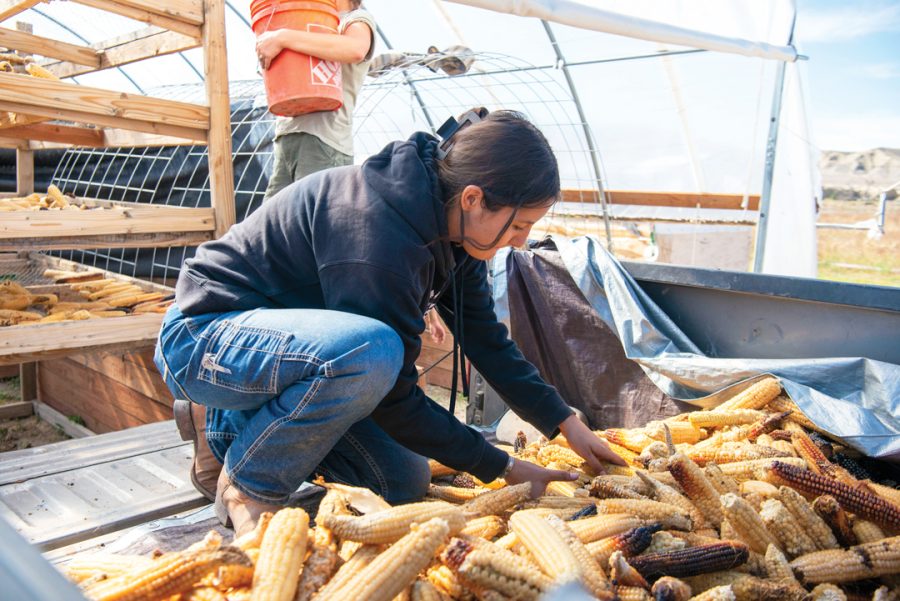
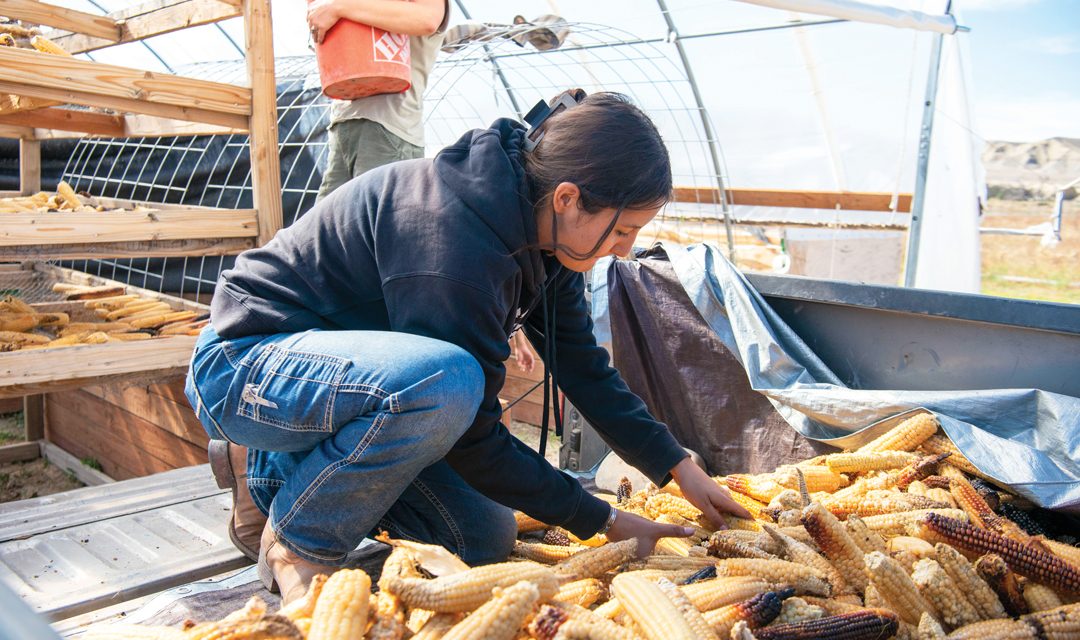
Kiera McCabe helps put roasted corn onto drying racks.
Along the San Juan River on the Navajo Nation, wide stretches of farmland have gone to dusty soil where verdant crops once grew to sustain Diné communities. For generations, aspiring Diné farmers who wanted to cultivate food—and businesses—on the reservation have struggled to access the resources, training, equipment, and, most simply, the land they would need to succeed.
Enter the cofounders of Bidii Baby Foods and the BEN Initiative. Building on their own experience farming and starting an ancestral foods business in Shiprock, Dr. Mary Ben and her husband, Zach Ben, have begun addressing the unique needs of such farmers head-on. Through their Farmer-in-REZidence Program, which runs annually from May through November, the duo teaches young growers how to plant, nurture, and harvest crops, as well as how to grow a successful farm business on tribal trust lands. Renting land from neighbors, family members, and allies, and lending out use of their own farming equipment, the Bens are building a resilient network of Diné farmers who strengthen the region’s food sovereignty and economic future.
The Farmer-in-REZidence (FIR) Program started as a pilot in 2024. “We realized that young farmers on tribal lands face huge systemic barriers. You can’t just lease land or get USDA support like on private land,” explained Dr. Ben, referring to the communal holding structure and restrictions on sales of much tribal land. “So we needed a program that understood those nuances and provided both mentorship and structural support.”
Some of that structural support comes from the nonprofit BEN Initiative. Unlike most farmer incubator programs, FIR’s approach is hybrid: The nonprofit acts as a fiscal sponsor, holding grants and funding for equipment and infrastructure for the FIR Program, while the Bens’ for-profit company, Bidii Baby Foods, provides a guaranteed market for select crops. “The only way we’ve been able to make this work is by combining a nonprofit and for-profit model,” Dr. Ben said. “It’s unique, and it’s essential for young farmers on tribal lands to succeed.”
The program has evolved into two distinct paths for participants. “One path is for farmers who want to run their own business,” Dr. Ben said. “Kiera McCabe is a perfect example. She’s developing her own brand, her own products, and uses equipment loaned by Bidii to scale her business. Eventually, she’ll be independent but will have the experience and support to make it work.”
McCabe, twenty-two, hails from Tółani Lake, Arizona, and had limited farming experience before joining the program. She spent her first year interning and learning the ropes with Bidii Baby Foods, and this season established her own business, Skoden Farm LLC, a to-go-snack-production venture using her own grown ingredients.
“Farming on tribal lands is completely different,” McCabe said. “Land acquisition, loans, infrastructure—it’s all a challenge. The program teaches us how to navigate that. We’re learning to grow crops, but also how to run a sustainable business and develop products that are accessible to our communities.”
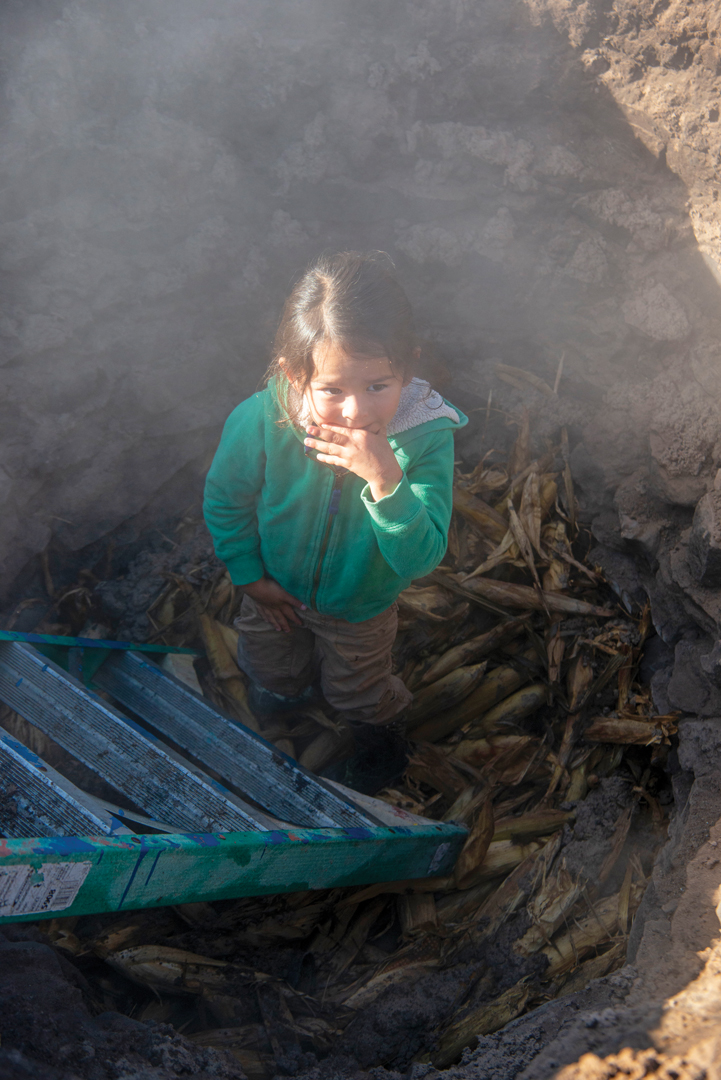
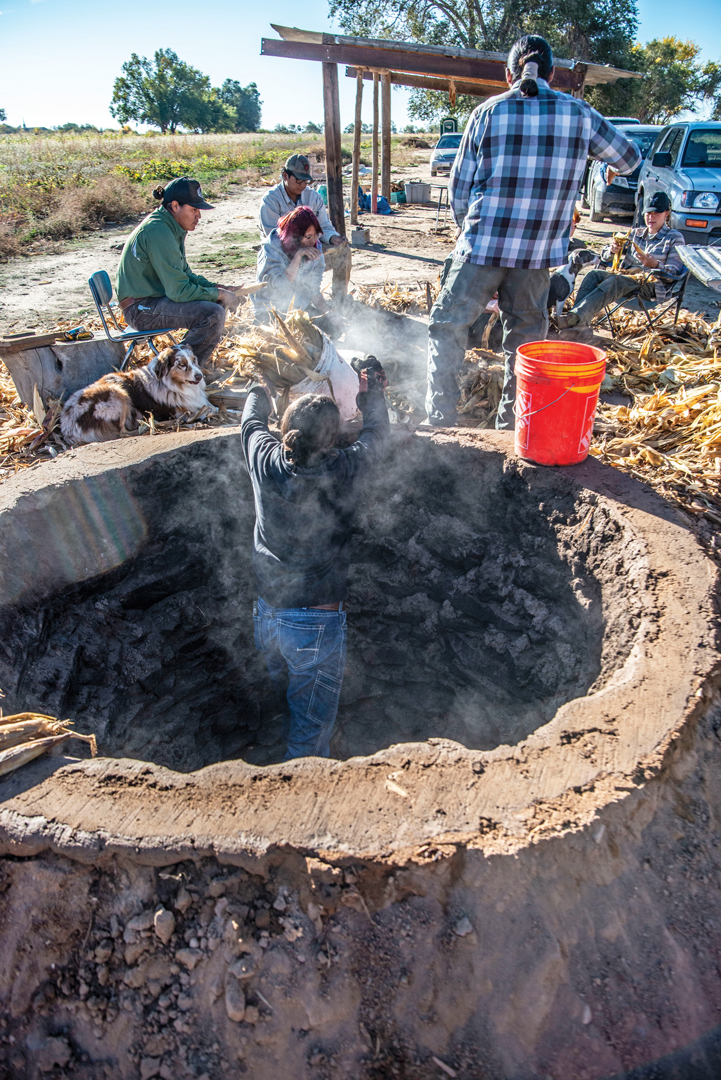
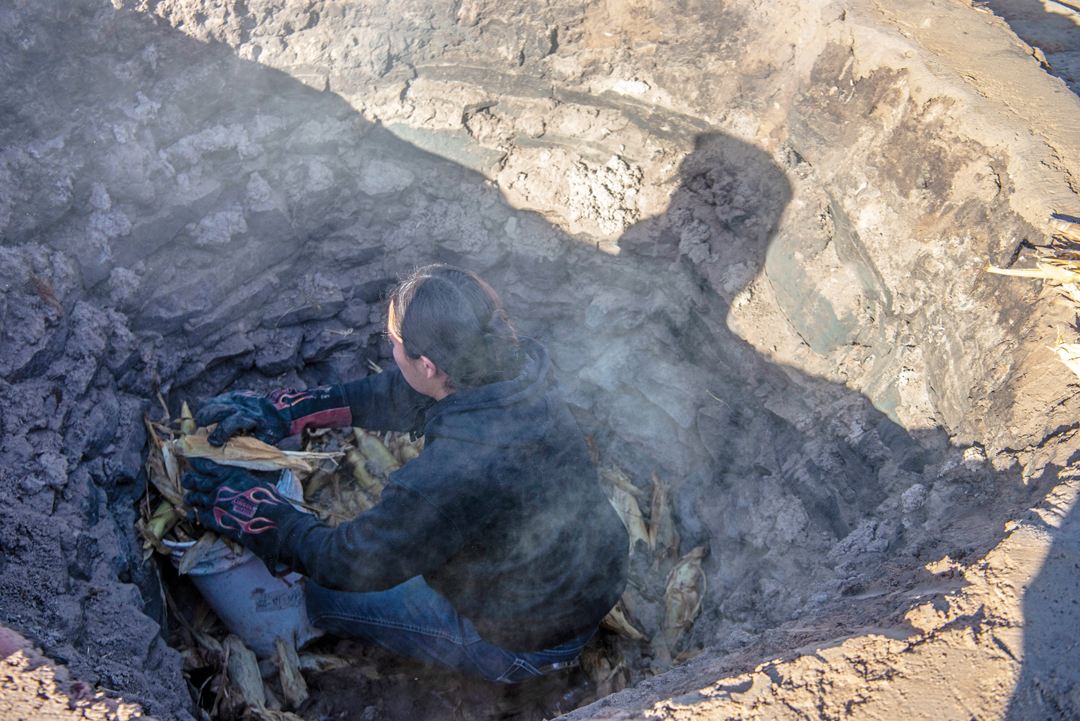
Thousands of ears of corn are roasted overnight in an earthen pit where all hands are on deck to help pull it out and shuck it, including the Ben family and farmers-in-rezidence.
The second path is for those who grow crops specifically for the company. Keishaun Johnson, twenty-two, is an FIR graduate who earned his commercial driver’s license and heavy equipment operator certificate through the program. He now has his own field to grow crops that Bidii Baby Foods has guaranteed to purchase. “He’s got his whole field paid for [before it’s grown],” Dr. Ben said. “We know the quality of the crops, and we have a reliable supply for our baby food line.”
“For us, both kinds of farmers are critical,” she added. “There’s such a shortage of traditional foods, and having farmers produce exactly what we need is a win-win. It’s not a competition. We need as many growers as possible to strengthen our food systems.”
Sicada Sloan, twenty-four, grew up between California, Salt Lake City, and the Navajo Nation. She first joined Bidii Baby Foods as an intern in 2024 and returned the following year for the FIR program. As a “rezident,” she was given access to an acre of land that she was responsible for farming, with the support and guidance of FIR.
“I studied agriculture and food systems in school,” Sloan said. “But it was always focused on growing. I didn’t really consider the business side—how to sell what you grow, how to plan crops economically. This program really opened my eyes.” She also appreciates the cultural and community aspects of the program. “Everything that can go wrong eventually does,” she said with a laugh. “But the sense of community here is amazing. Farmers support each other—you get through it together. Farming isn’t meant to be done alone.”
FIR participants receive training in food safety, business development, and financial management. Mental health is a cornerstone of the program too. FIR covers individual or group counseling for participants through Nizhoni Counseling in Albuquerque. “Farming has one of the highest suicide rates of any profession,” Dr. Ben said. “Add the challenges of poverty and rural living, and it becomes essential to provide counseling.”
Participants also engage in field trips and conferences. In 2025, they traveled to the Conference on Native American Nutrition in Minnesota, where they presented posters, staffed a sales booth, and connected with Indigenous food leaders from across the United States.
Corn is at the heart of the program. The farmers primarily grow Navajo white and blue corn, varieties rich in nutritional, spiritual, and ceremonial value. Blue corn is integral to traditional dishes, while the white and yellow varieties have specific ceremonial roles, representing male and female aspects of creation in Diné culture.
Processing the corn for Bidii Baby Foods turns a 50-cent raw ear into 25-dollar-per-pound value-added cereal. “Value-added processing is where the magic happens, but it’s difficult without infrastructure,” Dr. Ben said. “The nearest certified commercial kitchen is in Gallup. We’ve been hauling corn back and forth for years.”
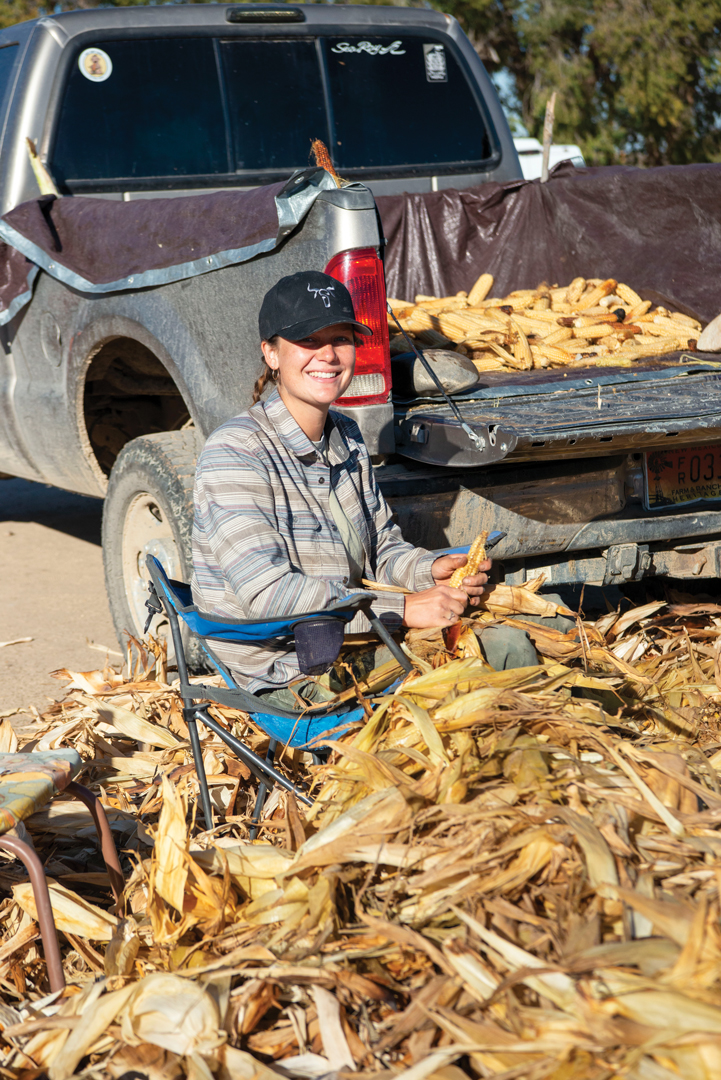
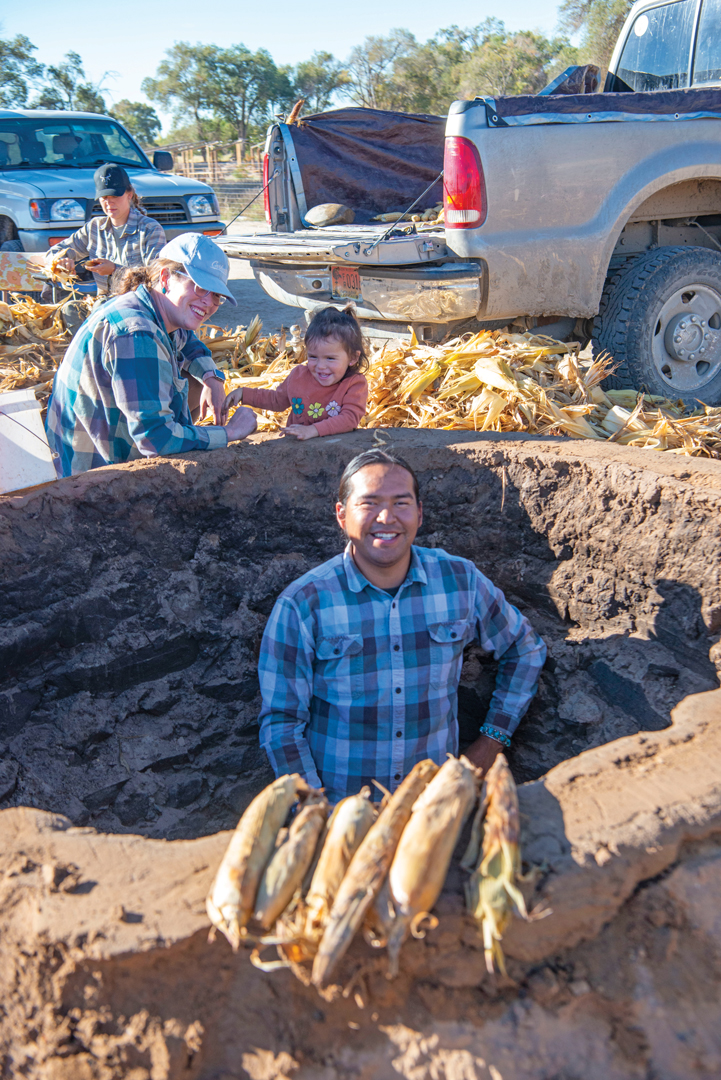
Sicada Sloan shucks roasted corn, tossing the ears in a truck for transport to the drying racks. Mary and Zach Ben, and their two-year-old daughter Nadaałtsuii, tackle the task at hand, one ear at a time.
The nonprofit is in the process of acquiring property in Farmington, which will house a warehouse, commercial kitchen, and aggregation space for local farmers. The goal is to consolidate growing, processing, and distribution in one location. “Most elder farmers don’t want to package or distribute,” Dr. Ben explained. “They want a guaranteed sale. We provide that, and it helps stabilize their income while strengthening the local food system.”
Growing on the Navajo Nation is not without its obstacles. Water access is inconsistent, land leasing can be complicated, and infrastructure is limited. This past season, heat, drought, and repeated water shutoffs from the San Juan River Farm Board resulted in what Dr. Ben said was one of the worst farming years they’ve had. Sloan echoed the sentiment. “There are challenges with land access, water rights, and grants,” she said. “But there are also opportunities. People want to buy from Native producers, and there’s a growing network of support.”
McCabe acknowledged having faced similar hurdles. As part of her residency, she subleased an acre of land that hadn’t been farmed in a decade, requiring extensive soil rebuilding. “Plan A never works,” she said. “You always need a plan B or C. Farming teaches you resilience.”
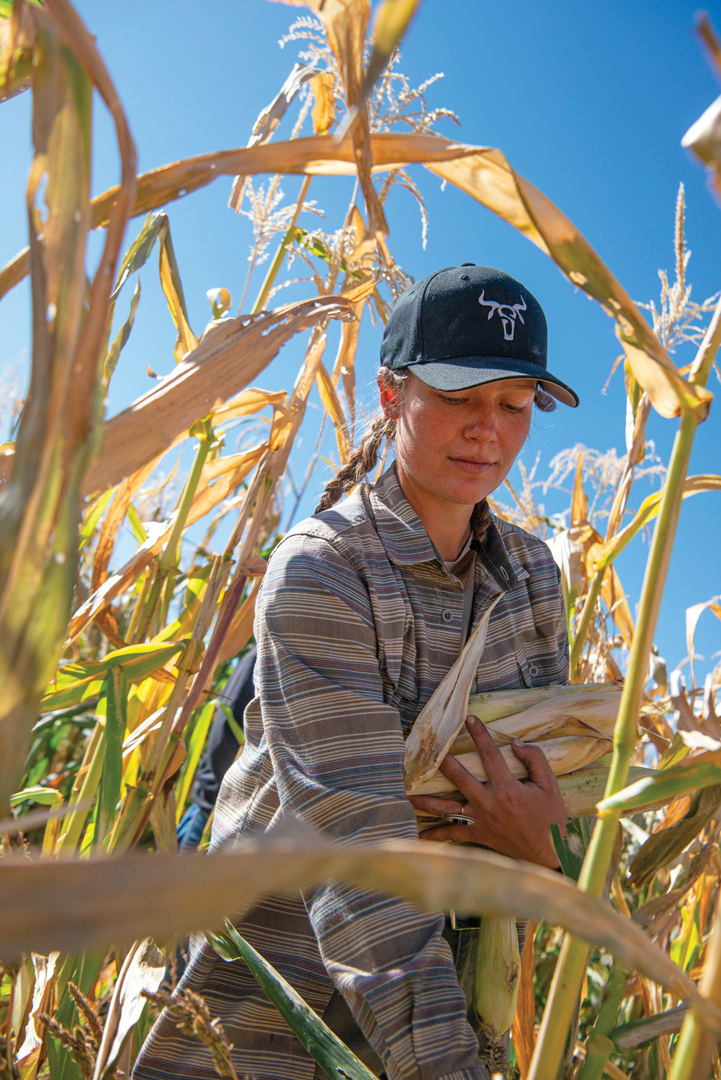
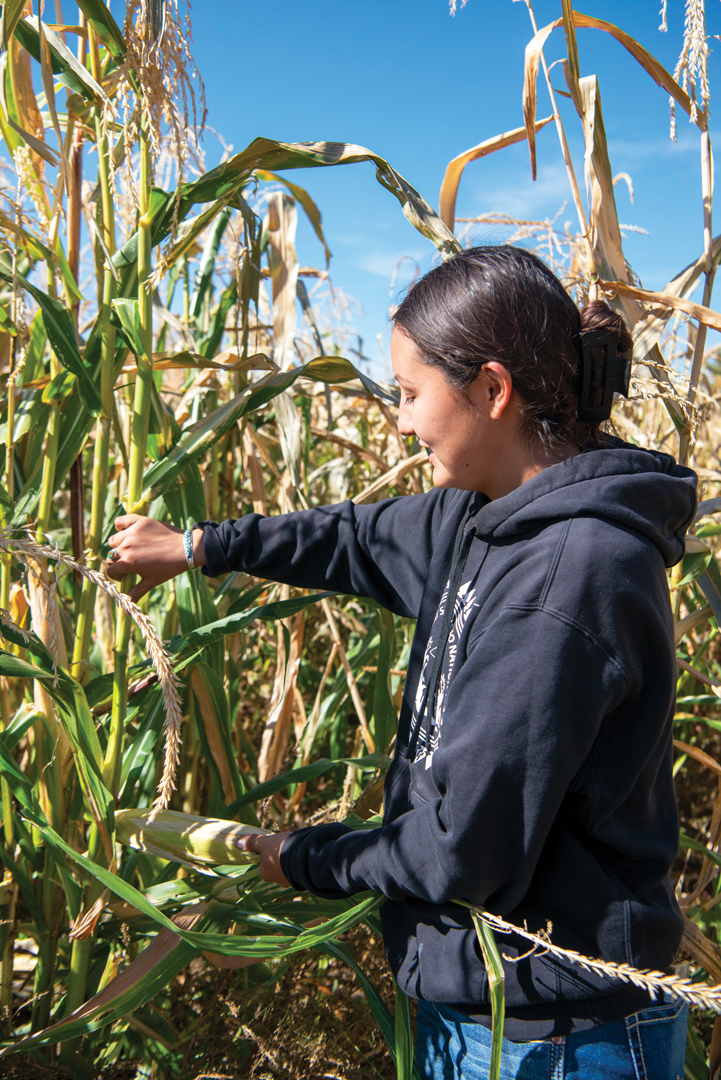
Sicada Sloan gathers corn from the field she has worked this year. McCabe has started Skoden Farms LLC using produce grown through her residency.
Beyond farming, the curriculum addresses developing farms and businesses on tribal federal lands. Sloan hopes to continue farming while eventually moving into tribal agricultural policy. “The problem isn’t that people don’t want to farm—it’s systemic barriers,” she said. “This program gives young farmers the tools and experience to address those challenges.”
Dr. Ben stresses that the program’s success isn’t just in growing crops but also in empowering a generation of Indigenous farmers. “At the end of the day, whether participants develop their own brand or grow for us, they’re feeding our people. Every farmer counts.” The Bens envision the Farmer-in-REZidence Program as a blueprint for other Indigenous communities. By combining mentorship, business training, mental health support, and guaranteed market access, the program demonstrates a sustainable path forward for tribal agriculture. For Dr. Ben, “It’s about giving young farmers the knowledge, resources, and confidence to thrive, while strengthening food sovereignty across the Navajo Nation.”
As the program expands, participants like Sloan and McCabe are laying the groundwork for a stronger, more self-sufficient agricultural community. From the seed of an acre of corn to the value-added cereal on store shelves, the impact of the program is visible in the fields, the market, and the lives of young farmers.
“We’re helping them succeed,” Dr. Ben said. “And when they succeed, the entire community benefits. That’s what the Farmer-in-REZidence Program is all about—growing people, crops, and the future of Navajo food systems.”

Ungelbah Dávila
Ungelbah Dávila lives in Valencia County with her daughter, animals, and flowers. She is a writer, photographer, and digital Indigenous storyteller.