By Ungelbah Dávila ∙ Photos by Stephanie Cameron
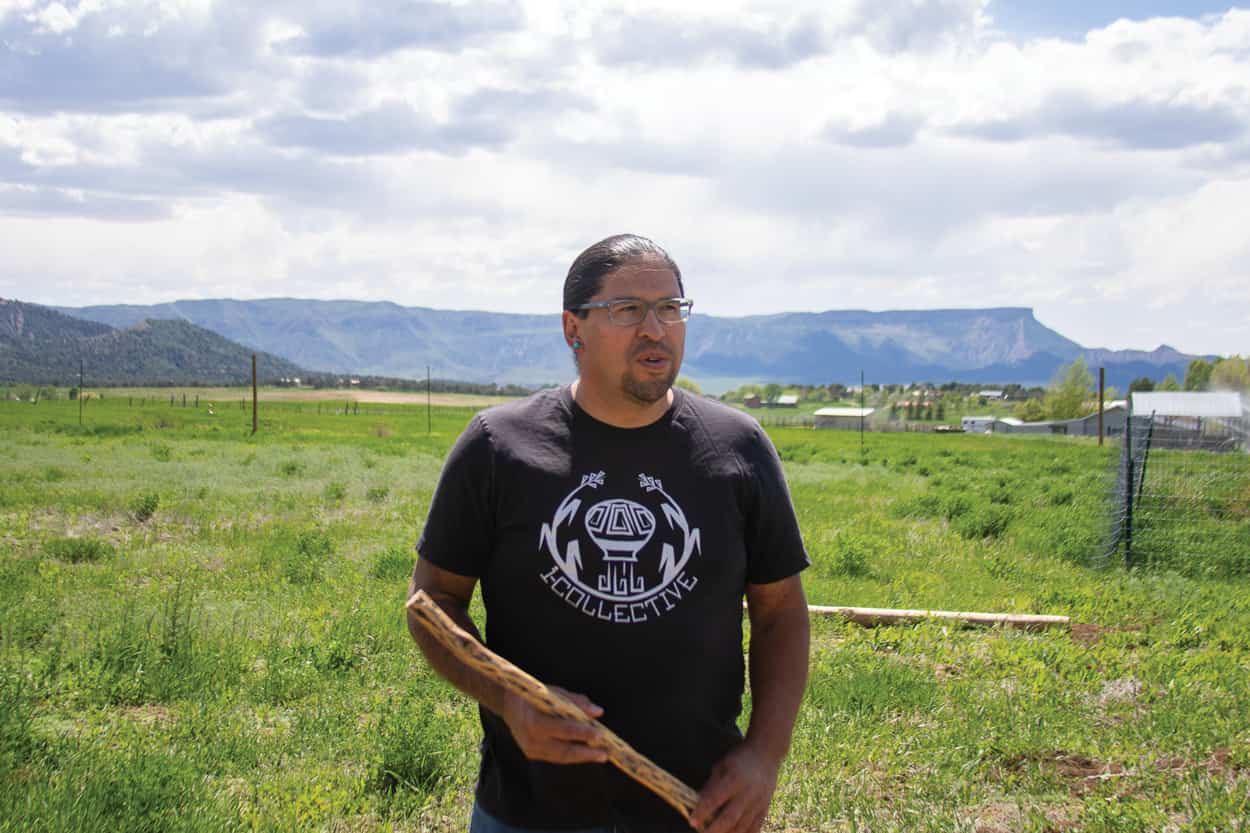
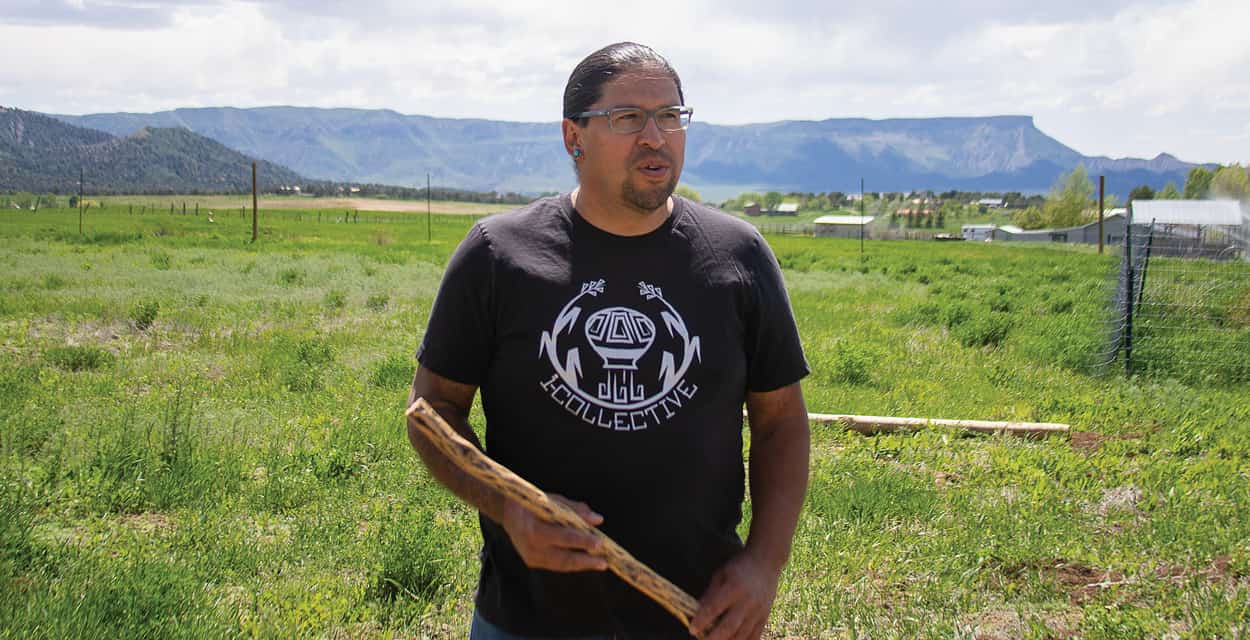
M. Karlos Baca at his home on 4th World Farm.
From the moment my interview with M. Karlos Baca (Diné/Nuchu) began, I knew my job wasn’t to weave his words into a story but to create space for him to speak. I reached him at his home on 4th World Farm on the Southern Ute Nation, and we struggled through the challenges of modern communication while discussing his socially and spiritually engaged work with food.
As the founder of Taste of Native Cuisine and cofounder of the I-Collective, Baca has been at the forefront of Indigenous food advocacy. Created in 2017, the I-Collective creates a platform and network for Indigenous youth, women, and two-spirit chefs, activists, herbalists, and seed and knowledge keepers. A respected chef, Baca is also the lead writer for A Gathering Basket, a virtual cookbook created by the I-Collective, featuring digital issues with essays, webinars, videos, recipes, and more.
Since leaving the culinary world, Baca has wholeheartedly embraced his calling to return home to the Ute Nation in present-day Mancos, Colorado, and bring with him the plants, which bring the insects, which bring the animals that once flourished in this area ten miles from the ancient city of Mesa Verde.
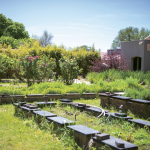
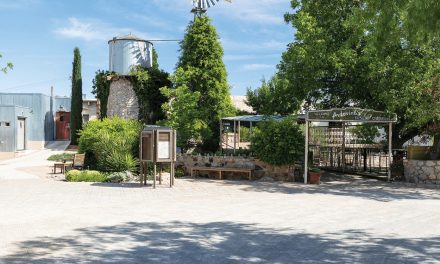
Today this three-acre farm is an “Indigenous seed bomb,” he says, “putting back Indigenous pieces of the puzzle all over the valley.” Flanked on all sides by commercial agriculture, 4th World Farm is a thriving ecosystem for eighty-three Indigenous plant species.
So, what is his role in all this? To listen, he says. “Listening has created regrowing the soil. Planting the water, and re-Indigenizing this entire landscape.”
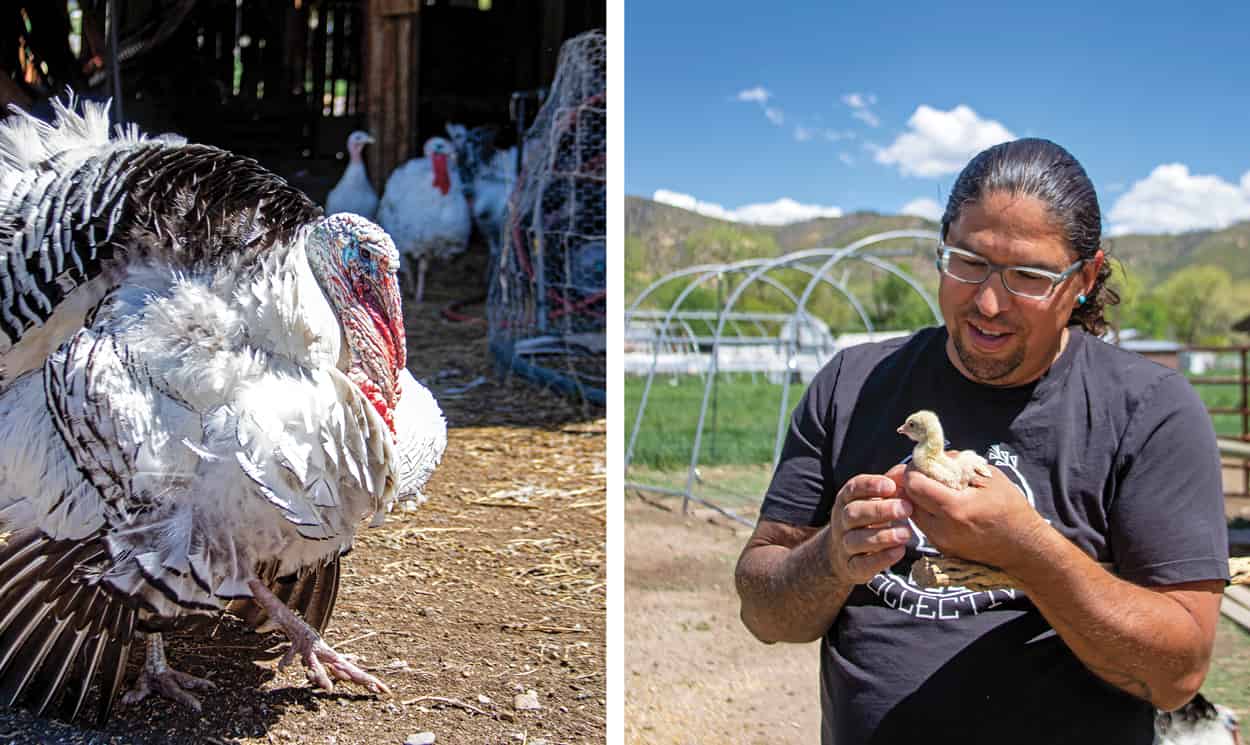
Left: Royal Palm turkey. Right: Baca with newly hatched turkey.
Of This Place
You have to first have an education on what Indigenous means. Indigeneity in and of itself means “of place,” but then on a deeper level, what does being of a place mean?
I usually describe it as this: in the same way that you treat your lover, your husband, your wife, your children, your grandparents, that same tenderness, love, emotion, and caretaking that you have for them is the same that you need to have for the land.
It’s deeper than just what our ancestors subsisted off of. It’s not just food. It’s not just this objectified thing the Western society has put in our minds as something you do three times a day.
Precolonial, while it seems to be relegated to the past, is actually the answer. It’s what us, as a people, have to immerse ourselves in. It’s what re-Indigenizing really means.
Precolonial food is more than what you eat, it’s the nourishment that you get from actually being part of the system, from being a part of the ecology of where you’re from.
Remembering Our FoodWays
We’ve been on these lands since creation, and our people starve on the lands that we come from.
There are enough uranium and coal mines that you can’t gather and eat from many places anymore, but for the most part, nothing went anywhere. Only we did.
It’s been programmed into us for over a hundred years that everything about the way we existed is wrong. As long as we continue to believe what the colonizer told us, we’re not able to step out of that system.
There’s a whole conversation to be had about parts of our health that have been removed from us, as Indigenous people. It also has a lot to do with our cooking, like cooking our food straight in ash, and what that adds. Or our grinding stones, and how the stones’ minerals actually get into our foods.
Returning the Mother
What does it mean to remother? To refeminize? To rematriate? As a man, I have to look in the mirror and really understand what my obligation to rematriation is, because it’s a beautiful thing.
In the United States, and not just within Indigenous communities, but Indigenous communities in particular because we’re such microcosms, the divide in information between the youth and the older ones is so vast that we’re creating a vacuum.
The elders are displacing this information from the youth and the youth are so far away from the information of our elders that there’s this vacuum effect that’s happening, and we need to figure out a way to bridge that.
That’s what 4th World Farm is for. This is part of the creation story of this place, that you can create an ecosystem to have those conversations. We host youth and elders here all the time.
Last fall, we managed to get fifty kids from DEAP [Dził Ditł’ooí School of Empowerment, Action & Perseverance, a public charter school] here to the farm. We all went up on Dibé Ntsaa and learned about plants and medicines. Then they sang a song, and I was sitting there contemplating, when was the last time there were fifty kids on this mountain singing a song? This place is a bridge for that to happen.
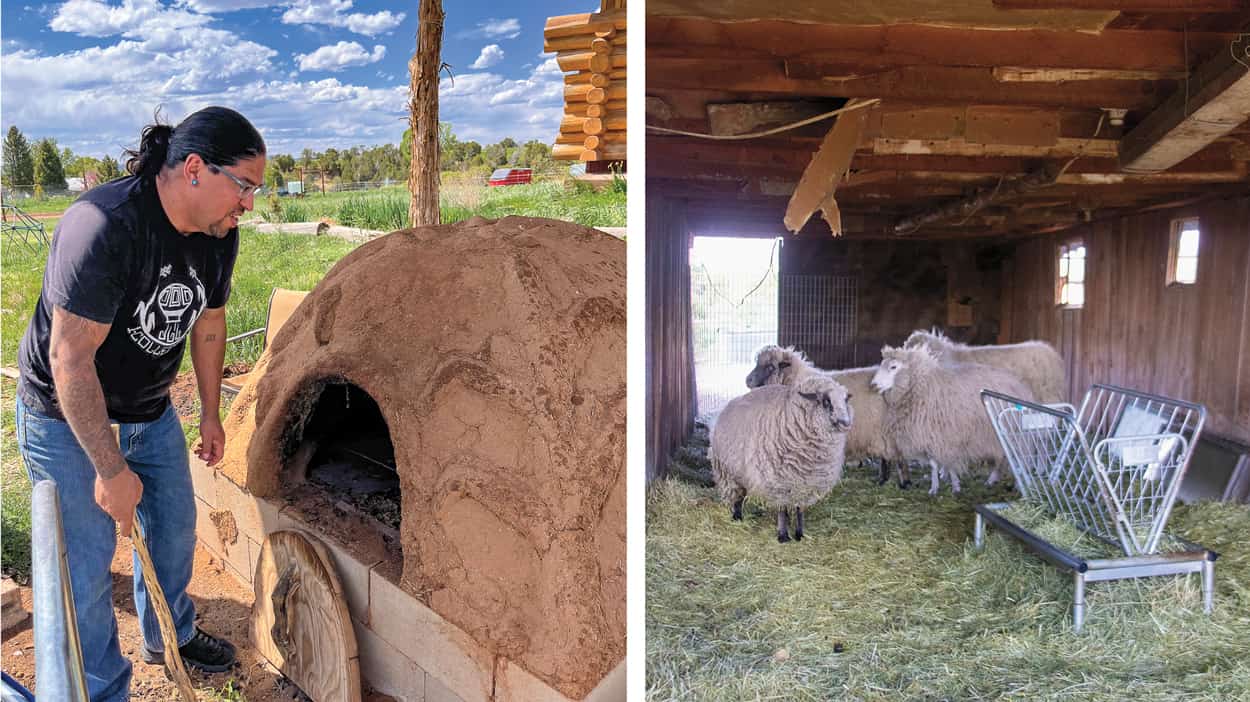
Left: Horno at 4th World Farm. Right: Navajo-Churro sheep.
Planting the Water, the Corn
In order to plant the water, you have to stand in the rain. You have to watch where that water is going, and you have to see if that water is being wasted or if it’s doing something beneficial. You can plant that water where it’s going to be the most beneficial to the land.
Here at the farm, I plant in two directions, understanding that we’re at a crossroads with climate change, and the fact that we’re in our twenty-third year of drought here in the Four Corners. I plant in one way for drought, and then I plant in another way for the opposite, because climate change doesn’t necessarily mean desertification.
Everything I’m growing has to fit in a ninety-day growing season. It has to deal with extreme heat and extreme cold every day, with extreme wind every day. I grow an eighty-day white shell corn that holds genomes from one of the last corn varieties from Mesa Verde. There are only a handful of that variety of corn in existence.
The way I learned about this corn is through star ways. It has to do with constellations, and it was a ceremonial corn.
It’s a corn that took me over a decade to source from three families—two families on Navajo and one family from Taos. I sourced nine or ten seeds, because that’s how close to extinction it was.
Braiding the Sacred (a movement of Indigenous corn growers and knowledge keepers) is getting ready to rematriate it along with fourteen corn varieties; some that haven’t been seen since the eighties, are coming back home. They’re coming back to fields and they’re coming back to people that understand what our future looks like. They understand the water’s disappearing, they understand our health is in crisis as Indigenous folks pretty much across the board.
They Brought Their Roots
People are always talking about permaculture, which is just Indigenous knowledge that’s stolen from us and sold back to people. People that aren’t of this space endlessly objectify Indigeneity.
But the majority of invasive (foreign) species that are here, whether it’s culinary sage or rosemary, came here with people that practiced their food and medicine ways. So, if you want to help the environment, and help the re-Indigenizing of this space, those plants can help take you home because those are your people’s plants.
They came here as medicines, and they came here with medicine people in some cases. If [non-Indigenous people] want to find some rootedness, I would say it’s through those plants. Because someone brought their roots with them there’s an opportunity to have that oneness with the land and those beings.

Ungelbah Dávila
Ungelbah Dávila lives in Valencia County with her daughter, animals, and flowers. She is a writer, photographer, and digital Indigenous storyteller.