A quiet harmony transpires when handcrafted food and drink meet handcrafted pottery. Both carry the mark of human touch, and together they transform the everyday act of eating or drinking into something more intimate and more meaningful.
Crockery created by New Mexican potters carries the fingerprints, sometimes literally, of those who made it. Whether harvesting clay by hand or taking inspiration from our state’s rich landscape, local potters are bound, tangibly and aesthetically, to the land. When used by local restaurants, bars, and coffee shops, these intentionally created pieces enhance the experience of slowing down and connecting back to our place on Earth as beings that exist because of soil and water.
No two vessels are identical and the variations in glaze, texture, and shape reveal the story of their makers. In the same way, from-scratch food and beverages, whether a dish of regionally raised beef, a cocktail of gin distilled with herbs from the proprietors’ garden, or a cup of coffee brewed with locally roasted beans, embody the creativity and care of the people who prepared them. When these two art forms come together, the humans at the table are reminded that nourishment comes in many ways.
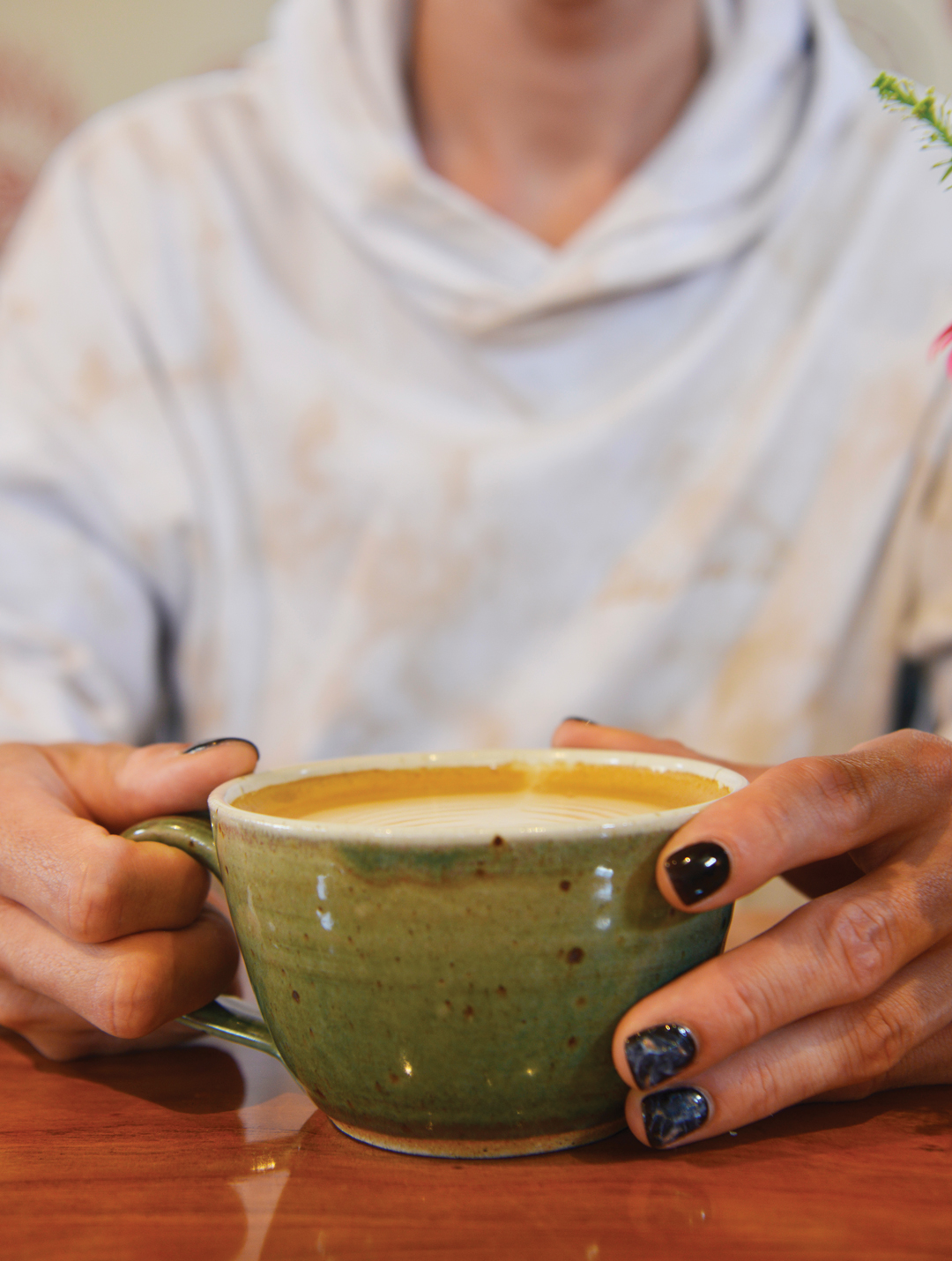
A handcrafted mug, for example, does more than hold coffee. Its weight, curve, and glaze influence how the drinker experiences warmth, aroma, and flavor. A rustic, earth-toned bowl elevates a simple stew, grounding it in tradition and making each bite feel like part of a larger story. Just as handmade food resists uniformity in favor of character, handmade pottery resists mass production in favor of individuality. Both ask us to slow down and take notice.
This pairing also strengthens our ties to community and place. Pottery reflects its makers much as food reflects the hands and seasons that shape it. When enjoyed together, they heighten the senses, enrich the spirit, and remind us that everyday rituals like eating and drinking are opportunities to experience art, culture, and human connection.
Paseo Pottery / Tumbleroot Pottery Pub
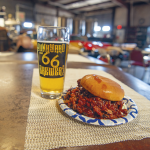
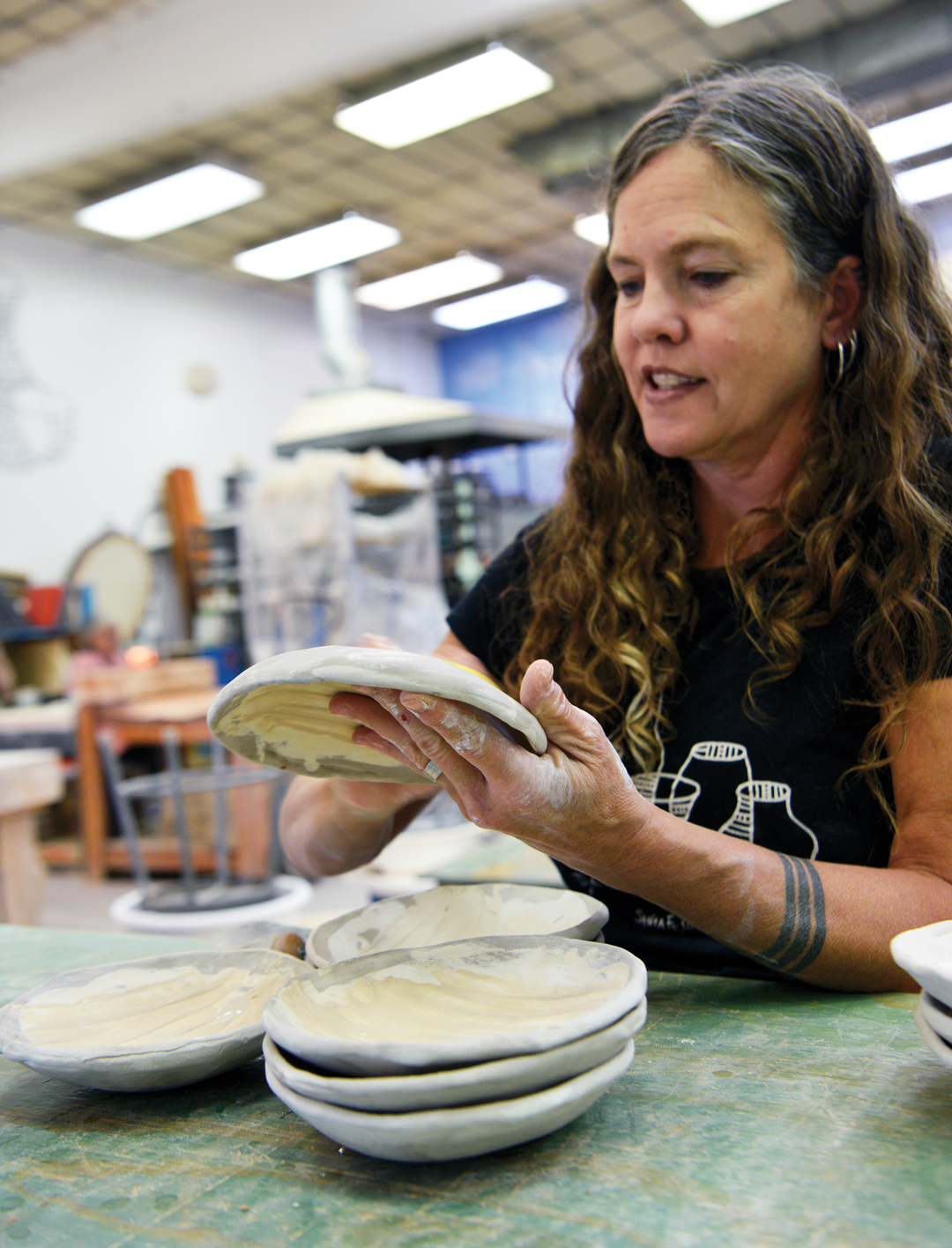
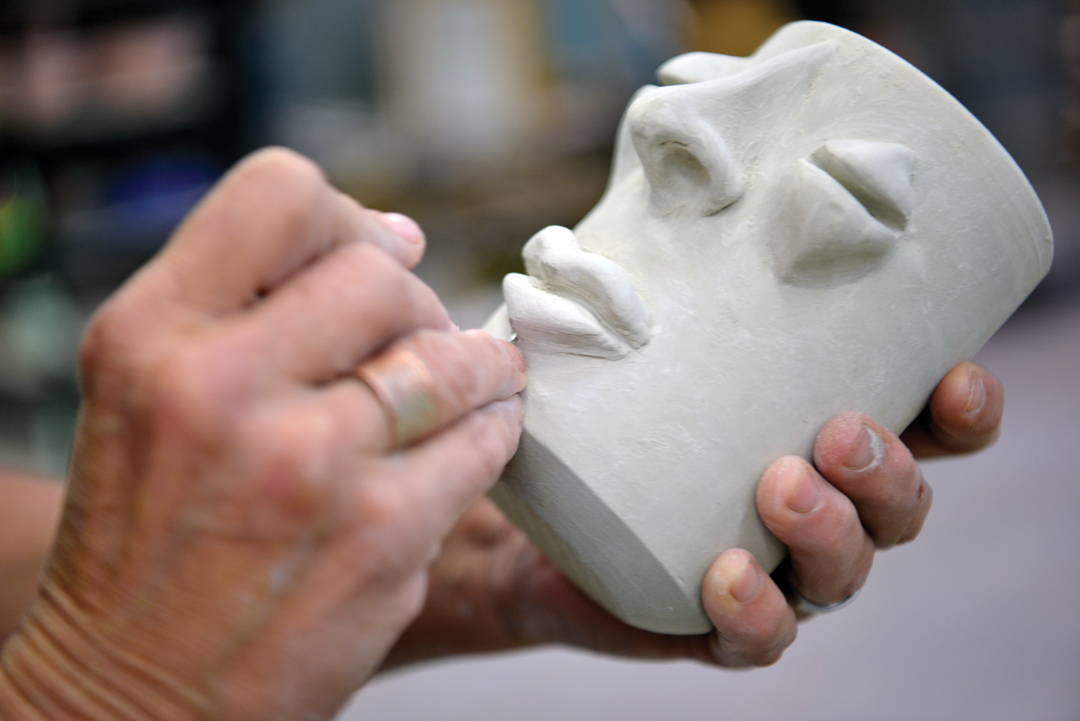
Paseo Pottery and Tumbleroot Pottery Pub in Santa Fe are a unique pairing of craft and creativity, blending handmade ceramics with locally brewed and distilled beverages. Paseo Pottery, founded by a group of ceramic artists in 1991, offers classes, memberships, and a gallery showcasing local artists. The studio also produces all the pottery used at Tumbleroot Pottery Pub, a collaboration between Angela Smith Kirkman of Paseo Pottery and her husband, Jason Kirkman, of Tumbleroot Brewery and Distillery.
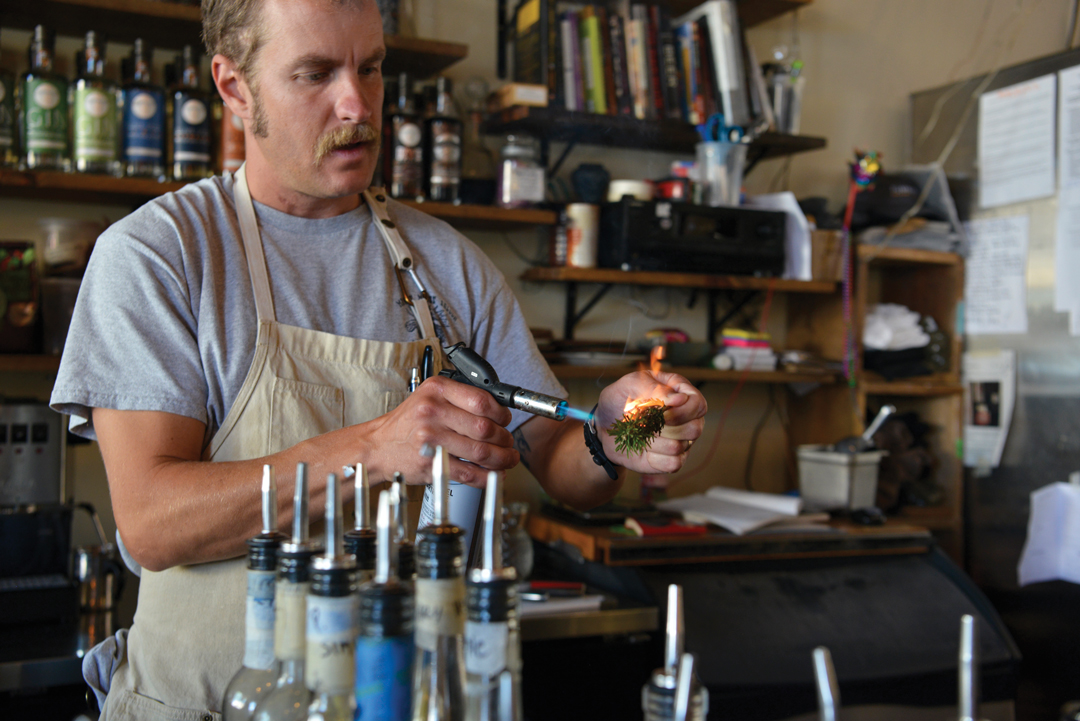
At the Pottery Pub on Palace Avenue, every cocktail, beer, or spirit is served in a vessel handcrafted at Paseo. Guests can also purchase pottery or try their hand at making their own. The collaboration is constantly evolving—seasonal cocktails inspire new designs, such as tiki tumblers in summer or mugs for winter hot toddies. In addition to crafting specialty drinks with homegrown ingredients,Tumbleroot distills their own spirits, using locally harvested juniper berries and herbs from the Kirkmans’ garden in their distinctive, award-winning gins.
Sage Valley Pottery /
Slow Burn
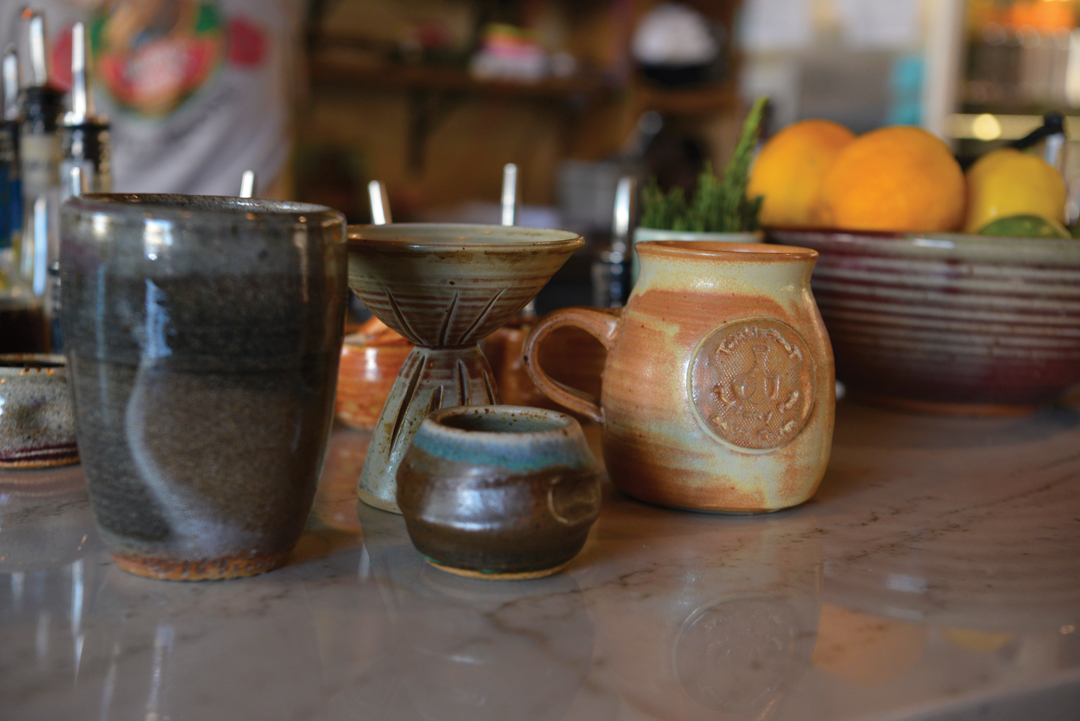
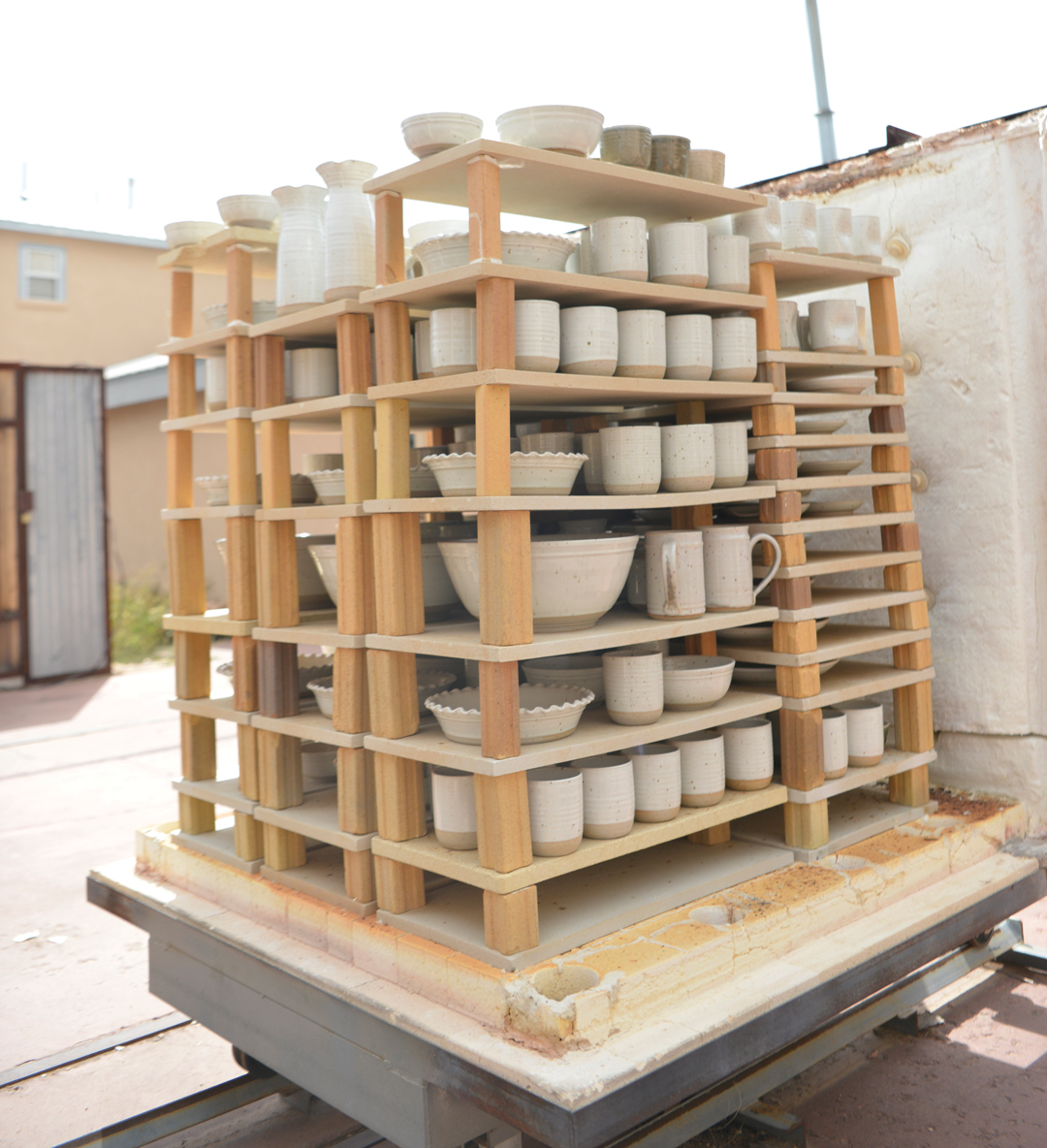
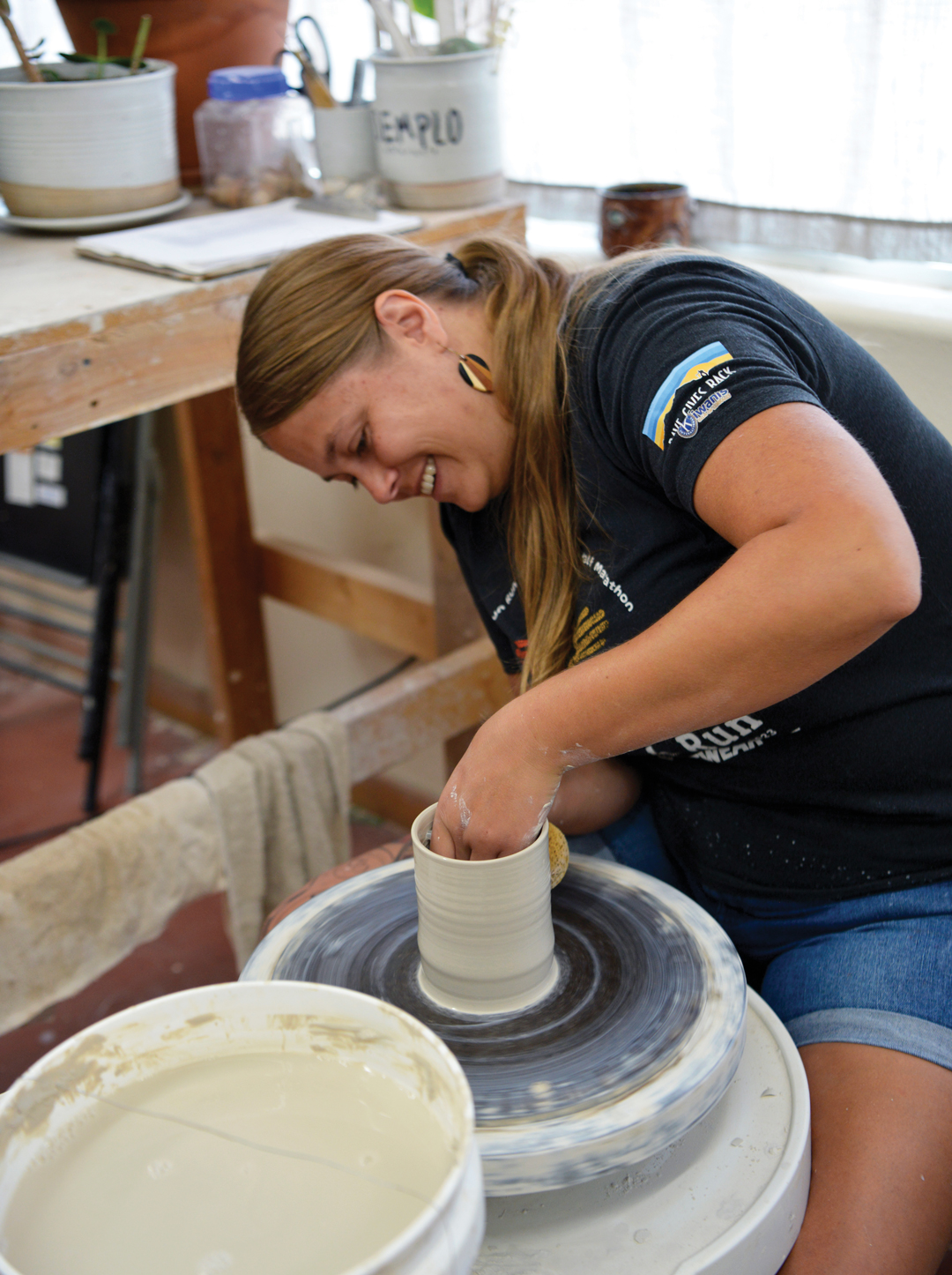
A rescued salamander named Fish Bait watches as Jessi Penrod, owner of Sage Valley Pottery in Corrales, transforms a lump of clay into a mug in a matter of minutes. Known for its speckled white glaze on porcelain stoneware, Sage Valley’s work is coveted by diners who appreciate handmade dishes that highlight rather than distract from what they hold. That understated design is a perfect fit for Slow Burn Coffee Roasters in Albuquerque, where drinks are best served in drinkware made in the same spirit of mindful ritual that guides the baristas behind the counter.
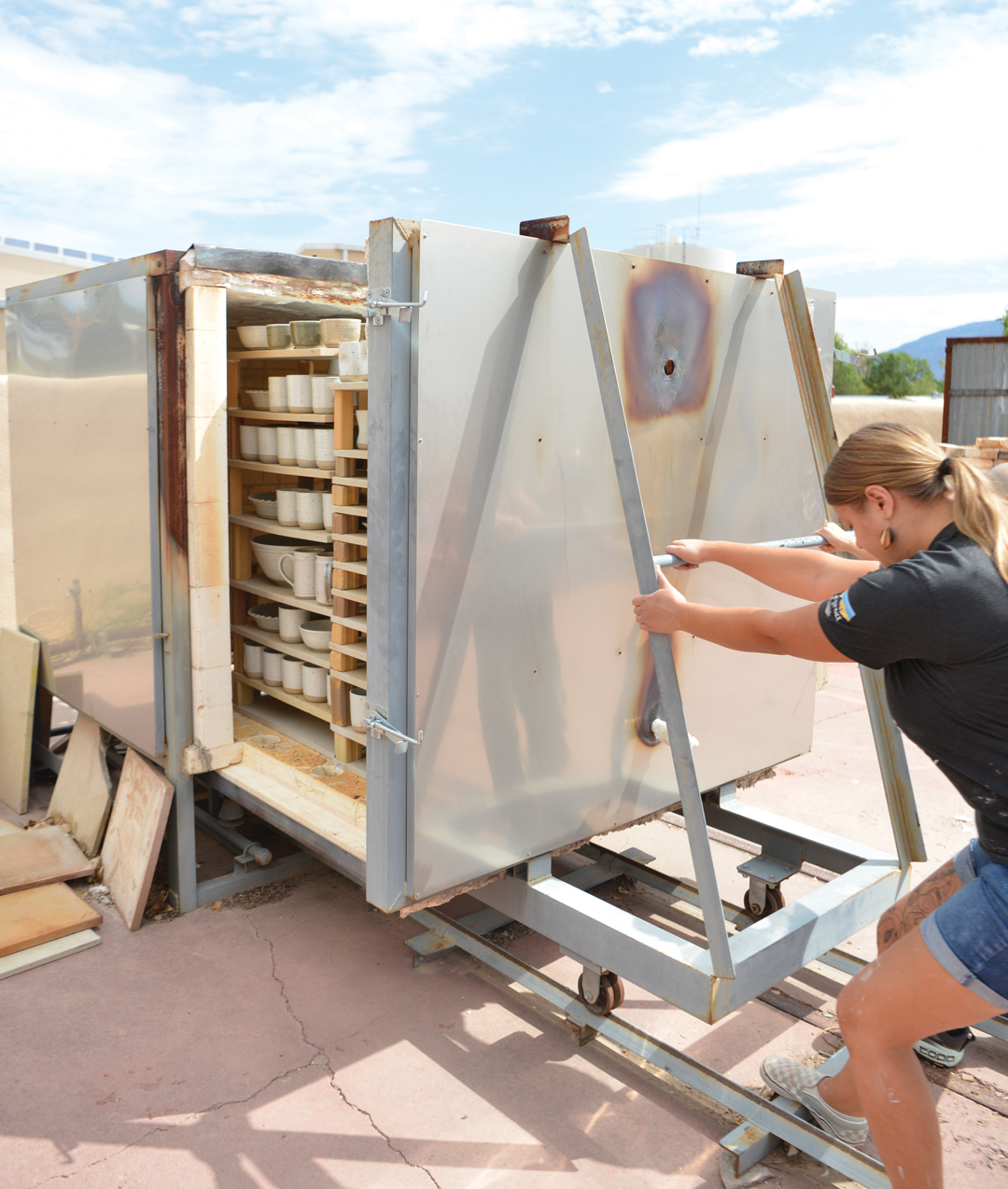
Every mug, tumbler, or espresso cup used at Slow Burn is touched by human hands every step of the way, from clay mixing to glaze testing to high-temperature firings in Sage Valley’s gas kiln. The result is pottery that melds functionality with beauty and the deep roots of New Mexico’s clay traditions. “Slow Burn has always strived to offer an elevated coffee experience,” says cofounder Zeus Zamora. “We chose to work with Sage Valley Pottery because their beautiful handmade ceramics are just as high end as the drinks we serve them in.”
Wannamaker Pottery / Juliette at Hotel Willa
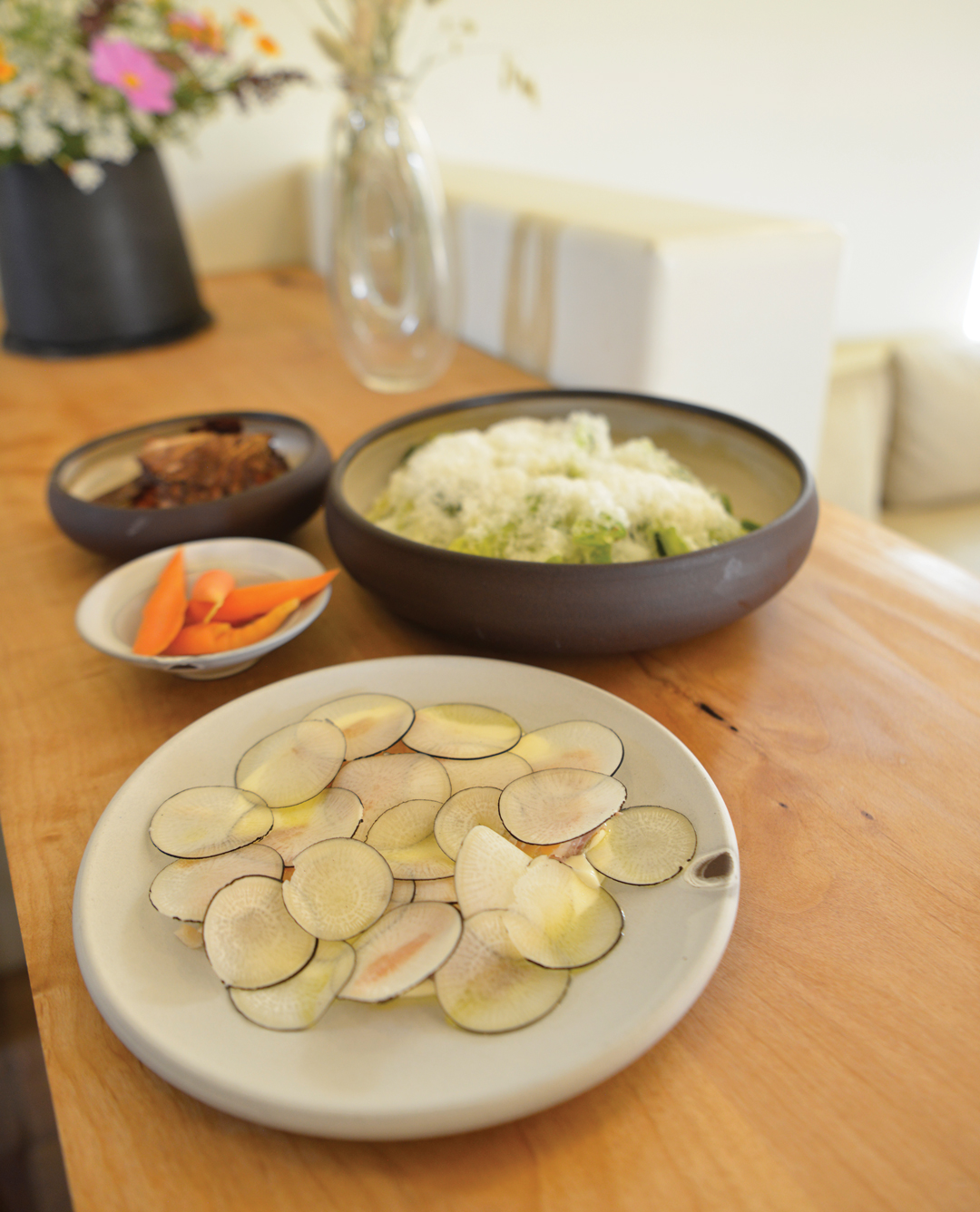
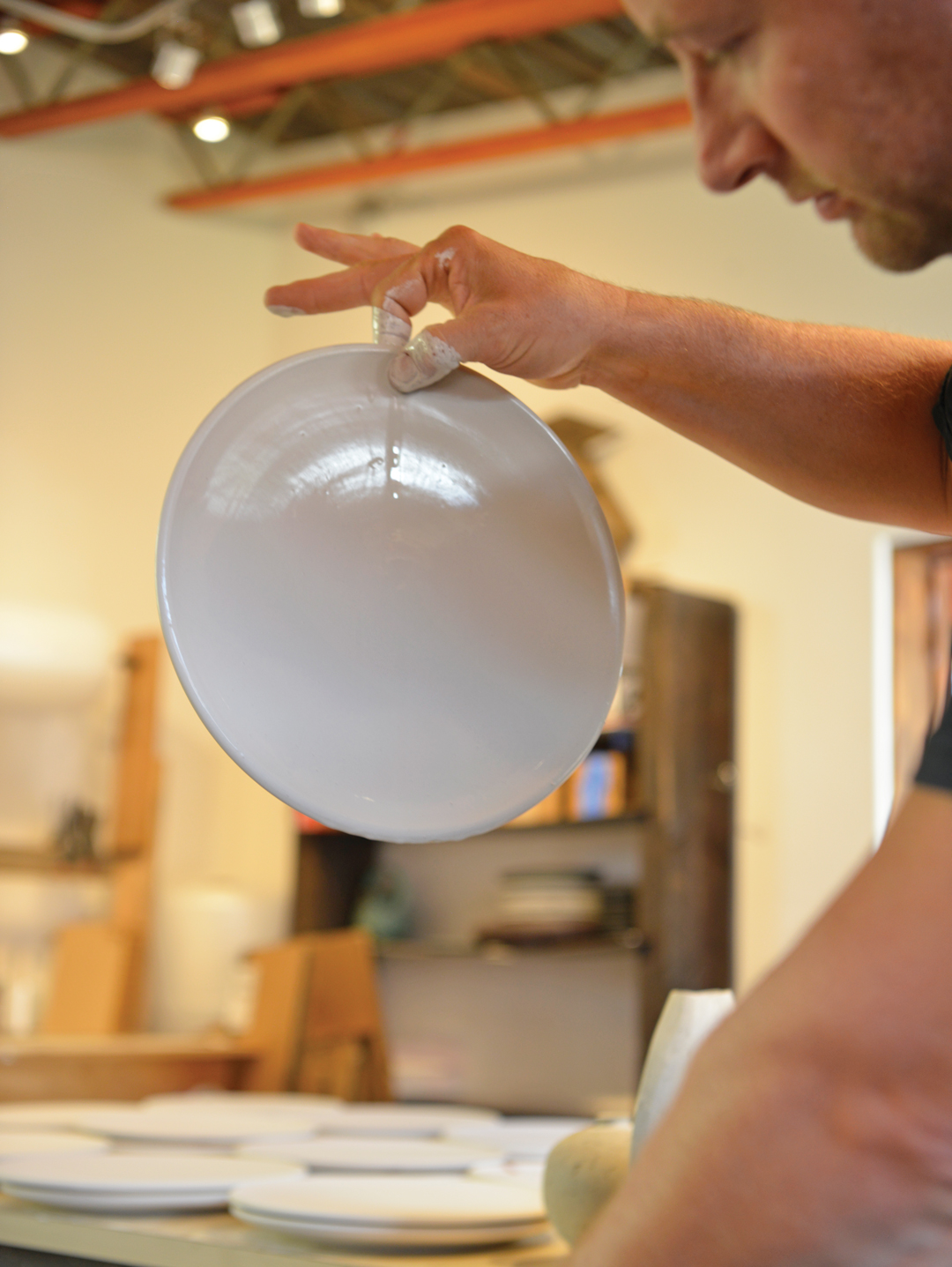
In Taos, the thumbprint of potter Logan Wannamaker leaves its signature on every plate and bowl used in service by Noah Pettus, executive chef of Juliette Restaurant at Hotel Willa. Wannamaker runs Wannamaker Pottery out of his studio in Arroyo Seco, where he produces a minimalist, electric-fired line for restaurants, as well as sculptural pieces fired in his twenty-eight-foot wood kiln, sold through his website and at his galleries in Taos and Ojo Caliente.
Chef Pettus describes the partnership as “integrative,” aligning carefully sourced ingredients with pottery that reflects the region’s character. Plates are chosen not just for beauty but for how they frame dishes like smoked trout with cultured cream or spicy pickled carrots from Umami Gardens in Abiquiú. Diners often remark on the feel of the ceramics, he says, which adds depth to the meal. Together, Pettus and Wannamaker create what they call storied dining—where food and pottery share the night’s narrative.

Ungelbah Dávila
Ungelbah Dávila lives in Valencia County with her daughter, animals, and flowers. She is a writer, photographer, and digital Indigenous storyteller.