Meet New Mexico’s Cheesemongers
By Briana Olson · Photos by Stephanie Cameron
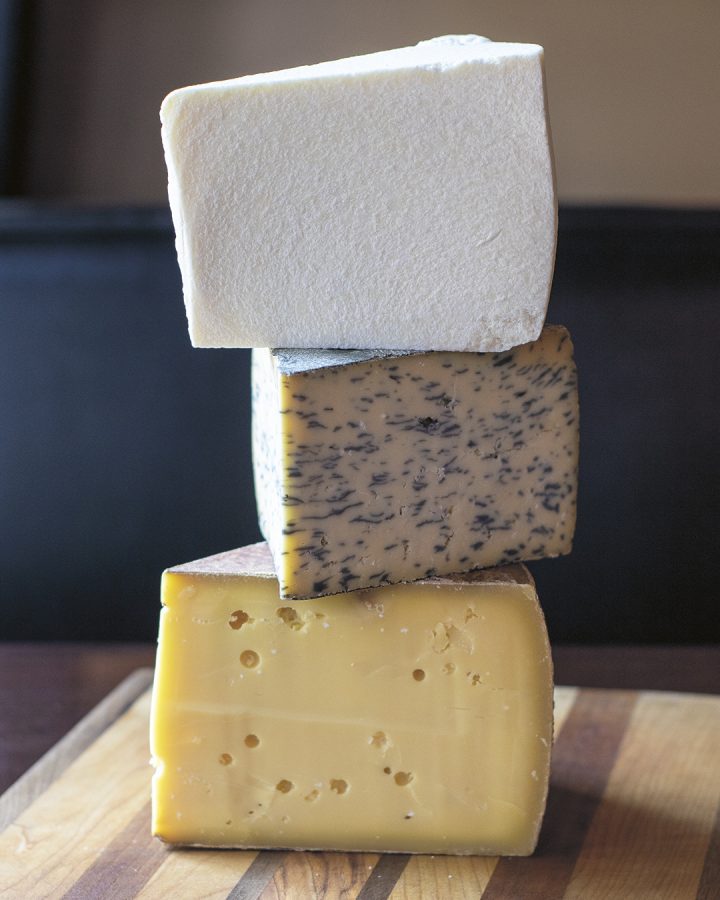
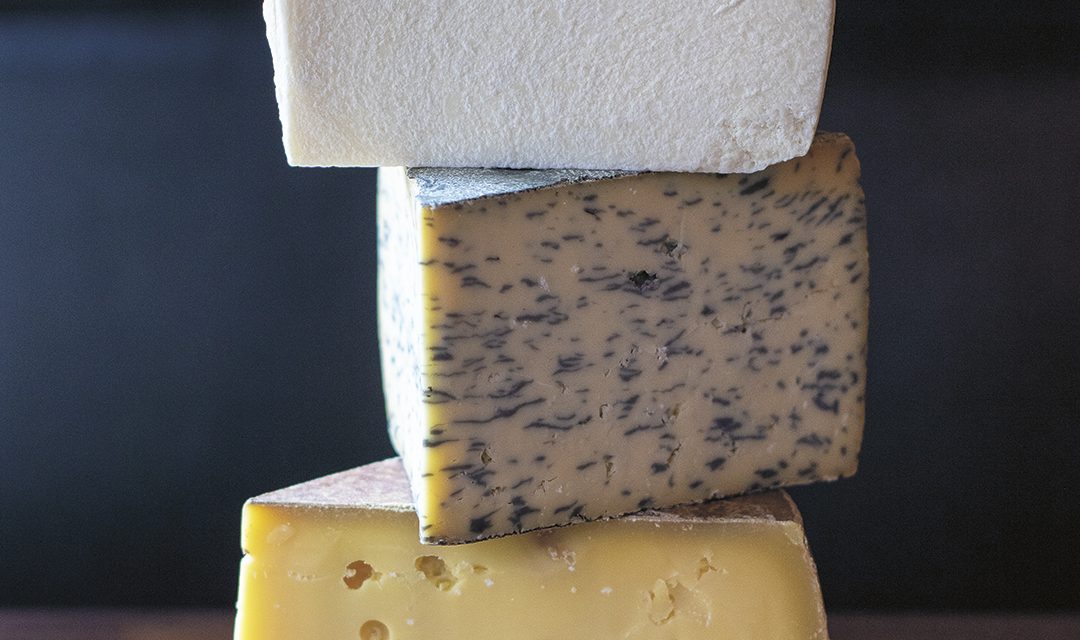
Quesos Navarro’s cotija, Finnish Marmori, and Almnäs Bruk’s Wrångebäck from the case at Picnic NM in Chomp Food Hall.
Fun fact: The reason you’ve never had horse cheese isn’t due to cultural taboos or logistical difficulties, but simply because horse milk doesn’t coagulate the way cow, sheep, and goat milks do. I learned this from cheese scientist Paul Kindstedt (“he’s a legend,” a local cheesemonger would later tell me) over the course of a cheese history talk hosted, fittingly, during lambing season by the New Mexico Cheese Guild and the Maxwell Museum of Anthropology in Albuquerque. “Every cheese maker has a common set of requirements that must be met,” Kindstedt said, launching into a discussion of the conditions that he believes led early humans to the invention of cheese—the most obvious of which was not, by known accounts, met in precolonial New Mexico. Incipient neolithic cheesemakers needed access to mammals whose milk coagulates and who produced enough milk to make cheese a viable food source—and they needed to have a practice of domesticating those animals. Having once been briefly chased around a mesa by a herd of bighorn sheep, I have my own theories as to why the native peoples of the Southwest focused on breeding turkeys instead—but whatever the reason, bighorn sheep were then and remain now purely wild. Neither Mexico nor New Mexico was destined to become the birthplace of curds.
But cheese wasn’t invented in the manicured fields of France either. Of all the requirements for cheese making that Kindstedt presented, the one that most resonated with the group of thirty-some cheese enthusiasts seated in the Hibben Center’s atrium was his contention that cheese originated as an insurance policy in agriculturally vulnerable areas, regions where local crop production was not enough to guarantee food security. “Despite being ringed by cheese-dependent cultures in Mongolia, Tibet, and India,” he noted, cheese-making traditions did not develop in lush eastern China. But they did develop in Anatolia among refugees from the fragile Fertile Crescent, circa 7000 BC—an era that Kinstedt describes as the golden age of cheese making in the neolithic. “Dairy and cheese making are the fallback strategy,” Kindstedt said, when communities encounter agricultural struggles or collapse—“because there’s still grass.” Fast-forward nine thousand years to the agriculturally vulnerable American Southwest, and small-scale cheese production holds appeal both as an instrument of food sovereignty and of craft.
Of course, the conditions necessary to the early development of cheese are not exactly equivalent to the demands cheese makers, and especially small-scale cheese makers, deal with now. Regulations governing the commercial production and sale of cheese, especially in the United States, are daunting. And in the global market of the twenty-first century, as essential as the ingredients themselves is this: access to a community of people willing to buy their cheese. In New Mexico, what I’ve come to think of as “zombie cheeses” now dominate both local production (see mega-manufacturer Southwest Cheese in Clovis) and consumption (consider the cheese melted into your next plate of chile rellenos). Despite traditions of cheese making that go back to the earliest years of Spanish settlement, many of us have lost touch not only with the craft of cheese making but with the most basic understanding of what cheese is—a naturally preserved food that developed to aid survival and, as new owner of The Mouse Hole Cheese Shop David Myers puts it, “morphed into a beautiful art form.” Luckily, we also have a growing crew of passionate cheesemongers, including Myers, who dedicate their days to spreading their love and knowledge of artisanal cheese—along with their respect for the people, animals, and land who produce it.

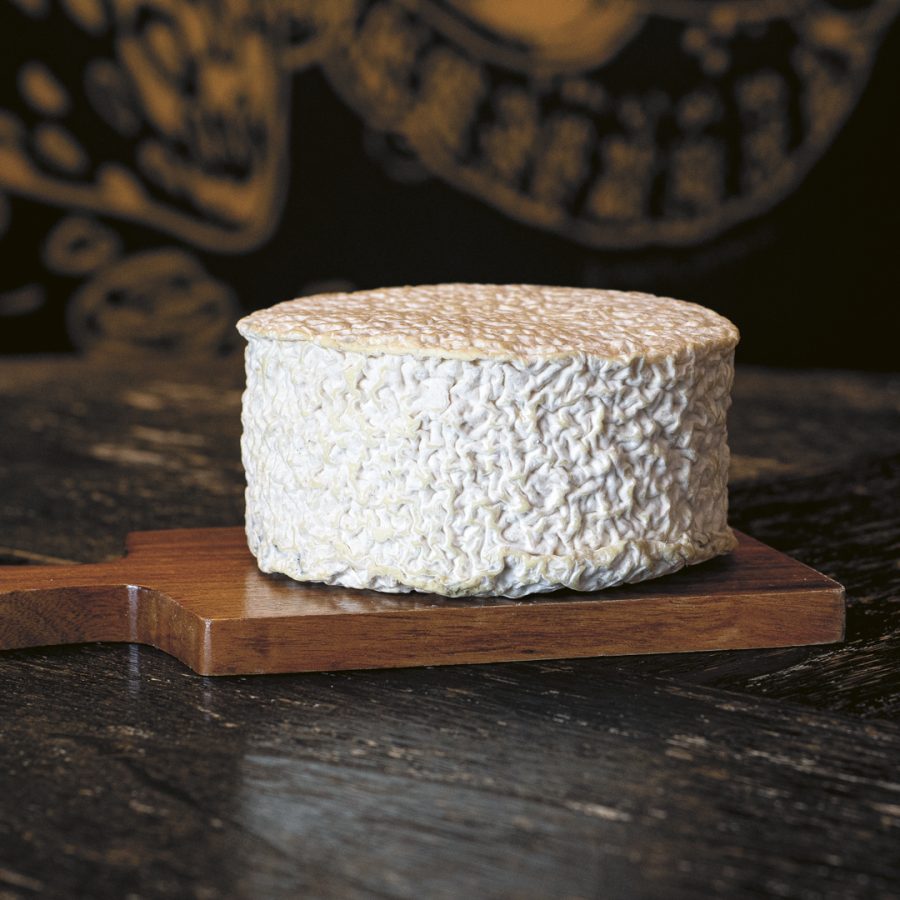
Shabby Shoe from Blakesville Creamery in Wisconsin.
“This world is full of drama,” Myers says shortly after we sit down together in the cool, shaded little dining room at The Mouse Hole Cheese Shop. In less than ten minutes, I’ve sampled OG Kristal (“one of my all-time favorite goudas—almost like fruity toffee”); heard about the rescue of a heritage starter culture key to making Gorwydd Caerphilly (a traditional Welsh cheese favored by miners in the nineteenth century); and learned that “cheese makers have had to march on Congress four times” since Myers got into cheese some dozen years ago. Still, when he says, “we wanted to plant seeds for the future,” he’s not talking about the seeds of the cheesemongers’ revolution; he’s talking about teaching kids about cheese.
This past year, in collaboration with the New Mexico Cheese Guild, Mouse Hole won a grant to design and run a series of cheese workshops in schools across the state. In designing these classes, he and his crew considered what would be useful for kids to know, what would be valuable in terms of food sovereignty and security, “but also, what can give happiness and pleasure that you can just employ immediately?” His answer: eating cheese, obviously, but also making an adventure of taste. I imagine, with a twinge of envy, being one of the first graders who got to sit in a class where this energetic flavor chaser and his cohorts looked around the circle and asked students to tune in, not only to the way a bite of cheese smells before you put it in your mouth, but to the aromas on the exhalation, where he says most of our experience of flavor comes from. (For the nerds: Retronasal olfaction is the textbook term for that.) “If you pay attention to breathing out of your nose when you eat or drink things that have flavor, it adds a completely new element . . . [and] making that part conscious, instead of subconscious, I think is a way to not only notice a lot more but to bring a lot more happiness to your life every single day.”
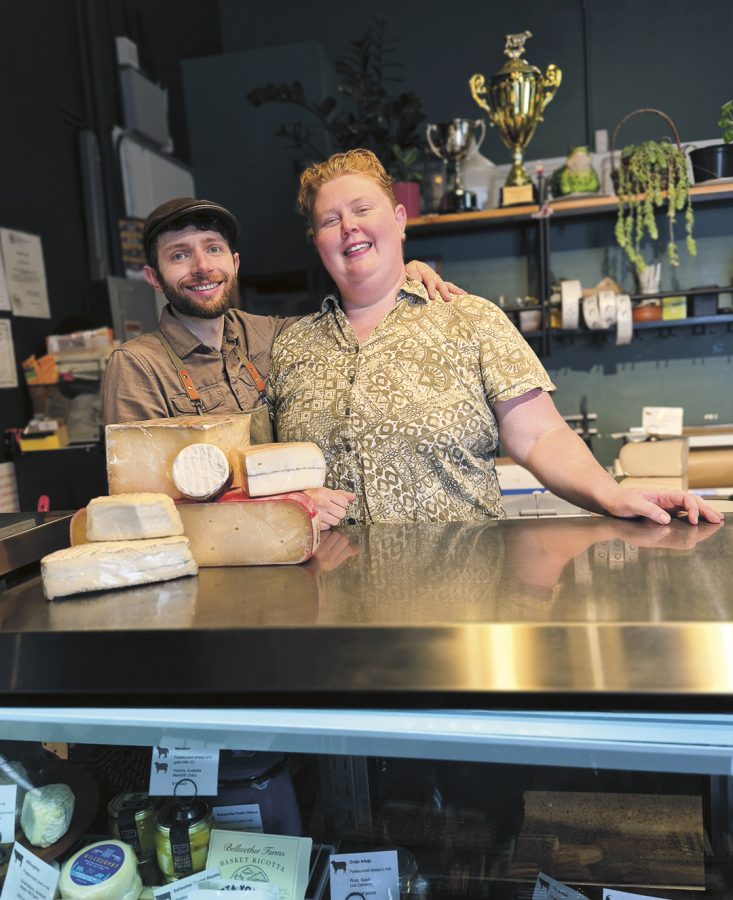
David Myers and Hanna Lee at The Mouse Hole Cheese Shop.
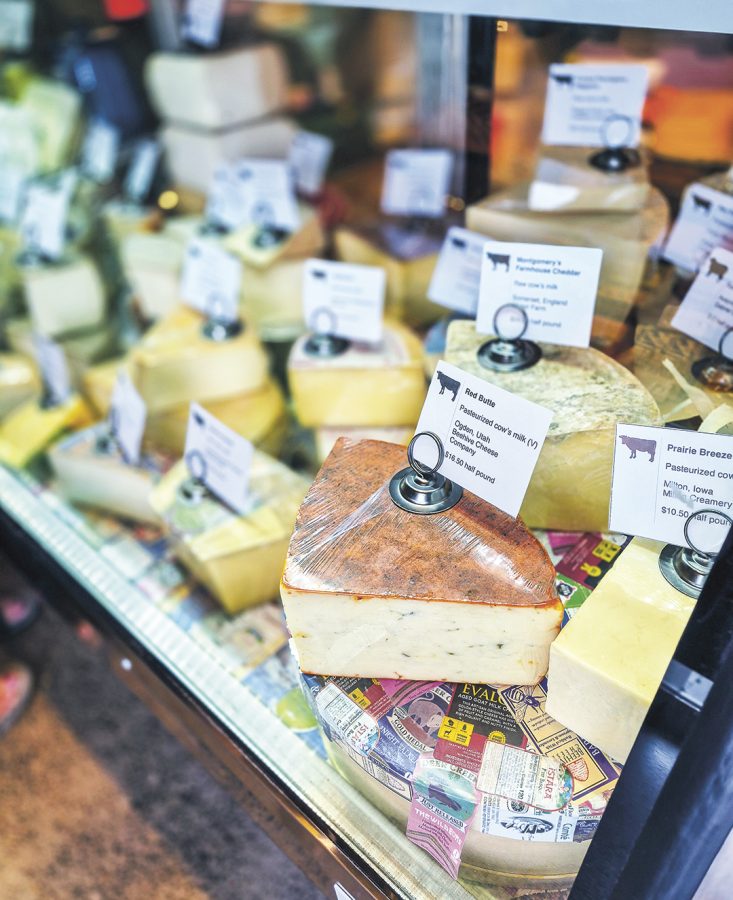
The cheese case at Mouse Hole.
Myers brings the same enthusiasm to plying visitors to Mouse Hole with bites of creamy, mushroomy chemin du brûlé or tastes of reserve Comté chased with a dab of tomato jam. While he’s likely to offer tasting notes that make funky or sweet sound like the least descriptive words in the world, he also insists that “nobody should ever be self-conscious because they can’t talk about or describe cheese.” Hearing him claim that a certain alpine cheese tastes like onions or beef broth might sound like a stretch—until you find yourself testing out your retronasal olfaction and thinking, “Hmmm, yes, but caramelized onions.” “With really small-batch, carefully crafted cheese from animals that are pastured, you can get hints of the pasture, you can get wildflowers, and grass, and herbs,” says Myers. That’s why he’s drawn to cheeses without added ingredients—“because cheese, just with the magic of fermentation, could already taste like anything you’d add to it. Yes, that is the same aroma compound you recognize from a freshly mown lawn, cotton candy, a lamb kebab.”
In terms of stocking the case at Mouse Hole, where he’s been since 2024, he says, “My whole curation ethos is to highlight and support small-batch producers that are aware of the space they take up in the world, people who care about flavor, tradition, animals, and the land they’re on and want to be good stewards of all those things.” This ethos is informed by the encyclopedic knowledge of a Certified Cheese Professional—a certification that involves, among other things, learning a lot about microbes—as well as years of experience working in the cheese world and developing a personal sense of best practices. Not least of those is the goal of offering his staff the kind of professional development opportunities he had early on, working for Downtown Cheese and Di Bruno Bros. in Philadelphia.
Myers himself has toured creameries in six countries, and his partner and fellow cheesemonger—and winner of the 2026 Cheesemonger Invitational—Hanna Lee once worked summers at Uplands Cheese Company, one of a few farmstead producers in Wisconsin, a state where mass-produced, mechanized cheese production has long been the norm. On a slow day, Myers says, Lee popped over to lend a hand at the nearby woman-run Blakesville Creamery, maker of the lemony, tart, bright, and dreamy Shabby Shoe. A Geotrichum cheese with a beautifully wrinkled brainy rind, its name was inspired by the cheese maker’s first time hearing the word chabichou pronounced in French and thinking, “shabby shoe?”
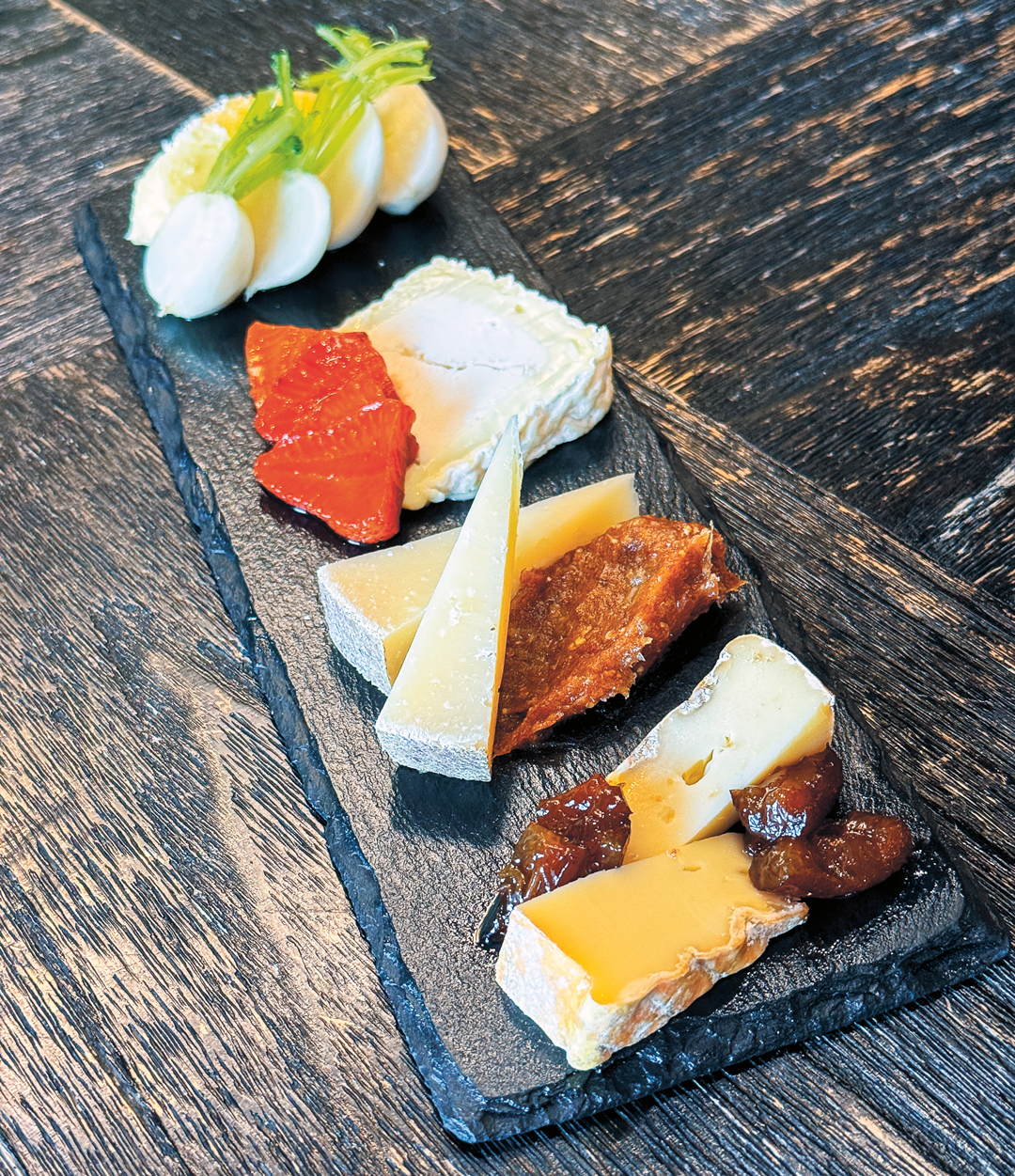
Mouse Hole cheese flight featuring cheesemonger-selected pairings (beurre de baratte with Hakurei turnip, Shabby Shoe with saba-marinated strawberries, Oveja Añejo with house blood-orange-and-date caramel, and Paesanella with plum mostarda).
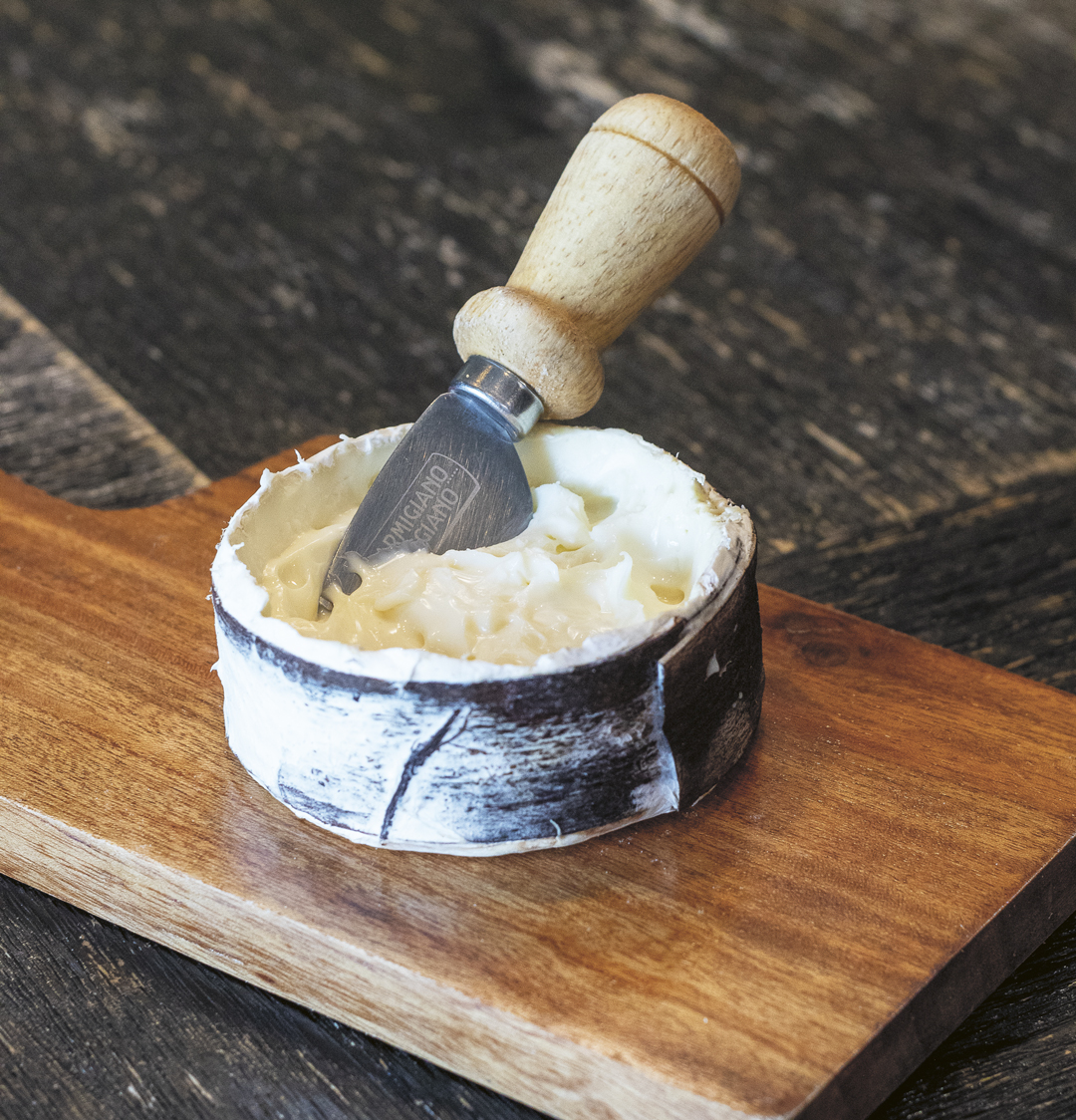
Mini Harbison from Jasper Hill Farm Vermont.
To win the invitational, Lee had to cut perfect quarter pounds, ace blind taste tests, and craft 150 perfect bites. “For the perfect plate,” Myers tells me, “she had a really salty cotija that she served with corn pancakes, guava marmalade, and sweet corn ganache with corn flour.” At Mouse Hole, where the sandwich menu is a collaboration among all the mongers, with a few recipes inherited from founding owners Mekala Kennedy and Nathan Sauceda-Halliday (who deserve a shout-out, Myers says, because “they just are excellent, kindhearted people who care and put people over profit, and that is rare”), Lee developed the Feta Believe It—a delightfully summery sandwich made with whipped feta from Meredith Dairy.
“A lot of people who consider themselves outsiders in the world find themselves in cheese,” says Myers. “A lot of queer people work in cheese, people from all backgrounds, and they all—they’re all ethical hedonists and they want to share delicious things with everyone and the world and share their knowledge and help each other out. It’s a really wonderful, beautiful subculture.”

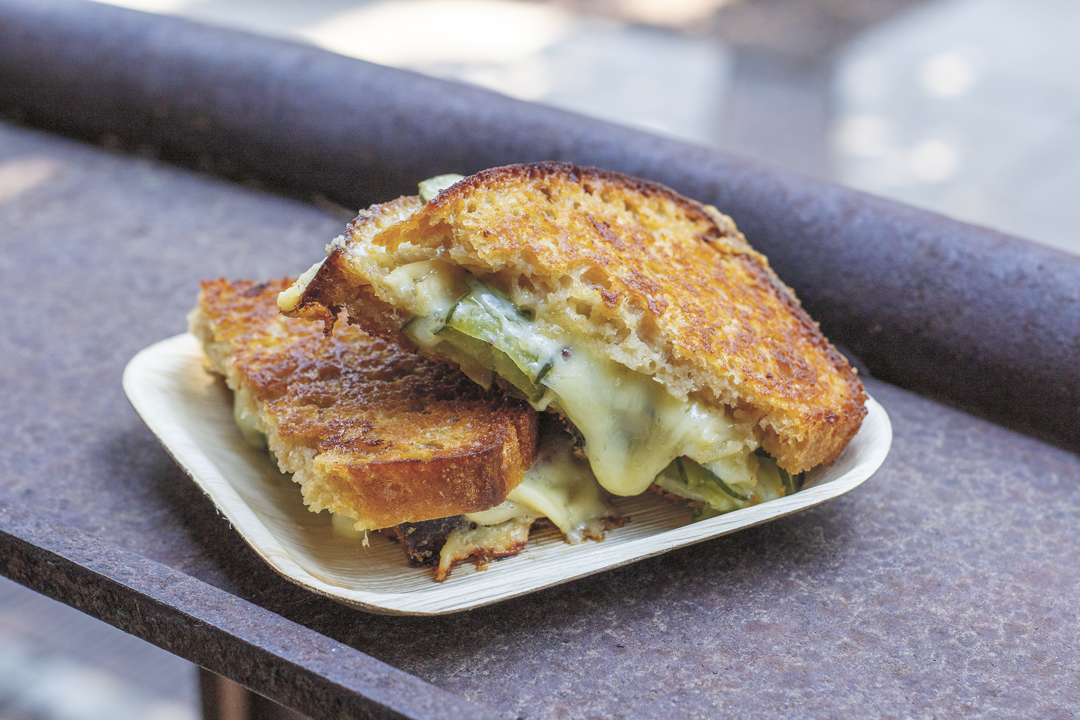
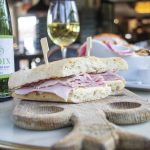
Jumi Raclette and house-made bread-and-butter pickles on Wild Leaven Bakery sourdough at Picnic NM.
“This is art,” says Lauren Stutzman, speaking of the works of cheese displayed in the cabinet of curiosities that is Picnic NM, the cut-to-order cheese, charcuterie, and sandwich shop that she and Matthew Bilodeau have been operating out of Chomp Food Hall since 2023. Picnic NM focuses specifically on farmstead cheeses, meaning that the milking animals and the creamery share the same land, or, in some cases, that the creamery sources all its milk from a single partner farm. “The people who make [farmstead cheese] I would call artists before I’d call them anything else. There’s the land piece, the terroir piece, the animals. . . . And if the [cheese makers are] using that for their medium for their final art, it’s always going to be a better product than if they’re getting milk from an unknown source and it’s produced in a mechanized way.”
The chasm between these artisanal cheeses and mass-produced cheese is vast. Studies show (surprise!) that dairy cows like pastures, but at industrial dairies, they’re often confined in warehouse-sized barns where lighting is used to alter their circadian rhythms, increasing milk production and stretching it as close to year-round as possible. Larger producers pool milk from dozens and even hundreds of sometimes distant farms, increasing the risk of contamination and making pasteurization necessary for those cheeses. All of this results in a sterile, uniform, deadeningly consistent product that lacks any specific sense of place—precisely the opposite of what Stutzman and Bilodeau delight in seeking out.
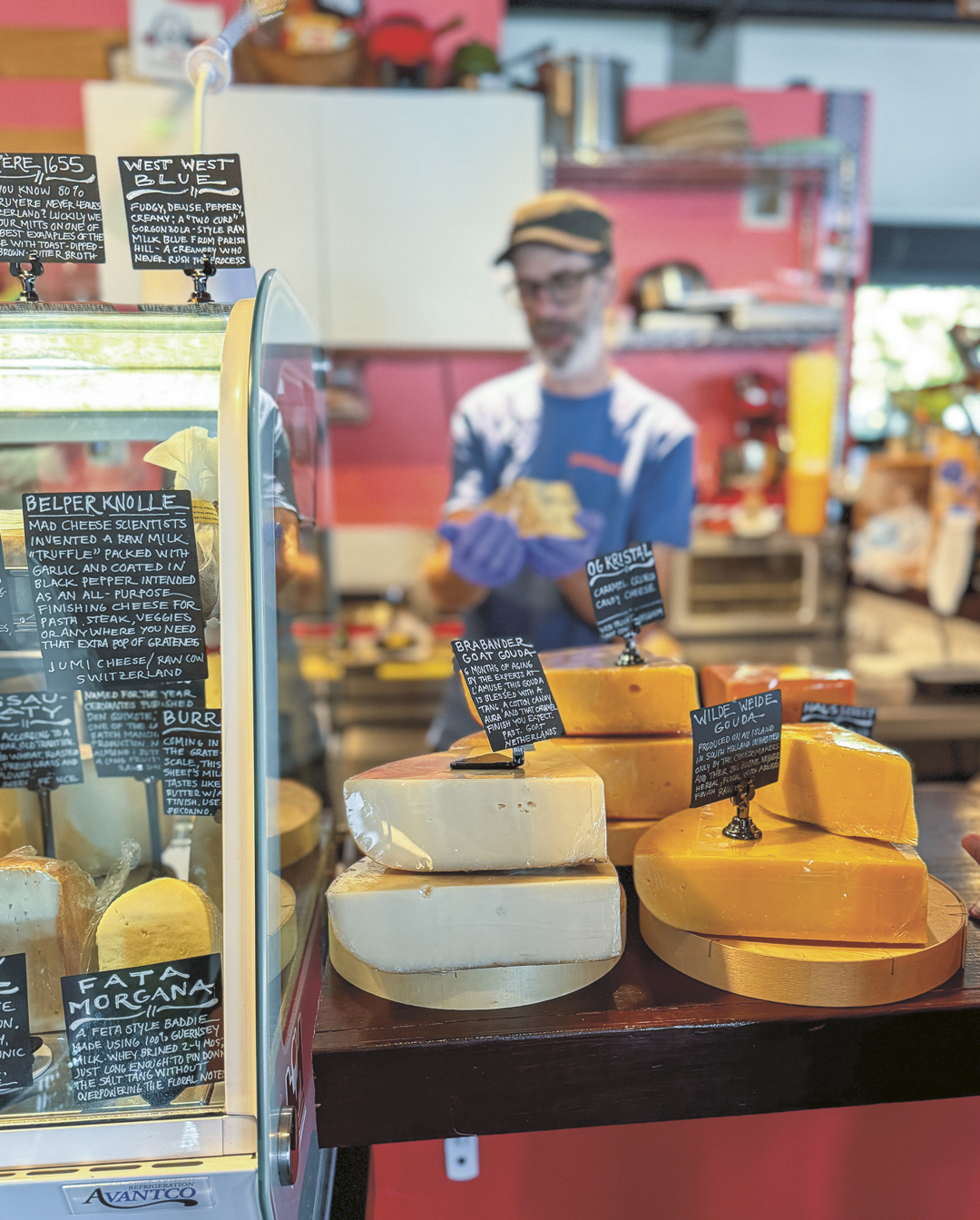
Matthew Bilodeau at Picnic NM.
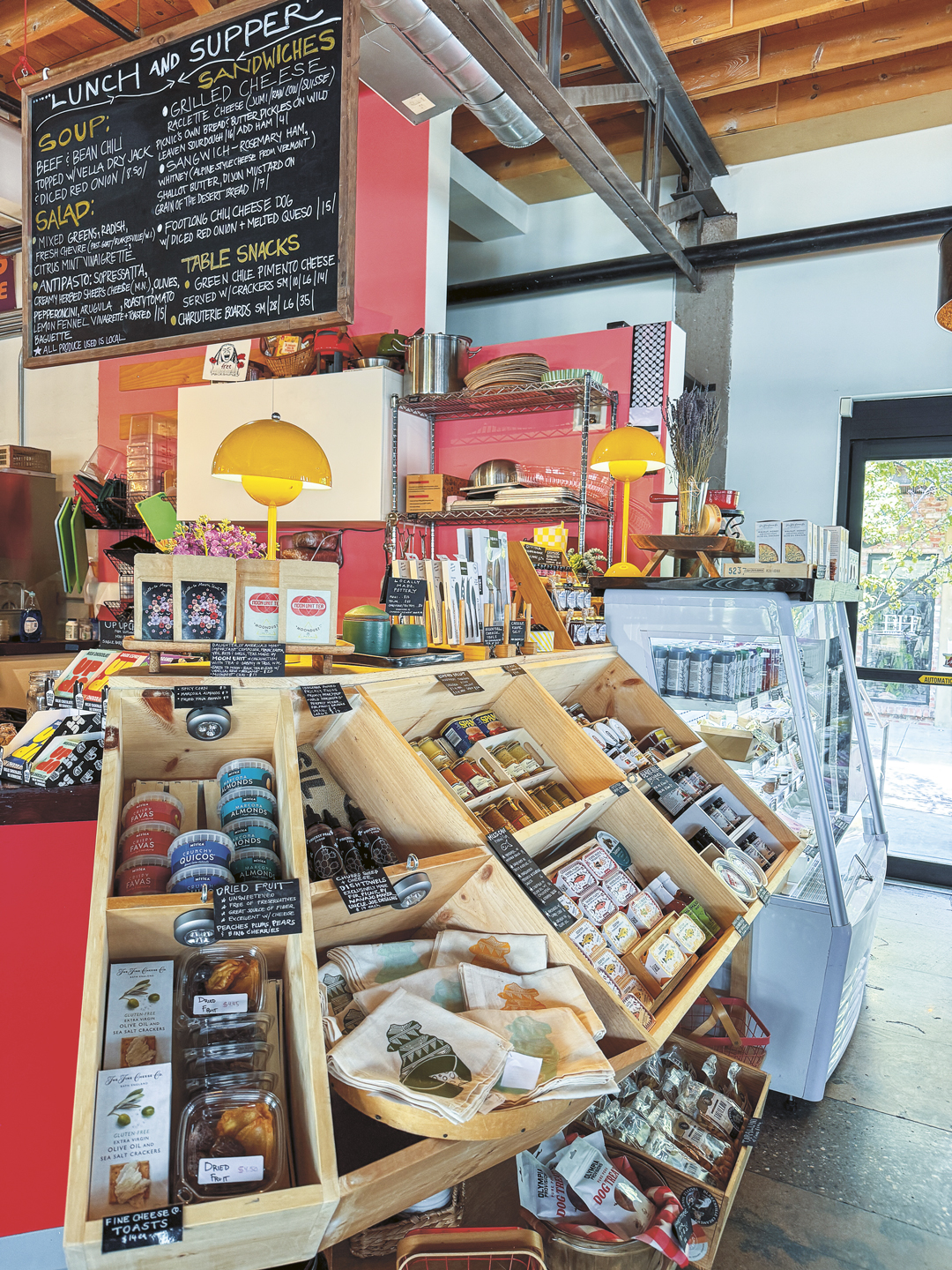
Cheese accouterments and local microproducts at Picnic NM.
“This is the closest to being there,” says Bilodeau as he shaves a thin slice from a wheel of Jack’s Blue, made, according to the handwritten tag in the case, with the milk of just four cows at Vermont’s Parish Hill Creamery, where cheese is produced using native, natural cultures—that is, cultures made from the milk of cows from the same herd who provide the milk for the cheese, rather than starter cultures ordered and shipped from afar. Indeed, it is earthy, rounded, faintly peppery, and worlds away from the flat, familiar tang of many commercial American blues.
Squeezing Stuzman’s and Bilodeau’s combined culinary experience into Chomp is a feat on par with that of fitting so many cheeses, along with a smorgasbord of products by local microproducers, onto the shelves of their food stall, stationed across from Chomp’s bar. (A semiretired carpenter and customer, originally from Holland, helped them with the build-out of this magic stall.) Before returning to New Mexico, they spent years in farm-to-table restaurants in Vermont and New York, Stutzman working front of house and Bilodeau in back. “All these cheese makers were up and coming at the time. They were our peers—people who are big names now, like Jasper Hill [Farm],” she says, referring to the award-winning farmstead creamery built in the wake of Vermont’s collapsing dairy industry.
“Our motto is, if you walk in with five bucks, you walk out with cheese,” Stutzman says. Accessibility is a personal value of theirs, and also one learned in their prior cheesemongering experience—Stutzman at Cheesemongers of Santa Fe and Bilodeau at the pre-Bezos-buyout Whole Foods cheese counter. “Part of making cheese more accessible is to not be such Francophiles,” Stutzman says, so while acknowledging France’s role in the evolution of cheese making, they like to focus on places that don’t get as much attention. Think a stunning ash-laden cheese from Finland, or the super-
savory Wrångebäck, a farmstead cheese that’s been made on the same Swedish land for well over a century. Seasonality also influences their selection—“because cheese is seasonal”—as does an attraction for the unusual, for what can’t be found elsewhere in Santa Fe or even in New Mexico. “We can now get cheese from South America and Mexico,” Stutzman says, slipping me samples of the faintly tropical Brazilian Mandala and the ricotta salata–esque cotija from Quesos Navarro.
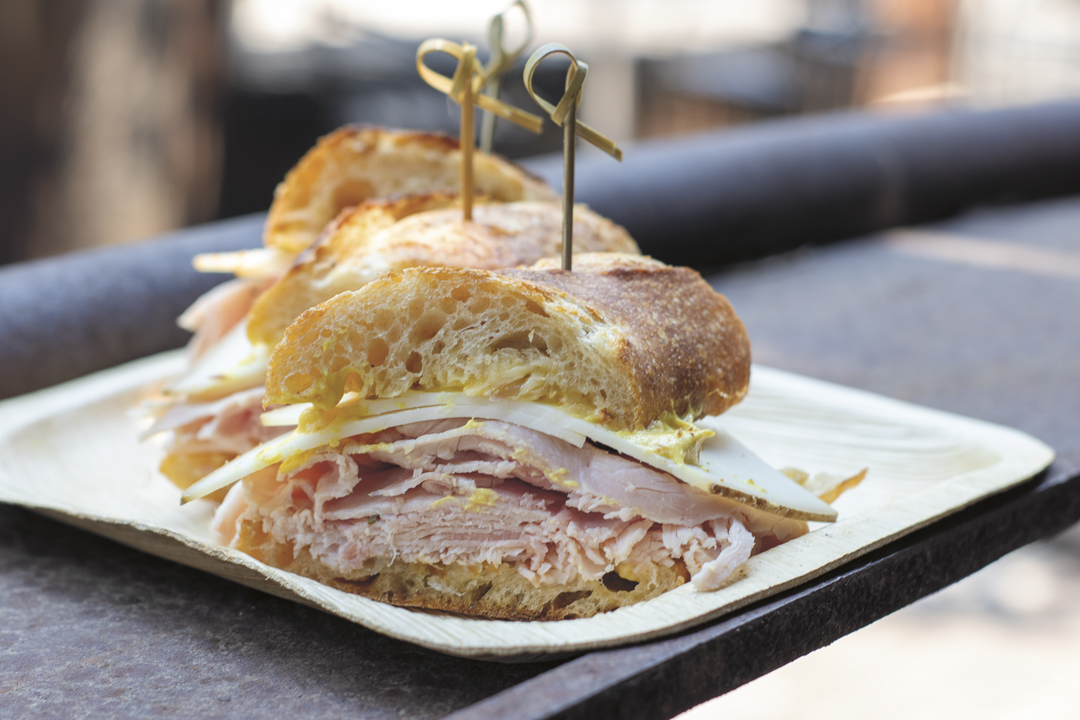
Sangwich with Fra’Mani rosemary ham, Jasper Hill Farm’s Whitney alpine-style cheese, shallot butter, and Dijon mustard on Grain of the Desert baguette at Picnic NM.
There’s something communion-like about this taking of slender bites of cheese on slips of cardboard or wax paper—but better, because what we’re being asked to taste, to connect with, is of the earth. Stutzman and Bilodeau’s love for their human community is palpable too. Members of the New Mexico Cheese Guild since its start, they have high hopes for up-and-coming makers like Brown’s Micro-Creamery and Ghost Town Goats, whose cajeta sits next to Santa Fe–made green chile crisp in their cold case. Picnic NM stocks not one but two local honeys, and their prepared food offerings give Bilodeau the chance to show off his kitchen chops while also hosting a talent show for local bakers and farmers.
Their rotating sandwich menu was a logical response to setting up shop in a food hall. Also, Stutzman says, “when we do [prepared] food, it’s easier to quash that ‘cheese is bougie, cheese is for white people.’” Possibly no sandwich in the world is less bougie than a grilled cheese—which is also the perfect platform to demonstrate that seemingly fancy ingredients, like raclette and handmade pickles, can make the most run-of-the-mill dish into something superb, without losing what makes comfort food comfort food in the first place. They do a fantastically messy chili dog made with queso menonita from Quesos Navarro and “a beef-and-bean chili that is completely and utterly New Mexican,” as Bilodeau puts it, with beans, chile, and chicos sourced from Nambé farmer Jesus Guzman. Even the watermelon radishes in a simple salad are very deliberately chosen. Green Tractor Farm’s radishes are “always the most vibrant, beautifully flavored wonder,” says Bilodeau. “People are so impressed with a slice of radish. All that stuff is really important to me to seek out.”

It might seem strange to utter the phrases “food sovereignty” and “artisanal cheese” in the same sentence, given the price point and boutique associations of the latter. But it’s not hard to find New Mexicans who will tell you about cheese-making traditions in their own family histories. And the more I’ve learned about cheese and the struggles faced by small producers, especially in the United States, the more I’ve come to think about buying these cheeses as an investment in the preservation of an art form that is also an essential craft—one that requires the work of humans, with all their senses alive and attentive. Is this just an excuse to buy delicious cheese from interesting people? Maybe, but it’s an excuse I’ll take.
The Mouse Hole Cheese Shop 300 Broadway NE, Ste A, Albuquerque, 505-554-2994, mouseholeabq.com
Picnic NM 505 Cerrillos Rd, Ste B101, Santa Fe,
@picnic_nm, @vend_a_wheel

Briana Olson
Briana Olson is a writer and the editor of edible New Mexico and The Bite. She lives in Albuquerque.