If lunch is an art form, the formula at Mille begins with this: an inviting indoor dining room conjoined to patio seating, so that there is a sense of café life spilling forth into the bright midday world and the light of day spilling in.
Windows. Crisp white wines. Good bread. A menu that is simple because simple dishes show what they are made of.
And, not least—this being, after all, a taste of France—plenty of time.
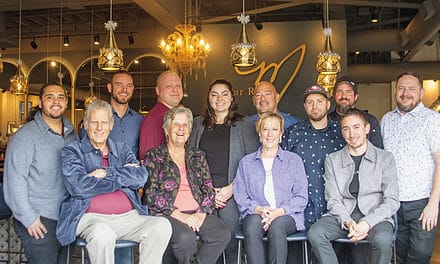
“It’s not just you have fifteen minutes to eat a piece of pizza,” Mille owner Marcel Remillieux says of school lunch in France, lovingly recalling the hour and a half lunches that he learned to treasure from school age through university.
Mille, pronounced “meal” with a bit of nasal lift, is named for the family-run pâtisserie purchased by Marcel’s grandfather in 1939 in Ajaccio, the capital of Corsica. “I grew up in there,” Marcel says, describing enviable after-school days deliberating over whether to have an éclair or a cream puff for dessert, being beckoned to the huge production room in the back to sample fresh apricot gelato straight from the machine.
Many French schoolkids go home, as he often did, to eat a full meal for lunch, “but even the cafeteria is a whole experience,” he says, with an appetizer and a salad, an entrée, vegetables, bread, yogurt or dessert, “and you have a choice for each of those steps.” He recalls balanced meals, and structure, with one student being assigned to water service for each table.
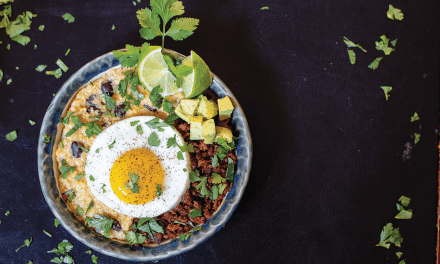
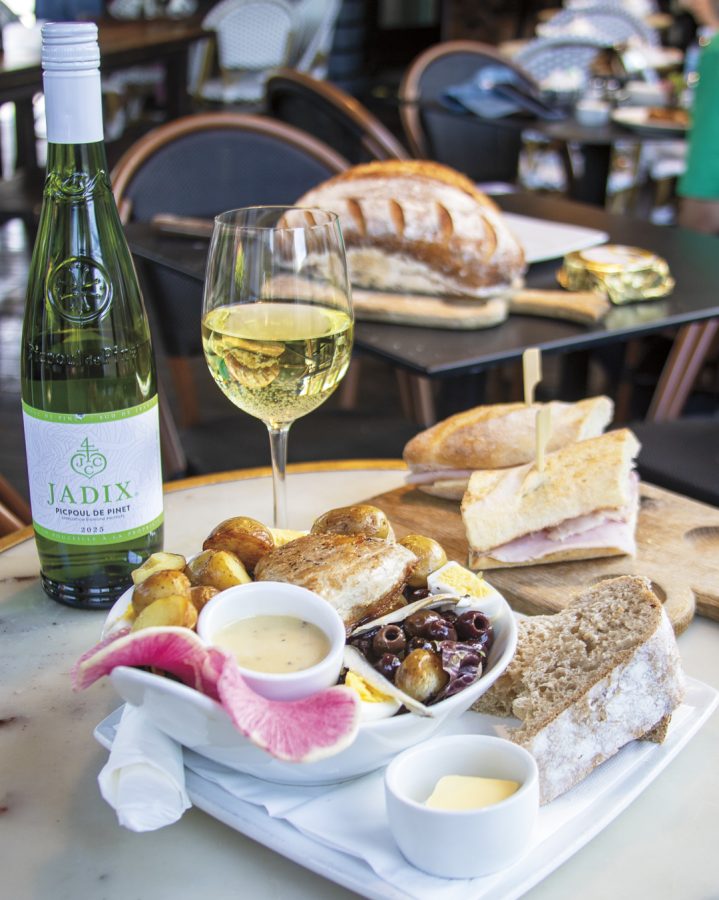
“That’s why at the restaurant, we have an actual lunch menu. It’s not just salads and quick bites. We have menu items for lunch that would very well translate to dinner if we were to open during the evening,” he says, listing off dishes like chicken cordon bleu, duck confit with roasted potatoes, a Nicoise salad served with a tuna steak. “It’s an invitation to stay, get a glass of wine with it.”
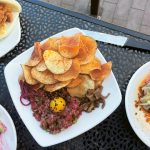
Ingredients are not necessarily sourced locally, but they are sourced with care. Tuna steaks for the Nicoise, smoked salmon for the Nordic crêpe, and fresh mussels—two deliveries a week—come through respected local fishmonger Above Sea Level.
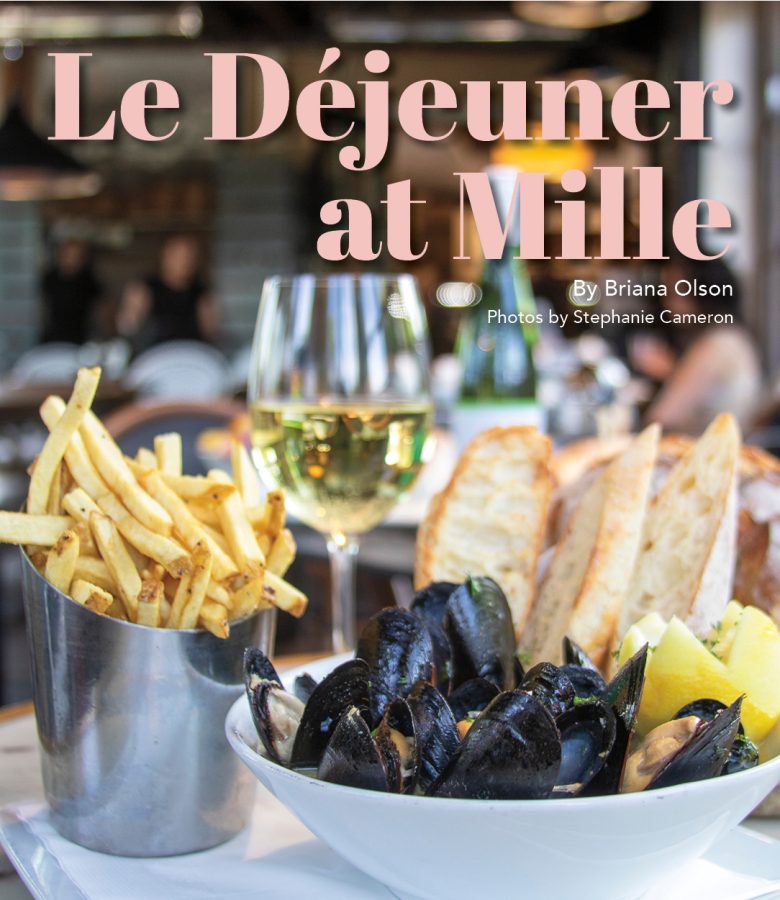
On a recent long lunch at Mille, I paired my mussels with the newest addition to their small wine list, a glass of picpoul. “It’s from the southwest of France, it’s dry, it’s very refreshing for the summer,” Marcel says. If going for a true French lunch, with an hour and a half to spare at the table with his wife, Mille cofounder Stéphanie Remillieux, he would probably order a bottle of Sancerre—from the Loire Valley, renowned for its sauvignon blanc.
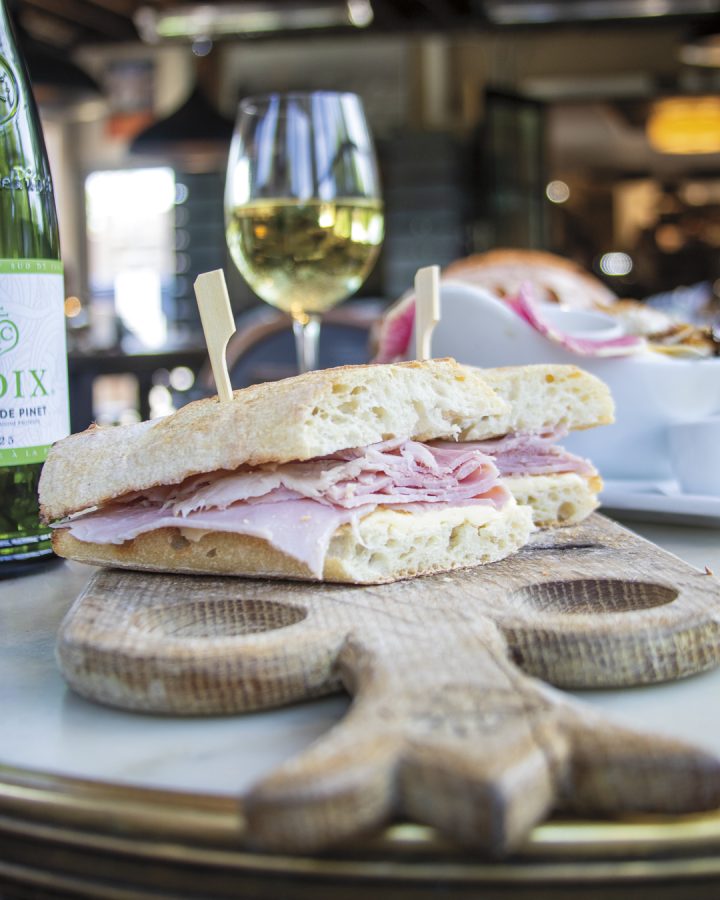
“You cannot use one butter for everything you do,” Marcel says when I tally up the different types of butter he’s mentioned. There’s the beurre de tourage, a tempered, fermented butter whose pliability makes it quintessential for croissants (and whose cost has risen substantially as a result of tariffs); clarified butter for cooking at high heat, as when sautéing the mussels; unsalted butter for white wine sauce, béchamel, choux pastry, quiche shells; and beurre de baratte, served with the brunch for two and on the jambon-beurre.
“The baguette should be crispy outside and quite hard, and inside very fluffy. We also make our own sourdough bread—that’s another recipe but still the same idea, very hard crust, very soft and fluffy and flavorful interior. Some people when they think about bread, [they think] everything should be soft. But the baguette is the baguette: It should be skinny, it should be hard crust, soft interior, and then we don’t fill the sandwich with tons of meat—because it’s a lot about the bread in those sandwiches. If you take the jambon-beurre, it’s Parisian ham, really good-quality ham, really good-quality butter, and the bread—and those are the three ingredients, there’s nothing else, but all three ingredients have to be perfect.”
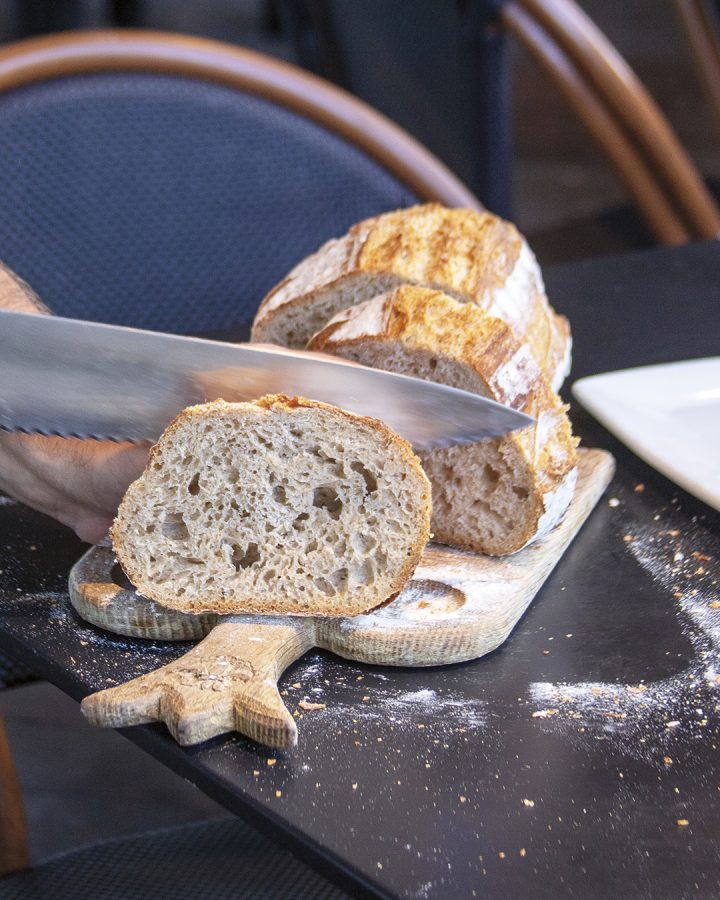
The original Mille was pure pâtisserie, in the French tradition, meaning there was no lunch. “I did a mix between what my grandfather was doing and what people wanted here, which was a café with made-to-order food,” Marcel says. “It’s like running two businesses at the same time,” with two teams, a kitchen team and a full baking team. That means the bakery team works even on the two days of the week that the restaurant is closed, “because it’s a three-day process to make the croissant dough.”
If you’ve wondered why Mille doesn’t sell more of their fantastic baguettes, or why they don’t add dinner service, this is why. “Even the fries that you ate with your mussels, we cut the potatoes, double fry them just like they do in Belgium. If you try to do things right, not give people a frozen product, make everything from scratch,” he says, “it’s a lot of work.”
And therein lies another reason to slow down and try on the French tradition of a long lunch. If making food is a labor of love, why shouldn’t dining also be—even at noon?
451 W Alameda, Santa Fe, 505-303-3745, millem.com

Briana Olson
Briana Olson is a writer and the editor of edible New Mexico and The Bite. She lives in Albuquerque.