By Briana Olson
Photos by Stephanie Cameron
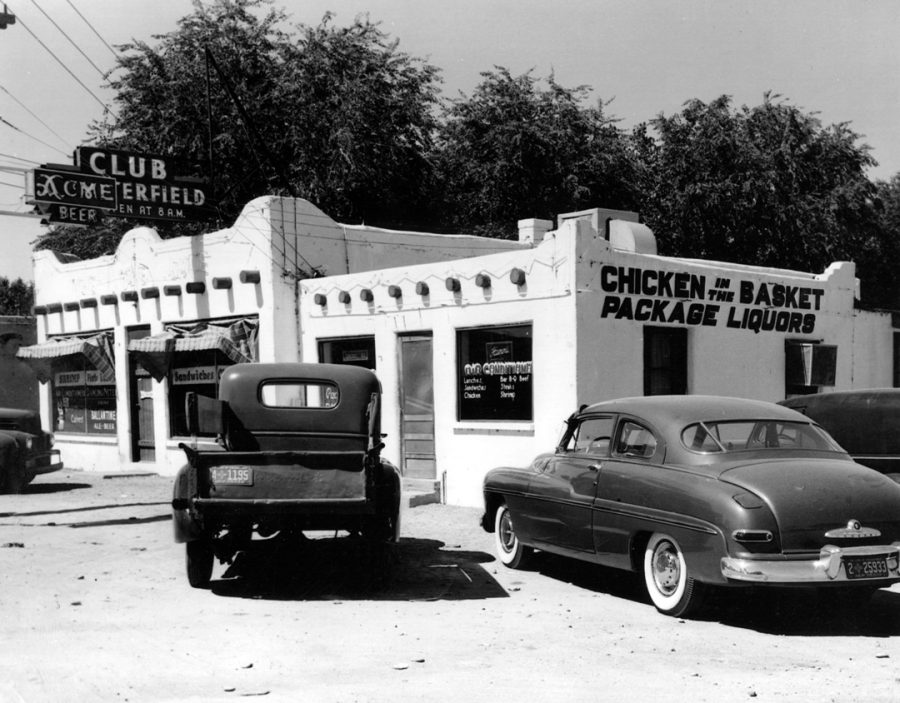
Left: ““The Club Chesterfield, 3621 West Central Avenue.” Photo courtesy of Albuquerque Museum, gift of Joyce Graves Barefoot.
Aside from country dancing, I don’t know what was on the menu at Club Chesterfield, the Hitching Post, and other bars and dance halls of mid-twentieth-century Albuquerque, but if my ancestors offer any clue, it was Budweiser and Miller, maybe with a shot of tequila, whiskey, or blended scotch. For some, the dive bar might be the quintessential Route 66 experience, but these days, some of those dives have grown up and found their calling as cocktail bars that specialize in new-world spirits.
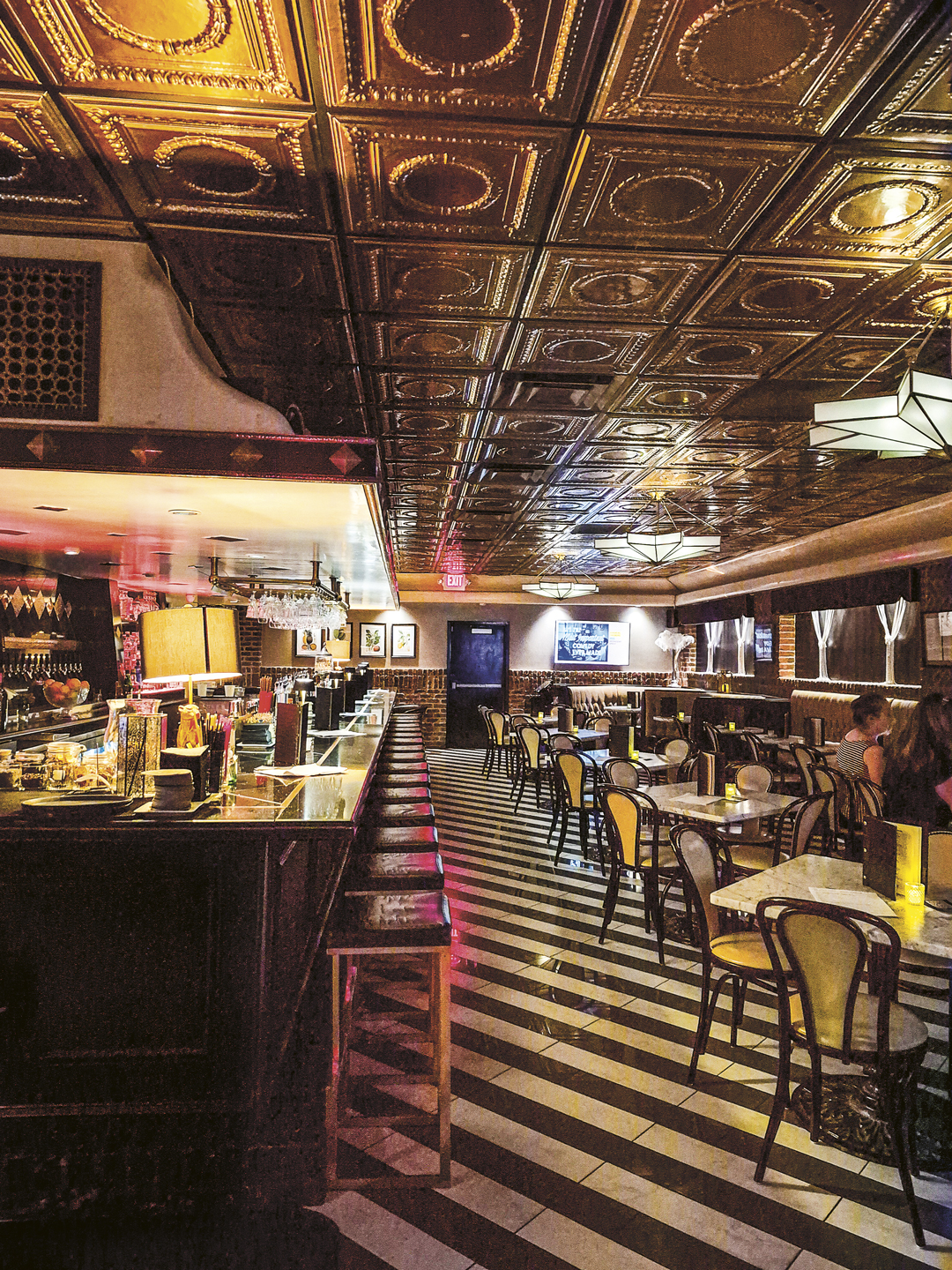
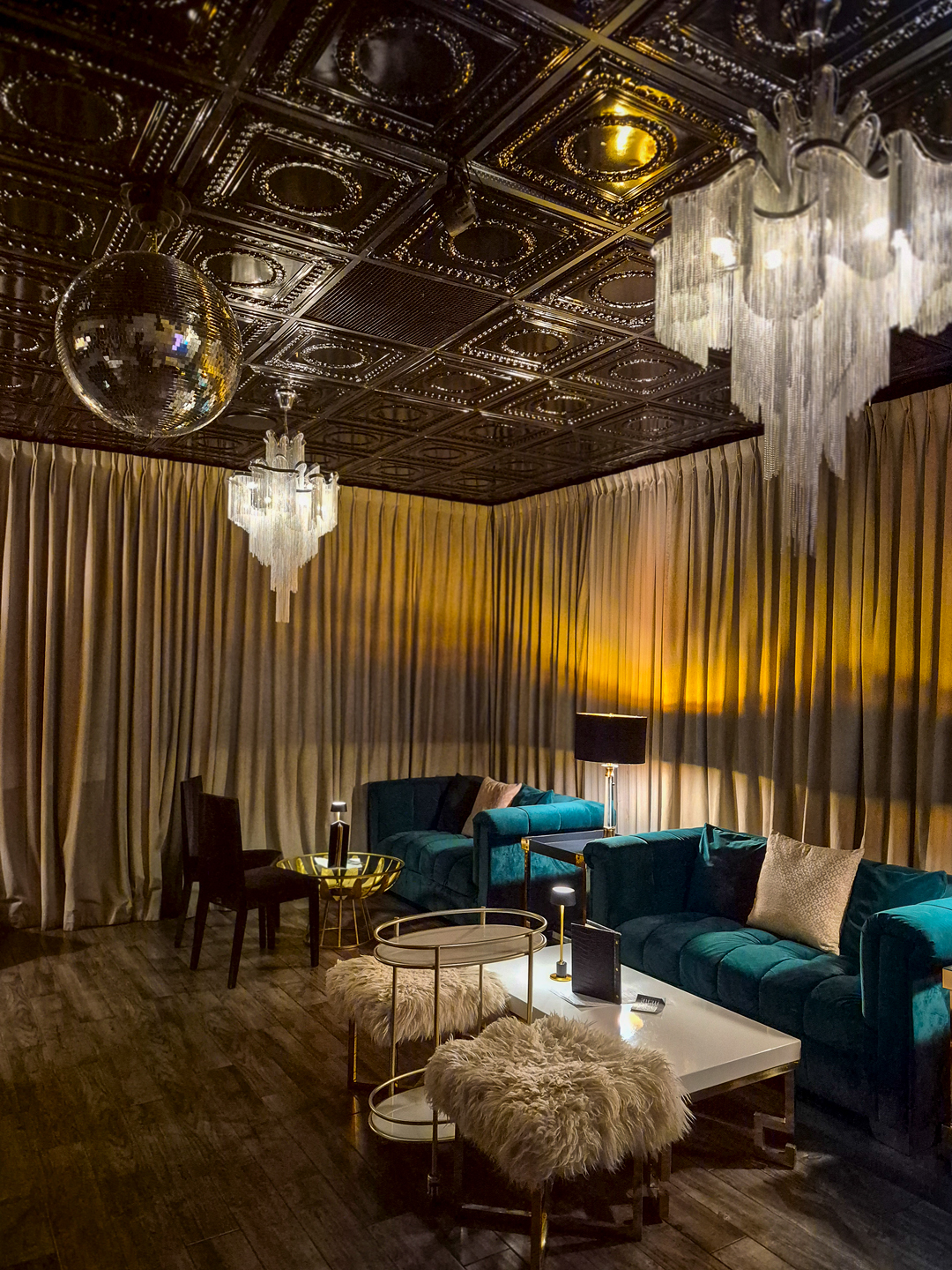
The Copper Lounge.
COPPER LOUNGE & LOS CONEJOS
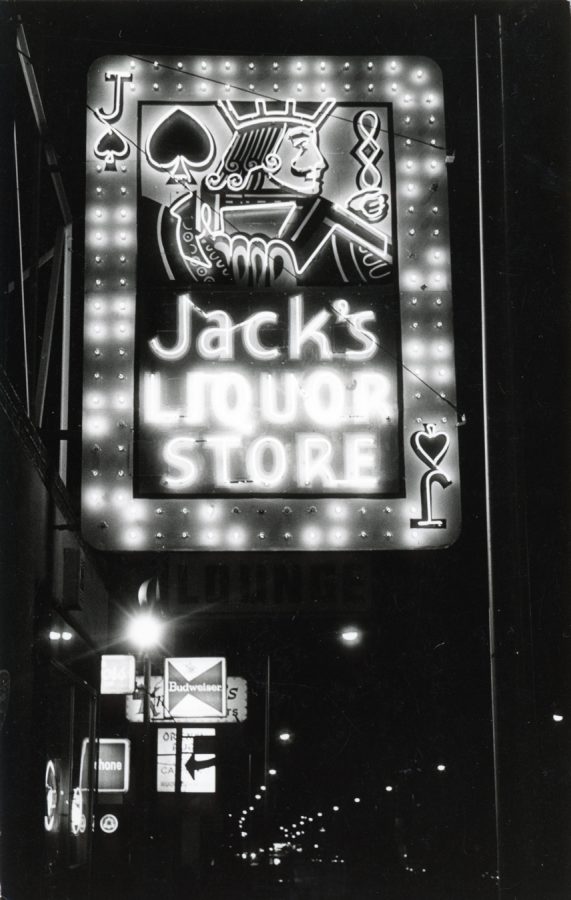
Few watering holes on Route 66 have walls that could tell stories as old and wild as the Copper Lounge. Built in 1948, the bar opened as Jack’s Liquor Store, then became Jack’s Lounge and Pizza, a spot remembered as much for its jukebox and its legendary neon sign, featuring the Jack of Spades, as for its drinks. In 2001, the former owner of Mori’s Lounge—another legendary local bar, torn down by the city to make way for courthouse row—bought Jack’s and transformed it into the Copper Lounge. Cindy Chalamidas took it over from her mother in 2015 and, in collaboration with general manager Giovanni Martinez, reconceived it once again.
From classics to house inventions like the Eternal Flame (tequila, sherry, chile morita, cinnamon, and cacao), this is a bar that takes its cocktails seriously. Exposed brick around the bar nods at the old Jack’s, as does the neon sign (although, let’s face it, the original Jack’s sign is unbeatable), but the Copper Lounge is very much its own place—and not only for the copper ceilings, black-and-white-tile floors, and sleek booths in the deco-styled main room or the plush wonderland vibes of the side lounge, where a television runs old movies without any sound.
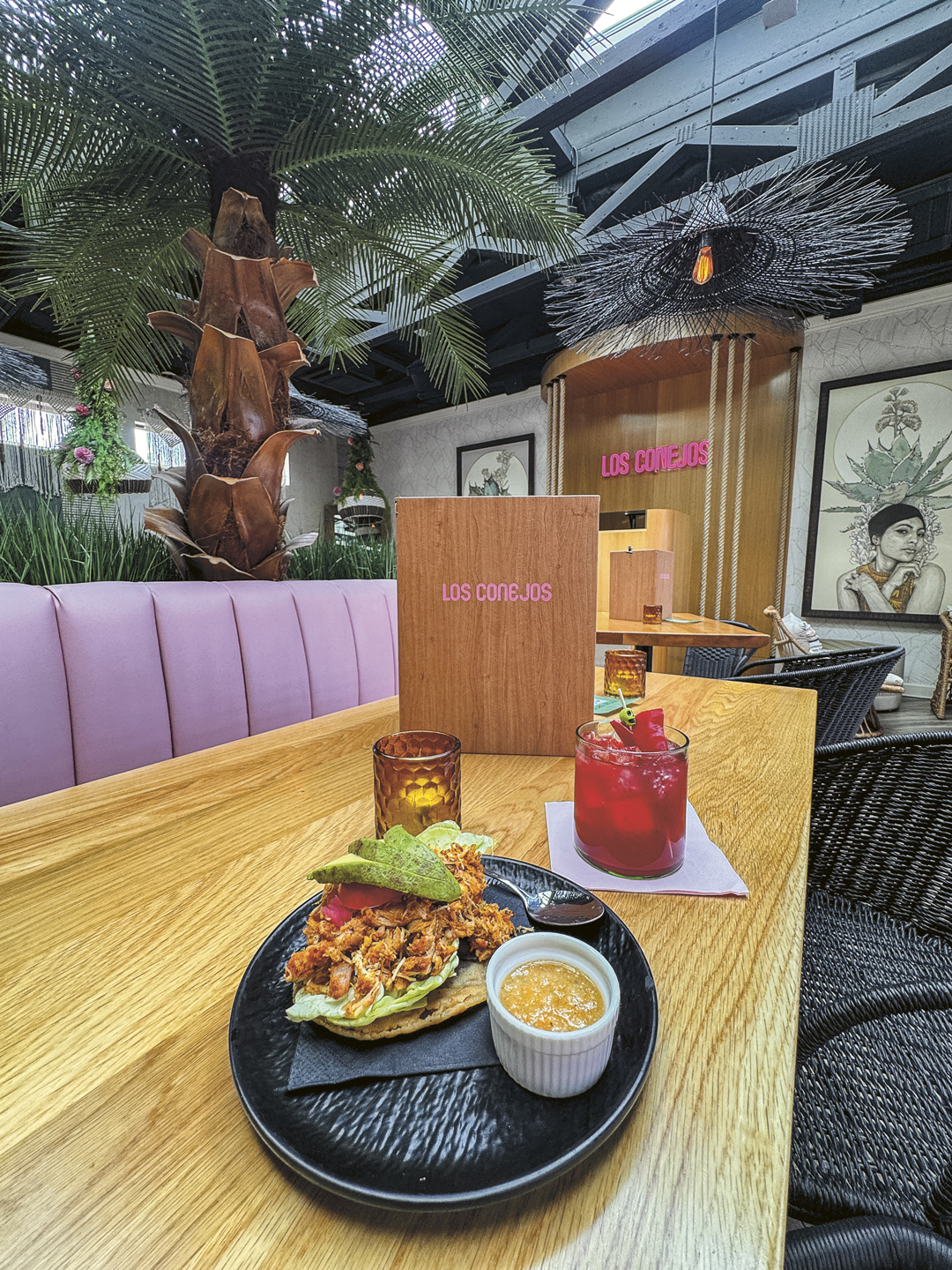
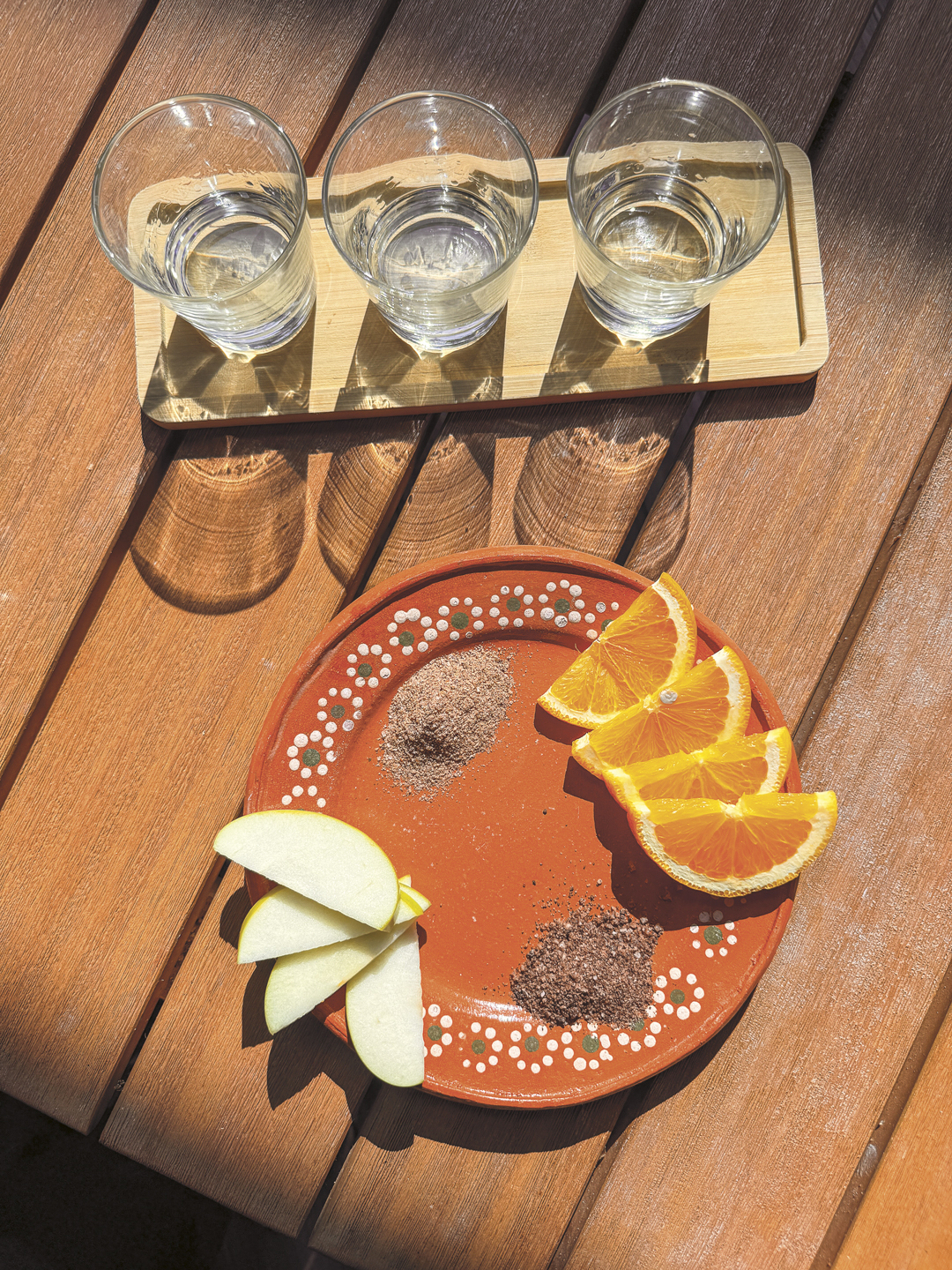
Panucho de pollo pibil and the Carmen and Rey Campero mezcal flight at Los Conejos.
The Copper Lounge also has something that Jack’s never could have had: a back bar and oasis devoted to agave spirits. “Los Conejos was a slow burn,” Martinez tells me, its remodel stretching through the pandemic, when it debuted as a patio bar. Los Conejos offers some fifty mezcals representing about fifteen brands, with an emphasis, Martinez says, on “producers we have a relationship with”—for instance, the distillers from Mal de Amor, whom he and Chalamidas met while visiting Oaxaca and who make mezcals from a variety of magueys, including the slow-growing, wild-harvested tepextate.
If the vibe at the Copper Lounge is roaring twenties, Los Conejos feels like a courtyard in southern Mexico: light filled, with lots of plants, bamboo accents, and maguey-centric artwork. Available in one- or two-ounce pours or by the flight, the range of mezcals, bacanoras, and destilados de agave is best sampled straight, but the menu features cocktails and micheladas too, along with aguachile, Sonoran dogs, and hearty panuchos de pollo pibil—a touch of the Yucatán, from which Martinez, by way of LA, traces his own heritage.
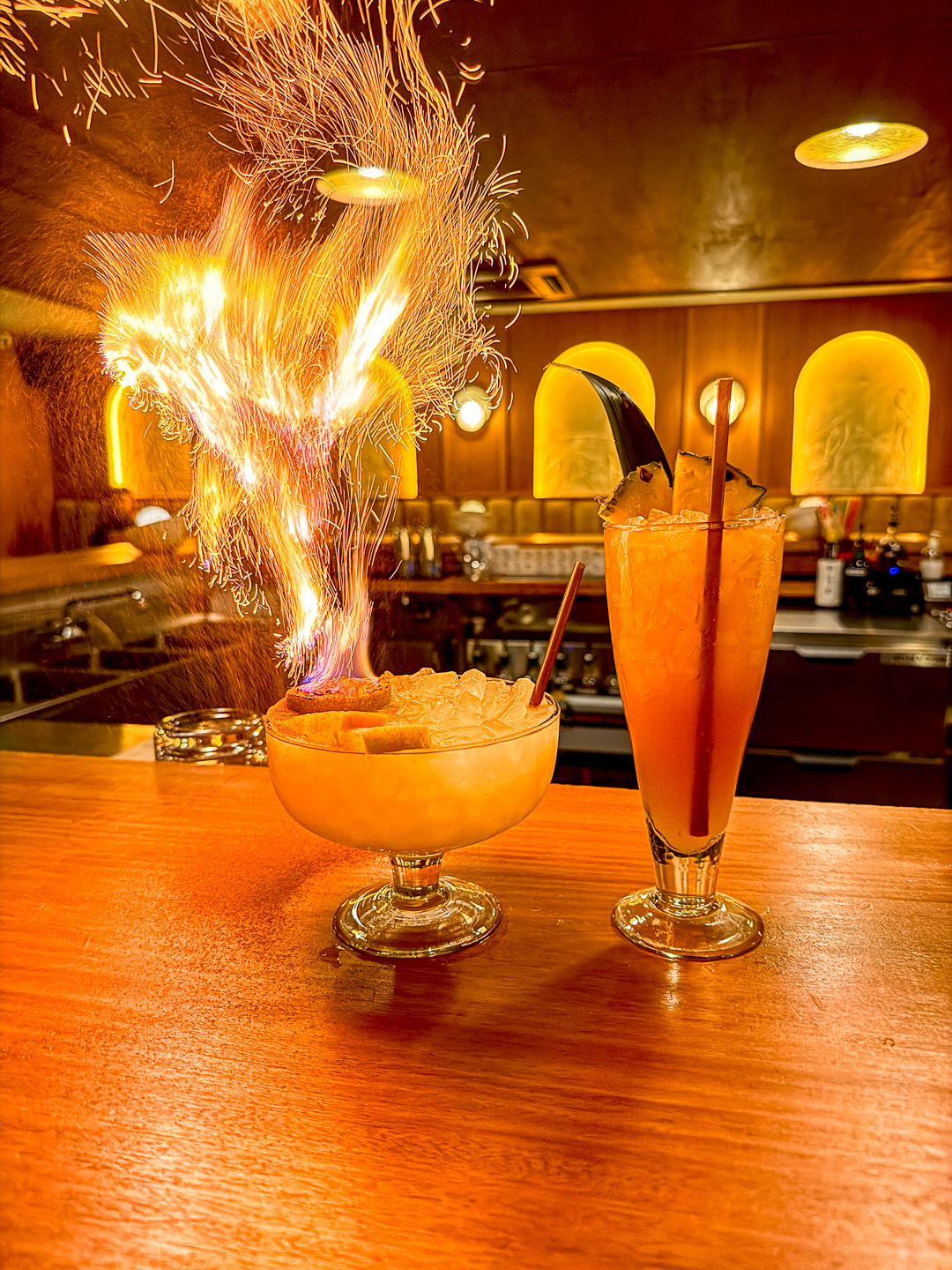
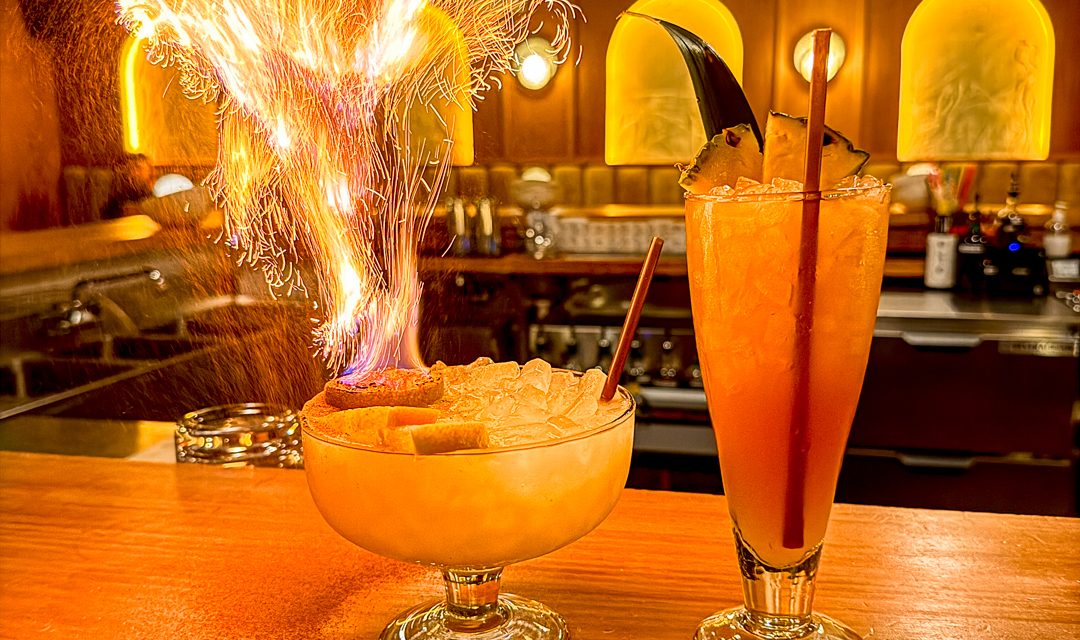
Kino’s Cannonball and Tom Khalada cocktails.
DAYDREAM RUM BAR
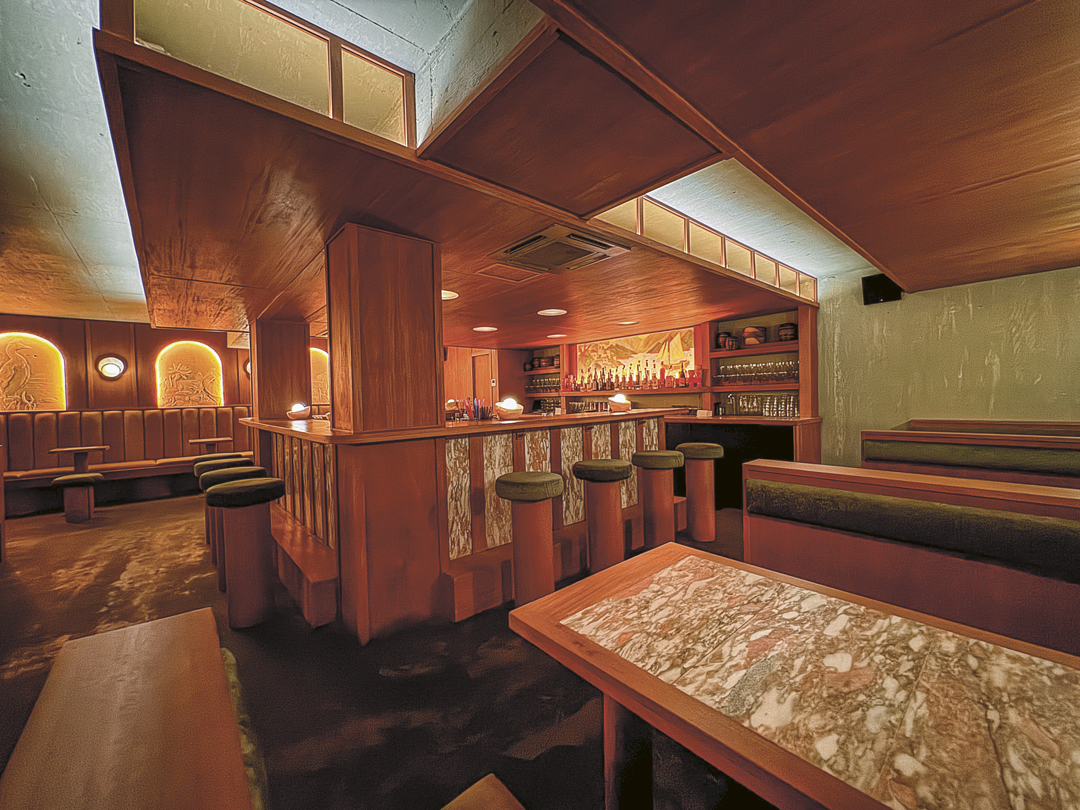
Daydream Rum Bar is, quite literally, underground. Accessed through a door inside Little Bear Coffee, the main bar feels less like an island escape than the moodily lit lower deck of an extremely stylish ship. “I’ve always been really drawn to craftsmanship,” says owner Isaac Fox, who designed and led the build-out, transforming the basement, à la filmmaker Wes Anderson, into a place that exists nowhere else. Think mahogany-paneled walls and plaster reliefs nested in warm, window-like arches; private, high-backed booths; velvet stools at a horseshoe bar; the flash of a mermaid’s tail; and, backing the bar, a glimmering bay scene painted by none other than Fox’s mother.
Why rum? “Tiki bars are fun and approachable,” says Fox. This resonated with the ethos that guided him and his brother Jacob in designing Little Bear—intentional spaces that offer something new minus any attitude of exclusiveness. “And I am just obsessed with rum generally, so that’s the other reason.” Rum’s relative affordability has been known to make people think it’s, well, cheap, especially if they have hangover memories of Bacardi 151. Daydream’s offerings are designed to change that, and also to showcase the regionality of rum cocktails. Some drinks call specifically for an aged Jamaican rum, others for an overproof rum or a French-style agricole, made from crushed fresh sugarcane juice rather than molasses. The Sucker Punch, for instance, is a lime-leaf-and-lemongrass-infused riff on Martinique’s national cocktail, with the aromatics lending Southeast Asian flair to the bracing blend of lime juice and rhum agricole.
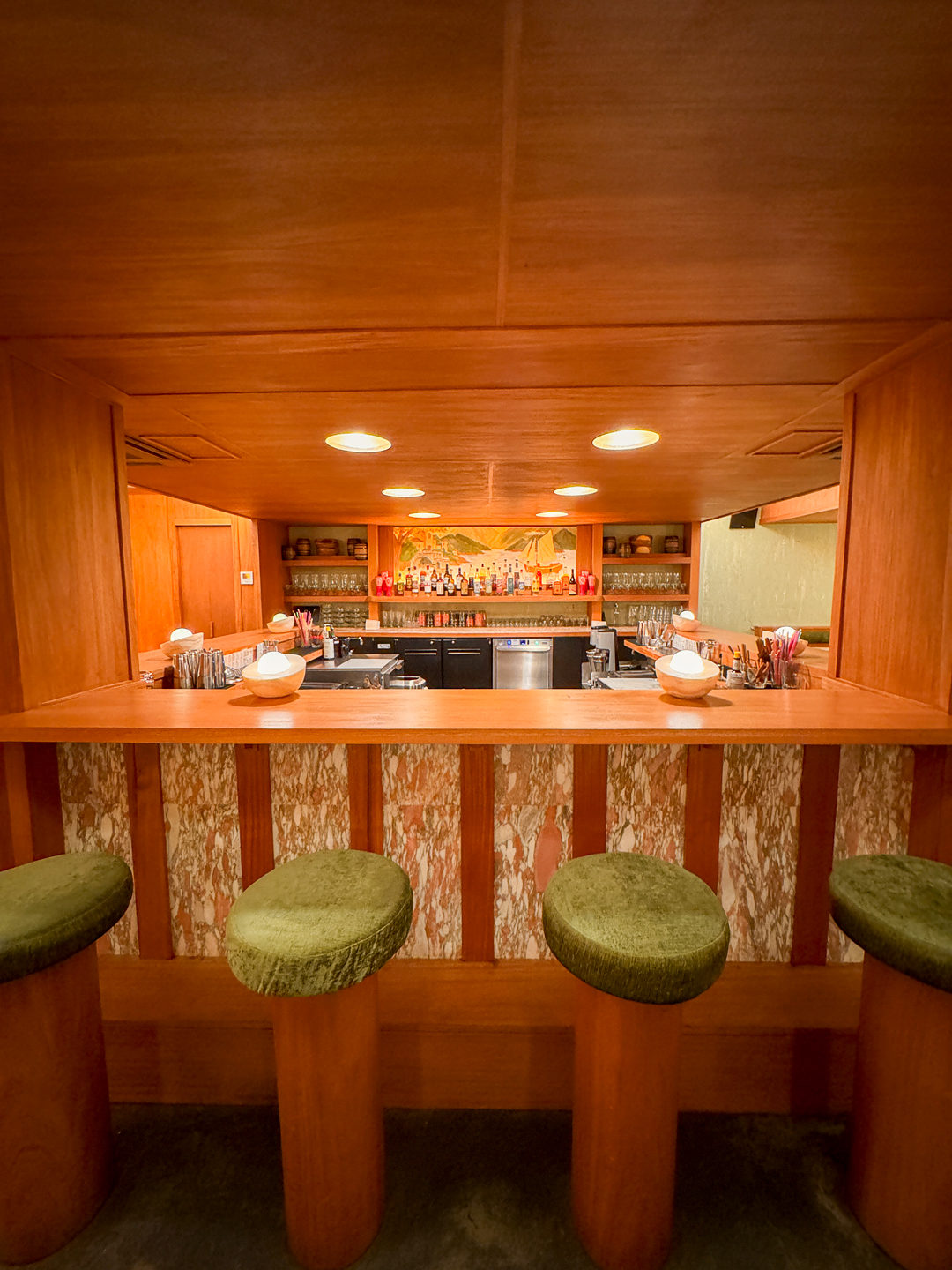
Daydream Rum Bar and rum tasting flight in the Calypso Club.
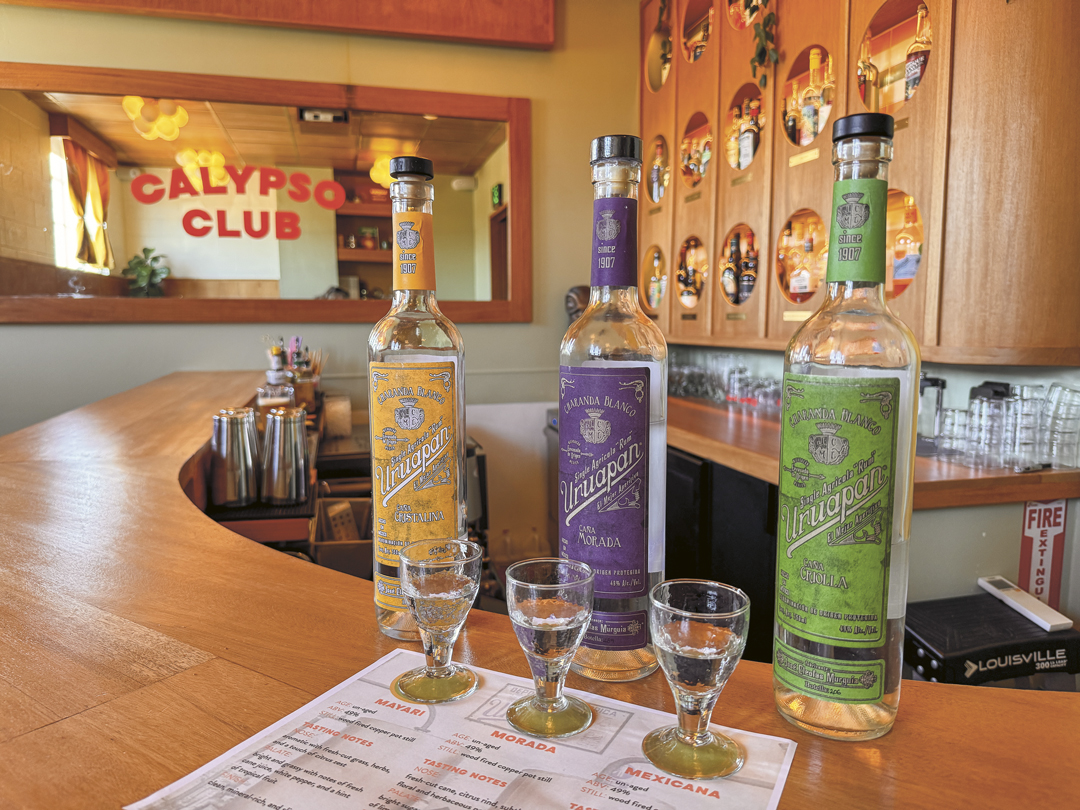
Almost all their rums, Fox says, come from locally run distilleries, like Neisson of Martinique, whose “labor paid to bottle ratio” is much higher than any other on the island. “I want my money to go to people based there, to support them in their regions,” he says, as well as to those using biodynamically raised sugarcane, rather than some conglomerate.
Friday-night tastings take place upstairs, in the candy-colored Calypso Club. At one, I sampled three agricole-style rums that, although all made by the same family-run Oaxacan distillery, from the same organic sugarcane, proved the range and complexity that is possible with rum. Every season, Daydream also chooses a different rum-producing country to highlight in their specials menu; this summer, Jamaican rums were featured in drinks like the Tropical Heat, a spin on a piña colada with Scotch bonnet peppers and almond orgeat.


Briana Olson
Briana Olson is a writer and the editor of edible New Mexico and The Bite. She lives in Albuquerque.