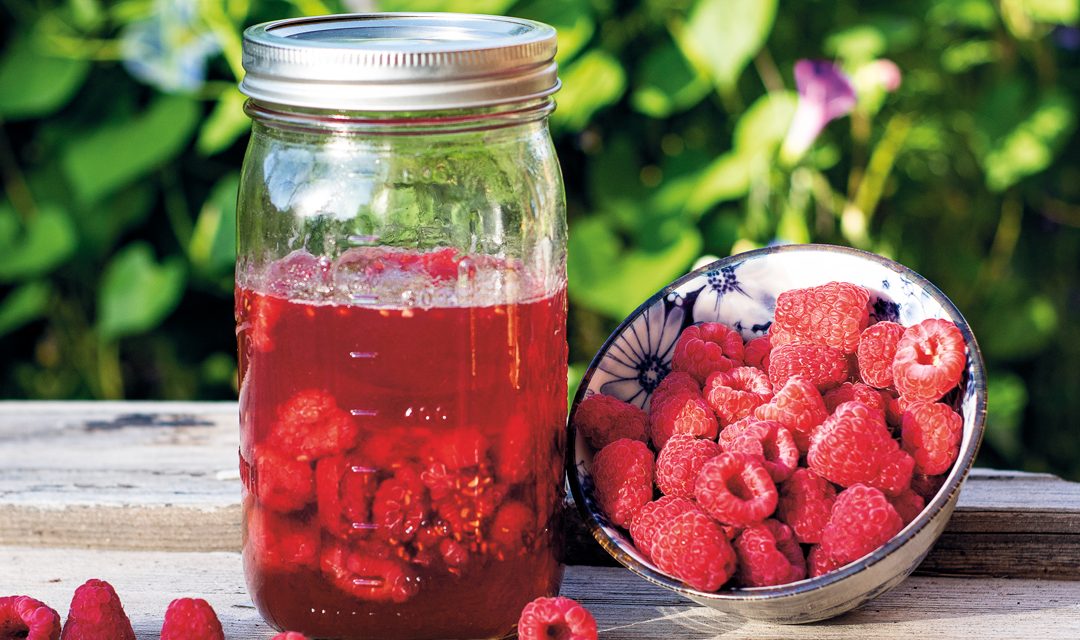
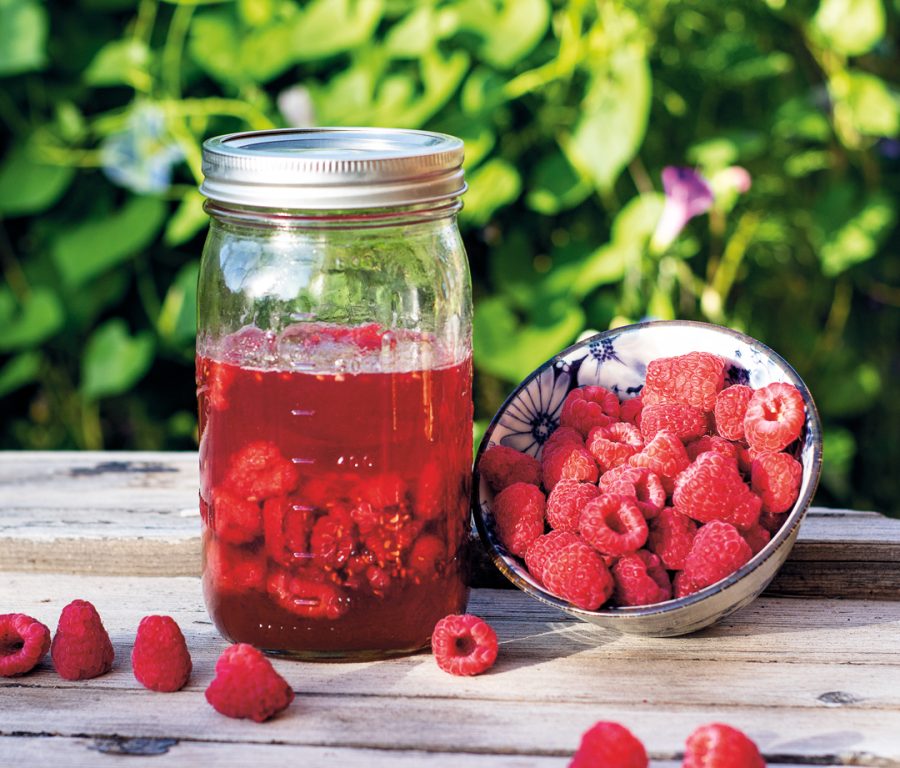
Almost any berry or soft fruit can be fermented in raw honey, making this one of the simplest and most adaptable of wild ferments. As the wild yeasts naturally present on the fruit and in the honey begin to work, the fruit softens while the honey becomes thinner, taking on the fruit’s color and flavor. Honey has a sense of place: New Mexico wildflower or mesquite honey will produce a different ferment than clover or orange blossom honey, each lending its own floral notes and character to the finished jar.
Serve the berries and honey over yogurt, granola, pancakes, or ice cream; pair them with cheese and crusty sourdough; or whisk the fruit-infused honey into vinaigrettes, marinades, or barbecue sauces.
Fermentation Tips
Use raw, unpasteurized honey. Raw honey contains the naturally occurring yeasts needed for fermentation.
Leave room to bubble. Fill the jar no more than three-quarters full to allow room for bubbling during fermentation.
Makes about 1 1/2 pints
Equipment: Wide-mouth 1-quart glass jar, fermentation weight, and lid
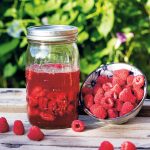
Honey-Fermented Raspberries
Ingredients
- 2 cups raspberries, lightly rinsed and thoroughly dried
- 1 cup raw, unpasteurized honey, or enough to completely cover the berries
Instructions
- Add the raspberries to the jar. Pour the honey over the berries until they are just covered, then gently stir with a clean chopstick or spoon to help the honey settle into all the spaces between the fruit. Add more honey, if needed, so the berries remain completely submerged, making sure the jar is no more than three-quarters full. Cover with loosely fitted lid.
- Store the jar in a cool, dark place to ferment at room temperature for 3–5 days (or longer, depending on the ambient temperature), ideally between 64°F and 75°F. Once or twice daily, burp the jar to release the accumulated gases, then use a clean spoon to stir the berries so everything stays coated. This is also when you should taste your ferment to see how it’s progressing. If berries don’t stay below the honey after it thins, you can add a fermentation weight to ensure mold doesn’t form.
- When the raspberries have softened and the honey has thinned noticeably, becoming easy to swirl around the jar, taste the ferment. It should have a bright, tangy flavor with just a hint of sweetness remaining. Small bubbles may be visible as fermentation slows. Once it tastes to your liking, transfer the jar to the refrigerator to slow the fermentation and extend its shelf life.

Stephanie Cameron was raised in Albuquerque and earned a degree in fine arts at the University of New Mexico. She is the art director, head photographer, recipe tester, marketing guru, publisher, and owner of edible New Mexico and The Bite.