
Sheep Milk Yogurt in the East Mountains
By Nina Katz · Photos by Stephanie Cameron
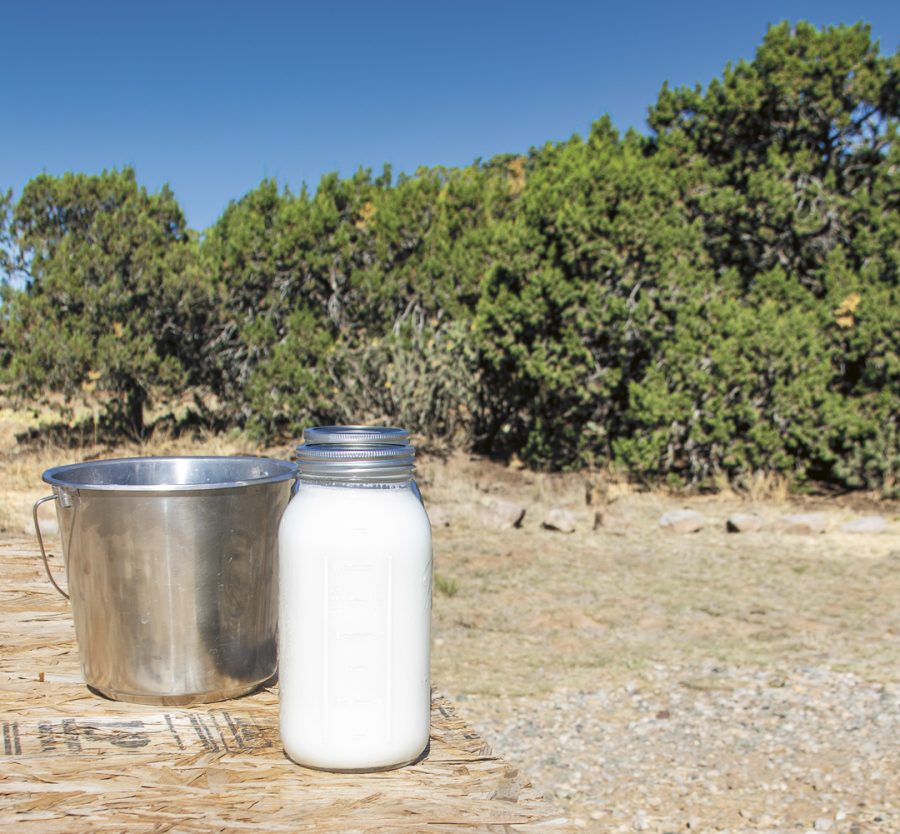
Fresh sheep milk at Arroyo Runs Through It.
There’s a lot to cover when it comes to yogurt. At its core, it’s a fermented dairy product created from combining heat, naturally occurring bacteria, and milk. It’s an ancient coagulation that is so common across cultures that, much like beer or cheese, yogurt’s origins cannot be pinned down to any one gurgling pot. One theory is that it wasn’t even a pot but more like some animal skin or intestine used as a container for milk by nomads traveling on horseback beneath the hot Central Asian sun. (“Yogurt” and its variations come from the Turkish word “yoğurmak,” meaning “to knead” or “to be curdled.”) After all that jostling, heat, and rogue bacteria, yogurt happened. Because versions of yogurt exist anywhere there is milk, global consumers can take their pick: honey-flavored Greek, no-fat, low-fat, full-fat, Australian, blackberry sheep milk yogurt, plain yak yogurt, yogurt in a tube, or yogurt from goat milk or plant-based alternatives, to name just a few.

Nina Listro milking her dairy sheep.
At Arroyo Runs Through It up in the East Mountains, farmer Nina Listro likes her yogurt one way: homemade from her herd of dairy sheep. Specifically, Listro makes plain yogurt that I was lucky enough to try—lucky because sheep milk yogurt isn’t that easy to find, and because I am a yogurt enthusiast. Some memorable yogurts from my life include the mousse-like Yoplait Whips! popular in the early 2000s low-fat diet culture, the fizzy glasses of doogh I drank at my childhood next-door neighbor Tiffany’s house on warm summer evenings, and more recently, the homemade Bulgarian yogurt my friend Soph scores on otherwise tense trips home visiting their parents—I guess yogurt really is a great unifier. And now Listro’s has made it into my own personal yogurt Hall of Fame. The yogurt from Arroyo Runs Through It is creamy and luscious, and surprisingly thick for being unstrained. A little sweet and pretty tart and tangy, we ate it while Listro showed me photos of her recently born, undeniably cute lambs who, in their own way, brought the milk Listro uses into existence. “I love a yogurt bowl with homemade granola and chia seeds, honey, and peanut butter. I also like blending the yogurt with either peanut butter or almond butter and dipping apples in it,” Listro said as we both ate spoonfuls straight from the tub, which we agreed was perfectly delicious and refreshing on its own.
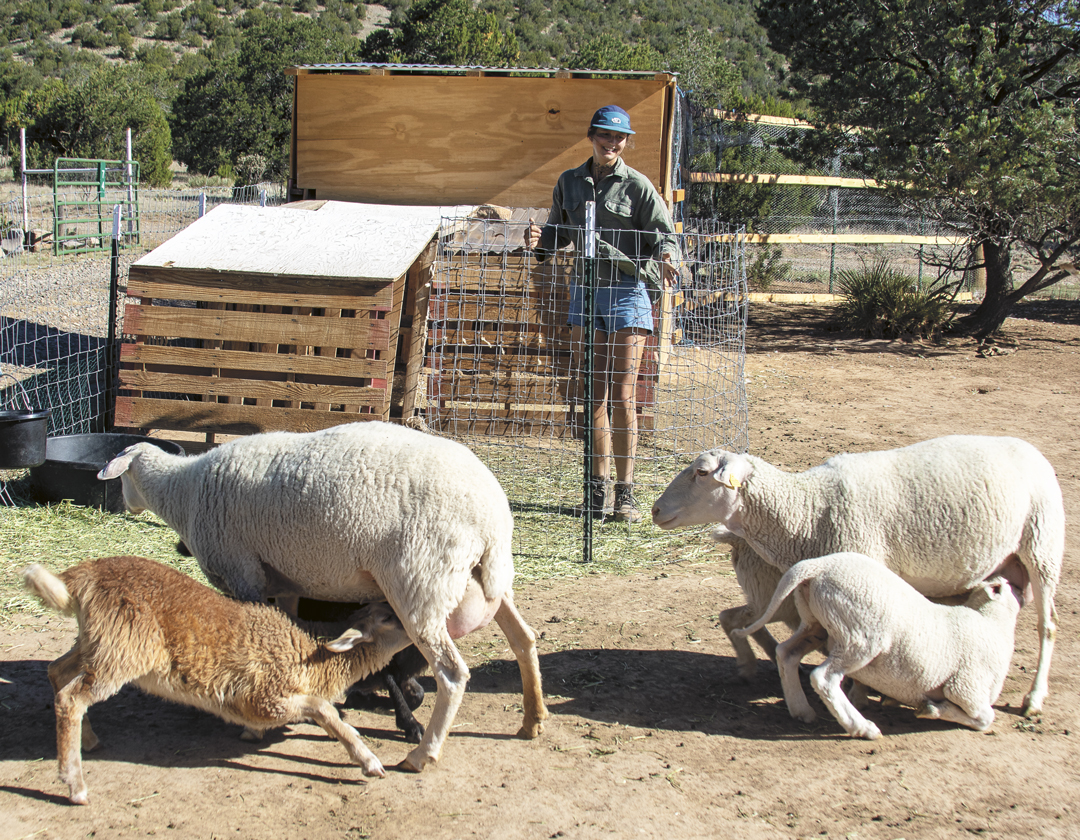
Mama sheep feeding their babies.
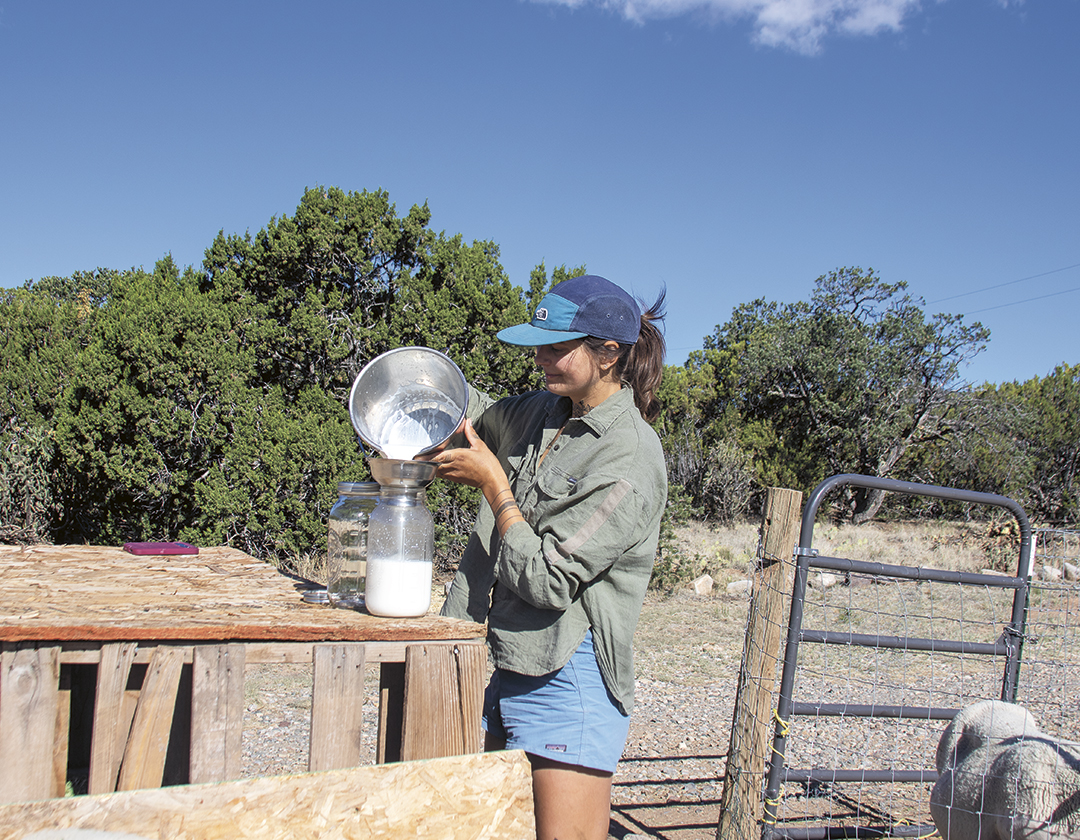
Transferring fresh milk into jars.
Established in 2023, Arroyo Runs Through It is what Listro calls a micro-farm because of its small ten-acre footprint nestled within the piñon-juniper and native grasslands in Stanley. Whatever you want to call it, Listro and her husband, Dylan Dunn, have a lot going on. They raise ducks, chickens, rabbits, and sheep, have a steadily growing permaculture food forest and kitchen garden, host volunteers through Worldwide Opportunities Organic Farms USA (an educational and cultural exchange program), and build earthen structures ranging from cob ovens to cob yoga huts. All of it runs off rainwater and gray water catchment systems that Listro built and plumbed herself. They also have five dogs, each of whom have very important jobs to do on the farm. (Without Freya the Anatolian shepherd and Durga the Kangal protecting the herd, there would be no yogurt to speak of.) Listro loves having folks over for a farm party or stewing-hen-processing workshop to show others that it’s possible to live without relying on (or relying as much on) groundwater. She is also passionate about spreading the good news about sheep milk: It’s delicious!
One could say the march of time has simply taken Listro from one vat of sour milk to another. She had her sheep milk yogurt awakening in 2018 working at Wondernut Farm near Yosemite, California. She remembers her first taste: creamier than any cow milk yogurt she’d had from the store. That’s because sheep milk contains nearly double the butterfat of cow or goat milk. Think of the last time you opened a fresh carton of heavy whipping cream and witnessed the condensed ribbon of butterfat sitting on the top. Now imagine a cream top twice as thick. That’s sheep milk.
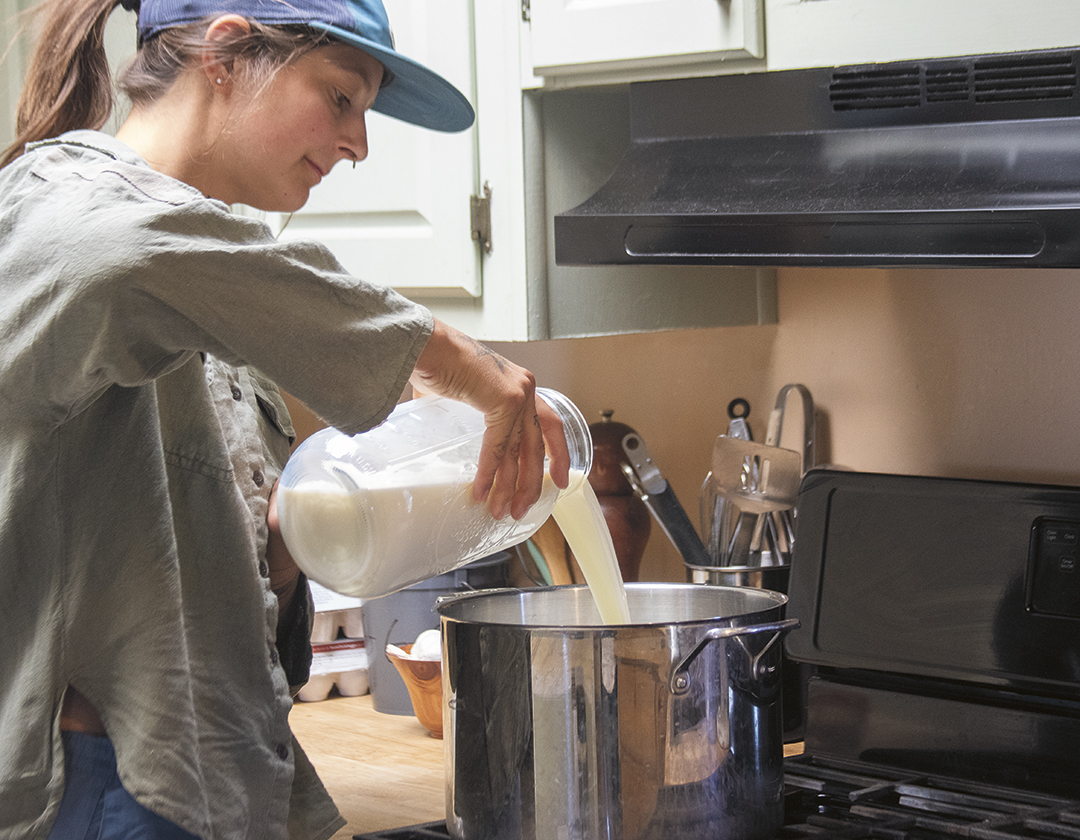
Heating milk for yogurt.
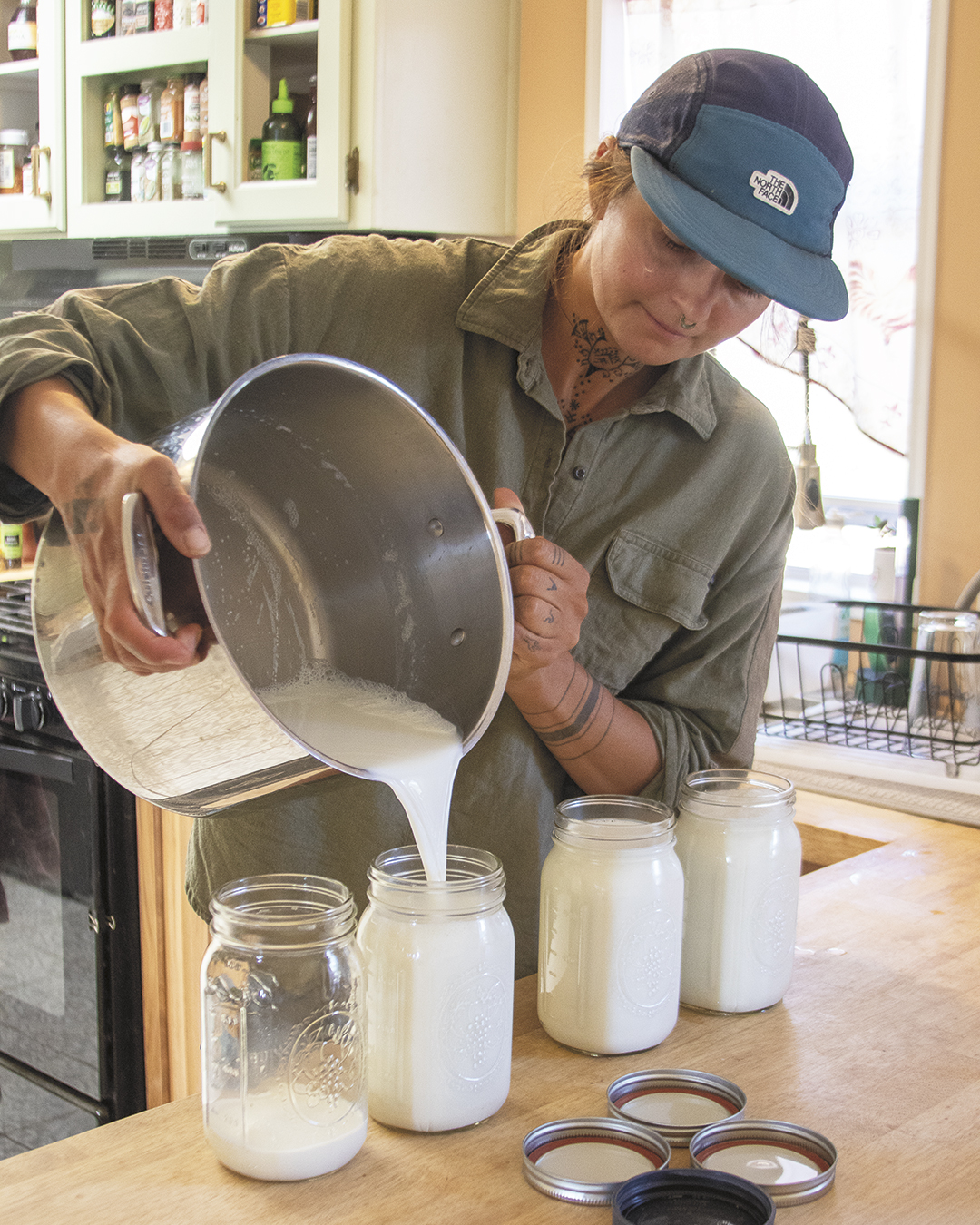
Pouring milk into jars to ferment in a dehydrator.
At Wondernut, Listro learned from her mentors about what yogurt can mean in the tool kit of a sheep-tender. First and foremost, yogurt is preservation. Like a farmer turning their abundance of cucumbers into pickles for the pantry, yogurt is a means of extending the longevity of every precious drop of milk. Of course, you could also make cheese, and every now and then Listro does, but yogurt is easier and faster. So for a busy farmer/builder/plumber, that’s the way to go.
After Wondernut, Listro did the classic bopping around on farms until she and Dylan landed in Stanley, where yogurt
making is one of the many indicators of how they render Arroyo Runs Through It as closed-loop as possible. Her first sheep, two ewes who were a mix of East Friesian (a breed from the Netherlands) and Lacaune (from France), came from Facebook Marketplace. (Listro says that every farmer she knows relies on the Metaverse’s classifieds for bartering, trading, selling, or buying something or other.) The person advertising the sheep was a neighbor who’d originally purchased them from Black Sheep Creamery, a once-beloved Grade A dairy in Washington state.
Like any modern homesteader, Listro loaded the ewes into the back of her Subaru, then took them home to live it up beneath the blue New Mexico sky. After a couple of rounds of breeding with an Awassi ram (a breed from the Levant) rented from a friend in Truchas, Listro is what I’d call sheep rich. Although her preferred way to consume the milk is straight up, poured into a glass cold from the refrigerator, yogurt is how Listro makes use of the gallons of milk her sheep yield each week.
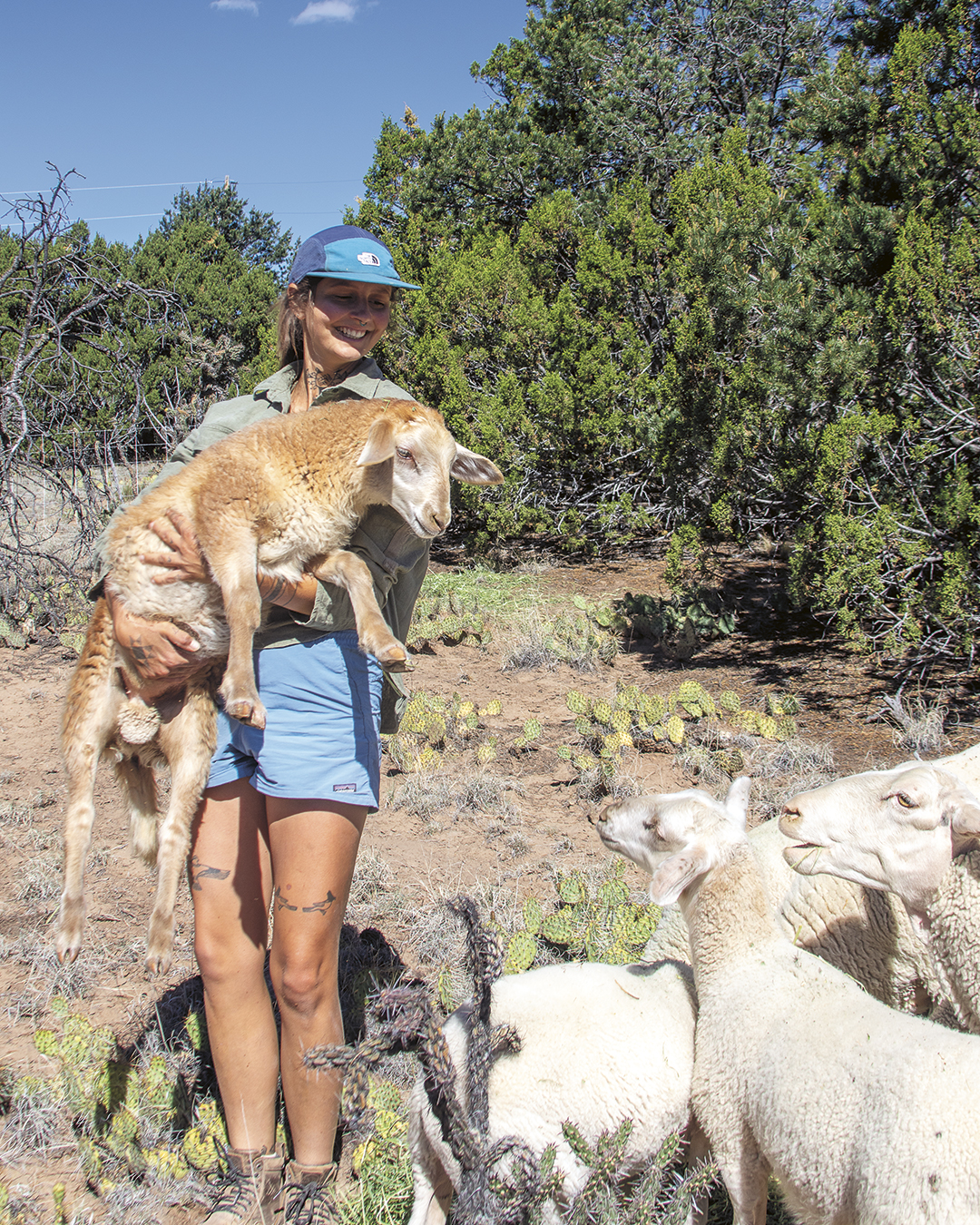
Nina Listro with her sheep.
Despite a few changes in tools, Listro is doing a similar thing to her milk that her Neolithic ancestors did to make yogurt long ago. Her method is this: Gather as much milk, ounce for ounce, as you would like yogurt (one quart of milk yields one quart of unstrained yogurt). In a stainless steel pot, heat the milk up to 180°F and then use an ice bath to cool it down to 115°F. Add a starter culture—for example, a single-serving of store-bought yogurt that is already full of Streptococcus thermophilus and Lactobacillus bulgaricus (yes, it’s just like making sourdough)—and hold the batch at 115°F for six hours in a dehydrator, an electric cooking pot, or even in a cooler in a bath of warm water (a trick from Listro’s Wondernut days). It never takes Listro more than thirty minutes to accomplish the initial heating up and cooling down and she says it’s considerably cheaper than anything you could buy at the store. I suppose that doesn’t factor in the costs of time, labor, equipment, and veterinarian care Listro invests to ensure her herd is healthy, happy, and producing the creamiest, sweetest, and tastiest milk around, but she assures me it’s worth it.
Note: The young farm’s yogurt is not for sale, but they do sell duck meat, duck eggs, and rabbit meat.
Nina Katz
Nina Katz is a food writer living in Albuquerque. They would like to see Froyo come back in a big way.