
New Liquor Laws Provide Opportunity
but Leave Some Restaurateurs Underserved
By Candolin Cook

Hibiscus Margarita at Ardovino’s Desert Crossing, photo by Stephanie Cameron.
Odds are, if you’d asked David Gaspar de Alba how he envisioned the grand opening of his Albuquerque restaurant Oni in May 2020, he wouldn’t have said, “With a take-out window.” Unfortunately, with COVID raging and health guidelines ever changing, Oni spent most of its first year in business as a to-go establishment, with some limited patio dining. In addition to the many other hardships the restaurant industry suffered during the pandemic, Gaspar de Alba says the loss of alcoholic beverage sales via on-site dining was hugely detrimental to Oni’s bottom line. “I’ve always said that you attract people with the food, but you make your money on the drinks,” he says. Once Oni did open its bar, they could only offer beer and wine because there was “no way in hell” the restaurant could afford a full liquor license.
For decades, New Mexico restaurants had to obtain a dispenser license to serve drinks made with liquor. These permits are finite in number (about four hundred), county specific, and incredibly expensive. Buying or leasing one of the in-demand licenses could set a restaurateur—often already operating on thin margins—back $300,000 to over $500,000 on the resale market. While efforts to reform this system had been underway for years, the pandemic brought new urgency to the needs of local restaurants, as well as breweries, wineries, and the state’s burgeoning craft distillery industry.
Finally, during the spring 2021 legislative session, a silver lining emerged for Oni and many other COVID-impacted restaurants hoping to expand their beverage programs. New Mexico lawmakers passed House Bill 255, a bipartisan effort to change several of the state’s liquor laws. Among other amendments, the bill removed restrictions on Sunday-morning alcohol sales, prohibited the sale of mini booze bottles at liquor and convenience stores, and overhauled existing liquor licensing laws to make it more affordable for New Mexico restaurants to serve spirits.

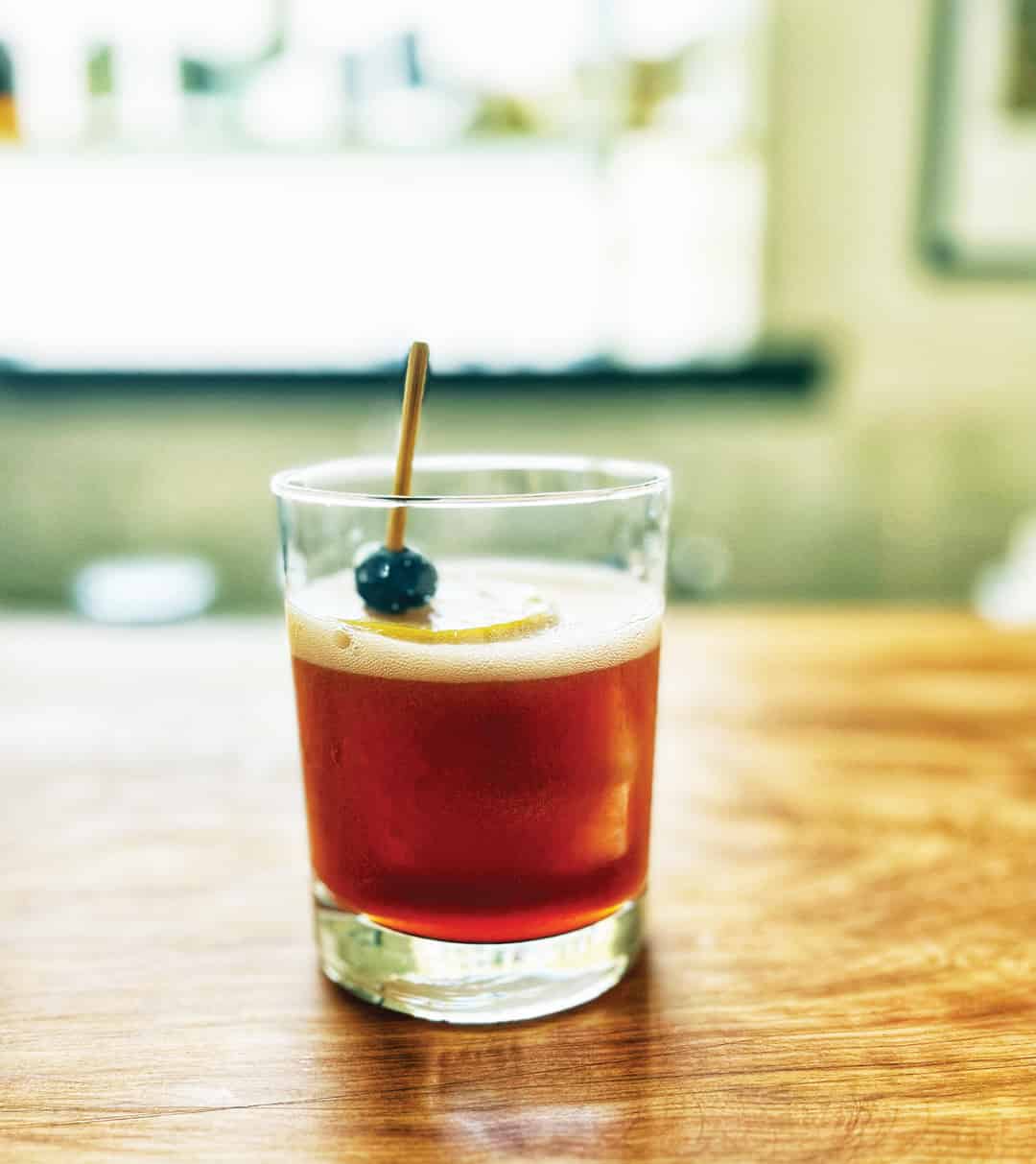
Left: Raja Raja at Paper Dosa, photo courtesy of Paper Dosa. Right: Oh, Sherry Baby at Restaurant Martín, photo by Stephanie Cameron.
Under the new system, restaurants holding a wine and beer Restaurant A license ($1,050 a year) could purchase a New Mexico spirituous liquors permit for an additional $500 a year, which would allow them to sell cocktails using hard liquor produced or bottled by New Mexico craft distillers. Alternatively, restaurants that wanted to serve name-brand and other non-local liquors could now buy a Restaurant B license for an annual fee of $10,000, instead of having to obtain one of the original dispenser licenses. Governor Michelle Lujan Grisham signed the bill on March 17, 2021, and the laws went into effect that July.
One of the first people in line for a New Mexico craft spirits license was Restaurant Martín co-owner and general manager Jennifer Rios. Since 2009, she and her husband, Martín Rios, had only served beer and wine at their Santa Fe restaurant. Jennifer explains that they never considered buying a dispenser license because of its exorbitant cost and because they “realized buying our restaurant property was a more solid investment than a piece of paper.”
Rios adds that a full bar setup would not have even fit inside their small dining room. A select assortment of New Mexico spirits works better for their space, she says, and customers are more understanding that they only serve one gin, for example, if there are only local products available. Working within these constraints has led to a more “curated and creative” signature cocktail program, which Rios says her customers genuinely enjoy. “New Mexico products hold their own, liquor to liquor, with what the world produces. We wouldn’t serve them if we didn’t think that was true.”
Like Rios, Paper Dosa co-owner Nellie Tishler jumped at the chance to add local spirits to her Santa Fe restaurant’s beverage program. A note at the top of Paper Dosa’s drink menu thanks the new state laws for the opportunity to “feature excellent local spirits from across the state blended with our homemade mixtures.” Although Tishler says she likes the local liquors and the challenge of coming up with unique cocktails, she admits that there are some drawbacks to having the craft spirits license versus a full one. “Local distillers sometimes run out of product, agave spirits (tequila) especially, and that’s what people really want to drink in this town,” she says. “If you want a drink to taste exactly [like one using a certain name-brand spirit], you can forget it. And it’s much more expensive. Local liquors are sometimes twice as expensive, and I can’t really pass that cost on to the customer because no one is going to order a $25 cocktail.” (Paper Dosa’s cocktails generally run $12 to $15.)
Tishler says she currently sells about $300 to $350 worth of cocktails a night, but she sees demand growing. Rios says similarly that mixed drinks at Restaurant Martín aren’t a huge money-maker as of yet, but the impetus of offering a cocktail menu is more about providing their guests with a full dining experience. Gaspar de Alba, who also opted for the craft distiller license, points out that not everyone likes beer or wine and calls the $500 fee to add local spirits a “no-brainer” investment.
In addition, all the restaurant owners interviewed say serving New Mexico–made spirits is in line with their broader values of supporting local. “Our philosophy is to buy as much local product as possible,” says Patrick Torres, co-owner of Black Bird Saloon in Cerrillos. He says that the craft spirits license has not only benefited his business but has allowed him to introduce New Mexico spirits to many of his customers. “When someone enjoys a local distiller’s product here, it creates a chain where they might then go out and buy a bottle retail or visit [that distillery],” he says.
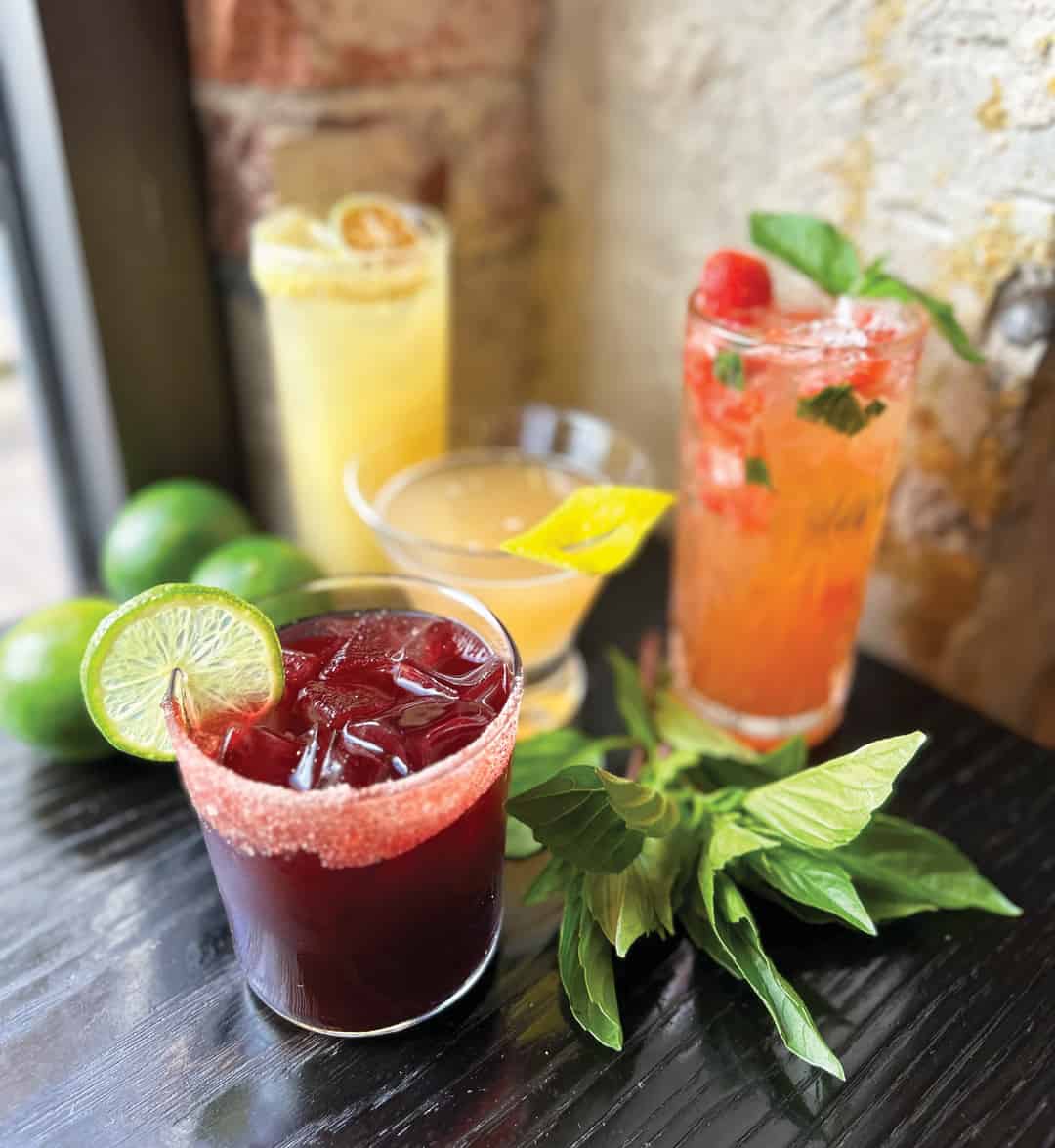
Seasonal cocktails at Oni. Photo courtesy of Oni.
Zach Hulme, owner of Still Spirits bar and distillery in Albuquerque, says he’s felt that support from his community, especially since the passage of HB 255. “It’s been good for us. Oni, for instance, is a great account. They buy more [whiskey, gin, and vodka] from us than liquor stores typically do—and more consistently. We’re small potatoes, so if we are the ‘well liquor’ at a restaurant like that, then we’re not jostling to be seen against the competition. Anything we can do to keep the money in New Mexico is good for all of us.”
However, not everyone is happy about the new licenses or the way their rollout was handled by the state government.
“It’s been so confusing,” says Robert Ardovino, owner of Ardovino’s Desert Crossing in Sunland Park. “I honestly still don’t know what the benefits or options are for people in my situation.” Ardovino is one of the many restaurant owners who purchased an original dispenser license before HB 255. Having a full bar prior to 2021 not only gave these restaurateurs a leg up on the competition, but many viewed the sometimes $500,000 license itself as an investment or a safety net for their future. When word of the bill got out, lawmakers and business advocacy groups fielded panicked calls inquiring if the dispenser licenses would be rendered virtually worthless overnight.
“Change is not easy, but a lot of that initial fear turned out to be [overblown],” says Carol Wight, CEO of the New Mexico Restaurant Association (NMRA). She estimates that for the older liquor licenses originally purchased for $300,000 to $350,000, the average devaluation has been about $50,000, with some still selling at full value. While that potential loss is not insignificant, it’s much less so than many had feared. This is largely because the NMRA and other advocates negotiated with the state so that the original licenses—still restricted in number and still sold person to person—have fewer restrictions than the new Restaurant B full liquor licenses at $10,000 a year.
For example, restaurants opting for the latter must make 60 percent of their revenue from food sales; must implement a three-drink maximum; cannot have a “bar-like setting”; and cannot serve alcohol after food service stops or after 11 pm, whichever is earlier. While those parameters might work for smaller restaurants, they are a no go for many larger and/or chain restaurants, such as Chili’s or local sports bars. Wight adds, “Ten thousand dollars a year is still a lot of money for a small independent restaurant. You have to really make sure you’re capable of selling a lot of liquor, which may be hard to do while hitting all of those [restrictions].” (When asked why Oni doesn’t apply for a Restaurant B license, Gaspar de Alba said he would have to be open until 2 am to justify the cost—and then, of course, would be in violation of the 11 pm rule.)
At the same time, Wight says the Restaurant B license removes a steep barrier of entry for restaurants, especially in rural areas, who want a full bar but can’t take out a $300,000-plus loan or can’t find a dispensing license available in their county. “There are pros and cons to each of the licenses.”
Another compromise the state agreed to was (what promised to be) a hefty tax deduction for original license holders—up to $50,000 a year for up to four years. Ardovino, however, says he has only received a total of about $12,000 in deductions. After examining the fine print and hearing from license owners, Wight refers to the tax deductions as a “boondoggle,” saying that someone would have to make “so much money” to get the kind of maximum credit the state was offering. She agrees with restaurateurs like Ardovino who say there is a lack of clarity.
“Twenty years ago, I had to pay through the nose [for a license] when I didn’t have the money,” says Ardovino. “It sort of felt like being forced to buy into the mafia in order to do business . . . and then they just left us to figure out all this stuff on our own.” He says when the bill first passed, he received calls from speculators offering to buy his dispenser license, but he was unsure if a different class of license would work for all aspects of his business. Holding on was likely a wise decision, but he still worries what the market will look like down the road when he’s ready to retire. Ardovino admits that he needs to do more research to navigate the tax situation and understand what his options are for resale someday, but that as a busy restaurant owner, finding the time or the money to hire someone to explain it all is daunting. “I’m just trying to keep my business going. We’re still down 30 percent in revenue from pre-COVID, and the tax incentives are nowhere near enough to make up for the [license devaluation],” he says.
According to data available on the New Mexico Regulation and Licensing Department’s Alcoholic Beverage Control Division website, dispenser and Restaurant A licenses still greatly outnumber the new generation of NM Spirits permits and Restaurant B licenses throughout the state. For instance, in Bernalillo County there are currently 193 Restaurant A licenses (allowing beer and wine sales only) versus 27 Restaurant A + NM Spirits (referred to colloquially as a craft spirits license). In many rural counties, the total number of craft spirits and/or Restaurant B licenses that have been issued is zero. Presumably, as the state’s craft distillery business continues to grow and the restaurant industry recovers from pandemic-era closures, those numbers will rise. How these options will ultimately affect the value of dispenser licenses remains to be seen.

Candolin Cook is a historian, writer, editor, and former co-editor of edible New Mexico. She recently received her doctorate in history from the University of New Mexico and is working on her first book.