Words and Photos by Willy Carleton
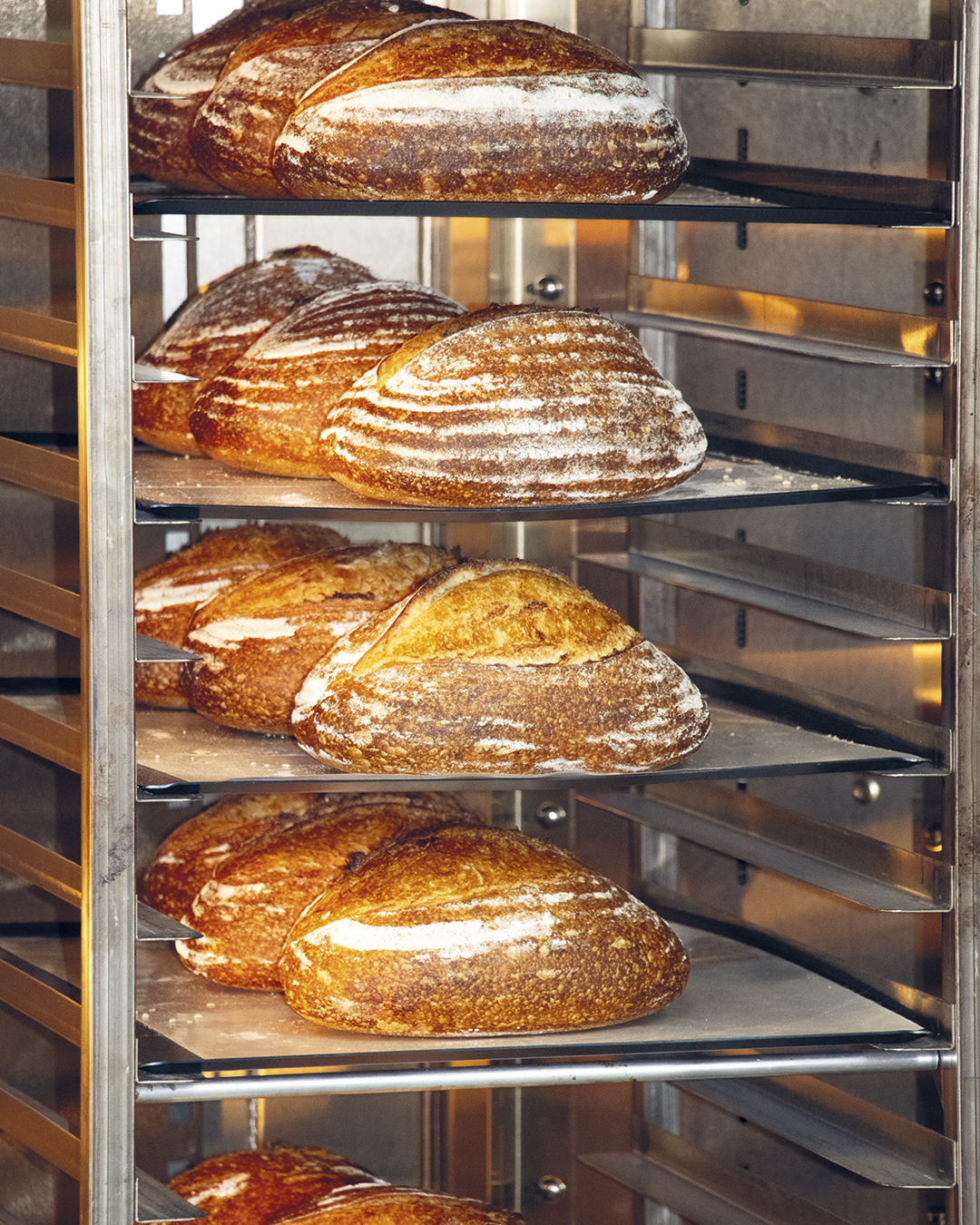
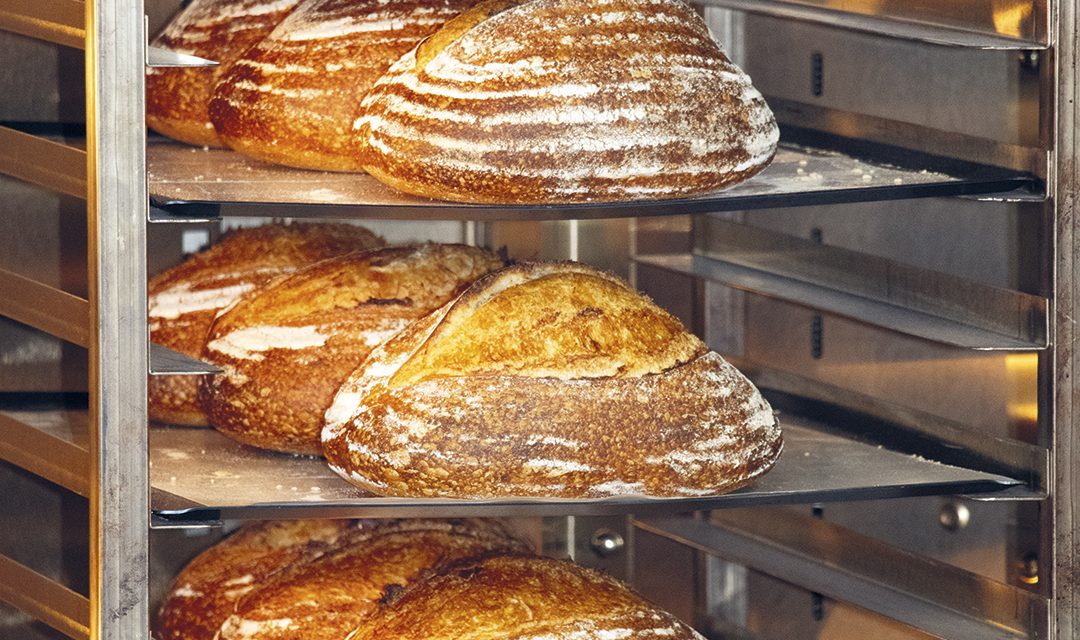
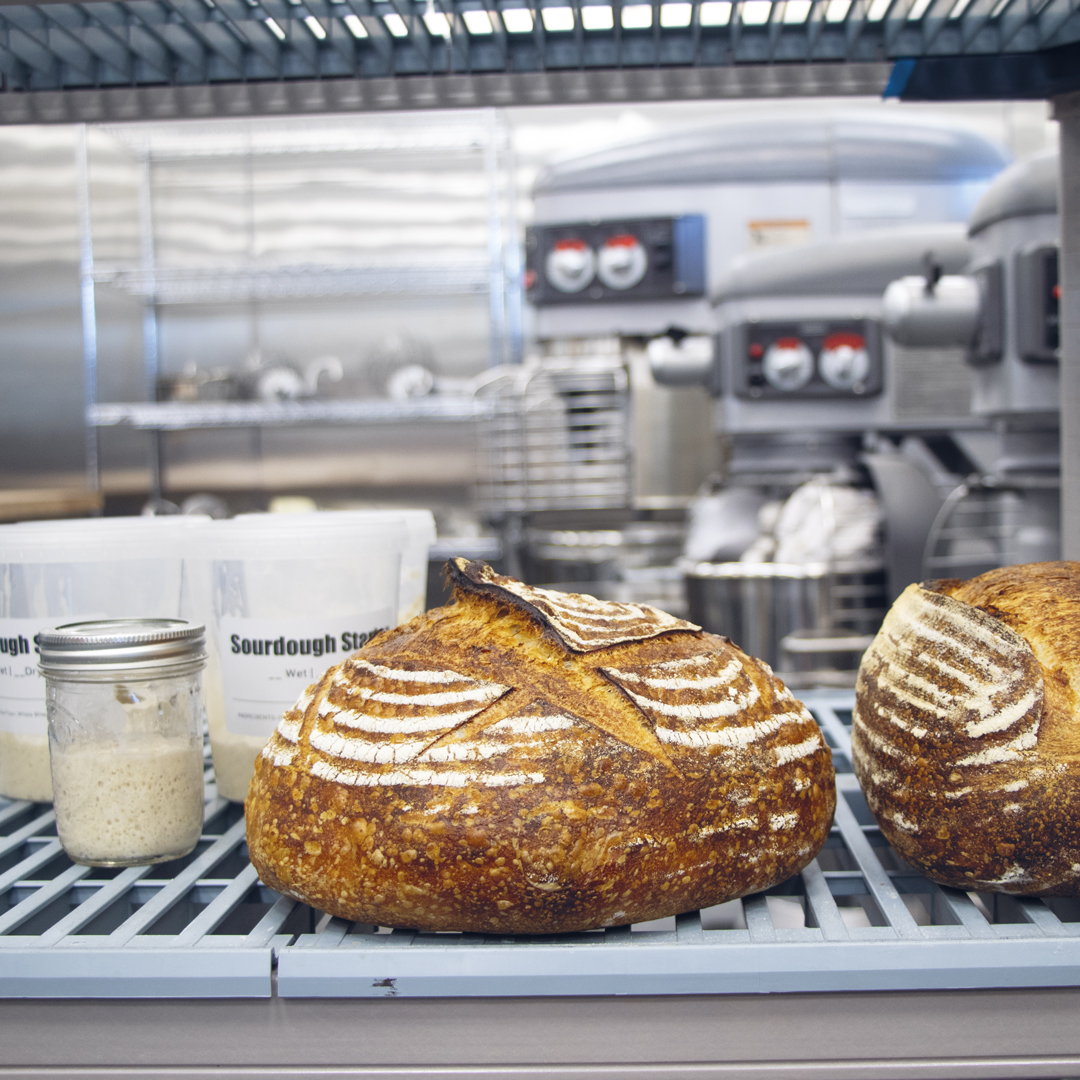
Loaves from Beginner Sourdough Class at Sherwood Bread.
One fearless morning in February, I grabbed a jar from my cabinet, mixed in a small amount of flour and water, and placed it atop my refrigerator. Just like that, I had taken the plunge into the world of baking sourdough bread. What had seemed so daunting—starting a starter—ultimately took less than five minutes. I was underway on a winding, enjoyable, full-sensory culinary journey that has not stopped since.
With a starter started and knowing very little about the art of sourdough baking (or the art of much other baking, for that matter), I was lucky to reserve a space in a normally sold-out class with Sherwood Bread at the Indian Pueblo Entrepreneur Complex in Albuquerque. Sherwood Bread has been offering sourdough classes for roughly two and a half years, growing in popularity and ambition along the way. “It’s been an amazing story. As of today we have about twenty volunteers, we’ve served about twelve hundred students, this is our second location, and I’m still processing what the heck is happening,” founder Igor Dernov mused at the beginning of our class. “It’s mind-blowing.“
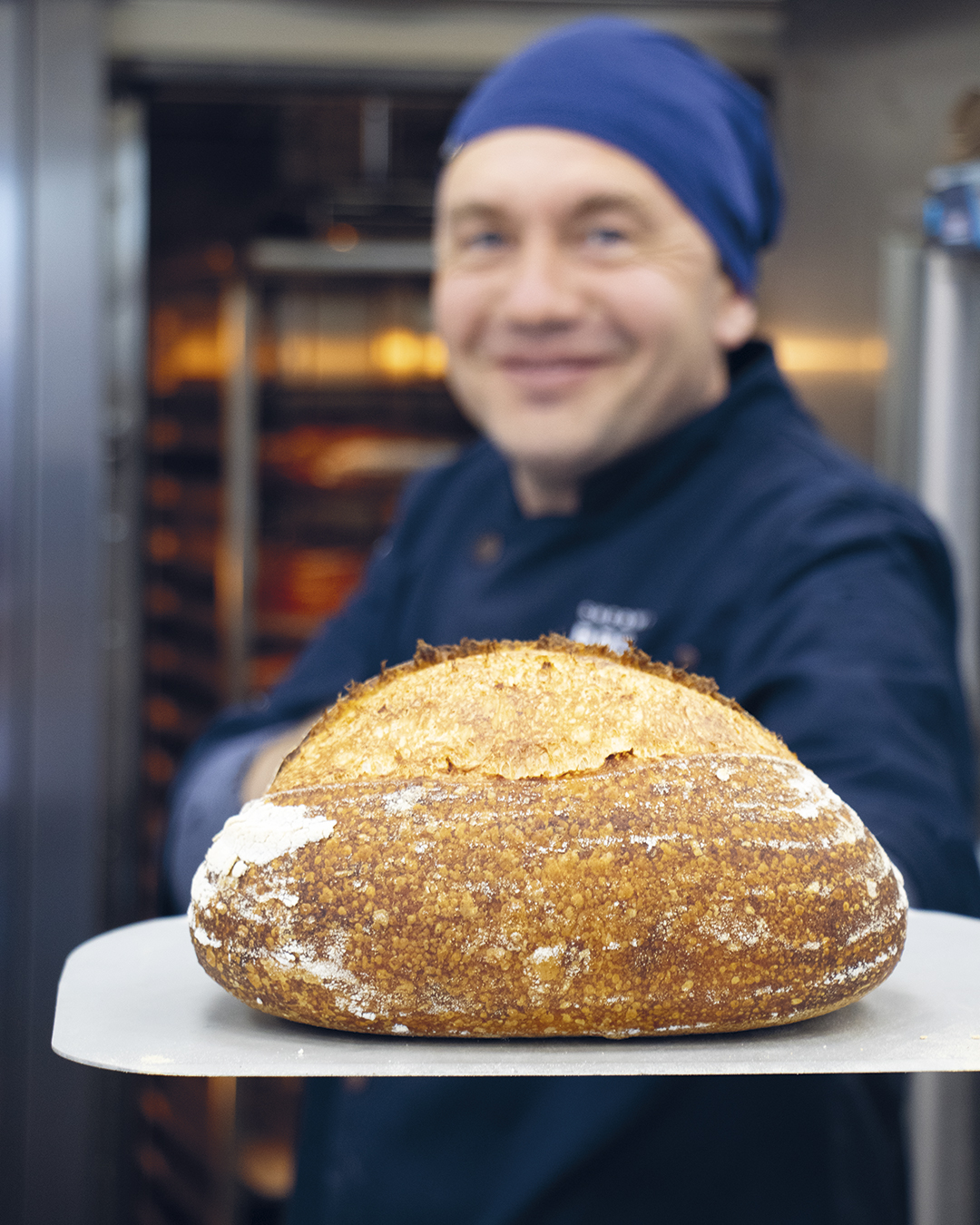
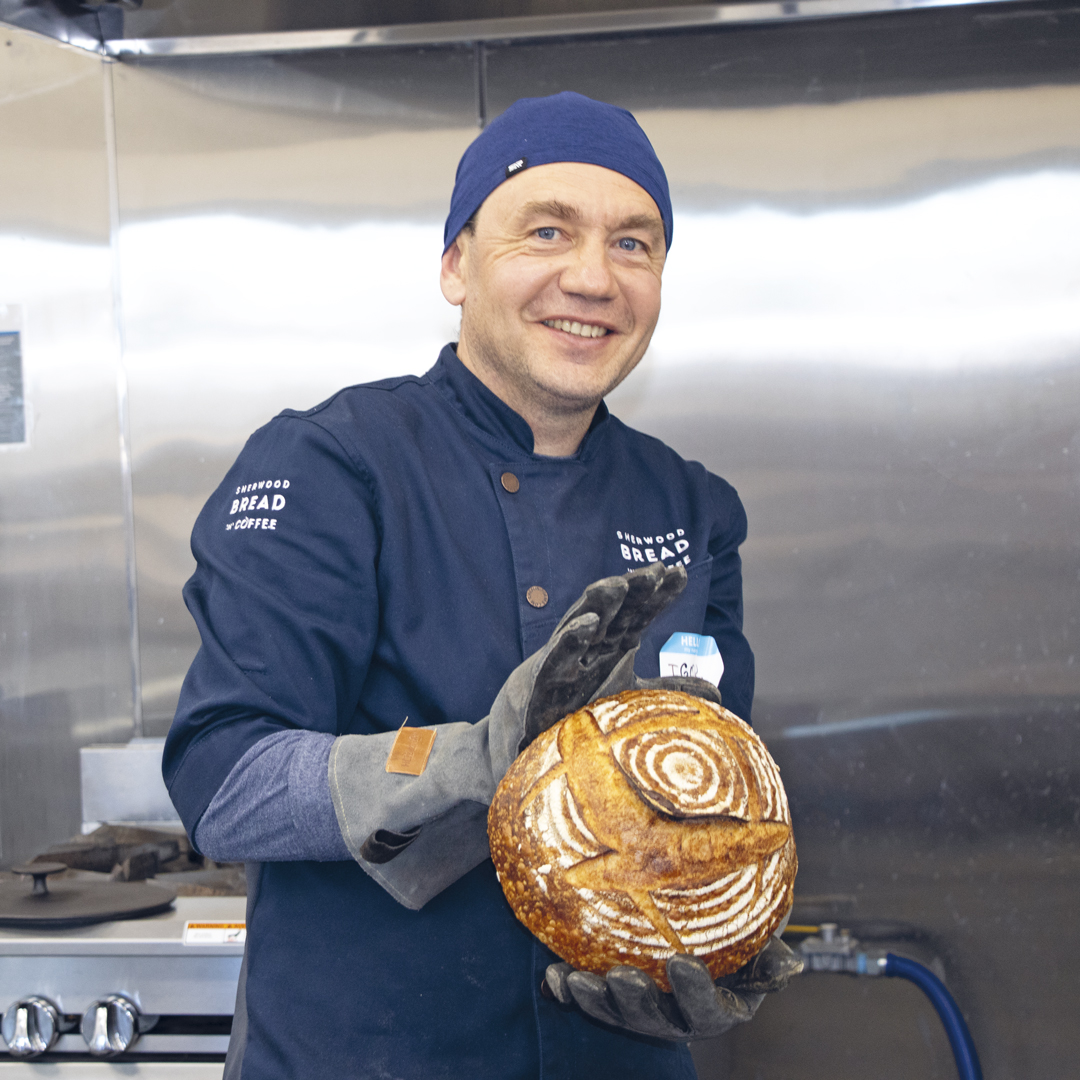
Igor Dernov, owner of Sherwood Bread, showing off the bread from his class.
Dernov is a charismatic chef with an engaging smile, a lifetime of sourdough baking experience, and a natural command of a classroom. The Beginner Sourdough Class I took is one of several sourdough classes and mini-workshops offered by Sherwood Bread, and provides a solid foundation for any novice bread maker. Starting us out in the classroom, Dernov introduced himself, outlined the sourdough-making process, and shared an overview of the day’s objectives, all while assembling and baking a couple of quick and savory flatbreads (or “Turkish pizzas,” as he calls them) from his previously made dough.
After devouring this tasty breakfast snack, the class moved into the spacious bakery teaching kitchen to learn each step of the sourdough-baking process. For roughly three hours, we weighed and mixed ingredients, whisked (Dernov favors Danish dough whisks over mixers), folded and stretched dough, and scored loaves before setting them into the oven. Along the way, Dernov broke down the rationale behind each step, explained how to avoid potential pitfalls (“Watch the dough and not the clock,” for example), and relayed some of the nuanced subtleties involved as he observed and corrected our movements.
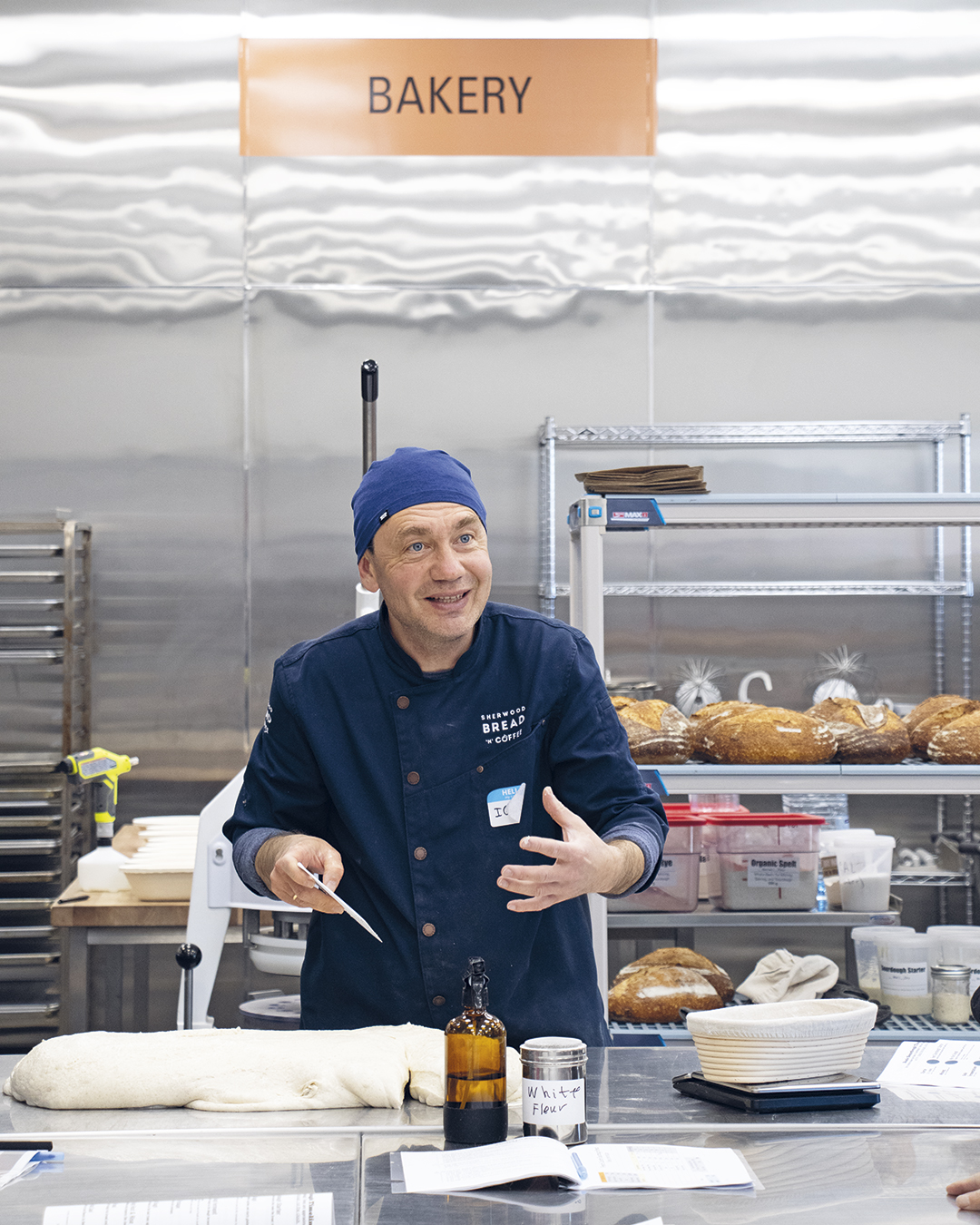
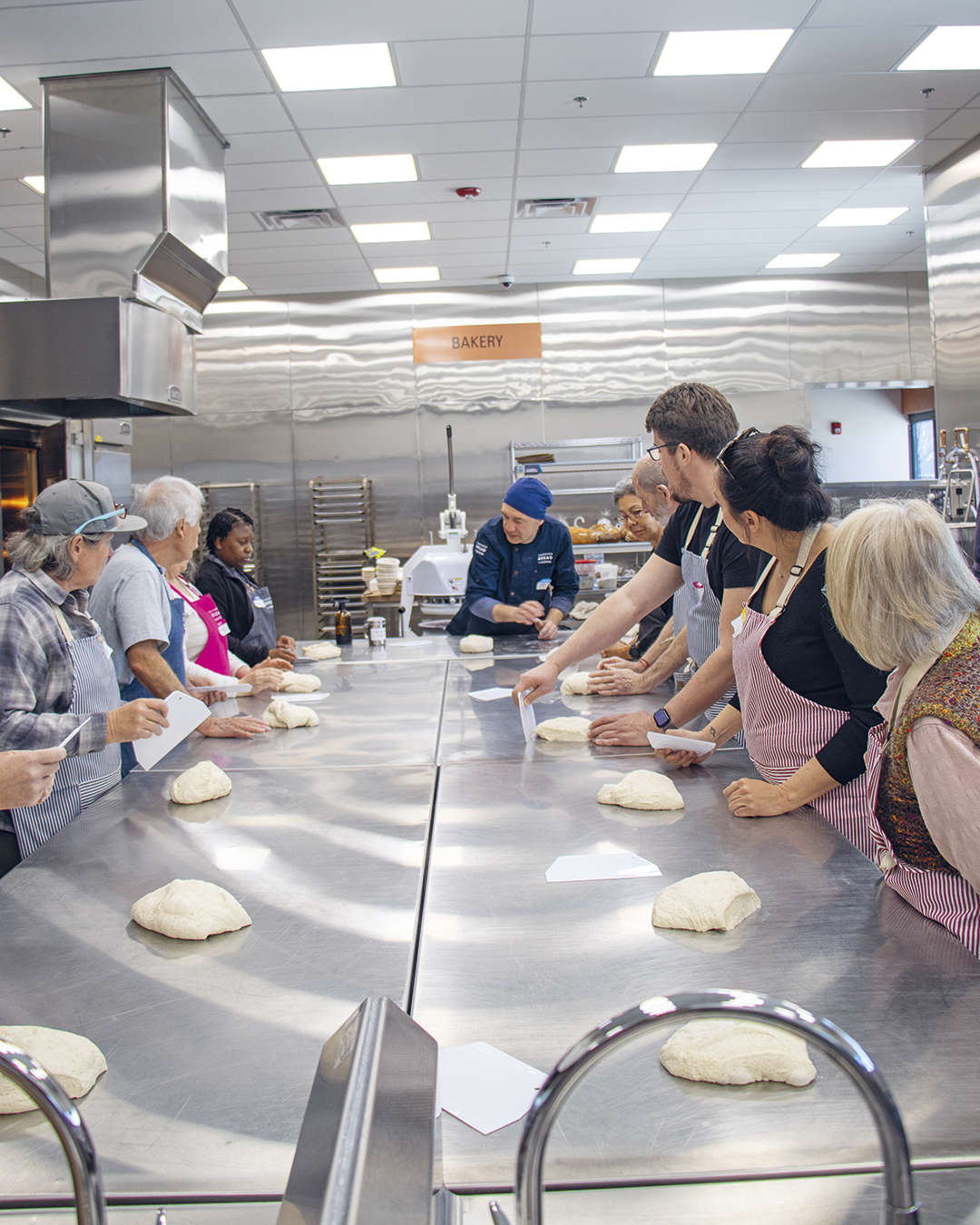
Igor Dernov instructing the class in a sourdough workshop.
“If you need to know one single thing,” Dernov stressed at one point, it’s that “sourdough is not a recipe, it’s a journey.” Beyond the recipe itself, he expounded, there are many small variables in baking—ranging from the strength of your starter to the depth and angle of the scoring pattern on the bread—and they all will affect your bread. Something as simple as whether the cast-iron Dutch oven you use is enameled or not, for example, or whether your oven is gas or electric, will affect your cooking time. “When you make sourdough bread, all senses need to be involved. Your smell. Your hands. The amount of pressure you apply. Look around—is it hot outside, is it cold?” This level of awareness is part of the zen of bread making, so to speak, where each loaf reflects the current moment. “Every time you make a loaf, it’s going to be slightly different. In the summer, you will have warmer temperatures in the house, in the winter colder temperatures. You will get flour from different sources. All of this will affect your bread. Each time will be different and you need to accept this.”
One of the toughest variables for new sourdough bakers, and one of the driving reasons Dernov teaches these classes, is altitude. “What makes this class unique is that it offers high-altitude adjustments in real time,” he announced toward the beginning of class. “You can watch lots of Instagram and YouTube videos, read books, and stuff like that, but you’re still not going to be successful because here we have high-altitude adjustments that need to be done. You need to understand the process . . . so instead of wasting flour or time or getting frustrated, you can jump right away into bread baking. You will get better with practice. That’s the only way.”
Teaching the art and nuances of high-altitude baking is a key part of Sherwood Bread’s ambitious road map for the next several years. Dernov hopes to grow as a school that will eventually train professional chefs in high-altitude baking while continuing to provide classes for everyday bakers looking to hone their skills. His plans for 2026 include getting certified to train professional chefs; developing new sourdough classes, such as one focusing on using locally grown White Sonora wheat and blue corn; and training new instructors to teach cooking classes that go beyond baking, covering everything from focaccia to tamales to ice-cream making. In the years ahead, he hopes to expand into a new location, perhaps adding a café/bakery alongside the school. His goals are lofty, but, if the success of his classes is any indication, they seem entirely attainable. “Our goal is to educate and raise the standards of bread, because if you want to change the world, first you build a school.”
I left class with a loaf of the most delicious sourdough I’ve had in years, pages of notes on how to try to replicate that loaf at home, and a determined enthusiasm to make a mess of my kitchen in the service of achieving that goal. In the weeks that followed, I managed not only to keep my starter alive but to bake some sourdough loaves that approached the signature “rustic, tangy, chewy” tagline that features prominently on Sherwood Bread’s sourdough manuals. But there was something else, too, that made it taste good.
As Dernov emphasized, it has been a journey, not a simple act of plugging in a formula to get exact and entirely predictable results. The dough has sometimes been stickier, or has risen too much; some loaves have come out a little flatter or a little less crispy than that prototypical loaf I took home from class. The process of making the dough has been, to my surprise, quite enjoyable. It’s been an exercise in mindfulness, propelling me to get my nose close to the jar to learn the smells and study the bubbles of the starter, and to learn with my hands as I feel the strength and airiness of the stretchy dough change throughout the day, all while patiently observing and allowing the life within the dough to do its work. It’s also been a low-key meditation on cocreation with the wild, unseen life—the yeast and bacteria that animate the levain—that exists within our air, our water, and even our bodies.
This deepening of my relationship to something so basic, my own bread, keeps me feeding the living starter in my fridge and, despite any mishaps or imperfect conditions along the way, makes each rustic, tangy, chewy loaf of my sourdough uniquely delicious.
2401 Twelfth Street NW, Albuquerque, 505-750-1144

Willy Carleton is a historian, writer, and educator, helping aspiring gardeners and farmers hone their skills and deepen their connection to the land through the School of the Desert Garden. He is a former editor of edible New Mexico and is the author of "Fruit, Fiber, and Fire: A History of Modern Agriculture in New Mexico." You can follow his current ruminations on growing food in the drylands at desertgarden.substack.com.