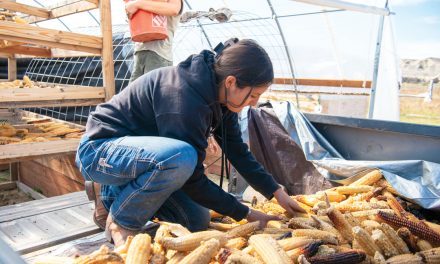
As New Mexican farmers become elders, who will take up their mantle—and where?
By Sarah Mock
Grassland restoration is ongoing at Ute Creek Cattle Company in Clayton as invasive cholla cactus is removed,
photo courtesy of Tuda Libby Crews.
New Mexico’s farmland has seen it all. For thousands of years, some part of the state’s fertile riverbanks, high mountain valleys, and yawning prairies have helped nourish dozens of Native tribes, conquistadores and Spanish settlers, norteños and revolutionaries, and American newcomers of countless persuasions. Just about every possible crop has risen up from these farms and ranches, including many generations of homegrown New Mexicans.
Who will farm next? is, therefore, not a new question. But for the current generation of New Mexican farmers, this question often lacks a straightforward answer. And given that according to the US Department of Agriculture, the average age of New Mexican farmers today is north of sixty years old, the timeline for determining the fate of the state’s farms and farmland is shortening at the same time that it’s growing more complicated.
The simplest possibility—passing on farms and ranches to the kids who grew up in the business—is trickier than it sounds.
“Like many families in agriculture,” reports Tuda Libby Crews, owner of Ute Creek Cattle Company in Clayton, “the siblings could not come together.”
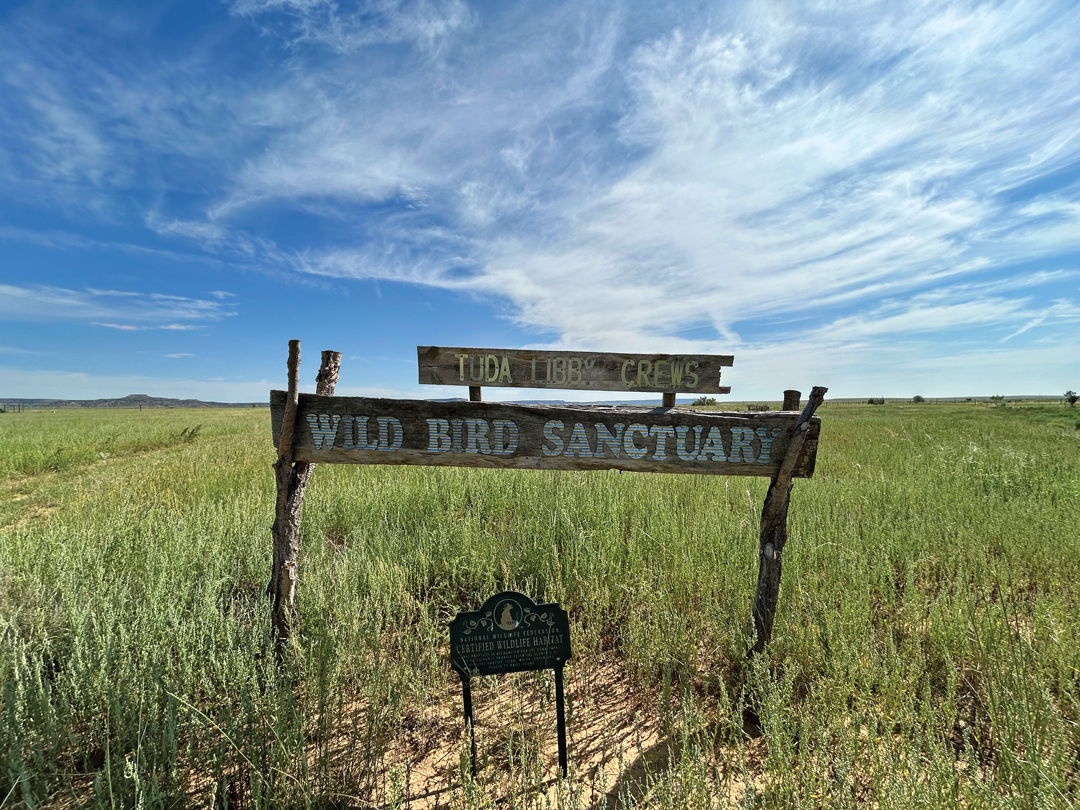
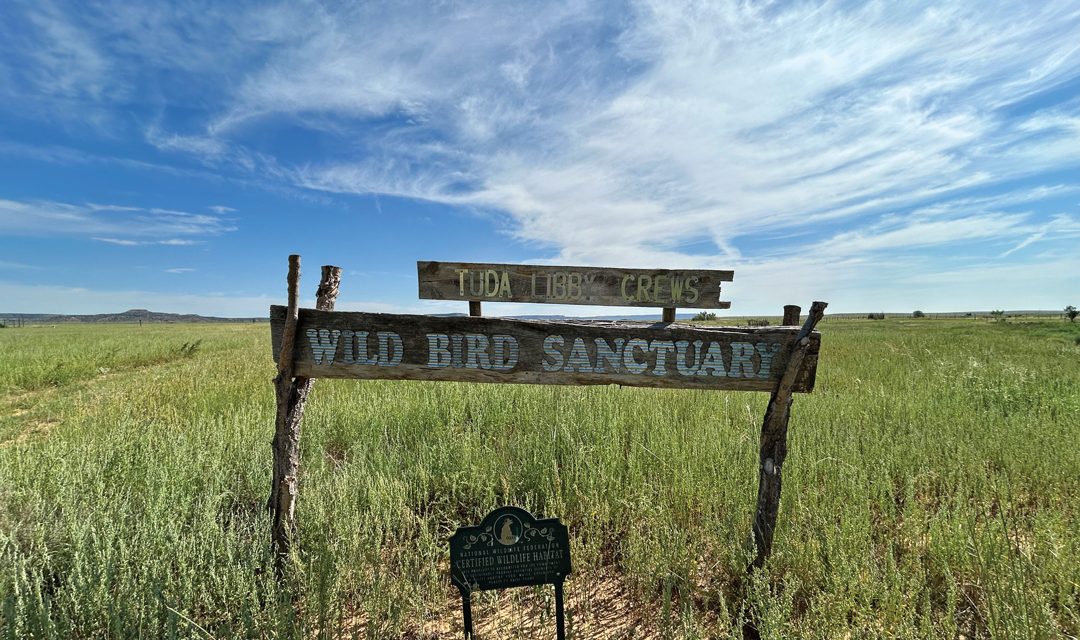
The fenced twenty-three-acre TLC Wild Bird Sanctuary at Ute Creek Cattle Company provides water, food, and habitat for short-grass prairie birds to breed, nest, and raise their young, photo courtesy of Tuda Libby Crews.
Crews and her four siblings are seventh-generation heirs to a historic cattle ranch in northeastern New Mexico. Despite decades spent away, she always knew she’d return to the ranch where she grew up, and she did so in the mid-2000s. After her parents passed, the issues that the adult siblings faced—distances of all kinds—meant that in the end, the single family ranch had to be divided into five individual properties.
“It was a very difficult and painful experience, and costly on many levels,” Crews says, and though the family has worked through the pain and anger since, the properties have remained separated so that each sibling could make their own decisions.
As Crews points out, this is not an uncommon occurrence in agriculture today, especially as fewer farm and ranch heirs aim to return and cultivate the land themselves. Though there is no specific data gathered around this trend, people like Lance Woodbury, a farmland succession expert based in Missouri, have anecdotally noticed more and more cases where children have not or do not plan to return.
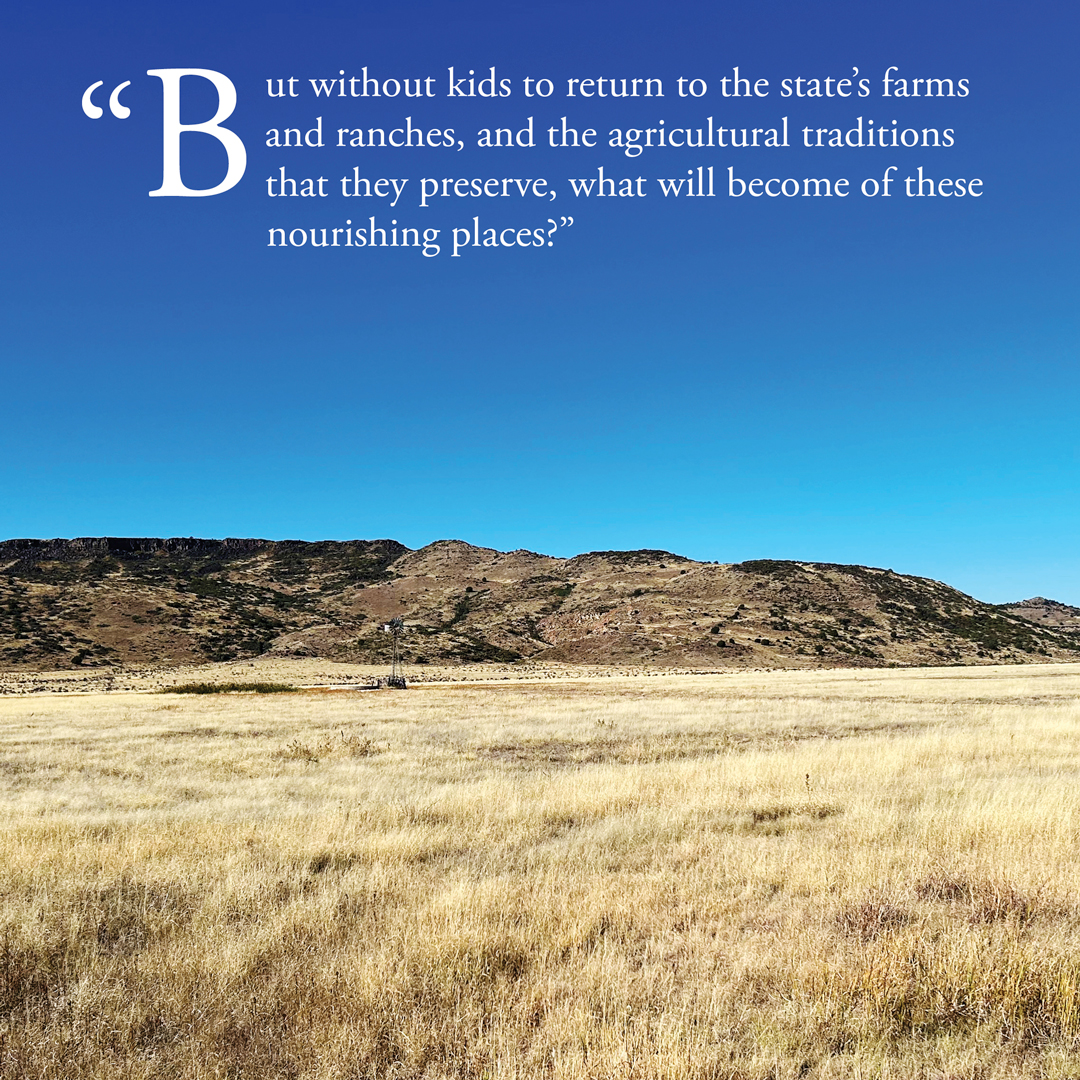
“I wonder about a ‘missing generation’ [of farm kids],” Woodbury says. Thinking about his own childhood spent on the farm in the 1980s, he remembers seeing a lot of economic strain and discussion of whether or not there was a future in farming. It follows that witnessing the hardships of farm life would encourage heirs to plan their futures elsewhere. But without kids to return to the state’s farms and ranches, and the agricultural traditions that they preserve, what will become of these nourishing places?
That question is one that Crews and her family have taken on directly as they imagine the future of Ute Creek. She wanted to help her children and grandchildren avoid some of the pitfalls she and her siblings faced, and to find a way to ensure that the ranch would be preserved for ranching in perpetuity.
This led her to a conversation with the New Mexico Land Conservancy, an organization that is helping secure a conservation easement on the ranch. These easements are a type of property right that prevents land from being subdivided or developed in the future. This is especially critical given that research by the American Farmland Trust suggests that more than 200,000 acres of farmland in New Mexico are at risk of being developed or otherwise converted in the next fifteen years. While Bernalillo County farmland is, predictably, being developed the fastest, rural counties like Colfax, where Ute Creek is located, are also at risk. And easements can do more than prevent land from being turned into condos or parking lots.
“Easements are a tool that protect lands from being developed while allowing continued agricultural use, and can provide landowners with additional resources to keep doing what they’re doing,” says Raena Kamakahi, conservation project manager at the conservancy, which has established more than 130 easements covering 700,000 acres. The work she’s referring to, in many cases, is conservation efforts and habitat restoration. The Ute Creek Cattle Company fits that mold, as Crews and her family have worked hard to regenerate their land, doing everything from removing invasive tamarisk (also called salt cedar) along their ten miles of creek to improving soil health and building a bird sanctuary.
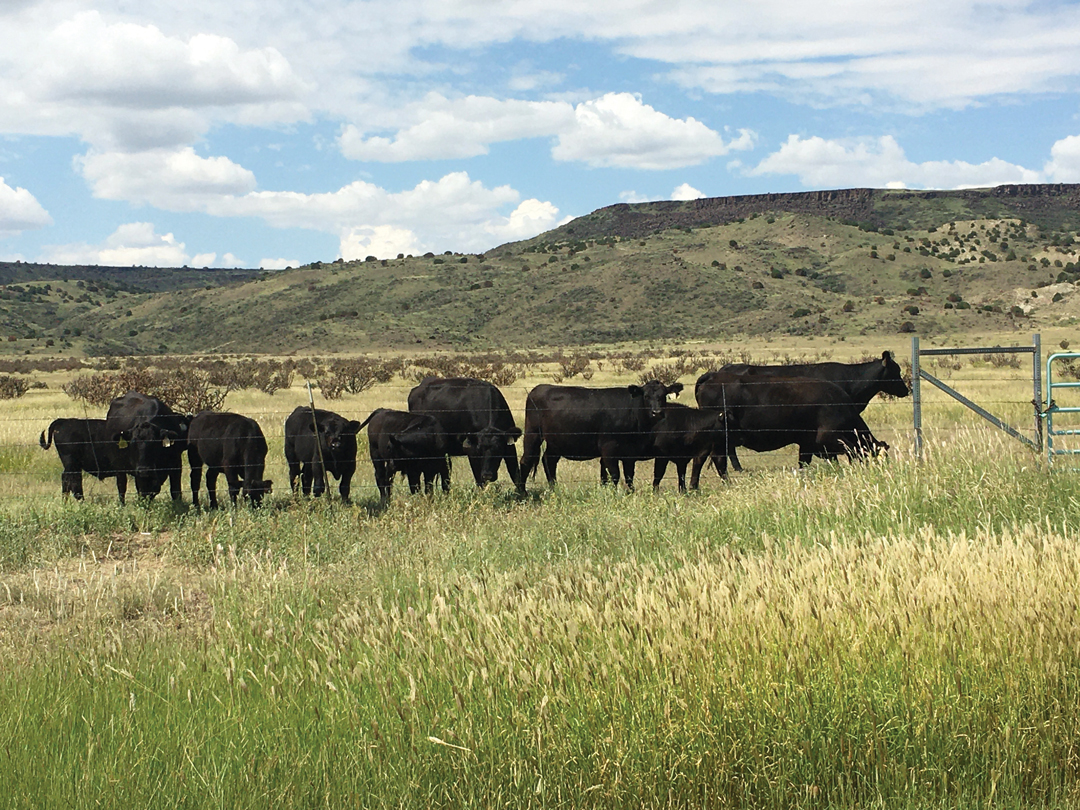
Angus cows with calves thrive on healthy grasslands at the ranch, photo courtesy of Tuda Libby Crews.
“This work isn’t just for the next five or ten years,” Kamakahi says of the conservation easement they’re creating to safeguard the Crews’ work. “We’re able to protect this land in perpetuity. It helps with water quality, wildlife, and just keeping food production in our local communities. We’re protecting that forever.” Especially for farms near urban centers, conservation easements can help relieve the pressure farmers face to sell their land for development, and landowners are compensated, either with cash or tax incentives, for making this long-term commitment.
An added benefit of conservation easements is that they can make owning farmland more accessible to young and beginning farmers. For many current farmers and landowners who’d like to see their land stay in agriculture, they find that young would-be farmers simply lack the resources to compete for land against developers. This alone motivates some landowners to pursue a conservation easement, or to work with organizations like New Mexico LandLink, which, since 2023, has been connecting existing farmers and landowners with those interested in continuing to use the land for agriculture.
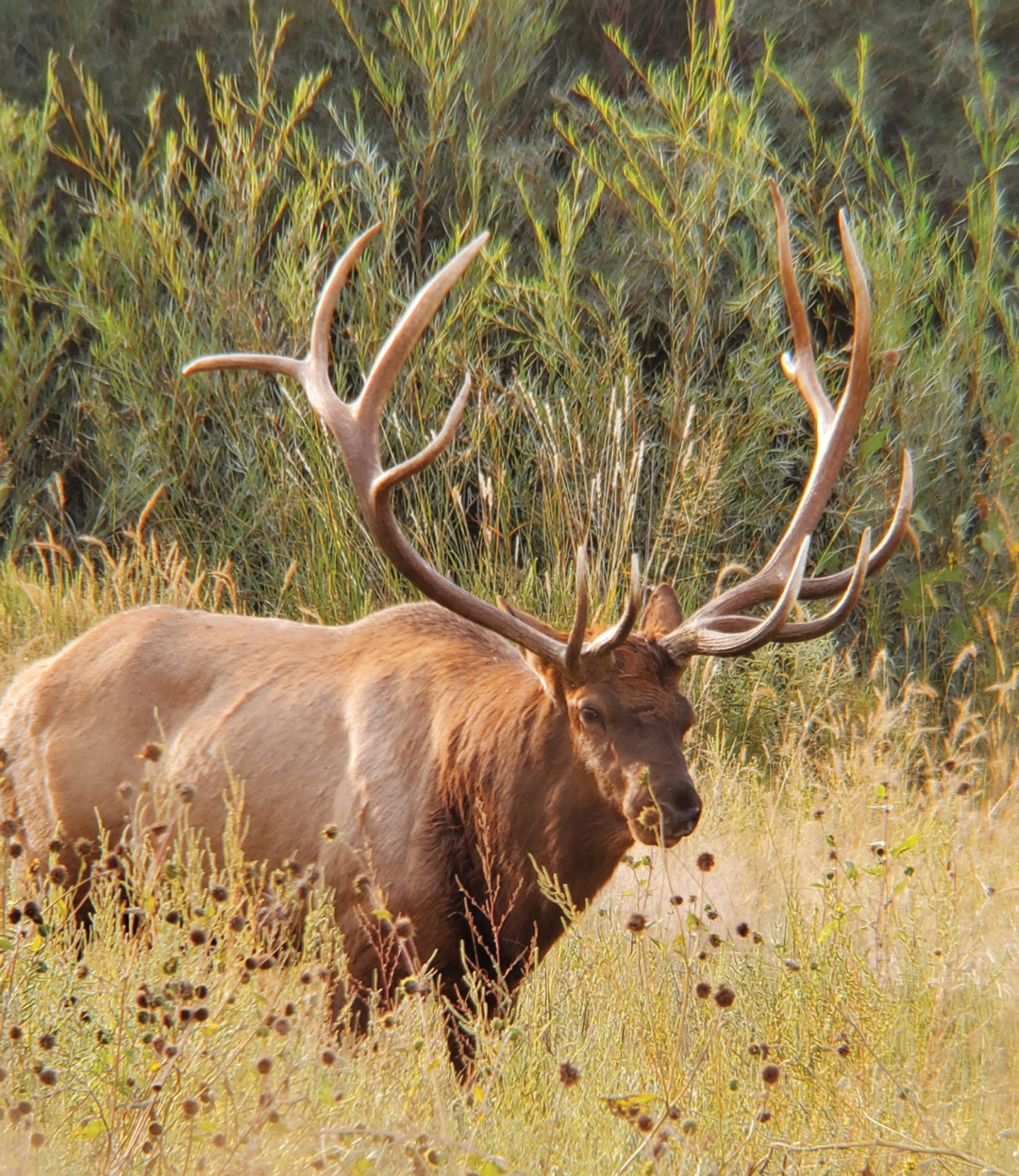
Implementing conservation practices has increased wildlife species and numbers at Ute Creek, photo courtesy of Bulldog Mesa Outdoors.
Another group, the New Mexico Agrarian Commons, is taking this work a step further. This collaboration between New Mexican nonprofits aims to own and preserve farmland in the state and make it more accessible for next-generation and underserved farmers, especially farmers of color. Isabelle Jenniches, cofounder of NM Healthy Soil and one of the NM Agrarian Commons’ founding board members, says that this structure gives current and retiring farmers and landowners an impactful way to pass on their farmland while ensuring it stays in agriculture and continues feeding their communities.
“It honestly sells itself,” Jenniches says of the unconventional model. “People are really motivated by a love of land, a connection to it. It’s a beautiful interplay between culture and ecology.” In discussions she’s had with everyone from landowners and farmers to community members, the idea has proven popular and continues to win support—especially because finding ways to ensure that new farmers have durable and equitable access to land is critical to advancing work around biodiversity, water quality, and ecosystem health.
“How can you ask people to invest in soil health,” Jenniches asks, “when farmers don’t know if they’re going to be here next year or next month?” Signing ninety-year leases with participating farmers is one way the group plans to empower farmers to make long-term investments not only in the health of the land but in their local communities as well.
But transitioning a farm is more than just a question of what farmers hope for their farm. Another issue is that farmers are not only farming longer, but Americans in general are living longer too, and both late-life health issues and the simple desire for a slower, less physical retirement often means that when farmers reach retirement age, selling the land is necessary. Farming is not an occupation that usually involves a pension.
Today, selling farmland is itself a fraught decision, not least because in addition to the destiny of the land itself, potential sellers can also sell other kinds of property, like mineral and water rights. Demand for water rights in the state continues to grow, especially as Santa Fe and Albuquerque expand, but concerns about the process of selling rights out of agricultural communities, and the threat this poses to old agrarian traditions, is growing too.
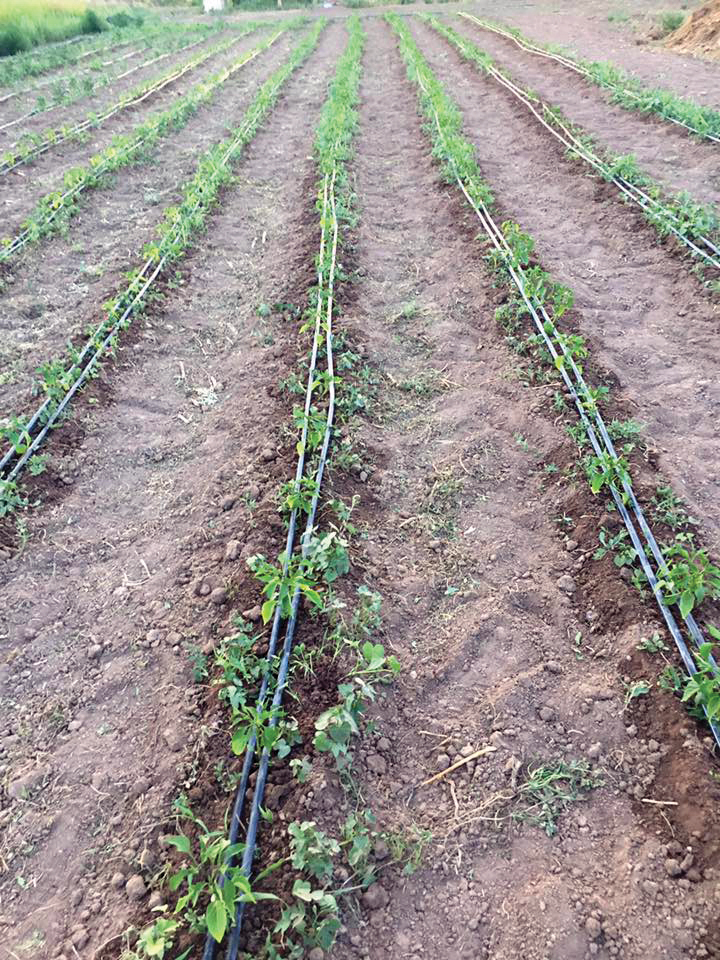
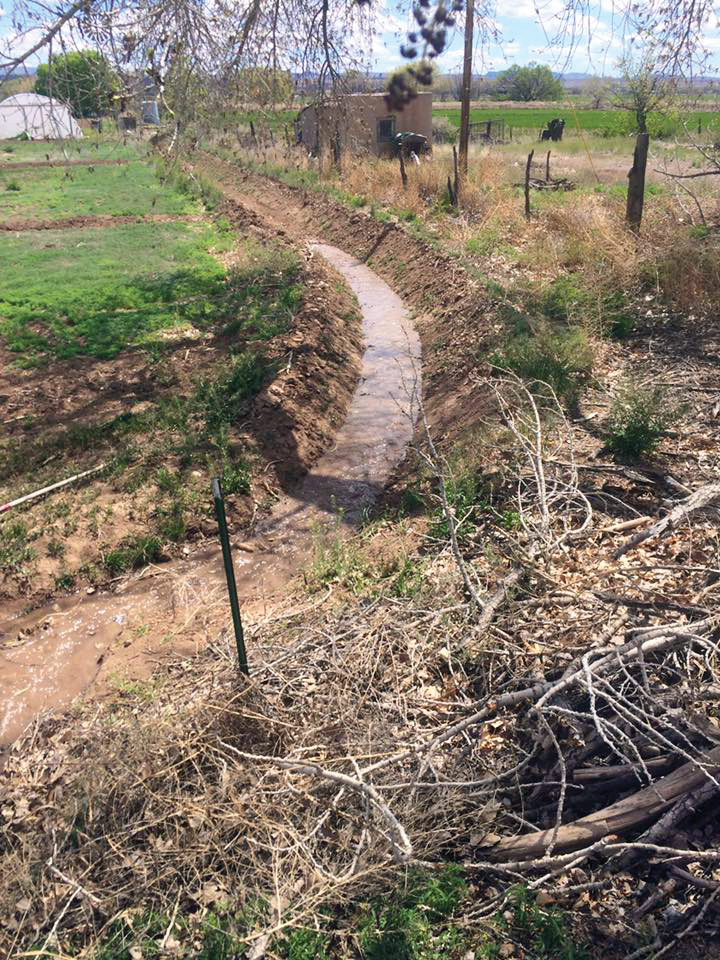
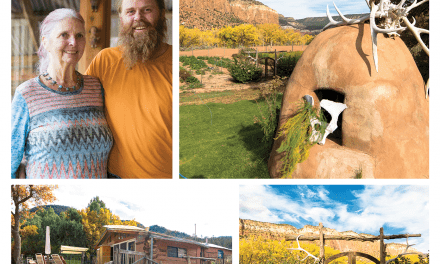
Joaquín Luján’s farm in Polvadera, Rancho Entre Dos Acequias, photos courtesy of Joaquín Luján.
Polvadera farmer Joaquín Luján isn’t as worried about preserving the land for his kids as he is about preserving his farm’s water rights, and the power that comes along with those rights, for his community. His small property has senior rights, which gives him a strong voice on local water issues. This is increasingly important as more and more water along the Rio Grande is sold for nonagricultural uses, and he’s seen how the displacement of the water from the sale of nearby properties impacts neighborhoods like his.
“Off the Rio Grande, there’s less and less community and more and more commercial,” he says. He fears his young neighbors, who are trying to become the next generation of farmers and ranchers, have almost no chance of getting water access for farming when they’re up against major businesses and municipalities from across the state.
Though Luján is slowing down now that he’s in his seventies and his wife is interested in being closer to kids and grandkids, he is holding on with the hope that there’s an opportunity to make the farm, the water it uses, and the land it occupies a durable part of the local fabric.
“I’m looking toward some kind of entity that might continue to use the farm as a school,” he explains, thinking it would be a good destination for South Valley Albuquerque schoolkids who he’s already connected to through his longtime work with the SouthWest Organizing Project.
Luján, like many farmers, is on the lookout for a unique opportunity to transition his farm in a way that preserves the integrity of the land and its special role in the local culture. This aim is not easy to achieve, and many farmers never do. The reality is that at the end of their careers, many farmers will hang up their tools for the last time, and the land they tended will pass on either to another farmer or rancher or to someone else, and the land will go by a different name, likely transition to a different use, and have a different destiny.
This question of farm and farmland succession is a difficult and painful one to discuss, for farmers maybe most of all. Many farmers that I reached out to for this story were not interested in talking about it, partly for the same reason that anyone might resist discussing their succession plan with a journalist: To do so requires publicly confronting our own inevitable demise. Compound that with the painful decisions involved in reducing a sacred space to a piece of paper and divvying up your life’s work or alienating your children, and that makes for a nasty landscape of pitfalls and land mines that most would rather avoid.
“It took me almost ten years to get in touch with my own mortality,” Tuda Libby Crews shared during our conversation. “But once you cross that threshold about dying, it’s so much easier to deal with.” Though her children and grandchildren probably won’t operate Ute Creek Cattle Company directly in the future, Crews still envisions it as a place the family will enjoy and have oversight of, alongside an on-the-ground ranch manager. When she thinks about the future of the land, she envisions a space of abundance, one that continues the legacy her family has built.
“What [my ancestors] went through, it’s staggering,” she says, reflecting on the long history of her home place. “I have such reverence and respect for that. It pushes me, it sustains me, and it guides me along the way.” For Crews, her ancestors helped guide her toward the preservation of both a beautiful and a useful landscape, one that feeds humans and animals, domestic and wild, and will continue to do so long after she passes on.
Sarah Mock
Sarah Mock is an agriculture and food writer, researcher, and podcaster, focusing on topics from farm production to ag history and economics. She’s written two books, Farm (and Other F Words) and Big Team Farms. Her current project, The Only Thing That Lasts, is a podcast for Ambrook Research about the past, present, and future of American farmland. She lives in Albuquerque.