
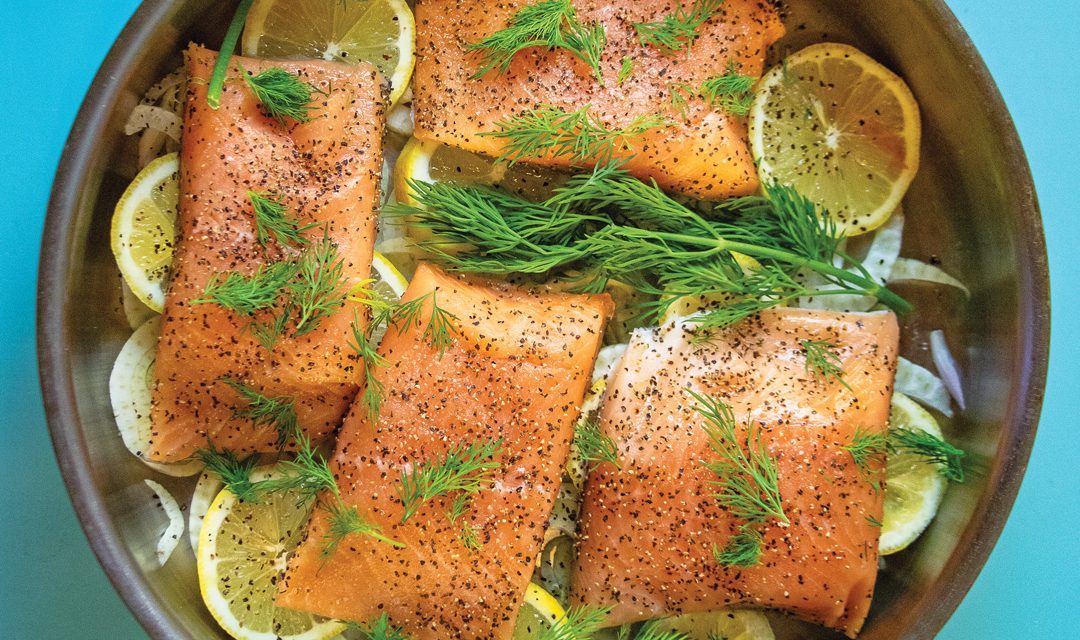

Serves 4
Method: Poached; Level: Easy
Prep time: 10 minutes; Cook time: 10 minutes; Total time: 20 minutes
Poaching is a great way to prepare salmon, especially if you want moist and tender results. You can poach fatty fish in water, wine, or broth; use oil or butter to poach lean fish. When poaching, load up your liquid with lots of aromatics because your fish will cook in less than 10 minutes. Poached salmon can be flaked on salads and mixed in with pasta, but it is also great served whole with lemon, butter, and roasted veggies.

Wine-Poached Atlantic Salmon
Ingredients
- 1 lemon, thinly sliced
- 1 shallot, sliced
- 1 medium fennel bulb, sliced into rounds
- 4 salmon fillets, skin on
- 6 sprigs fresh dill
- 1 cup water
- 1/2 cup white wine
- Salt and fresh-cracked black pepper, for seasoning
Instructions
- Make a bed of lemon slices, shallot, and fennel in the bottom of a wide skillet with a lid.
- Lightly season salmon fillets with salt and pepper, then place them, skin side down, on the lemon slices, shallot, and fennel. Scatter dill around the pan and on top of the salmon. Pour in water and wine; the liquid does not need to cover the salmon.
- Place skillet over medium-high heat and bring to a simmer. When liquid is aggressively simmering (not boiling), turn the heat to low and cover skillet with its lid. Cook until an internal temperature thermometer reads between 125°F to 130°F, 5–12 minutes, depending on how thick the salmon fillets are. I recommend using two spatulas to remove the fish from the pan so it remains whole while transferring it to a plate.
Seafood Watch recommends farmed salmon as a “Best Choice” or “Good Alternative,” depending on the farming method and body of water. All Atlantic salmon is farmed, and there’s no commercial fishing for this species in the US.
- Buy Atlantic salmon farmed in Maine.
- Buy Atlantic salmon farmed in the Faroe Islands, Denmark.
- Buy Atlantic salmon certified by the Aquaculture Stewardship Council (ASC).
- Avoid Atlantic salmon farmed in Canada, Chile, Norway, or Scotland, except when purchasing from businesses committed to sustainable seafood, or if it is ASC certified.
Source: Monterey Bay Aquarium Seafood Watch