Words and Photos by Stephanie Cameron
When I was coming up in the culinary world, I was fortunate to train under the mantra of “fresh, seasonal, local.” Frozen seafood can certainly seem like the antithesis of that idea. But I’ve come to understand that the two are actually in alignment. —Barton Seaver, author, speaker, and chef
This past fall, while attending the Edible Institute in Portland, Maine, I had the privilege of hearing a presentation by Barton Seaver, the author of The Joy of Seafood: The All-Purpose Seafood Cookbook with More Than 900 Recipes and seven other books. His passion for seafood was infectious, so much so that he refers to himself as a “seafood evangelist.” Seaver has dedicated his career to advocating for sustainable seafood. His enthusiasm for incorporating more fish into our diets as a sustainable and healthy protein option challenged my long-held beliefs. For years, my mantra had been “I don’t eat seafood in the desert.” Yet as I listened to him speak, my preconceived notions began to melt away, prompting me to rethink my stance. Adding to this shift was my doctor’s advice: I needed to incorporate more fish into my diet. This posed a challenge, as my primary protein sources have come mostly from local ranchers for the last twelve years. Living in the desert means that fresh seafood isn’t exactly abundant—unless I go fishing for it myself. Still, Seaver’s words and my health needs sparked a new perspective, motivating me to explore ways to make fish a part of my diet without compromising my commitment to eat with consideration for the health of the planet.
In the United States, buying and eating fresh fish, particularly local varieties, is a luxury largely limited to the coasts. But today’s technology allows frozen fish to be a high-quality alternative to fresh, even in a landlocked state. Jeff “Rojo” Koscomb and Butch Wilder, owners of local seafood distribution company Above Sea Level, shared this with our sister publication, The Bite: “So much of the freezing is done on the boats now. For decades, the misconception about frozen fish was true because it wouldn’t be frozen until the ship came in. So that seafood may have been out of the water for hours or even weeks. But now they are able to use the ‘individually quick frozen’ (IQF) method right out of the water at peak freshness.”
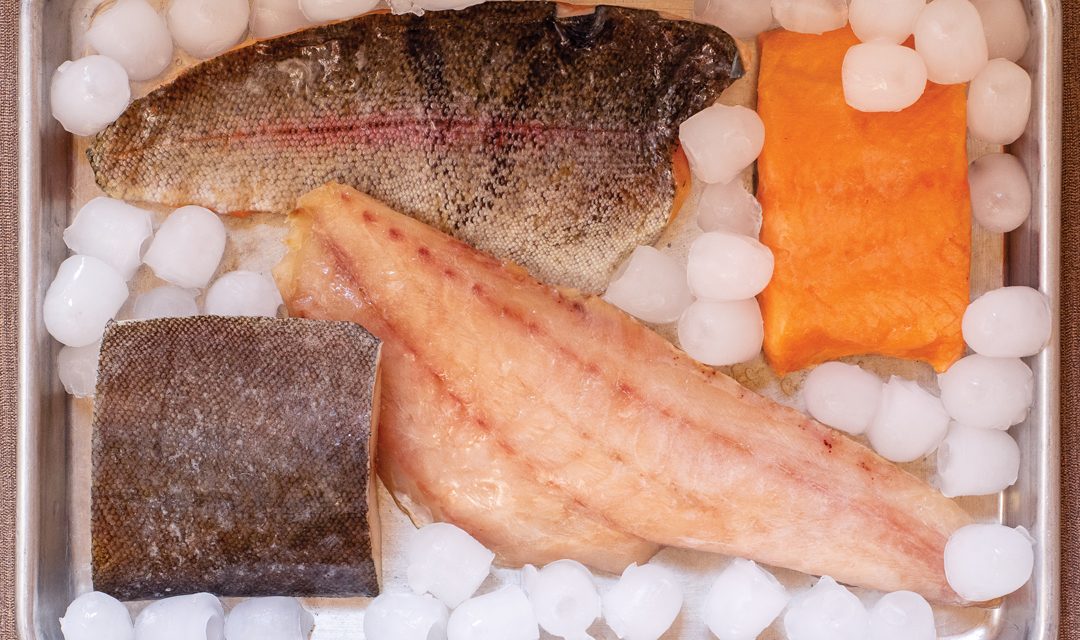
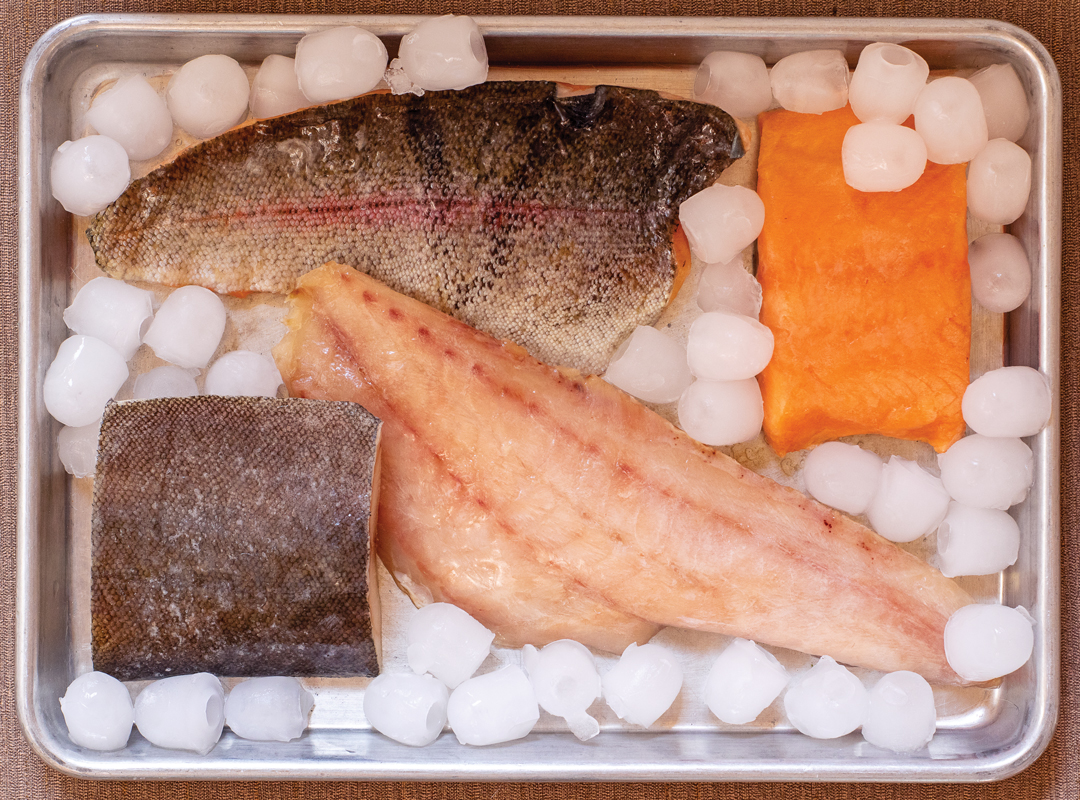
For this edition of Cooking Fresh, I’m specifically focusing on fish. I’m sharing a selection of recipes and cooking techniques that work well with a variety of fish species, along with a guide to choosing sustainable options, meaning that they aren’t overfished or farmed in a manner that degrades shorelines or pollutes local waterways. I used frozen fish for all these recipes, and here’s why: When it comes to fresh fish, it’s best to cook it the day of or the day after purchase. Frozen fish offers more flexibility because it can last nine to twelve months in the freezer. The quality of flash-frozen fish is often superior to that of the “fresh” fish available in our region, as it’s typically frozen within hours of being caught. This also makes frozen fish a more sustainable choice; while processors discard little to no seafood, a significant amount can go to waste at the retail level if it isn’t sold quickly enough or in home kitchens if it isn’t cooked in time. Frozen fish eliminates that urgency, allowing us to enjoy great-tasting seafood whenever we’re ready.
From community-supported fisheries to mail-order subscriptions to discerning local shops and markets, New Mexicans have many options for sourcing seafood. The key is to do your research and always ask questions about where your supermarkets and seafood suppliers source their products. Buying from businesses that provide fishery source information and are committed to selling sustainable seafood can increase the likelihood that your purchase is supporting both a healthy ecosystem and the economies of ethical fisheries.
Recipes from this Issue
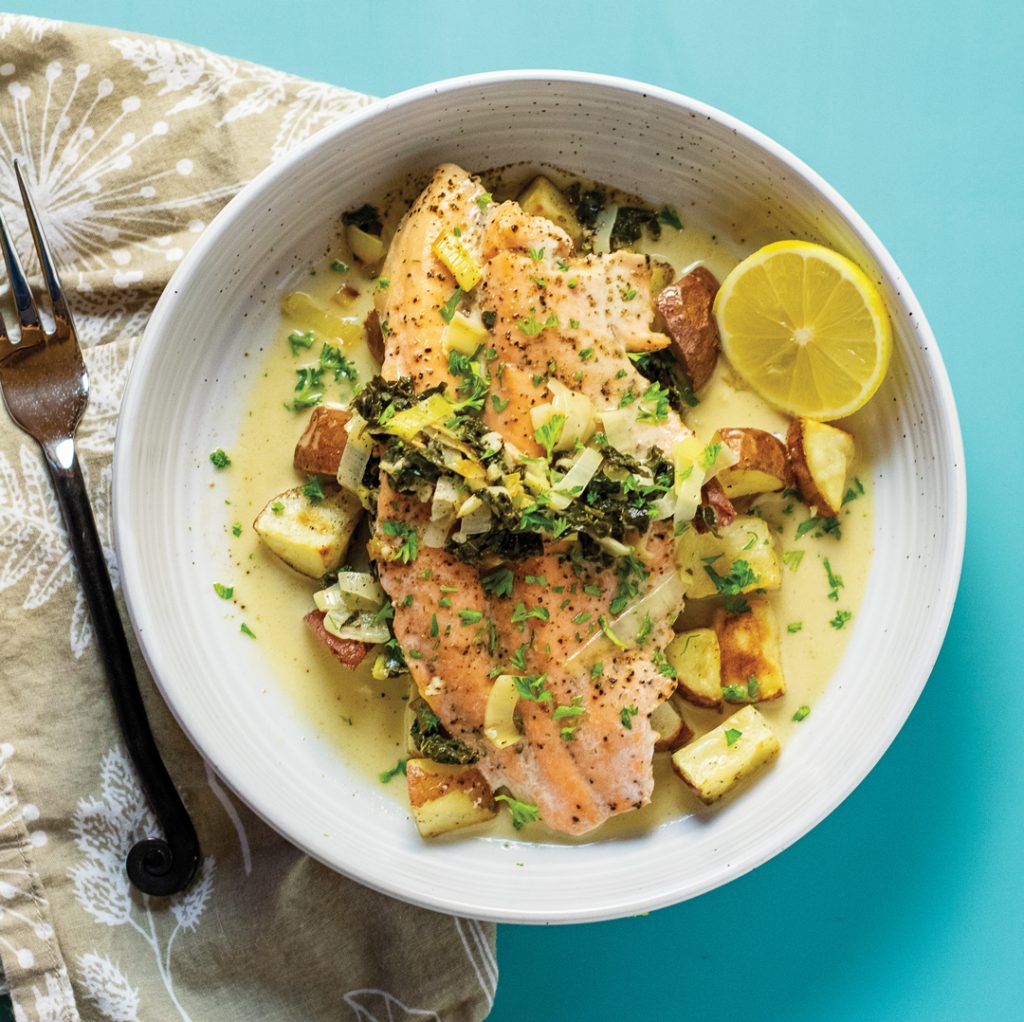
Braised Steelhead Trout with Creamed Kale
This recipe gently cooks delicate trout fillets in a white white sauce, leaving perfect flakes that soak up the flavors of the braising liquid.
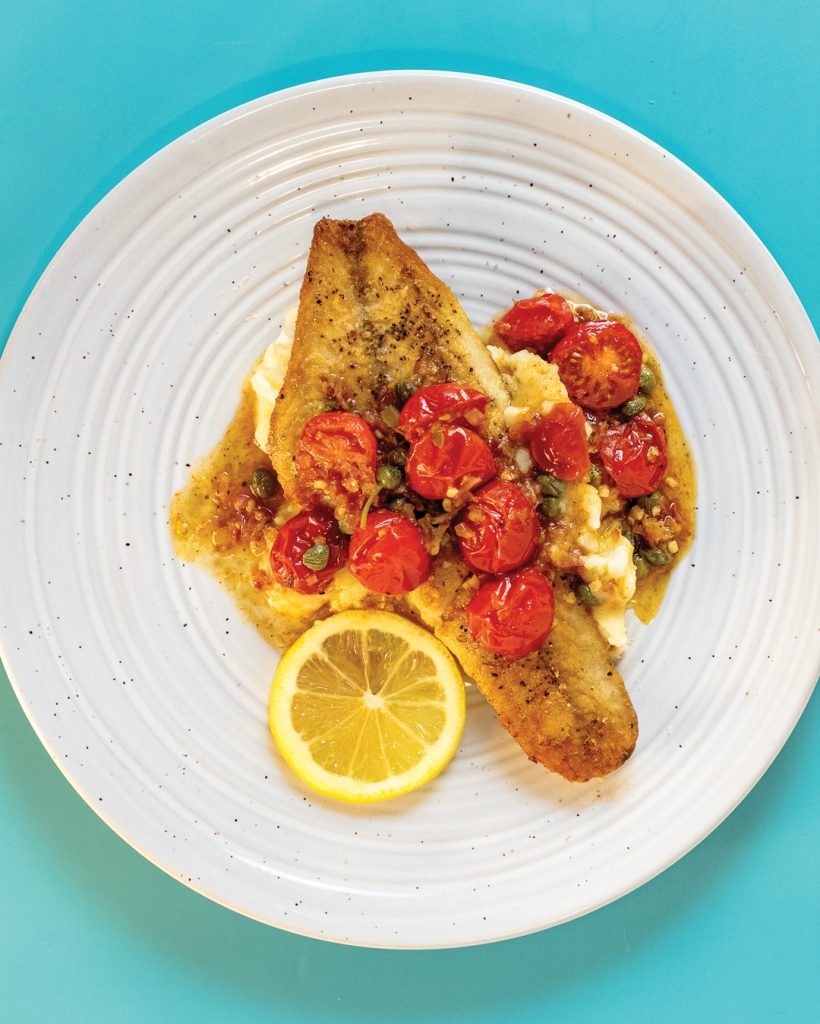
Rockfish with Caper and Tomato Pan Sauce
In this recipe, we sear the fish, a method that creates a crispy crust and tender, moist interior.
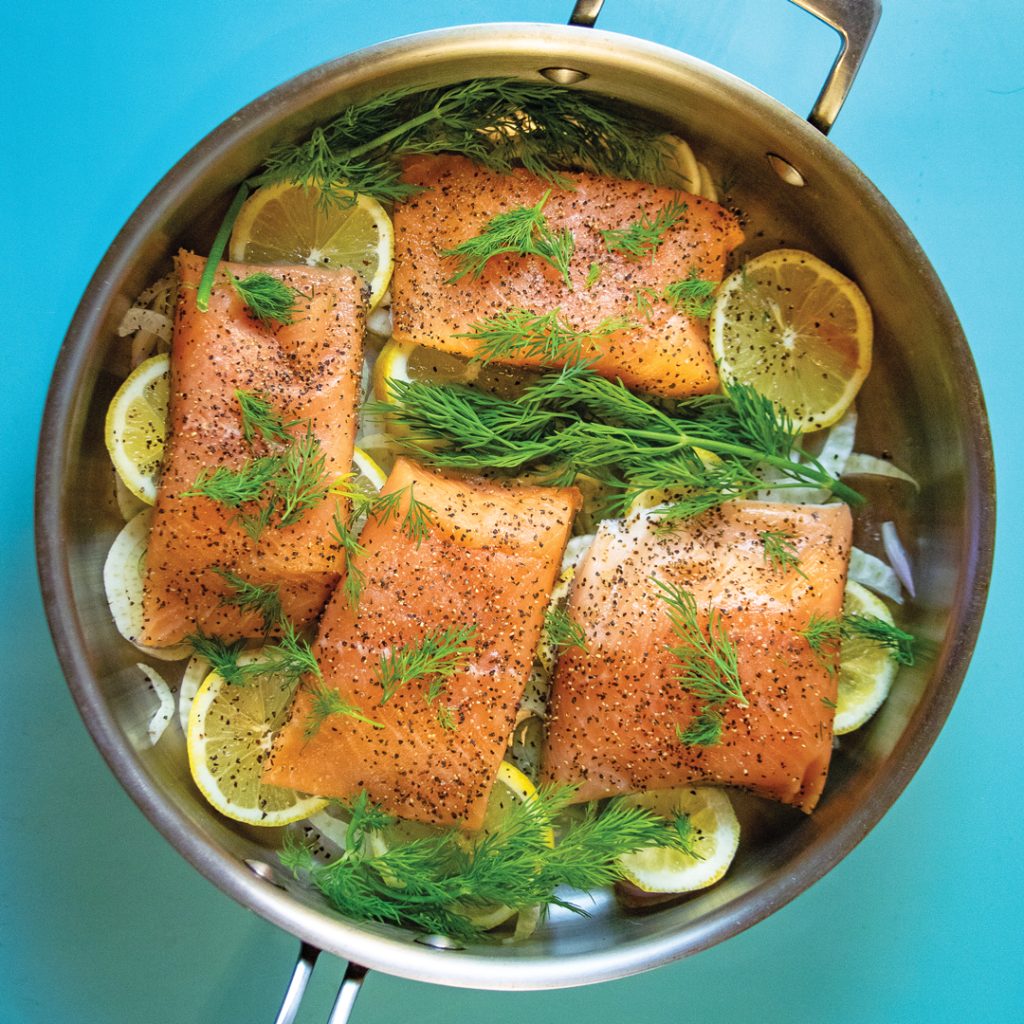
Wine-Poached Atlantic Salmon
Moist and tender poached salmon can be flaked on salads or mixed in with pasta, but it is also great served whole with lemon, butter, and roasted veggies.
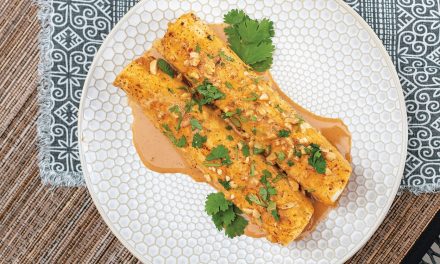
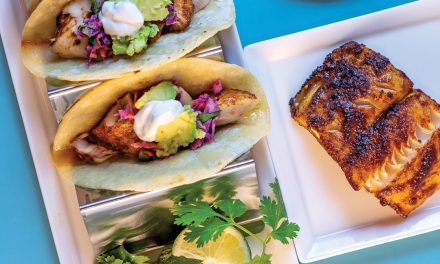
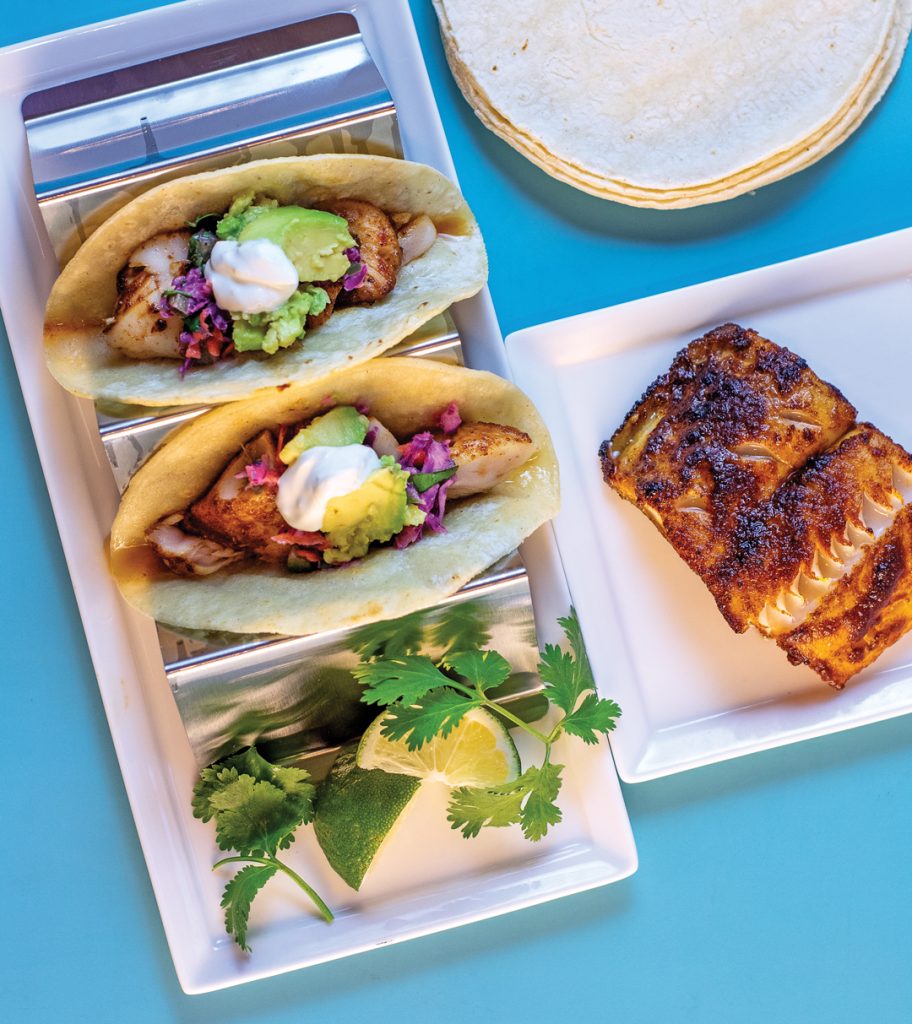
Sablefish Tacos
Creating a quick marinade and using the broiler to cook the fish makes these flavorful tacos an easy meal to put on the table.
How to Thaw Frozen Fish
The best way to thaw frozen fish and to preserve the quality is in the refrigerator overnight. The controlled environment of the refrigerator prevents cells from expanding too quickly, which can change the fish’s consistency, and inhibits the growth of harmful bacteria.
Remove fish from its packaging and place on a plate or tray lined with paper towels. If possible, arrange the fish in a single layer. Put the fish on a low shelf in the refrigerator, which is usually the coldest part. Lightly cover the fish with a single layer of plastic wrap or parchment paper, folding it around the ends of the plate or pan to seal it. Once the fish thaws, rinse it to remove any ice glaze and pat it dry with paper towels.
It’s best to cook fish within a day or two of thawing it.
National Seafood Guide from Monterey Bay Aquarium Seafood Watch
Many fish we enjoy are in trouble, due to destructive fishing and farming practices. Seafood Watch assesses how specific fisheries or farms perform against their rigorous standards. You can make a difference for our oceans by making responsible seafood choices. Learn more about best choices, good alternatives, and what to avoid at seafoodwatch.org.

Stephanie Cameron was raised in Albuquerque and earned a degree in fine arts at the University of New Mexico. She is the art director, head photographer, recipe tester, marketing guru, publisher, and owner of edible New Mexico and The Bite.