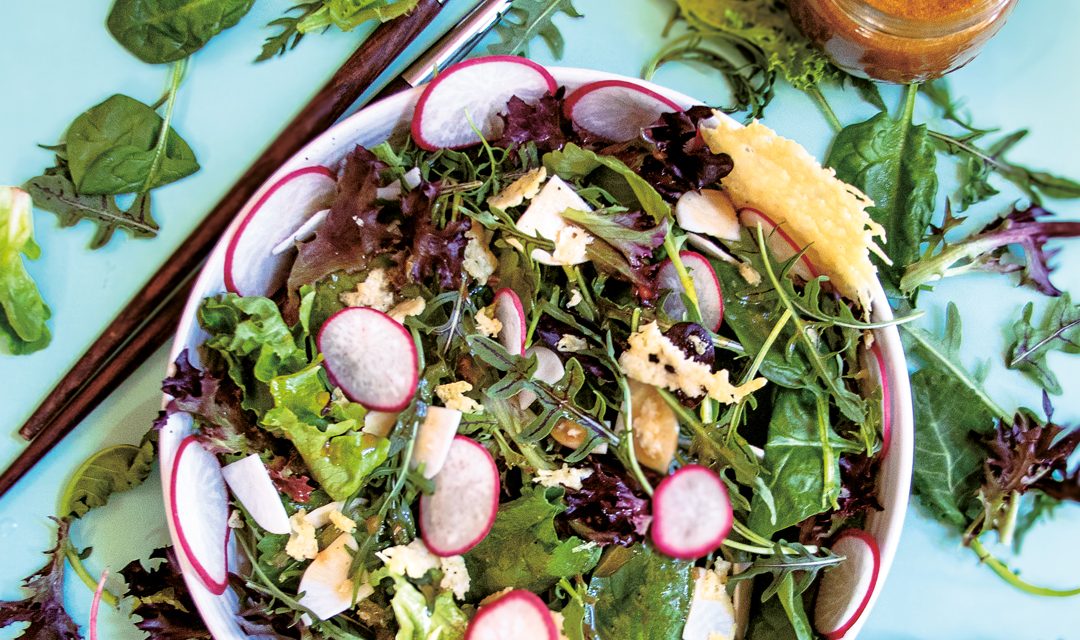
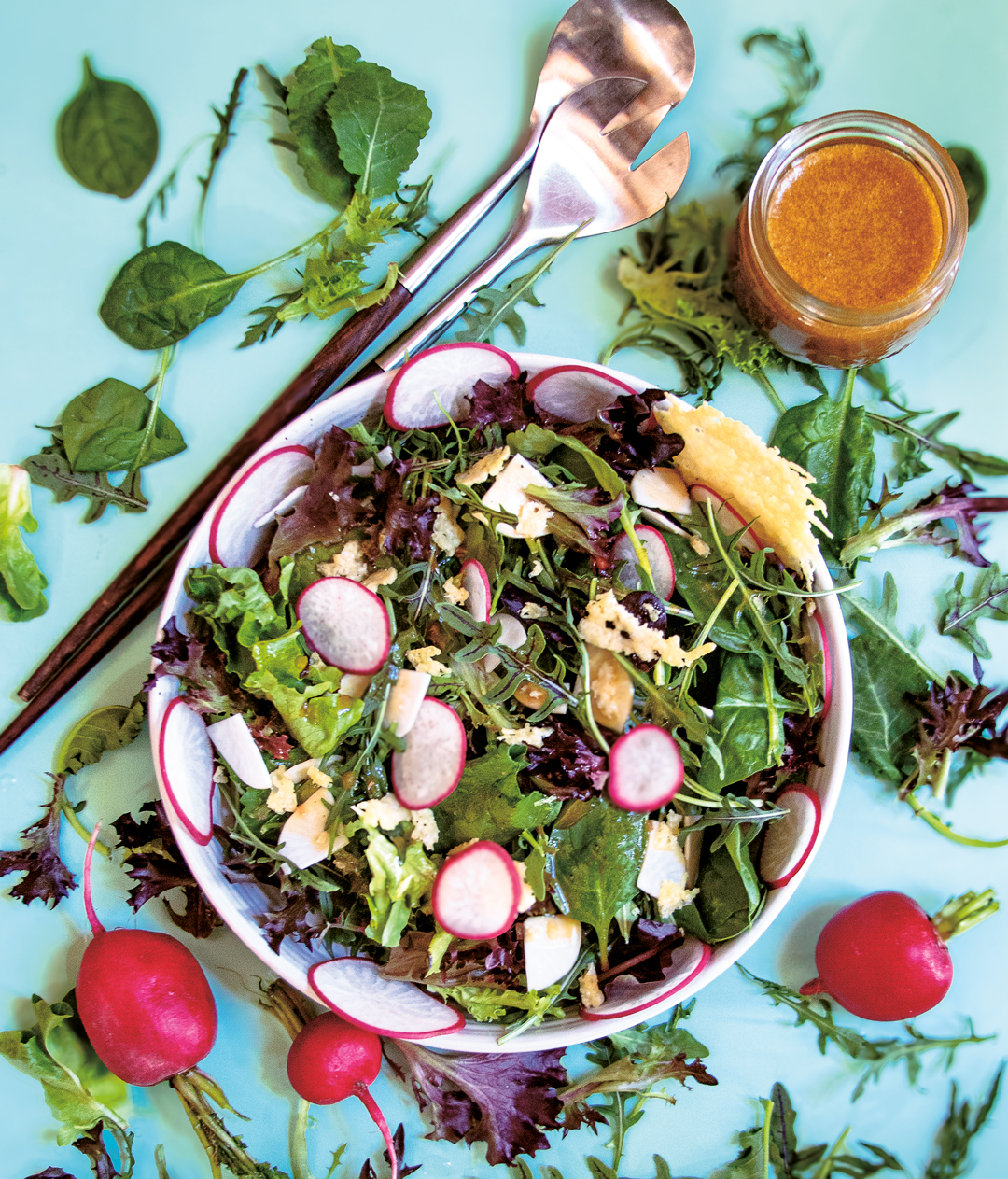
Arugula, baby kale, baby lettuce, Salanova lettuce mix, radishes, hakurei
turnips, Parmesan crisps, and honey shallot dressing.
I have a confession to make: I rarely eat lunch unless there are some leftovers in the fridge. It’s not that I don’t want to, but because I’m tied to my desk most days, I often don’t think about nourishing myself until the hunger pangs kick in around 3 pm. Then, I think, “Well, it is almost dinnertime, so why bother?” Often, I think if I had a meal-prep plan for the week and set an alarm for noon, maybe I could make it happen. So, with peak summer produce on the horizon, I’ve devised some quick make-ahead recipes to dress up salad greens, radishes, snap peas, and hakurei turnips from the weekly CSA, and I’m setting a new alarm on my phone to take a break from screen time.
If you’re tired of the same predictable salad day after day, toppings are the way to spice things up, and having a freshly made dressing can make a salad a satisfying meal. The recipes for these add-ins and dressings can be stored for at least a week. Try a new set each week to pair with your haul from the farmers market, and then follow simple guidelines for a variety of five-minute, lunch-ready salads.
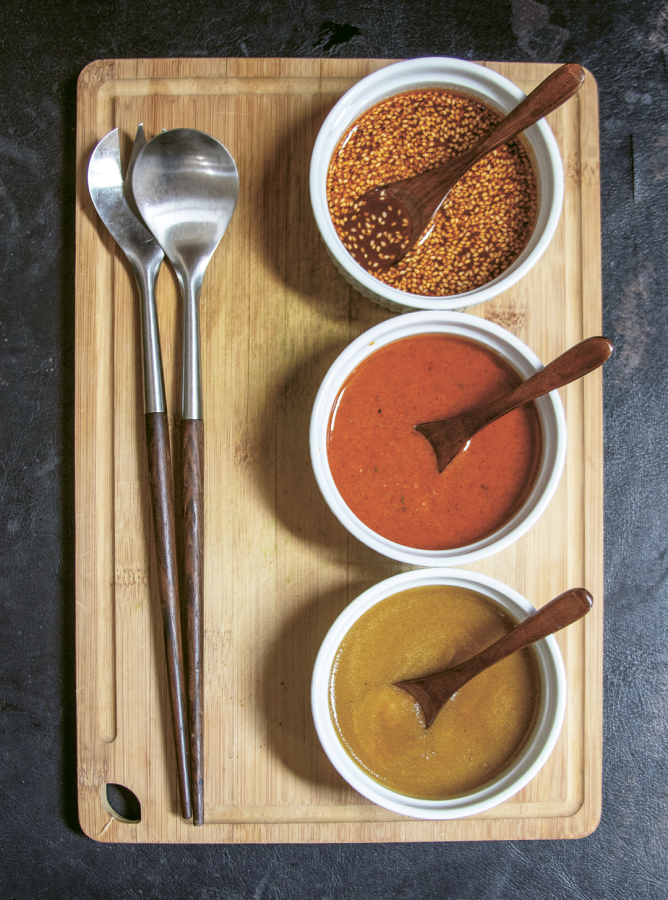
Gochujang Vinaigrette, Roasted Red Pepper Dressing, and Honey Shallot Dressing.
Dressings
When it comes to homemade dressing, the rules are very simple and forgiving. With lots of exceptions, the basics are 1 part acid to 3 parts oil, a pinch of salt, and freshly ground pepper. I usually use extra-virgin olive oil, but a high-quality vegetable oil is fine, and the acid of choice depends on the greens or vegetables. You can add any combination of fresh herbs, garlic, shallots, or chives. Easy. Follow your taste buds; your preference might be 1 part acid to 2 parts oil, so experiment. Once in the habit of making your own, you’ll never go back to the preservative-laden homogeneity of store-bought dressings.
Honey Shallot Dressing
This incredibly versatile vinaigrette perfectly complements bitter greens, fruit-and-nut salads, or roasted vegetables.
Honey Shallot Dressing
Ingredients
- 1 shallot, minced
- 2 tablespoons honey
- 4 tablespoons red wine vinegar
- Salt and freshly ground black pepper
- 1/2 cup extra-virgin olive oil
Instructions
- Combine all ingredients with a generous seasoning of salt and pepper in a Mason jar. Seal the jar tightly. Shake vigorously until the dressing is well emulsified.
Gochujang Vinaigrette
A thick, red, fermented paste made mainly of rice, soybeans, chile peppers, and barley, gochujang is dense and has a wonderful balance of sweet, salty, and spicy flavors. Although this delicious gochujang dressing is just right on fresh salads, it is also especially good on cold (or hot) soba noodles. I am using NM ChileJang, made using New Mexico red chiles and available at Albuquerque-area locations including the Downtown Growers’ Market, Rail Yards Market, tiny grocer ABQ, The Farm Stand, and Polk’s Folly Butcher Shop and Farm Stand.
Gochujang Vinaigrette
Ingredients
- 1–2 tablespoons gochujang (depends on spice level desired)
- 1 tablespoon sugar
- 2 tablespoons rice vinegar
- 1 tablespoon olive oil
- 1 tablespoon sesame oil
- 2 tablespoons soy sauce
- 1 clove garlic, minced
- 2 teaspoons sesame seeds
Instructions
- Combine all ingredients in a Mason jar. Seal the jar tightly and shake vigorously until the dressing is well emulsified.
Roasted Red Pepper Dressing
This dressing balances just enough sweet, sour, and salty to hit all the right notes when tossed with salad greens. Jarred red peppers are easiest, but peppers roasted and peeled are wonderful, if you have the time to prepare them. If you don’t have harissa, you can substitute it with 1/4 teaspoon of cumin, 1/4 teaspoon of chile flakes, and 1 teaspoon of tomato paste.
Roasted Red Pepper Dressing
Ingredients
- 1/2 cup roasted red peppers, drained
- 2 tablespoons fresh lime juice
- 2 tablespoons red wine vinegar
- 1 small clove garlic
- 1 teaspoon harissa
- 1/4 teaspoon dried oregano
- 1/3 cup olive oil
- 1/2 teaspoon kosher salt
- 1/4 teaspoon freshly ground black pepper
- 1 1/2 tablespoons maple syrup
Instructions
- Add all ingredients to a blender in the order listed. Process until smooth, scraping down the sides as needed. Season with additional salt and pepper to taste.
- Refrigerate for up to one week. If the dressing separates after being refrigerated, give it a firm shake before using.
Check Your Oil!
Taste the oil before adding to your dressings and vinaigrettes. Oils are delicate and volatile—heat, air, and light are their enemies. Smell your oil, and taste it. An oil that has gone rancid will have an unpleasant smell and off taste, and it will ruin your salad. Cold-pressed and nut oils have distinct tastes and aromas reminiscent of their sources. Note that the spicy, peppery, and bitter flavors of some olive oils are inherent qualities, not a sign of poor quality. Store oils in a cool, dark place. I store my walnut and hazelnut oils, as well as sesame and cold-pressed oils, in the refrigerator. Experts recommend storing oil at 57°F, the temperature of a wine cellar. Olive oil will keep well if stored in a sealed container in a cool, dark cupboard for about one year.
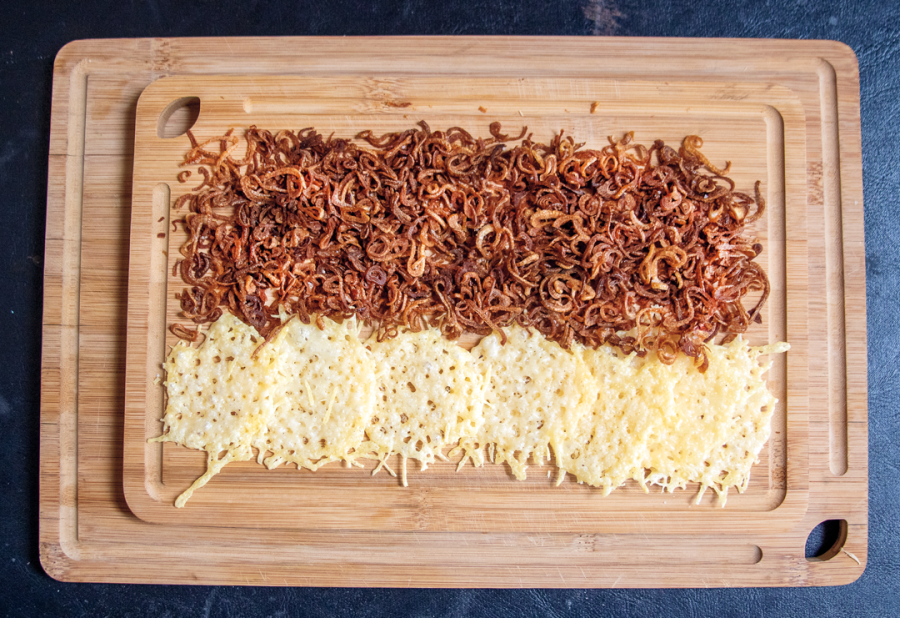
Crispy Shallots and Parmesan Crisps.
Toppings
There are endless ways to top a salad. Nuts: try them raw, roasted, candied, toasted, or slivered. Chili crisp, salsa macha, and dukkah are all flavor and texture boosters. You can also use briny olives, pickled veggies, and soft cheeses to layer in flavor. Adding grains to salads instantly transforms them from light sides into filling and nutrient-dense meals. But if you really want to up your game, try these from-scratch toppings.
Parmesan Crisps
Known for their irresistibility as a snack or as an elegant topping to soups, Parmesan crisps are also a surprise addition to any salad, adding texture and nutiness.
Parmesan Crisps
Ingredients
- 4 ounces freshly grated Parmesan cheese (about 1 cup)
- 1/4 teaspoon freshly ground black pepper
Instructions
- Preheat oven to 400°F.
- Line a large baking sheet with parchment paper. Spoon cheese by the tablespoonful, 2 inches apart, onto the prepared baking sheet. Spread each mound to a diameter of 2 inches, maintaining 1 inch of space between them. Sprinkle with pepper. Bake for 6–8 minutes or until crisp and golden. Cool completely on the baking sheet, then remove with a thin spatula to a wire rack.
- Once completely cooled, store in an airtight container away from direct sunlight for up to 5 days. Do not refrigerate these; moisture will destroy their crisp texture.
Crispy Shallots
Fried shallots are a prized garnish in my household. When they show up on the counter, my family starts putting them on every dish we make—steak au poivre, mashed potatoes and gravy, stroganoff, soups, sandwiches, and, of course, salads.
For the project of cooking shallots, investing in a mandolin is a must, and cooking on high heat means never walking away.
Crispy Shallots
Ingredients
- 1 pound shallots, peeled and sliced into 1/16-inch-thick rounds (thinnest setting on mandolin)
- 2 cups vegetable oil
- Kosher salt
Instructions
- Prepare your space and set up a heat-safe bowl with a strainer and a sheet pan with two layers of paper towels.
- Place shallots and oil in a heavy-bottomed saucepan or pot over high heat. Shallots should be submerged in the oil and not touch the bottom of the pan. Use chopsticks or tweezers to pull them apart into individual rings. Cook shallot rings until bubbling, about 3–5 minutes. Continue cooking for 6–8 more minutes, until they’re a pale golden color. Quickly remove from the heat and pour shallots into the strainer-lined bowl. Then quickly transfer shallots to the paper towel–lined sheet pan and spread them out evenly. Season shallots with salt before they cool down. Gently pull the top layer of paper towels from beneath the shallots and blot the tops dry.
- Fried shallots can be stored in an airtight container at room temperature for up to two months. The remaining fried shallot oil can be refrigerated in an airtight container for up to 1 month and used for your next delicious dressing.
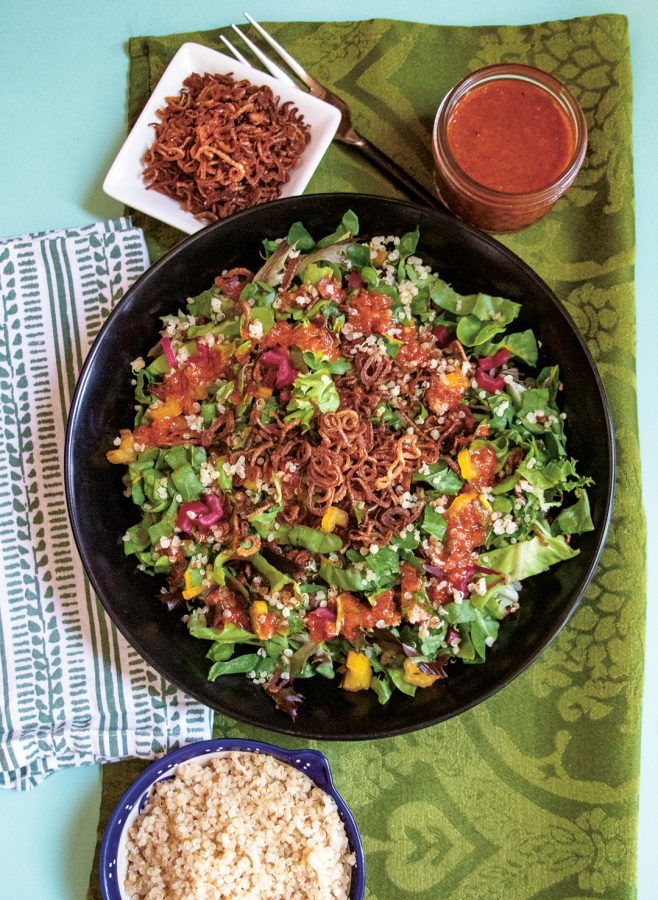
Rainbow chard, chard stems, quinoa, roasted red pepper dressing, and crisp shallots.
Try Something New
Yes, romaine, butter lettuce, and iceberg can all make a good salad, but don’t be afraid to mix it up. Purslane, arugula, mustard, and dandelion greens add bite, and sturdier greens like collards, broccoli leaves, and bok choy lend crunch. Toss in pea shoots and budding leaves of favas, beets, and Swiss chard, which are delicate and tender, to complement the crunchier greens. And chopped fresh herbs like chives, tarragon, and basil punch up the flavor.
Grains
A good rule of thumb is 1 cup grains to 3 cups greens and veggies. Baby spinach, kale, arugula, or chopped romaine work well when paired with grains and any of the dressings in this edition of Cooking Fresh.
Cooked quinoa, farro and other wheat berries, wild rice, couscous, and barley can be stored in an airtight container in the refrigerator for 3–5 days. For longer storage, they can be frozen for up to 2–3 months. To maintain quality, ensure the grains cool completely before storing and avoid leaving them at room temperature for more than 2 hours. If making a salad, ensure the grains are completely cold and well drained before mixing to prevent salad greens from becoming soggy.

Stephanie Cameron was raised in Albuquerque and earned a degree in fine arts at the University of New Mexico. She is the art director, head photographer, recipe tester, marketing guru, publisher, and owner of edible New Mexico and The Bite.