
M’tucci’s Four-Day Workweek
By Sophie Putka

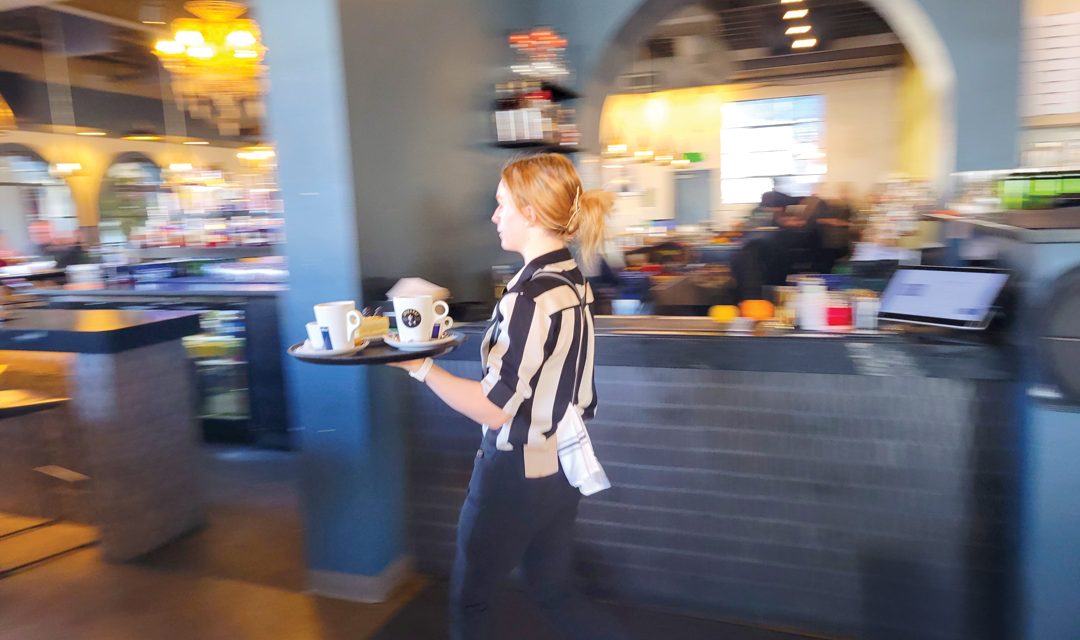
Coffee service by bartender Abby Sadler at M’tucci’s Bar Roma, photo by Walt Cameron.
In the winter of last year, John Haas and Howie Kaibel of M’tucci’s Restaurants found themselves in a scenario they could have never imagined: talking with Vermont Senator Bernie Sanders’s staff about legislation that could one day turn American work life upside down.
Sanders’s team wanted to discuss with Haas and Kaibel a new policy they had implemented at their restaurants: the four-day workweek. The senator was introducing a bill in Congress that could mandate a thirty-two-hour workweek nationwide, and he wanted to know if they could come to DC to speak at some hearings. The bill stalled out in a House committee, but Haas, M’tucci’s cofounder and president, and Kaibel, their minister of culture and brand manager, had their own workplace transformation to focus on.
Early in 2022, M’tucci’s introduced a four-day workweek across the company, which now boasts four restaurants, one speakeasy, a catering company, and a commissary kitchen, all located in the greater Albuquerque metro area. Only salaried employees—around forty chefs, managers, and other support staff—would follow the new schedule. As Haas explained to me, hourly restaurant staff already had fairly flexible schedules and could set their own availability.
Still, the move was a rarity in the restaurant world, known for its long hours and high burnout rates, even among full-time staff and management. Haas himself was a veteran of the industry before cofounding M’tucci’s with Katie Gardner and the late Jeff Spiegel in 2013. For fifteen of his twenty-eight years in restaurants, Haas said he worked eighty to one hundred hours a week, sacrificing a lot of life along the way. He dreamed about a day he might cut back to even four twelve-hour days.
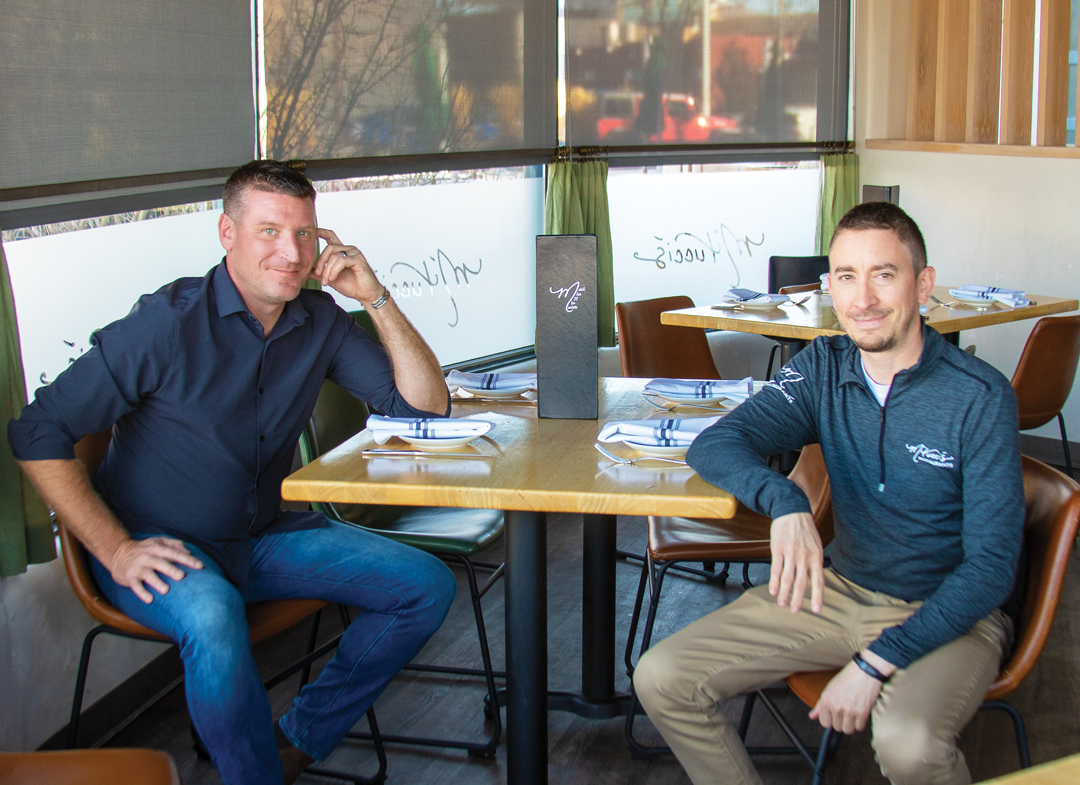
Howie Kaibel and John Haas of M’tucci’s Restaurants, photo by Stephanie Cameron.
“I saw everyone giving their life to their job, and it’s like, for what, you know? And I don’t say that to take what we do lightly,” Haas said. “But . . . we’re not performing brain surgery, we’re not sending astronauts into space, we’re a privately owned business that’s creating food and experiences for people, and more importantly, we’re trying to create a culture and a lifestyle that’s healthy for people that are a part of the company.”
Then the pandemic struck the service industry like a bolt of lightning. M’tucci’s was no exception, Haas said. Suddenly, the company, which had only recently opened M’tucci’s Twenty-Five, their third restaurant location, ground to a halt. Haas and other leadership were left scrambling to come up with new business ideas and to keep their existing staff on board for as long as possible.
“It kind of put things into perspective for me, and then, in turn, [I] felt like I needed to do the same for others,” said Haas, who had been toying with the idea of a shorter work week for a long time. “Because one of the best things about our company was everyone was just insanely motivated, and will work their asses off. And that is such a gift, but at the same time, I learned we have to protect people from that too.”
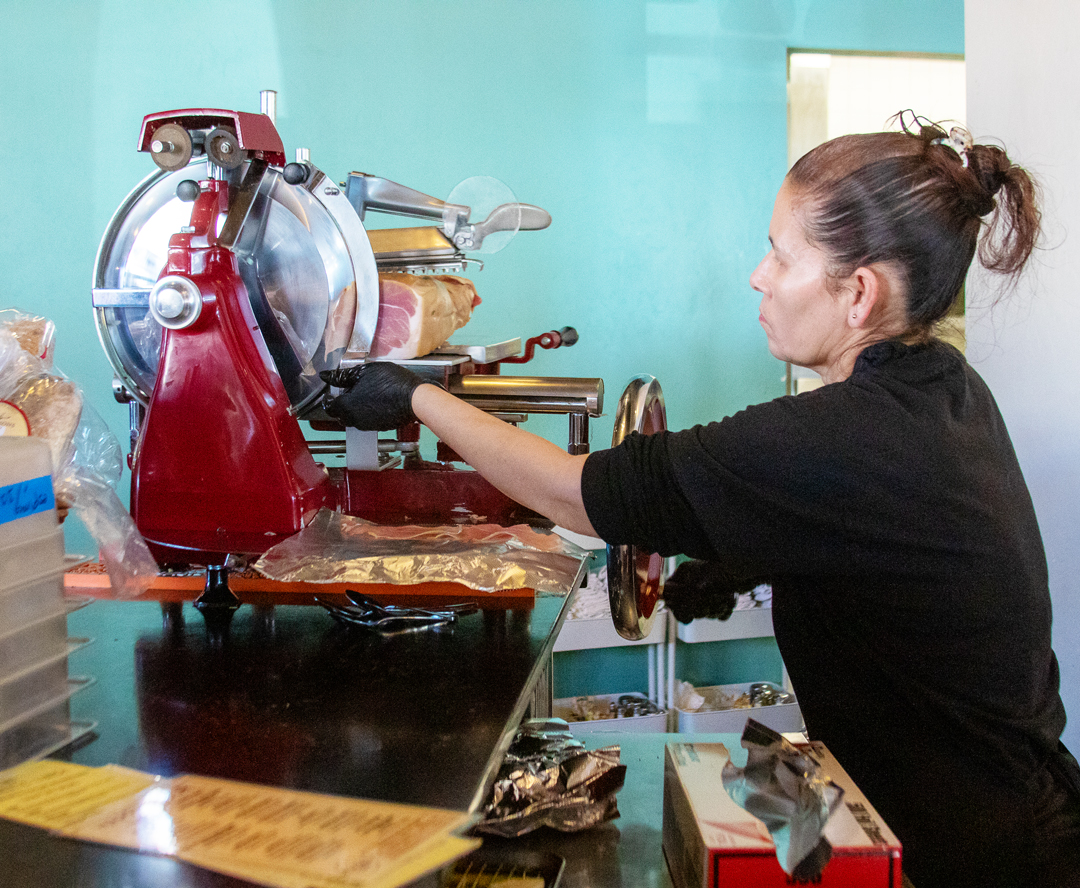
Cook Gladis Vargas working the deli slicer at Bar Roma, photo by Stephanie Cameron.
One day, Haas read an article in the New York Times about a New Zealand company that had successfully implemented a thirty-two-hour work week. In late 2021, Haas and Kaibel sought the help of 4 Day Week Global, a nonprofit that conducts research and runs pilot programs designed to reduce working hours.
“[When] I told them we wanted in, they immediately perked up their ears,” Kaibel told me. “They said, ‘Well, an American restaurant company, that’s unusual.’ They couldn’t even come up with another restaurant company around the world that was doing this.”
The organization checked in on Haas and Kaibel weekly and had them fill out surveys for their research, but the process wasn’t without its challenges. For one thing, industry veterans habitually work well over fifty hours a week. “We had to force our chefs to take time off because they were so used to [that],” Kaibel said.
More predictably, there were the practicalities of running multiple restaurants that were open seven days a week. They hired another manager to fill some gaps, and Haas said they had to ramp up communication significantly to ensure everyone was on the same page without intruding on their personal time. Three years in, and Haas said daily email recaps and notes left in their scheduling software have proven particularly useful.
Because of the demands of food service, the four-day rule doesn’t always go perfectly. Scheduling had to be given an overhaul, Haas said. Sometimes people end up working longer days, or covering shifts. But most of the salaried employees went from in excess of fifty hours a week to around forty, and Haas said he tries to ensure employees keep it as close to that as possible.
And for every hurdle, Haas has a saying: “FITFO,” or “Figure It the Fuck Out.”
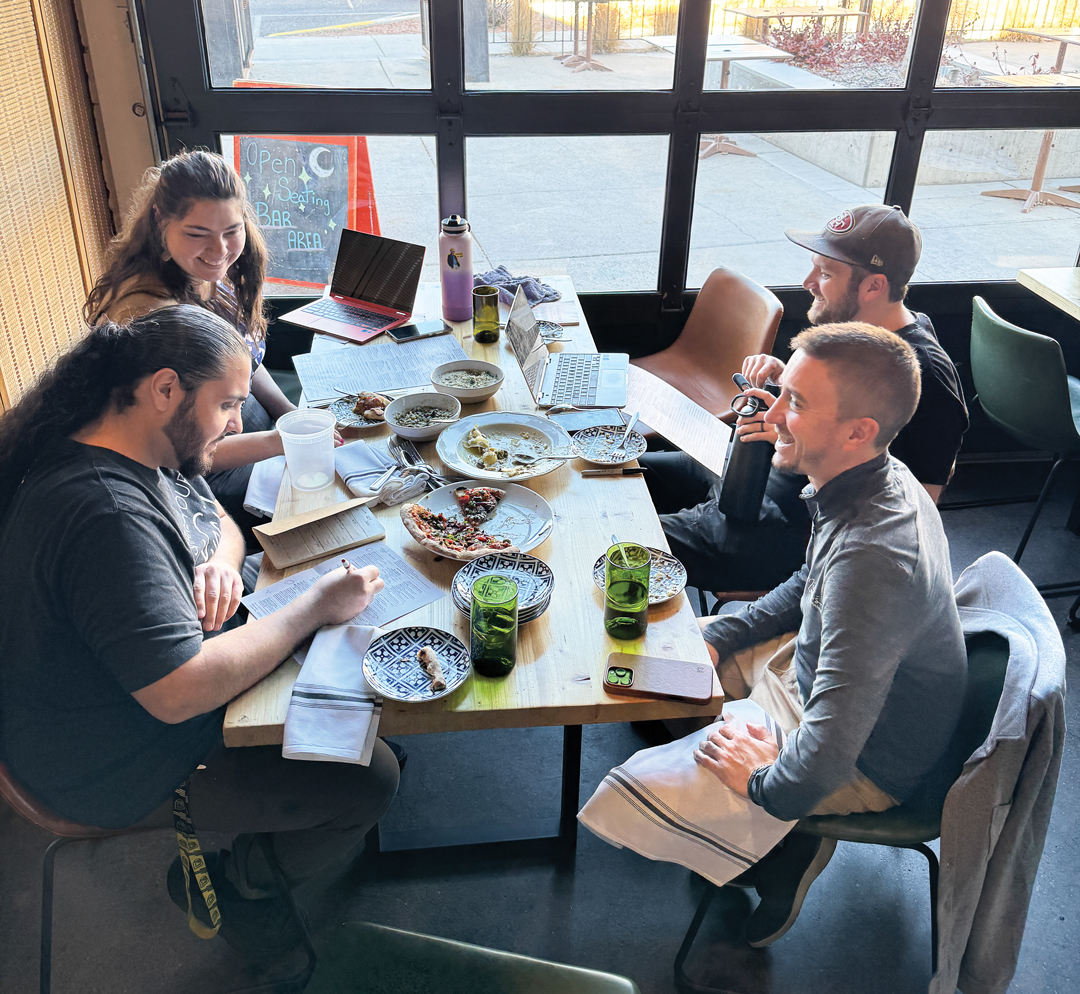
Menu development with the M’tucci’s team, photo by Stephanie Cameron.
“Our industry can be very stubborn and slow to change . . . and I think that you just have to be willing to rethink the way you do it,” Haas said. “There’s always a solution, if you really think about it.”
The benefits two years in have been immeasurable, Kaibel and Haas said. Both noticed staff taking more trips with their free time. Employees return to work reenergized, moods lifted. A few, realizing they didn’t need to be in a restaurant office to do things like inventory and bookkeeping, started to work from home sometimes, welcoming more time spent with family. “The people are happy . . . I see people spending more free time or having side hobbies, having richer lives than they had before,” Haas said.
“It’s just so clear that they’re energized and ready to go every day that they’re at work,” Kaibel said. He added that he thinks their chefs, by dint of working fewer days themselves, began to allow kitchen staff to take on more responsibilities and exercise more creative freedom.
Both leaders said their turnover rate before the change, at 40 percent, was already significantly lower than the restaurant industry’s national average, which several sources put at well over 70 percent. But training new hires is costly in the long run, Kaibel said.
“I think some of our industry is really good at just chewing people up and spitting them out,” Haas added. “It’s like, grind them until they’re burnt out, and then find somebody else and replace them. But as much as people want to say people are replaceable, they’re not.”
In the six months after the four-day rule kicked in, Kaibel said, not a single employee left. Kaibel remembers Haas saying over lunch, “That’s unheard of.” The retention has remained high.
“Nobody wants to go back to five days,” Haas said.
Neither has noticed a big shift in productivity, which is tricky to measure, but they say it’s about the same. This is mostly consistent with widespread trials that have found jumps in workplace satisfaction, with the same or increased productivity. In a recent trial of forty-one organizations implementing four-day workweeks in the US and Canada, revenue increased by 15 percent, on average. A 2022 UK trial with sixty-one organizations found that almost all planned to continue with the four-day workweek, and employee turnover went down nearly 60 percent.
Kaibel himself technically follows the modified schedule, but on average, he says he works five shorter days instead of four. “I’m not a strictly Monday through Friday person, and I’ll work for this company on weekends when it’s needed,” he said. “I give 100 percent when I’m in the office working for this company, and I take 100 percent breaks when I know that I have earned it.”
The local Italian chain’s four-day workweek has attracted national attention, including 2023 coverage from NPR’s TED Radio Hour, along with lots of local recognition. In 2023, they took home two community service awards—one from the New Mexico Restaurant Association and one from the New Mexico Public Relations Society of America—and in 2024, they won a New Mexico Ethics in Business Award.
Reduced work hours are just part of a long-running push to support employees. Apart from a host of health insurance benefits available to its employees, M’tucci’s also offers an after-school tutoring program for children of restaurant staff called M’tutoring (yes, really). Kaibel, a former employee of Yelp, heads up these initiatives.
As for Haas, does he follow the four-day schedule?
“I don’t,” he said, laughing. “If you’re a business owner and you have a four-day week, good for you. You’ve got it figured out.”
M’tucci’s Restaurants, multiple locations, mtuccis.com
Sophie Putka is a part-time food writer and mushroom farmer. In other lives, she has been a barista, nanny, salon receptionist, outdoor educator, camp cook, and medical journalist. She lives in Albuquerque with her dog Iggy.