
For the past four years, I’ve been developing a relationship with the seasonal rhythms of the vineyard as both a viti-culturist and a winemaker: In the spring, we prune; in the summer, we weed and train vines through trellises; and in the fall, we harvest. After the grape-growing season ends, and after hundreds of whole grape clusters are in my cellar waiting to be crushed, I begin a different kind of farming.
Crushing the grapes ignites a riotous dance party where single-celled fungi known as yeasts will eat, breathe, sweat, dance, and then die. Covering the skins and stems of grapes is a polyculture of beneficial microbes and through this process known as a primary, or aerobic, fermentation, those fungi begin to create the nectar we know as wine.
Farming microbes in a way that maintains a healthy, living culture means becoming a kind of dance-party chaperone. At this aerobic gathering, where microbe populations can double every two to four hours, the farmer-chaperone is carefully tending the ferment (the dance party) across several days, making sure the conditions of the vat (the dance floor), including temperature and oxygen exposure (vibes), are right for the kinds of microbes they want to keep. A few times a day, they’re pushing down the floating cap of grapes—a place where unwelcome microbes intent on crashing the party like to land.

Harvesting grapes for wine. Photo by Allison Ramirez.
A friend who grew up in the Loire Valley in France shared with me that when he was a child, the whole village would show up to participate in the grape harvests. Everyone, young and old, had a role. Collective harvest traditions continue present day all over the world in communities growing their own food and preserving it for future use, including in traditional farming communities here in New Mexico.
My ancestors became estranged from their land, languages, and communities generations ago. I did not grow up in a home with access to land or with strong community ties. I was an adult before I visited a farm or sought out experiences farming. And yet when I prune trees and vines, something in my body remembers. When I make butter or ferment cabbage, I can feel the presence of kin in the kitchen.
I see how fermentation and food preservation—historically women’s work—are critical technologies yoked to farming. In these practices there is an invitation to remember lifeways in which human connections to land, seasons, and their communities centered around collective harvests. And when I harvest grapes and make wine with friends, I feel connected to something much older than every living person or being I have ever known.
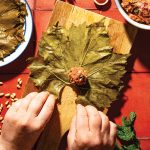
Across this last year as our grape-growing and winemaking collective, Last Ditch, has grown, we’ve hosted dozens of people to work and learn alongside us in the vineyard and in our cellars. We’ve held workshops on pruning, grape-leaf harvesting, dolma making, bottling, and tasting. And in mid-September we’ll host winemaking workshops centered around the grape harvest in northern New Mexico.
During September and October, we harvest grapes in the morning and eat a homemade lunch of red beans, rice, and cornbread together in the afternoon. My mentor pours his beautiful homemade wine and his partner brings a perfectly dressed salad of greens grown in the fields below the vines. Everyone gathered around the table has a role. Alone, doing this work would be overwhelming, but with all of us together, it becomes a celebration.

Protecting the wine with an air lock. Photo by David Dunlop.

Tasting wine before corking. Photo by David Dunlop.
A Beginner’s Recipe for Making Wine
When ripe, grapes arrive complete with everything they need to become wine. Yeasts, single-celled fungi like Saccharomyces cerevisiae along with many others, naturally live on the skins and stems of grapes. These yeasts are ancient and abundant and can be found everywhere in the natural world. They live on flowers and plants, on our skin and inside our bodies. Next time you spot a juniper tree covered in berries, you can witness these yeasts as a whitish blush on their sticky blue skin.
Transforming grapes into wine, in collaboration with these fungi, is something humans have been doing for at least ten thousand years. If you’d like to take part in this ancient, symbiotic craft, here’s how to begin.
First, find some grapevines or grapes. Ask around and see if your neighbors have any they will share. The farmers market is a great place to look as well. If you have access to wine grapes, that’s wonderful. And you can make wine from (preferably unsprayed, unwashed) table grapes too. A few days before you plan to make wine, gather some grapes from the market or pay a visit to whatever grapevines you have access to. If the fruit is firm, ripe, and tastes good to you, it will likely make good wine.

Setup for bottling. Photo by David Dunlop.

Corking the bottles of wine. Photo by David Dunlop.
Take several clusters of grapes, squeeze them with your hands, remove the stems if you’d like, and place the juice and skins in a jar, securing a clean cloth with a rubber band around the opening to keep thirsty creatures away. Gently press the surface of the ferment down a few times a day for three to four days to keep it wet and encourage the right microbial guests. This smaller batch is known as a pied de cuveé, translated as “the foot of the tank,” and works exactly like a sourdough starter when making bread.
Next, organize your family and friends if there are more grapes than your own hands can harvest. Put the grapes in food-safe buckets and dance on them to crush them. Invite your friends to join the dance. Combine all the crushed grapes into larger food-safe buckets or bins, then pitch the pied de cuveé you’ve been tending these past few days into the mix. Invite the good microbes to stay and tell unwelcome ones to stay away.
This larger vat of juice should be tended as above, the top pressed down a few times a day, and kept in a cool spot, if possible. Cover it with a cloth secured with a string or rubber band to protect it from thirsty creatures.
After leaving the juice in contact with the skins for a day or two, strain the juice into another vessel, secure it with cloth around the top, and allow it to continue to ferment aerobically—exposed to oxygen—for another few days, and sometimes a week or longer depending on its progress. Check it daily. Tasting a little bit of your brew each day can be fun and instructive. Wait until the fermentation noticeably slows down and the majority of the sugars have been consumed by the yeasts.
Then, using gravity and a food-safe hose, siphon or rack the wine into an airtight vessel for safekeeping—a glass carboy with an air lock attached to a bung is perfect. Place this carboy in the coolest, darkest corner of your home, forget that it’s there, and take your winter’s rest. This part of the process is called the second ferment and is an anaerobic fermentation that can last seven to eight months or longer. You’ll know the fermentation is done when you taste the wine and want to drink it.

Cheers to the harvest. Photo by David Dunlop.
In the spring, when the sun invites the earth to remember green, unearth the vessel, smell and taste to see if the wine is ready, and if yes, call all of your friends to gather, drink wine, and celebrate the gift that is our connection to this strange cosmos, to harvest, and to each other.
If you also want to remember the harvest, sign up for our newsletter at lastditch.wine and join us for a winemaking workshop this September or one of our events next year.

Grape harvest. Photo by Allison Ramirez.
Brook Brooks
Brook Brooks is a viticulturist, garage winemaker, writer, and educator based in Santa Fe. They cofounded and co-organize Last Ditch, a grape-farming collective that hosts place-based experiential work and educational opportunities in vineyards and cellars across the region.