By Sophie Putka
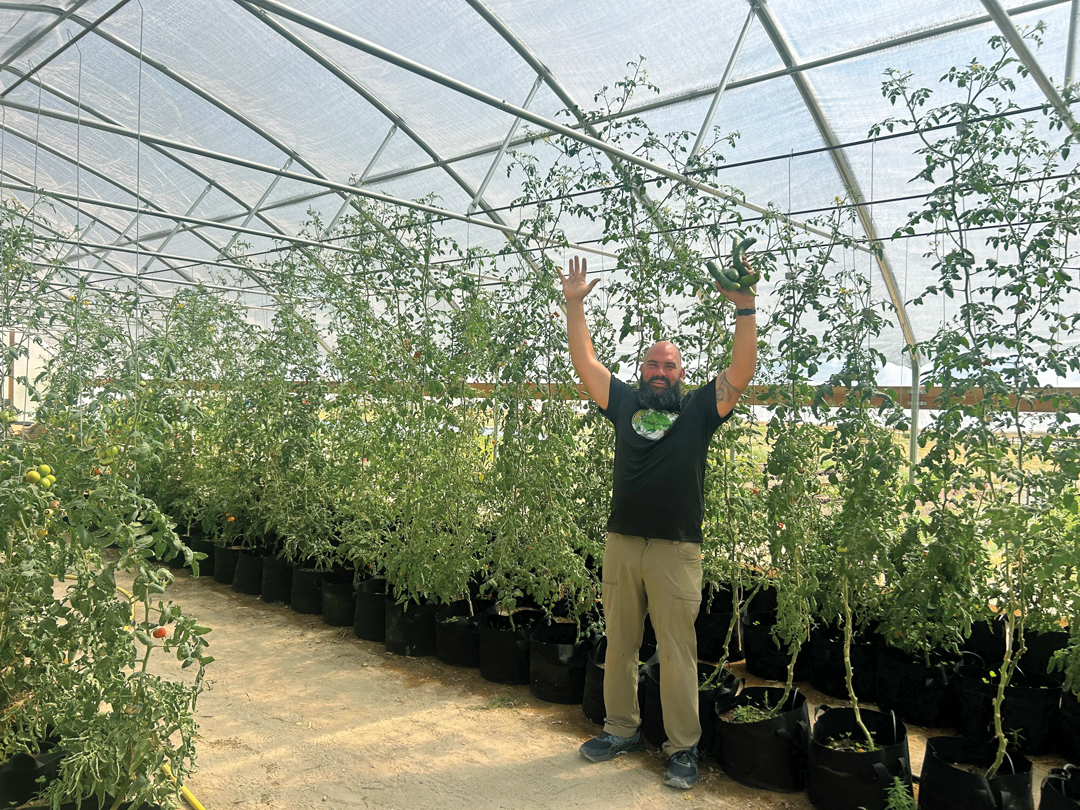
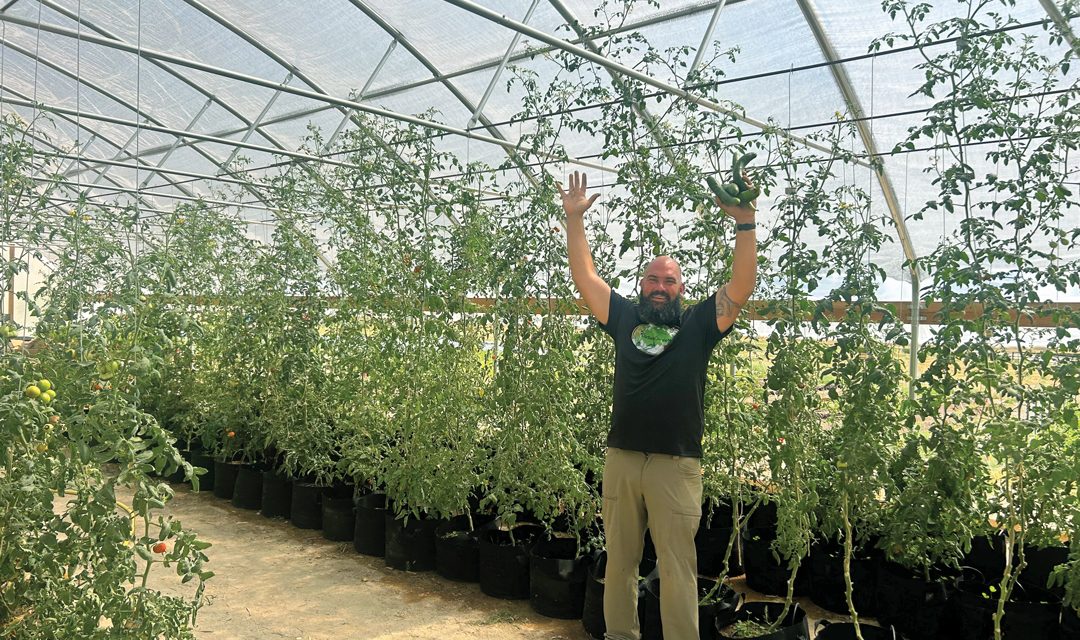
Jeremy Gathings at Gathings Gardens. Photo courtesy of Gathings Gardens.
Although much of our food comes from thousands of miles away, many New Mexicans are also lucky enough to have a wealth of choice in getting fresh, local food onto our tables. We might seek out the nearest farmers market, visit a neighbor for eggs, or even grow our own veggies at home. But for New Mexico public schools, who provided 22.7 million school breakfasts and 32.5 million school lunches in 2024 alone, the story isn’t as simple. Small farms who call New Mexico home, too, can’t always rely on weekend markets to ensure a steady income. That’s where New Mexico Grown comes in.
Administered through New Mexico’s Public Education Department, the Aging and Long-Term Services Department, and the Early Childhood Education and Care Department, NM Grown’s approach is three pronged. It provides funding for schools and programs to purchase produce and other foods from approved New Mexico suppliers, often small farms; it helps farms and producers obtain food safety certification that allows them to sell to schools and senior centers; and it serves as a clearinghouse for schools and farms to connect with one another. The goal? Supporting local farmers and meeting the nutritional needs of children and elders with food from their own “backyard.”
I sat down with three approved produce suppliers for NM Grown to learn about their path to agriculture, the support they’ve had, and some of the ongoing challenges in getting their produce to the people who need it most.
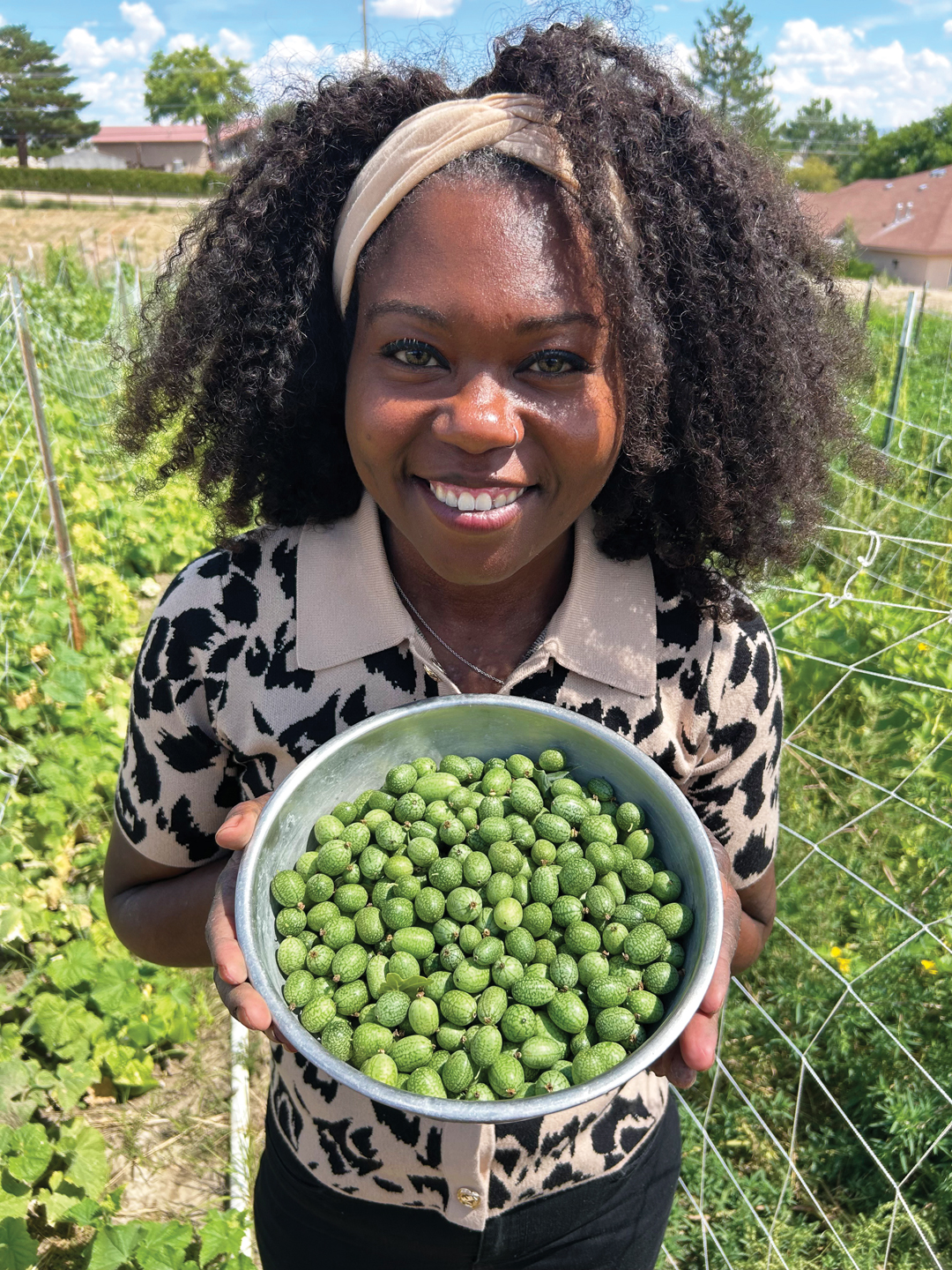
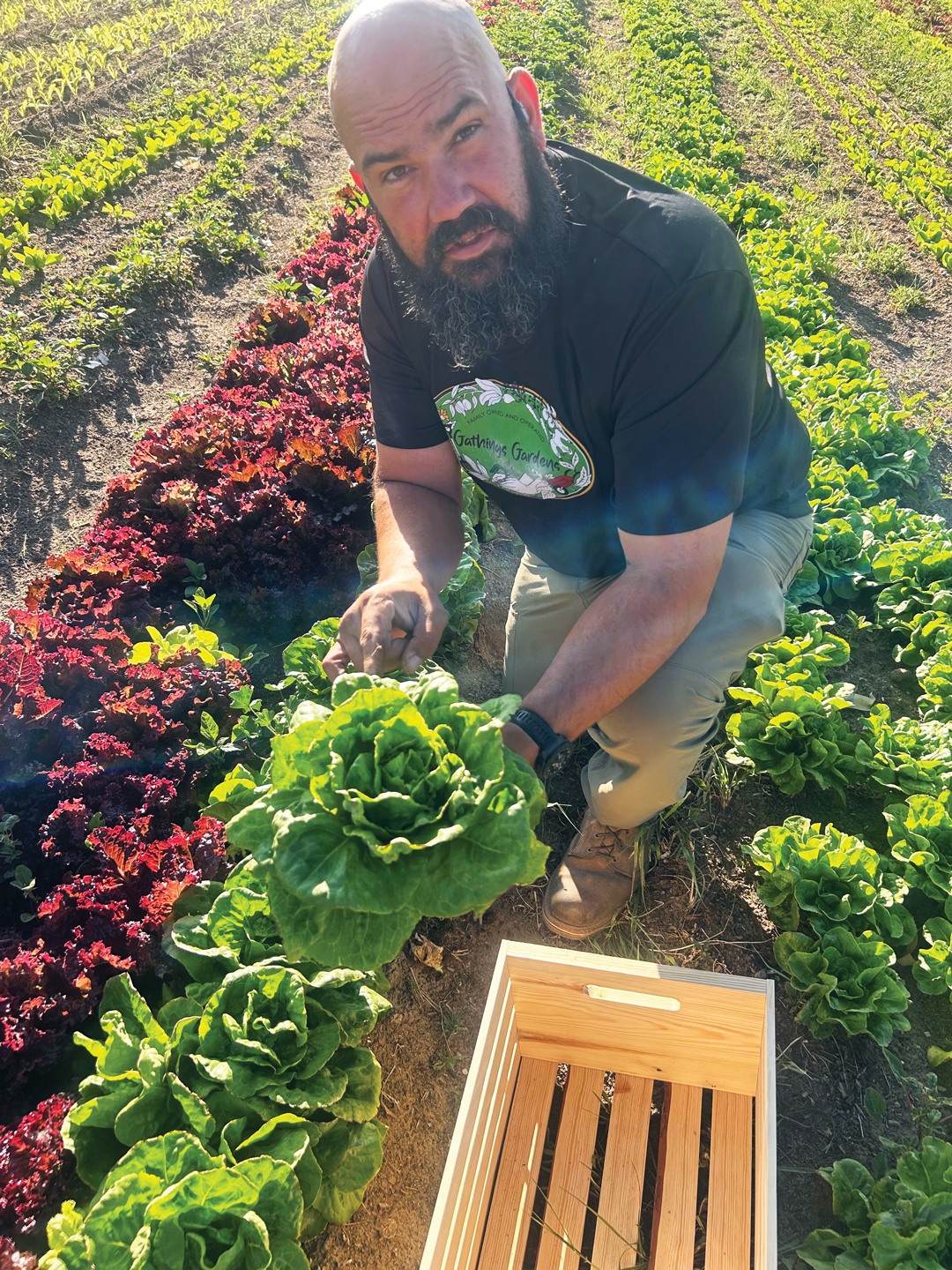
Selece and Jeremy Gathings harvesting produce at Gathings Gardens. Photos courtesy of Gathings Gardens.
Gathings Gardens
“We realized pretty quickly that there weren’t a lot of fresh produce options available here,” Jeremy Gathings said, speaking of his and his partner’s move, three years ago, from Dallas to the Farmington area where he’d grown up. Jeremy and Selece Gathings were sharing a twenty-three-acre family farm with his parents—land where mostly alfalfa had been grown—when, drawing on the family’s gardening experience and the couple’s long stint in landscaping, they decided to start growing produce. They invested in automated underground irrigation and began amending the soil using regenerative methods, but had a disappointing first year. “It was literally just sand that we started on,” Jeremy said, so improving the soil’s fertility was a painstaking process. In 2025, though, Gathings Gardens did something many farmers only dream of: turned a profit.
Learning what would sell was its own challenge. “When we first started, we had this idea we were going to grow everything,” Jeremy said, from spinach and collard greens to fennel, “but we have learned that we had to dial it back a little bit.” Knowing they wanted to sell produce through school systems, they got involved early on with NM Grown. The schools buy a lot of cucumbers, tomatoes, and carrots from Gathings Gardens, while collards, kale, and radishes are more popular with senior centers.
“The New Mexico Grown program was pretty key in giving us some direction on how to get into the system and start selling,” he said. Apart from supporting existing farms, Jeremy said the program has enabled a number of new enterprises “that just would never have been here.”
Selling produce is not the Gathings’ only farm-to-school connection; they have also helped two schools build community gardens, and they host regular field trips, where kids can get their hands dirty. Harvesting carrots and then eating them in a prepared lunch a few days later, Jeremy said, helps “to plant the seed that they can do this too, that you don’t have to go to the grocery store to buy vegetables you can actually grow.”
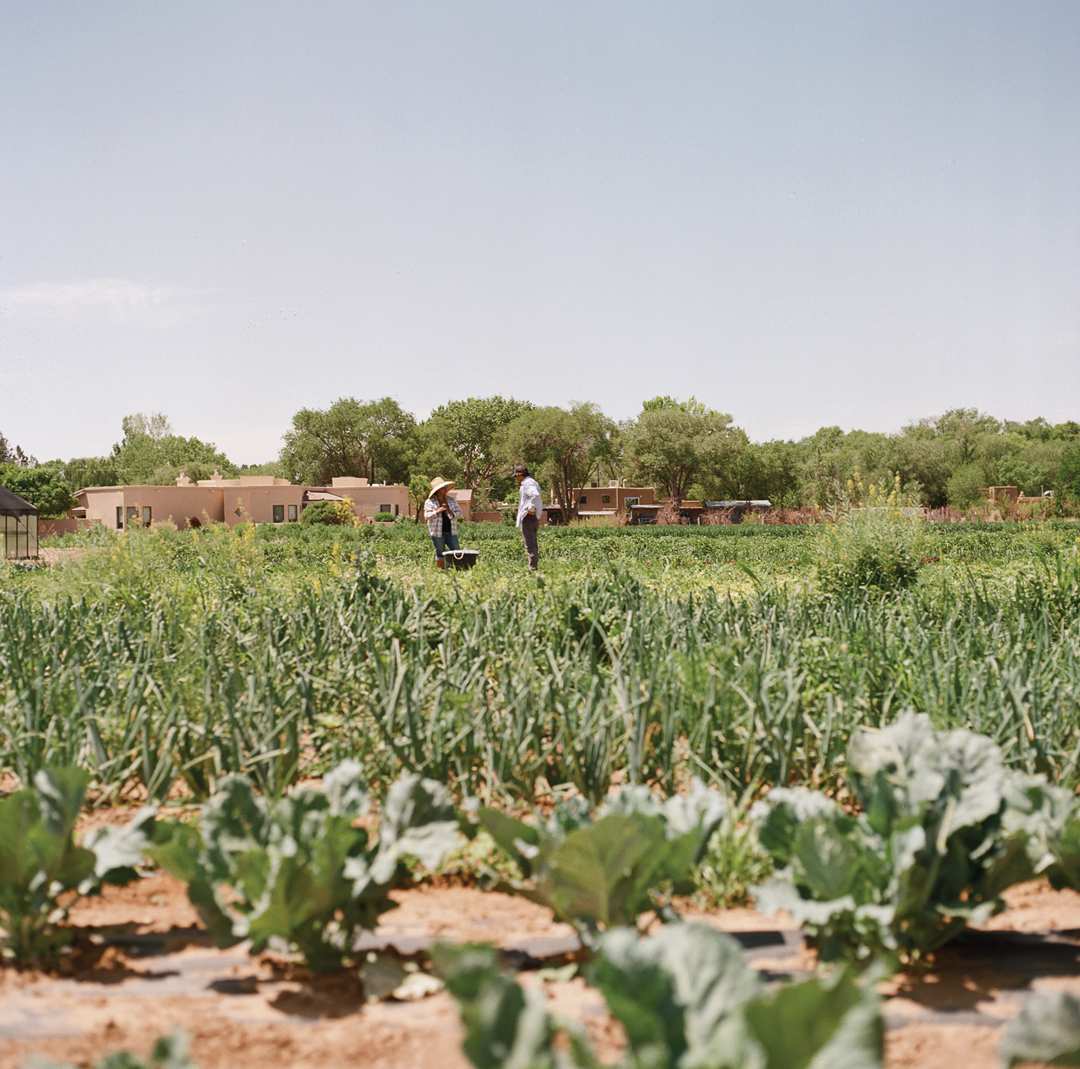
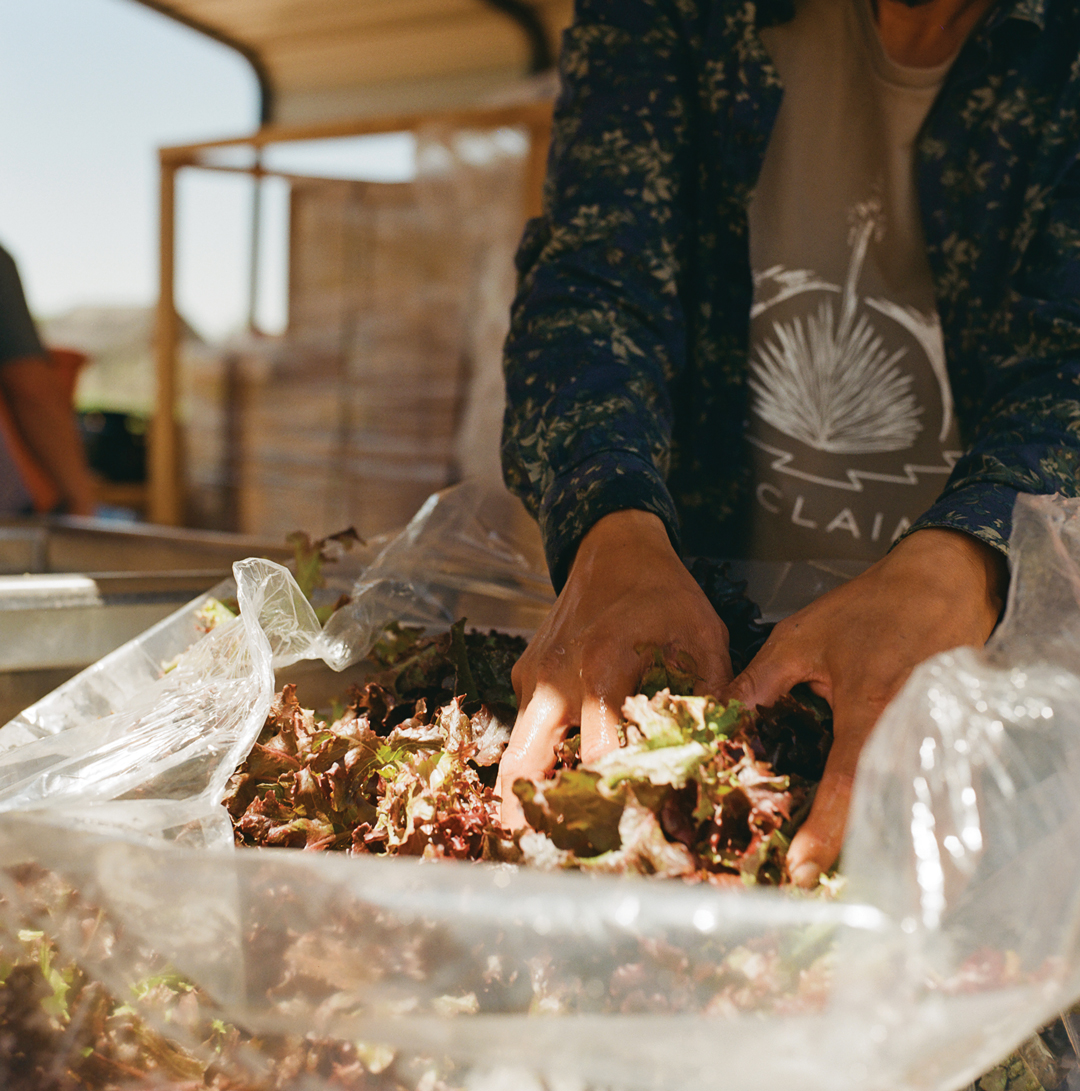
Farmers in residence picking peas (left) and washing red leaf lettuce (right) at Indigenous Farm Hub. Photos courtesy of Indigenous Farm Hub.
Indigenous Farm Hub
Indigenous Farm Hub (IFH) is more than true to its name. Initially conceived during the pandemic by Alan Brauer, IFH’s senior director, and Kara Bobroff, director of the nonprofit One Generation and founder of Native American Community Academy (NACA), the project quickly grew beyond its initial purpose of supporting NACA students and kin in the midst of COVID—and beyond Bobroff’s backyard, where they raised enough vegetables to feed twenty-five families during their CSA’s first season.
First, they decided to expand the project to serve broader goals: connect Indigenous youth to the land, provide them an opportunity to see farming and food production as a viable career path, and support existing Indigenous farmers by providing training and other resources. And, Brauer said, “We thought that if we’re going to do all this work with youth and farmers, and there was going to be a place of convening for people to have a circle of learning, then we might as well grow a lot of food for people too.”
IFH now operates on sixteen acres in Corrales, twelve of which the program owns. There, in addition to their CSA and training programs, they host dozens of field trips for K–12 students. The day after we talked, Brauer had a group of kindergarteners out to help pick popcorn and make corn husk dolls. “It’s important to make sure that it’s fun,” he said, but also, “they’re engaging in something that’s kind of useful at the farm.”
Through NM Grown, IFH has connected with schools, mostly early childhood centers, where they’ve been able to make larger sales than they could at markets. Though he grew up farming, Brauer confessed that completing the program’s Farm Food Safety Risk Assessment, outlining everything from methods of sanitizing farm equipment to the kind of water being used, was pretty daunting. “But after that, it’s been really positive,” he said. So far, they’ve had success with selling to smaller programs that make thirty lunches a day versus larger systems, like Albuquerque Public Schools, which makes close to fifty thousand daily.
One thing Brauer hopes to see in the future is more support in coordinating growing seasons around what produce the school buys, when, and how much. “In that way, farmers can plan for that, because a lot of times they say, ‘Hey, we need this many carrots in June.’ Well, we have to plant those in April, in order to meet [that need], right?” Brauer said. He’d like to see more emphasis on how to meet demands from schools at the right time to better serve more students.
Currently, Brauer said, most of the farm’s sales are individual, “like a bag of popcorn to somebody at a market, and then the CSA model’s our big thing. But this year is the year that we’re really wanting to expand more into providing [to] the schools and figuring out how to tap more into the New Mexico Grown program.” Already, IFH has begun selling their corn flour and masa to NACA and other Indigenous-centered schools—sales they plan to extend to the Indian Pueblo Cultural Center Inter-Tribal Food System Pilot, which aims to improve access to local and culturally relevant foods for tribal schools.
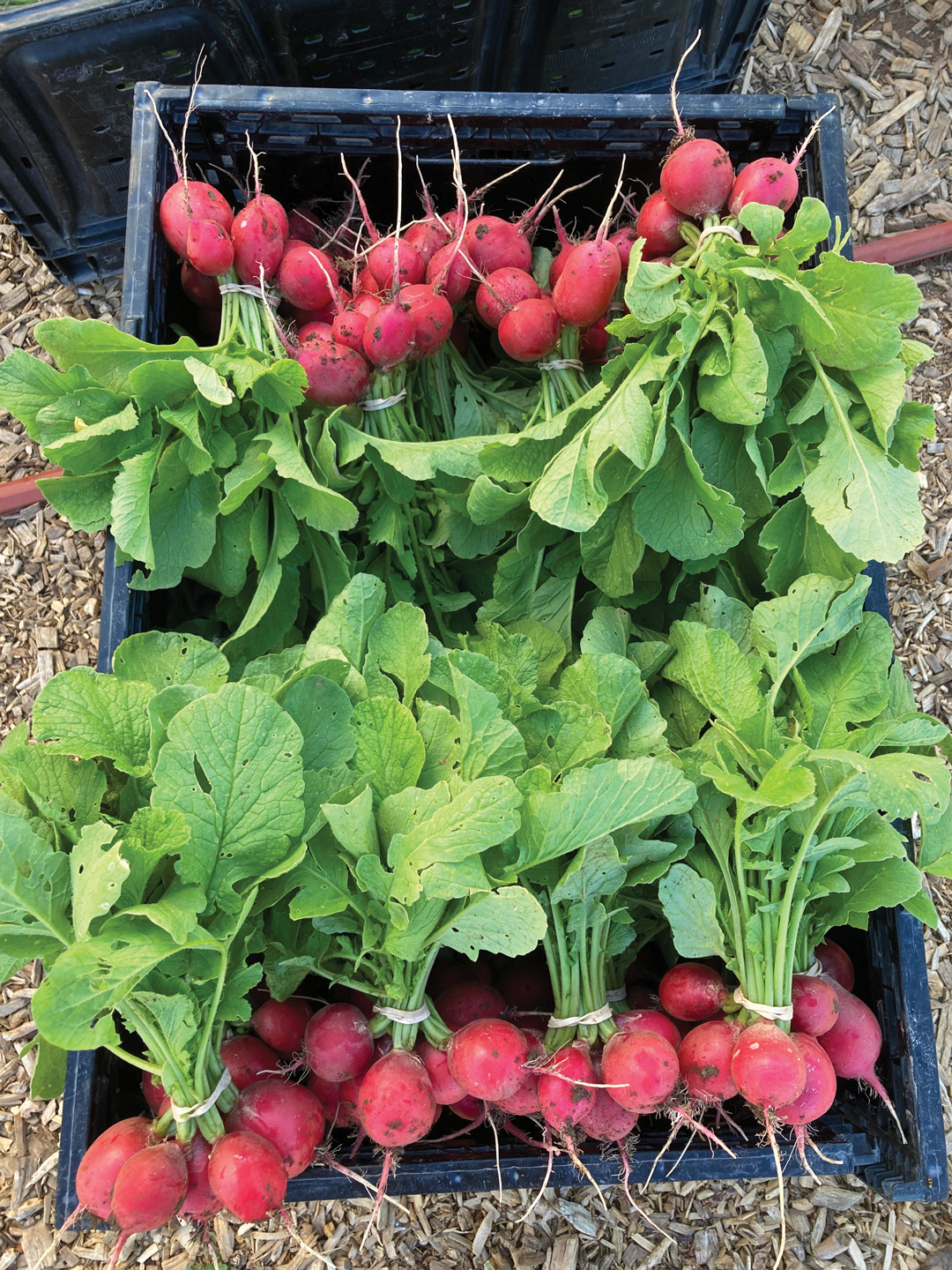
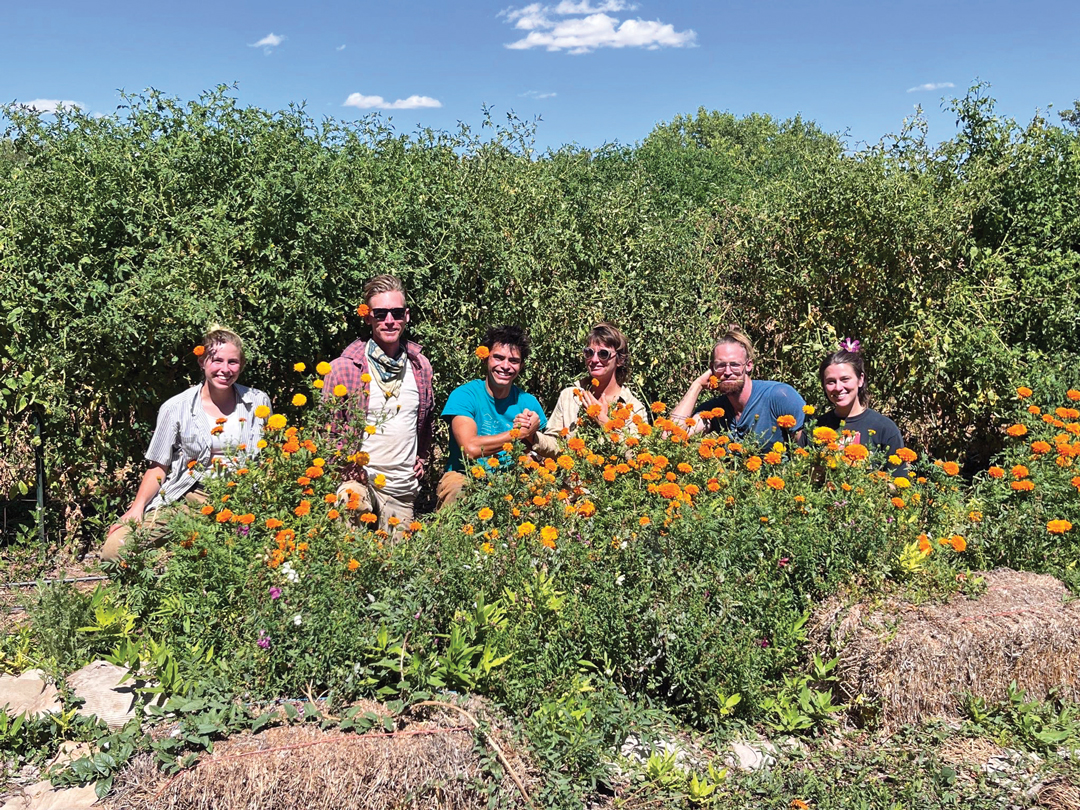
Freshly harvested Champion radishes and farm crew members Carrie Metzger, Ian Colburn, Keegan Kloer, Liana Sonne, Owen Hilchey, and Court Kessler at Farm of Song. Photos courtesy of Farm of Song.
Farm of Song
“The goals of the farm are to, one, produce as much food as possible in a reasonable way,” said Keegan Kloer of the South Valley based Farm of Song. “Two, to be the best workplace possible, given the constraints and given that not everyone is always going to be like, ‘I love my job’ every day. And then the third goal is to do both of those things in ways that are both sustainable for the land and sustainable for our bodies.”
Farm of Song turned three this year, but Kloer and co-owner Ian Colburn have farmed together for twice that long. In 2023, after months of gathering the resources, they, along with third co-owner Owen Hilchey, were able to buy the land they were leasing and build a healthy, diversified farm.
NM Grown, Kloer said, has helped them meet their goals, “from the perspective that it gives us access to new markets, as well as markets that feel aligned with who we want to be trying to get vegetables to.” Farm of Song, which grew about forty different items this year, has a handful of small clients through the program, mostly early childhood education centers and preschools that buy basics like carrots, cherry tomatoes, zucchini, and cucumbers.
While this is the first farm they’ve co-owned, Colburn and Kloer have ample experience farming around Albuquerque, and this was not their first season working with NM Grown. Colburn said that the program makes their food safety certification process manageable, although the process is still challenging, especially for smaller farms. “A lot of us are not super well-funded organizations,” Kloer said. Some of the steps can pose an administrative burden, Colburn said, “but I think overall, it’s really good for the local food system that we all get on the same page, and we kind of have this bar set.”
According to Kloer, many NM Grown produce inquiries come from people too far from the Albuquerque metro area to make delivery feasible—even with the help of participating food hubs like MoGro and New Mexico Harvest, who aggregate produce and transport it around the state. Farm of Song would like to sell to schools and programs in Laguna Pueblo or Española, for instance, but while the state has made funding available for schools and programs to purchase produce, Kloer said, “a lot of the connective tissue that is necessary to make that funding actually useful for a lot of people isn’t there.”
Still, the farm hopes to replicate the success of this season in selling both to NM Grown clients and their wider customer base. “We had a very good year, both revenue-wise and just [with] efficiency, had a lot of laughter,” Kloer said. The two farmers said they ultimately hope to win a grant for capital improvements (like a well and pump) that could help them scale up production of vegetables that they have experience with. For example, an entire field of carrots. That kind of volume could potentially go toward serving larger NM Grown clients, such as Albuquerque Public Schools.
Sophie Putka is a part-time food writer and mushroom farmer. In other lives, she has been a barista, nanny, salon receptionist, outdoor educator, camp cook, and medical journalist. She lives in Albuquerque with her dog Iggy.