Hand-building a connection to land and water in the high desert
By Willy Carleton
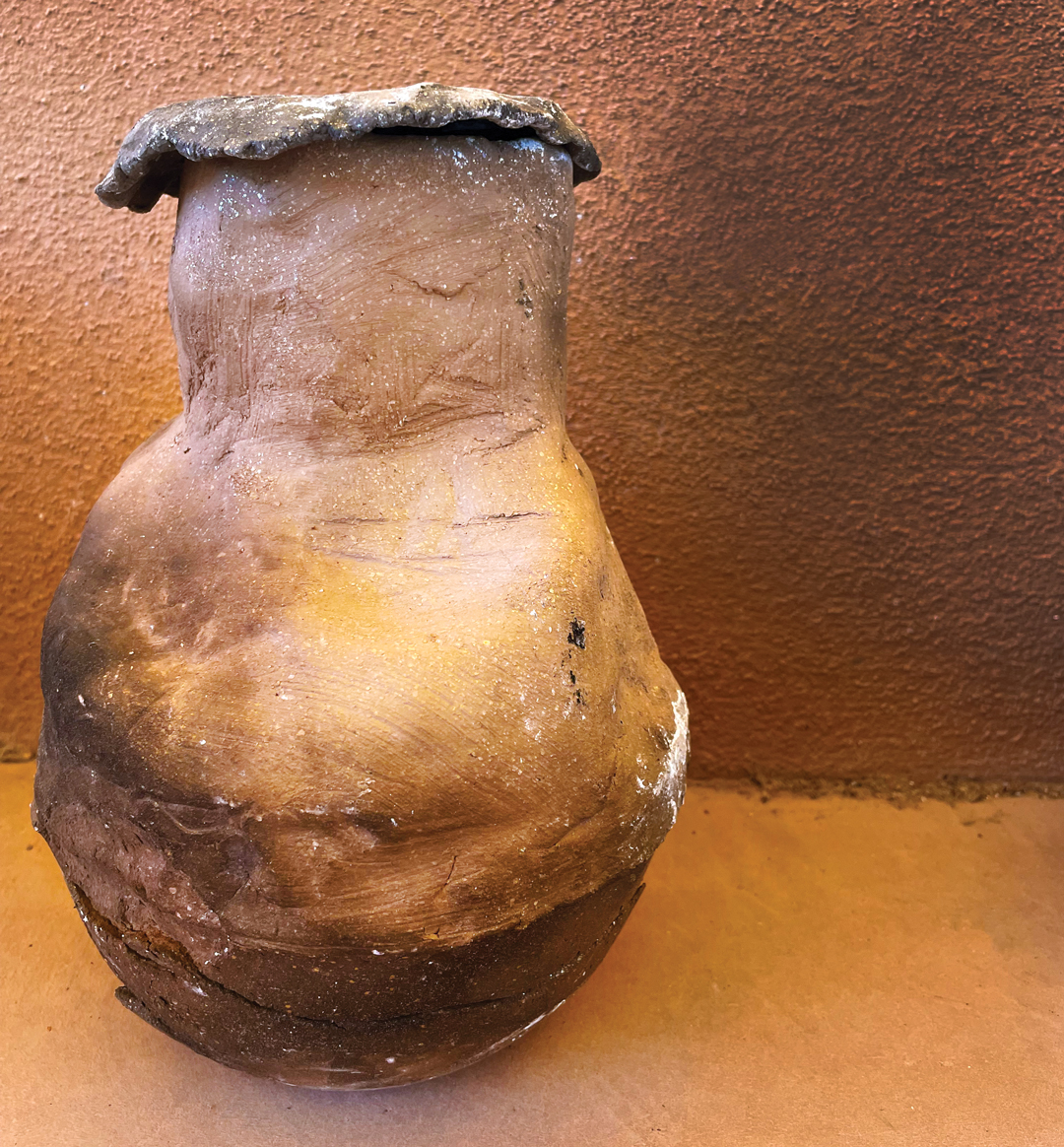
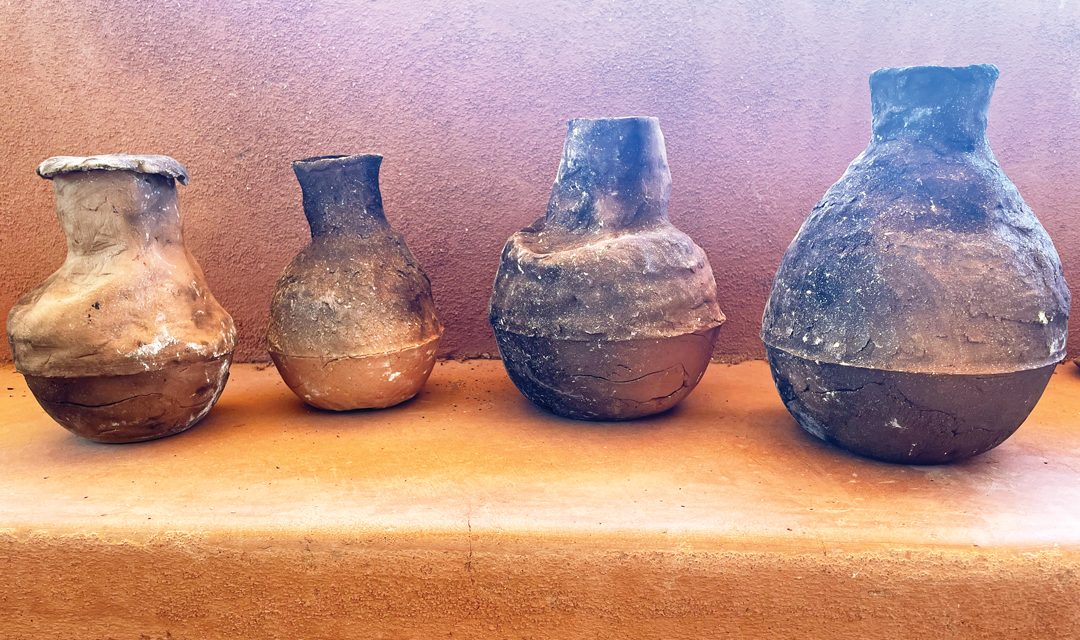
One of the author’s handmade ollas. Photo by Willy Carleton.
I feel the heat through my gloves as I add willow branches to the firepit, watching as smooth earthen forms slowly become porous pots. The fire crackles loudly, smoke rising toward the turquoise expanse above. The morning sun climbs higher in the sky as I build up the fire. Mesmerized by the ungraspable, dancing flames, I see all the planetary elements in play to birth these humble vessels: Red earth, dried in the shaded air, is hardened by fire for the sake of holding water.
There are faster ways to procure ollas, just as there are easier ways to get the calories I obtain from my garden, but the ollas are more than a tool. A product of my amateurish pottery skills, in their lumpy, imperfect shapes I see a singular expression of my hopes for an abundant harvest. A heartfelt and slowly made vessel not to be looked at but to be buried, to hold and slowly release life-giving water before eventually becoming earth again. They mean something to me, and therefore they feel worthy as an offering back to the land.
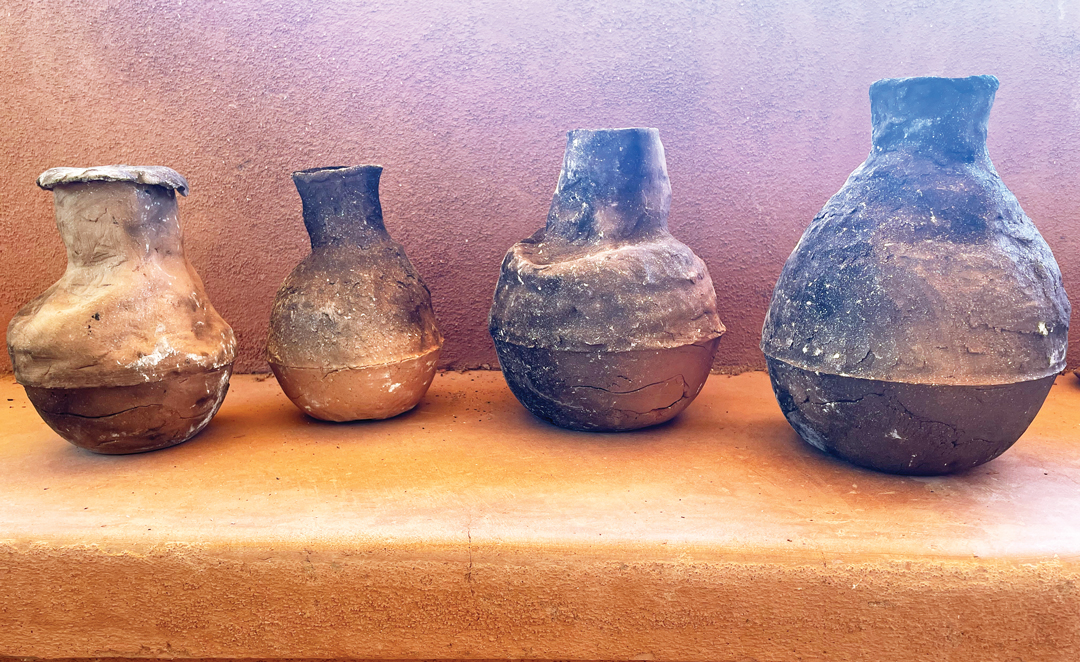
Willy Carleton’s imperfect ollas, photo by Willy Carleton.
Clay pot irrigation is a millenia-old technology (first documented in ancient China and used for centuries in New Mexico) that is, by some estimates, 30 to 50 percent more efficient than drip tape, the seeming gold standard of modern agricultural water-use efficiency. The way traditional ollas work is simple: Unglazed clay pots are fired at a low-enough temperature that they remain porous. They are buried in the ground, with only their necks exposed, and filled with water. The tops are covered to prevent any evaporation, and the ollas slowly sweat out the water into the earth around them. Nearby plants use the moisture, and over the course of the growing season attach their roots to the pot to drink water directly through capillary action. The roots take only what they optimally need, and far less water is lost to percolation into the soil than when using drip or flood irrigation. Depending on its size and the thickness of its walls, an olla can hold water for close to a week, reducing the need to continually water. Because it’s only subsurface irrigation and doesn’t water the soil’s surface, few weeds germinate and thus the water goes to the intended plant or plants. For all these reasons, olla irrigation makes good sense for the desert gardener.
I am not alone in my respect and wonder for ollas. On a late-summer afternoon, I chatted with Yancey Ranspot beside the tall stalks of corn rising above squash and bean plants in the waffle garden next to the old wine warehouse at the Agri-Nature Center in Los Ranchos. Ranspot organizes a crew of Youth Conservation Corps (YCC) members from the Albuquerque Sign Language Academy, and they have been tending this garden all year by carefully filling the ollas at the center of each waffle with rainwater collected from the cistern at the corner of the garden. Ranspot and I have worked together to develop an olla-making program at the Agri-Nature Center that offers community classes and trains YCC members in the art of hand-building and plaster-casting clay pots. Perhaps down the road, the center will provide olla-making resources for local schools. “Ollas make sense in our climate and they help us connect more deeply to our landscape,” Ranspot told me. “We are part of a bigger push in our community to make ollas, and to make the knowledge of how to construct and use them more accessible and widespread.”
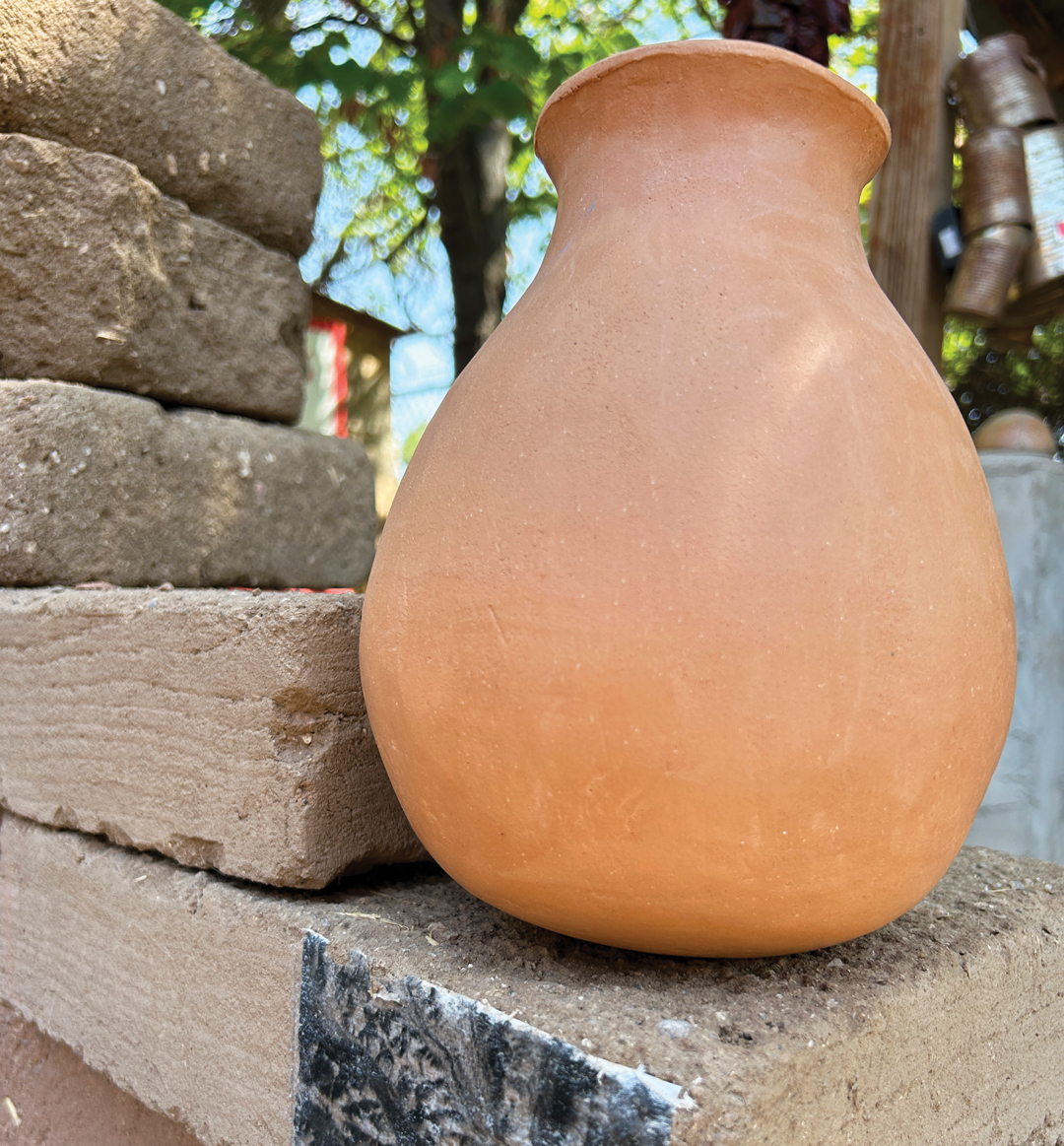
An olla handbuilt by Margarita Paz-Pedro, photo by Margarita Paz-Pedro. Paz-Pedro at an olla-making workshop at the Agri-Nature Center, photo by Willy Carleton.
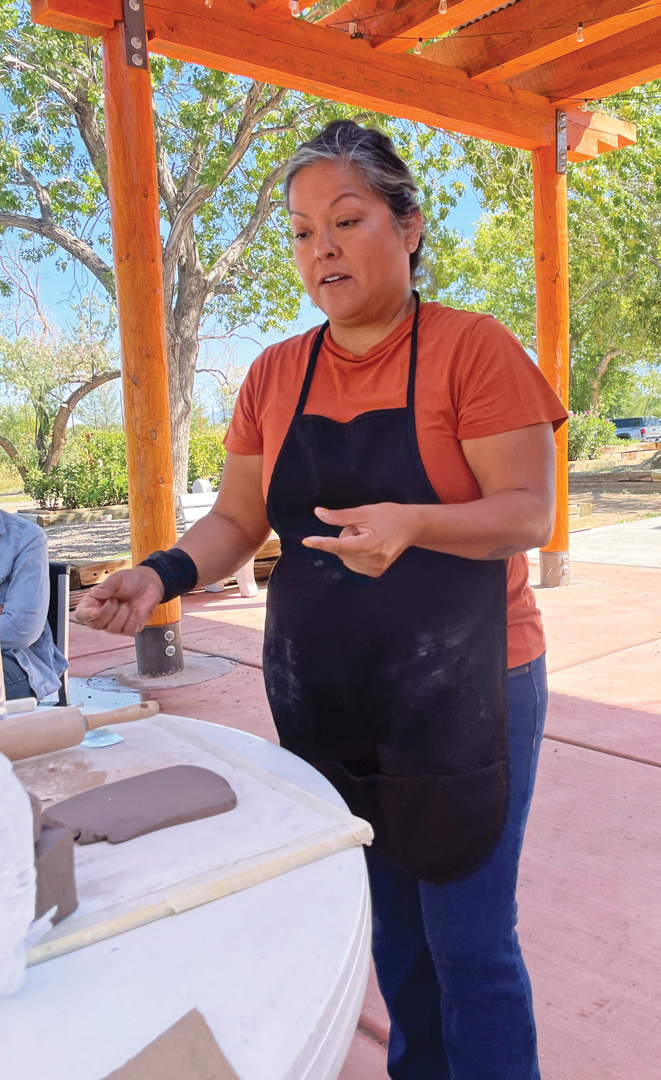
Leading the classes on the art of hand-building ollas is Margarita Paz-Pedro. “I’m a lifelong educator,” Paz-Pedro explained to me a few days after I met with Ranspot. But it’s not all about sharing knowledge: “Working with clay gives me a lot of joy that I want to share with others,” she said. Paz-Pedro has begun providing olla-making workshops for community members and students across Albuquerque through a pilot program started by the Environmental Protection Agency’s Urban Waters Partnership and administered by Ciudad Soil and Water Conservation District. Community interest, Paz-Pedro reported, has been high. “In an age of so much technology,” she said, “finding something that requires you to use your hands provides a whole different experience that I think a lot of people are looking for these days.”
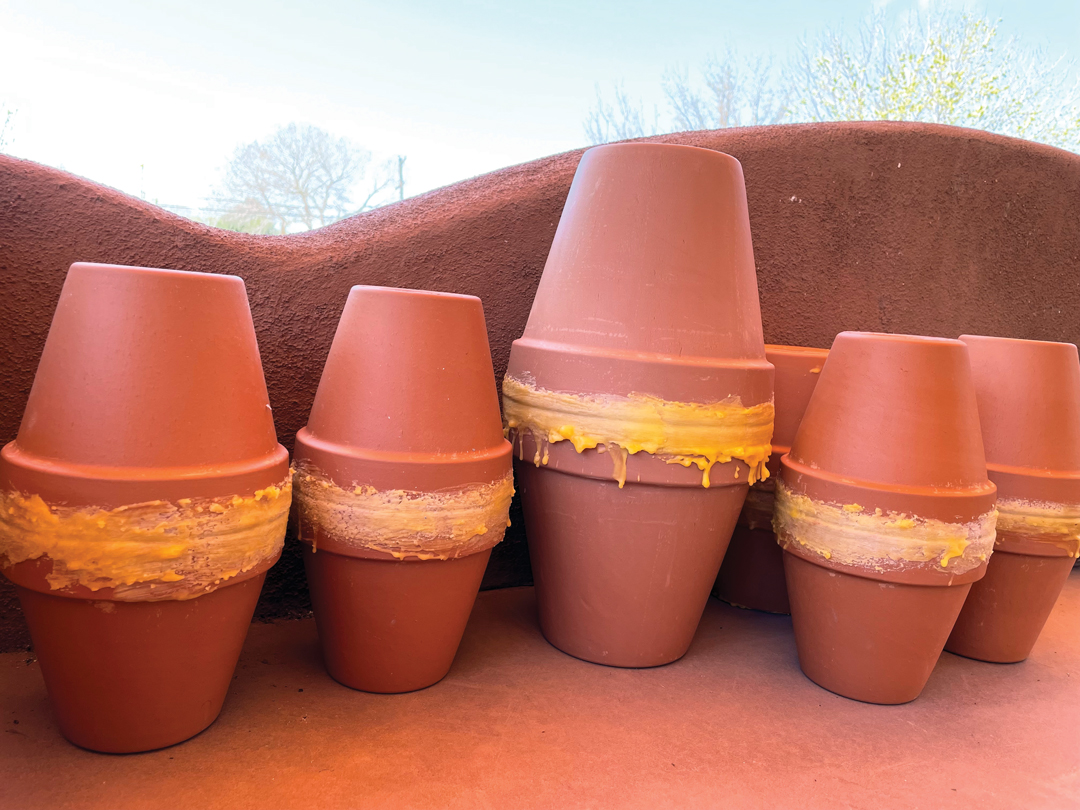
Garden store terra-cotta pots sealed with beeswax for clay pot irrigation, photo by Willy Carleton.
If you want to experiment with clay pot irrigation but can’t make a workshop, or if making ollas from hand doesn’t appeal to you, you can also use the unglazed terra-cotta pots you find at any garden store. Seal the hole in the bottom of the terra-cotta pot (with something small and flat, like a tile, with sealant around the edges), bury it in the ground, and use the terra-cotta plate as a lid. Or, if you want a larger olla, place one pot over the other, sealing them together and sealing the hole in the bottom pot. Many people opt for food-grade silicone as a sealant, though I had some beeswax on hand and chose to experiment with that. The pots sealed with beeswax have held up well, requiring a second round of sealing in only a few places. For a more in-depth take on olla irrigation, I recommend David Bainbridge’s book Gardening with Less Water.
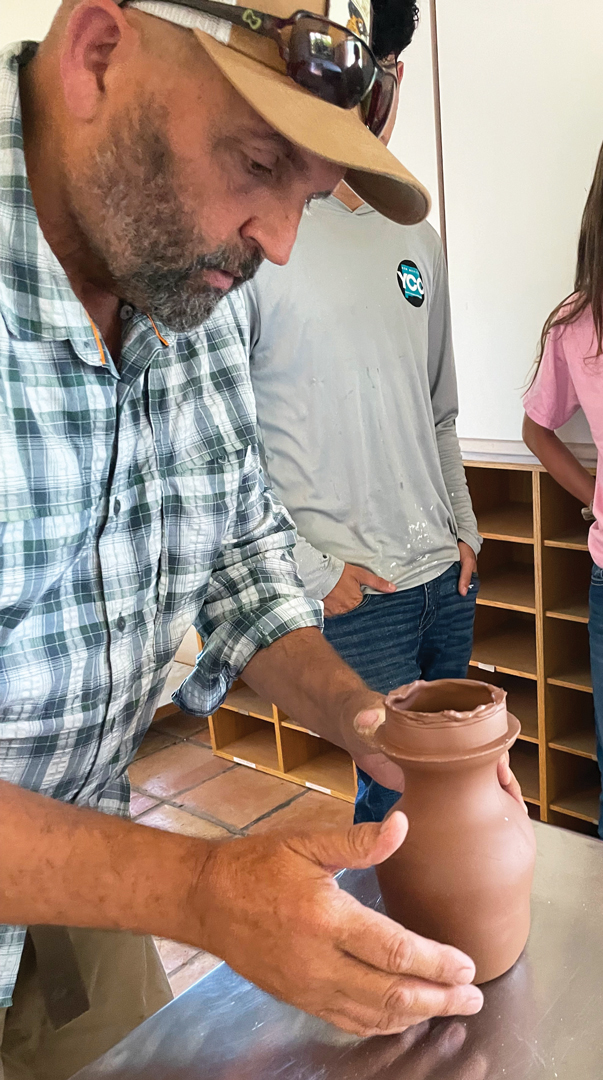
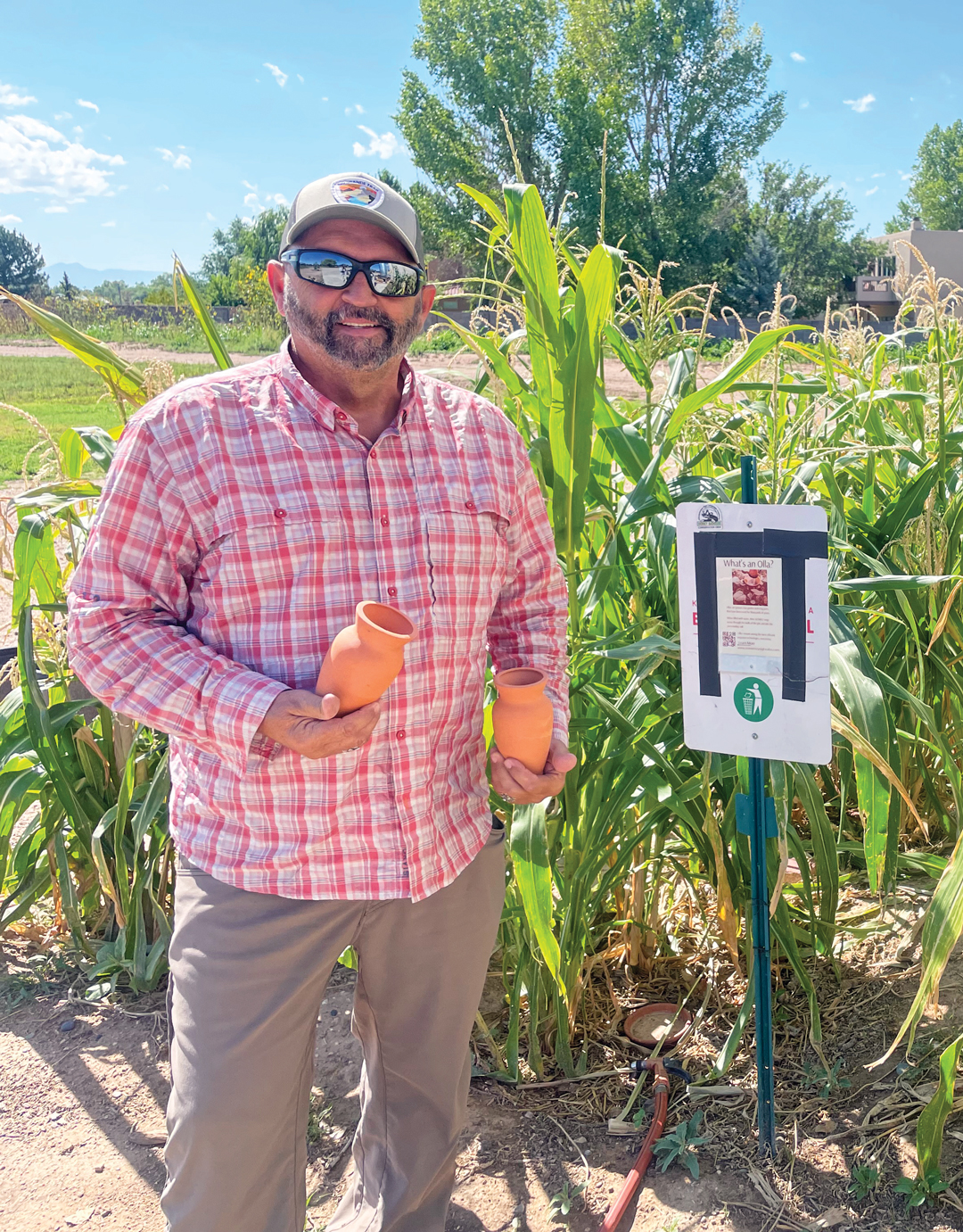
Yancey Ranspot showing Youth Conservation Corps members how to make plaster-cast ollas at the Agri-Nature Center and Ranspot with ollas in the field. Photos by Willy Carleton.
Whether you take a local workshop, experiment with hand-building and pit-firing ollas on your own at home, or retrofit a terra-cotta pot, making—and using—earthenware irrigation will draw you more closely to both water and land in your desert garden.
After two full seasons of observing the small, thriving ecosystem of basil plants, okra, and chiles that surrounds the ollas in my own garden, my appreciation for this simple clay pot technology has only grown. The plants seem able to withstand hotter days with less stress as I am able to stretch the water from my rain barrels further. Beyond that, I feel connected to the vessels, shaped by my hands, buried in the soil. That connection has amplified my relationship to the water and land, and to the food it bears, and has added to the nourishment of my garden.

Willy Carleton is a historian, writer, and educator, helping aspiring gardeners and farmers hone their skills and deepen their connection to the land through the School of the Desert Garden. He is a former editor of edible New Mexico and is the author of "Fruit, Fiber, and Fire: A History of Modern Agriculture in New Mexico." You can follow his current ruminations on growing food in the drylands at desertgarden.substack.com.