
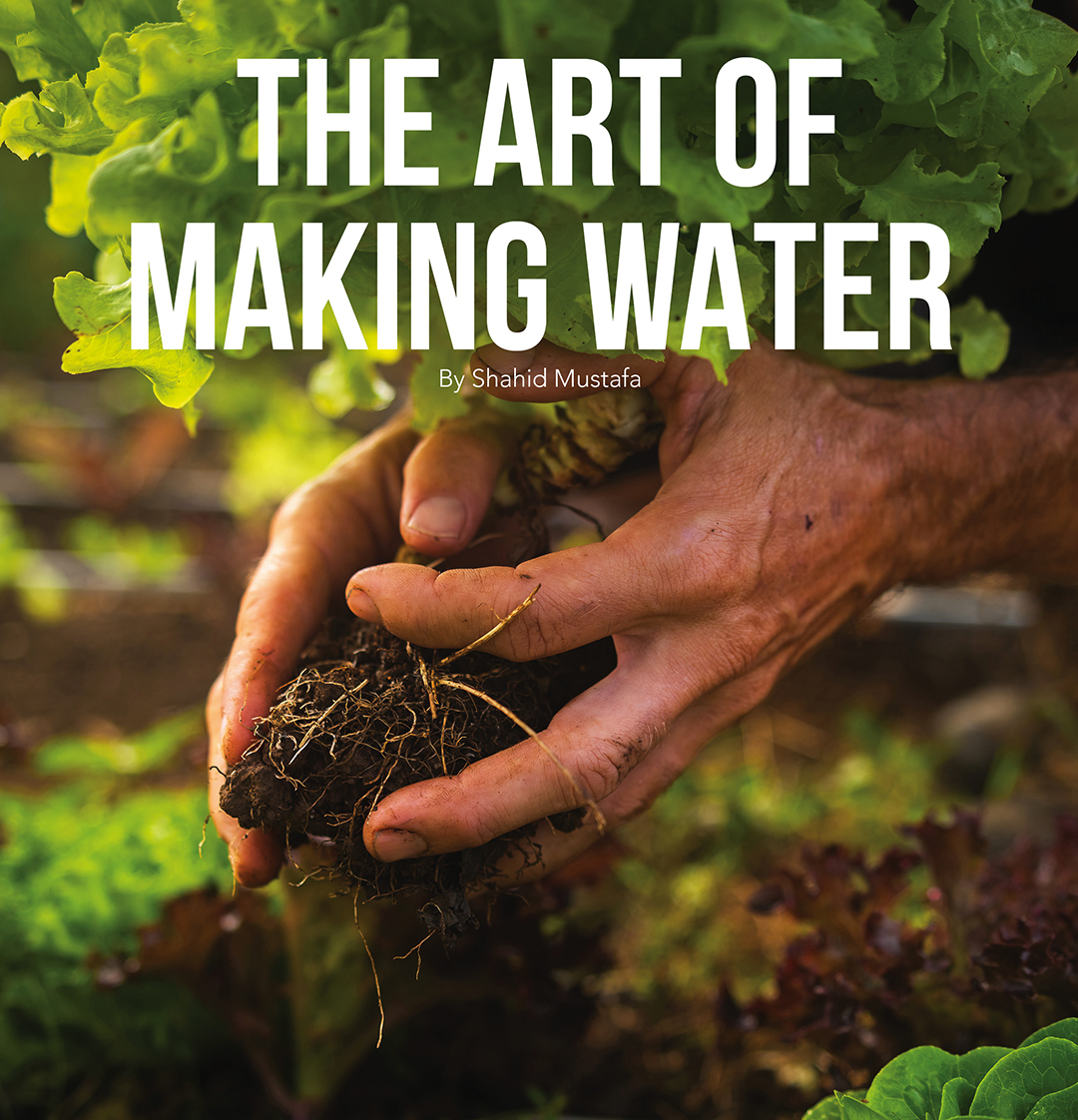
Lettuce and leafy greens are among the vegetables known to absorb contaminants from the soil, photo by Nikita Photography.
Phytoremediation refers, theoretically, to a form of repair. But inherent to the term is something much more fundamental: the process by which plants absorb toxins from water and potentially take in contaminants through their roots and store them in their tissues. The vegetables that are most effective at taking up contaminants and storing them are leafy greens, lettuces, and root vegetables—pretty much the top three out of five items I usually provide in my weekly CSA (community supported agriculture) share. According to recent National Institutes of Health research on the risks of growing vegetables in old mining areas, “The bioaccumulation of toxic elements in edible parts of vegetables cultivated on contaminated soils results in their entry into the food chain and negatively affects consumers’ health.”
Needless to say, I don’t grow vegetables in order to treat polluted soil or groundwater. (For the record, I grow using organic practices on land that has never been mined.) But recent developments in local policy have me concerned about the future health of the waters flowing beneath the land I farm. What troubles me is not the presence of heavy metals but the proliferation of perfluoroalkyl and polyfluoroalkyl substances, commonly known as PFAS. The Environmental Protection Agency has found that PFAS are long-lasting chemicals, parts of which break down very slowly over time, and due to their widespread use, many PFAS are found in the blood of people and animals, as well as in water, air, and soil. There are thousands of PFAS present in many different consumer, commercial, and industrial products, which makes it challenging to assess the potential human health and environmental risks.
Produced water is defined as the water in subsurface formations that is brought to the surface during oil and gas production. Based on findings from previous spills in states including Texas, produced water resulting from oil and gas extraction is suspected by some environmentalists to be riddled with PFAS. In New Mexico, the majority of produced water is the wastewater product of the oil and gas sectors. According to the New Mexico Environment Department (NMED), “For every barrel (42 gallons) of oil produced, four to seven barrels of produced water may be generated. In 2018, New Mexico became the third largest oil-producing state, generating over one billion barrels of produced water (~60,500 Olympic size swimming pools).” Currently, most of this water is stored in deep wells through underground injection. This storage problem, combined with the impacts of rising temperatures and a vanishing snowpack, has led to a push to turn this produced water into—well, into what is one of the ongoing questions and points of tension. Another, more immediate concern is the handling of produced water itself.
A press release published on March 11, 2025, by the environmental nonprofit WildEarth Guardians states, “PFAS, often called ‘forever chemicals,’ encompass more than 14,000 man-made substances used for their oil and water repellency, temperature resistance, and friction reduction. These chemicals are highly toxic at minuscule amounts, persist indefinitely in the environment, and are linked to testicular and kidney cancer, thyroid disease, reproductive issues, and other severe health risks. Without full chemical disclosure, oil and gas companies can easily hide continued PFAS use behind trade secrets.”
The New Mexico–based nonprofit issued this press release in direct response to the state Oil Conservation Commission’s decision, earlier that day, to ban PFAS’ use in fracking—but not to require full disclosure of all chemicals used in the drilling and production process. The commission’s decision appears to have been made based on concerns of overstepping its own authority and potentially violating the New Mexico Uniform Trade Secret Act. According to that act, a “trade secret” means information, including a formula, pattern, compilation, program, device, method, technique, or process that determines independent economic value. In its ruling, the commission effectively allows that an entity or “person” (as the act defines them) has the right to withhold disclosure of potentially harmful PFAS used in its operations if disclosure would expose to the public a unique proprietary formula—except in the case of reporting an accident or spill.
The lone supporter of full disclosure in a 2–1 vote was Commissioner Greg Bloom of the State Land Office. Explaining his vote, Bloom stated, “There are a lot of PFAS chemicals, potentially hundreds of thousands, that have not been safety tested,” that could be hidden in the attempt to protect trade secrets. In his testimony he also shared, “1.5 ounces [of these chemicals] would contaminate 100,000 acre-feet of water, an acre-foot is enough water for two or three houses for a year, it’s hundreds of thousands of gallons. So the toxicity of this is almost the level of where it’s unfathomable and they haven’t been safety tested, they’re being spilled on the ground; we heard testimony they could be evaporated into the air. We don’t know what happens with that.”
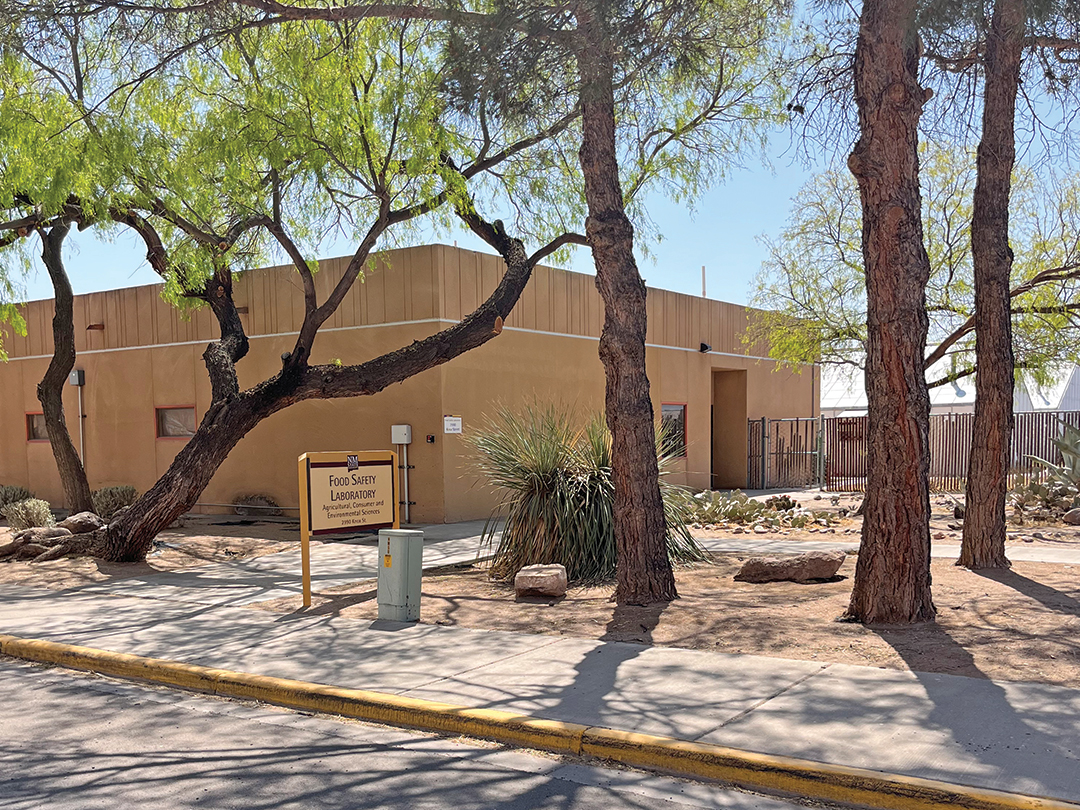

Food Safety Laboratory and greenhouses at the College of Agricultural, Consumer and Environmental Sciences at NMSU, host to the New Mexico Produced Water Research Consortium, photos by Shahid Mustafa.
Without being required to disclose the chemicals used, Bloom observed, companies working in the state cannot feasibly be held accountable. He said, “Simply, if a company wants to bring chemicals into New Mexico, transport them, potentially spill them, may or may not report them, may or may not have them cleaned up. . . . We should know what chemicals are being used out there.” In defense of his position, Commissioner Bloom also offered, “I think our charge is to protect public health and the environment; it’s not necessarily to ensure trade secret status for chemicals which we now know are incredibly toxic.”
Responding to the commission’s decision in the March 11 press release, Melissa Troutman, climate and health advocate at WildEarth Guardians, said, “This decision gives the illusion of progress, but without enforceability through disclosure, it’s nothing more than posturing. Industry’s stranglehold on New Mexico politics is suffocating, and today’s ruling proves it.”
In support of the commission’s decision not to demand full disclosure is the New Mexico Oil & Gas Association (NMOGA), which describes itself as “a coalition of oil and natural gas companies, individuals, and stakeholders dedicated to promoting the safe and environmentally responsible development of oil and natural gas resources in New Mexico.” According to NMOGA’s website, “Advanced technologies have allowed the industry and regulators to better understand produced water and how it can be treated and reused in both the oil and gas industry and other agricultural or industrial processes. Reusing produced water turns a waste product into a valuable resource, promoting conservation of our freshwater supplies for essential uses such as drinking, agriculture, and ecosystem support.”
March 22, 2025, was World Water Day, observed specifically to advocate for the sustainable management of freshwater resources. The date also marked the end of the first session of the 57th Legislature of New Mexico, where a House Bill (HB 222) proposed “requiring disclosures of chemicals used in hydraulic fracturing operations and downhole operations” and prohibiting the use of fracking and drilling fluids containing PFAS. The bill did not pass, so the Oil Conservation Commission’s ban remains the legal safeguard for protecting New Mexico’s waterways from PFAS contamination. In light of the bill not passing, Troutman responded via press release, “Farmers, first responders, water well owners, and medical professionals need access to chemical pollution data to protect health and safety. But in New Mexico, oil and gas is allowed to keep chemicals secret, prioritizing profits over public health and our right to know what chemicals are being dispersed into our communities.”
In New Mexico, approximately 81 percent of the public water supply comes from groundwater sources, and over 76 percent of the state’s surface water goes toward agriculture. Groundwater is water that infiltrates the ground and fills the spaces between soil particles and cracks in rock formations known as aquifers. Aquifers are replenished by rain and snowmelt, and the naturally arid conditions of the Southwest, compounded by population growth and severe drought, have had a dramatic impact on the state’s groundwater reserves.
In the same legislative session, another bill was successful. According to the Office of the Governor’s website, HB 137 “is a key component of Gov. Michelle Lujan Grisham’s 50-Year Water Action Plan, designed to protect the state’s limited freshwater resources. By treating and incentivizing the use of salty underground water, the Strategic Water Strategy supports manufacturing and clean energy needs while preserving community drinking water supplies.” An earlier version of the bill included projects involving the reuse of treated produced water, or wastewater from oil and gas production. While those terms were cut from the final version of HB 137, Governor Lujan Grisham remains committed to continuing research on produced water treatment, which she sees as “a critical tool for New Mexico’s long-term water security.”
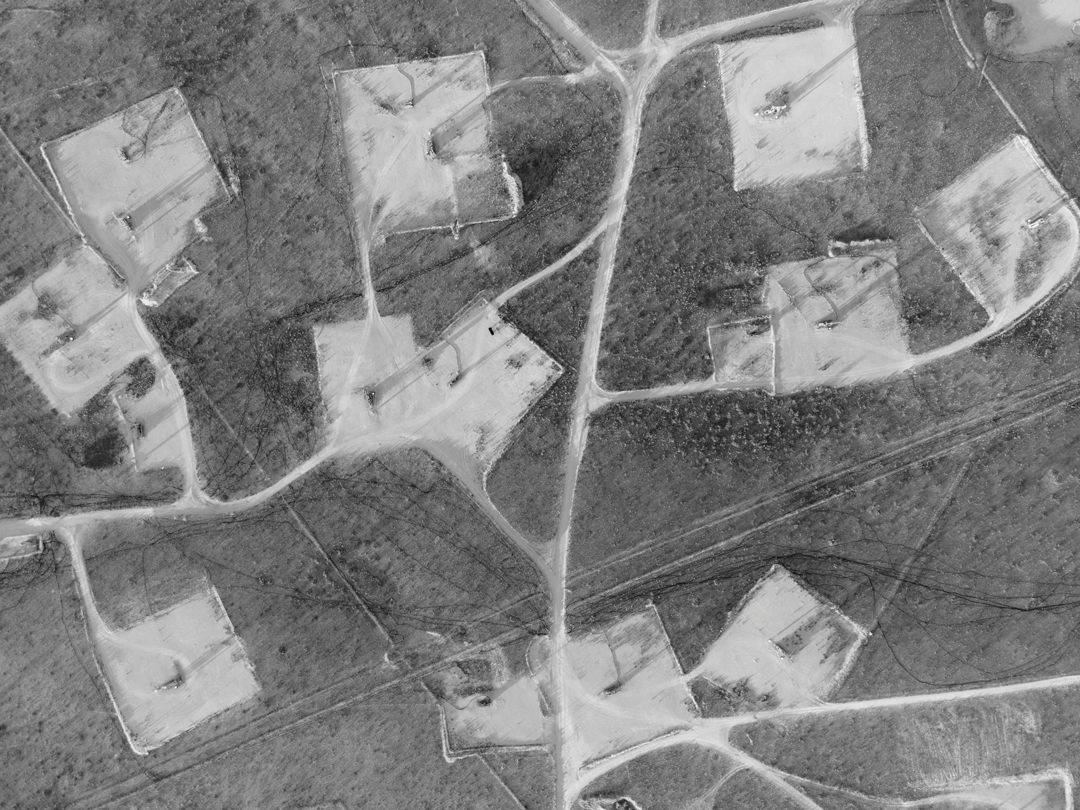
Aerial view of oil pads in New Mexico, photo by Purplexsu Photography.
On March 12, in announcing a promise to “modernize outdated regulations on wastewater discharges for oil and gas extraction facilities” and deliver on President Trump’s energy agenda, US Environmental Protection Agency (EPA) administrator Lee Zeldin said, “EPA will revise wastewater regulations from the 1970s that do not reflect modern capability to treat and reuse water for good. As a result, we will lower production costs for oil and gas extraction to boost American energy while increasing water supplies and protecting water quality.”
Leading the charge in researching produced water treatment in New Mexico is the New Mexico Produced Water Research Consortium (NMPWRC), which was established in 2019 in response to the Produced Water Act of the same year. In order to establish regulations and policies for the reuse of produced water outside the oil and gas sector, the NMED entered into a memorandum of understanding with New Mexico State University in September 2019 to create the NMPWRC. In addition to filling “scientific and technical knowledge gaps” needed to establish such regulations, the consortium’s stated goals include accelerating technology and processing “research, development, and implementation for environmentally sound, safe, and cost-effective reuse of produced water for industrial, construction, agricultural, rangeland, livestock, municipal, aquifer storage, surface water, and/or other applications.”
When asked about the research on produced water, and specifically their findings on using produced water in agricultural applications, NMPWRC’s program director Mike Hightower said, “What we’re in the process of right now is treating it for agriculture. We’re looking very closely at treating water that can be used. Even though we’re looking for it, we don’t see a lot of PFAS in produced water from oil and gas wastewater. Our focus has been on organics, and we’re finding that we can remove the organics well. Some of the constituents that people are worried about are not in produced water. We can make this water very high quality. All of our current data is suggesting that we can make that water appropriate for agricultural food production.” As to when the consortium might determine the safety of applying produced water in agricultural production, Hightower said, “We’ll have enough data within the next two years. The EPA is really interested in this, and trying to protect all of the potential applications.”
In New Mexico, we are experiencing the real-time, tangible effects of climate change. The strategies of denial and procrastination have led us to the point of crisis management, which, to me, is reflected in the reactionary language of legislation that attempts to balance the need to protect both public health and industrial privacy. How we arrived here matters less now than how we move forward. As the debates about these recent votes show, there still seems to be a wide gap between the narratives of the opposing viewpoints. Speaking of the chemical disclosure bill that failed to pass, Troutman added, “Though HB 222 didn’t get to the governor’s desk this year, we will continue to push for chemical disclosure until we get it, and we need the public’s support to make that happen.” The need to act fast has always been voiced by environmentalists, and the legislation that was approved by the state sets the stage for introducing produced water into the public water supply, a strategy that presents a reasonable cause for concern due precisely to what may be perceived as the lack of time available to invest in evaluating the long-term ramifications.
In journalist Steven Solomon’s book Water, published in 2010, he wrote, “The age of water scarcity consequently heralds the potential start of a momentous transition in the trajectory of water and world history: from the traditional paradigm based on centralized, mass-scale infrastructure that extracted, treated, and delivered ever greater, absolute supplies from nature to a new efficiency paradigm built upon more decentralized, scaled-to-task, and environmentally harmonious solutions that make more productive use of existing supplies.”
Perhaps we are now at a point where we have no choice but to accept our current (no pun intended) reality, and brace ourselves for a paradigm shift that demands a greater public responsibility in understanding the real and potential threats to our water alongside a willingness to embrace and support the developing technologies that we will be dependent upon to preserve our most basic common need. The moment upon us demands diligence and steadiness as we navigate these chaotic rapids.

Shahid Mustafa
Shahid Mustafa owns and runs Taylor Hood Farms, practicing regenerative organic agriculture on more than three acres in El Paso, Texas, and offering a CSA with home delivery. Through his nonprofit organization DYGUP/Sustain (DYGUP stands for Developing Youth from the Ground Up), he has worked with the science department at Las Cruces High School to implement an environmental literacy curriculum and establish a one-acre plot where students receive credit for helping with all stages of vegetable production. With plans to become a certified organic farm and train a new generation of farmers, he hopes his efforts will be an inspiration for farmers to adopt the regenerative organic practice.