Inside The Love Apple and Manzanita Market
By Mariko O. Thomas
Photos by Douglas Merriam
The first time I went to The Love Apple was on my twenty-fifth birthday. I was a graduate student and was living most of the time up a massively potholed dirt road with no running water. I wore a slightly ripped secondhand black dress and red lipstick that I think I had gotten for a high school graduation gift. I drove the winding way up to Taos and entered what felt like a magical vigil. The white adobe walls cradled me in the flickering candlelight, and the creak of the wooden floors under my heels seemed to say “I think it’s sweet you dressed up but you didn’t have to,” and from my perch on a worn wooden chair on what was once an altar, I surveyed the space and had never felt more held by the metaphorical arms of a restaurant. A giant painting of rumpled white sheets graced one wall. When the light hit it one way, it was a sensual portrait of post-rising, the sheets remembering warm bodies that had been there a moment before. When the light hit it another way, it was the most generous image of calm I had ever seen. I remember that I ordered tacos (the cheapest item on the menu at that time) and one glass of wine, and despite the phenomenal imposter syndrome I carried eating at a nice restaurant at that age, I felt welcome.
This is the magic of Jennifer Hart’s restaurants. Both The Love Apple and her newer project, Manzanita Market—a counter-service café on the plaza featuring breakfast, simple sandwiches filled with cured meats and house-made spreads, and bone broth soups—are what I can only call a nourishing embrace of a space. Both restaurants have a clean, simple aesthetic, but not in the vein of Swedish modernism, where spilling something feels like an act you might be reprimanded for. Rather, it is obvious that they were created with intentional, though slow, choices, shaded with a pinch of random opportunities. There is obvious care but also a lack of pretension in Hart’s commitment to local sourcing, the sheer rainbow of colors of the foods served, and the handmade pieces and recycled and refurbished finds adorning both spaces. The community is present in both buildings, whether it is the line of coffee drinkers smoking and chatting along the wall by Manzanita Market’s front door or the vegetables and meats coming to The Love Apple from places you could point out on a map if you’re from around here.
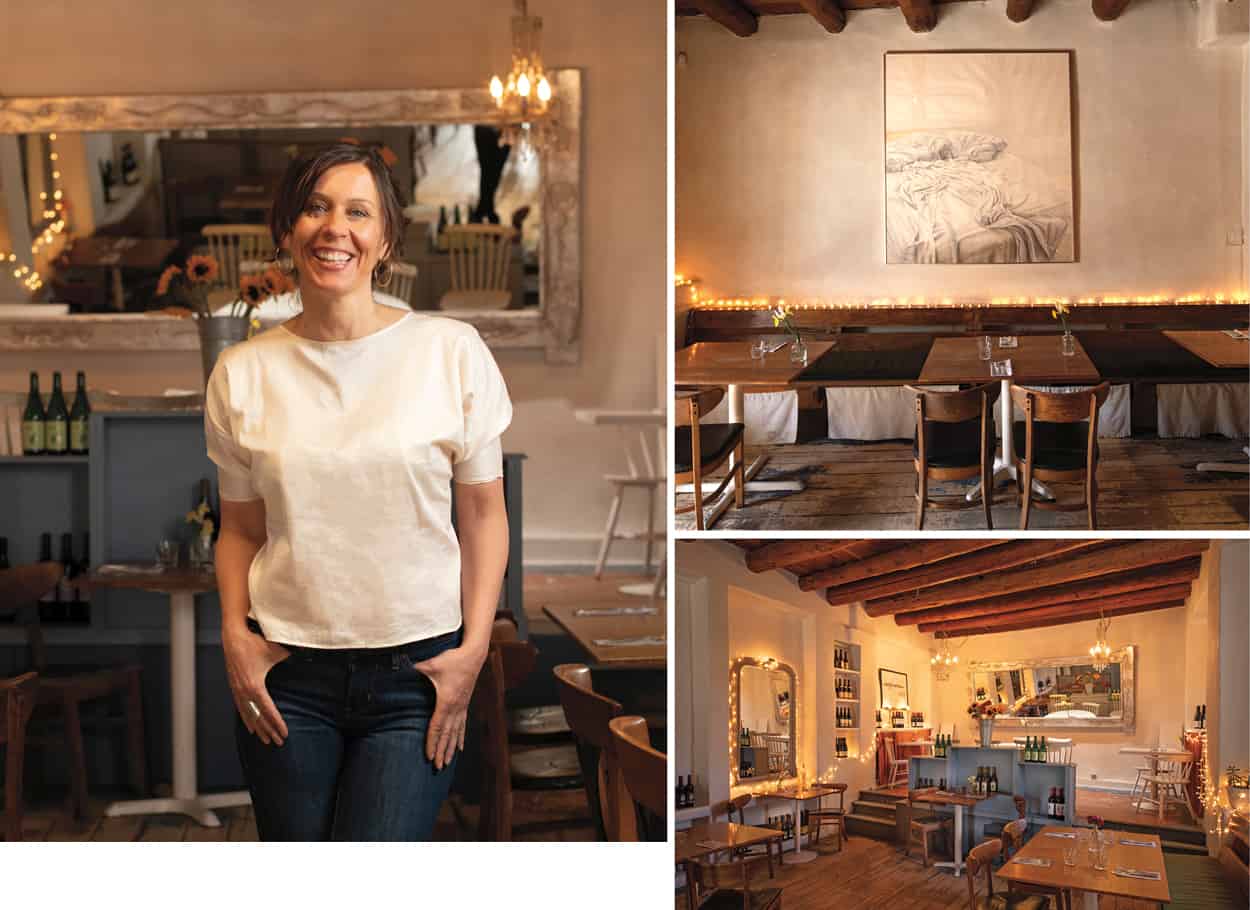
Left: Jennifer Hart, owner of The Love Apple and Manzanita Market. Top right: The Love Apple dining room with its giant painting of rumpled sheets. Bottom right: The former altar with its elaborately framed mirror.
The Love Apple (pomme d’amour, as the tomato is sometimes called in French) is situated in what used to be Placitas Chapel, a high-ceilinged though tiny adobe church with creaking floors, whitewashed curving walls, and the exposed vigas New Mexico interiors are known for. The steeple is a bit askew, and Hart tells me that the insurance company keeps requesting it be removed, but they “just keep putting Band-Aids on it because it’s so sweet, it’s our little crooked cross.” There is a tiny red-checkered apron operating as a window shade, with a stitched angel sticking out of the pocket, and the bathroom is a delicious yet unfussy shade of fuchsia.
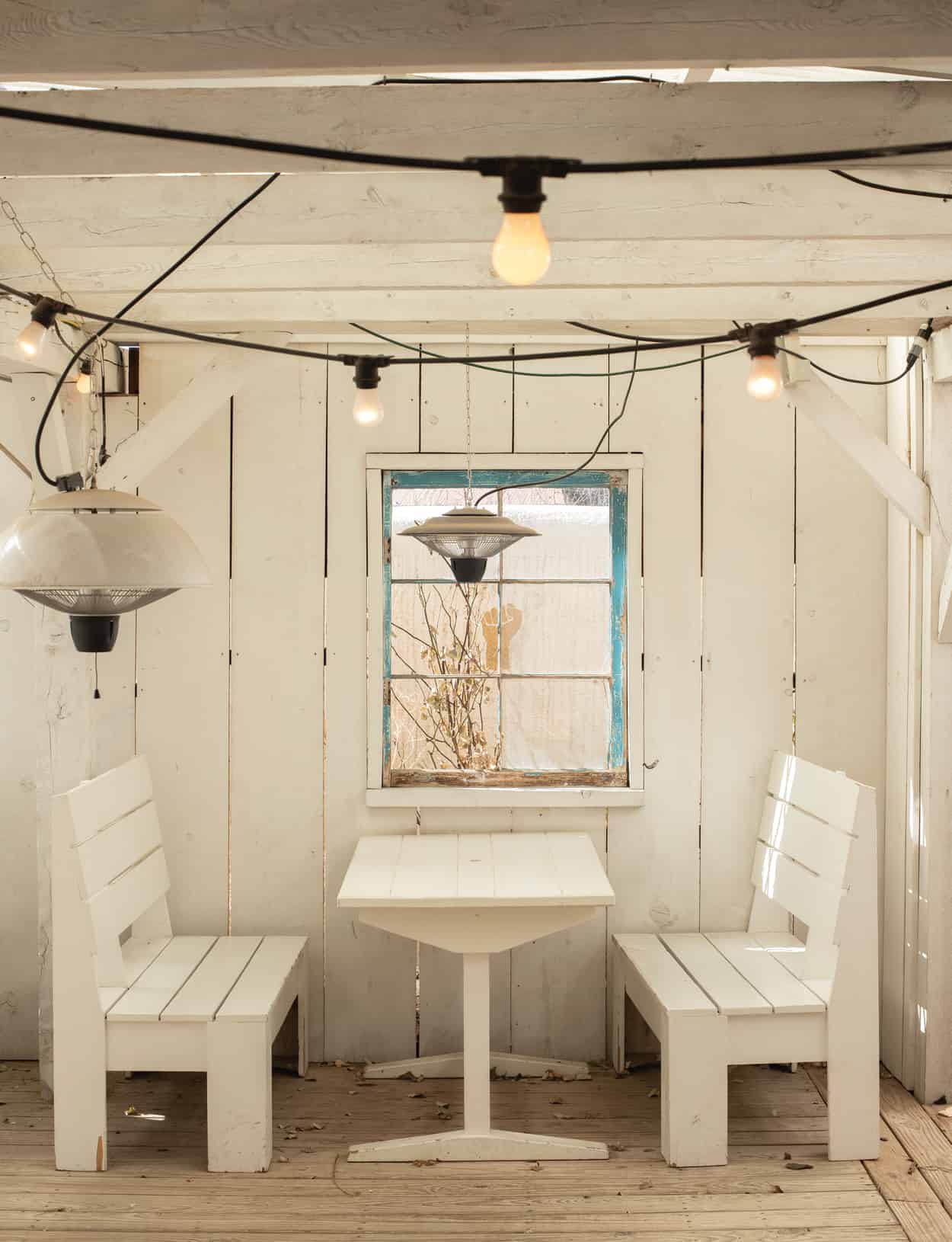
When entering the belly of the restaurant, my eye is drawn to a giant mirror with carved icons leafed in silver that overlooks the former altar, a raised portion of the floor with a smattering of farmhouse chairs and tiny wooden handmade tables. Overflow wine storage is in the alcoves, laced with white sparkling lights, along with a few more mirrors. Hanging from the ceiling are a few whimsical chandeliers made from curving wire adorned with geometric crystal beads and dangling drops that catch the candlelight. The space has the effect of slow and resourceful romance, of being on a date in an ancient country kitchen, of cleanliness but not sterility. On the courtyard patio, garlands of dried flowers hang above white-painted tables. Hart swears that everything came together slowly, with many weekends of friends helping plant flowers and trees, building tables and fences, and finally, after a rainy year, putting up a roof outside. When I ask her about her design plan, she says, “It’s not as if I had a lot of money at one point and had this great design plan. It all came together like ‘Oh, now we can afford a wall!’”
The food at The Love Apple also aligns with the design aesthetic in that all dishes are somehow simultaneously decorative and simple. A single-page paper menu boasts delectables like blue corn muffins with orange sage butter and a warm spinach salad with roasted carrots, candied pepitas, and a smoked red pepper dressing. On this visit, I ordered a pan-seared duck breast served alongside a baked green chile tamale adorned with crème fraîche and a dollop of red chile sauce. The duck melted in my mouth, offset by the bitter tang of green chile and the hearty texture of the tamale masa. Intrigued by the sourcing of local wild meat, I also tried the elk medallion. The steak was tender and mild, served with a yam chèvre puree and a pinch of horseradish parsley gremolata that lingered on my tongue. The best way I can describe this food (which is certainly fine dining), is fine dining where the chefs really and truly love and know the landscape where they live.
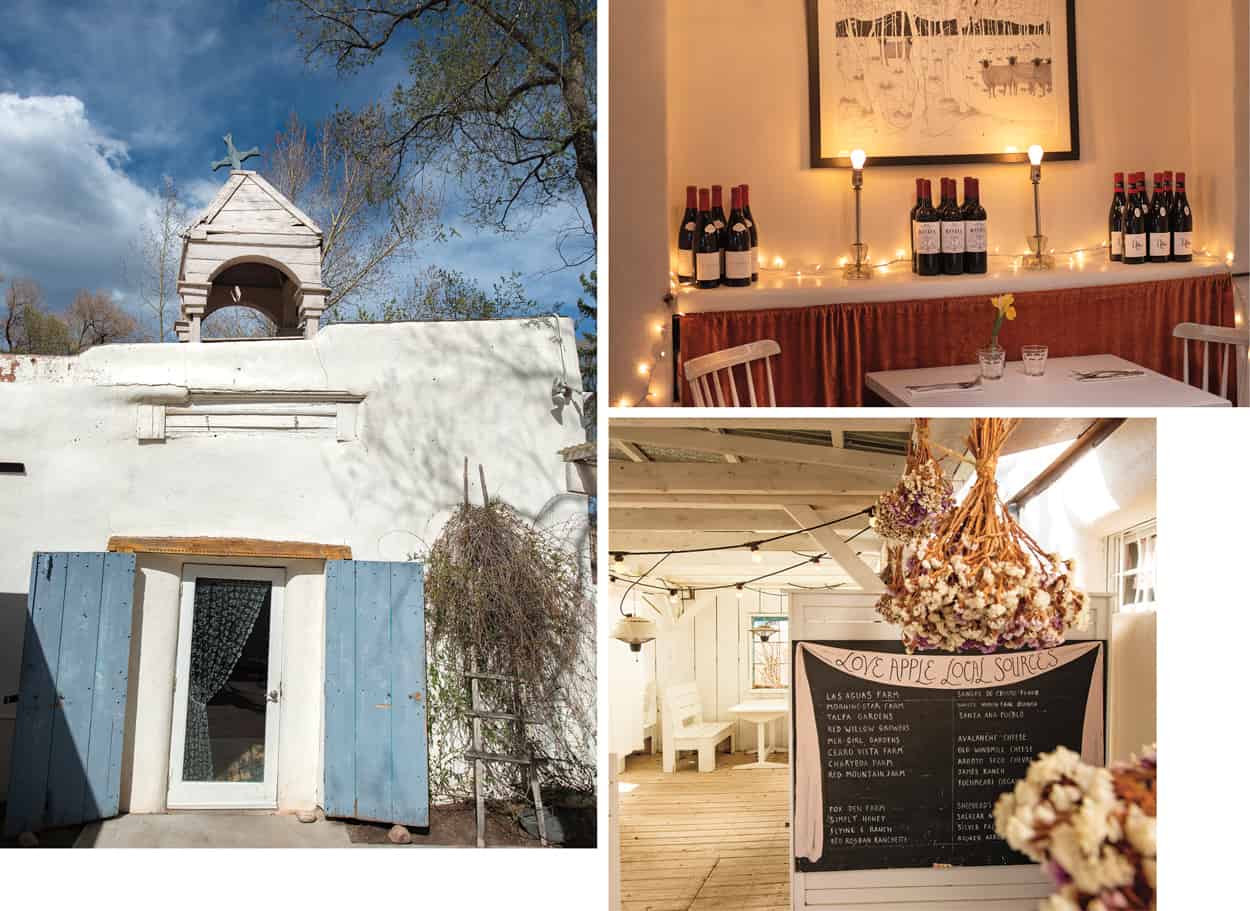
Left: Steeple at The Love Apple. Top right: Overflow wine storage in the alcoves. Bottom right: List of the restaurant’s local sources.
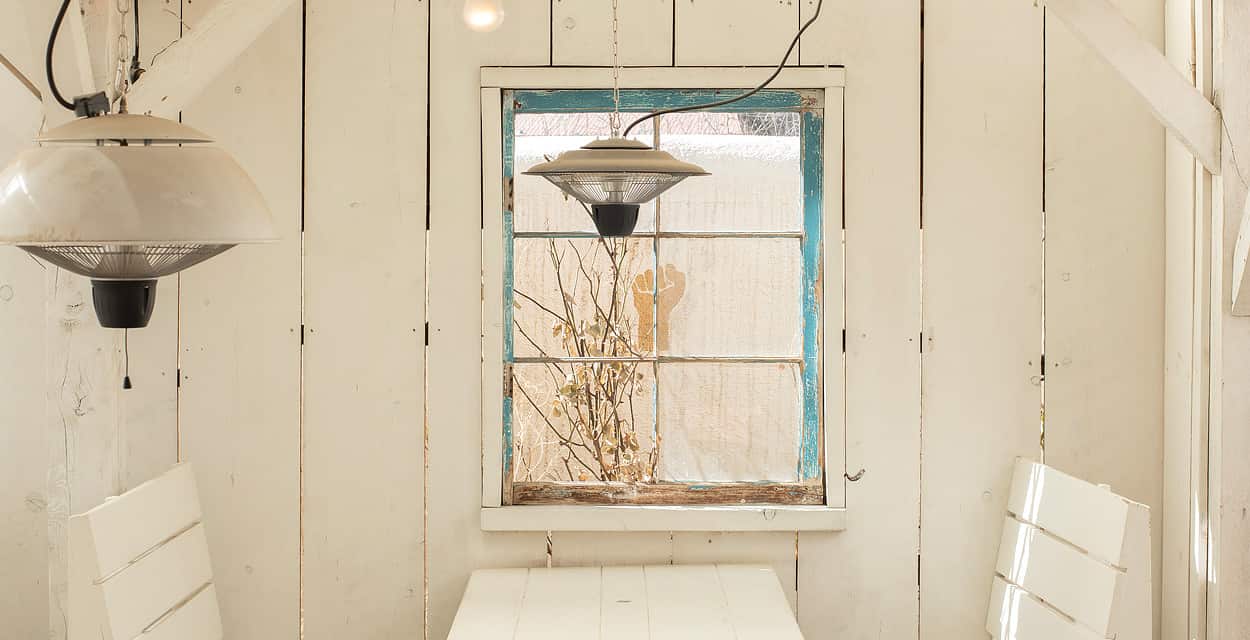
The space and food at Manzanita Market create a similar sensation—but even more informal and relaxed. The menu comprises sandwiches and fresh greens, buttery breakfast biscuits, and generous slices of leek and ham quiche. There is golden milk ice cream. There is a mushroom chai latte. There are sourdough cinnamon rolls—and these, with a strong French press, are heavenly. A large communal table laden with photography and poetry books holds court in the center of the room, and a painting of a kitchen hangs on one wall. The scene depicted in the painting feels so familiar it almost aches: It is a small kitchen with a slightly rumpled rug, a room someone seems like they will enter at any moment with objects that hold the imprint of the humans who touched them. Here, as at The Love Apple, Hart has brought to life a clear concept of belongingness.
What is most magical about both spaces is that human labor and experience is a visible and recognized force. And whether it was the twenty-five-year-old version of me in the thrifted dress, or my current self in—well, I suppose still a thrifted dress—one feels like the table was set with them in mind, and they are welcome to come sit awhile.
The Love Apple 803 Paseo Del Pueblo Norte, Taos,
575-751-0050, theloveapple.net
Manzanita Market 103 N Plaza, Taos, 575-613-4088,
manzanitamarket.net
Mariko O. Thomas
Mariko O. Thomas is an independent scholar, instructor, and writer living in Taos. She is interested in plant-human relationships, environmental justice, and storytelling.