By Robin Babb
Wine, like The Lord of the Rings or the Roman Empire, can really tap into the obsessive capacities of insufferable nerds. For the longest time, I thought this tendency for wine people to go really hard on learning every little thing about the regions, producers, and grape varieties that they love was pure performative gatekeepery—the wine snob stereotype at its worst. But, as I’ve begun to fall down the rabbit hole in recent months, I’ve discovered something that, as a former Tolkien kid myself, I should have known all along: Learning more about the object of your love is a natural extension of that love itself, and greatly enhances the experience of it. My adolescent attempts to learn the entire history of Middle-earth eventually petered out, but in adulthood I’ve found that learning some more about the real world I inhabit through the lens of wine is equally—if not more—delightful. And wine, as a product with a broad network of connections to ecology, geography, social and environmental history, land and water use, and any number of other potential fixations, provides, I think, a uniquely good gateway for learning more about those subjects themselves.
Thankfully, I’ve found that the wine world is not quite as exclusive as I had feared. In fact, the wine industry is undergoing something of a sea change in recent years, and new, younger winemakers are making attempts to welcome new, younger wine drinkers into the fold with more accessible (from both a taste and a cost perspective) wines. For instance, natural wines are very much marketed to millennials rather than older wine drinkers, and they tend to be a little lighter on the palate and more crushable (as the real heads say) than the average pedigreed European wine. Natural wines, which are made using few, if any, preservatives, added sulfites, or other chemical additives, and often with organically grown grapes and naturally occurring yeasts, also appeal to the environmental and health concerns that some wine drinkers have. And natural wines have officially hit New Mexico, with local producers like Polychrome Wines making them and bars like La Mama in Santa Fe and Little Bear PM in Albuquerque populating their menus with them.
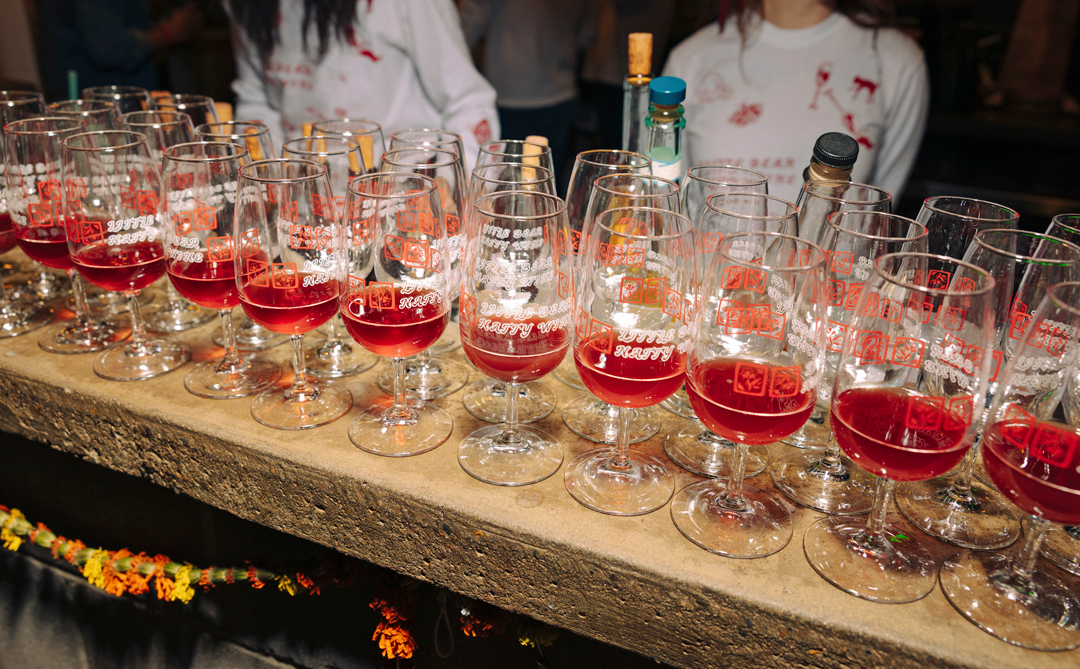
The “bubble greet” at Natty Wine Fest 2025: Poderi Cellario Frei-zzante pet nat. Photo by Will Fox.
Little Bear PM is also the home of the annual Natty Wine Fest, an event that gathers natural wine producers, importers, and aficionados together for a night of what academics might call a survey of the literature. At last year’s fest, fifty-five different wines from all over the world were featured, with sommeliers and representatives on hand to talk with guests about each. I tried a couple of beautiful wines from the Australian winery Delinquente, most notably their light and savory pétillant naturel called Tuff Nutt. Polychrome Wines was in attendance as well, pouring from their lineup of exclusively natural wines, including the local favorite Pinot Meunier. I stopped to chat with Santa Fe–based Chris Barnes, the national sales manager at natural wine importer José Pastor Selections, and sampled some of the Spanish wines he brought out to showcase for the night. Barnes says that wine allows him a lens on agriculture and culinary tradition in a way that few other things can: “The thing about wine is there’s a whole trade behind it. There’s a thousand books about wine, there’s six thousand years of history. You can get into it as a trade, you can make it a hobby, or you can get really serious. There’s so much to grab on to there. That knowledge, you can associate that knowledge with real-life experiences.”
“I feel like [the event is] a good opportunity to try a lot of different varieties in a small time, and not overwhelmingly snobby or intimidating, like how some wine tastings can be,” says Annamarie Morris, the general manager of Little Bear Nob Hill and one of the organizers of Natty Wine Fest. “One of the things I like about the natty wine world is that it’s a little separate from the very professional sommelier world of tasting, which is kind of gatekeepy. You can come in with no knowledge and still have a good time.” Indeed, in terms of bang for your buck and getting to know which kinds of wine you like and which you don’t, it’s a pretty ideal setup. I’d just recommend you don’t plan on driving yourself home afterward. This year’s Natty Wine Fest is, at press time, tentatively scheduled for the second weekend of November.
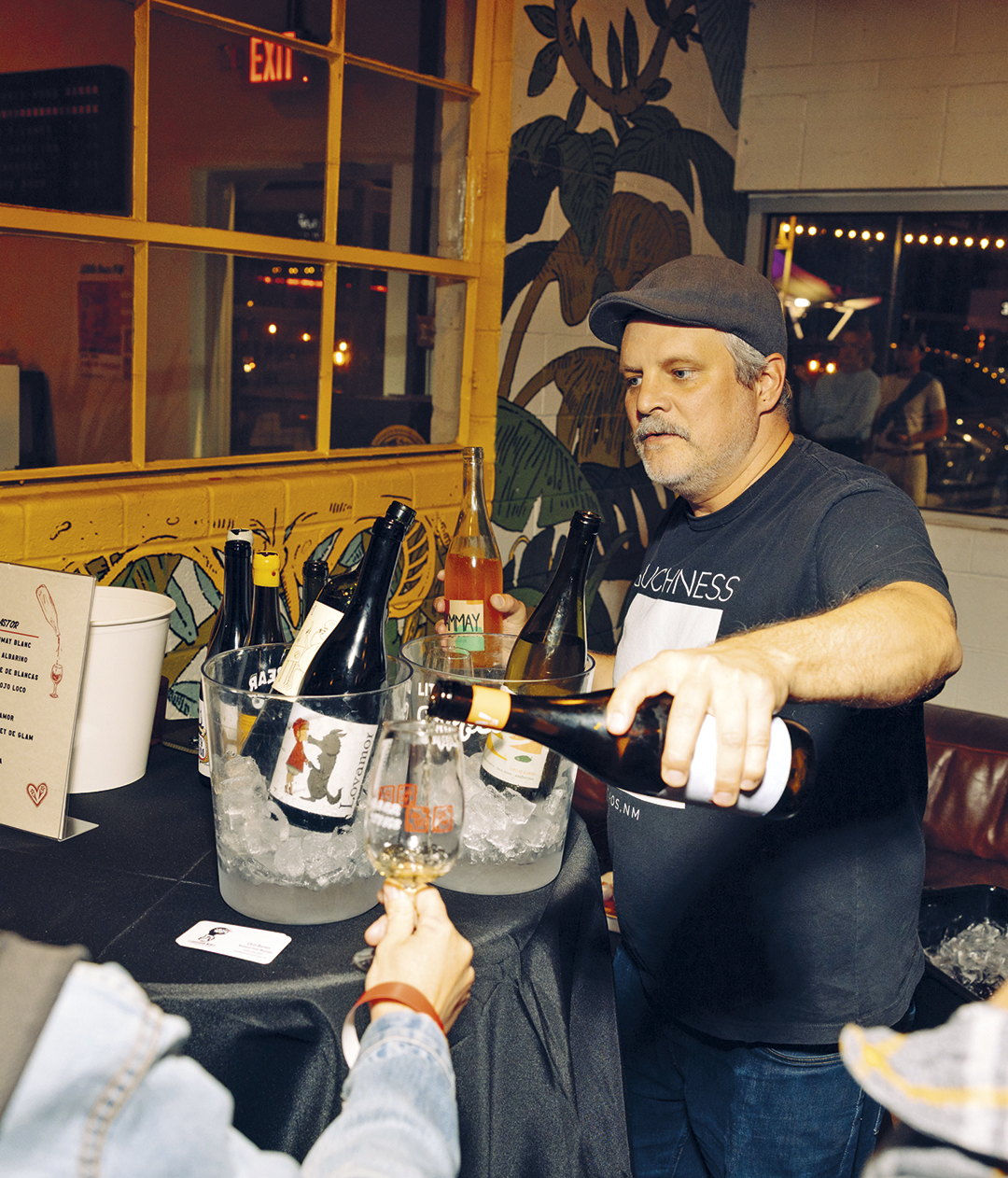
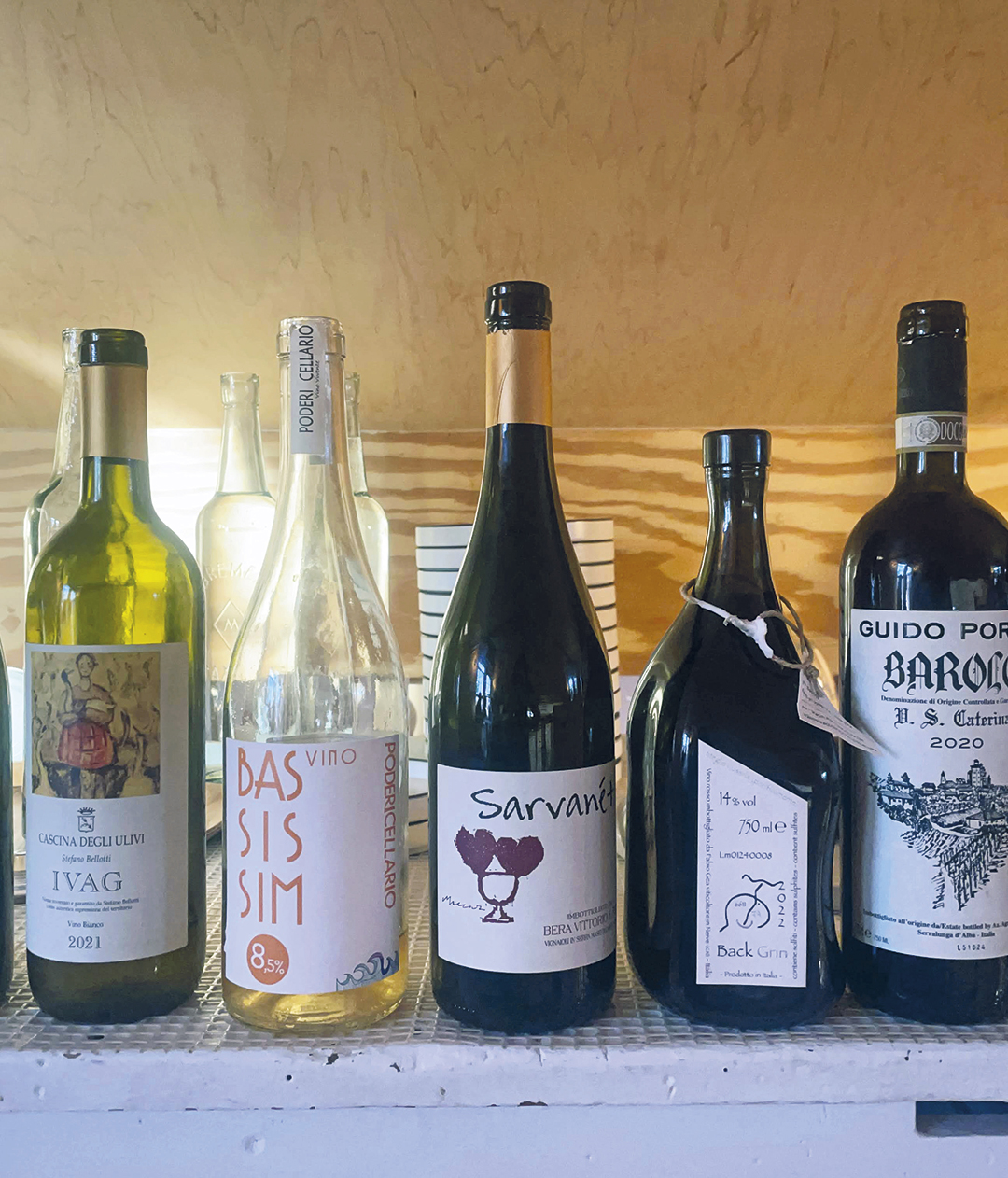
Chris Barnes pouring wine at the Natty Wine Fest 2025, photo by Will Fox. Wines served at a tasting focused on the Piedmont region of Italy at La Mama in Santa Fe, photo by Robin Babb.
For more of a deep dive, I made the trip up to La Mama in Santa Fe for a tasting focused on wines of the Piedmont region of Italy, most known for making Barbaresco and Barolo wines. But at La Mama, it was a slightly different lineup: a dry and citrusy bianco macerato (i.e., macerated white) from the Poderi Cellario winery, made with chardonnay, malvasia, and muscat grapes, was followed by a peppery and funky white wine made with cortese grapes from Cascina degli Ulivi. With each of the seven wines we tasted, John Shaw, the staff sommelier, offered some history of the region and how it influences these modern-day winemakers and their distinctive wines.
Each month, La Mama hosts a Wine 101 tasting like this, based around a certain region, grape varietal, or kind of winemaker. Every March, for instance, they host a tasting of wines by exclusively women winemakers. The co-owners, Sara Moffat and Jen Turner, say that the tastings are intended to demystify natural wine, and to highlight off-the-beaten-path winemakers that might not be on most wine drinkers’ radar. “Natural winemakers often have an interest in using and preserving indigenous grapes, or odd varietals that aren’t used much in conventional winemaking,” says Moffat. “More interesting varietals than what you’re gonna find at [Trader Joe’s].”
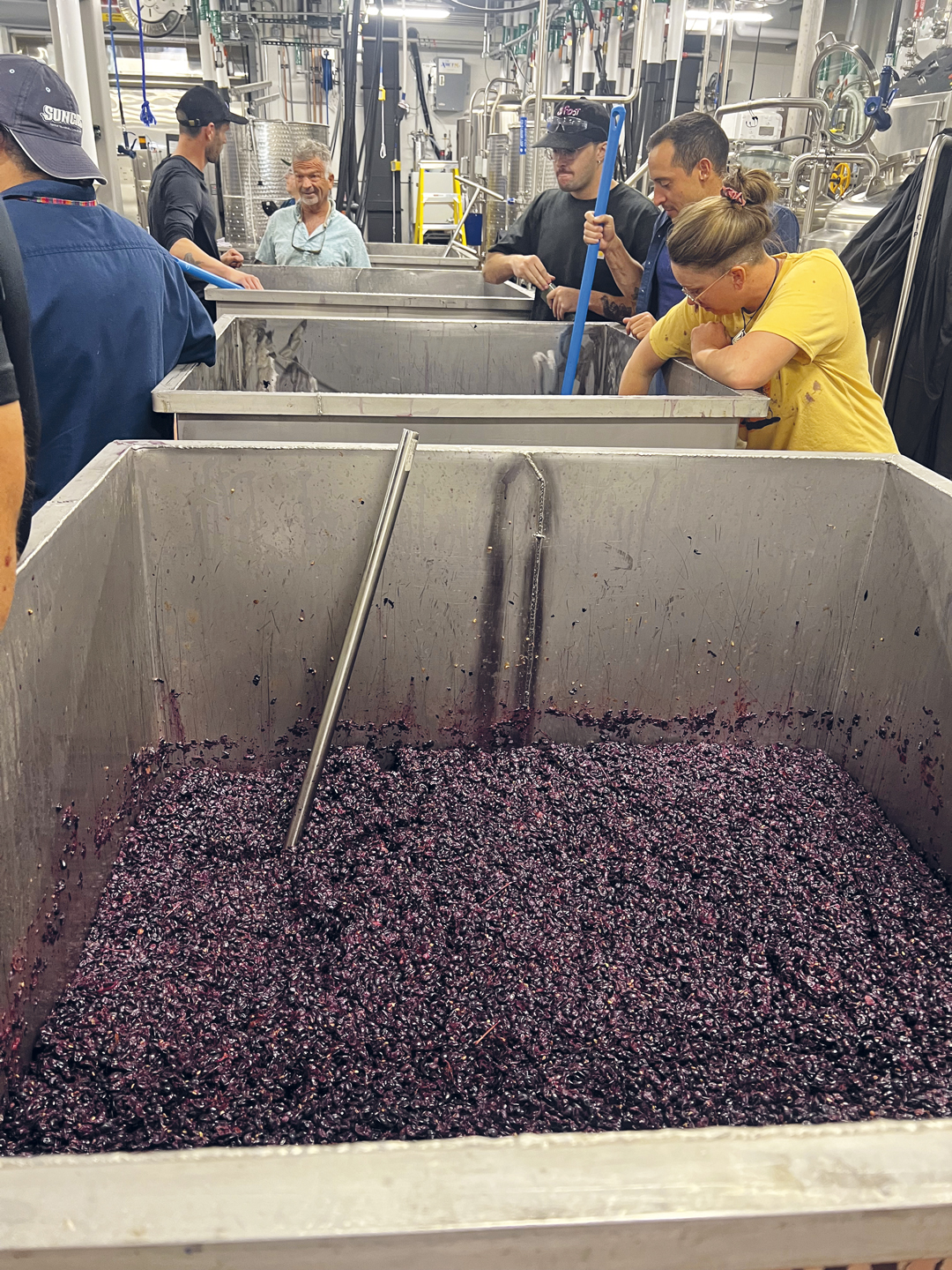
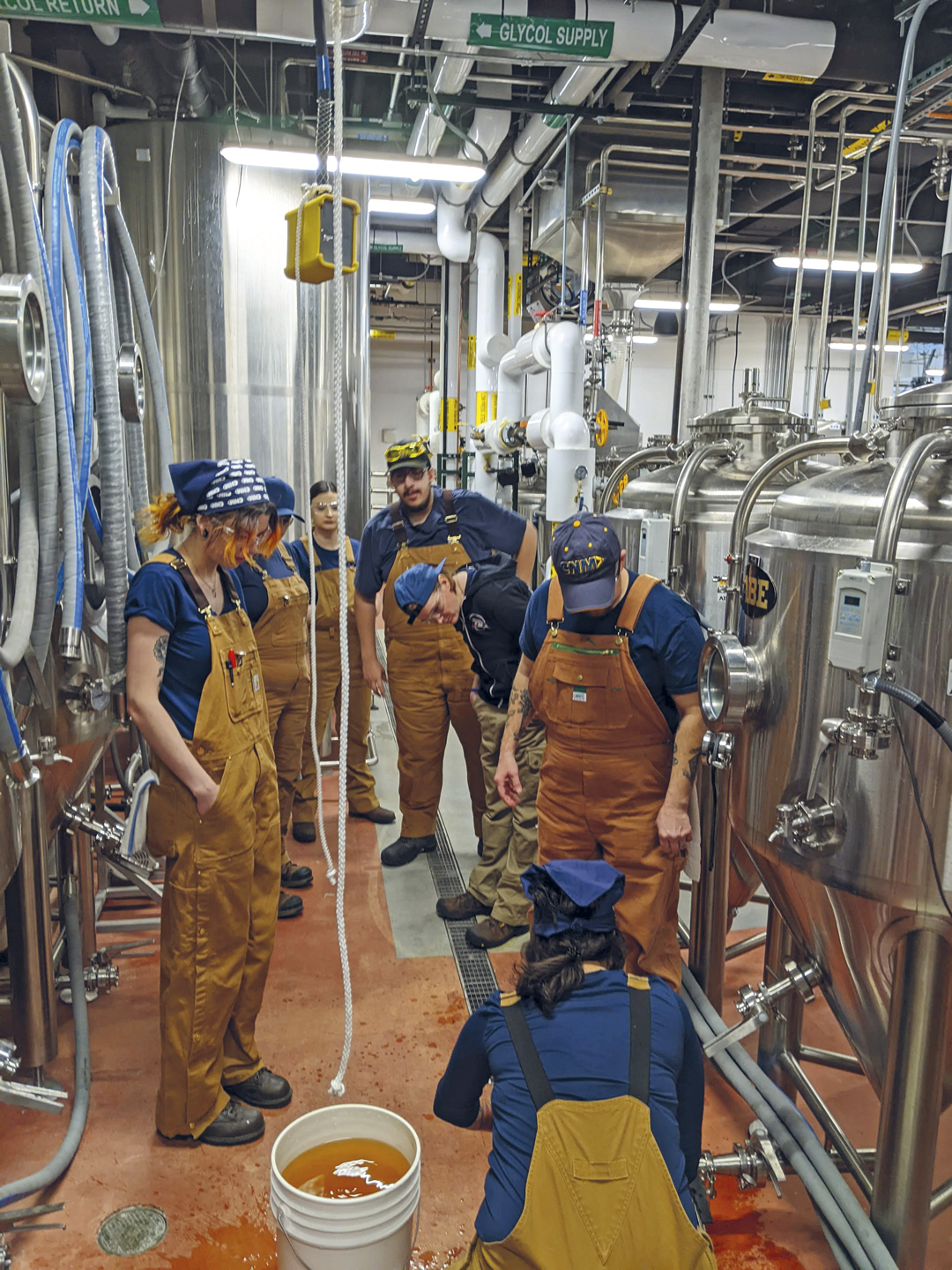
Punching down the “cap”: the grape skins, seeds, and pulp that rise to the top of the fermentation tank in red wine production; sanitizing the fermenters. Photos by Antonio Fernandez.
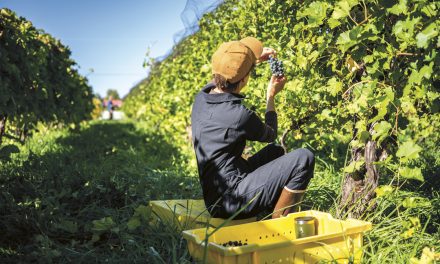
Being an avid reader as a kid prompted me to write, falling in love with food led me into the kitchen, and, predictably, learning more about wine has encouraged me to try my hand at the production side, too. This is the way of all nerdy hobbies, isn’t it? Although my own winemaking experiments have been catastrophically undrinkable thus far, I can safely say it was because I was operating on a lark rather than on, you know, tried-and-true recipes and wisdom from seasoned professionals. Thankfully, New Mexico having the wine industry it does, there is a wealth of both tried-and-true recipes and wisdom from seasoned professionals for amateurs like me to avail themselves of. And there are quite a few opportunities to put that newfound education to use.
Both Central New Mexico Community College (CNM) and New Mexico State University (NMSU) offer classes in wine production, as well as commercial-grade facilities in which to learn. As the classes are largely geared toward those who want to work in the wine industry in some capacity, there’s business management and marketing folded into the curriculum—but, says Professor Dale Ellis, who teaches NMSU’s Wine Making, Production Costs, and Marketing for Small Wineries class each fall, hobbyist winemakers and those simply interested in learning more about how wine is made will find plenty of value in the class as well. “I consider it a wine appreciation class, but from a winemaker’s perspective. And you do that from understanding how much work goes into it.”
At CNM, which officially launched their wine certificate program in 2024, students can take classes in either wine production or food and beverage pairing, with the focus generally on placing students in hospitality industry jobs. For nondegree students who don’t have the time for a full-semester course, CNM’s Ingenuity program offers two- or three-week “wine boot camps” that offer, as the name implies, highly concentrated instruction on a specific focus—generally either reds, whites, or sparkling. These boot camps are especially popular with people who are already working in the wine industry but want to learn more about a particular style of wine.
Both the boot camps and the regular semester-length classes are set up as “hybrid lab and theory classes,” says Antonio Fernandez, the lead beverage instructor at CNM’s Beverage Production and Management Program. “It’s a highly successful educational model, we’ve found. The science and concepts take root with the students when they’re able to immediately apply something they’re learning about.”
While I don’t see myself plunging into a whole degree for the sake of this newfound interest in wine, I’m grateful that classes like these are available to professionals and amateurs alike. And if I ever do end up making a halfway palatable wine at home, you all will be the first to know.

Robin Babb
Robin Babb is the associate editor of edible New Mexico and The Bite. Previously, she was the food editor at the Weekly Alibi (RIP). She’s an MFA student in creative writing at the University of New Mexico and lives in Albuquerque with a cat named Chicken and a dog named Birdie.