Preserving Food and Culture at Southwest Heritage Mill
By Nina Katz
Photos by Stephanie Cameron

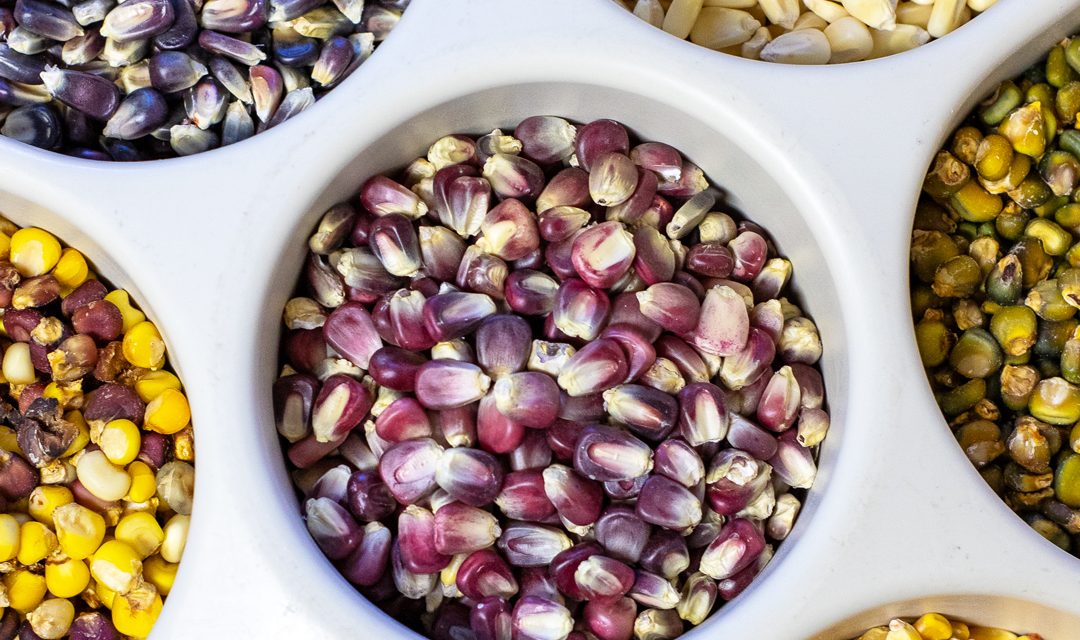
Several varieties of corn at Southwest Heritage Mill.
For someone in the business of colorful corn, Felix Mauro Torres’s beginnings were pretty achromatic. Not far from Southwest Heritage Mill, which has been Torres’s project for more than fifteen years, is the North Valley neighborhood where he grew up. Summer after summer, his family grew a hueless heirloom variety there known as White Concha. Originally cultivated in the Española Valley, tall stalks of White Concha corn wave in Torres’s memory like skyscrapers. He recalls their big cobs arching off the leafy green plants. A small number of seed purveyors, such as the MASA Seed Foundation and Native Seeds/SEARCH, still distribute White Concha seed, or Concho, as it is sometimes called. The seed packets feature photos of the white kernels, as stark as chalk on a chalkboard or a sun-bleached cow skull.
Torres, Albuquerque’s only custom corn roaster and miller, credits his passion for “preserving food and culture” to his parents’ annual white corn crop. Starting with his family’s supply of passed-down kernels of White Concha, he learned to grow corn from his father and to cook with it from his mother.
The term “mill” traditionally refers to the place where grain is ground into flour. Torres could run wheat or barley or rye through his machinery, but for nostalgia’s sake, he sticks with corn. Though he now spends almost every day in a large warehouse that houses everything he needs to turn blue corn kernels into blue corn atole, clean grains of popcorn, and package posole, his first mill was his parents’ kitchen. The first milling machine he ever used was his mother’s Corona Corn Mill table clamp grinder, manufactured and patented by the now defunct Landers, Fray & Clark houseware company of New Britain, Connecticut. Of course, the people of “old” Britain weren’t exactly grinding corn—that would be Torres’s family. His mother was Mexican. After immigrating to New Mexico, where she met Torres’s father, she purchased the Corona Corn Mill, automating the processes previously carried out with molcajetes and metates, and used it in preparation of some of Torres’s favorites—tamales at Christmastime and corn tortillas.
Specializing in colorful corn, Torres processes literally tons of it each month. Various shades of red, blue, and yellow kernels arrive certified non-GMO in heavy bags and leave Southwest Heritage Mill cleaned of weevils and beetles, roasted and/or ground into products like dried red corn posole and blue corn bizcochito mix, or as wholesale grain for craft distilleries. If you’ve ever bought blue corn waffle mix from the Range Café or The Fruit Basket ABQ, you’ve had Torres’s speciality product. Similar to grocery stores like Trader Joe’s, which sell products rebranded with their generic logos through a process known as “white labeling,” many of Southwest Heritage Mill’s products are sold to consumers without their own branding appearing anywhere on the package.
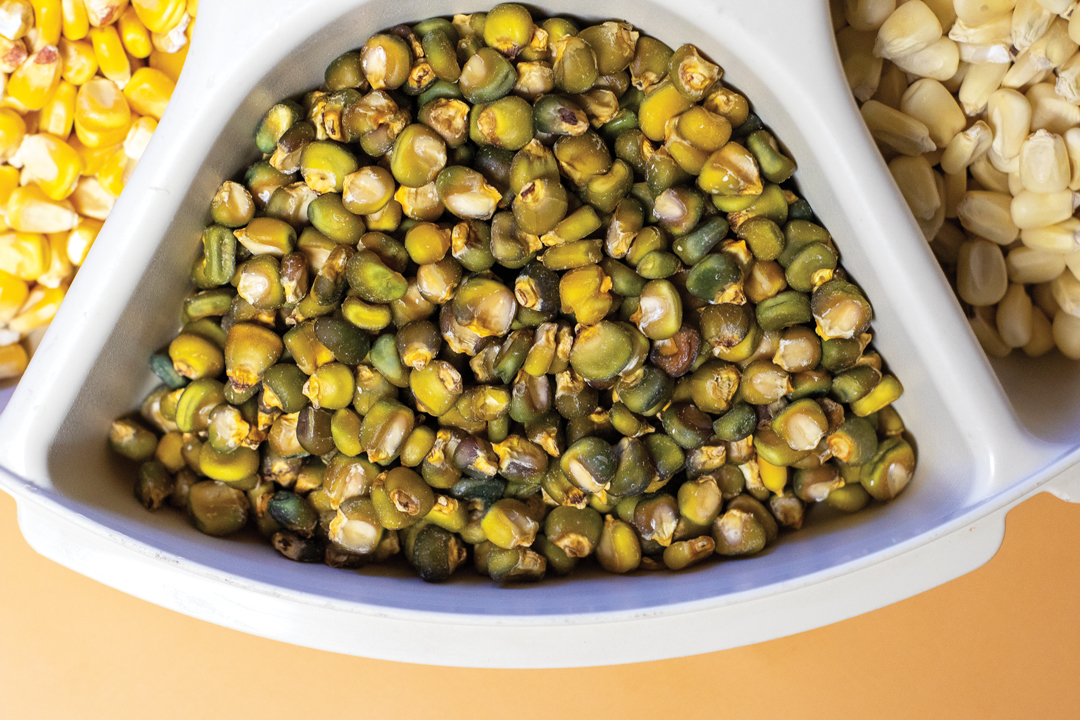
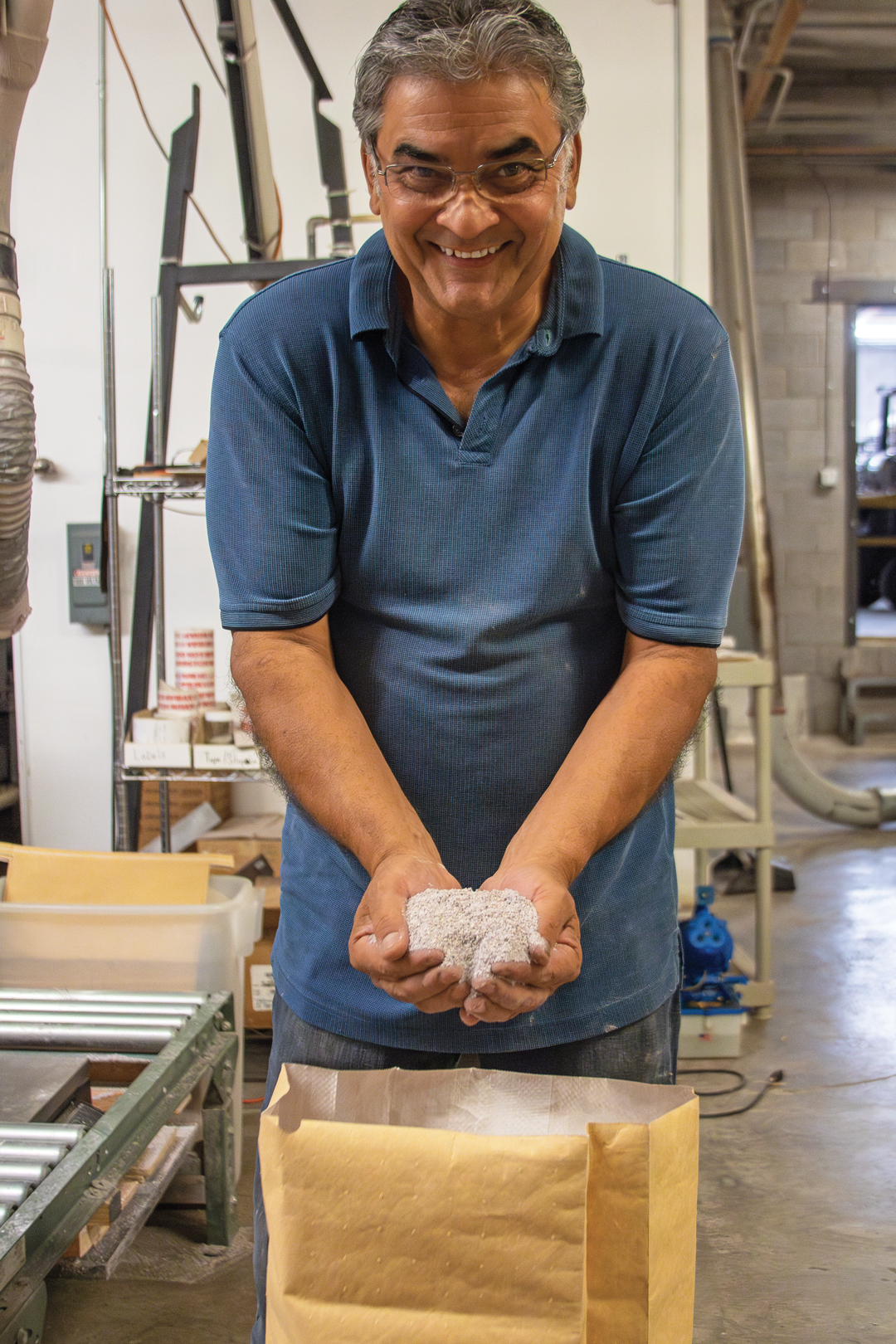
Green corn from Oaxaca; Felix Mauro Torres holding blue cornmeal.
The roots of corn run deep in New Mexico. The state is linked by ancient trade routes to the grain’s birthplace in what is now central Mexico, and Ancestral Puebloan people continued to domesticate corn in its arid canyon enclaves. Of course corn’s dancing tassels look so good against the New Mexican blue skies. In the summer, the sugar-pithed stalks bring us into the garden. In the winter, the nixtamalized kernels gather us in the kitchen for a pot of warm posole.
Torres still has his mother’s well-worn table molino, proudly displayed in his front office. It’s tiny compared to the giant roaster and molino in the back. These are old machines too (Torres’s roaster is 109 years old), but as of now, he has no interest in purchasing new equipment, which can cost tens of thousands of dollars. When his current equipment breaks down, he puts on his repairman hat and fixes the machines he knows inside and out. So far, it’s a system that has worked out for Torres to keep his establishment up and running. He remembers lots of mom-and-pop mills like his scattered across Albuquerque during his childhood. Now, he estimates, there are about four or five in the entire state.
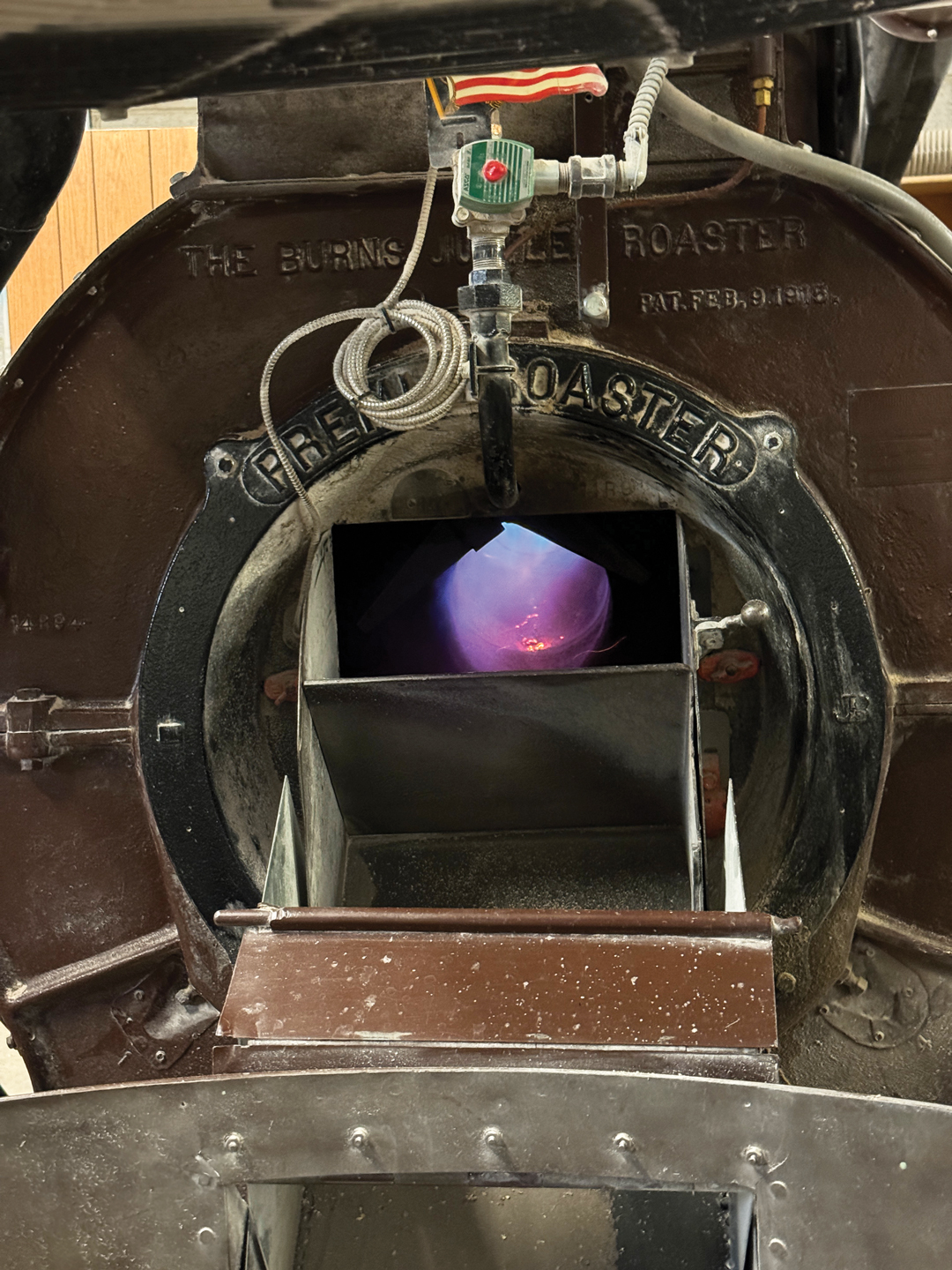
Fire burning in Torres’s Burns Jubilee gas roaster, patented 1915; Torres’s first mill, from his mother’s kitchen.
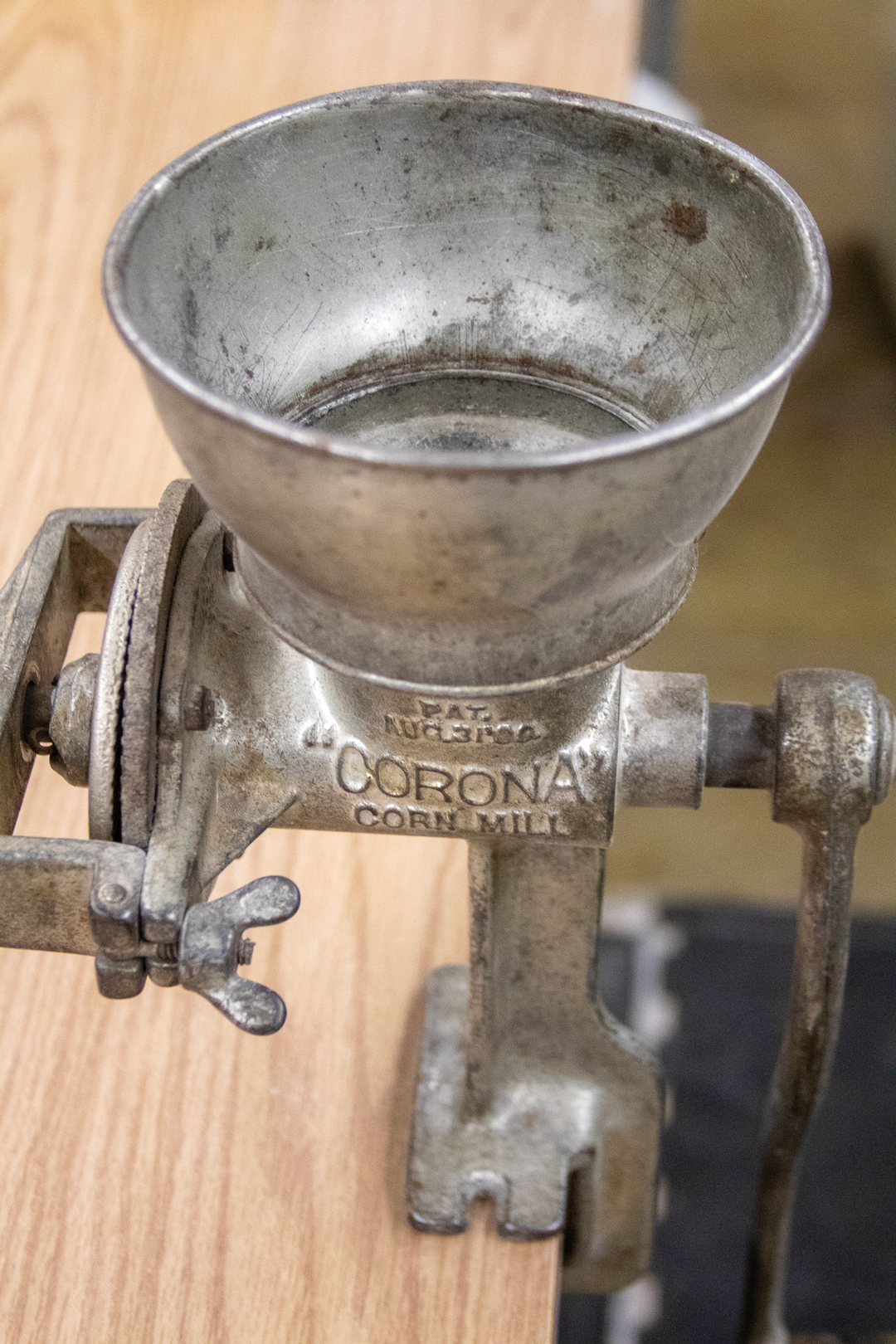
“The reason I do this is because I want to preserve food and culture,” Torres says, with his mother’s mill sitting on the table between us. “I’m doing what I like instead of getting caught up chasing the dollar. If I’m chasing the dollar, then it would feel like a competition in this small community of grinders. Instead, me and my closest competitor are friends and we will probably be friends for life.”
Torres and his mill have found their niche, and he’s excited to add another shade to his lineup in the near future: green. When people refer to “green corn,” they typically mean one of two things. The first is grain corn—hard when mature—that is harvested early, when the kernels are soft and full of milk, suitable for roasting or stewing into succotash. The second type is literally green corn, with kernels in shades of chartreuse, emerald, and deep forest canopy. This verdant variety, an heirloom reportedly cultivated for thousands of years in southern Mexico, is what Torres is eager to start processing for his customers. He sent me home with a sample of green corn atole, which keeps its color when cooked. I can confirm that green looks (and tastes) great with a drizzle of heavy cream and brown sugar.
Beyond new products like green corn atole and a line of hot sauces he’s developing with an in-town business partner, Torres is excited to keep innovating and growing Southwest Heritage Mill—possibly by bringing on someone he can share the bulk of his responsibilities with. “I don’t want to become a huge company,” Torres remarks, “I just want to become an important one.”
Nina Katz
Nina Katz is a food writer living in Albuquerque. They would like to see Froyo come back in a big way.