By Kristina Hayden Bustamante
Photos by Stephanie Cameron
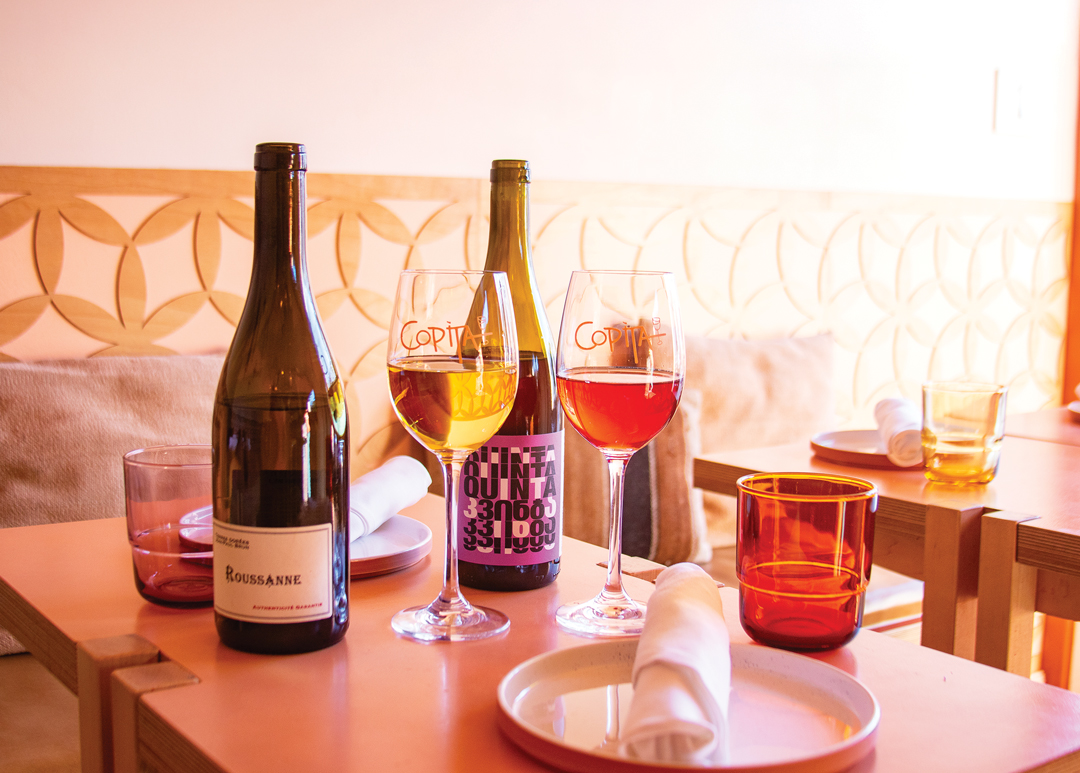
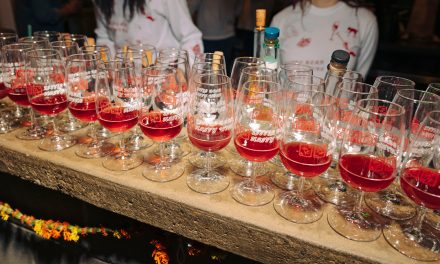
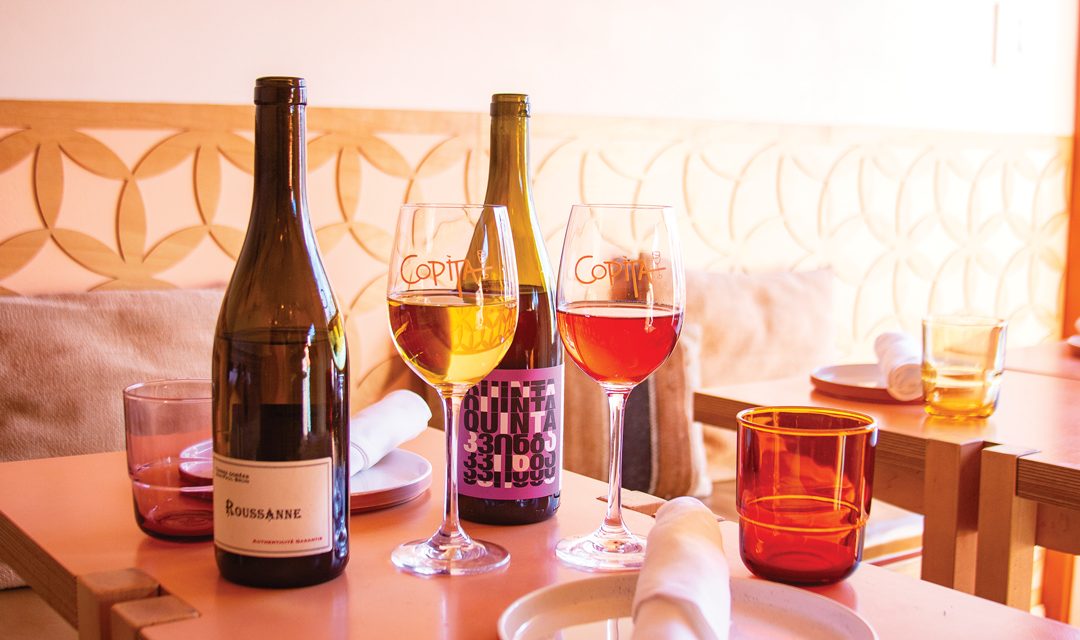
Two from a selection of natural wines at Copita Wine Bar in downtown Santa Fe.
Nowadays, whether or not to drink natural wine can be as contentious as whether or not to pour an oaked red with fish. For some, the rule is to drink only natural wine; for others, the rule is never to touch it. But what is natural wine, exactly? According to Wikipedia, natural wine is simply wine produced without the use of pesticides or herbicides, with few or no additives. These wines are rarely filtered and are made with very minimal intervention. It sounds perfect and I suppose in some ways it is. Yet I have often been unsure of myself when it comes to pairing natural wines with food. They can be quite bold and flavorful in a way that is unfamiliar to many consumers, and sometimes pairing them is a challenge. For many wine drinkers, it can be difficult to even determine whether or not they are good.
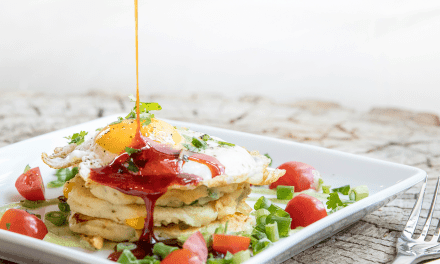
Am I going to tell you about the natural wine that changed my life or my opinion of natural wines as a class? No; I’m going to tell you about another unforgettable meal. The dish was the lamb posole at Paloma (which, by the way, was ranked by the New York Times as one of the twenty-six best dishes of 2024 in the United States). I asked for an unusual pairing and that is exactly what I got. It was a natural wine from Argentina, a blend of at least five indigenous grapes that even I was mostly unfamiliar with.
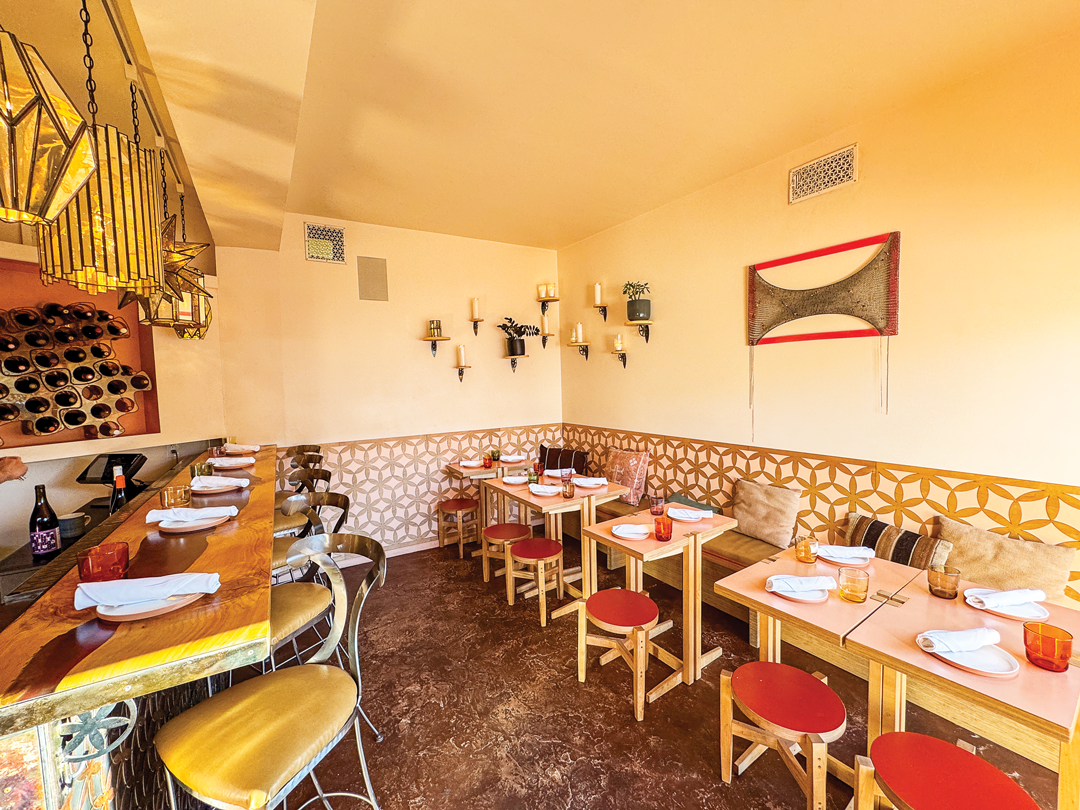
Inside Copita Wine Bar.
Paloma’s beverage director, Carley Callis, is the person who really opened my eyes to the culture of natural wines. Marja Martin opened Paloma in downtown Santa Fe in 2017, and it has been a crowd favorite ever since. Besides the incredibly fresh and inventive spins on Oaxacan cuisine, there is a dedication to the philosophy and ethics of natural wine that I think is incredibly daring in a town like Santa Fe. As a long time Angeleno, I am more than familiar with the trend of natural wines—but is natural wine merely a trend? I do not believe that it is. This is a style of winemaking that is as old as winemaking itself, and Paloma’s dedication to building a program around natural wines deserves some serious attention.
It is rare that I meet someone so articulate and dedicated to their craft as Callis. In her spare time, she studies scent and perfume. Her understanding of how different aspects of scent combine relates directly to her understanding of wine. We “taste” wine predominantly with our nose, and Callis has an instinctual ability to create the enchanting alchemy between food and wine. I asked her how she goes about choosing bottles for the restaurant and its sister wine bar, Copita, which opened in 2023 and is a total charmer. She told me that she doesn’t put a lot of stock in the classic rules of wine pairing. According to those rules, I might have been offered the ripe, full-bodied Canopus Malbec de Sed, but instead I was poured a glass of the El Montañista Corte de Tintas. It was fresh and energetic with vivacious bright red fruit—the complete opposite of what I expected would work. It was a frigid winter night in Santa Fe, but I felt like I was eating my posole on a beach or street-side patio in Mexico.
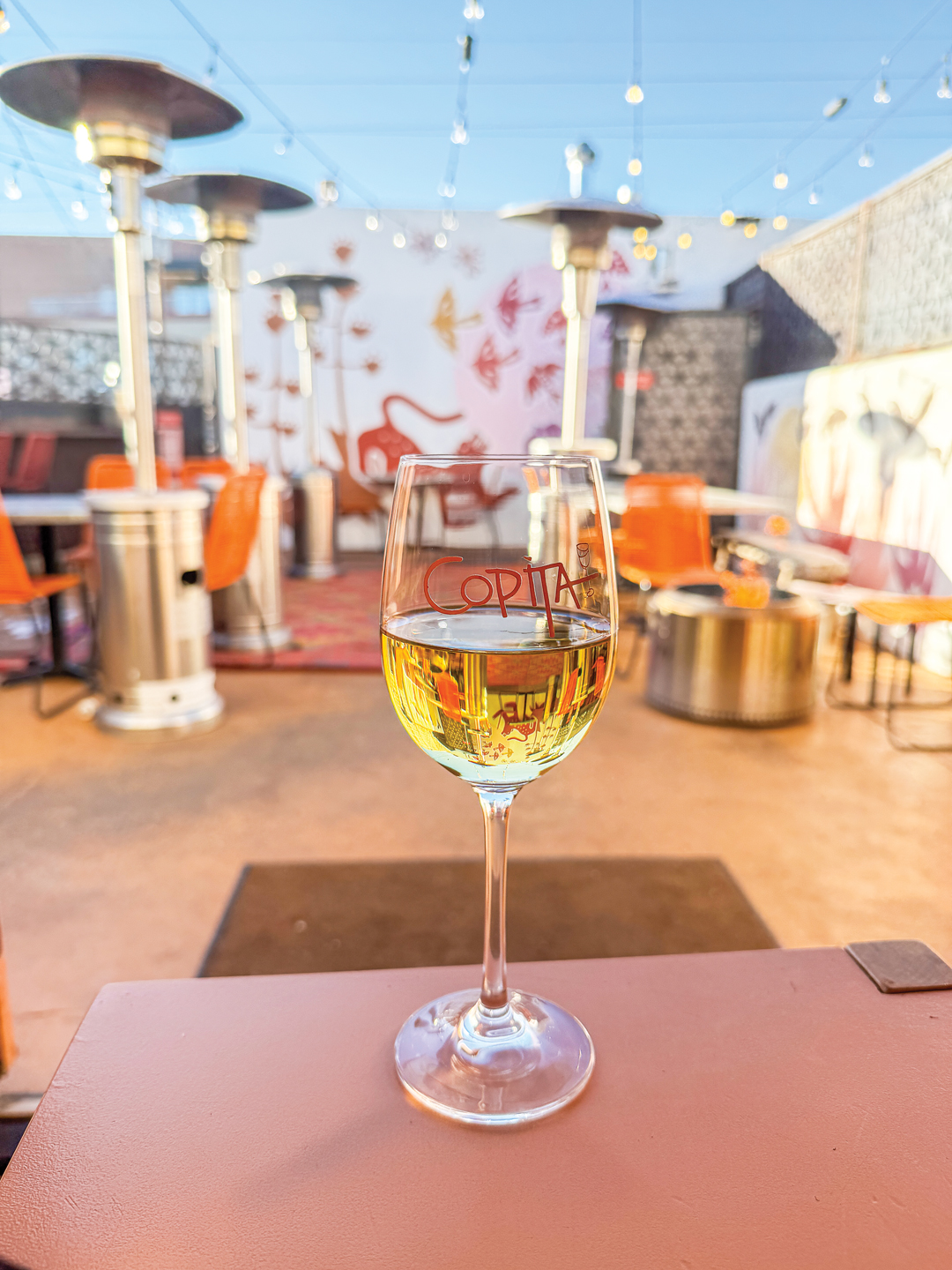
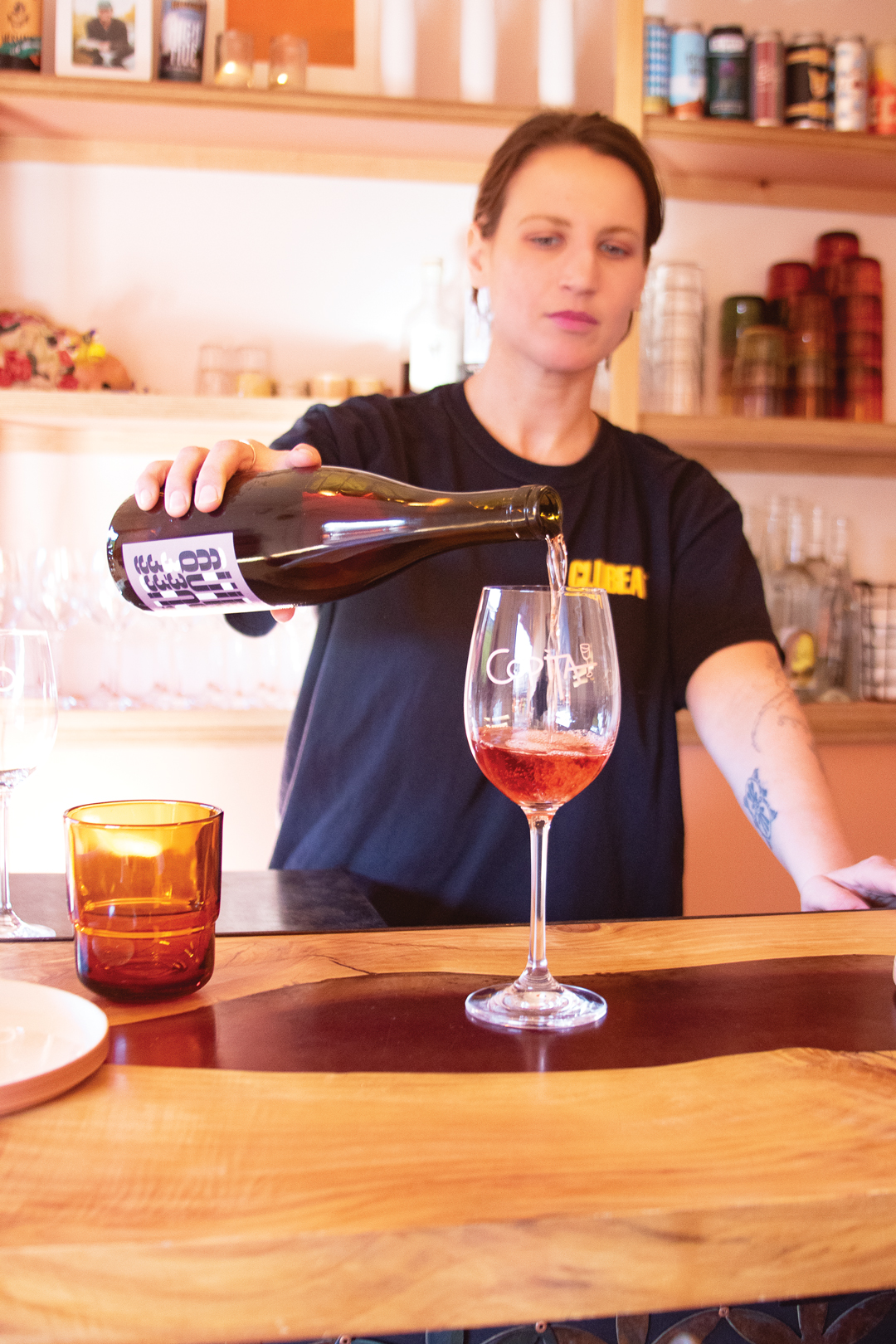
A glass of Jean-Paul Brun Terres Dorées Roussanne on the patio at Copita and Callis pouring a glass of Quinta from the Georgian winery Pheasant’s Tears.
Unusual pairings are Callis’s favorites and start with wines that she is currently obsessed with. She describes them in such a wonderfully nontraditional way that a guest is simply compelled to try them. “I want to get away from the apparatus of the wine world and get into the more sensual and somatic,” she explained. “The whole language of wine is changing.” She asks questions and often plays games with her guests to better understand what they might enjoy, and that thoughtfulness and care for her guests is what hospitality is truly about. Inevitably, she discovers what the guest is curious about and the whole idea of the classic wine pairing becomes more of a personal journey and less of a chemistry lesson. Joining a new generation of wine drinkers and sommeliers, she helps her guests find their own way when it comes to wine, a shift that’s long overdue. At Paloma, Callis breaks the rules and gives the guests what they are truly after, and it turns out that what many of us long for is an experience.
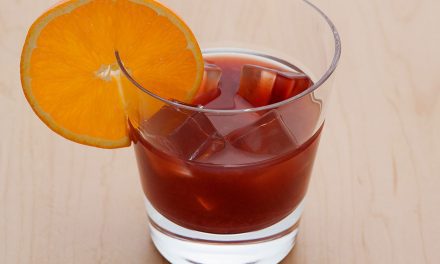
Often, the unexpected is key to that experience. With Paloma’s cocktails, what’s surprising may appear clearly on the menu—Lapsang souchong whiskey, for instance, or a martini made with seaweed. With wine, I have discovered some of the most interesting pairings with the help of a guide. Sometimes even a professional sommelier needs to be reminded that trying new things is part of the path to finding out what we like, and that, rules or no rules, we should always err toward drinking what we enjoy.
Cheers to breaking the rules!
Copita Wine Bar, 403 S Guadalupe, Santa Fe
Paloma, 401 S Guadalupe, Santa Fe, 505-467-8624
Kristina Hayden Bustamante
Kristina Hayden Bustamante has built a career sharing what she has learned about wine with nearly everyone she meets. For more than two decades, she has crossed the country, working from New York City to Los Angeles, and is now happily resettled in her adopted hometown of Santa Fe, where she is the wine director and sommelier at the historic Palace restaurant.