By Sarah Mock
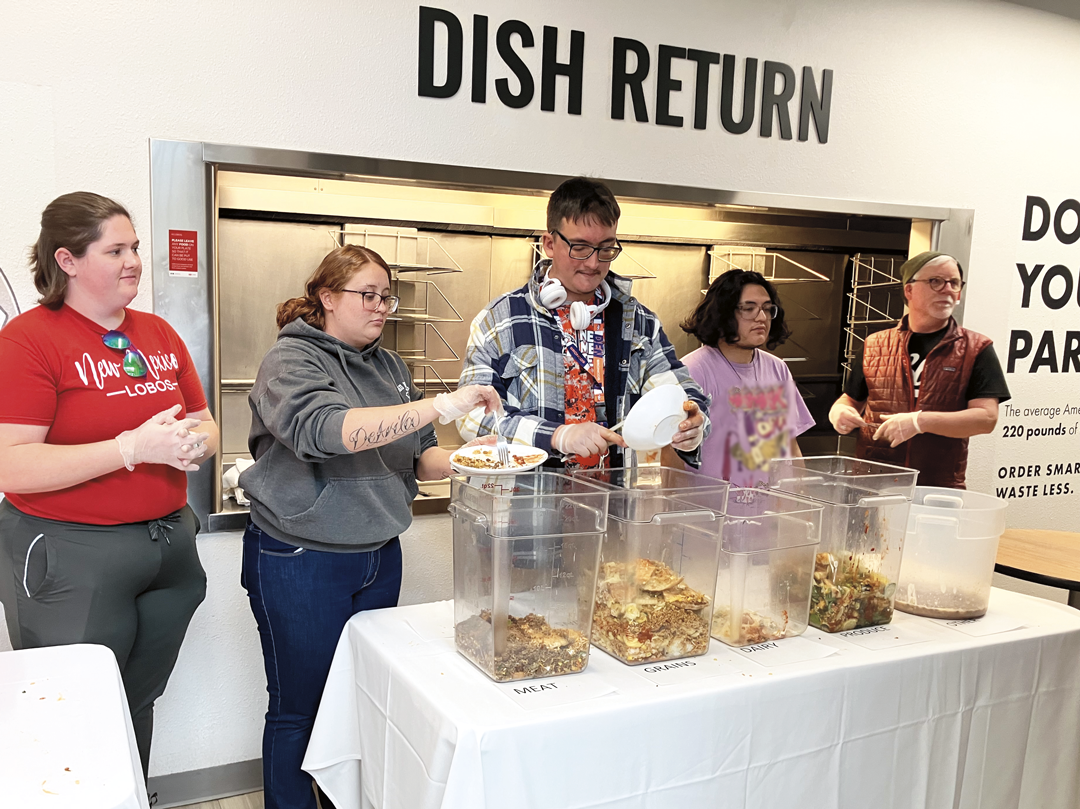
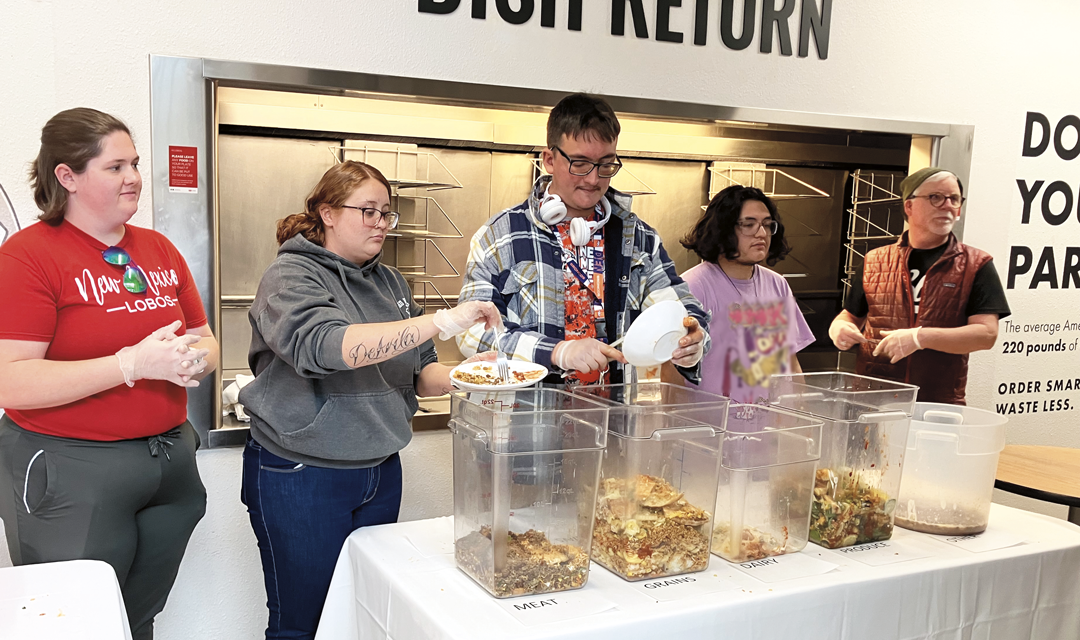
Postconsumer food waste audit “Weigh the Waste” in the UNM La Posada Dining Hall, where all plate waste from a single three-hour lunch service was collected, separated, and weighed by student volunteers. Photo by Jessica Rowland.
Long after the last lunch bell rings at Taos High School, burritos, salads, and other snacks are still being eaten. Not in the cafeteria, but out behind the main school building. There, forgotten scraps of the daily specials are given a second chance as food for hungry microorganisms.
The story of this meal begins not with the eaters but with the macroscopic community who prepared it. Six Taos High students started cooking back in 2025, when they were challenged, as part of a University of New Mexico food waste internship, to audit their school’s garbage to understand what, and how much, was being thrown away on a given day.
“It was horrendous,” senior Gabriela Rodriguez tells me more than a year later, chuckling. On the chosen day, she and her classmates gathered all the garbage they could find, then donned hazmat suits, gloves, masks, and goggles, and dumped all the trash out on tarps to sort. And they weren’t just sorting food from paper and plastic but grains from vegetables from meats too.
“We were literally peeling apart sandwiches,” adds senior Jacob Flores, “to weigh the bread and the tomato slice separately.” But after hours of painstaking and smelly work, they had the information they were looking for. They were able to report that students were discarding around 103 pounds of food per day, which would be the equivalent of 18,600 pounds over the course of the school year.
These students did not jump straight from measuring food waste to feeding microbes. They had more learning and exploring to do, much of which happened as part of their internship, funded by a three-year Sustainable Agriculture Research and Education (SARE) grant from the USDA, which supports food recovery work across the state at high schools and UNM campuses from Taos to Gallup to Belen. The goal of this effort is not only to understand the amount of food ending up in the garbage at campuses in New Mexico but to divert as much edible food as possible to students and other community members who don’t know where their next meal will come from. The aim is to feed people, then animals, then microbes, and in the process, keep as much greenhouse gas–emitting organic waste out of landfills as possible.
When it comes to the first step in the process—feeding people—undergrads at the University of New Mexico’s main campus are leading the way. Like at Taos High, interns at UNM’s Albuquerque campus started by conducting a food waste audit. But on a campus with nearly 24,000 students (versus fewer than 1,000 at Taos High), how students eat and dispose of food operates on a different scale, and creates big opportunities for food rescue.
For students like Rae Bretado and Annalise Kerwin, grabbing something quick in the Student Union Building (“the SUB” to Lobos in the know)—say, a prepackaged sandwich from Mercado or a chile relleno burrito from La Ventana—is an easy choice. But if you wander a little farther into the building, you’ll find a different kind of food establishment, a meeting place for an increasing number of UNM students and food rescued from all over campus.
This is the Campus Lobo Food Pantry, where any enrolled student at UNM can take home up to ten pounds of food a day. Though the pantry has limited hours, it’s not for lack of demand; according to a 2024 report, 58 percent of college students in New Mexico are uncertain how they’re going to access their next meal, and that number is much higher for Black and Indigenous students.
Much of what’s on offer in the pantry, from canned foods to fresh produce, is provided by Albuquerque’s Roadrunner Food Bank, and some comes from on-campus, student-run Lobo Gardens. But increasingly, students with the UNM Food Recovery Network chapter are working to get more options, from baked goods to prepared foods, sourced from campus vendors like Einstein’s Bros. Bagels and Chick-fil-A, where safe and edible food is being tossed.
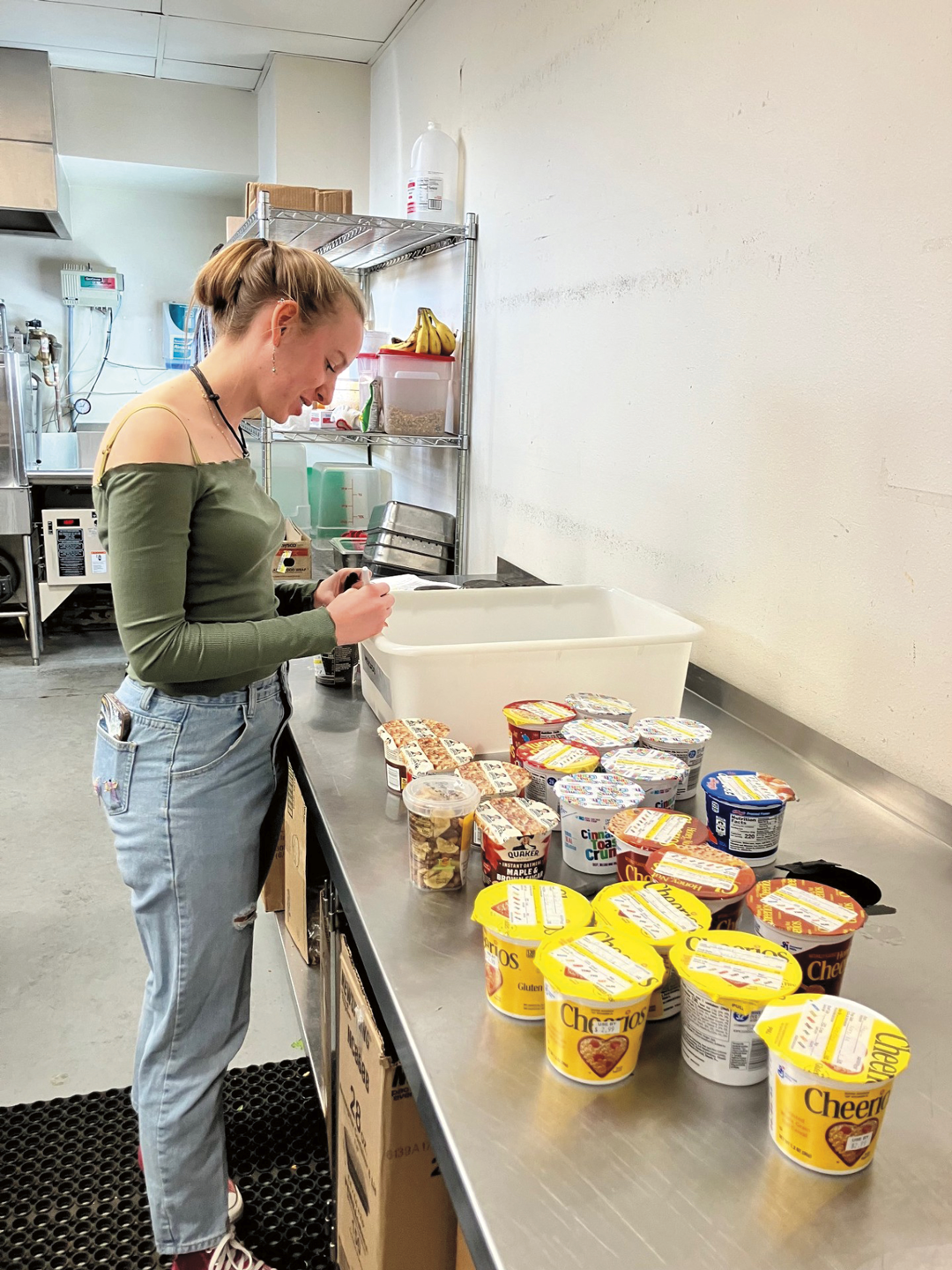
A Food Recovery Network student processes recovered food for the Lobo Food Pantry. Photo by Jessica Rowland.
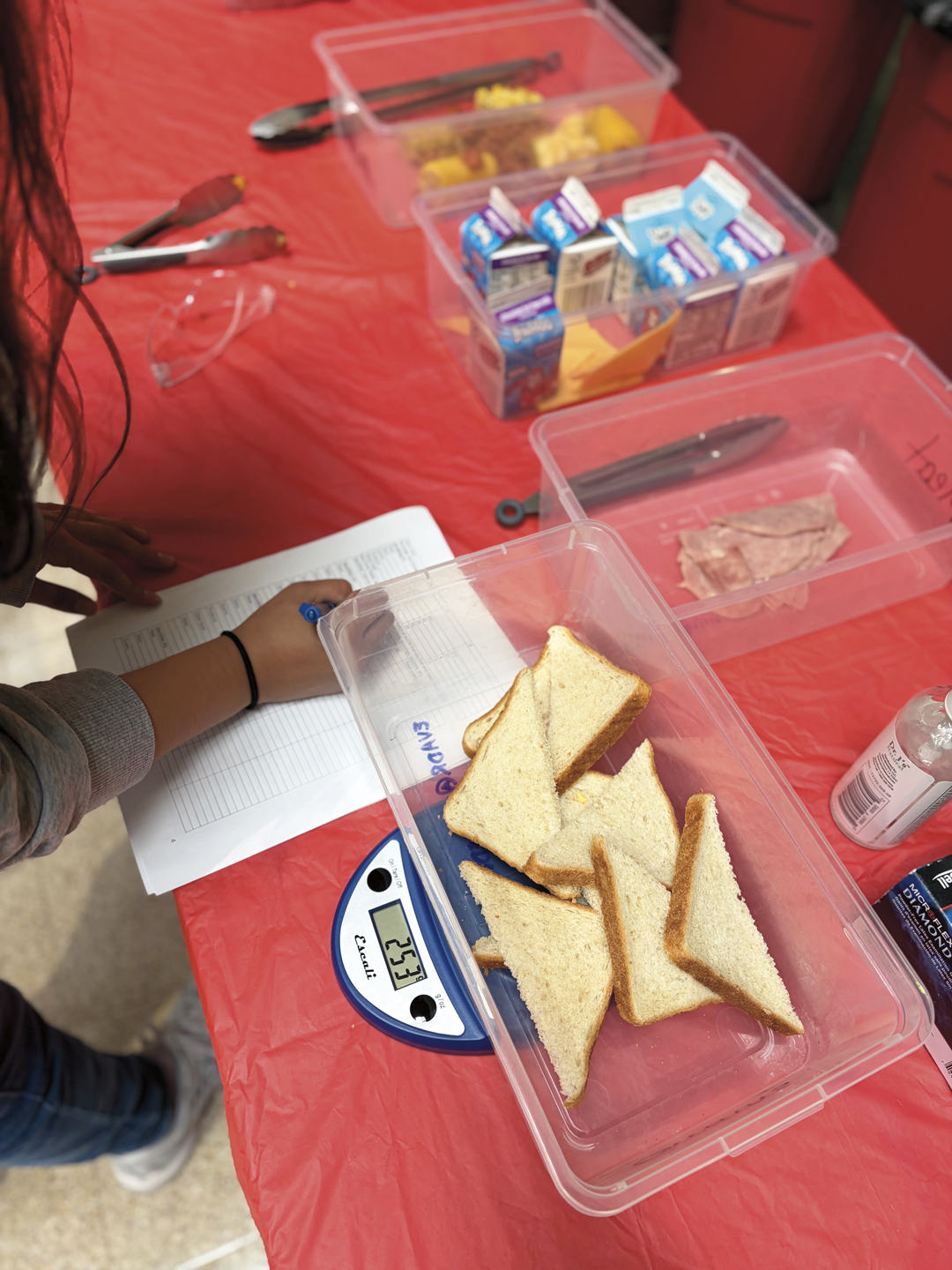
A student weighs and documents food waste for a food waste audit at UNM Gallup. Photo by Eva Stricker.
Despite the fact that these businesses share a building with the pantry, working with them can be challenging. First, vendors have to agree to donate, which has required years of relationship building by students and advisers. Next, the food actually has to be picked up daily by student volunteers, and then it must be weighed, repackaged, stamped with a consume-by date, and put out in the pantry. These latter tasks require that students become certified food handlers, which involves taking an online training course.
“There’s just so much liability around food,” Kerwin explains, acknowledging that this has made it more difficult to find enough students to collect all the available food. “For some of us who want to build careers in this, it makes sense,” Bretado adds. “But otherwise, people are just busy.” Despite the mobilization challenges, students with the Food Recovery Network have already rescued more than 575 pounds of food this year, all of which has gone directly to feeding fellow students.
“We have all these free and reduced-price lunch programs in New Mexico for K–12 students,” says Eva Stricker, who both advises the Food Recovery Network and helps guide student actions at UNM and Taos High through the SARE food waste project. “But all that goes away as soon as students get to college.” This, she says, is a big reason why the state struggles with some of the highest rates in the nation of food insecurity among college students, and why more strategies to address this problem are needed.
The on-campus food pantry is just one solution aimed at addressing both student hunger and food waste. Another initiative, called the Fare Share program, allows students to pay what they can—more or less than the ticket price of the meal—at participating establishments, with the goal of making on-campus dining more accessible for more students.
A key concern for students working to establish and grow these and other programs is the stigma associated with food insecurity. While Food Recovery Network volunteers like Bretado and Kerwin are enthusiastic about their efforts to reduce waste and help their classmates, they’re also sensitive to the way their peers might feel about accepting food that, however safe and edible, might have otherwise ended up in the trash. “We want to recover food and give more access, but we also want to do it with dignity and reducing the stigma that comes with food insecurity,” Kerwin says.
This concern is shared by students like Gabriel Vallejo, for whom the issue hits close to home, as he personally dealt with food insecurity in high school and knows how strong the impulse can be to decline help. That’s why he’s helped spearhead a food rescue project through the Basic Needs Project and the UNM Honors College, where leftover food from events is saved and information about free leftovers is circulated to students and faculty alike via email. “When you see someone like the dean stopping by to get fresh fruit or leftover salads,” Vallejo says, “when it’s someone you look up to, who has the kind of position you’d want to have in the future, that makes it a lot easier to take what you need.”
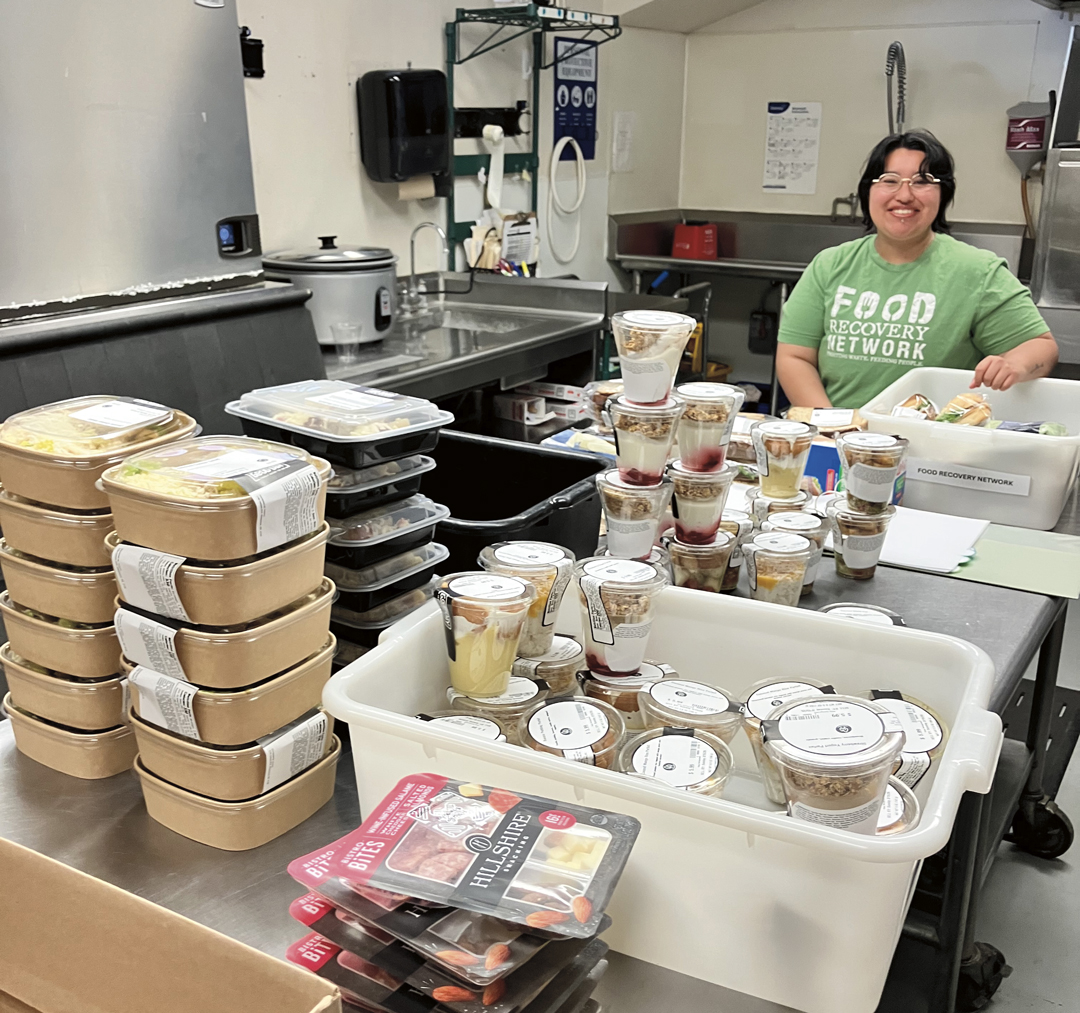
A student with the UNM Food Recovery Network involved in recovering uneaten food from retail locations on campus. These items go to the Lobo Food Pantry to support food insecure students. Photo by Jessica Rowland.
For SARE food waste program adviser Stricker, empowering students to take the lead on these kinds of efforts was not a by-product but a primary goal of the project. “We’ve worked with thirty-seven students,” she says, “and our goal is not just to teach but to train students to take information and actually do something with it out in the world.”
The students at Taos High School have certainly done that. After their food waste audit, the interns went on to found the school’s Eco Club, and then turned the Eco Club into a sustainable living class that’s having impacts on both students and the surrounding community. “I know that a lot of people in our town, in our school, don’t have food,” Rodriguez says, explaining why she’s poured so much of her time into this work, as her classmates nod along. “This club helps us help them.”
One of their first projects was focused on upcycling their school’s paper waste, a need that became even more urgent when the Taos recycling center closed in 2021. The students landed on a solution that involves shredding paper and cardboard, adding water, and then drying it out to make a hardened, flammable brick that can be distributed in the community as alternative fire starters. In addition to projects like this, the students are experimenting with ways to compress plastic waste into adobe-like bricks that can be used for building, and with processing glass into gravel that they can use to make ADA-compliant paths around their garden space. You’ll even find evidence of their creative upcycling in the broken marching band drums that are scattered around the garden, now planting pots.
In addition to reclaiming waste, the former interns are rehabbing a greenhouse space, planting an orchard and a vineyard, and engineering both solar irrigation and a hydroponic growing system that involves live tilapia, all with the help of dozens of students in the sustainability class, and under the watchful eye of club adviser and sustainable living teacher William Tindell. And they’re hopeful this work will continue well after they’ve moved on.
“Now we’re working on expanding to other schools to help them create their own eco clubs and even their own sustainable living classes,” says Flores as we stroll around the garden space. Already, a pair of students at the crosstown high school in Taos, Vista Grande, have completed their own waste audit, and Taos High hosted a statewide event in April for students, educators, and lawmakers to come and learn about their projects and programs.
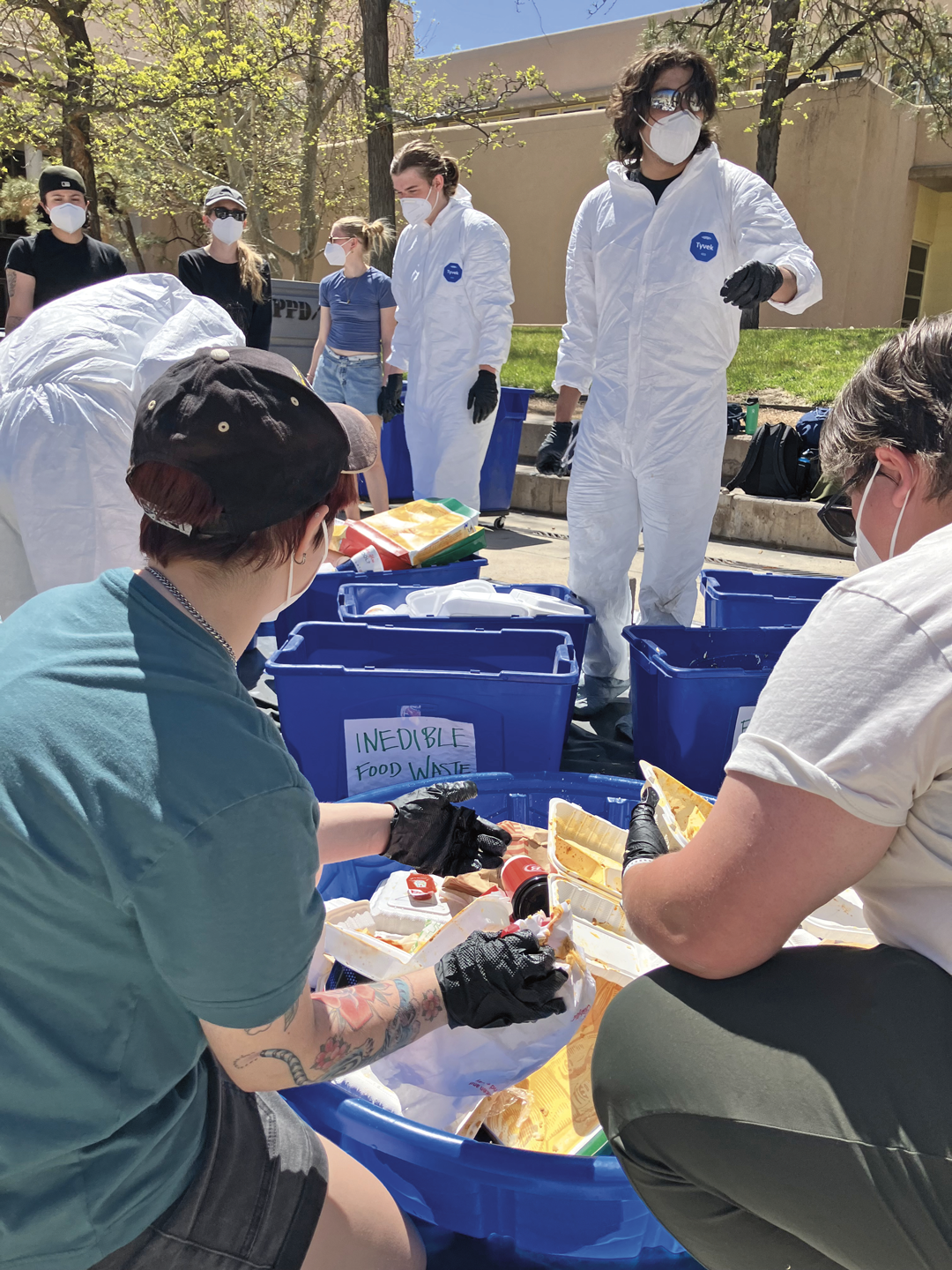
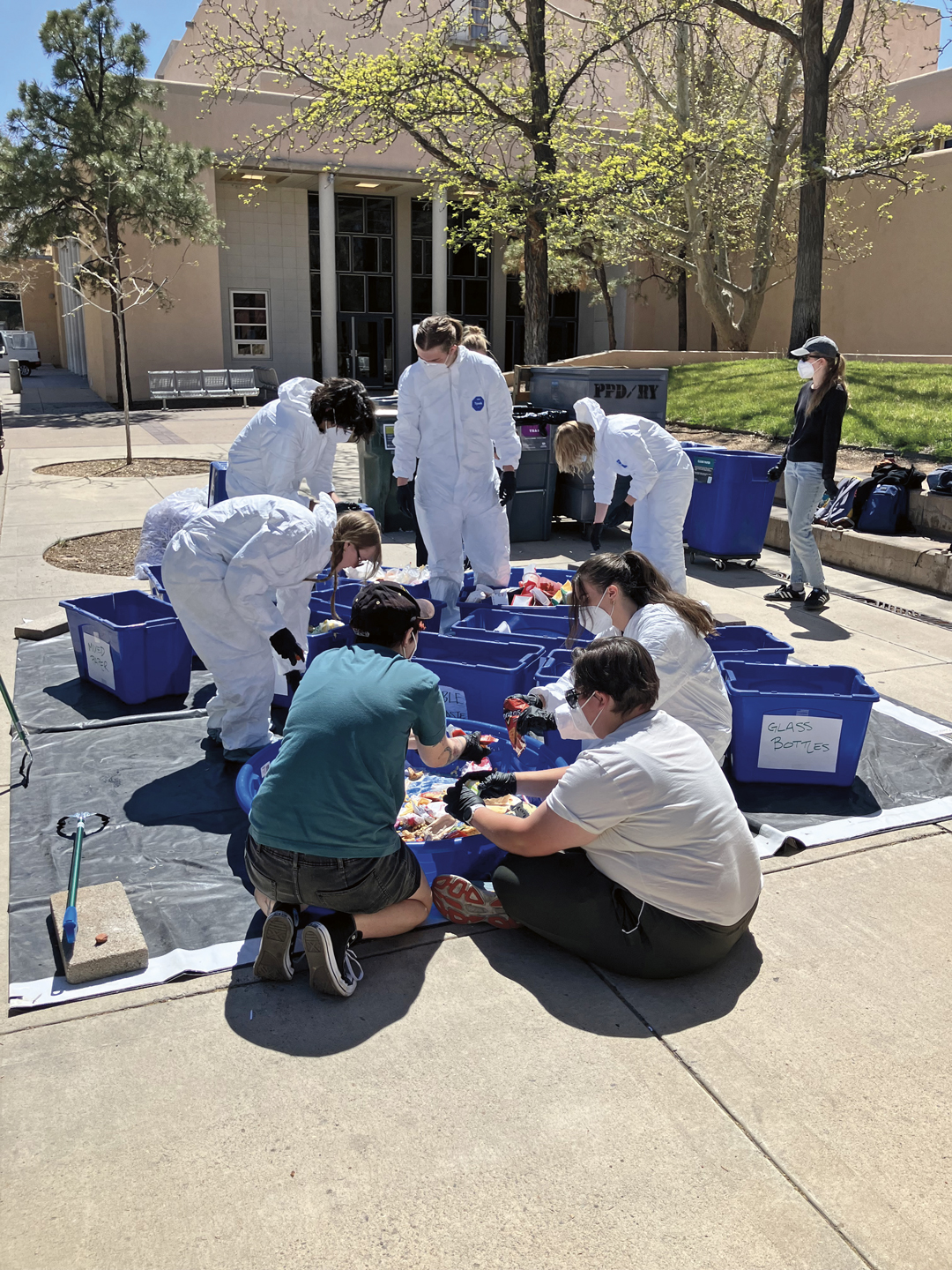
The inaugural waste audit of the UNM Student Union Building food court found that, of more than 400 pounds of waste, just over a quarter was edible food waste, and close to 50 percent was made up of single-use paper (bags, wrappers, napkins, cups) and plastic (clamshells, lids, cutlery, bowls, cups, lids, bags). Photos by Jessica Rowland.
All six of the original students who helped found the club and the class graduated this spring, and they’re off to study a diverse range of subjects from engineering and physics to psychology. This meant that, in addition to the rest of their work, these teens spent time in their final semester recruiting younger students to take over, keep the work going, and finish new projects, like advancing plans to build a chicken coop and feed their flock dehydrated vegetables and bread waste sourced from the school’s culinary club.
One of the roles being taken over by a younger student belongs, at the time of my tour in April, to Flora Mack, the senior in charge of managing the students’ current answer to the school’s food waste problem. She shows me to the back of the student garden space where, behind the cinder-block barrier, a collection of innocuous-looking five-gallon buckets sits.
“We just started doing bokashi,” Mack tells me, referring to a composting method that, as her collaborator Mateo Miller explains, works a bit like making kombucha. “Basically, we took a bunch of food,” Mack continues, “and blended it up with a hand blender. Then you add the bokashi [bran], and it ferments for a few weeks.” Rodriguez pulls out her phone to show a video they made of the messy process. Miller adds that this method allowed them to sidestep the school’s concerns about pests and smells, since bokashi is made in sealed containers. “That’s important because you can’t get people to separate their food,” Keira Robinson explains, cringing at the memory of trying to convince their classmates to sort their food waste. But bokashi offered a neat solution to this logistical hurdle, since the method can safely process both meat and dairy products.
So into the bucket goes all the organic waste that might come out of the Taos High cafeteria on a given day. And there it becomes a tasty meal for a bokashi mix of bacteria and yeast. The microcommunity in the first set of buckets has just finished its meal, turning last month’s lunch slurry into a nutrient-rich goo that will be mixed with soil to make a high-quality compost. Mack and her classmates hope the compost will be used to feed the garden they helped build, and if all goes smoothly, they plan to share any extra compost with nearby elementary and middle school gardens. That work will be carried on by the next group of leaders who’ll take up the mantle of feeding whoever (and whatever) they can.
Sarah Mock
Sarah Mock is an agriculture and food writer, researcher, and podcaster, focusing on topics from farm production to ag history and economics. She’s written two books, Farm (and Other F Words) and Big Team Farms. Her current project, The Only Thing That Lasts, is a podcast for Ambrook Research about the past, present, and future of American farmland. She lives in Albuquerque.