THE HUNGER-FREE STUDENTS’ BILL OF RIGHTS ACT IN NEW MEXICO
By Sarah Wentzel-Fisher
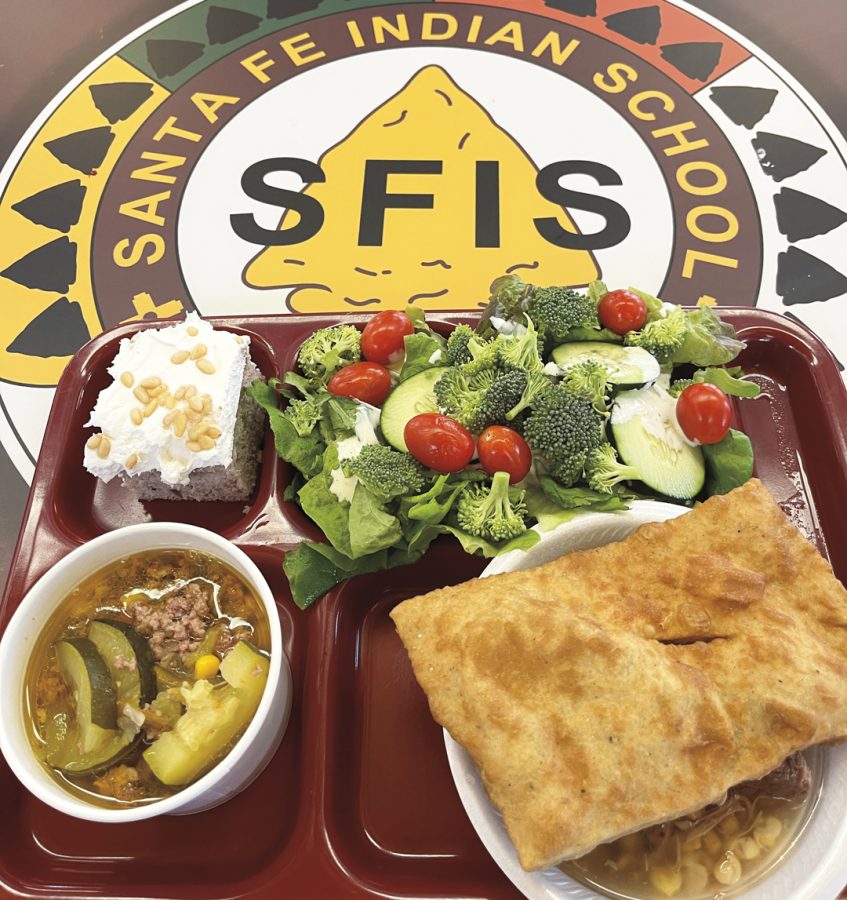
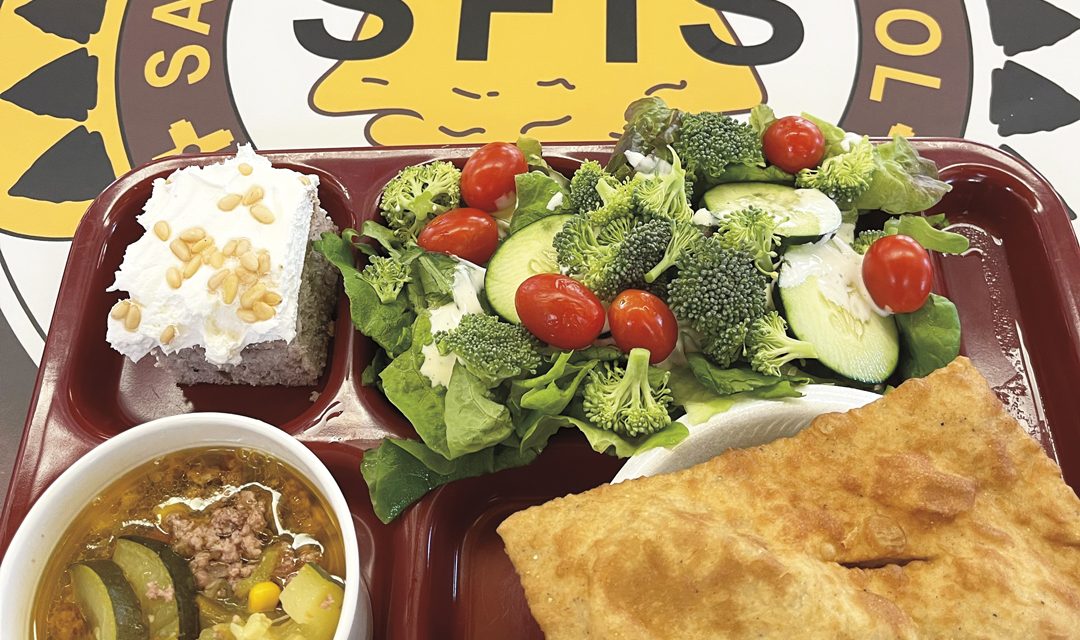
Lunch tray with chicos stew, blue corn cake, blue corn fry bread, and a healthy salad from the school’s salad bar, served at the Santa Fe Indian School Tribal Purchasing Pilot Celebration. Courtesy of New Mexico Public Education Department.
If you attended public school, even if you were a bring-your-lunch-in-a-bag kid, you’ve probably experienced the good, bad, and institutional of the school lunch cafeteria. Being at the lunch table is one thing, but being in the kitchen is another. And if you’ve ever cooked for a crowd, you understand the complexities of procuring large quantities of food, timing each step, and working within the constraints of the available kitchen tools. Imagine all the shopping and staged preparation you’d do for a dinner party for eight or a large family barbecue. There’s a lot of math and moving parts involved, no?
Now imagine the logistics, planning, and care needed to serve the student body of New Mexico public schools. To serve lunch to the 65,000 students enrolled in the Albuquerque Public Schools system, Subway—the largest restaurant chain in the state—would have to serve more than 440 meals each day at each of its 146 sites. Imagine that volume, and then consider how you might orchestrate the task of feeding not just lunch but also breakfast, five days a week, to all 300,000 students in public schools across the state. The undertaking is more than a little daunting, but the positive impacts of getting these two meals a day right are substantial.
During the 2023 legislative session, New Mexico passed the Hunger-Free Students’ Bill of Rights Act, which created ambitious goals to provide healthy, free breakfast and lunch to all K–12 students in the state. In addition to the money to cover the gap between what the federal government will fund and what meals cost for all students, the legislation also calls for 50 percent scratch cooking; reducing food waste; asking students what they like to eat; creating share tables; and increasing the capacity of schools to buy ingredients from New Mexican farmers. This whole system approach—one of only nine in the country—means that students get better food they are excited to eat, less food gets thrown away, farmers have new markets, and lunch ladies get to be heroes.
While it may be technical, complicated, and unglamorous, the school lunch program New Mexico has committed to will have profound impacts long term. A growing body of research shows that regular access to healthy meals at school is associated with a wide range of benefits for children, including improved academic performance, better physical and mental health, stronger attendance, and reduced behavioral challenges. Researchers have found that students who consistently receive nutritious meals are more likely to concentrate in class, perform better on tests, and experience fewer disruptions related to hunger or food insecurity. And the benefits of better school lunches extend far beyond the school walls. Healthy school meals are increasingly seen as an investment not just in educational attainment but in public health, workforce development, and economic stability.
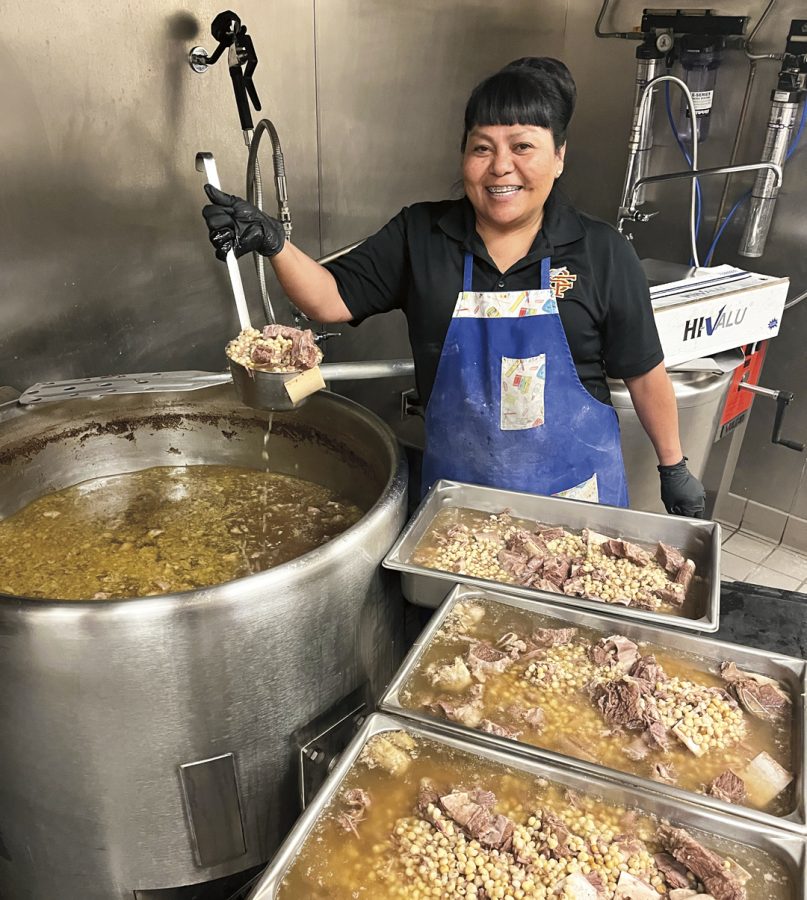
Staff member at Santa Fe Indian Schools serves up a chicos stew prepared from ingredients sourced through the New Mexico Grown Tribal Purchasing Pilot, including chicos/steam corn/Neeshjizhii from Bidii Baby Foods and beef from NM LA beef. Courtesy of NMPED.
Nationally, school lunch has come a long way in the last century. Starting in the 1910s, thanks to the efforts of women-led civic organizations, a few large cities initiated the first school meal programs. In the 1940s, these programs became normalized and ubiquitous through New Deal programs designed to support farmers, provide jobs, curb child hunger, and, as I was surprised to learn, address national security concerns. In 1946, under President Truman, Congress passed the National School Lunch Act, providing funds for schools to start nonprofit lunch programs that could provide low-cost lunches to eligible children, in part motivated by the number of American men who didn’t qualify for the draft during World War II due to malnutrition.
Fast-forward to the 1980s and 1990s, when federal funding for school meals was significantly cut back and some school systems introduced food service provision by large corporate chains like McDonald’s, Little Caesars, and Chick-fil-A. These decades mark a low point in accountability and quality in school lunches—this is the “ketchup counts as a vegetable” era, when tightened school budgets and corporate influence meant fewer meals cooked from scratch, and many school cafeterias were modified to favor heat-and-serve options. If you’d asked kitchen staff where they were sourcing beef or salad greens, you’d likely have been met with a blank stare.
In the 2000s, as medical, nutrition, and educational experts raised concerns about the dramatic spike in child obesity in the United States, school lunches became a point of public health scrutiny and greater political attention. As meals eaten by a majority of youth, school lunches presented an opportunity to address nutrition-related health concerns through public programs. Prompted in part by Michelle Obama’s Let’s Move campaign, in 2010 Congress passed the Healthy, Hunger-Free Kids Act, which allocated $4.5 billion to improve school meals through infrastructure, purchasing, and the creation of
evidence-based nutrition standards—which also meant better standards for ingredients.
This federal legislation also created the Community Eligibility Provision, which stipulates that if a certain percentage of students in a particular school qualify for free school lunch—meaning they come from a household deemed below the poverty line or they are eligible for other food assistance programs—the school is eligible for federal funds to pay for free breakfast and lunch for all of its students. In 2023, the threshold for a school to access those funds decreased from 40 percent to 25 percent of students, making most schools in New Mexico eligible. In fact, the state leads the nation in utilization of the program, with 95 percent of schools both qualifying for and choosing to participate in it.
Support for navigating the federal bureaucracy to access funds for free lunches is just one facet of a highly coordinated effort on the part of the New Mexico Public Education Department (NMPED) and several other state agencies and community organizations working to fulfill the promise of the Hunger-Free Students’ Bill of Rights Act. While it passed in 2023, the legislation is the result of a decades-long, multi-sector initiative to increase resilience and well-being of all New Mexico residents. Similar to federal lawmakers recognizing that they could solve many issues with the National School Lunch Act, New Mexico community leaders and decision-makers saw a set of related challenges that could be confronted by guaranteeing that every kid enrolled in school can not only eat lunch but eat a healthy lunch. Research in hand, they mapped a web of connections, drawing lines from healthy eating to improved learning outcomes, from stronger rural economies to lower rates of chronic disease, and from new markets for agriculture to greater economic health.
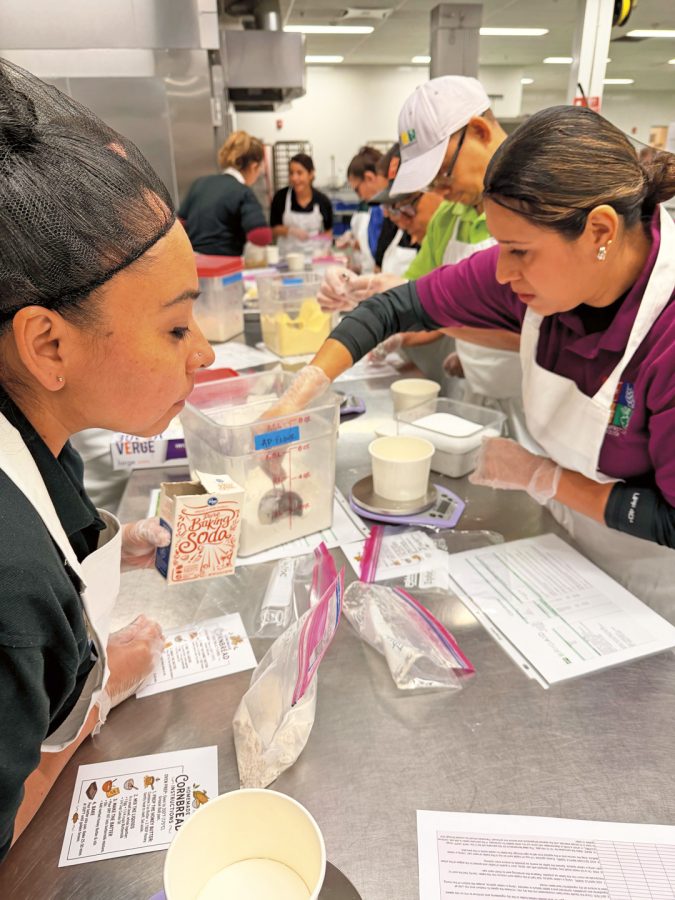
The Food and Nutrition Services team at Albuquerque Public Schools learns to prepare a new sheet-pan corn bread recipe at a training led by Brigaid. Courtesy of Albuquerque Public Schools.
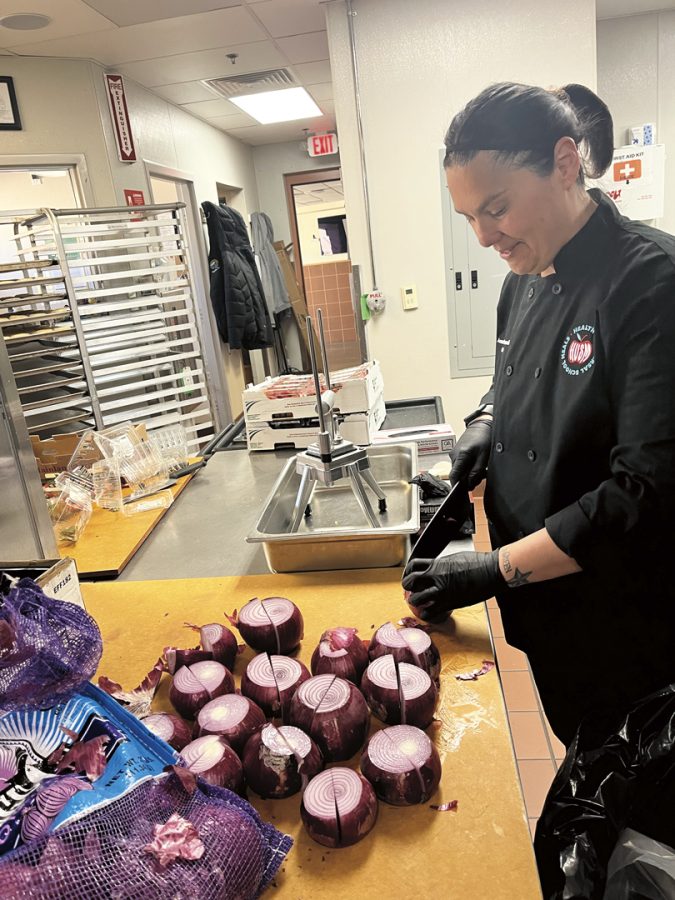
Chef Amanda Hermosillo from the Healthy Universal School Meals team helps chop onions at Navajo Preparatory School for the freshly prepared green chile stew. Courtesy of NMPED.
What does it take for farmers to get their produce to schools, for school food service staff to work with local ingredients, for kitchens to be equipped to receive and prepare meals from food grown in the state, and finally, for schools to ensure they are reducing the amount of lunch that gets tossed out? How do we change an entire system? The short answer is an incredible amount of collaboration.
Feeding the children of New Mexico takes farmers, ranchers, community leaders, chefs, cooks, parents, teachers, administrators, bureaucrats, students, and, well, really everyone. And many of the key players have truly committed to this work from the ground up. Take Elizabeth Anichini, now the Healthy Universal School Meals program manager at the Public Education Department, who cut her teeth working at La Semilla Food Center in Anthony, helping create their edible education program focused on school gardens, hands-on nutrition education, and integrating cultural foodways into school and community settings throughout the Las Cruces area. Speaking of that role, she said, “I got to see all the work it takes to develop farmers, the food safety piece, the food hub piece, and the uptake in schools themselves. I saw what it takes to shift the food system in an equitable way to support frontline communities and the environment.”
That community-based work was foundational to what she does now, which is akin to conducting a bureaucratic orchestra. From working closely with the approved supplier program that helps schools source New Mexico–raised beef and vegetables to facilitating training for school food service staff, and from helping food service directors translate and clarify (and follow) the rules to supporting administrators as they navigate the paperwork to get the funds they need, Anichini and her team embody the values inherent to the Healthy Universal School Meals legislation. (The latter, known in New Mexico law as a “rule,” is where the Public Education Department spells out the path to fulfilling the Hunger-Free Students’ Bill of Rights Act.) “Students across the country eat two to three meals a day for twelve to fifteen years of their life in school. Knowing the nutritional impact that has on them, shaping food preferences and connection to culture, the opportunity to help shape this transition feels really important,” Anichini said.
A school gets about $3.50 for a breakfast and just shy of $5 for a lunch per student. These funds cover not only the ingredients but the labor to prepare it, the kitchen to cook it in, nutrition and meal planning, and overhead costs. New Mexico also offers a $0.10 per meal incentive for purchasing local ingredients, meaning the state will kick in additional funds to purchase ingredients from local farmers and ranchers. Of what gets locally purchased, 75 percent must be served in a minimally or not processed way, for example, a whole apple or cooked pinto beans. In the 2024–2025 school year, 275 schools—ten times as many as in 2021—purchased some local food and altogether were allocated more than $2 million for regional procurement. This demonstrates a growing demand for local and culturally relevant foods in schools. It also means a growing market for small and medium-sized farms.
The New Mexico Farmers’ Marketing Association has played a key role in helping connect New Mexico farms with schools. Beginning in 2021, the organization helped launch the New Mexico Grown Approved Supplier Program on behalf of a broad public-private partnership that included more than a dozen state agencies and nonprofit organizations. Today, 80 percent of students attend schools participating in this program, which source anywhere from one to a dozen ingredients from New Mexico farmers or ranchers. Through the program, the farmers’ marketing association trains growers in Good Agricultural Practices (GAP) auditing, a set of federally recommended food safety standards. The training covers practices such as properly organizing farm wash-and-pack stations to reduce the risk of bacterial contamination and implementing labeling systems that improve traceability. By completing the training and ongoing certification and reporting, growers can demonstrate that the food they deliver to school kitchens meets food safety requirements.
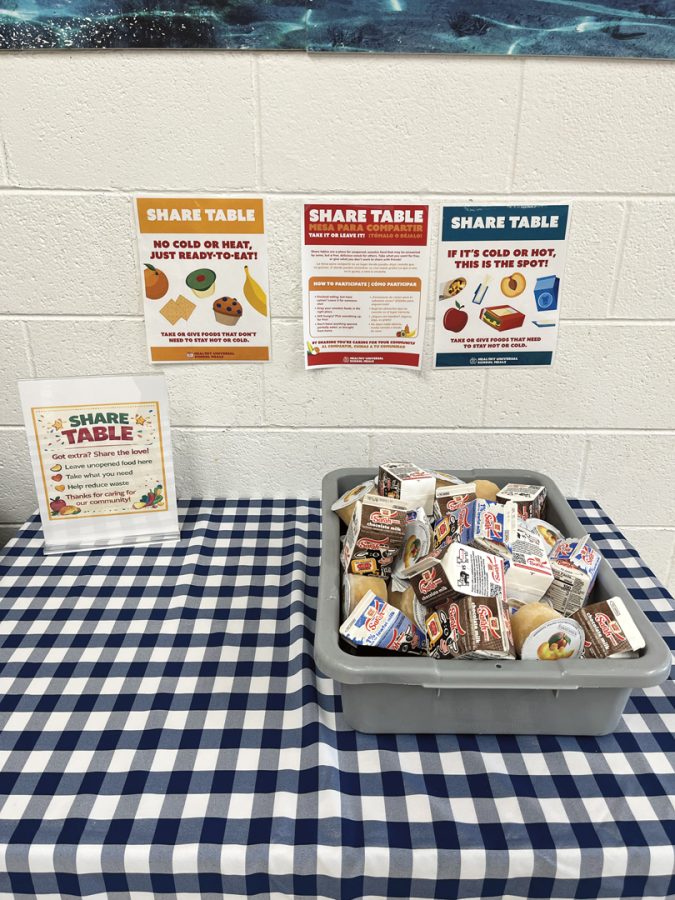
Share table in action at Melrose Municipal Schools. Courtesy of NMPED.
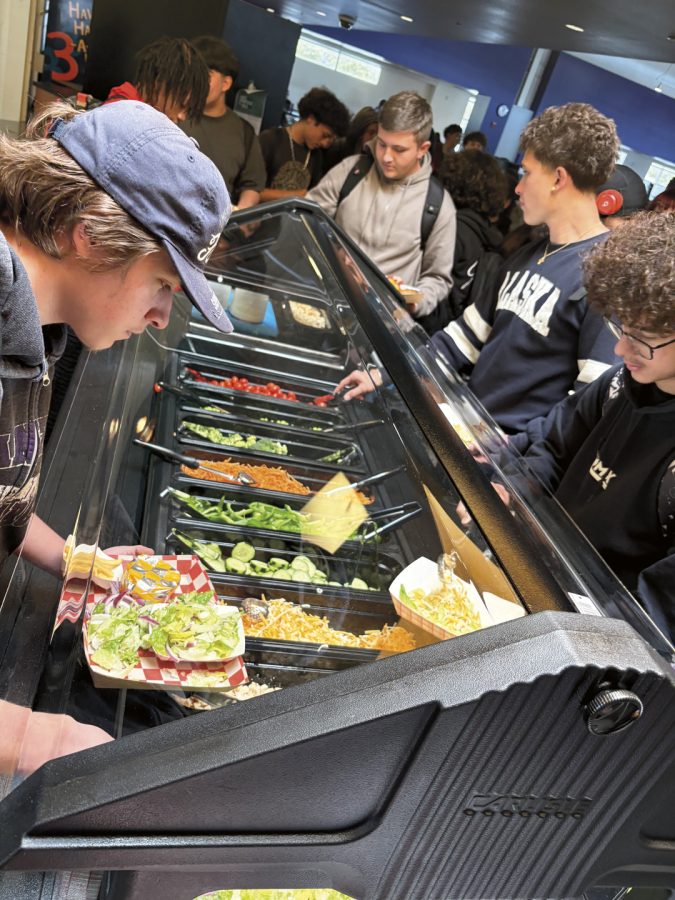
High school students enjoying the new “GreEnergy Spot” featuring fresh veggies and proteins for lunch. Courtesy of APS.
Zach and Mary Ben own and operate Bidii Baby Foods in Shiprock, where they use traditional and regenerative practices to grow corn and other vegetables, and make traditional early childhood foods from what they grow. “We always knew we wanted high food safety standards because we were producing baby food,” said Mary. “Originally we assumed we would pursue GAP certification, but that process is expensive and difficult for small producers. The Approved Supplier Program created a more supportive pathway. There was a time investment, but not the same financial burden.” Working with the farmers’ marketing association opened the door to both a manufacturing permit to grind their corn and a relationship with the Farmington Public Schools system.
But just because a farmer grows something doesn’t mean a school will buy or prepare it, nor that students will eat it. When asked about selling to schools, Mary explained, “One issue is that schools often expect producers to provide foods that don’t make sense regionally or culturally. At some of the early producer-buyer meetings, schools asked for things like bok choy and berries—foods that aren’t realistic to grow in our region.” But the Farmington school system had a champion, Marie Johnson, then the Farmington Public Schools’ student nutrition supervisor, who spearheaded a conversation about how the school might adapt and partner more effectively with farmers, and listen to what kids wanted. Mary said, “I was inspired by Marie’s openness and creativity when working with us, and her commitment to hearing from students.”
Johnson put up QR code stickers all over schools in the district, which linked to a poll asking questions like: What foods do you eat at home? What vegetables do you like? What foods would you want at school? Among more than 600 responses, the overwhelming answers were mutton stew, squash, corn, and other traditional Navajo dishes. Johnson took student feedback to heart and the school worked on developing recipes that met nutrition guidelines using the ingredients students wanted and that were grown in the region, like the corn that Zach and Mary produce.
Now, said Mary, “the challenge is seasonality. We’re investing in drying and freeze-drying infrastructure. Producers need ways to preserve products so schools can purchase local foods year-round. Instead of only selling fresh squash in September, producers should be able to sell preserved, but not highly processed, ingredients in January.” In fact, this is where Bidii Baby Foods has found their niche selling to schools. They wait until the winter months, when other farmers have sold out, to provide schools with dried corn and other ingredients minimally processed and stored for sale a few months later.
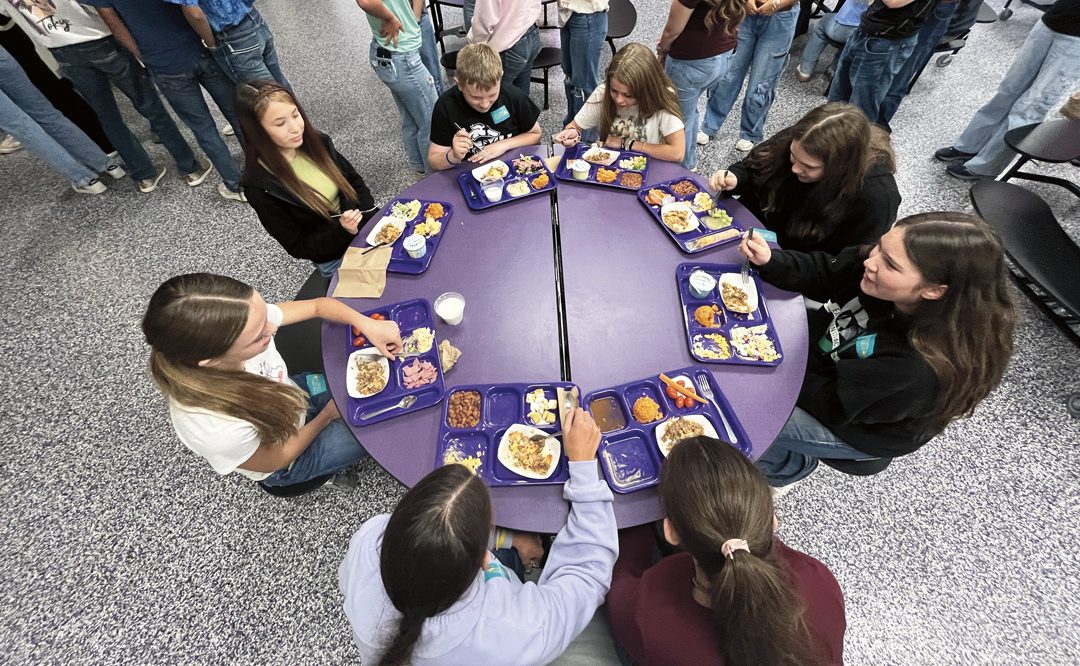
Middle school students in Elida Municipal Schools enjoy a freshly prepared meal of red beef enchiladas during a Healthy Universal School Meals cafeteria celebration, where they tasted two potential menu items—green chile rice and esquites—and then voted to help decide if they’d be included on next year’s lunch menu. Courtesy of NMPED.
Asking kids what they want to eat can reshape the entire school meal experience. When students like what is served, they are more likely to choose school meals and eat them, reducing what gets thrown away—which is another mandate of the Healthy Universal School Meals legislation. Eva Stricker, research professor in the biology department at the University of New Mexico, has spent the last two years working with students to study food choices in college and high school cafeterias and to identify strategies to reduce both hunger and food waste. Her research found that patterns vary by community. In many schools, grains and fresh produce are among the most frequently discarded items, while in others, milk is the item most often left behind.
What students throw away can offer important clues about how waste might be reduced, but student preferences are only one part of the equation. Another factor is the amount of time students have to eat. New Mexico schools have long been required to provide a minimum thirty-minute lunch period, but the 2023 legislation also requires that students receive at least twenty minutes of seated eating time. Schools are also required to create “share tables,” designated spaces where students can place unopened or allowable food items they do not want so that other students can take them or they can be donated to food pantries rather than thrown away. Some schools give students more choice over what goes onto their trays in the first place. Finally, many schools have adopted composting programs as a last step in reducing waste and keeping food scraps out of landfills.
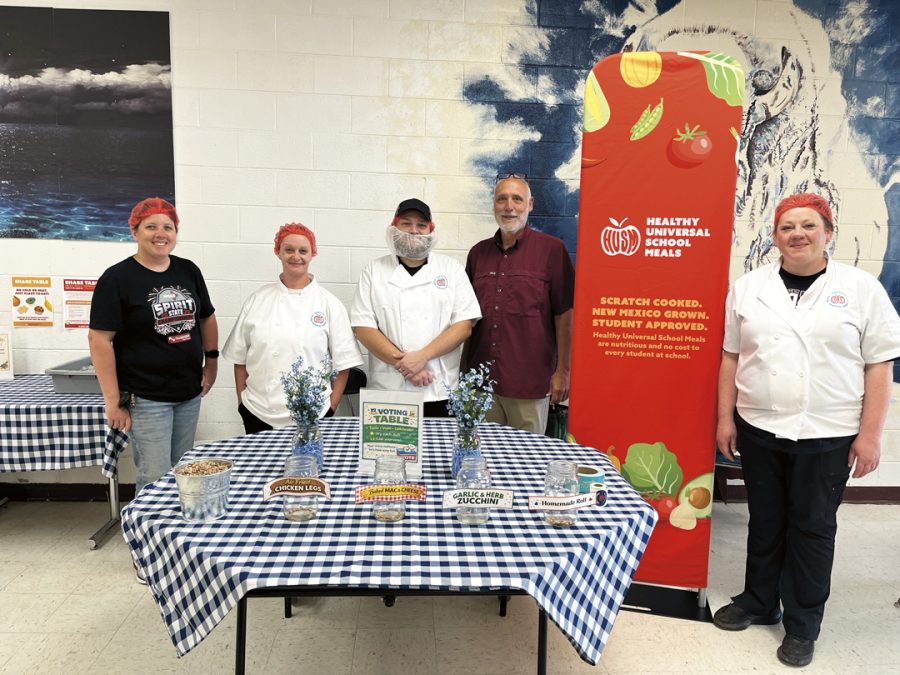
Melrose Municipal Schools kitchen team members Heather, Amanda, and Dusty with Superintendent Brian Stacy and cafeteria manager Summer Adams at the voting table where students used beans to vote for items they’d sampled and would like to see added to the menu next school year. Courtesy of NMPED.
On May 1—National School Lunch Hero Day, appropriately enough—I spoke with several people at the New Mexico Public Education Department, including Anichini, who work behind the scenes to steward schools through the transition to the new approach to school meals. Three critical pieces have become the focus of the department’s Student Success and Wellness Bureau as it oversees this transition: staff training, administrative guidance, and kitchen improvement. Led by Anichini, the Healthy Universal School Meals team (which includes its own chef) held a statewide School Chef Symposium in 2023. Since then, the team has worked in partnership with Brigaid, an organization that hires professional chefs to train, mentor, and problem solve alongside food service staff to improve scratch cooking. Through this partnership, they have instituted a series of hands-on trainings where regional chefs work with school cafeteria staff on recipe development, techniques for kitchen efficiency, and other important elements of making delicious food for a crowd. Using this approach helps elevate the craft of institutional meal preparation, and, Anichini believes, helps food service staff feel seen, valued, and supported.
Not all school kitchens are created equal. Brigaid conducted statewide kitchen assessments and found that many schools in New Mexico already have solid infrastructure for scratch cooking. While some will work closely with Anichini and her team to make necessary upgrades to kitchen infrastructure, others will focus on recipe development and staff training. Albuquerque and Hobbs use central kitchen models. This means a larger, more equipped central kitchen does the heavy lifting on scratch cooking—say, baking dinner rolls or cooking raw ground beef and beans—and then individual school kitchens receive these prepped ingredients and use them to make dishes like chili on the day of service. Albuquerque, in particular, operates an incredibly sophisticated system to prepare and distribute meals at scale, and is now working to empower its staff to fully utilize this infrastructure to deliver high-quality, delicious meals to students.
“Healthy Universal School Meals legislation is fundamentally a value statement,” said Anichini. “We value students, their right to healthy food, and the role food plays in learning and health. School cafeteria staff deeply care about feeding students well. New Mexico Grown reflects that we value local farmers and culturally important foods.” Reflecting on the care that has manifested through the program, Anichini said, “I feel like we’ve threaded the needle between policy and progress. There’s a lot to celebrate across the state.”
Marie Johnson took the helm as the food service director for Albuquerque Public Schools (APS) in 2025 and is inarguably the state’s fiercest champion of this shift. She has taken what she’s learned in Farmington and is now putting her special blend of tireless work ethic and enthusiasm for high-quality, community-adapted food service to work in the state’s largest school district. Johnson is working on this shift one school team at a time, making sure staff are excited for the shift and feel like they have the tools they need to do the job. For APS, her goal is to have all schools hitting the 50 percent scratch-cooking benchmark by day one of the 2026 school year, starting with scratch-cooked muffins for breakfast. “I’m happy to see where this journey takes us, how much better we [as a state] will be,” she says. “I’m excited to to celebrate how we [APS Food & Nutrition Services] contributed to changing school food, and the lives of students, for the better, one meal at a time.”
Sarah Wentzel-Fisher
Sarah Wentzel-Fisher is a committed champion of the local food movement and of resilient and regenerative agriculture. A board member for both the Rocky Mountain Farmers Union and the Southwest Grassfed Livestock Alliance, she has worked as an organizer for the National Young Farmers Coalition, the editor of edible New Mexico, and the executive director of the Quivira Coalition. In her free time, you can find her feeding chickens, making pear butter from rescued fruit, and visiting with farmer friends around the state.