MY Elusive PONCHE
By Denise Chávez
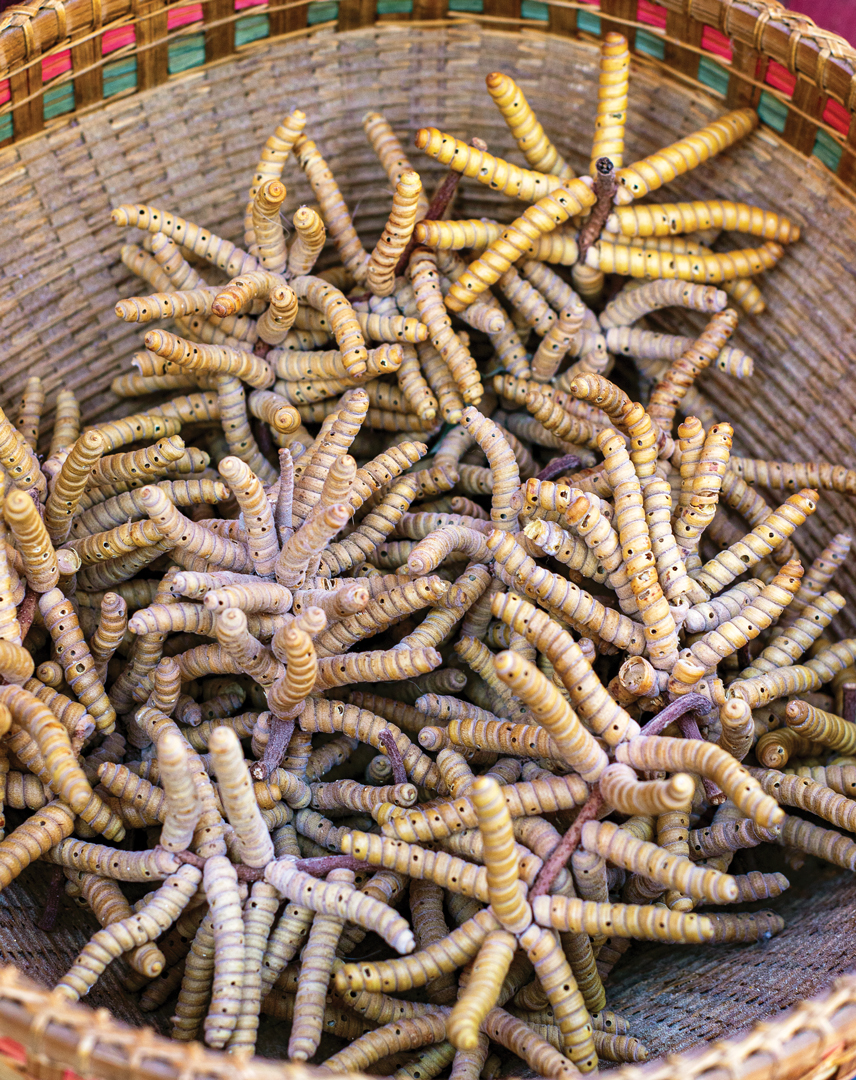
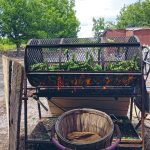
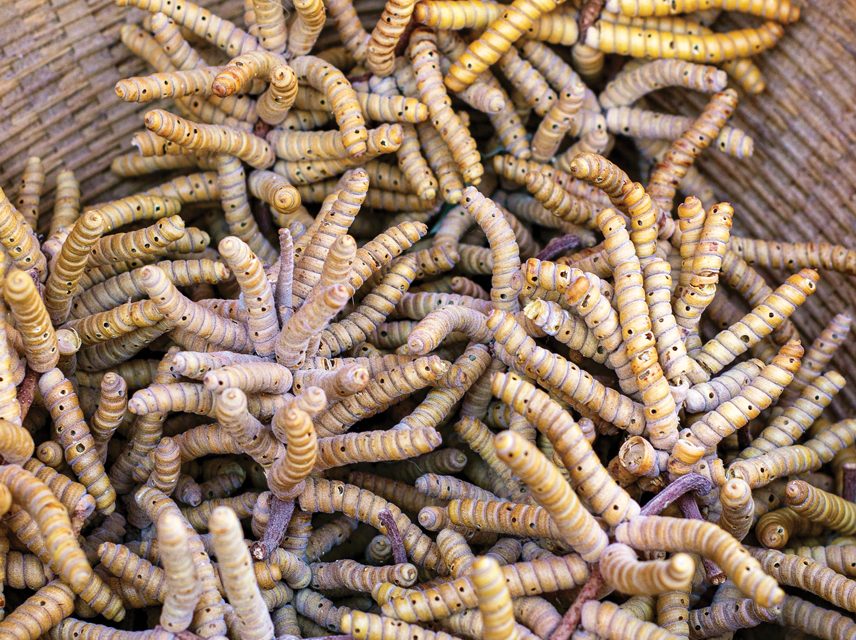
A basket of dried tornillo seedpods from Denise Chávez’s tree. Photo by Stephanie Cameron.
Sana, sana colita de rana, si no sanarás hoy sanarás mañana.
Heal, heal, little frog’s tail. If you don’t heal today, you’ll heal tomorrow.
—Familiar children’s rhyme
My memories of ponche are as sacred as those of my home life on the US-México border. As a girl and, yes, even when I was older, if I was not feeling well, my mother, Delfina, would move me from my twin bed at the back of the house to her off-limits front bedroom to be ensconced in her enormous, very comfortable queen bed. This show of respect is something intrinsic to many cultures. We offer our best to those in need, we elevate them with our care.
Mother would bring me a drink with an egg and warm milk, adding vanilla, piloncillo, nuez moscada (nutmeg), and cinnamon. If I was really sick, whatever liquor was on hand would be added. The egg white was beaten until frothy with an eggbeater, no electric mixer; then the yolk was incorporated along with the spices. I would lift myself out of bed and drink that hot and soothing beverage and I always felt better.
I still long for that ponche. It represents my familial and cultural ties to food and everything that I hold sacred. For those of us with roots along the borderland between México, our little corner of the United States, and the greater world, our legacy of bebidas/drinks is a mirror of culture, diversity, and richness.
What has become of those traditions? Who will carry them on? In researching for this article, I have realized how deeply we have lost our connection to our ancestors, to their foodways. But the old recipes and memories persist.
Growing up entre mundos / between the worlds of New Mexico, Texas, and Chihuahua in a desert landscape of rich and varied native foods, I was familiar with tunas, the rich red fruit of the prickly pear cactus that my mother loved. I was used to her randomly pulling over in some isolated spot after spying some wild, unattended tunas. She would scamper out of the car to pick the fruit of the cactus, embedding the fine, nearly invisible spines in her hands, yet happily feasting on the deep-red fruit. I came late to a full appreciation of tunas. It wasn’t until I had my own prickly pear cactus that I learned to savor their rich flavor, their magic.
Like ponche, agua de tuna, for me, is another sacred beverage.
I faithfully pick tunas each season. No doubt I still have some spines scattered in various parts of my body. A spine embedded in my palm recently kept me up at night. Even now, this fruit’s unique taste eludes my description, my words.
Many of the beverages of our region are interconnected, cousins to each other, with similar but distinct names and replete with regional differences. The same drink is the same drink but different in Arizona, New Mexico, and various states in México. There are many ponches, and there are many ways to understand the borderlands. In south-central México, there is the ponche de Navidad, a holiday staple in households as geographically distant from the literal border as the Pacific Northwest. A friend, Amy Costales, children’s author and Spanish professor in Oregon, has prepared this celebratory drink for twenty years with her family.
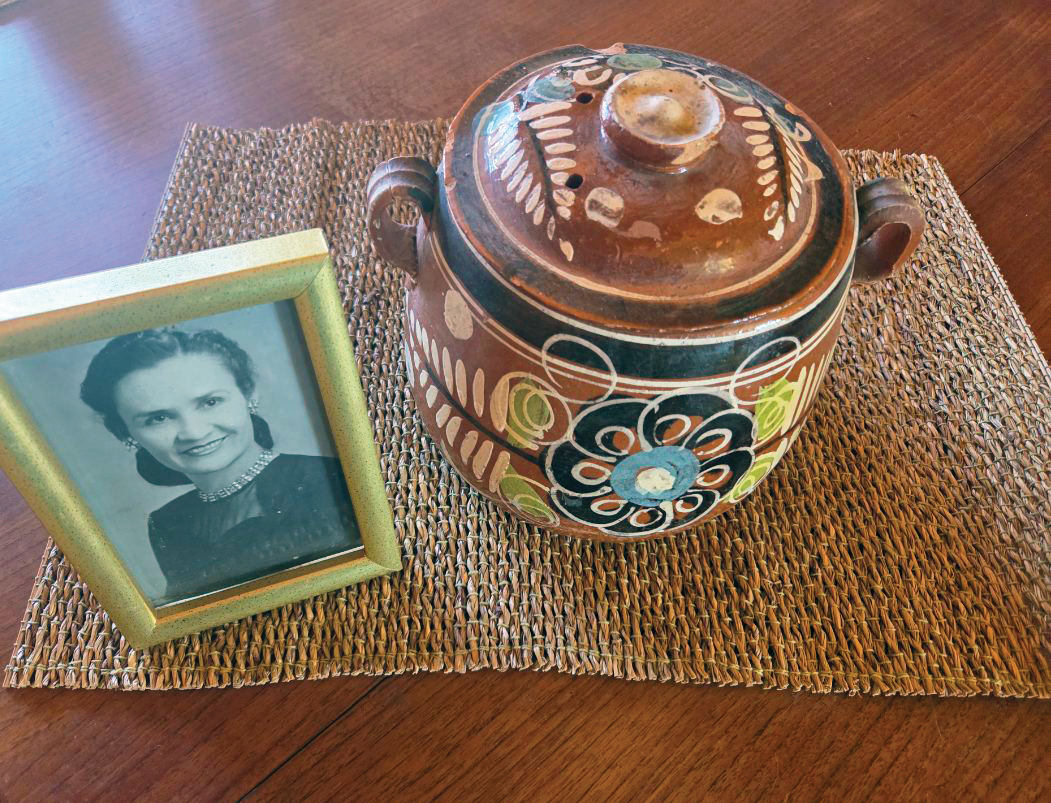
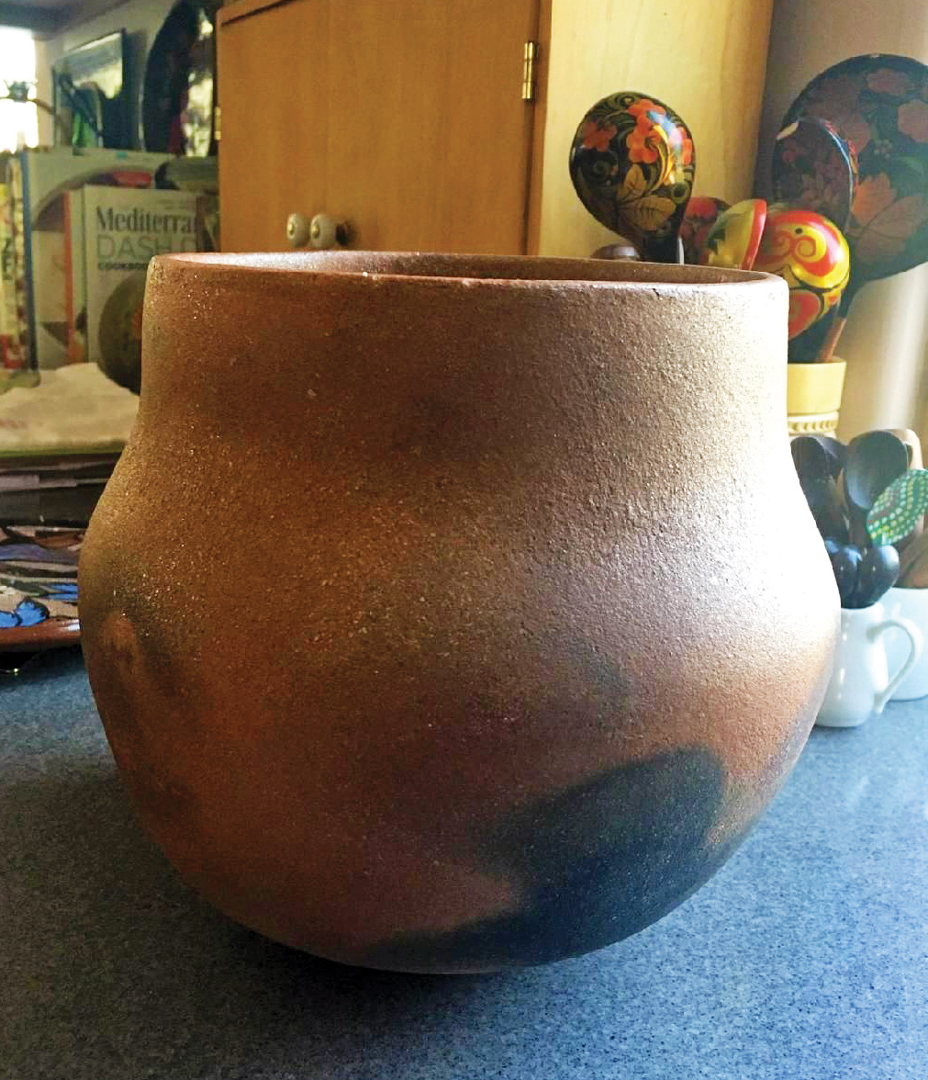
Denise’s mother, Delfina, and her olla. Photo by Denise Chávez. Margo Chávez Charles’s olla. Photo by Margo Chávez Charles.
Together, the family gathers the ingredients from local markets, then cuts, chops, and has everything ready for Amy’s husband, Fernando Arriaga-Colín, the concert master, to blend the beloved ponche during the holidays. The entire house is centered on and revolves around its preparation. The heart and soul of this ponche is the tejocote, Mexican hawthorn. Family members remove the seeds from these tiny orange fruits, cut stalks of sugar cane, and add the sugar, jamaica, tamarindo, and canela to water. When the key elements are boiling and the tamarindo is coming off the seeds, the tejocotes are added, then the guayabas, and, finally, the apples, pears, and other softer fruits. The mixture is heated in an olla de peltre that takes up half the stove. Ollas de peltre, the much loved enamel-and-steel pots, hold the heat, and are easy to clean, affordable, lightweight, and, yes, attractive. And they last.
Once the ponche is ready, it is placed in the garage to sit until the morning. For the families, it is a treasured sharing, and when evening comes, the adults enjoy the addition of tequila. No plastic containers or little packets of spice mixes from the grocery store, no premade ponche. Once you have the basic ingredients, you make time to prepare the ponche. There is a comforting ritual element to the preparation, a communal sharing and a joy of connection. It is a time to slow down, to be home, to enjoy the basic, the authentic, the familiar, the familial.
Equally loved across time and borders is tepache, a fermented drink made from pineapple rinds and either sugar or piloncillo. My friend Raúl Aguirre grew up between Tijuana and Tucson and remembers his mother making tepache. In those days, few had refrigerators. Raúl recalls a neighbor, Señora Socorro Medina, “Doña Hielitos,” who sold flavored ice cubes for a nickel. Raúl also fondly remembers a drink called chingadito, a warm ponche with canela, piloncillo, apples, oranges, and whatever other fruit was available. It was a lifesaver on those long cold walks from his neighborhood to the church where his family prayed a nine-day novena just before the Feast of Our Lady of Guadalupe. A chingadito was sure to warm your bones, especially if it had a piquito of liquor in it.
The range and variety of borderland bebidas is spectacular and to pinpoint one recipe for each drink would be difficult. Recipes over time have become individualized according to one’s particular taste, economic realities, the season, items on hand, location, and familial and cultural background.
Atole, for example, can be a simple ground cornmeal with milk or water, sugar or piloncillo, and cinnamon, or it can be enhanced with chocolate, fruit, or lard. Lard? The Southwest Indian Cookbook notes the addition of one tablespoon of lard. The flour called for in this recipe is blue corn, not white, and no cinnamon or sugar is added. I’m told the lard is used as a softener and flavoring for the ground corn, which is a process most of us are not used to.
Likewise, champurrado, a hot beverage with pinole (ground corn flour) or masa harina, may include water, milk, clove, and piloncillo or sugar along with Mexican chocolate, either Ibarra or La Abuelita, depending on your preference, political leaning, and social consciousness. I call this a veritable “Battle of the Brands,” as each brand of chocolate has its fervent devotees. Champurrado might also include star anise or vanilla extract. Salt might be added; soy or oat milk might replace cow’s milk. Get the picture? The same can be said for every beverage. This cross-pollination of recipes is what makes our frontera so rich.
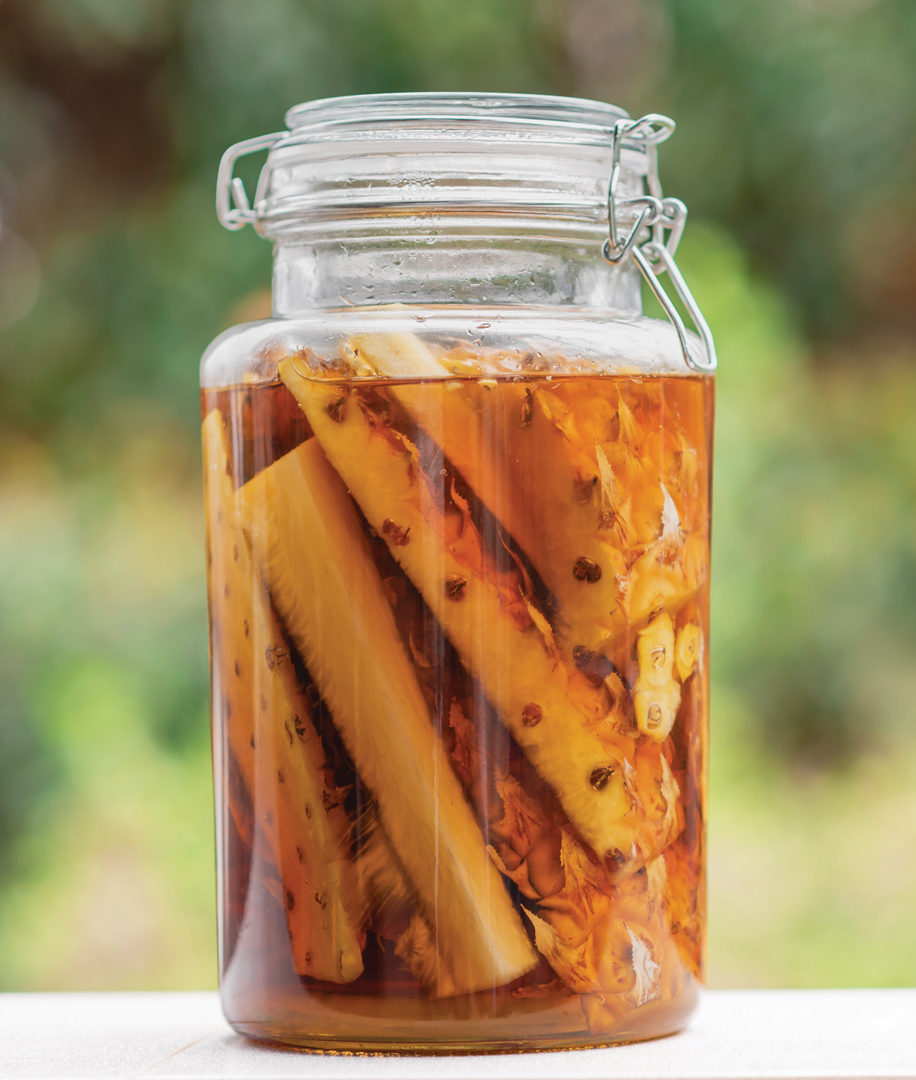
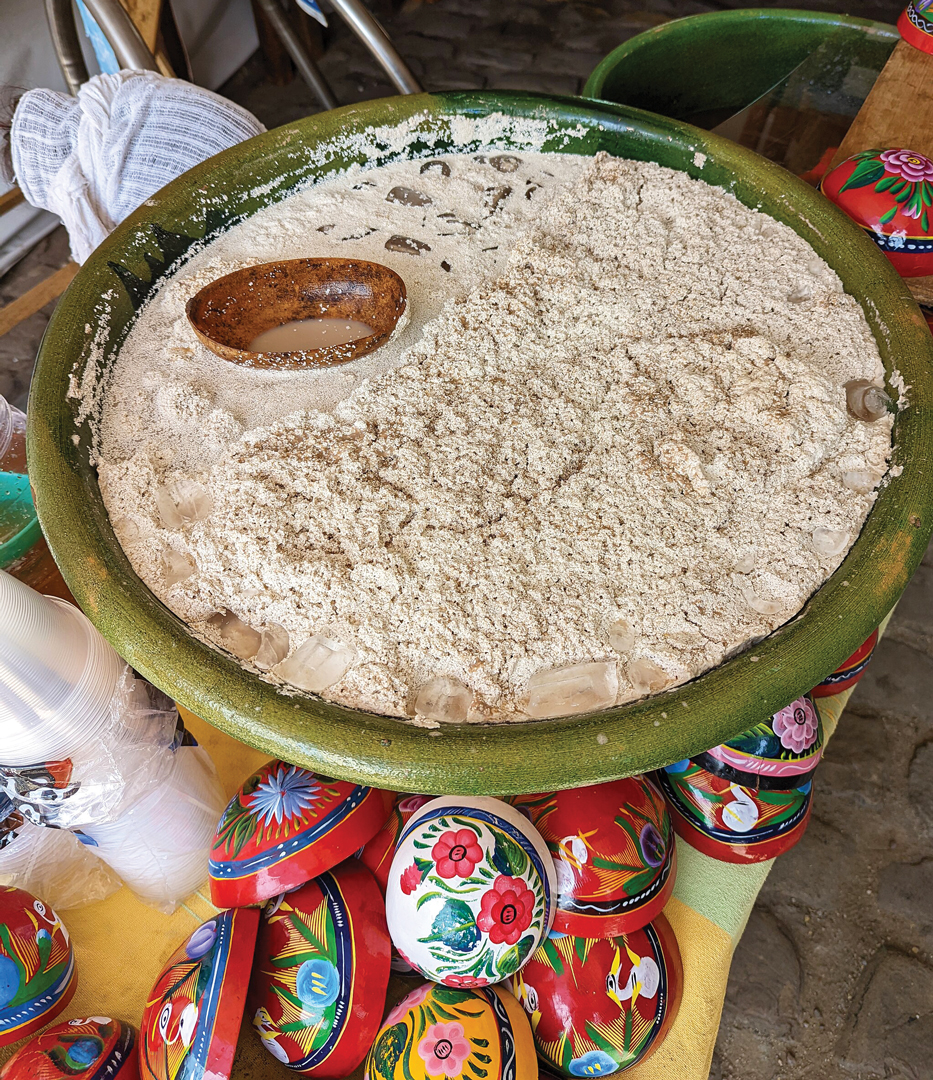
Tepache, a fermented drink using pineapple. Photo by Ann Gaysorn. Tejate, a maíz and chocolate beverage, traditionally made in Oaxaca. Photo by François Calvaresi.
Hoy en día / nowadays, the problem and change is that our legacy of food is being lost. You can go to the grocery store and find packets of prepared atole in various flavors: nuez, coco, fresa, mango. Few people grind their own corn, so one comes to depend on store-bought corn flour and nixtamal. Pinole comes in little bags, ready to be used. Expediency is the word. Make it fast. Who has time to prepare a drink like tesgüino or tepache, both of which need days for the fermentation process?
Speaking with Delma Valles, from Andrews, Texas, I learned she was my Aunt Lucia Madrid’s student in Redford, Texas, my mother’s hometown. Delma grew up in Ojinaga, Chihuahua, just across the river. Her family made many types of atole, most particularly from tamale masa after a matanza, when a pig or goat was killed and roasted, “so the asado ‘meat’ wouldn’t make them sick.” “Too much meat, too much fat, too much lard,” her grandmother cautioned, as she served atole to buffer the effects of the meat.
Had I realized the sheer enormity, the range and depth, of our borderland bebidas and their many incarnations, I doubt I would have set off on this culinary journey. My education has become ever expanding and my respect is profound. I have been inspired and, at times, yes, confounded.
I had a comical conversation with Guadalupe Zacarías, a friend from Michoacán, about what I thought was tesgüino, the fermented corn beverage that is sacred to the Rarámuri Indians in the Copper Canyon. “I need tesgüino stories and recipes,” I said. She corrected me, “Tejuino.”
“Tesgüino.”
“Tejuino.”
“Tesgüino,”
“Tejuino.”
It was only later I realized we were talking about different drinks from different states in México. No, they weren’t the same! How could they be? And on reading the Pueblo Indian Cookbook, I found tesgüino wasn’t tejuino but had evolved to tiswin!
After doing much research on borderland beverages, I call these drinks the Tremendous T’s:
TESGÜINO is a fermented corn beer produced by the Rarámuri tribe in the Copper Canyon. An elaborate process involves soaking the kernels and allowing them to ferment in tesgüineras, clay pots. A tesgüinada, the celebratory gathering to prepare and consume tesgüino, is an integral part of community life for the Rarámuri.
TEPACHE, found throughout the Southwest and México, is a fermented drink using pineapple peels and rinds sweetened with piloncillo or sugar.
TEJUINO is another fermented corn beverage, popular in the Mexican states of Jalisco, Colima, and Nayarit as well as in the United States. It is made from corn masa, mixed with water and piloncillo and boiled until the liquid is very thick. It is then allowed to ferment slightly.
TESCALATE/TAZCALATE, from the state of Chiapas, is made from a mixture of roasted maíz, roasted cacao, ground piñónes, achiote, and sugar or piloncillo.
TEJATE is another maíz and chocolate beverage, traditionally made in Oaxaca. Toasted maíz, fermented cacao beans, toasted mamey pits, and flor de cacao are finely ground into a paste, then mixed with water, usually by hand. Tejate is sweetened and served cold.
TISWIN, found in our Southwest Indigenous cultures, is dried white corn to which is added water, brown sugar, orange peelings, cinnamon sticks, and cloves. The mixture is left to ferment for a number of days.
Are you overwhelmed? I was!
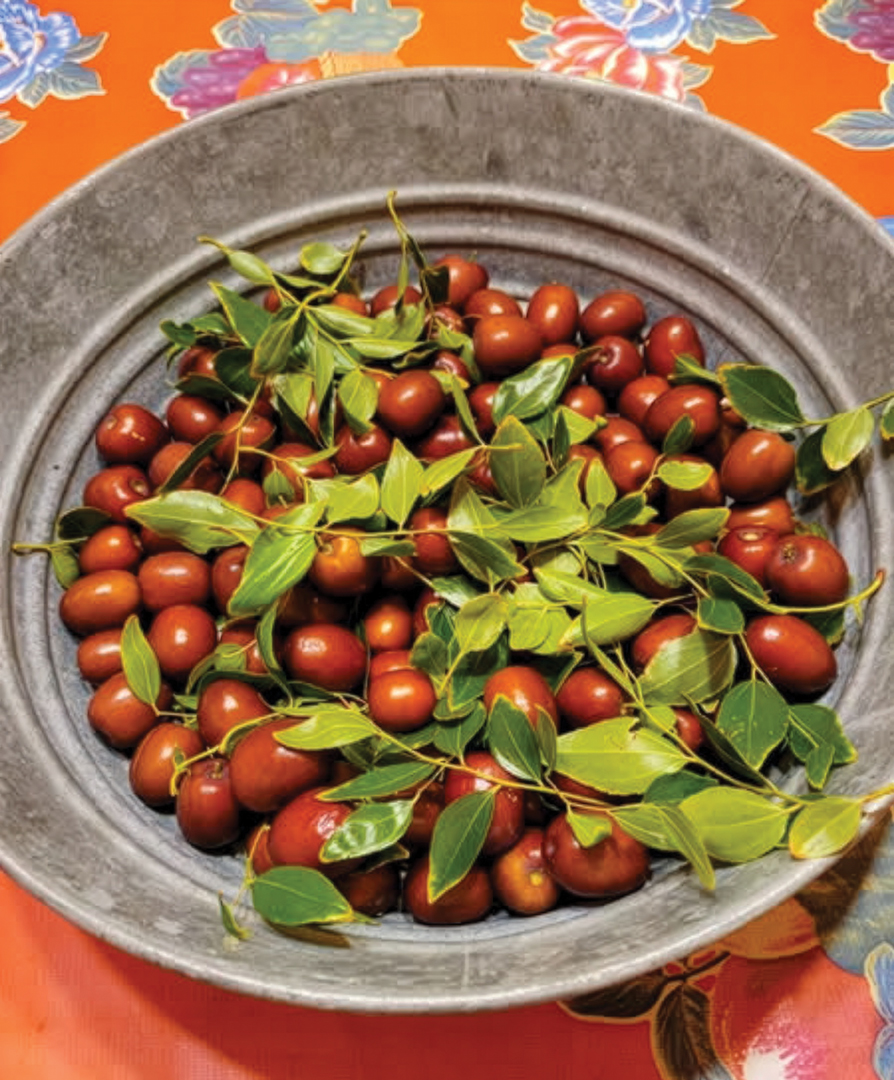
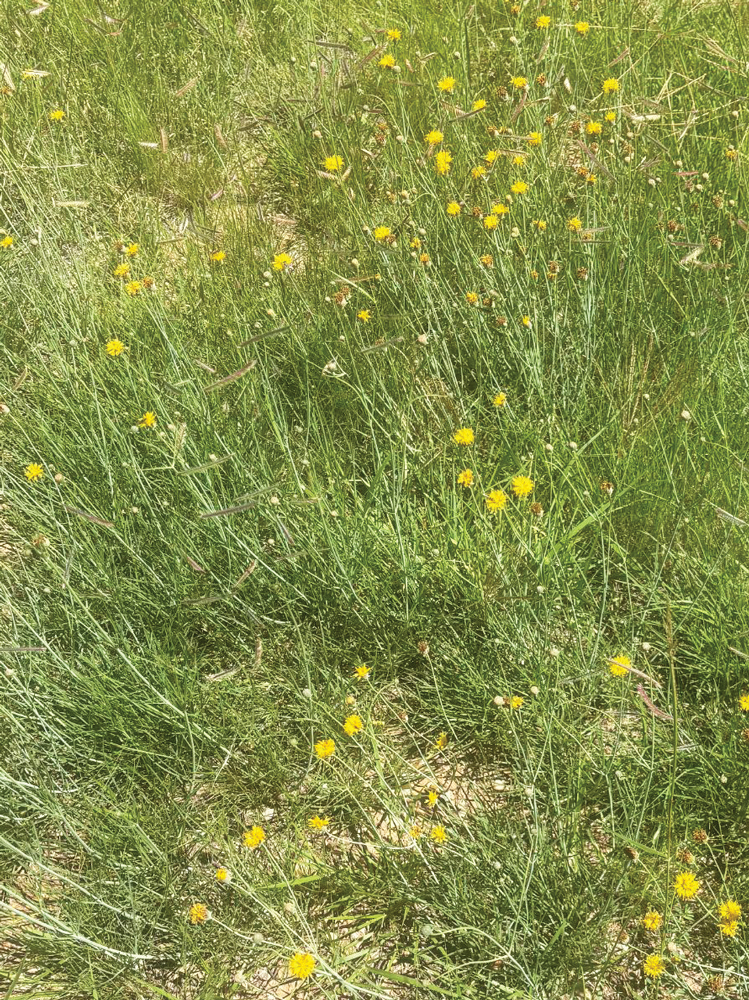
Jujubes. Photo by Denise Chávez. Cota. Photo by Hermán García.
Not all borderland beverages are so complicated. Consider borderland tés.
As with ponche and atole, to begin a discussion of desert land teas is to pull up memories of family. In my childhood, I was often sent out to the backyard to gather hierbabuena for tea. We had a large patch of wild mint that grew underneath a constantly leaking water hose that was attached to the old leaky swamp cooler—our “drip system” that kept the mint thriving at all times of the year. After washing the fresh mint, we made hot tea. Cooled, it became a tasty iced tea. I often sucked on the mint leaves with the same reverence as a devoted and secretive piloncillo eater. We could never keep enough piloncillo on hand. I still love the taste and carve off shavings from the unrefined brown sugar cone whenever I use it in cooking.
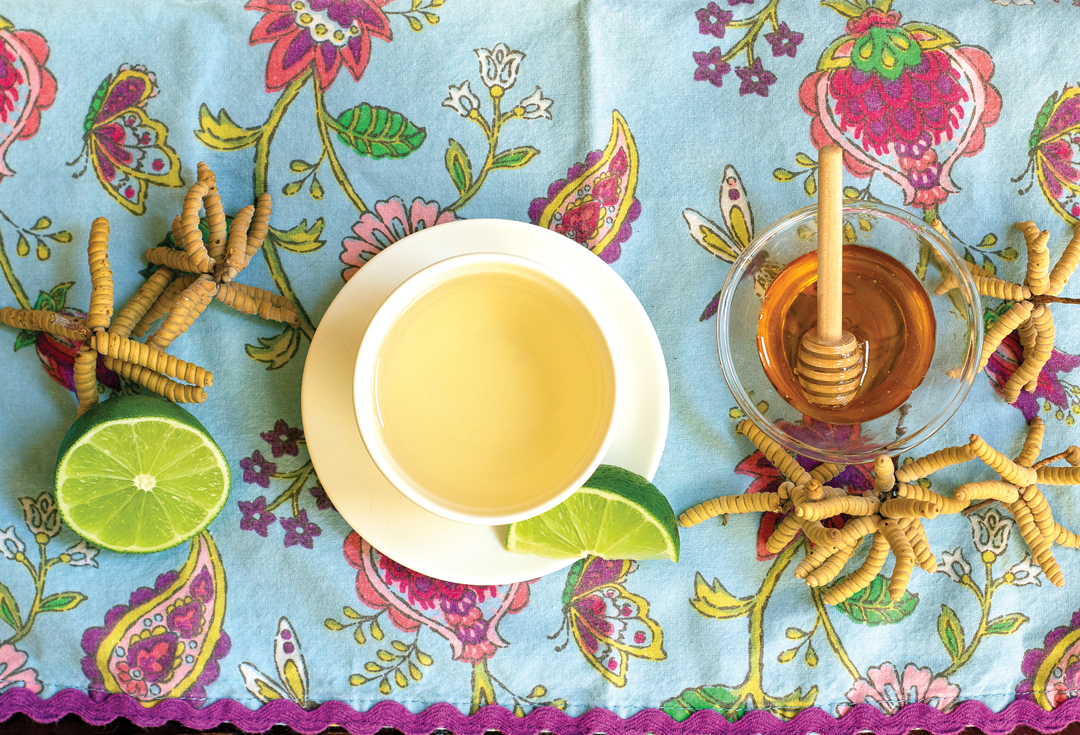
Tornillo Tea. Photo by Stephanie Cameron.
For others, tea memories may be of manzanilla/chamomile, estafiate, osha, or neldo. Hermán García, retired bilingual education professor at New Mexico State University, grew up in the village of Encino, southeast of Santa Fe, where the cota that grew wild on his family’s farm was washed, placed in a sun tea jar, and left outside for a few hours. Mint might also be added. Cota, also known as Navajo tea, has long been used to aid digestion. Many teas are medicinal and one can go to herb books to find their usage. As I have learned from having a bookstore business on Tornillo Street, screwbean mesquite pods make a medicinal tea; they can also be ground into flour and are delicious snacks. I have made té de tornillo with a little added bit of agave nectar or honey and a chorrito—a little squeeze—of lime juice. It is hearty, earthy, and delicious. A jujube tree near our bookstore provides a delicious early fall fruit and the berries can be used as well for tea, jams, and syrup.
“Just add un chorro de leche y azúcar,” notes Delma Valles, and the tea, whatever kind, is complete. Borderland measurements are colorful and linguistically rich: A puño is a dash, a pisca a pinch, un chorrito a small drizzle, un chorro a larger drizzle, a chisguete a squirt, un piquete or a piquito a shot, a bonche a bunch, un montón a lot, and so it goes on.
Our elders shared and led us to the comfort of Mother Earth. “I love what the plant and tree world gives us,” says Kerry Caldwell, a local chef and holistic practitioner. Her grandmother, Mariana López, also a healer and the mother of nine children, gave Kerry sage advice: “Go sit and lean on a tree. Go put your hands in the earth. Run your hand in hierbabuena.”
Toni Bueno, a southern New Mexico singer and performing artist, reflected on “las bebidas milagrosos / the sacred drinks” that bring up “tantos hermosos recuerdos / many beautiful memories! Many times when I was sick and my medication wouldn’t work, mi jefita cariñosamente me preparaba [té de hierbabuena], giving it to me in spoonfuls till it did its magic. To coat my stomach, she would make atole with cinnamon to kill any stomach bugs, adding a bottle of Sprite and ‘Sana, sana colita de rana’ to finish it off.”
Sometimes the recipes get lost in translation. The wording of our recipes reflects our region, our homes, our legacies. It’s good to have a reverence for the way people use their words and how they apply their experience to their food, and this includes our rich borderland bebidas.
Growing up, aguas frescas were for special occasions. Like ponche, they have that magical healing energy. There is agua de horchata, the queen, and the luxurious and rich agua de jamaica; the fruit-infused aguas de limón, de fresa, de sandía, de piña, de melón. One of my favorites, pepino with chia seeds, can be found at La Reyna Michoacana in Las Cruces. Community activist Silva Rascón is the owner of this local treasure, a must-visit place for not only its paletas but its fresh aguas.
I often prepare agua de tuna from the tunas in my yard. The New Mexico State University Cooperative Extension Service website provides much-needed information about harvesting and preparing the tunas, as well as offering recipes. The one I use calls for orange juice. This addition is good, confirms Chef Kerry Caldwell, who states the acidic blend balances out both the taste and medicinal properties.
I keep baggies of a dozen frozen tunas in my freezer at all times. I find that this amount is plenty for my husband and me, con algo que sobra / a little left over. As with all medicinal and healing plants like the tuna or tornillo, we must approach them with gratitude and blessing. I always thank the plant for providing us with nourishment.
Cooking, for me, is a meditation and healing process. I grew up with a schoolteacher mother who was a single parent and would come home at lunchtime to see if the alimony check was in the mail. She would grab a can of cold peas for lunch and then rush back to her third graders. And yet my mother did have her traditions, her touchstones, her food knowledge that she imparted to me.
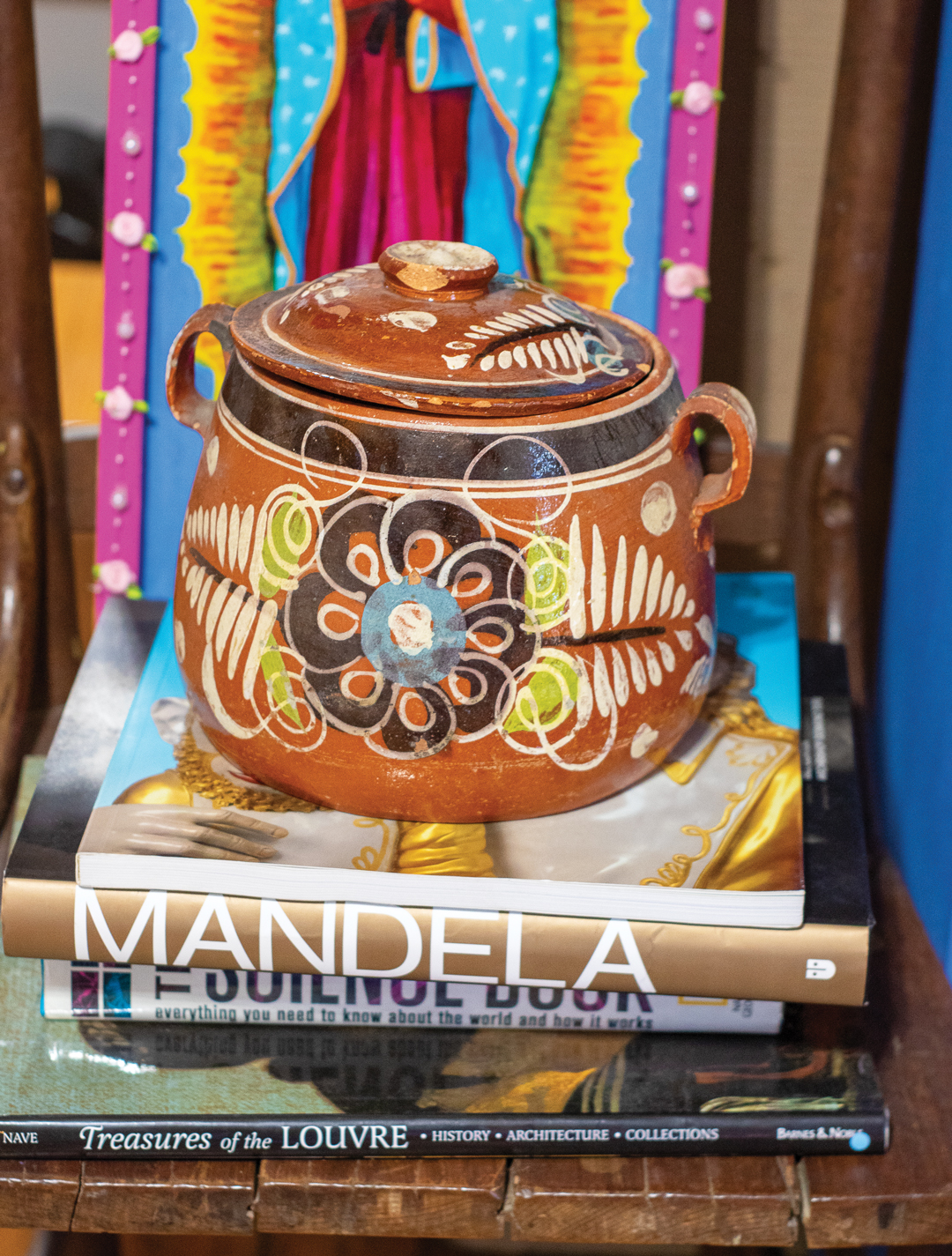
Casa Camino Real bookstore. Photo by Stephanie Cameron.
My mother, Delfina, became a young widow when my older sister Faride was only three days old. Later, she studied at the Universidad Nacional Autónoma de México in México City for thirteen summers. She spent time traveling throughout the country on weekends, experiencing her tierra natal / her homeland. That was her lifetime, her story about navigating the country between loss and becoming. I don’t know many details, and will never know all her stories, but somehow her spirit resides in me. Her food is my food, her nourishment my nourishment.
My story is the rediscovery of family, especially my mother. One of my most precious food memories will always be of that elusive and sacred ponche brought to me as a child, with love, all intention of healing.
When people come into our bookstore in Las Cruces, Casa Camino Real, and we sit down for café de olla or champurrado or any of our borderland beverages, we always toast our Ancestors: Arriba, abajo, al centro y pa’ dentro!
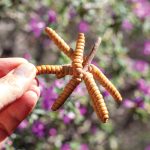
Tornillo Tea
Ingredients
- 6 tornillo pods, washed
- 6 cups water
- Agave or honey, to taste (optional)
- Lime, for garnish
Instructions
- Add the tornillo pods to water and bring to boil; turn off heat, cover, and steep for 20 minutes, until tea is a rich, earthy, amber color. Remove pods and strain. Sweeten with agave or honey, if desired. Serve iced or hot, with lime.
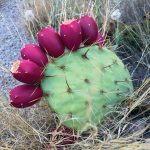
Agua de Tuna
Ingredients
- 12 –15 hand-harvested tunas
- 1 –2 cups water
- Juice of a lime, lemon, or orange
- Agave or honey, to taste (optional)
Instructions
- Select prickly pear cactus with plump, beautiful fruit. Using tongs, gather 12–15 ripe tunas from the cactus. I always enjoy communing with the plant before taking any fruit. Gather with an open heart, focus on the task, and ground yourself in the process.
- Rinse the fruit well. Using tongs and a sharp knife, peel away the outer skin and spines; discard. Add peeled fruit to a blender with 1–2 cups water and juice of a lime, lemon, or orange. Add honey or agave, if using. Blend well. Strain with fine mesh or cheesecloth. Refrigerate in a tightly covered jar for up to one week, or freeze in ice trays and add to water or tea on a hot day.

Denise Chávez
Denise Chávezis a writer and owner of Casa Camino Real bookstore in Las Cruces. She is the author of The King and Queen of Comezón; A Taco Testimony: Meditations on Family, Food and Culture; Loving Pedro Infante; Face of an Angel; and The Last of the Menu Girls, among other works. Chávez is the winner of the American Book Award and the New Mexico Governor’s Award in Literature. Her long-term project, Museo de La Gente / Museum of the People, is the formation of a community resource center, library, bookstore, and living archive of the Borderland region based in her hometown. After all the hullabaloo, she has decided to write a book called Biscochos/Biscochitos: The Cookie.