Talking Taos Land Trust with Darien Fernandez
Words and Photos by Victoriano Cárdenas
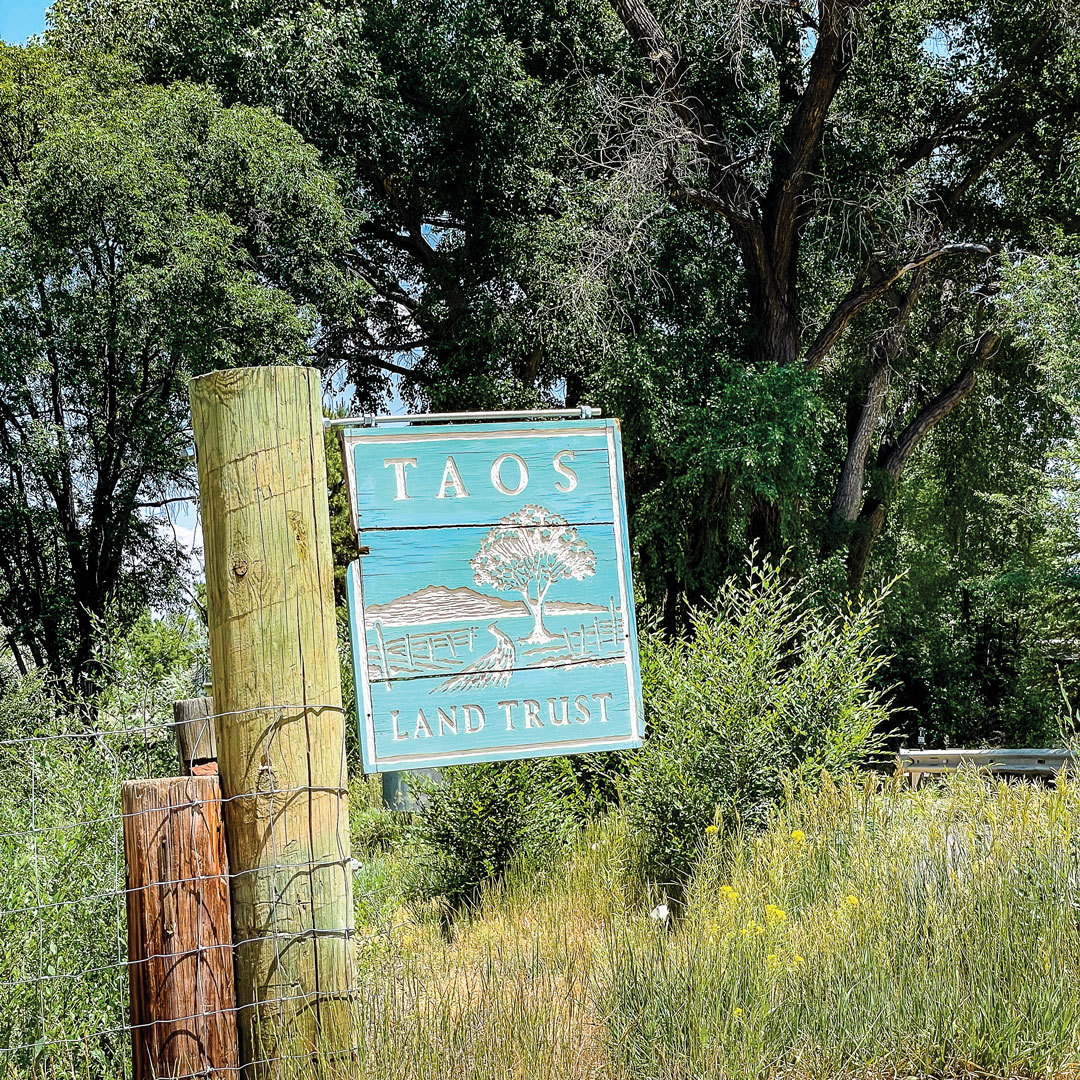
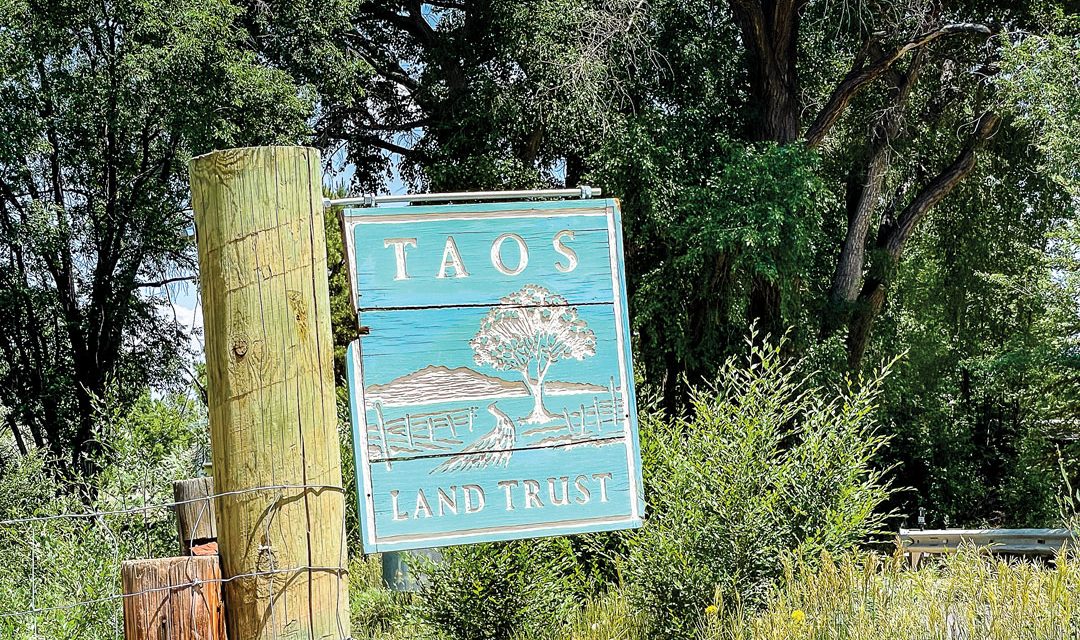
When people hear “high desert,” the first thing that comes to mind is not usually wetlands. A lot of Taos was once wetlands, including some of my family’s ancestral lands in El Prado. Over the years, the water in the pond dried up and the frogs disappeared. And, as more of my family members got older or moved away, we stopped farming. This is a common story among small family farms in the area. But the wetlands, farmlands, wildlife, history, and traditions of Taos are persisting and returning with the help of Taos Land Trust.
Taos Land Trust was the first land trust in New Mexico, established in 1988. The trust was founded with the purpose of helping landowners put their property into permanent conservation easements, which limit development on the land. These easements help preserve the land’s values—the views, the wildlife, the traditional agricultural practices, the acequias—those things that make Taos so lush, fruitful, and beautiful.
For the past thirty-eight years, Taos Land Trust has worked to conserve and protect more than twenty-five thousand acres of land, with programming that includes wetland restoration, community education, and paid internships for local youth. The trust is also committed to improving walkability and bikeability in Taos’s city center, building a community that’s easier to navigate without cars. This means advocating for sidewalks, bike lanes, community gardens, and food forests. About ten years ago, Taos Land Trust purchased the property that is now Rio Fernando Park.
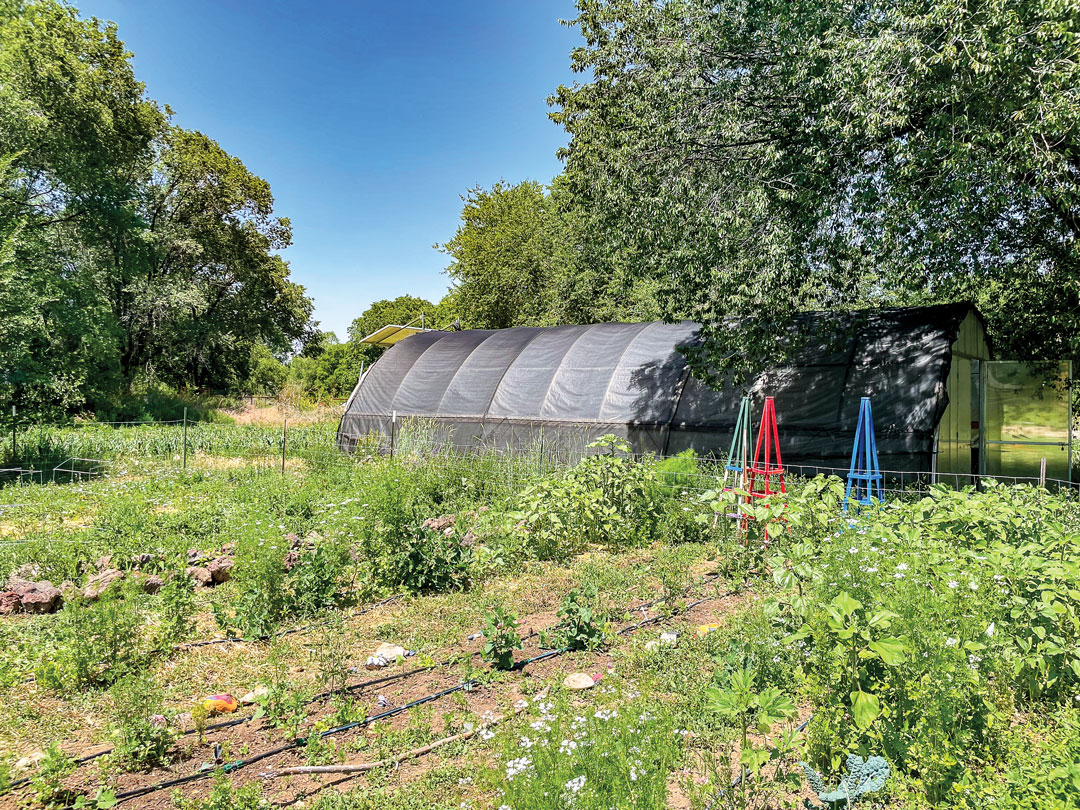
Greenhouse and food crops at Rio Fernando Park.
“Rio Fernando Park is like a lot of northern New Mexico properties,” says Darien Fernandez, Taos Land Trust’s executive director and a town councilmember. “It was traditionally a calf-cow operation, with some alfalfa and veggie gardens that had been passed down through the family, and folks just started moving away. When it came up for sale, there was a lot of concern. There aren’t many large parcels like this in Taos, especially not in the middle of town, and so the land trust got funds from the LOR Foundation to buy the property. Then there was the question of ‘What do we do with it?’ The trust started a multiyear public engagement process, with numerous listening sessions with community members, educators, elected officials. And out of it came this vision for a kind of open space and a living laboratory where we could look at regenerative agriculture and just allow folks to connect with the land in various ways.”
The headwaters for Rio Fernando Park come down through Taos Canyon, past Mante’s Chow Cart, and into several acres of wetlands at the adjoining Rio Fernando and Fred Baca Parks. The trust’s work in Rio Fernando Park is centered on cultivating trails, restoring wetlands and habitats for wild animals, and removing invasive species, as well as cultivating a garden and a community to tend it. “I split a lot of my time between writing grants and being out here,” Fernandez says, as his son hands him a burdock leaf.
The trust hosts educational workshops at Rio Fernando Park, and the students from Vista Grande High School are growing food that they eat in their school lunches. There is a fairy forest and, across the bridge, Fred Baca Park, with plenty of places for kids to learn about nature through play as well as farming. “We have forest schools with groups of kids, just running around and experiencing nature, and getting excited about being outside. And they become our future stewards,” says Fernandez. The day I visited, the trust had just driven a tractor full of dirt to Twirl Toy Store, giving kids a chance to play in the mud in a messy, marvelous celebration of International Mud Day.
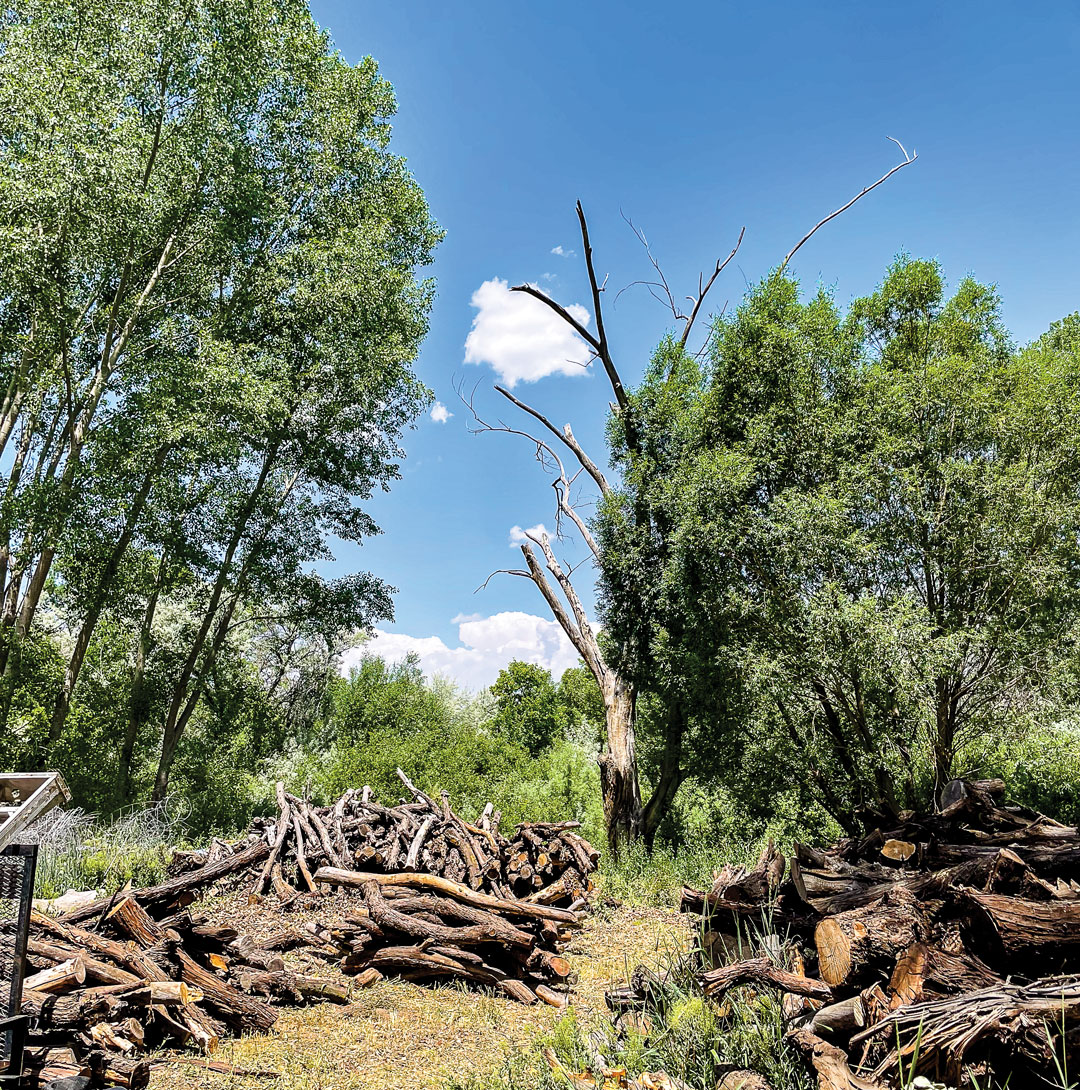
Wood cleared from Rio Fernando Park to be used in other projects.
The trust has plenty of resources for adults as well, offering a community garden, farm equipment for rent, and invasive plant removal in collaboration with Chamisa Goatworks. In turn, the nominal fees for these resources help to sustain the trust, providing resources for programming like invasive species workshops.
Non-native species “can often outcompete a lot of the native species, stripping nutrients from the soil and overrunning open spaces,” says Fernandez. “So we’ve done a few different treatment methods here. We’ve mowed, hand cut, cover cropping to establish soil health. Then, we come in with native wildflower and high-
desert grass mix once we’ve established a good enough soil base. It takes numerous treatments, and you gotta be consistent. It’s not just once, it’s every four to six weeks and then aggressively planting competing species.” In the long term, Fernandez hopes to see wildlife, especially pollinators—birds, bees, moths, butterflies, bats—rebounding with these changes.
This is not easy work. It’s not just mowing, gardening, planting. It’s also grant writing, community outreach, workshops on wetland ecology. A love for the land is what’s helping to bring the land back to its natural glory.
“We are the land, and we’re able to showcase that by connecting various generations, toddler groups and elders and community members, in the garden, walking through the park, and enjoying it in various ways. There isn’t only one dictionary definition of querencia. It’s a feeling, right? We see that feeling, we see what it means for each person who is here in this space. It’s just evident in how beautiful it is here.”
The potential sale of public lands could disrupt this work, however. Cutting off the headwaters and cordoning off forests for development and extraction would impact everything downstream. “It’s gonna affect our watersheds, our acequia systems that feed off the Rio Fernando. If they’re privately owned and logging companies remove all that material, leaving barren landscapes, we’ll get hit with floods and further degradation of the water systems,” Fernandez says. “I think [the threat of such land sales] freaks people out because it’s against the history of this area, the values, the culture.”
Despite this anxiety, or perhaps because of it, Taos Land Trust is inviting the community to celebrate the tenth anniversary of Rio Fernando Park, its produce, its community, and Taos culture at their Fall Festival. “We haven’t raised pigs here, but we’re going to get a few to roast. Our youth crews have been building hornos this summer, and we’re gonna roast corn we’ve grown in an horno and have a workshop on how to build and cook with hornos. People will be sitting on benches we’ve made from the Russian olive trees that we harvested from this park.”
Keeping the community sustained through celebration and connection is key to the trust’s goals, not just at the Fall Festival but every day of the year. “We can continue to provide a space where [the people] can be recharged from the drains of daily modern life. It’s all about reconnecting with the way that we used to be, which is where we need to get back to if we want to be sustainable as a community and keep our water culture, our land stewardship culture alive,” says Fernandez. “And all of that querencia, that work that we do, keeps the butterflies alive and happy, [and] those butterflies help keep the plants alive and happy. And you know, this is just twenty acres in a broader community, but it’s very representative of where we’ve been, the changes that are taking place, and how we can go back to some of those old ways.”
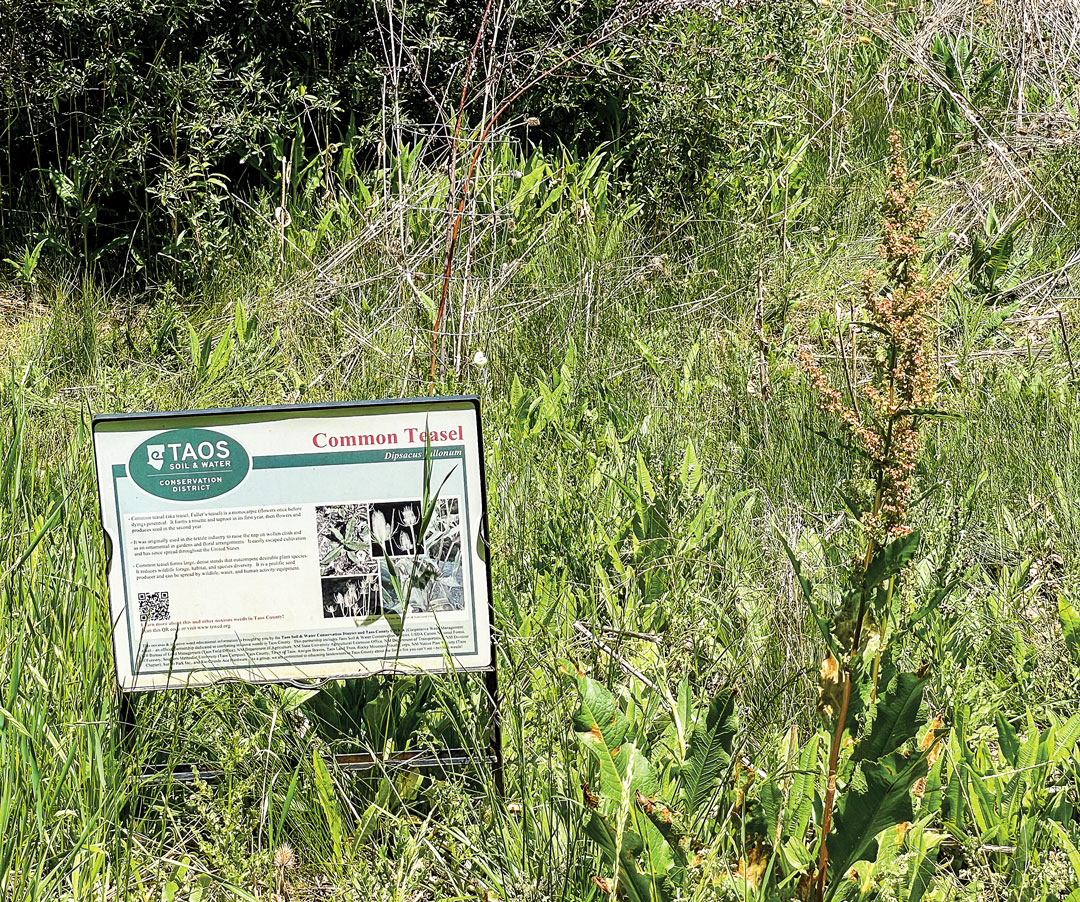
Informational placard about the impacts of non-native species in Rio Fernando Park.
Victoriano Cárdenas
Victoriano Cárdenas is a trans poet and writer from El Prado, and his ancestral home is El Torreón Hacienda. He grew up irrigating fruit orchards and fields of alfalfa with his grandfather, drawing water from the Acequia del Medio del Prado and the Acequia Madre del Prado. His debut book of poetry, Portraits as Animal, was published by Bloomsday in 2023.