How to Use a Native New Mexican Walnut to Make an Italian Classic
By Ellen Zachos
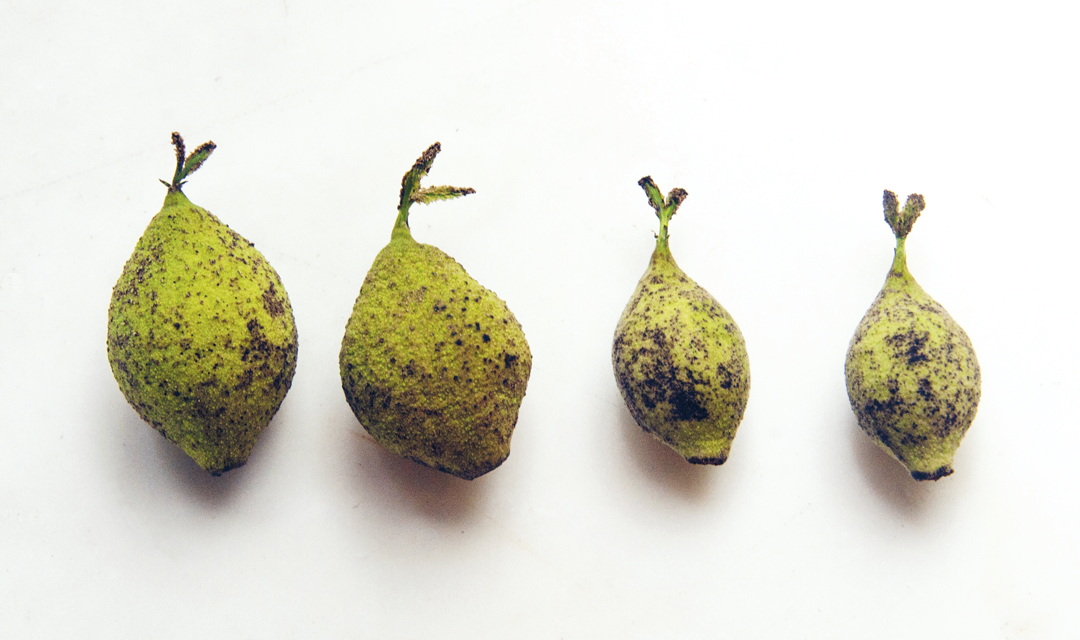
Walnuts from an Arizona walnut tree. Photo by Ellen Zachos.
Don’t let the name fool you! The Arizona walnut (which, like most trees, is not known for its map-reading skills) is also native to New Mexico, Texas, and northern Mexico. Nature makes its own borders, and the range of the Arizona walnut (Juglans major) is limited by environment rather than state lines. It favors land adjacent to streams and rivers in areas below seven thousand feet and is hardy to USDA zone 6. In New Mexico, those growing conditions are best met in the southwest corner of the state; look for them in the Lincoln National Forest, the Gila National Forest, and along the San Francisco River.
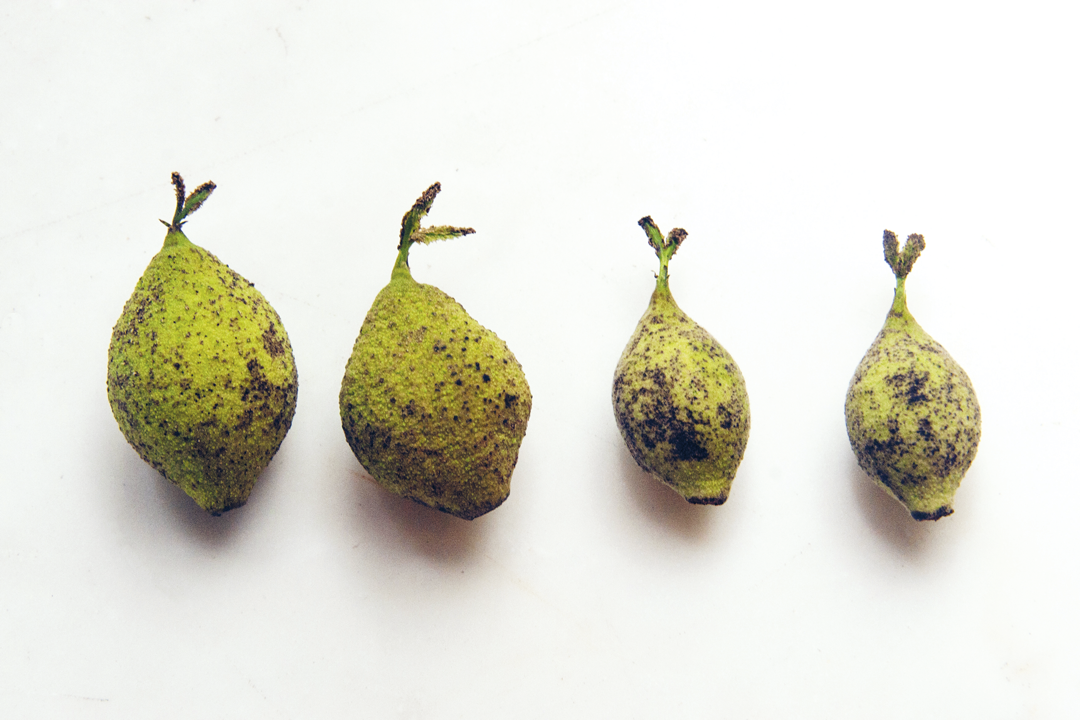
The Arizona walnut is a medium-sized tree, growing to be forty-five to fifty feet tall under optimum conditions. Despite often being described as a riparian tree, the Arizona walnut needs less water than many other riparian species, such as willows and cottonwoods. Leaves may be up to fourteen inches long, and are divided into multiple smaller leaflets arranged along a central stem. Nuts are encased in thick green husks, making them look like mini green tennis balls (one to one-and-a-half inches in diameter) when they litter the ground in fall.
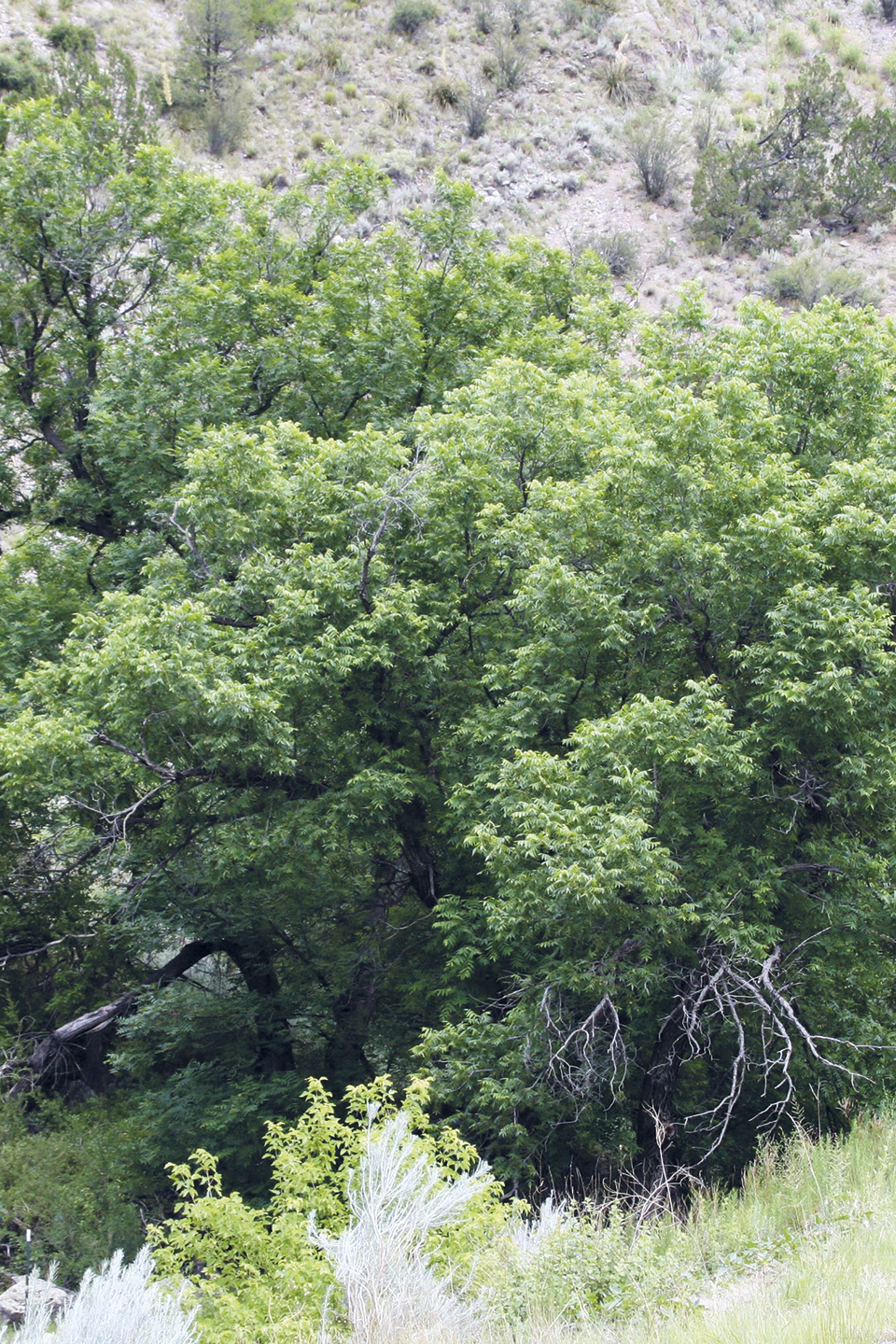
Arizona walnut tree in New Mexico. Photo by Whitney Cranshaw.
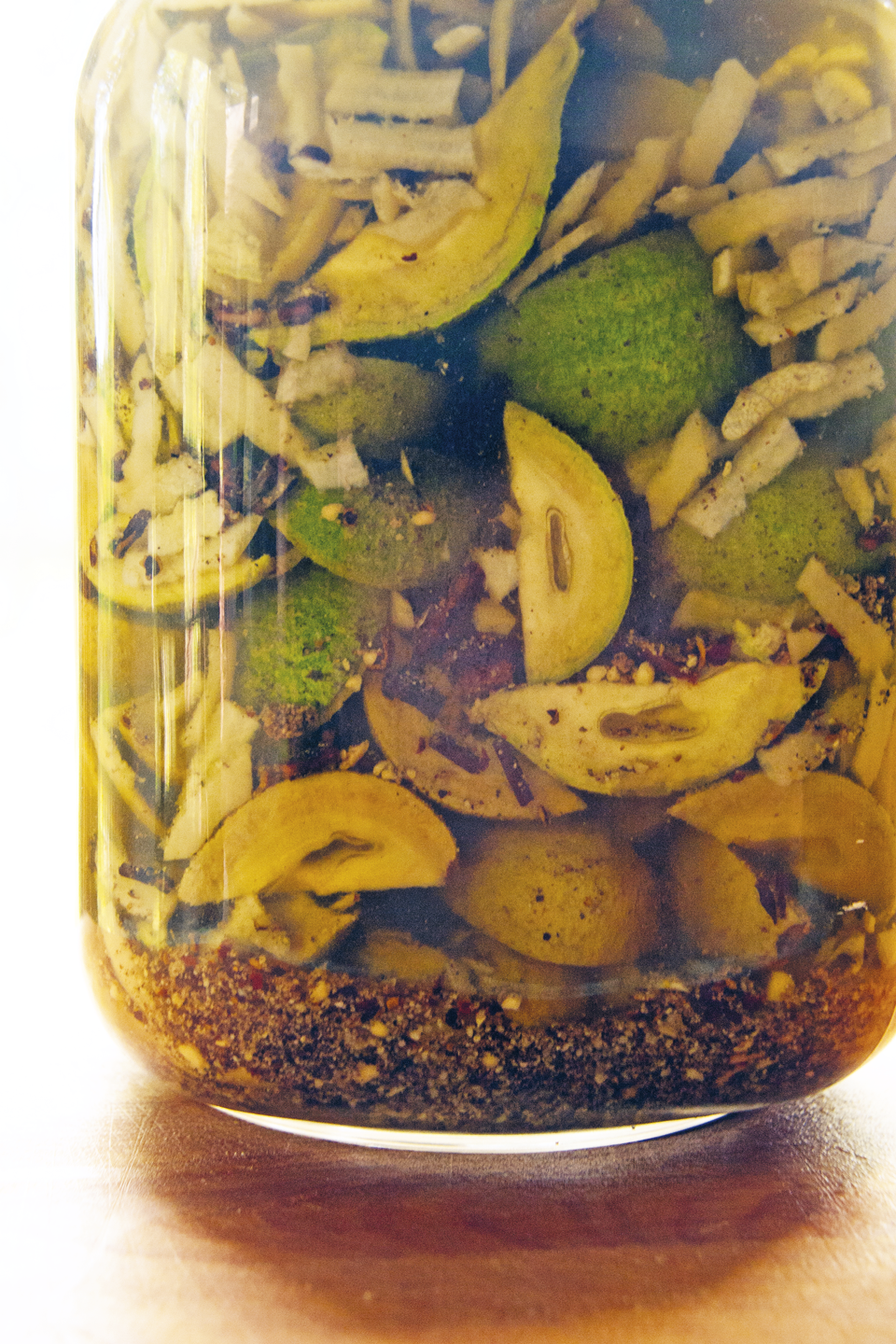
Walnuts infusing in alcohol to make nocino. Photo by Ellen Zachos.
Collecting them may be easy, but processing those mature nuts is a commitment. First the thick husks covering the shells must be removed. Some people run over them with cars, some people stomp on them with their heaviest hiking boots. It takes effort and determination to get those husks off, and the husks will stain your skin a dark brown that lingers for days. Next the nuts must be cured, and finally they must be shelled. As a member of the black walnut group, the Arizona walnut has an exceptionally hard shell inside that green husk. It takes a specialized nutcracker to release the treasure inside.
Thankfully, harvesting and processing immature nuts in spring is much easier, and your reward is a delicious adult beverage: nocino. To harvest, gently twist the unripe nuts off the branch. Depending on your location, nuts will be at just the right stage of unripeness in May or June. The important thing is that the walnuts have not yet developed a hard shell beneath the green husk. You can test this by pushing a metal skewer through the nut. If you meet little or no resistance, the nut is at the right stage for making nocino. And that’s it! No further preparation needed until you’re ready.
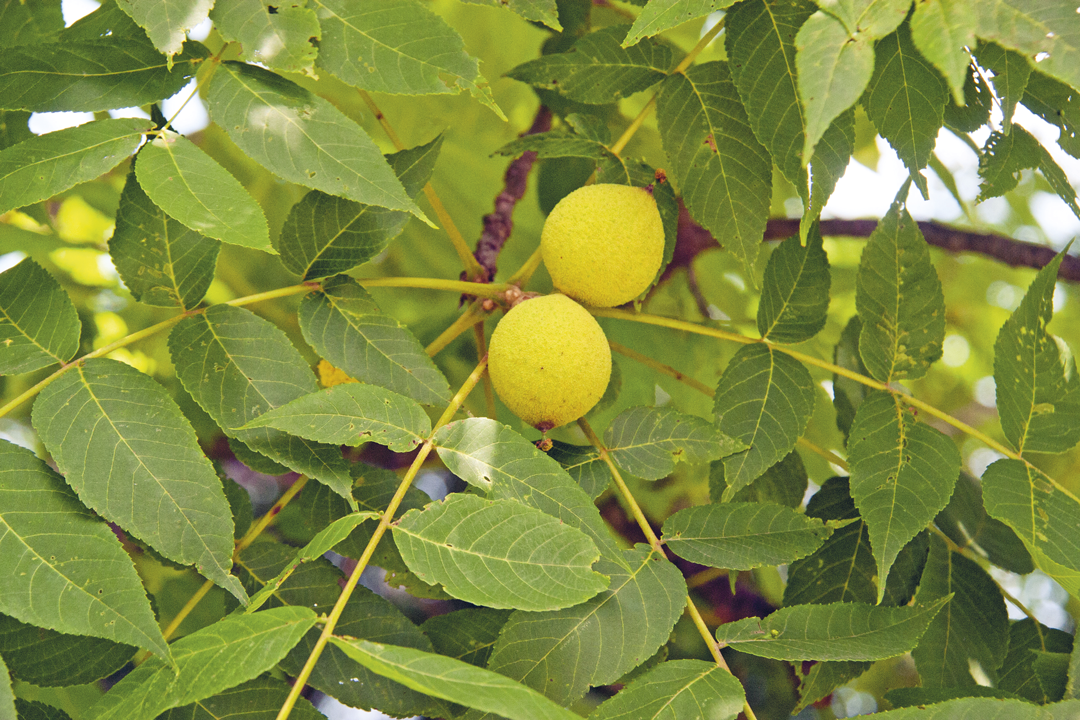
Walnuts from an Arizona walnut tree. Photo by Ellen Zachos.
Legend tells us nocino was invented by the Picts in northern Britain (originally made with the English walnut, J. regia), then carried south by the Romans. Today it’s known as a delicious Italian digestif, despite its Celtic origins. Interestingly, the best story I know about the Arizona walnut also comes from Italy. In 2008, the staff of the Botanical Garden of Rome reported that a mature Arizona walnut tree fell to the ground in slow motion, its root ball acting as a counterbalance. Its foliage cushioned the fall, and its root ball remained in place, now partially exposed, but still rooted. Staff pruned the broken branches and mounded soil over the exposed roots. The tree refused to die. It continued to grow, branches reaching up rather than out, using the horizontal trunk as a source of nourishment. A grove now rises from what was once its vertical torso.
In Italy, nocino is often flavored with cinnamon, vanilla, lemon peel, and cloves, which are all delicious. For your bespoke nocino, why not experiment with some local wild spices? The following recipe can be scaled up or down, depending on how many walnuts you harvest. As you’ll see, this recipe requires patience, but every sip is worth it!
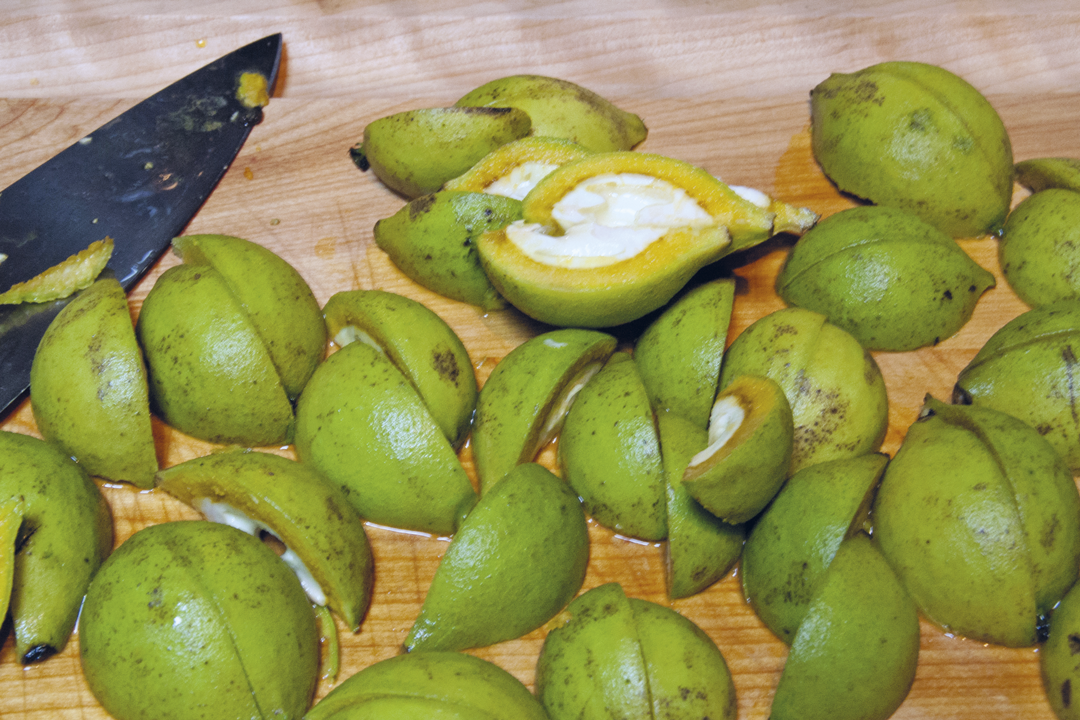
Preparing walnuts from an Arizona walnut tree. Photo by Ellen Zachos.
New Mexico Nocino
Infusion
2 pounds unripe walnuts
1/2 cup dried sumac berries
1/2 cup spruce tips, chopped
3 tablespoons dried sweet clover, crushed
2–3 quarts Everclear 151
Simple syrup
Approximately 6–8 cups sugar
Approximately 6–8 cups water
First
Cut the unripe nuts into quarters, using a very sharp knife. Remember to wear gloves! The nuts stain at this stage too.
Put the nuts and spices in a 1-gallon jar. Add the alcohol, cover the jar tightly, and shake to combine. Let the alcohol infuse for 40 days in a cool, dark place. The liquid will quickly change from clear to almost black.
Second
Strain out the solids, thank them for their service, and throw them away. Measure the liquid and combine with an equal amount of simple syrup.
To make the syrup, combine equal parts water and sugar and simmer, stirring, until you have a silky solution with no granularity. You can expect a 25 percent decrease in your final syrup; i.e., 1 cup of water and
1 cup of sugar make approximately 1.5 cups of simple syrup. Estimate your simple syrup needs based on how much alcohol you glean after straining. Six cups of sugar and 6 cups of water will give you just over 2 quarts of simple syrup. Eight cups of each will produce three quarts. Let the syrup cool before using.
Let this combination sit for 90 days in one or more sealed containers.
Third
Strain liquid through a fine coffee filter and pour into bottles. The nocino is ready to drink now, but its flavor will improve over the next 6 months: a combination of dark sweetness and slightly bitter richness. As a beverage, it can be served plain, over ice, or in a cocktail, but it’s also great in marinades or (wait for it) poured over ice cream.
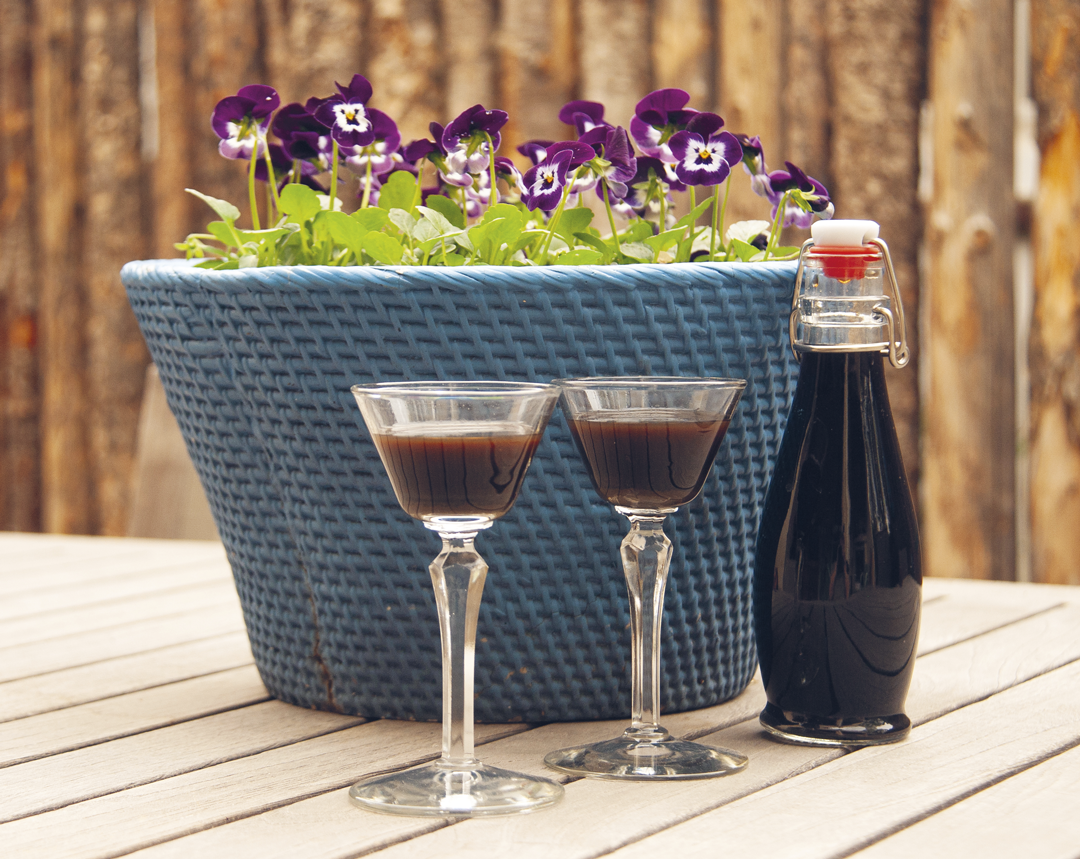
Glasses of finished nocino. Photo by Ellen Zachos.
Nocino Cocktail
Combine 2 ounces of your favorite rye whiskey with 1 ounce of nocino in a shaker full of ice; shake for 30 seconds. Strain into a glass and top with 2 teaspoons of vanilla ice cream. Let the ice cream melt just a little before you take your first sip. I call this “My Milkshake” and it definitely brings all the boys to the yard.

Ellen Zachos
Ellen Zachos lives in Santa Fe and is the author of eight books, including the recently released The Forager's Pantry. She is the co-host of the Plantrama podcast (plantrama.com), and writes about wild foods at backyardforager.com. Zachos offers several online foraging courses at backyard-forager.thinkific.com.