The Case for Hybrid Grapes in New Mexico
Words and Photos by Joe Scala
Green Tractor Farm vineyards.
Five years ago, I had only recently arrived in Albuquerque for graduate school and had yet to try any New Mexican wines. Upon first visiting Jubilation Wine & Spirits, I chose a bottle of Milagro Vineyards’ grüner veltliner (which was fantastic), and then I saw it: chambourcin, a hybrid grape wine made by Sheehan Winery. Ultimately, I didn’t even care how it tasted; I was just excited to try a single-varietal hybrid grape wine, which is something of a rarity in the wine world. Fortunately, I enjoyed this bottle: It was dry, light-medium bodied, and smoky, with notes of red berries and fairly smooth tannins. I appreciated it even more because winemaker Sean Sheehan decided to feature the chambourcin name prominently on the label, rather than bury the varietal’s namesake with a generic “red wine” or hide it in a blend.
Since that first bottle of Sheehan’s chambourcin, my research as a PhD candidate in the University of New Mexico’s Department of Geography and Environmental Studies has led me to investigate lesser-known aspects of New Mexico’s wine history. Over the last two years, I have been sampling old-growth grapevines in northern New Mexico for genetic analysis and collecting oral histories related to each vine. I have tested about fifteen centenarian vines (one hundred–plus years old) and have found a few obscure European grape varieties, as well as a significant number of hybrid varieties, which I did not anticipate. This discovery has led me to a deeper fascination with hybrid grapes and their part in New Mexico’s oft-mythologized history of winemaking.
To understand the significance of hybrid grapes in New Mexico, one must first recognize the deep roots of Vitis vinifera, the European grape species, in this region. Franciscan missionaries and Spanish settlers introduced these vines to what is now New Mexico in the early seventeenth century, with the listán prieto grape, the mission grape, as the primary variety, making New Mexico the first place in what is now the United States to establish vineyards. These grapes were grown and vinified (fermented into wine) by Franciscans and were essential for religious ceremonies, including the forced and coerced conversion of many Indigenous people in the region, ultimately becoming woven into the fabric of everyday colonial life. Over generations, more waves of European migration introduced new varieties of vinifera, vineyards expanded, and their cultivation was adopted by various Pueblos, making European grape varieties a foundational part of the agricultural landscape. This vinifera-dominant wine culture persists today, but not for lack of alternatives. For centuries, other fermented beverages have been made in the region, such as the corn-based tiswin and fruit wines made from prickly pear, chokecherry, apple, and peach.
Las Parras de Abiquiu vineyards.
The introduction of hybrid grape varieties to local winemaking began only in the early twentieth century, when the New Mexico Agricultural Experiment Station and Extension Service, under the leadership of pioneering horticulturist Fabián García, helped to popularize their use among farmers. Though different grape varieties growing near each other have been known to hybridize spontaneously in the wild, the ones that García was working with (like all commercially used hybrids) were the product of modern breeding, which guides this cross-pollination of different varieties in a controlled setting to achieve desired traits, such as specific flavor profiles, color, cold hardiness, or fungal resistance. These grapes largely came from grape breeding programs at Cornell University, University of Minnesota, University of Arkansas, and agricultural science institutions in France and Germany. While the term “hybrid” can refer to crossings between two European varieties, such as cabernet sauvignon, itself a cross of cabernet franc and sauvignon blanc, García was experimenting with interspecific hybrids: the deliberate crossing of European grapes (Vitis vinifera) with native American species such as Vitis labrusca, V. riparia, or V. aestivalis. The most notable hybrid varieties grown in New Mexico today include chambourcin, seyval blanc, vidal blanc, marquette, baco noir, traminette, léon millot, and marechal foch.
As you might guess from the source of some of these hybrids, this pursuit of resilient grape varieties can be found in other wine regions. The Finger Lakes in New York famously rely on cold-hardy hybrids like marquette and la crescent to survive harsh winters, while Michigan’s wine industry, particularly in the Leelanau Peninsula, utilizes hybrids like vignoles and traminette to survive lake-effect winters. Even in some tradition-bound European wine regions, winemakers can now use select hybrid grapes; for instance, the mildew-resistant hybrid grape voltis can comprise up to 10 percent of the grapes used in wine designated Champagne, a move that aims to reduce the reliance on copper-based fungicides in the vineyard. In California, hybrid grapes are often used in single-varietal wines; a California wine labeled cabernet sauvignon is legally required to be composed of 75 percent cabernet sauvignon, with the remaining 25 percent allowed to be other grapes, including hybrids.
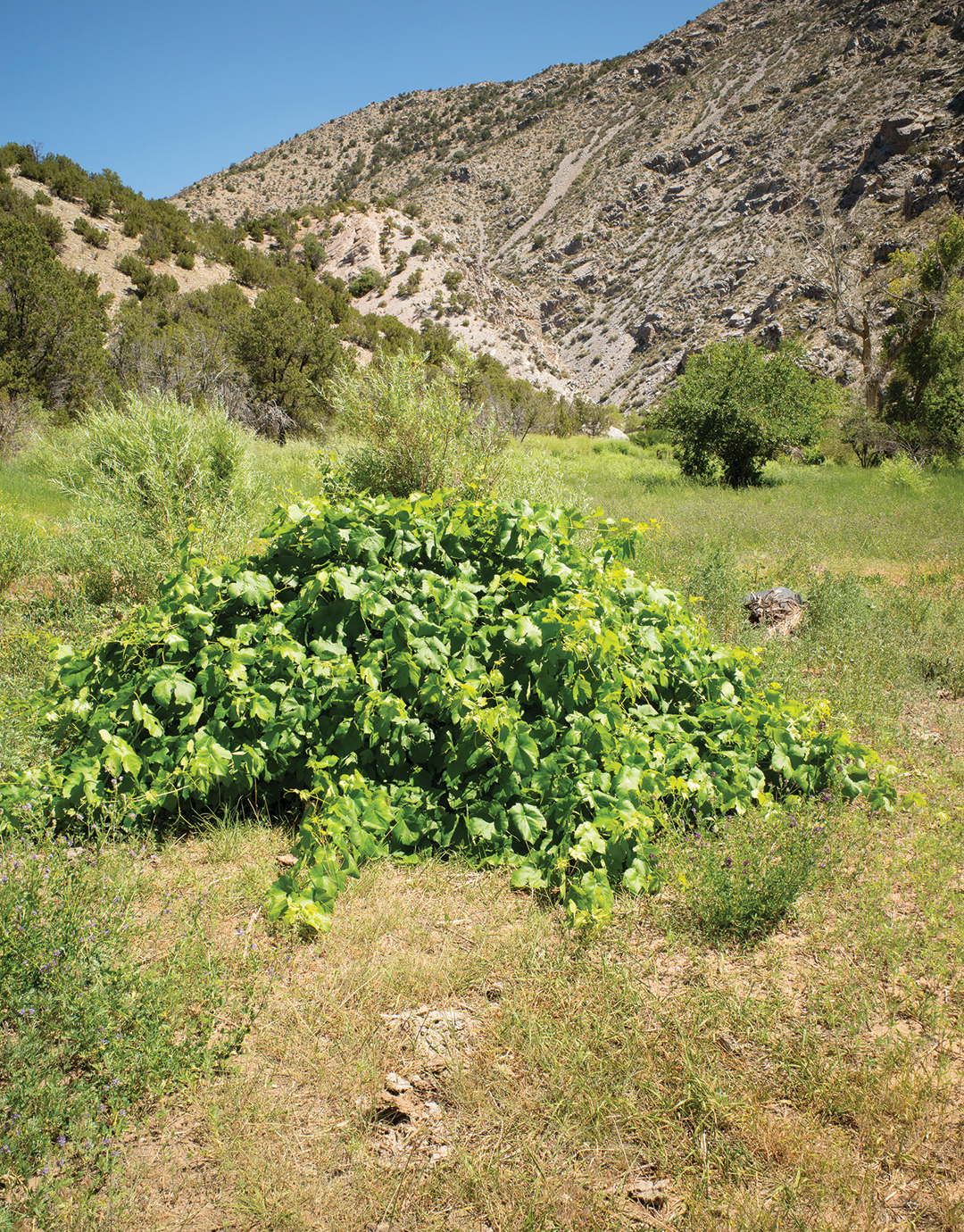
Feral grapevines in La Madera.
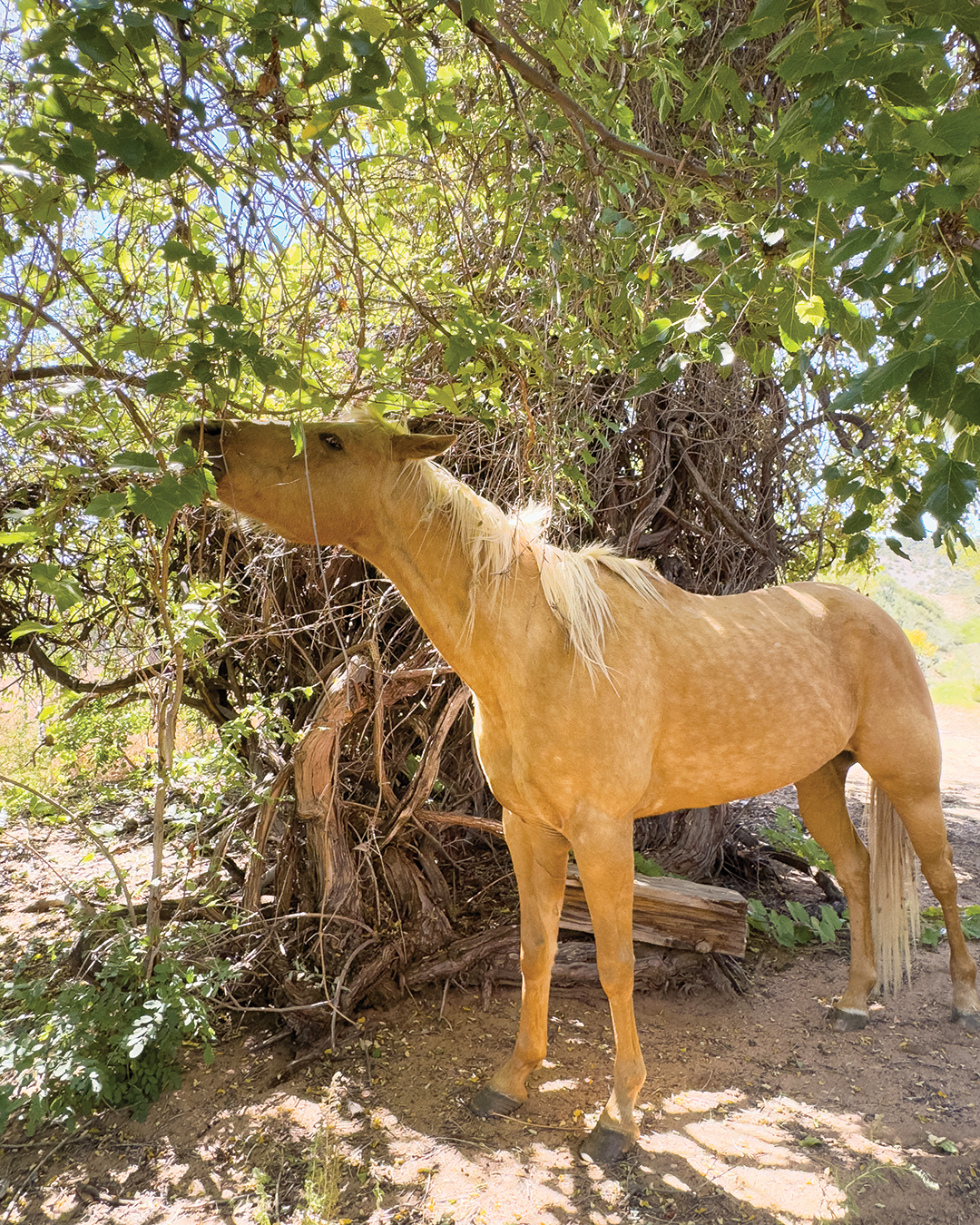
Corona munching grapes from a La Cienega vine with an ambiguous relation to a hybrid grape from renowned French breeder Bertille Seyve.
Despite the many strengths of hybrid grapes over their European relatives, most winemakers in New Mexico still prefer vinifera varieties; cabernet sauvignon, chardonnay, zinfandel, syrah, and riesling are most common. This preference often boils down to a winemaker’s affinity for another region’s wines made with these grapes, their marketability and name recognition, or an apparent mainstream distaste for hybrid grapes. Hybrids are often described as “foxy,” a derogatory (and contested) term used to describe the “wild” taste of native grapes and some hybrids. While some vinifera varieties perform relatively well in New Mexico’s climate, their success largely depends on where and what one plants. Overall, vinifera varieties are more susceptible to frost, disease, fungal infection, and insect predation than their hybrid counterparts. These differences in the vineyard are stark, according to Webb: “The vineyard we work with in Bosque Farms is located by the river in a valley, so it does get frost. Things like tempranillo get hit hard by the late frost, and sometimes we don’t get anything, including this last year, whereas the marquette is always great.” My experience with their marquette would agree: It has a lively cherry cola taste, and a mouthwatering acidity that makes it pair just as well with a green chile cheeseburger or brisket nachos as it does with a porch hang with friends.
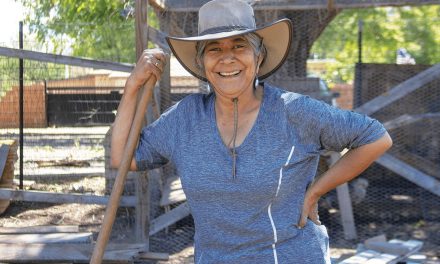
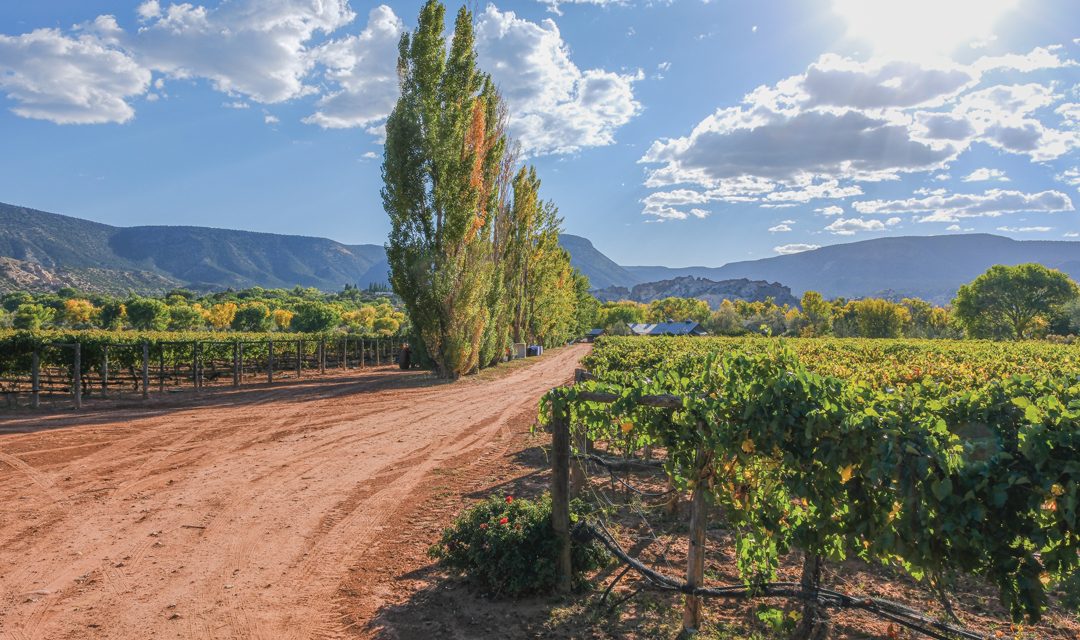
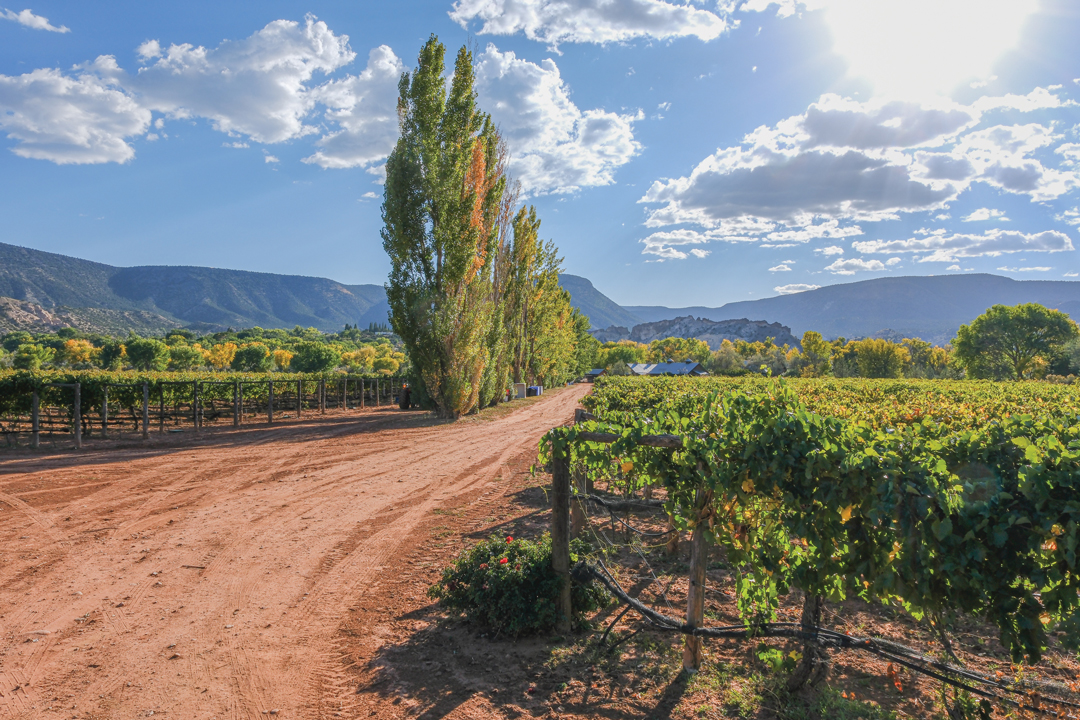
Most wineries in New Mexico source the majority of their grapes from southern New Mexico, away from frost-related concerns, save for a few exceptions in the Middle Rio Grande Valley (including the aforementioned Milagro, based in Corrales). Stan Bader, however, has been growing grapes and selling them from his Abiquiu farm, Las Parras de Abiquiu, for about thirty years. After moving to northern New Mexico in 1996, he began planting his 5.5-acre vineyard at 6,100 feet, starting with léon millot, a hybrid grape developed in 1911 at the Oberlin Institute in Alsace, France. “We decided to plant almost exclusively hybrid grapes based on what we were learning from the New Mexico Vine and Wine Society,” Bader explains. “I probably tried a half dozen or more vinifera and was not successful except for the riesling. Hybrids were hardy enough to handle the elevation and climate.”
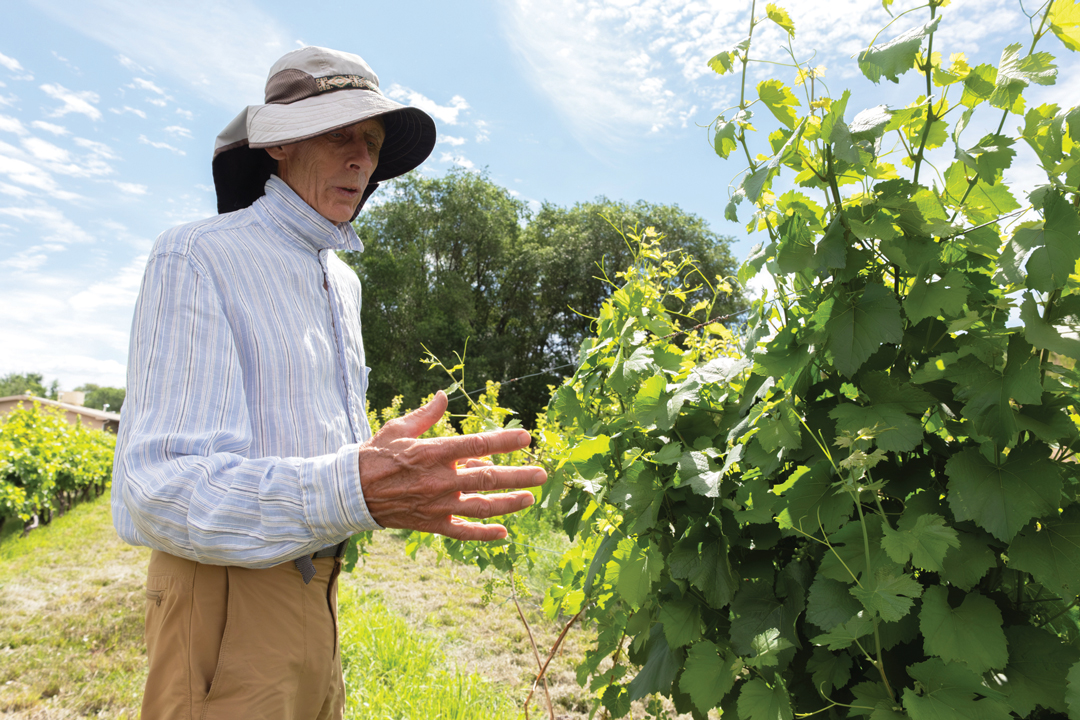
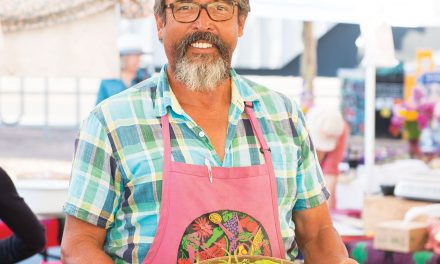
Tom Dixon in La Cienega.
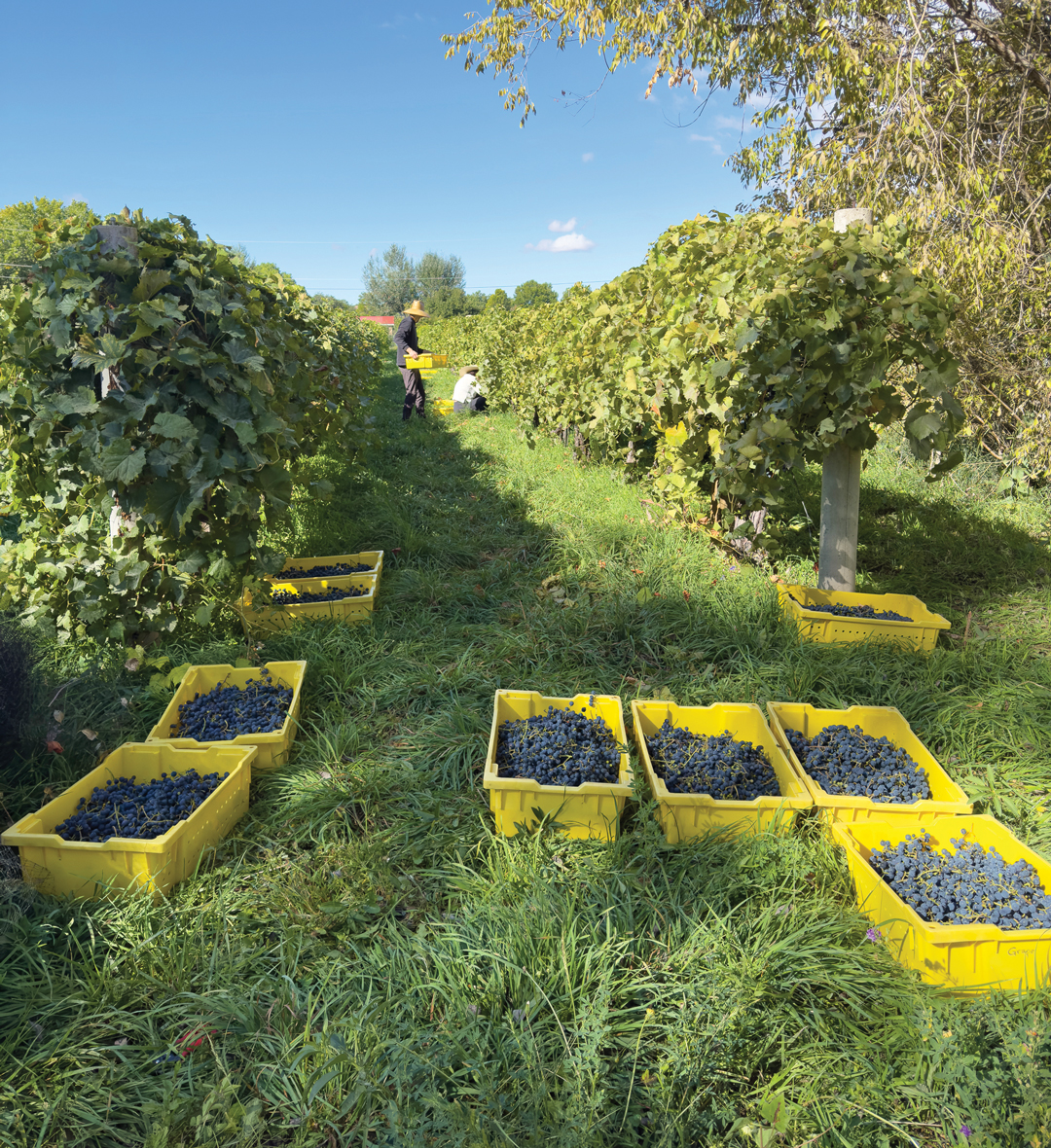
About twenty minutes south of Santa Fe, in the traditional community of La Cienega, grape grower Tom Dixon offers another perspective shaped by twenty-five years of experimentation. The primary goal for this vineyard, an extension of the California Certified Organic Farmers–certified Green Tractor Farm, was testing the hardiness of numerous varieties of grapes, hybrids and vinifera alike. “One was a full-blooded American grape, called valiant,” Dixon says. “Flavors and aromas are distinctively Welch’s grape juice.” Dixon’s experience also highlights the spectrum within hybrids themselves. He has a particular fondness for wine made with traminette, a hybrid rich in vinifera genetics. “I suspect that’s why I have trouble with them, because of the percentage of vinifera. I need to baby them,” he admits. This tension, between wanting the perceived quality of vinifera and needing the ruggedness of hybrids, is a common refrain.
For both growers, the practical benefits of hybrids are matched by a philosophical commitment to low-intervention farming. Since hybrids are typically bred to possess greater resistance to fungal pressures and disease, they require fewer chemical applications. The reluctance of many commercial grape growers in New Mexico to embrace hybrids, for one reason or another, results in increased pest-icide and fungicide use, which ultimately ends up in our watersheds and impacts downstream water users. While it is possible to grow vinifera grapes without the use of pesticides and fungicides—after all, New Mexico has had vineyards for almost four hundred years—most winemakers and grape growers in New Mexico would choose productivity over any chance of crop loss. Hybrids, by contrast, can remove this difficult choice, offering a path that protects both yield and the environment. Even if embraced by the winemaker, their ultimate success still hinges on the market: Consumers must be willing to buy wines made from these hardier grapes.
Bader and Dixon’s shared commitment to organic farming practices bumps against the stark economic realities of growing grapes in New Mexico. Bader points to pricing dictated by large growers and wineries, and the crippling costs and scarcity of labor, noting that the best migrant pickers from Chihuahua are no longer coming. “Picking costs are a minimum of a third of what you will get per ton,” he explains. “I’ve never made a profit selling my grapes.” This is due in part to the vinifera-superiority trend among many winemakers, which results in hybrids fetching only $800–$1500 per ton versus $2000–$4000 for vinifera. Ultimately, Dixon believes that the broader acceptance of hybrid grapes by winemakers and consumers alike requires clever marketing and public education. He ponders the French model of place-based labeling over varietal labeling, and the story of small-farm integrity. “Marketing has to be part of the solution,” he says. “Educating the public about hybrids, and getting excited about things that are different.”
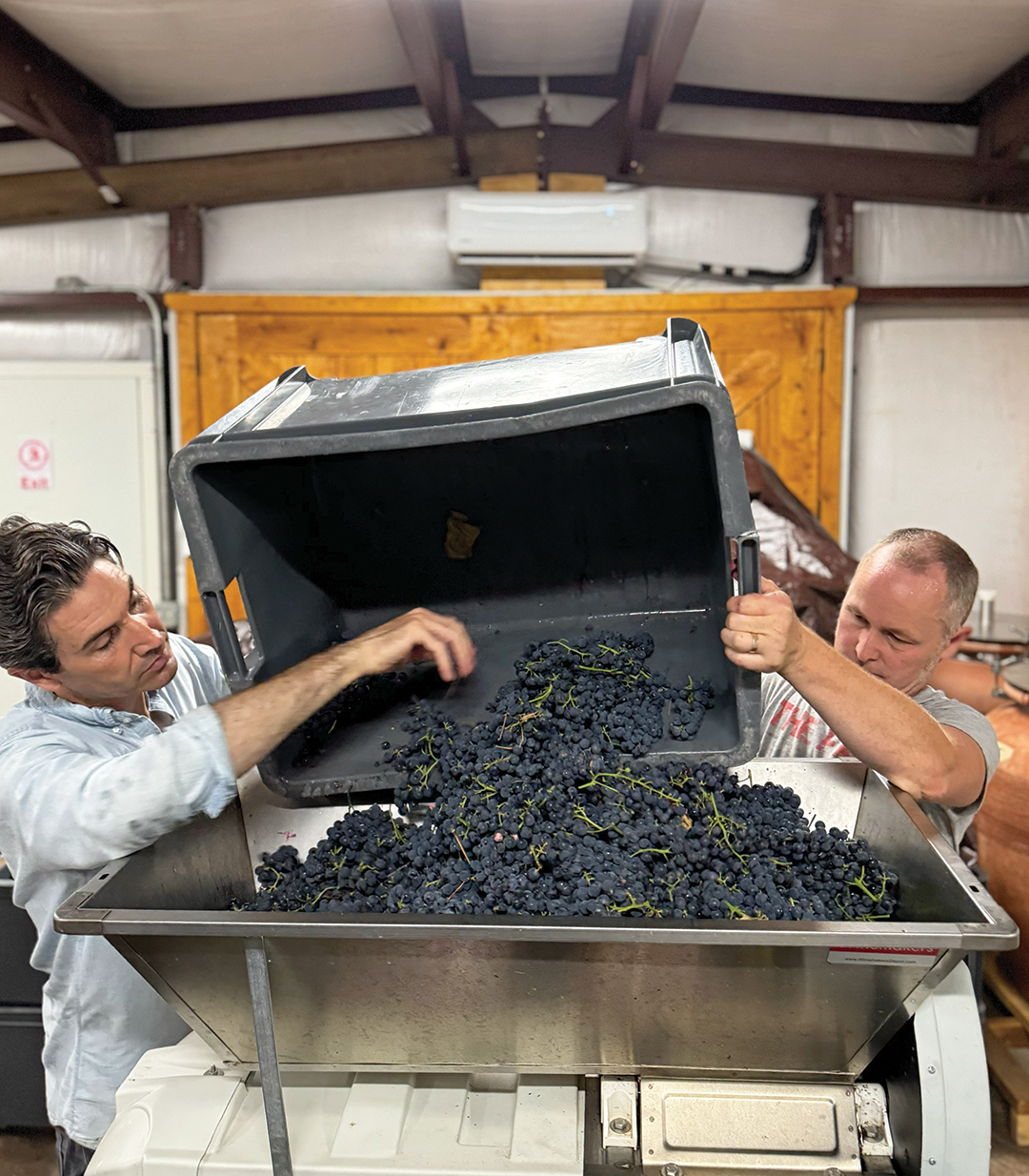
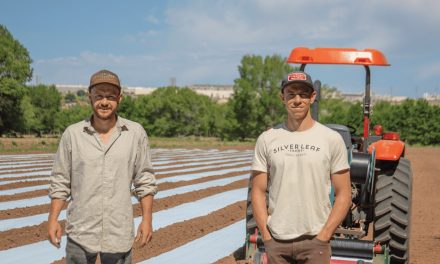
Tim Eyster and Zac Webb of Polychrome Wines.
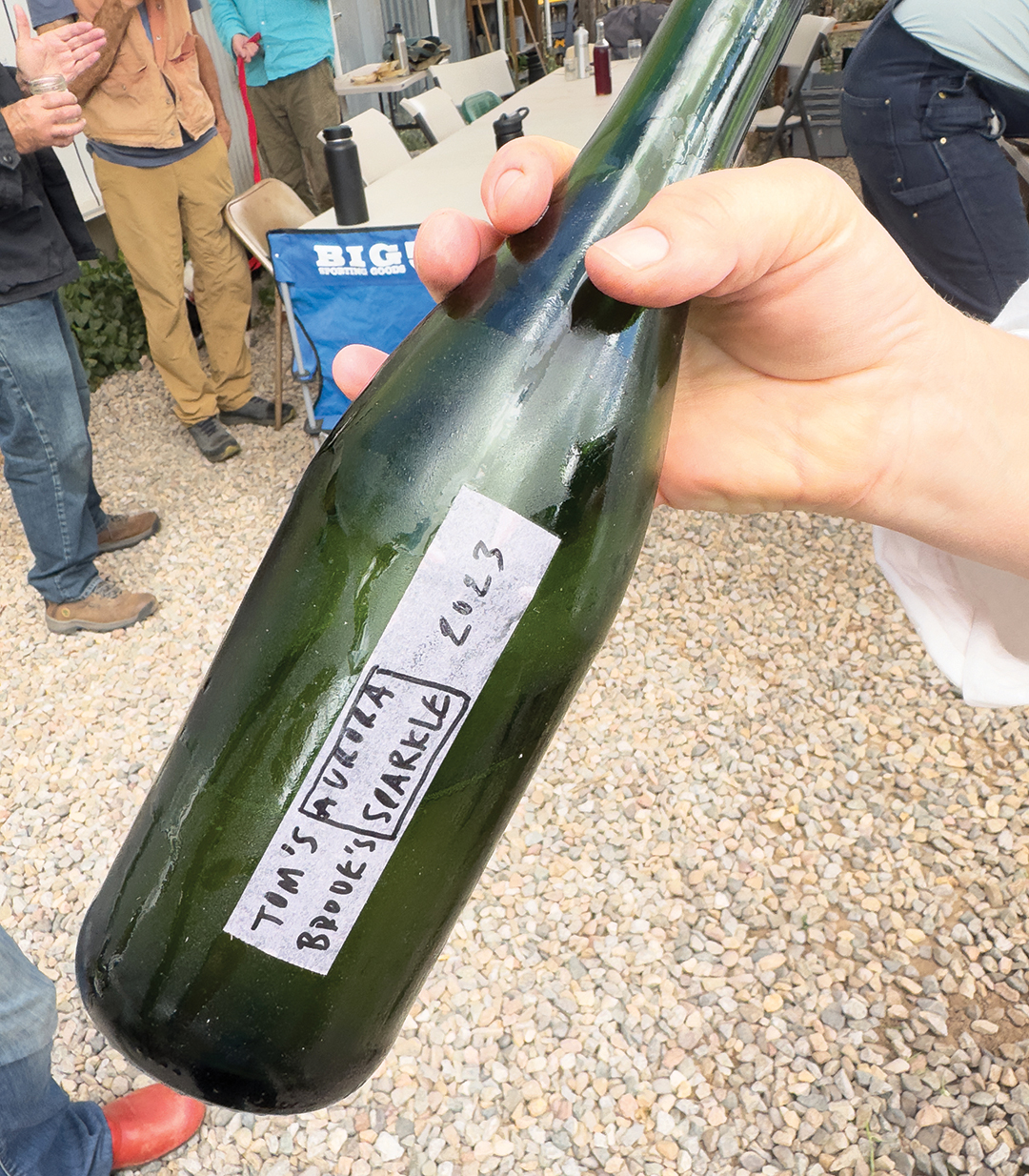
Brook’s Wine, a collaboration between Tom Dixon and Brook Brooks of Last Ditch wine collective.
When it comes to educating the consumer, Webb expands on this idea: “From what I’ve seen, ‘natural wine’ fans care a hell of a lot less about the hybrid versus vinifera divide. They are open to trying new things. You just have to put it in context. When I pour the marquette, I try to compare it to something they might be used to. I will also give them the environmental reason why it is there.” Hagan offers a different approach: “I don’t have a prejudice against hybrids. They make beautiful wines. My approach is to win people over by blending them and creating something delicious, then educating the consumer about why the blend is so special.”
Dixon frames the current economic realities of small-scale viticulture. “My sense is that the monetary value on the open market is way under what it should be. . . . At $1–$1.50 per pound, growing [hybrid] grapes hardly makes sense at all.” He sees little financial future in selling hybrid grapes on the commodity market. “The only way it makes sense to me is to do a full in-house operation,” he concludes, suggesting the value must be captured by the grower through winemaking. Hagan is doing just this: Last year, Embudo Valley Vineyards planted 1,200 new vines of frontenac gris, blanc, and noir, hybrid grape varieties released in 1996 from the University of Minnesota. Yet for Bader and Dixon, the calculus transcends dollars. “Almost every other thing that I do, I have a way of rationalizing in terms of dollars and cents, except for winemaking. It’s a challenge. . . . The value relates to how people define happiness.”
As grape growers, both Bader and Dixon see hope in shifting market perceptions and a new generation of wine drinkers. Winemakers like Polychrome Wines and Embudo Valley Vineyards, alongside groups like Last Ditch—a collective of viticulturists (including Dixon), garage winemakers, and educators based in Santa Fe—and small family operations like Ortiz Cellars in Jacona, are active participants in this “hybrid valorization.” These winemakers are leading the charge against what Bader notes as a persistent bias. “As soon as you say a wine is from a hybrid grape, the wine snobs don’t want to even taste it,” he says. Viticulture extension agent Geraldine Diverres Naranjo reflects on this: “Personally, I tend to prefer the taste of vinifera, but I have to admit I haven’t tried many hybrid wines. I also believe taste is learned; we can develop a palate for things. I hated beer when I was young, and now I love it.”
Ultimately, this exploration of hybrid grapes provides a lens to view the entire wine world: Every bottle of wine is the result of a series of value-laden decisions. From the vineyard to the winery, what we choose to grow and how we choose to make wine are profound expressions of our priorities, whether tradition, terroir, ecology, or economic survival. This commitment to hybrids is not only academic for me. Together with my partner, I am working to restore a vineyard of hybrid grapes in La Cienega, a hands-on effort to understand the merits and challenges of vineyard management and to preserve and promote two hybrid varieties planted roughly twenty-five years ago, noiret and traminette. To me, it’s overly simplistic to say that hybrid grapes are the future of New Mexico wine. Rather, the future of New Mexico wine is determined by value-laden decisions we all make, whether a farmer seeking to reduce chemical inputs or a consumer choosing a bottle of wine.
Note: In the print version of this story, the caption for a photo of Tom Dixon in La Cienega misidentified Dixon as Stan Bader of Abiquiu.
Joe Scala
Joe Scala was raised in Nashville and is a PhD candidate in the Department of Geography and Environmental Studies at the University of New Mexico. His research explores the political ecology of heritage and the modern significance of regional wine histories. During the week, he serves as a community planner for Santa Fe County. On the weekend, he and his partner spend much of their time in La Cienega, where they are learning to restore a vineyard and produce small-batch wines.