By Sarah Mock
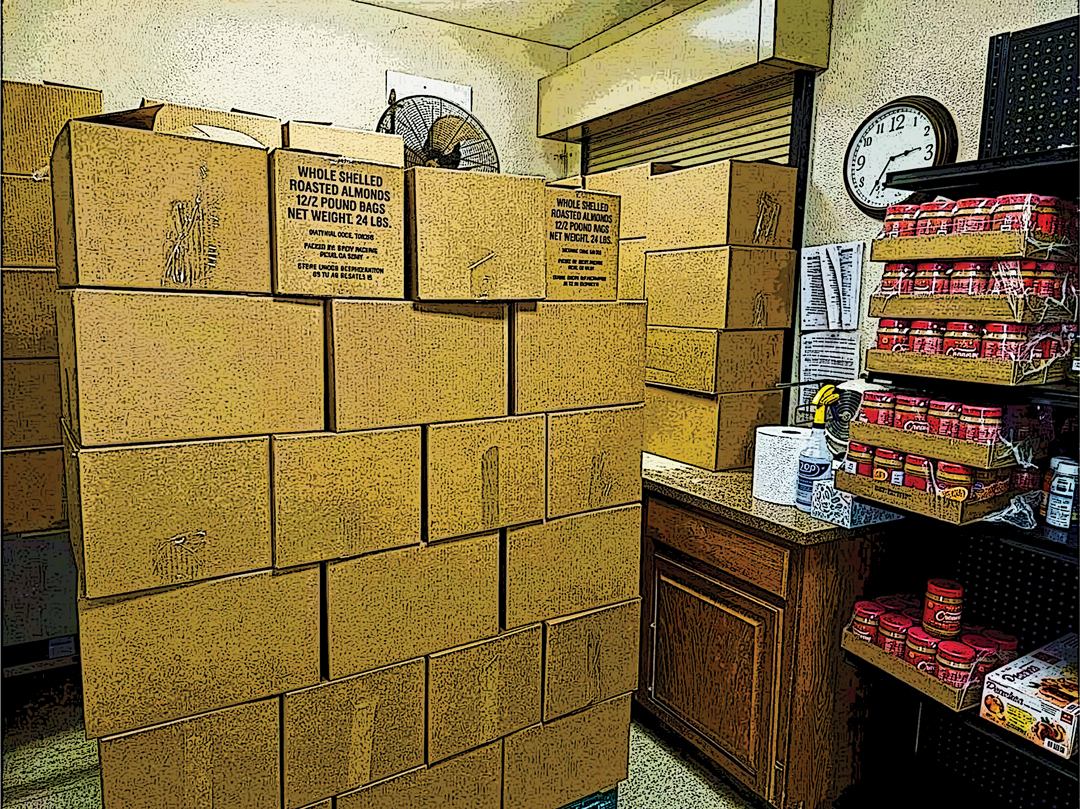
Rio Grande Food Project. Photo courtesy of RGFP.
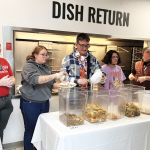
People come from all over central New Mexico to the little brick building on South Coors Boulevard in Albuquerque. It’s nearly 11 am, almost closing time at the Rio Grande Food Project (RGFP). There’s one person in line ahead of you, and then a woman with a tablet and kind eyes is waving you over. You sit, and she asks you where you live, how many people are in your household, how little money you have. You have to sign your name to a statement about your need, and then you’re up again, weaving through the building with its unmistakable “church basement” aesthetic to a window in the back. There, two gray-haired volunteers hand you a cardboard box full of dry pinto beans, pasta, green chile salsa, marinara sauce, cans of vegetables and fruit, and one precious box of cereal. It’s heavy, so another volunteer puts it into a shopping cart and helps you out a side door. From a folding table outside, you’re free to choose a few items of fresh produce and bread, then the volunteer helps you load it all into your car. You leave, relieved to have something to put on the dinner table.
If you’ve never needed the help of a food pantry, this process might be unfamiliar. It bears little resemblance to grocery shopping: browsing shelf after shelf, making selections from overflowing aisles of packaged foods, fresh produce, meat, dairy, and more, whether in person at the supermarket or online. But for many New Mexicans, these boxes, filled with just a couple of days’ worth of ingredients, are a monthly or weekly necessity. And due to recent federal policy changes, they’re becoming more essential every day.
Here in the Land of Enchantment, food banks and pantries are tasked with feeding one of the poorest, most diverse, and most rural populations in the country. Hungry clients live on the streets of urban Albuquerque, in far-flung and economically depressed villages, and everywhere in between. Many have jobs. Many care for someone—for children, elders or parents, disabled or convalescing family members. Many live in food deserts, where there is no place nearby to buy fresh, nourishing food, whether you have money or not. Delivering enough food across this vast and heterogeneous landscape is wildly hard, and the organizations who do it often work with meager, or even nonexistent, budgets.
Tackling these unique challenges has helped New Mexican food banks and pantries become national trailblazers in anti-hunger work. And as federal support looks poised to dry up, organizations like RGFP are increasingly looking beyond the immediate need to help address the circumstances that cause food insecurity in the first place, from overdue bills and high-priced prescriptions to lack of access to childcare.
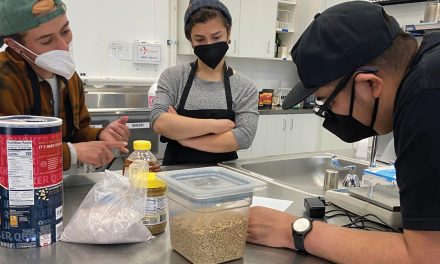
“There are so many services that relate to food security, but are not directly food distribution,” says Ari Herring, RGFP’s executive director. While the project continues to distribute food, they’ve also expanded the scope of their offerings to clients, hosting financial literacy workshops and cooking classes and even providing the chance to meet with onsite nutritionists. “We’re trying to ensure this place is an ecosystem both about cultivating long-term food security and also alleviating today’s hunger need.”
Aiming to address the root causes of hunger and making sure people have food in case of emergency are two very different tasks, each with unique difficulties. But the reality is that more and more, food banks and pantries are tasked with pursuing both.

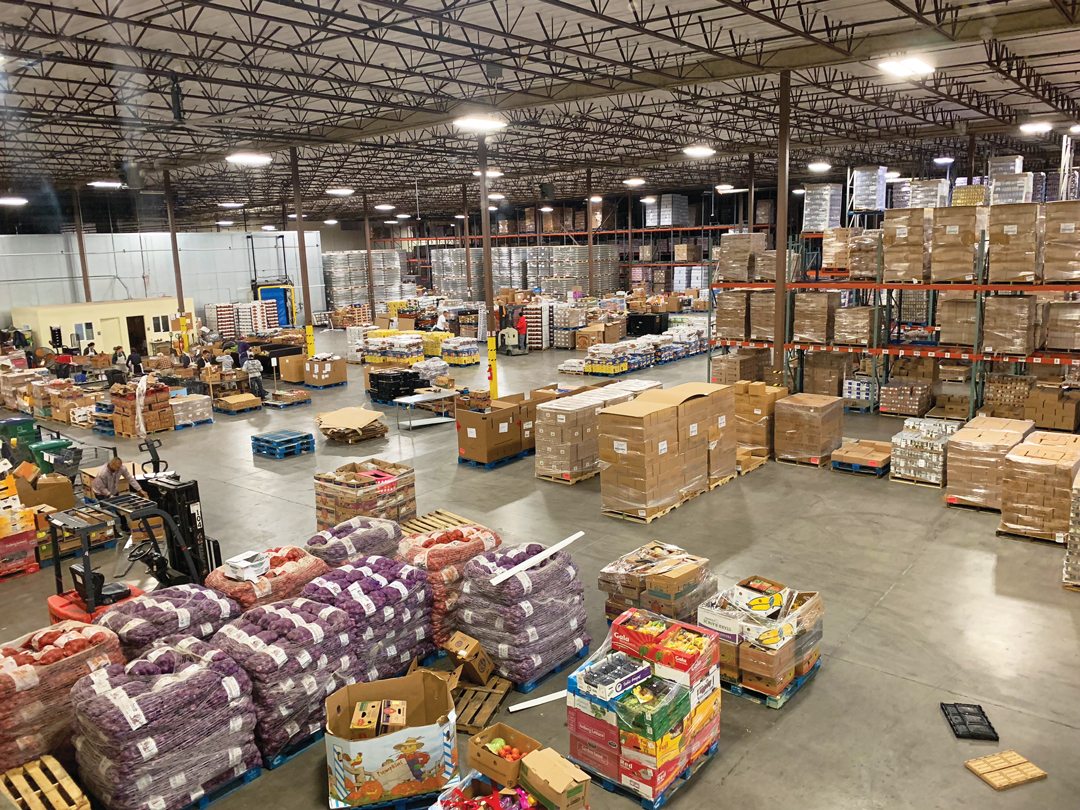
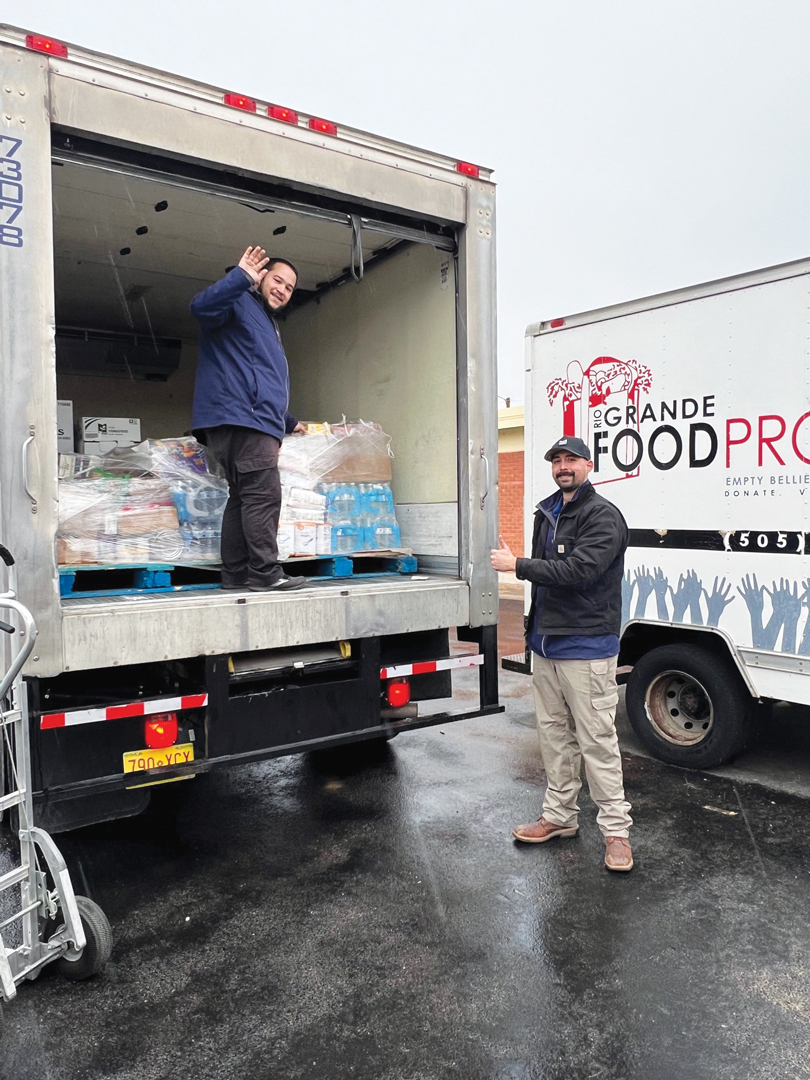
Left: Roadrunner Food Bank warehouse in Albuquerque. Photo courtesy of Roadrunner Food Bank. Right: Drivers from Ben E. Keith Company assist with Rio Grande Food Project food drive. Photo courtesy of RGFP.
On a stroll through the Roadrunner Food Bank warehouse on the other side of town, it’s clear that while the scale of hunger in New Mexico is large, so are the solutions, and facilities, we’ve built to address it.
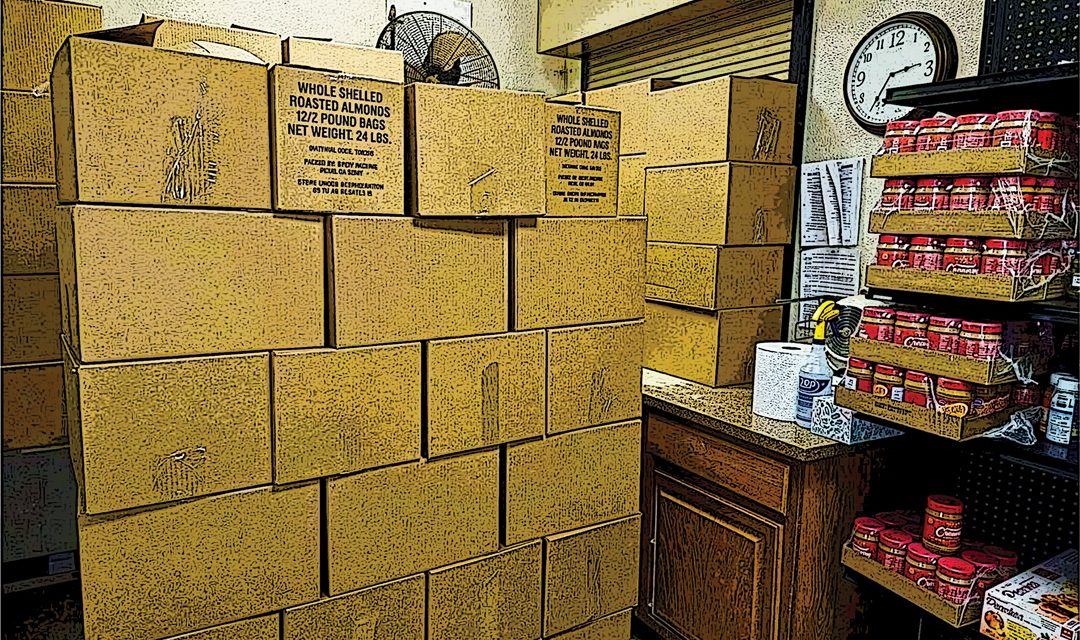
The warehouse is cavernous, multiple football fields wide and three or four stories tall. I count about twenty shipping pallets, stacked high with bags of fresh potatoes, lined up near the ten or so loading docks, not far from some shed-sized cardboard boxes where food drive donations are being sorted. But Jason Riggs, director of advocacy and public policy at Roadrunner, leads me past all this, into the facility’s cold room, which is larger than the one at Costco. This space is nearly empty, and beyond the potatoes, the warehouse is relatively bare too. From Riggs’s perspective, this is as it should be.
“We move 4 to 5 million pounds of food in and out of this warehouse a month,” he says, referring to the bulk food items that are acquired and then distributed to more than 500 partner agencies across the state, from food pantries to hot meal sites. So while Roadrunner receives and stores a lot of food, the goal is to get as much of it out the door as soon as possible. To accomplish that, the bank makes extensive use of the twenty-two trucks in its fleet, which collectively cover a stunning 400,000 miles a month.
Roadrunner is New Mexico’s largest food bank, and serves a critical role for pantries like RGFP. While pantries tend to be small and deeply embedded in the community, food banks sit one rung higher up the supply chain, centralizing resources to help pantries get the food they need. That means that food banks can buy and receive food and donations in larger quantities, allowing them to work more with government programs and large food distributors, and increasingly, to purchase food outright at a scale that helps them get volume discounts.
“We used to get most of our food from large corporate donations,” Riggs explains, meaning food items that were overstocked by grocery stores or other companies and donated rather than sent to landfill. “But since the pandemic, we’re not seeing those big bulk donations anymore. So we have to purchase more and more food.”
Though purchasing food allows Roadrunner to acquire food more intentionally, with a greater focus on nutrition and cultural relevancy, it also raises their costs at a time when food price inflation is already increasing need in the community. This, in turn, makes food banks more dependent on federal food programs like the Emergency Food Assistance Program, or TEFAP, which connects food banks with farm commodities purchased by the USDA. But in March of 2025, about $500 million in TEFAP funding was cut by the Trump administration, which meant more than 4,000 truckloads of food never arrived at food banks across the country, including dozens to Roadrunner, according to reporting by ProPublica.
While Roadrunner staff deals with the short-term problems caused by canceled USDA deliveries and the increased need caused by the federal shutdown and its aftermath, they’re also trying to prepare, and help their clients prepare, for systemic changes to the Supplemental Nutrition Assistance Program, or SNAP, which have already begun taking effect. SNAP, which allocates an average of $177 per person per month to 42 million Americans, provides nine times as many meals to hungry families as all the nation’s food banks and pantries combined. But the Big Beautiful Bill, which was signed into law in mid-2025, made changes to SNAP eligibility and work requirements that will likely lead to millions of Americans, and about 58,000 New Mexican households, losing some or all of their SNAP benefits.
In response, Roadrunner is setting aside staff time to help clients navigate new work requirements and other administrative barriers, hoping to prevent more people from losing their benefits. This work will complement existing support that helps clients apply for state and federal assistance to pay for prescriptions or utilities, find permanent housing, or gain access to free childcare, all of which can be essential interventions that help people avoid the need for food pantries in the first place.
“We knew the cuts to SNAP would be catastrophic,” Riggs says, explaining why Roadrunner and other food banks advocated so hard against changes to food assistance eligibility. Despite Roadrunner’s impressive scale, their primary role is to help pantries deliver a few supplemental meals in a given week or month. It’s meaningful for sure—but if food pantries are all that stands between starvation and survival, they won’t be enough.
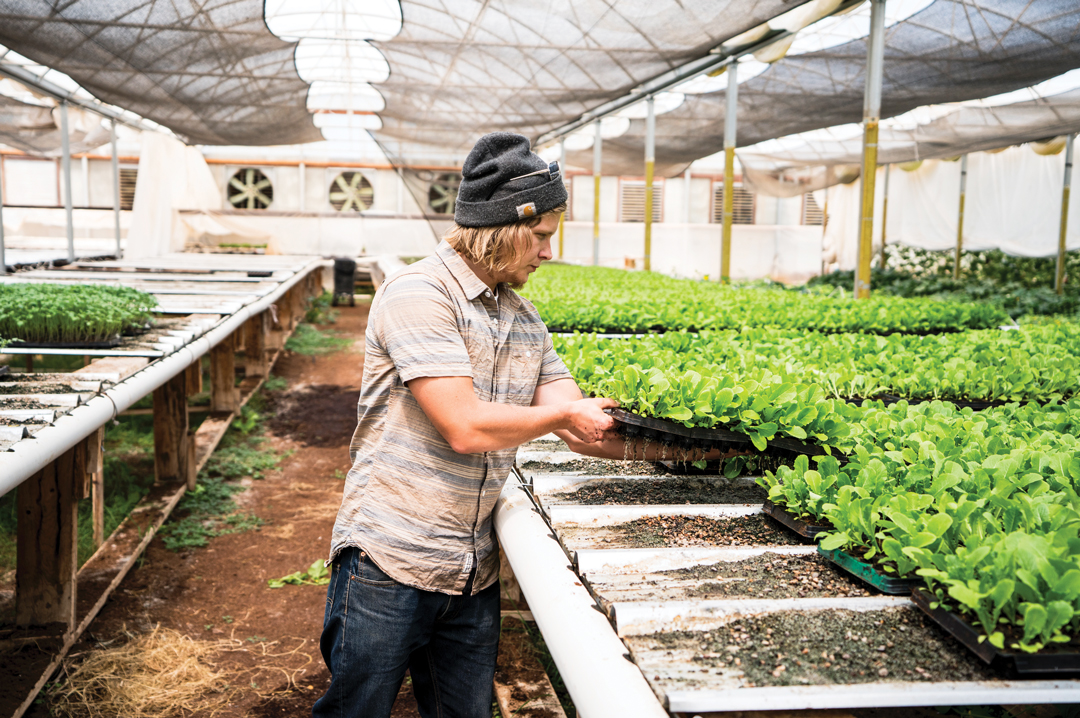
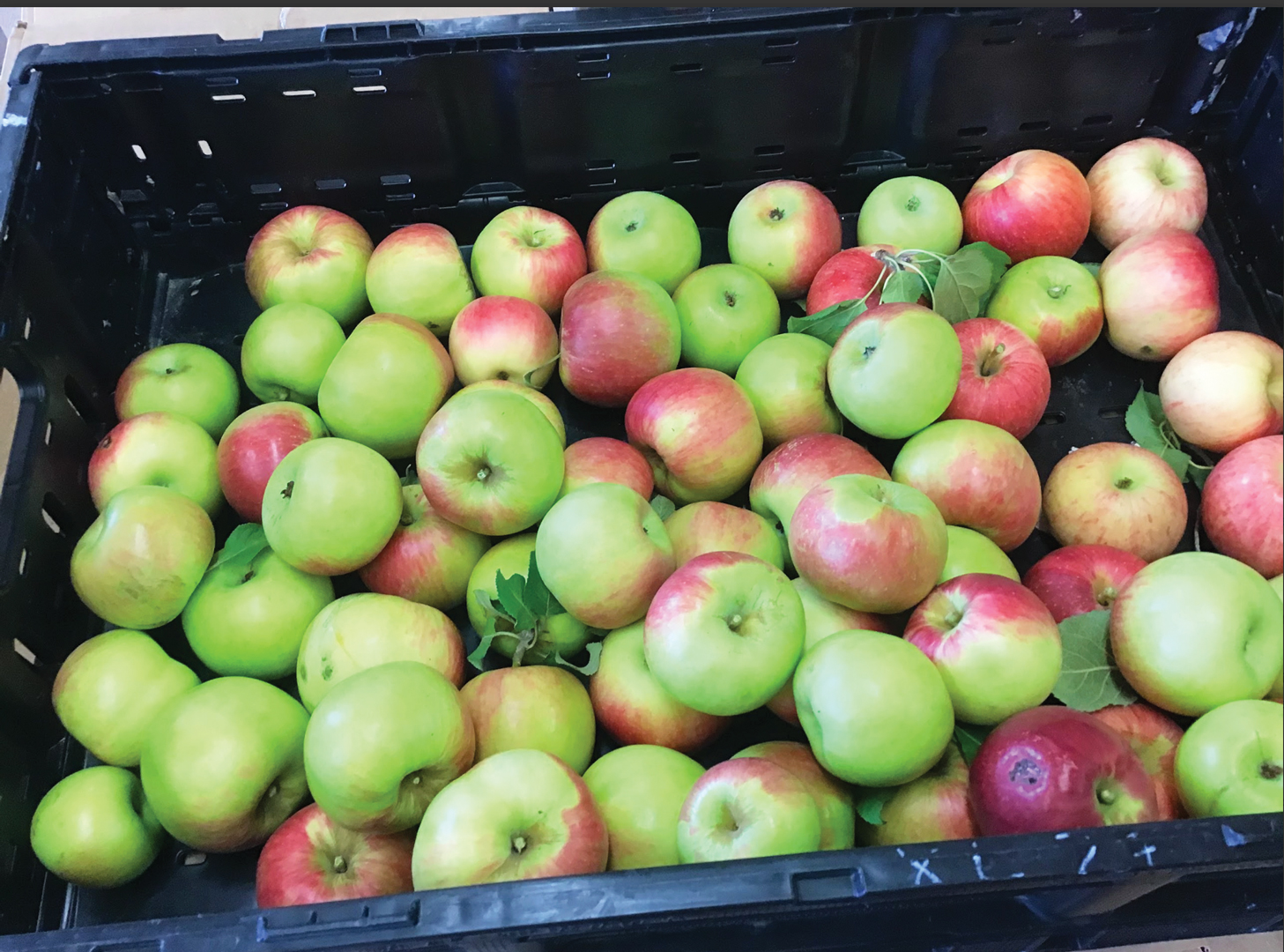
Left: Ben Rasmussen helping out at a farm near Columbus, New Mexico, that distributes through Frontier Farm Hub. Right: Local produce distributed through the Commons: Center for Food Security and Sustainability, southwest New Mexico’s largest food pantry and a partner with Frontier Food Hub.
At the very end of one Roadrunner delivery route, residents in one of New Mexico’s most rural communities are working to solve local food issues on their own terms.
In Silver City, this led to the creation of the Frontier Food Hub, a nonprofit that aims to help nearby farmers and producers sell and distribute their goods within the region, and to help local food pantries within the 17,000 square miles of Catron, Grant, Hidalgo, and Luna Counties access their products as well. At the food hub’s mobile markets, shoppers can purchase food from local farmers, and those with SNAP benefits can stretch their dollars further thanks to Double Up Food Bucks, an extension of the SNAP program that gives recipients more buying power when purchasing fresh fruits and vegetables. This translates into more sales for farmers and more healthy food for hungry families in the area.
“It becomes a direct economic development tool for regional farms and ranchers,” says Ben Rasmussen, the former founding director of the Frontier Food Hub. “And it allows folks who saw local food as cost prohibitive to have access.” SNAP, and other USDA-funded programs, have been critical for the hub, which Rasmussen believes has not only increased access to fresh food but has also improved farm sustainability and made the region more viable overall.
From Rasmussen’s perspective, this dual focus on both eaters and farmers addresses key food banking challenges around nutrition, waste, and cultural relevancy. The roots of these issues lie in the large scale of food banks; after all, when moving millions of pounds of food, bang for the buck is top priority. But that means that what ends up in pantry boxes is often highly processed and shelf-stable food items, which may lack the wholesome ingredients that make up a balanced diet. Plus, items in pantry boxes can be unfamiliar to recipients, things like garbanzo beans or dried cranberries, which may not fit into a family’s traditional recipes or cooking repertoire. When households receive food items they do not want or cannot use, food ends up in the trash. But, Rasmussen believes, when local food pantries can source directly from nearby farmers, food is not only fresher, it’s more likely to appeal to local palates.
Despite all the potential benefits, and the 100,000 pounds of fresh produce that Frontier has distributed to pantries thus far, this work remains incredibly hard to do. It’s a chicken-and-egg problem, wherein local pantries lack the consistent resources to buy large quantities from farmers, and farmers lack the security to make investments in expanding production, which would ensure that enough food is available at a reasonable price. Unhelpfully, the Trump administration has also dramatically cut USDA programs like the $500 million Local Food Purchase Assistance Cooperative Agreement Program, which aimed to address this issue by helping food banks purchase directly from local farmers.
So for now, the food hub, and the farmers and pantries it works with, continues to take baby steps toward a more regional food and farm ecosystem. But Rasmussen worries that reduced SNAP eligibility will be a blow to rural communities well beyond the food hub. “SNAP is hugely important for some of our grocery stores too,” Rasmussen says. “It’s incredibly significant, especially in places with low-income populations.”
Indeed, a recent study by the Center for American Progress found that 27,000 grocery stores across the United States, and hundreds across the state of New Mexico, rely on SNAP spending for a significant portion of their revenue. Cuts to SNAP spending, then, threaten to create a vicious cycle where reduced benefits lead to the closure of local grocery outlets, creating even more demand for food pantries and a greater risk of community members going hungry.
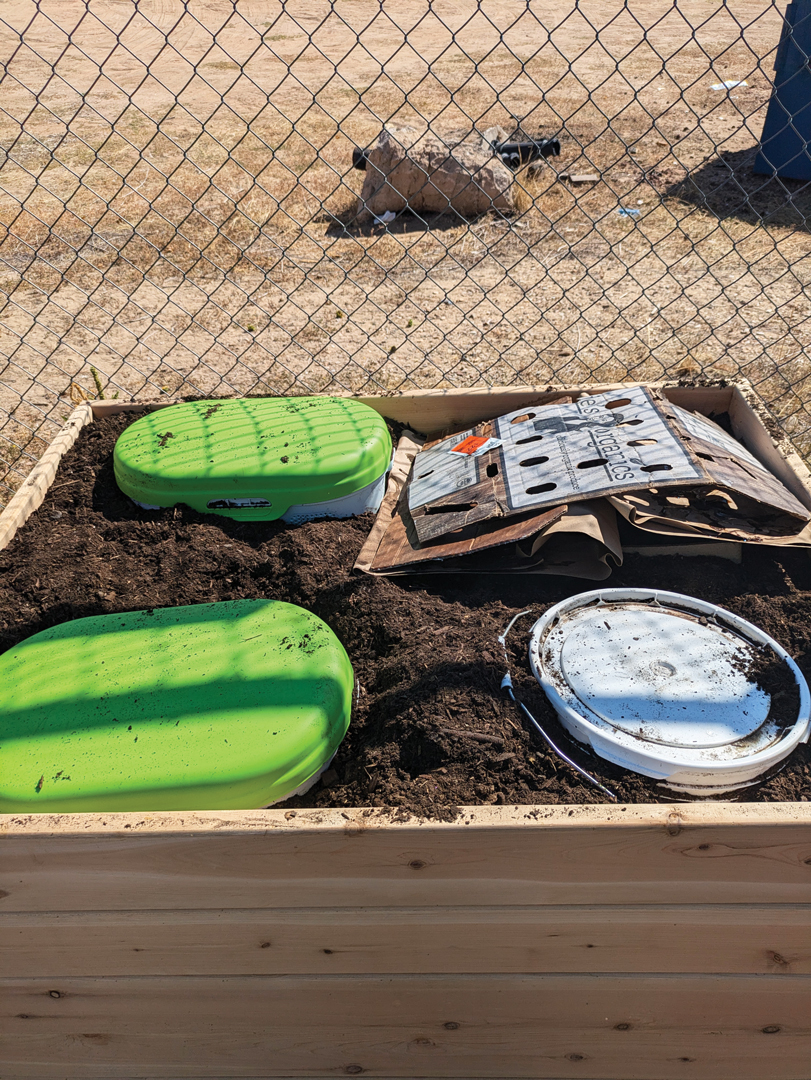
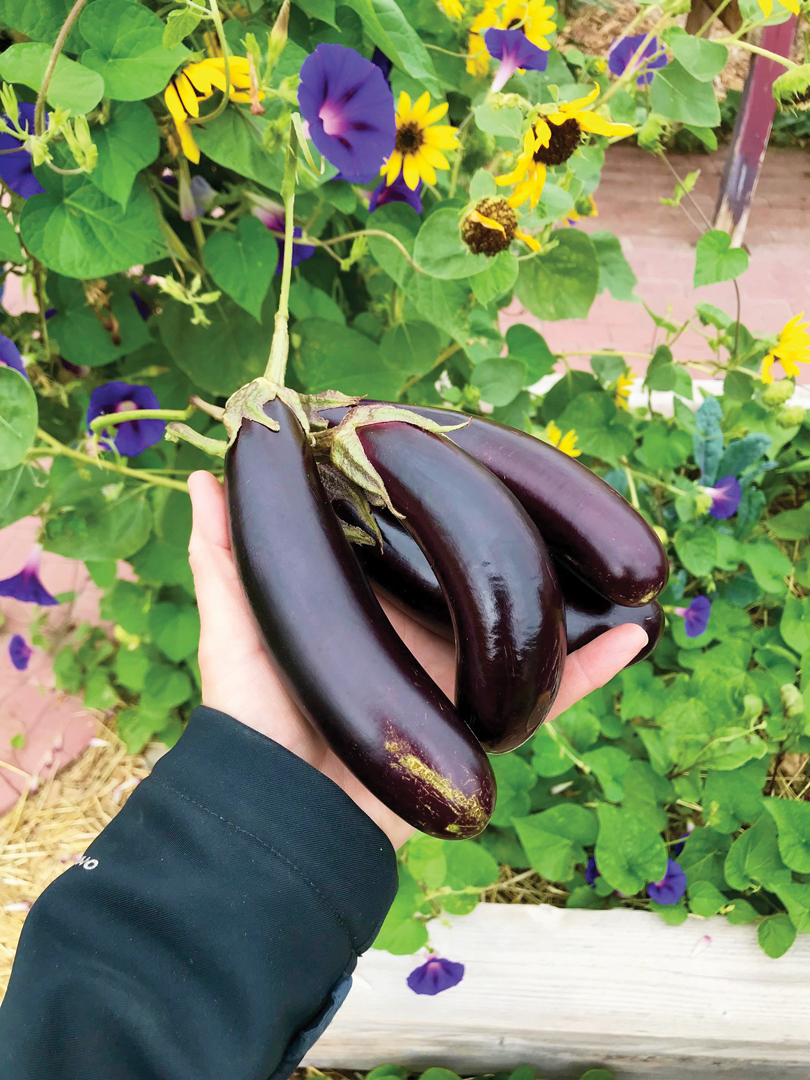
RGFP’s Urban Garden worm bin and fall harvest. Photos courtesy of RGFP.
Back in Albuquerque, it’s noon, and food distribution at the Rio Grande Food Project has ended for the day. The food pantry served more than 200 households during its morning distribution, sending thousands of pounds of food into home kitchens across the metropolitan area. For the volunteers, the work is hard; many clients are on edge, anxious and scared, scrambling just to get enough gas money to drive to the pantry in the first place. But Ari Herring remains hopeful in her vision for the future of the pantry.
“A kid should be able to go to a food pantry and not tell the difference between that and a grocery store,” she explains, leading me outside toward a large dirt lot behind the building. It’s here, where the organization carried out in-car food distribution during the pandemic, that Herring envisions building a new facility, one that gives clients the same dignity that most people take for granted: the dignity to choose the ingredients that they and their family want, can cook, will eat, and will not throw away. Grocery-style food distribution may sound unusual, but Herring is inspired by examples like the GrowHaus in Denver, which show that more choice-centric models are possible. Herring hopes to bring that kind of creative, dignified food access to Albuquerque soon.
In addition to achieving a market-like experience, RGFP is also aiming to provide a more robust menu of wraparound services going forward. On top of their growing list of education and support programs, RGFP has a myriad of partners who offer everything from job training and help applying for Medicaid to free vaccines and pet food. Continuing to deepen these community and institutional partnerships is part and parcel of helping people overcome hunger, not “at scale,” but one circumstance and one family at a time.
Tomorrow the team will be back to distribute food inside the building, and to grow some food outside it. That work takes place in RGFP’s Urban Garden, sandwiched between the building and the empty lot. The garden serves many roles—as an escape for community members and food pantry clients, as a space to learn about everything from compost to seed saving to growing tasty food, and as a worksite, a place where people come and weed or rake or haul materials in order to feel like they’ve earned the food they’ll later load into their trunks. Shame, and the stigma of getting a “handout,” of being “needy,” are still barriers to addressing hunger in our community. So the garden is there for that too—to soothe what needs soothing, to feed what needs feeding.
Sarah Mock
Sarah Mock is an agriculture and food writer, researcher, and podcaster, focusing on topics from farm production to ag history and economics. She’s written two books, Farm (and Other F Words) and Big Team Farms. Her current project, The Only Thing That Lasts, is a podcast for Ambrook Research about the past, present, and future of American farmland. She lives in Albuquerque.