By Sudha Rani Kailas · Illustration by Mariah Cameron Scee
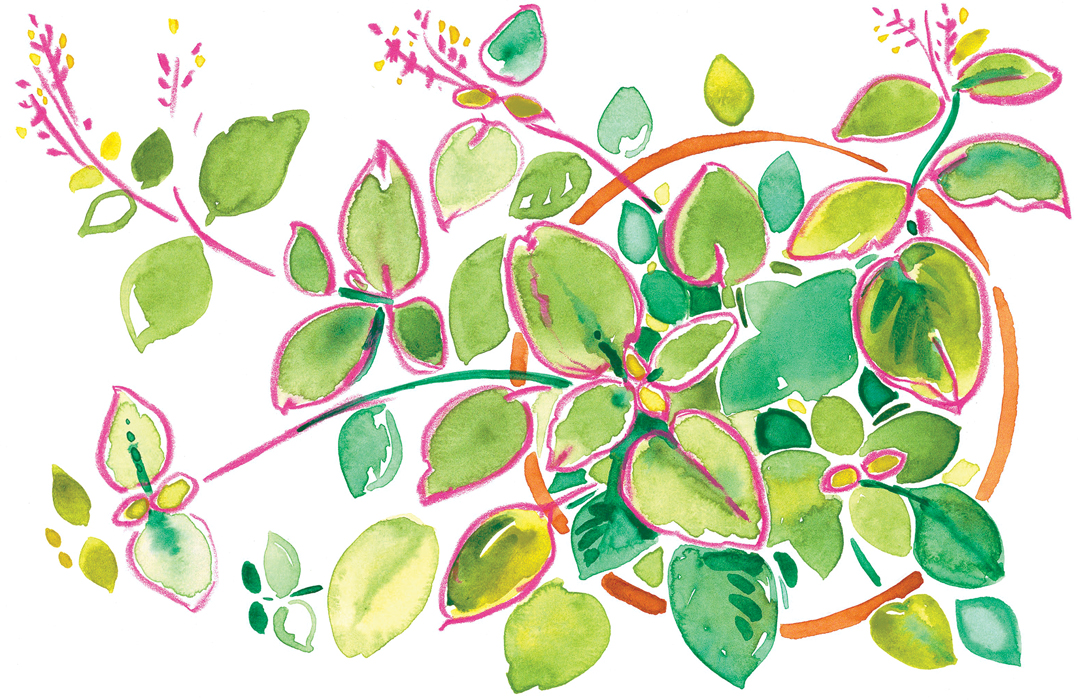
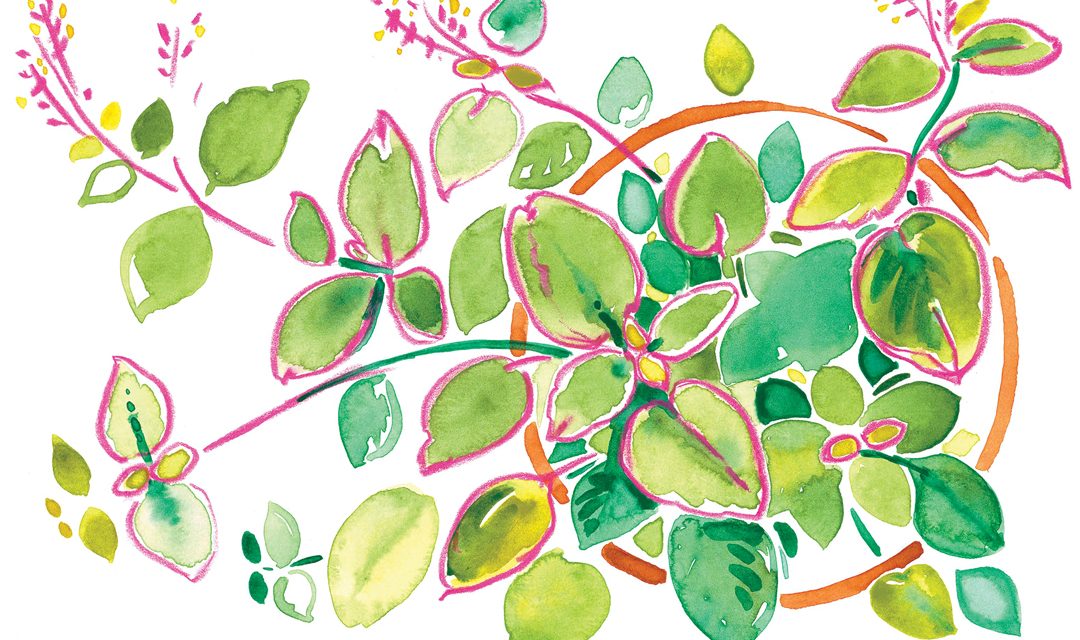
Tulsi is one of the most beloved herbs in my high-desert garden, so much so that I go to great lengths to overwinter it in my kitchen. As the season progresses, the branches stretch toward the sunlit windows, catching the morning light. Thankfully, the days lengthen just in time for the warmth required to rejuvenate my sacred tulsi. Tulsi is a member of the Lamiaceae family, which includes aromatic flowering herbs like rosemary, mint, and basil—from which tulsi is genetically distinct, despite being commonly known as holy basil. There are many varieties of tulsi revered across Africa and Southeast Asia for their revitalizing energy, and the plants I grow carry that same vitality. Just as I sow the seeds that were gifted from previous seasons, I carry the plants back outside to drink the sunlight and welcome the bees, a gentle ritual of spring.
I experience the dance of creation between our plants, their flowers, and the creatures that love them as the divine play of Mother Earth, whose macrocosm emerges with a distinctly nurturing intelligence. In the Vedic tradition, the seed is still, silent potential, and what arises from it—leaf, stem, fragrance, medicine—is Shakti: the expressive feminine force of nature. In this way, tulsi has become a quiet sister, steady and clarifying, inspiring the same creativity ushered forth by spring. As my tulsi plant bounces back to life among earthworms and baby birds, I gather the offerings of her fresh leaves more freely. I am an avid believer that you are what you eat, and I recognize tulsi as one of the kitchen’s greatest culinary allies. Tulsi navigates the body gently: It restores prana, clears nadis, and eases the chest, aligning thought with the natural rhythms of breath. After cooking with strong flavors like garlic and onions, simply inhaling a satchel of dried tulsi clears the nasal passages, preparing the mind for the next task at hand.
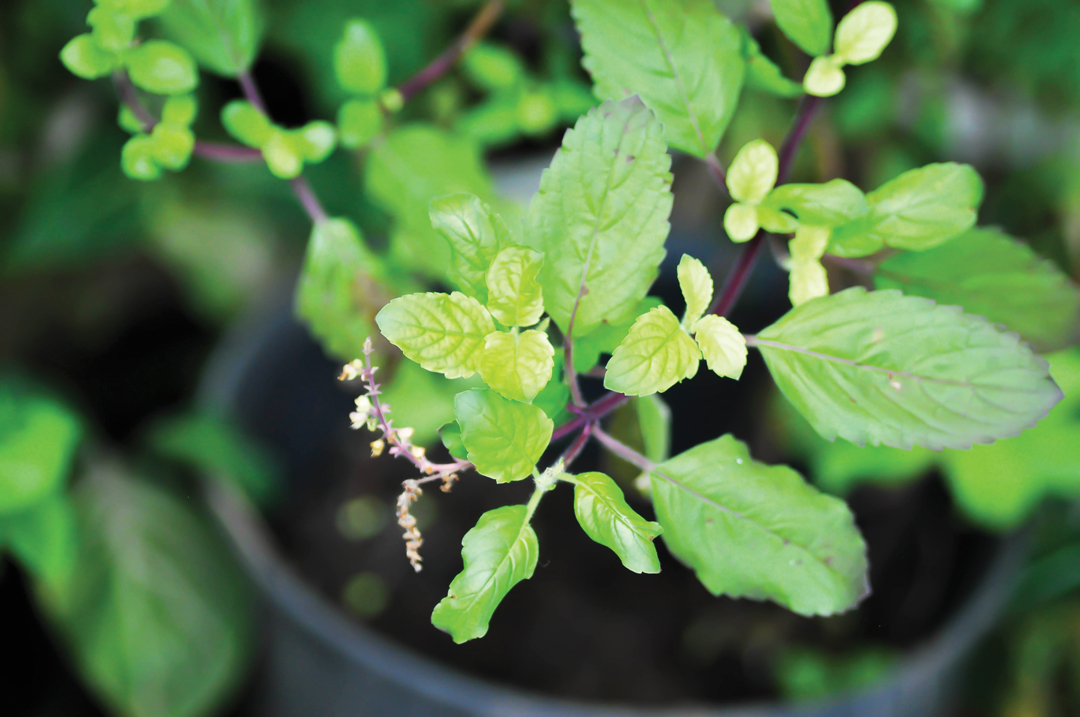
Tulsi, a.k.a. holy basil. Photo by Joanna Tkaczuk.
In Ayurveda, tulsi is described as sattvic: possessing the qualities of purity, lightness, and serenity that give rise to mental clarity. Ayurveda also recognizes tulsi as a hridaya herb, building resilience within the heart, and a medhya herb, supporting intellect and memory. When I spend time with tulsi, she guides renewed clarity, inspired speech, and intuitive insight, making her my go-to herb for writing, learning, and inner illumination. Her fragrance is an instrument of sattva. On the warm days of summer, savoring a single tulsi leaf in the pale morning light, I experience a brightness that lifts prana along the spine, harmonizing heart and mind. Tulsi is known for her pungent rasa (taste). One bite and the leaf delivers crisp, clove-like qualities that warm the tongue. A delicate bitterness accompanies pungency, finally ending in sweetness. The leaf’s light astringency cleanses the palate with expansive flavors of pepper and mint.
There is a folklore within the oral traditions of South India that Saraswati Devi, Goddess of creative wisdom, blessed tulsi as the most virtuous of plants, amplifying gifts of clarity and comprehension. Traditionally, teachers, speakers, singers, and orators across India imbibe an infusion of tulsi before recitation. Its warmth is gentle, opening the throat without drying the mucosa, allowing the voice to emerge rich, resonant, and clear. In my work as a holistic physician, I encourage artists to keep a plant near their practice spaces. Writers sip tea before settling into the creative flow, and meditators burn a drop of tulsi essential oil to sharpen concentration. The belief is that tulsi carries a frequency that acts as a subtle doorway, guiding the mind inward, sustaining inspiration.
While we imagine food must be eaten in order to nourish, Ayurveda holds a subtle wisdom of primary nutrition that teaches that we ingest not only what we taste but also what we see, smell, hear, and feel. Everything we receive through the sensorium while exploring gardens, orchards, and forests ignites a sensual experience that is amplified when we bring those freshly harvested fruits and vegetables into the kitchen. Like the long stalks that raise her delicate flowers to the sky, tulsi is an uplifting herbal medicine. A warm cup of fresh tulsi tea brings forth a feeling of levity, a brightening behind the eyes and expansion through the chest that invites the breath to flow freely.
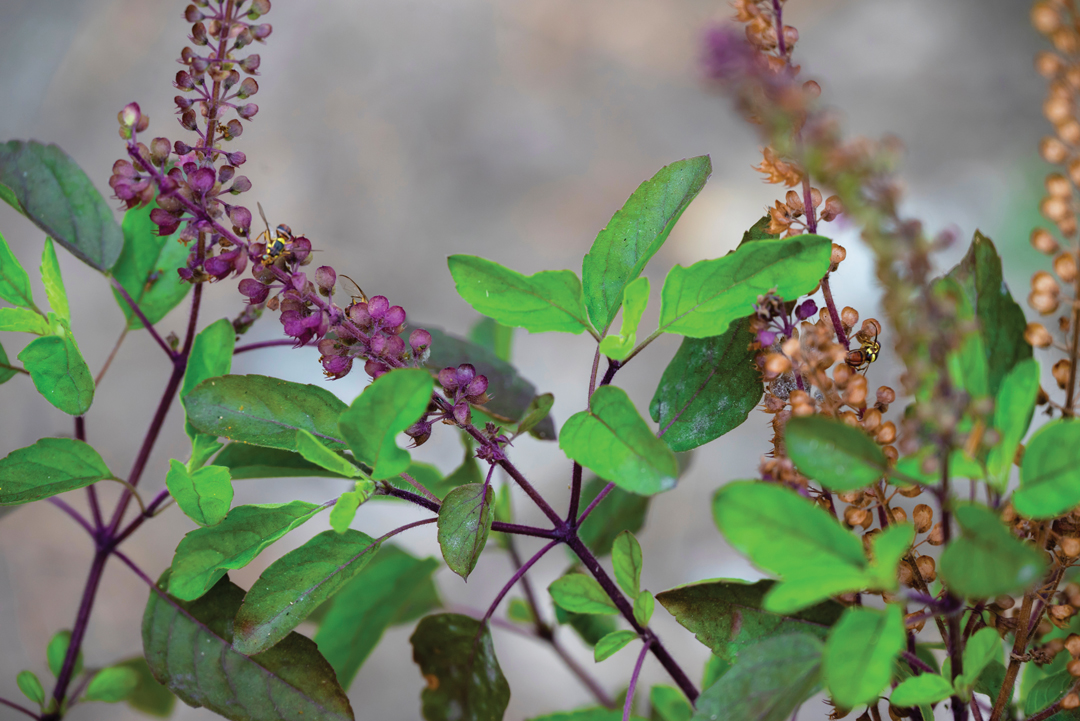
Tulsi flowers. Photo by Joanna Tkaczuk.
Tulsi is becoming more widely recognized in New Mexico communities, celebrated for both her flavor and properties of unique tranquility. A fellow meditator shares my love of tulsi by growing her year-round in his greenhouse. The restaurant Tulsi in Santa Fe features dishes infused with the namesake herb. Based in Peralta, Bluefly Farms produces and locally distributes a tulsi-infused sparkling water, and at the Santa Fe Farmers’ Market, a grower from One Straw Farm in Dixon delights, “[Tulsi] just makes me happy!” Sunny and slightly spicy, tulsi’s fragrance lingers in the sinuses like the vibration of a mantra, steadying the mind.
As a neuroscientist by training, I’ve been excited to see researchers expressing an interest in tulsi. Numerous studies have recently demonstrated that the tulsi variety Ocimum tenuiflorum (also known as O. sanctum, or Rama tulsi in Vedic texts) has antimicrobial and antiviral properties that support the digestive system, which Ayurveda regards as foundational to optimal health. Tulsi is also an adaptogen, shown to modulate stress by supporting immune function, balancing endocrine activity, and soothing both the cardiovascular and nervous systems. Finally, while further trials would be valuable, existing research indicates tulsi’s neuroprotective qualities: Its antioxidant and anxiolytic effects can reduce oxidative stress and support neural processes, promoting memory, focus, and cognition.
Each fall, I can’t help but protect my sister tulsi by bringing her back indoors, where she brightens the home through the dark season. She serves me as a botanical bridge between the physical and the divine, her steady resilience granting strength for the challenging work I carry as a physician. The seasons turn, and tulsi remains the first plant to call me in the morning, rising with the sun as bright green spirals that awaken my mind like cool gusts of mountain air. And when I close my eyes and sing with her, I hear the wise whispers of ancestors guiding my practice. With the return of warmth, I look forward to her seedlings emerging once more, those seeds entrusted to me now returning as life, bringing ease to the garden, nourishment to the bees, and a sense of sweet harmony to all who stop and say hello.
Sudha Rani Kailas
Sudha Rani Kailas is a physician, researcher, and advocate for holistic living. She blends modern science with Vedic wisdom, exploring the intersection of medicine, herbalism, and creativity. Her work celebrates the transformative healing power of sound, flowers, and mindful practices rooted in everyday life.