In the Kitchen with Jonathan Perno
By Sarah Wentzel-Fisher · Photos by Stephanie Cameron
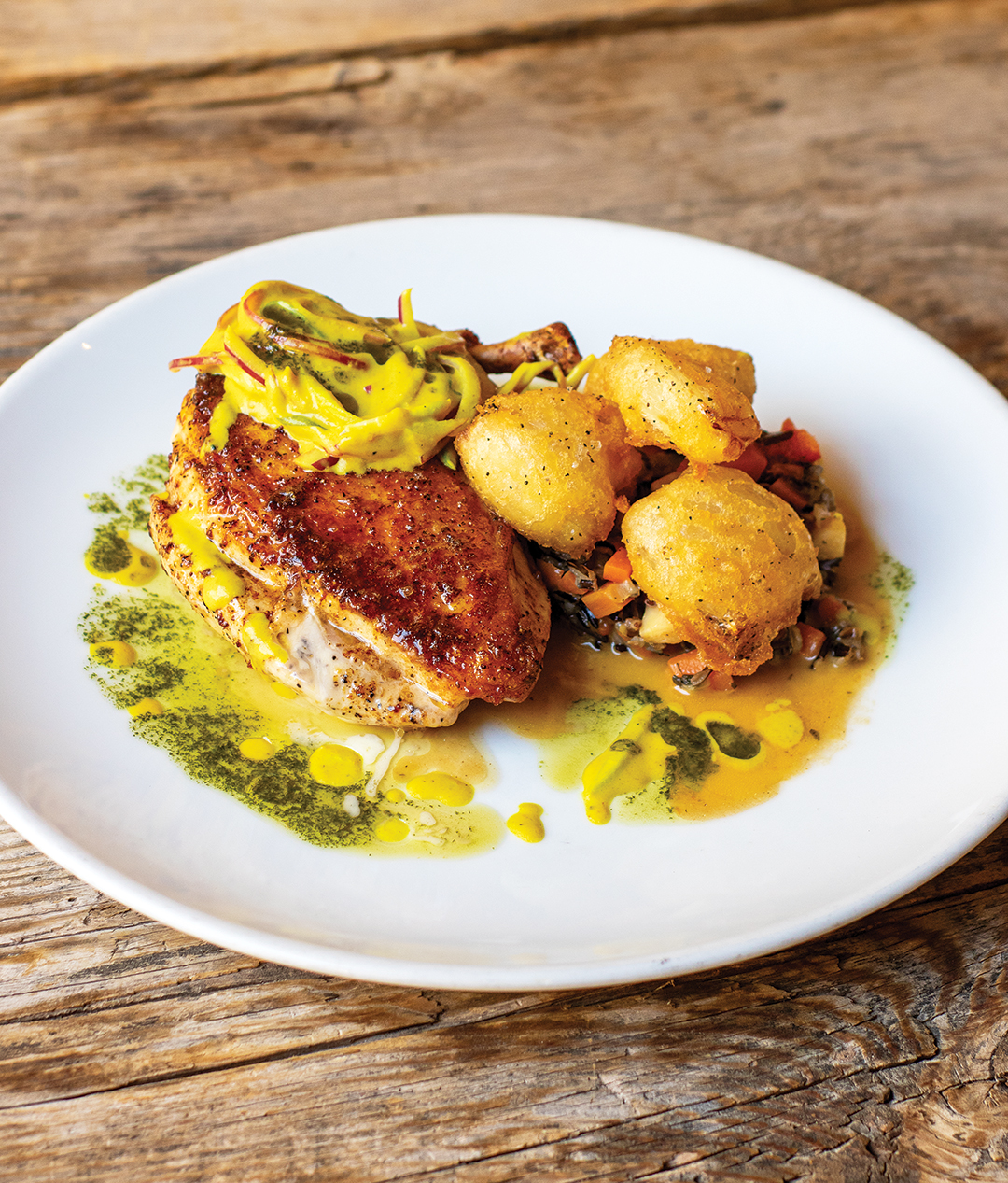
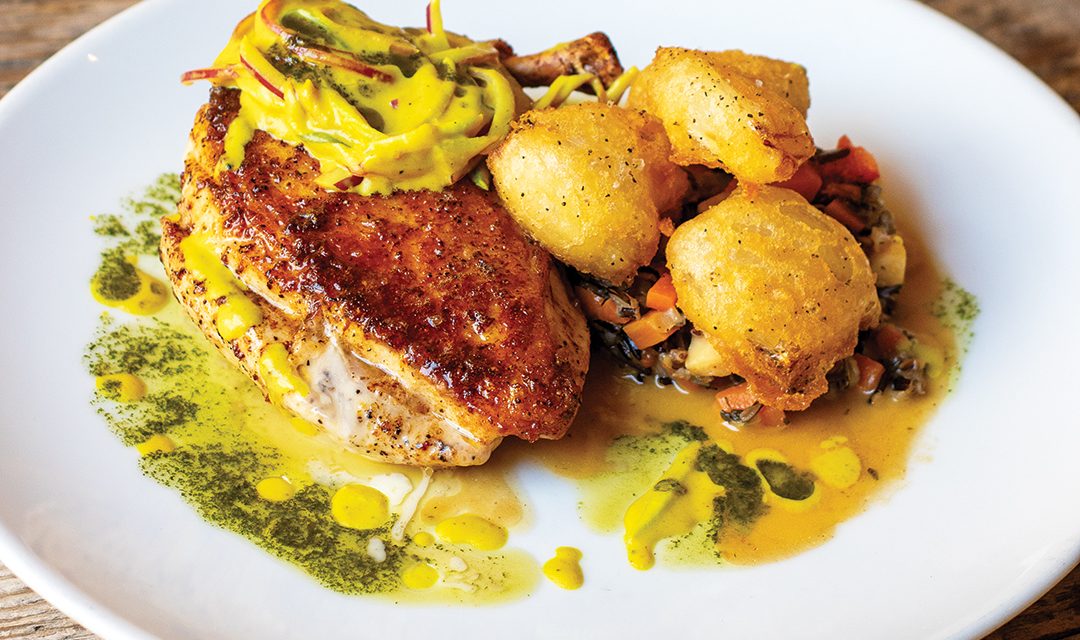
Seared chicken breast stuffed with smoked ham, Gruyère, and sage, served with wild rice pilaf, three-onion slaw, fried shallots, and mint oil.
In the fall of 2015, I shared a meal that still stands out as a moment of rare alignment—when food, conversation, and company became more than the sum of their parts. That evening, I joined Chef Jonathan Perno, then leading the kitchen at Los Poblanos, along with edible New Mexico publisher Stephanie Cameron, for an O’Keeffe-inspired tasting menu prepared by Chef John Rivera Sedlar in Santa Fe. The meal was a meditation on place and season, but the conversation was about ingredients—not just what they were but how they speak, and what it means for a cook to listen.
In that 2015 conversation, Perno described his approach as spontaneous and ingredient led, shaped by technique and an openness to what the food itself suggests. When edible invited me to write about Perno’s latest endeavor—Restaurant Forty Nine Forty in Corrales, where he took the helm last year—I saw an opportunity to return to that earlier thread and explore how listening has evolved into a full practice, one with the potential to shape not just dishes but systems, teams, and even the next wave of restaurant culture.
Today, in the heart of the Village of Corrales, nestled in an unassuming business complex off the main road, Jonathan Perno does what he has always done: tunes in, translates, and teaches. He pays close attention to what comes through the kitchen. At Forty Nine Forty, the small restaurant where he now serves as chef and co-owner, the food does far more than fill a plate. It shapes the menu, sets the rhythm of the kitchen, and helps define how the restaurant fits into New Mexico’s evolving food landscape. Whether from near or far, Perno sources ingredients with care for their provenance and an understanding of their value.
New Mexico’s restaurant culture is at a generational inflection point. The 1990s ushered in an era of national recognition, as a cohort of chefs helped define Southwestern fine dining. In the late 2010s, a new, more place-based vision for restaurant culture began to emerge—before the pandemic disrupted the industry entirely. As restaurants rebuild and recalibrate, chefs with experience, vision, and a commitment to thoughtful sourcing are shaping what comes next. Perno is among those helping define this next chapter, focusing on the expression of ingredients as much as culinary authenticity or creativity. His stewardship of Forty Nine Forty represents a new turn for the chef, but also a philosophical evolution. This is a story about deliberate steps, relational sourcing, functional foundations, and ongoing learning. It may also serve as a model for the chefs he has trained and those with whom he currently works, one focused less on spectacle and more on the health of the whole—of kitchens, communities, and the ingredients that connect them.
“Food has a life,” Perno says. “It doesn’t last forever. You have to know why you’re bringing something in, how much you need, and what you’re going to do with it.” When Perno arrived at Forty Nine Forty, he found a kitchen without reliable ordering, labeling, or tracking. In his words, this did not honor the ingredients and the time and energy spent growing, harvesting, and getting them to his larder. He started his work at Forty Nine Forty creating the capacity to give ingredients their due. Before chasing ideal sourcing, he decided to focus on fundamentals: building order guides, tightening inventory, organizing storage, and establishing composting. For him, these structures define ingredient integrity as much as origin does. “If you bring something in, you have to know what to do with the by-product,” he says. “If you’ve got too much of it, you better figure out how to stabilize it—preserve it, pickle it, dry it. Managing food is the work.”
The mild, sweet, crisp daikon doesn’t usually inspire passion. But to the ingredient-thoughtful Perno, this king of late-in-winter storage vegetables can take center stage supported by aromatic parsley, sweet roasted cipollini onions, and the salty, umami kick of caviar. At Forty Nine Forty, the kitchen team devotes the first half of the week to creating a Tuesday and Wednesday dinner tasting menu that changes weekly, based on availability and inspiration. Perno and his team develop as many as ten dishes each week—some refined, some abandoned, all shaped by the constraints of a small space and team. “If you corner yourself by saying, ‘This is what we serve,’ you’re stuck,” he says. “What happens if something isn’t available? The more flexible you allow yourself to be, the more creative you become.” Ideas often emerge in unguarded moments: cooking daikon at home, tasting winter parsley, playing with texture or balance.
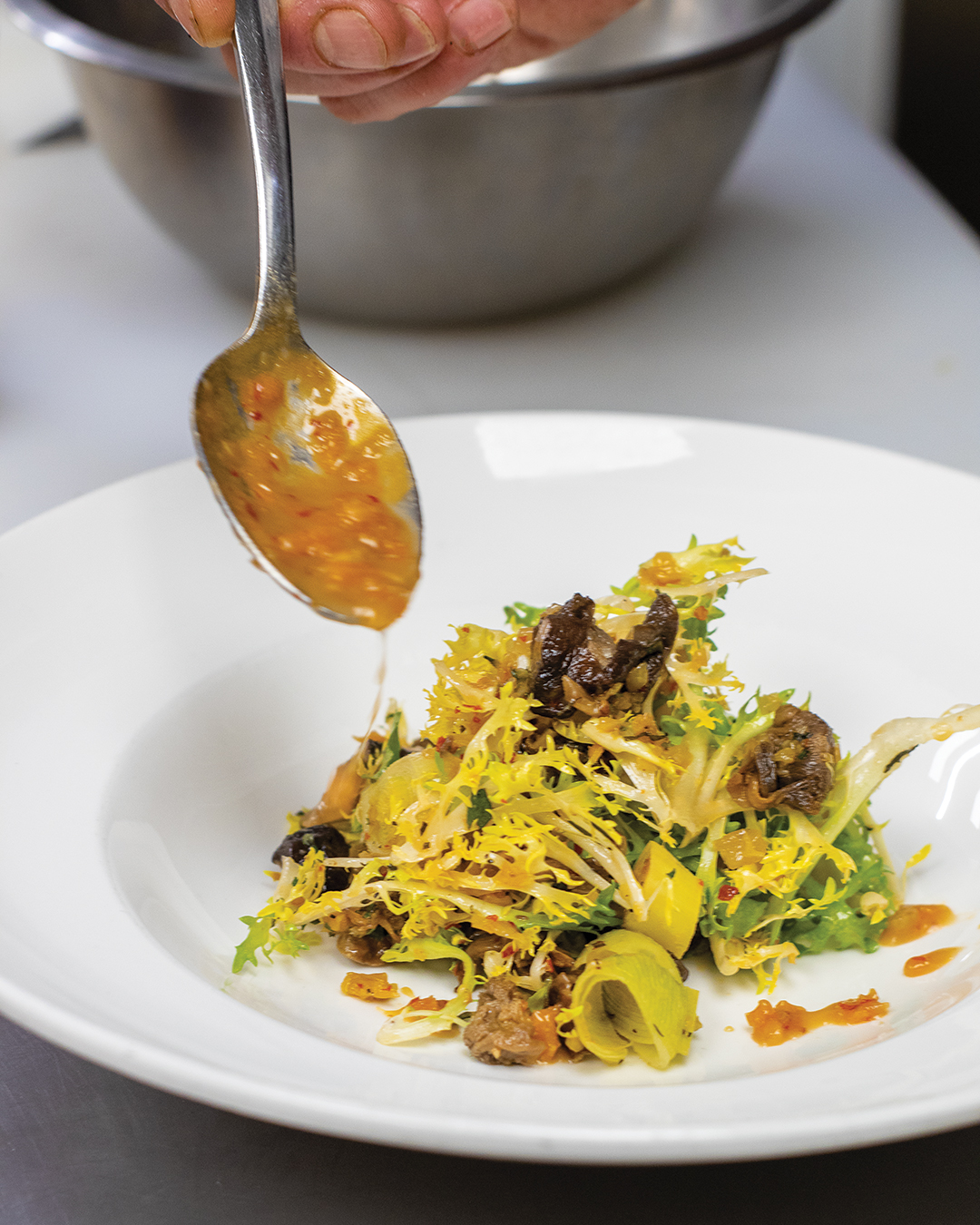
Leek and mixed mushroom salad with kimchi dressing.
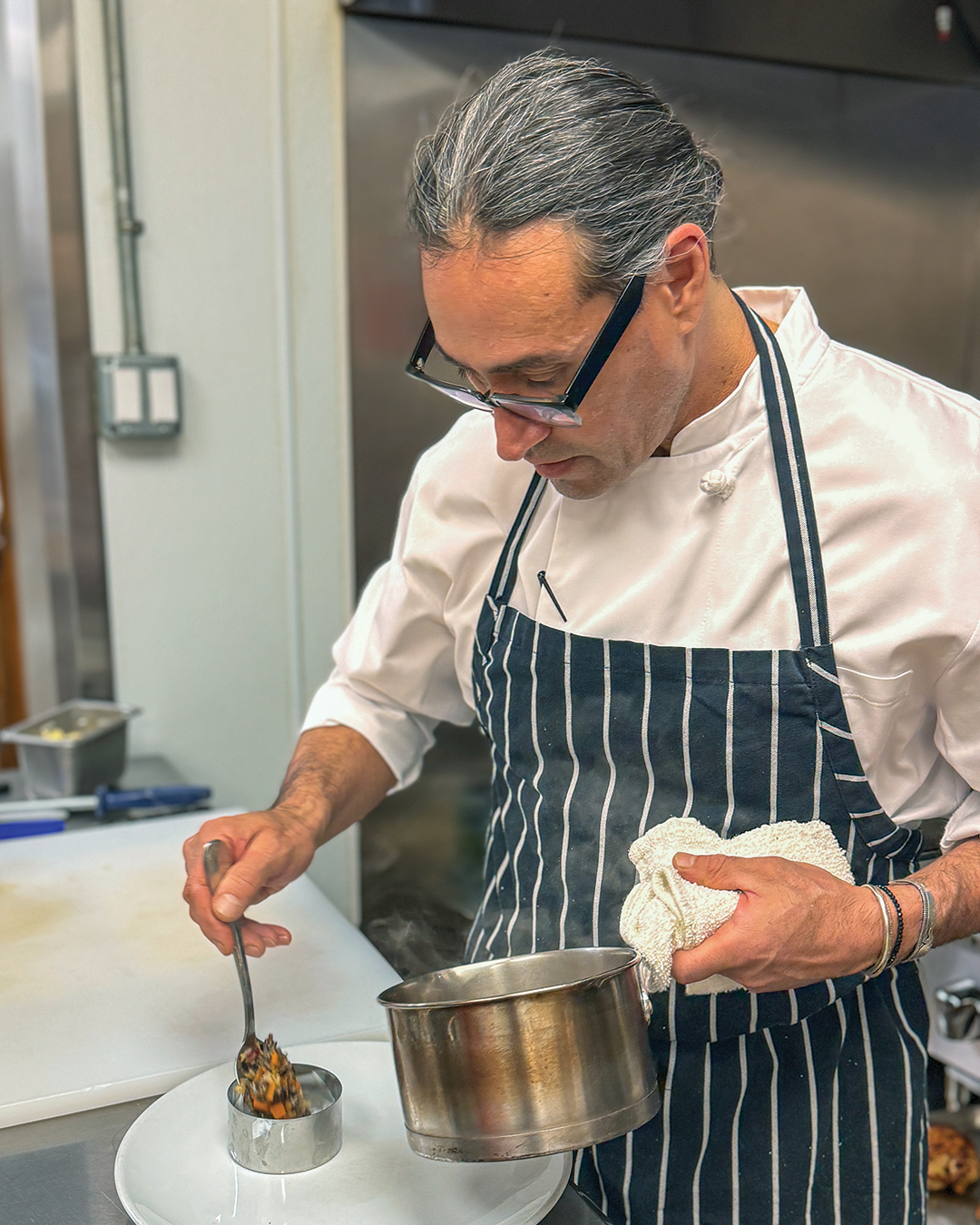
Jonathan Perno plating a dish.
“I learned how to communicate with an onion or a carrot,” he says, reflecting on lessons from early in his career. “I had to let go and see where it would take me. The job is to draw the best out of the product, not force it to be something else.” To this day, he begins most dishes working with the foundational elements. He often cooks with nothing more than salt, fat, and heat, allowing a vegetable or cut of meat to speak before layering flavor. “I want to understand the ingredient first,” he says. “Herbs and spices come later. That’s when you seal the magic.”
Few ingredients excite Perno more than herbs. At Forty Nine Forty, he plans to grow them in raised beds to fully capture their aromatic intensity. “Herbs are so underappreciated,” he says. “I grew parsley this year, and you could touch it and smell it immediately. You didn’t have to bruise it to get its essence.” He treats herbs as integral, not decorative, often adding them late in the process to preserve and elevate their character. “That’s where it’s at,” he says. “When an ingredient speaks before you even cook it.”
Perno is also known for his whole-animal utilization—an approach that is not yet possible at Forty Nine Forty due to limited space and cold storage, but one that remains central to his long-term vision. That vision is taking shape in Cambio, a second restaurant slated to open later this year in downtown Albuquerque. Still partially built out, the space will include a walk-in cooler purpose-built to accommodate full carcasses, in turn allowing Perno to work directly with ranchers, maximize the use of high-quality local meats, and lean fully into his strengths as a butcher. “When you get a whole animal, you’ve got to use everything,” he says. “That’s the challenge, but it’s also the benefit.” Rather than functioning as a wholly separate venture, Cambio will support and extend the work happening at Forty Nine Forty, creating a shared infrastructure that strengthens the unique offerings at each restaurant.
Whole-animal cooking stabilizes costs and forces creativity, while also reducing reliance on national distributors. Fully disengaging from broadliners may not be possible, but whole-animal sourcing represents a meaningful step toward greater independence and integrity. “You look around and it’s Sysco or Shamrock putting food into most buildings,” Perno says. “People buy the same things and manipulate them differently, but there’s no difference other than the way you put it on the plate.” By contrast, working directly with ranchers reshapes the relationship entirely—introducing trust, flexibility, and shared risk—and ensures that the difference begins with the meat itself and the people who raise it.
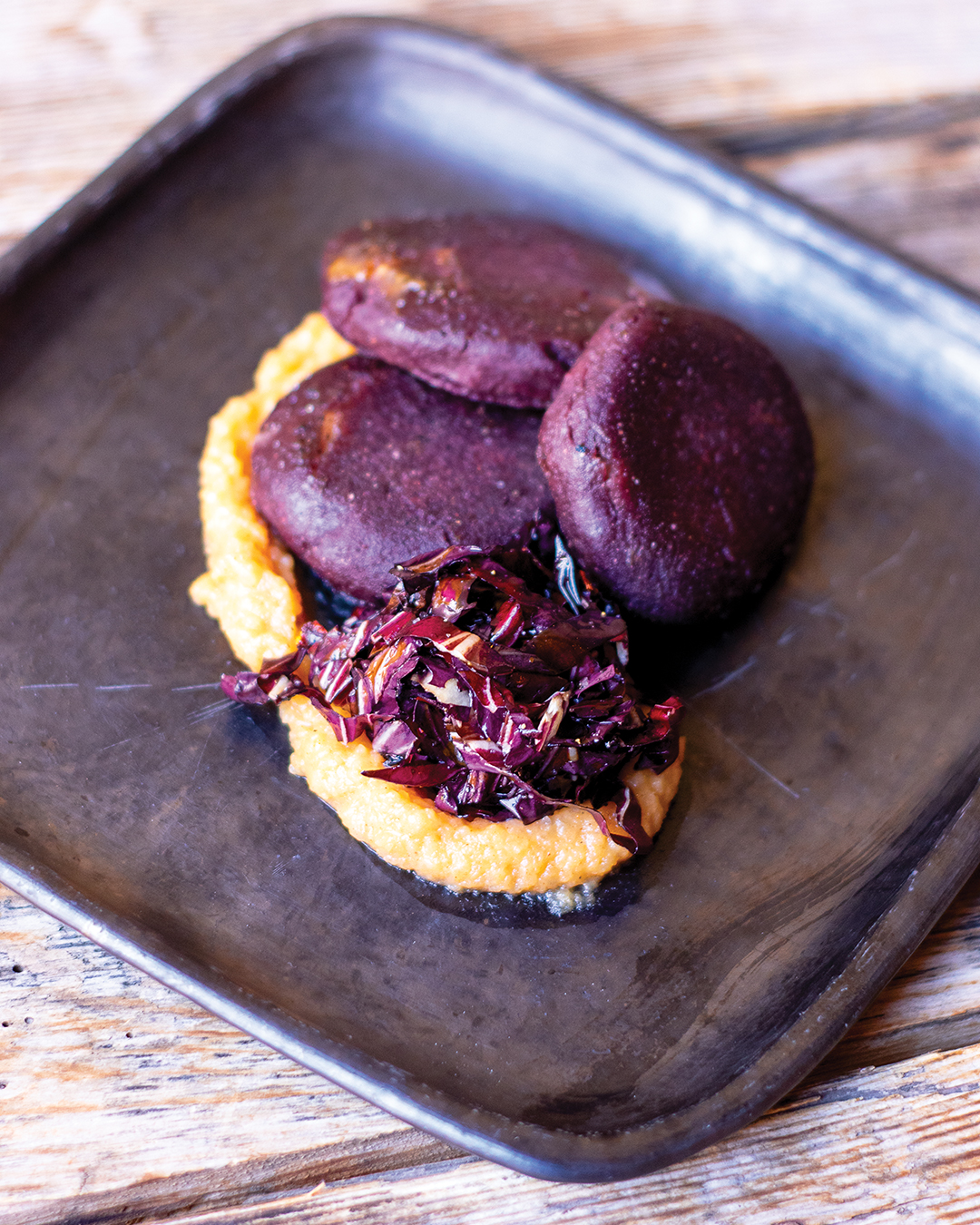
Blue corn pupusas stuffed with barbecue green chile pork and served with quince apple butter.
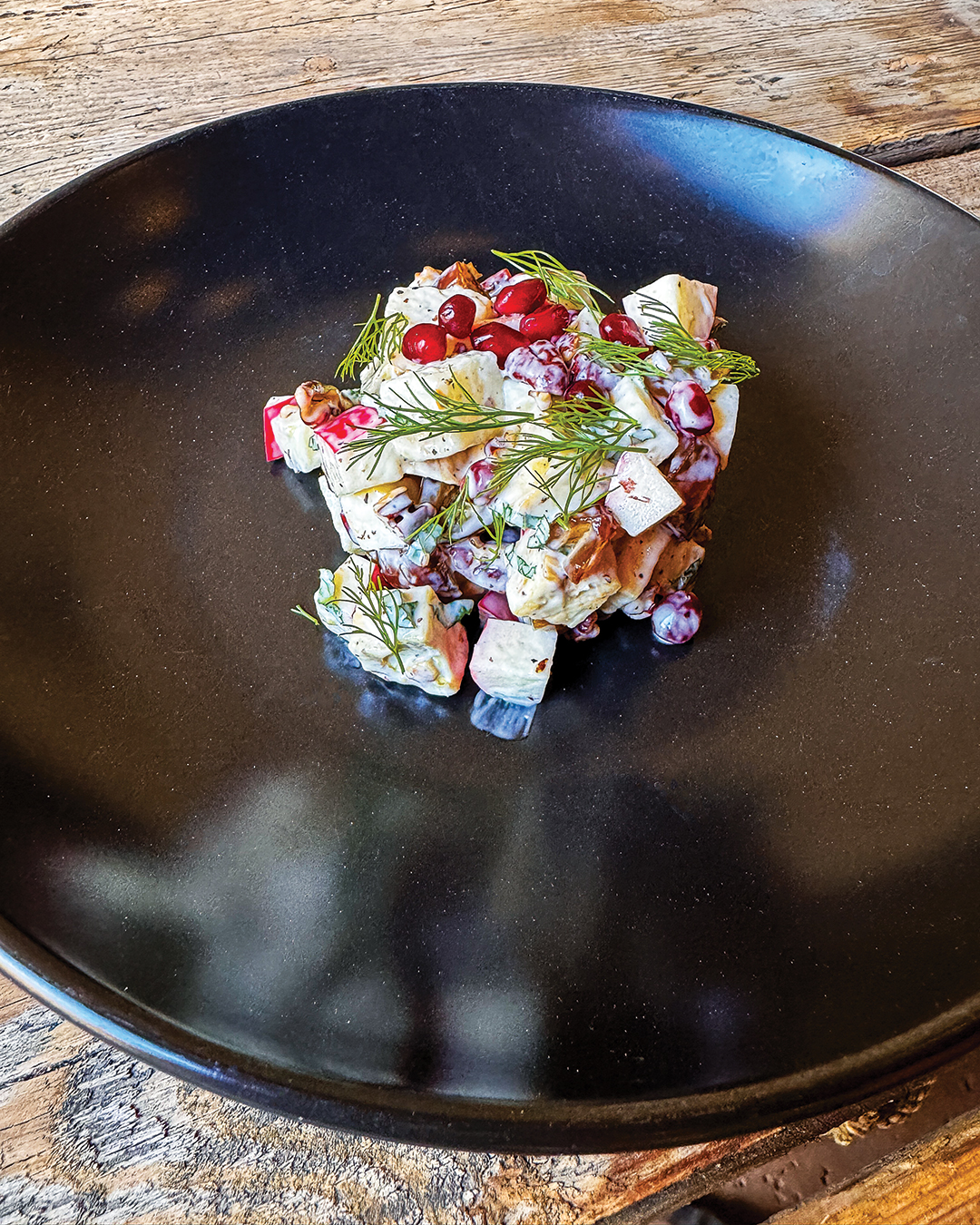
Winter Waldorf with celery root, jicama, apples, and pecans.
Relationships with purveyors is next on Perno’s agenda at Forty Nine Forty, now that some of the kitchen systems are up and running. “There are a lot of good farmers out here. Our resources are here—it’s just about figuring out how to work with them.” Perno, from his time in California through his time at Los Poblanos, has long put in the hard work to both develop relationships with farmers and ranchers and make sure he’s honoring what they produce. “Our job is to carry the integrity of the producer forward through the work that we do,” he says with reverence. “The food was already great before it got to you. You just need to keep that energy moving forward.” At the same time, he recognizes that food production is not engineering; it’s hard work, luck, timing, weather, economy, the messiness of humans, and a little bit of alchemy. Nonetheless, Perno assures me that more farms and ranches will be represented on his menus as the year unfolds.
Translating intention into a memorable meal also depends on a kitchen crew capable of communication, trust, and shared purpose. Perno recognizes the mentors who shaped him, and that awareness informs how he works with his own staff. In a small kitchen, he notes, accountability is immediate—and productive. “In a small kitchen, you’ve got nowhere to hide, and that’s a good thing,” he reflects. “Small is better. I actually learn who my crew is more intimately. Instead of superficially going through the motions with a bunch of people, we can really learn about each other.” As he speaks about leaning on and learning from his team, it’s clear how meaningful he finds input and exchange in the kitchen. “They’re kind of teaching me a different way to look at ingredients,” he says.
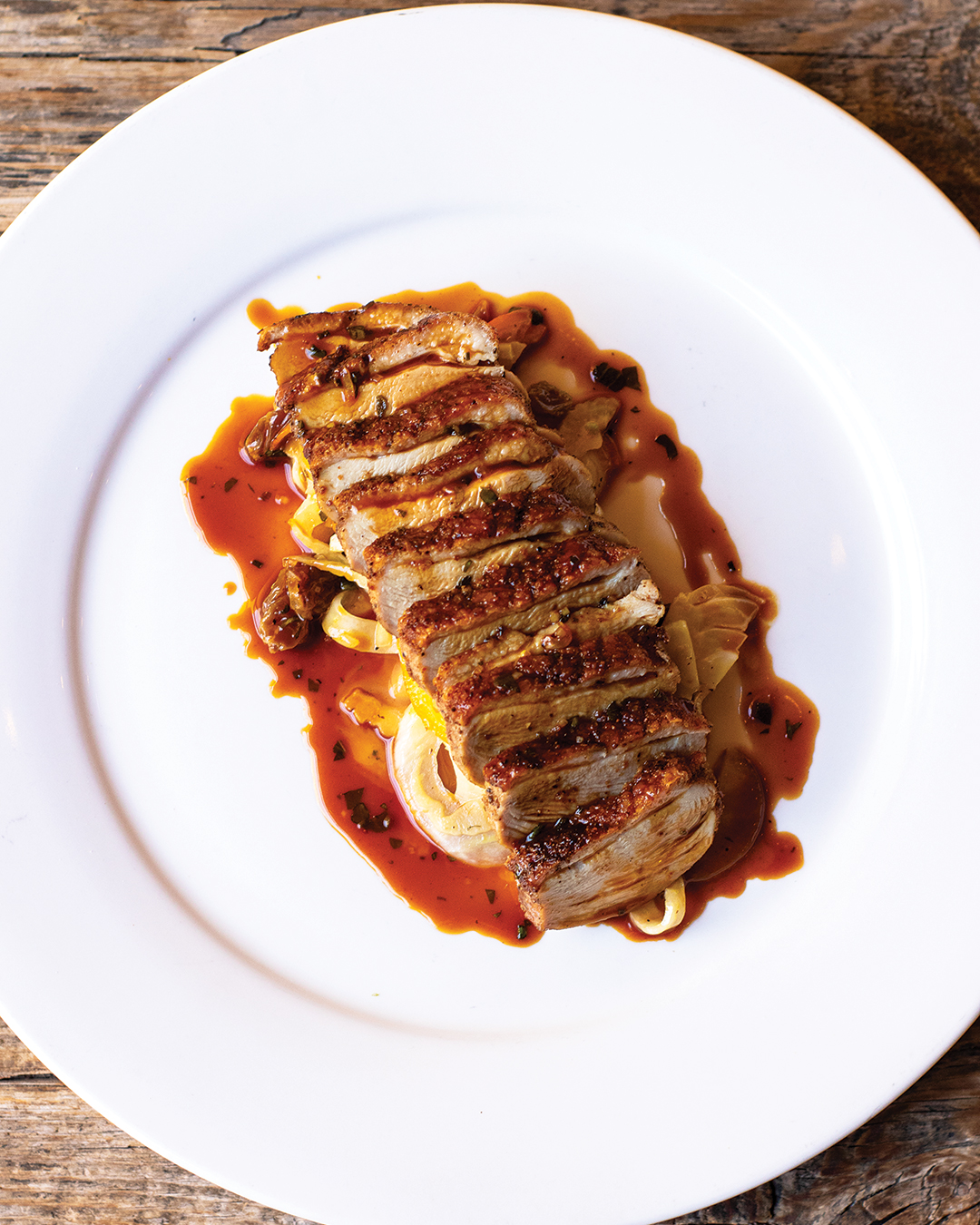
Roasted spiced duck breast with sautéed fennel, mandarinquat, and demi-glace.
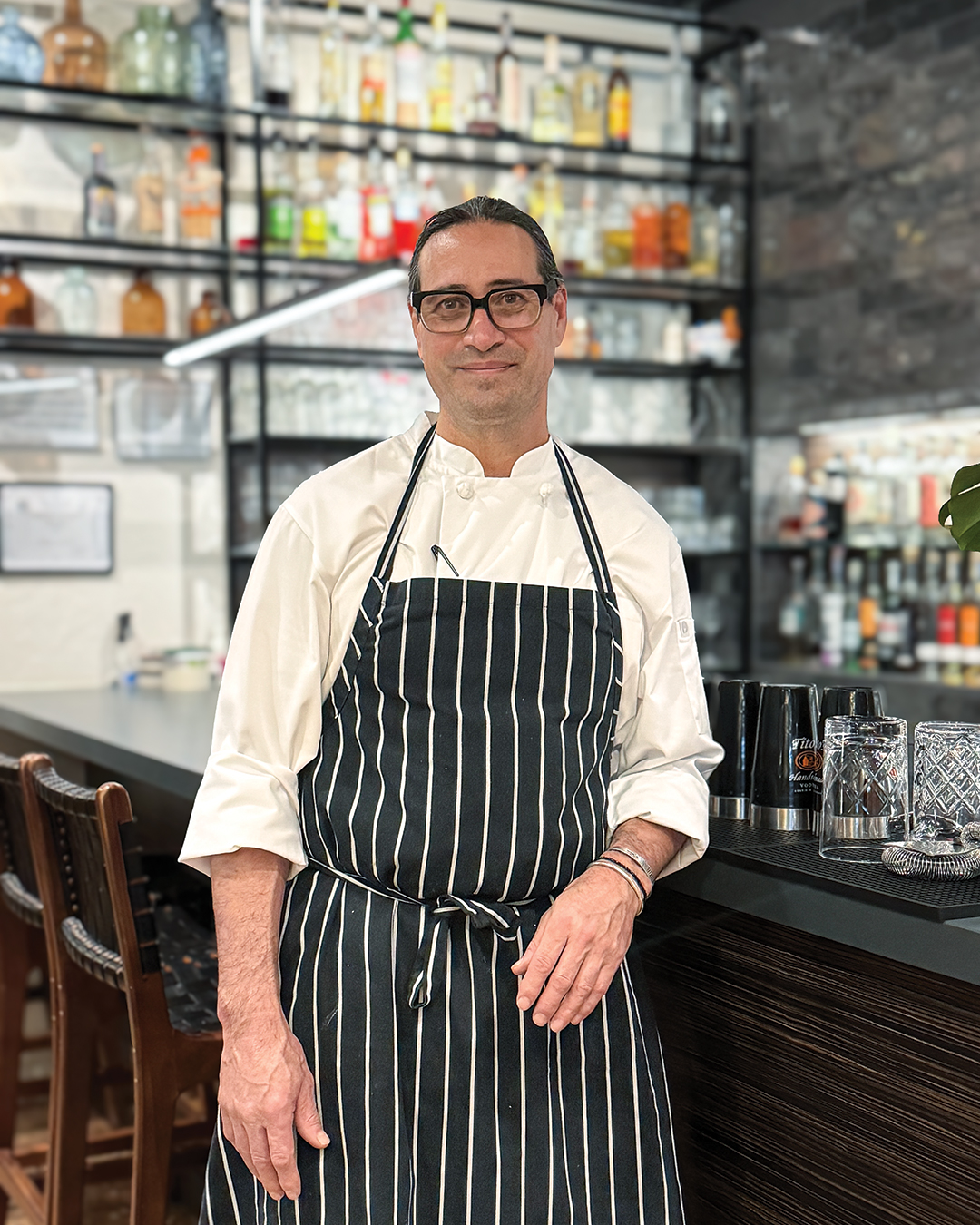
Co-owner and executive chef Jonathan Perno at Forty Nine Forty.
The winter evening I visited Forty Nine Forty, Perno had been rushed to the hospital for an unexpected—but, thankfully, not life-threatening—surgery. It was an unusual moment to dine at a restaurant where the point was to see the chef at work, yet his absence underscored something important. Despite the circumstances, the food was exceptional, the service steady, the presentation simple yet precise, and the experience deeply satisfying. That the team delivered with such care and confidence, even without their chef on the line, testifies to the strength of the kitchen Perno is building.
For the first time, Perno carries the responsibility of ownership, which has only sharpened his attention to health—of the kitchen, the team, himself, and the structures that hold them together. Rather than chasing scale or spectacle, he has chosen something quieter and more demanding: small rooms, a visible kitchen, deliberate systems, and one step at a time. Like the ingredients he favors, his relational approach rewards patience and attention. At Forty Nine Forty Perno continues to listen.
4940 Corrales Rd, Corrales, 505-554-3866, @fortynineforty
Sarah Wentzel-Fisher
Sarah Wentzel-Fisher is a committed champion of the local food movement and of resilient and regenerative agriculture. A board member for both the Rocky Mountain Farmers Union and the Southwest Grassfed Livestock Alliance, she has worked as an organizer for the National Young Farmers Coalition, the editor of edible New Mexico, and the executive director of the Quivira Coalition. In her free time, you can find her feeding chickens, making pear butter from rescued fruit, and visiting with farmer friends around the state.