By Emily Arasim Beltrán
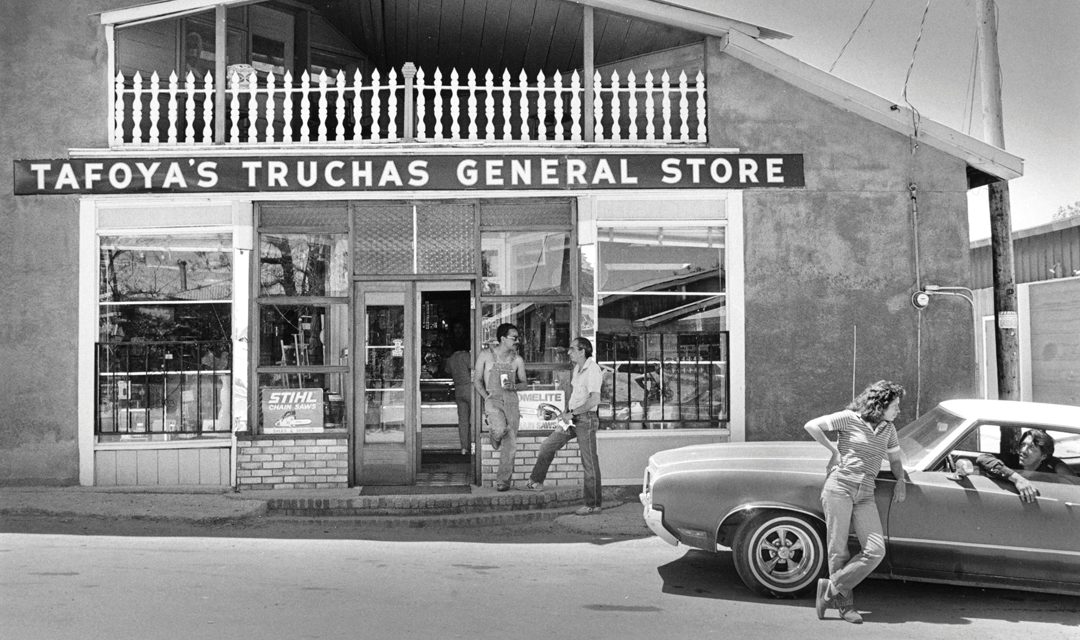
Tafoya’s Truchas General Store, circa 1989. Photo by Sydney Brink. Courtesy of the Palace of the Governors Photo Archives (NMHM/DCA).
Rural grocery stores are the heart of their communities. Yes, they provide food and household necessities, but they are also places for neighbors to gather and trade news, maintain relationships, and organize to better their community. They ensure that elders and those without transportation have what they need close by, offer a young person their first job, and support the success of a whole constellation of other small businesses, as well as local farmers, ranchers, and craftspeople. They can increase resilience when snowstorms block road access to larger towns, and in times of disaster and crisis they can provide a lifeline of resources. Critically, they offer a space to actualize a vision of economic development that is rooted in culture and keeps money circulating in the hands of local people.
Inspired by their deep importance—affirmed by national research, the many stories of rural community members, and my own observations living and working in the Pojoaque and Española Valleys—I set out to investigate rural grocery stores across northern New Mexico. The result is a community handbook that weaves together historic documentation, analysis of the pressures and changes impacting these vital spaces, and a toolbox of strategies to support their resurgence, as well as profiles of twelve stores in Mora, San Miguel, Taos, Santa Fe, and Rio Arriba Counties.

Across rural New Mexico, virtually every village once had at least one local, family-owned grocery store that anchored the community. Many have closed, but other beloved stores remain open despite the odds. Some continue to run much as they always have by the third (or fourth or fifth!) generation of family, while others have transformed and are using new models to stay viable.
In the United States more broadly, hundreds of rural grocery stores have closed their doors in recent decades. Most of the data I’ve found comes from the rural Midwest; Iowa, for example, lost half of its remaining rural grocers between 1995 and 2005. In New Mexico, as elsewhere, such losses are viscerally felt and visually striking, with abandoned store buildings along rural roads, plazas, and main streets standing as wounds in the landscape. Their closures can trigger a cascade of impacts, from an increase in food insecurity and diet-related illnesses like diabetes and obesity, to the loss of neighboring businesses, to feelings of grief that we just don’t know our neighbors anymore.
While it can be easy to brush this off as an unavoidable consequence of population decline, many factors are at play, including disinvestment in rural communities and the transformation of the modern food system over the last century (think supermarkets, industrial farms, strip malls, and highways). At the same time, major lifestyle shifts mean that most rural residents now commute to work and school, making it easy to also shop away from home. Changes in the ways we think about food (the idea that it’s a burdensome expense that should be as cheap as possible is a relatively new idea) have also played a role, drawing shoppers to big-box chains and dollar stores. Then there are the high costs of utilities and of repairing old buildings, coupled with insufficient funding for small businesses and the aging of longtime store owners.
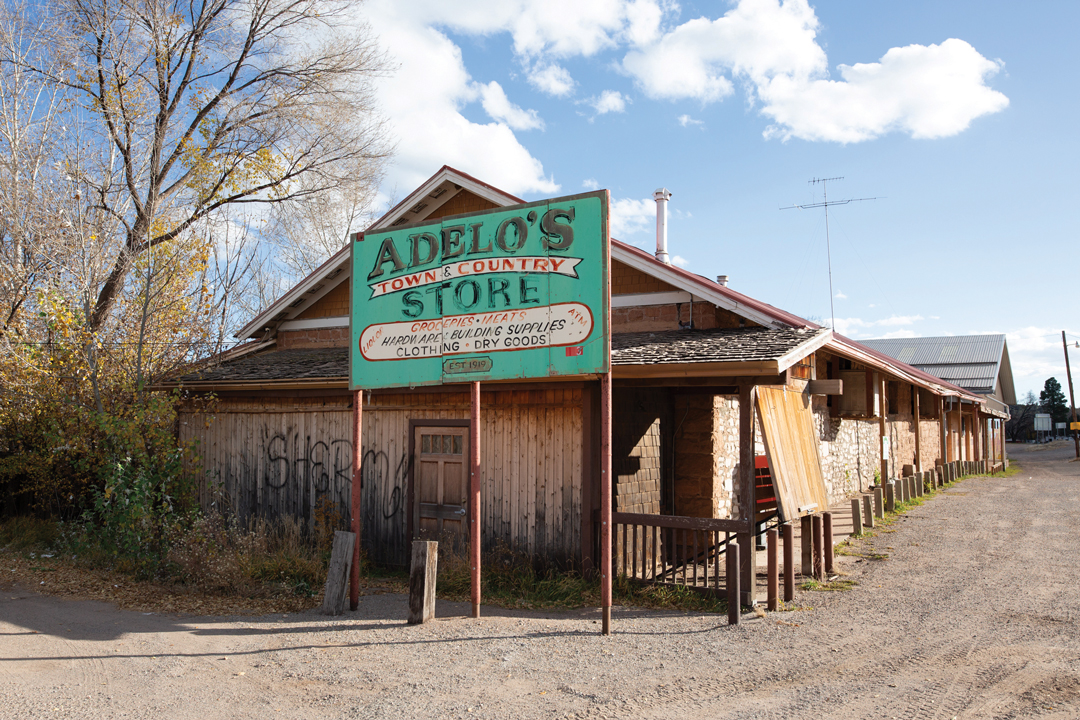
Adelo’s Town and Country Store in Pecos. Photo by Kevin Beltrán.
Over the course of my research, my understanding of what is at stake has deepened, as has my belief in the ability of local people and supporters to come together to protect and revitalize these spaces. Policymakers and government agencies have a role to play, whether that is funneling more funding into local food infrastructure, enforcing laws meant to limit the monopoly power of big chains, providing technical assistance, or even renting county-owned buildings to aspiring grocers and co-ops. There is also a big need for alliance and resource sharing among stores, and for creative partnerships with nonprofits and community organizations.
Individuals and families living in or with ties to rural places also retain agency to make changes—whether that means having hard conversations about how to reduce dependency on dollar stores, organizing a meeting to discuss a new cooperative, or investing in an old store that has started to fade. In New Mexico in 2024, the average annual per-person household spending on groceries was $3,358, according to the USDA. This means that a small community of 250 people is spending over $800,000 per year on food. Yet the majority of food spending continues to happen outside rural communities, with residents commonly driving one to four hours round trip to centralized supermarkets, or purchasing food from nearby dollar stores and gas stations that extract wealth from the community and send it off to distant CEOs and shareholders. The average dollar store does approximately $1.6 to $2 million in business each year, which could instead be invested in local stores, and therefore in local well-being and power.
Shifting this landscape will be labor intensive and require long-term investment and support. Conversations with store owners and community members throughout my research process have also taught me that it will demand thoughtful work to ensure that new or revitalized stores are accessible and reflect the visions of longtime residents, as even the most well-meaning projects can contribute to gentrification. Despite the many challenges, I believe that change is possible, in part because of the alignment between the values needed to support local business and the traditional values of rural New Mexicans—including self-sufficiency, collective governance, mutual aid (mutualismo / ayuda mutua for Hispanic/Chicano communities), and love of and attachment to place (querencia).
New Mexico also has a rich legacy of existing and historic stores from which we can draw lessons. The profiles below are just a few of those included in my dissertation, Revitalizing Rural Grocery Stores in Northern New Mexico: A Community Handbook, which can be found in the University of New Mexico Digital Repository. I hope that these examples—as well as those of other successful stores like Bode’s General Store in Abiquiú, the Dixon Cooperative Market & Deli in the Embudo Valley, B Street Market & Deli in Mountainair, and Major Market in Zuni Pueblo—prove that people can and will support locally rooted ventures, and serve as useful and inspirational models for present and future rural grocery stores in New Mexico.
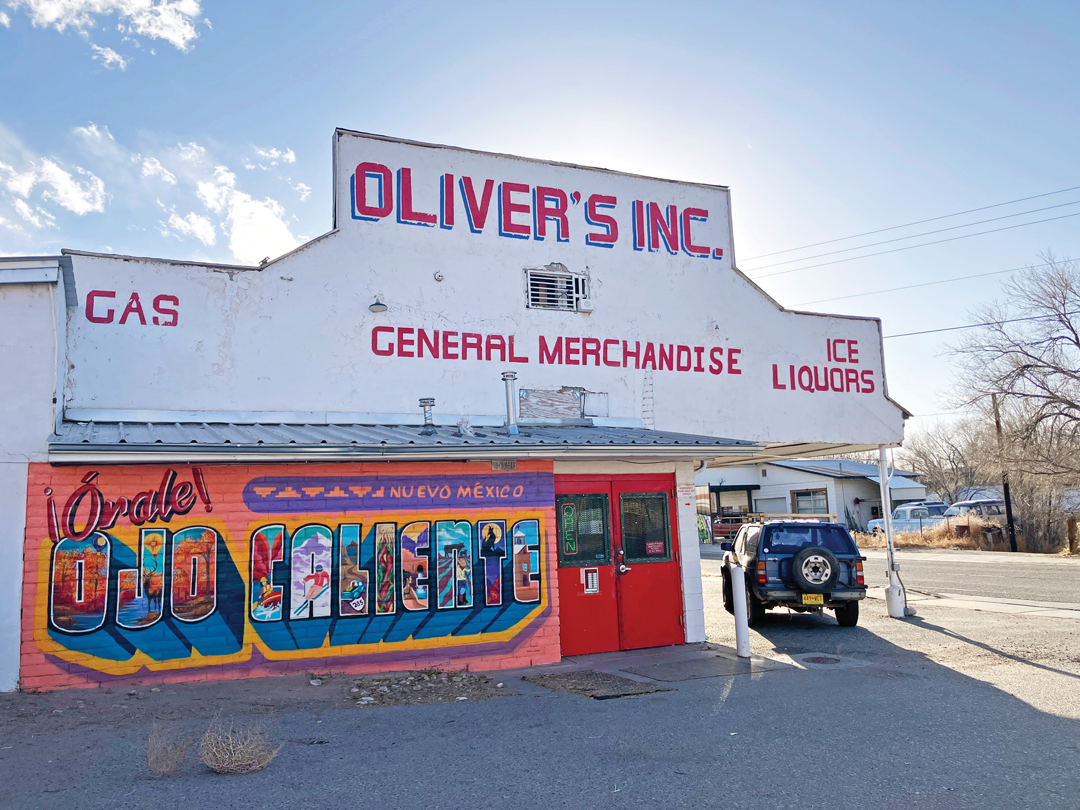
Oliver’s General Store in Ojo Caliente. Photo by Emily Arasim Beltrán.
Oliver’s General Store, Ojo Caliente
Today, Oliver’s stands as a regional icon where locals and visitors alike grab grocery essentials, a cold drink or some red chile powder and atole, and exchange news and gossip about events and jobs, acequia meetings, and lost pets. The store has sponsored countless school sports events, hosts local kids for Halloween trick-or-treating, donates food for bake sales and fundraisers, and acts in many other ways, big and small, as a source of support and connection. Its deep, but perhaps underappreciated, role is embodied in the large Our Lady of Guadalupe shrine that blesses and protects the south wall of the building.
Until the 1980s, when more locals began to shop at the new chain stores in Española, Taos, and Santa Fe, Oliver’s was the primary source of groceries for many residents of Ojo Caliente and surrounding villages. As the community’s patterns changed, and many other nearby stores closed, Oliver’s found a way to weather the storm, due in part to its central location on a busy road, but also thanks to its power as a cultural and social hub.
The store opened in the early 1900s, and is located on US 285 in the village of Ojo Caliente in Rio Arriba County. It spent several decades as the Lucero family’s Roadside Cash Store before it was purchased and renamed Oliver’s by members of the Vigil family of El Rito. For five decades starting in 1974, a team of four siblings, their spouses, and their parents ran the store together. After serving their community well into old age, in 2023 the family team retired and the store was sold to new co-owners from Taos and Pilar, who have continued uninterrupted operations.
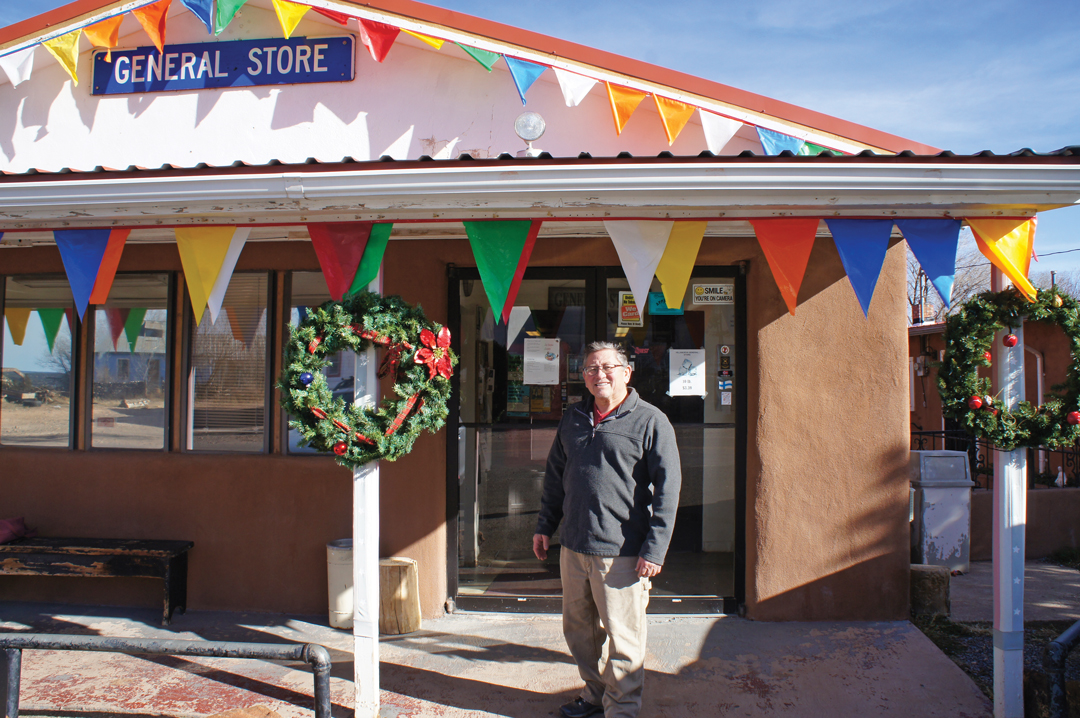
Danny Torrez at Villanueva General Store. Photo by Emily Arasim Beltrán.
Villanueva General Store, Villanueva
Founded in 1912, the Villanueva General Store in San Miguel County remained open under the stewardship of four generations of the Lucero family (a different Lucero family from the one involved with Oliver’s) for one hundred years. Standing in the heart of the village, just across the road from the Nuestra Señora de Guadalupe Church, the Villanueva General Store and neighboring Gallegos Cash Store are the only stores available for area residents. The roughly two hundred people living in Villanueva and one thousand people throughout surrounding villages must otherwise travel an hour and a half round trip to Las Vegas or two hours to Santa Fe for groceries. A true general store, it always offered something for everyone, including small tools for home and auto, camping items, kids’ toys, canned goods, basic meat and dairy, and local dry goods like chile and chicos.
Mother and daughter Rosave and Josie Lucero guided the store for much of its history before passing it to Josie’s son, Danny Torrez. He found creative ways to keep the business alive despite the many challenges faced by small store owners, such as the logistical difficulty of getting deliveries to a remote rural area. In addition to expanding the deli, where they’d long offered Josie’s famous Frito pies, burritos, stews, and tamales, in 2022 Torrez opened a full-service restaurant, La Cocina Lucero, which quickly became a popular spot for family meals, particularly on Sundays after church.
In 2024, Torrez made the difficult decision to put the store up for sale, and officially closed in October 2025. While he said the family was prepared to let the store “close with dignity” after more than a century of service, exciting discussions are underway with a group of community members who hope to lease the store for a cooperative market endeavor.
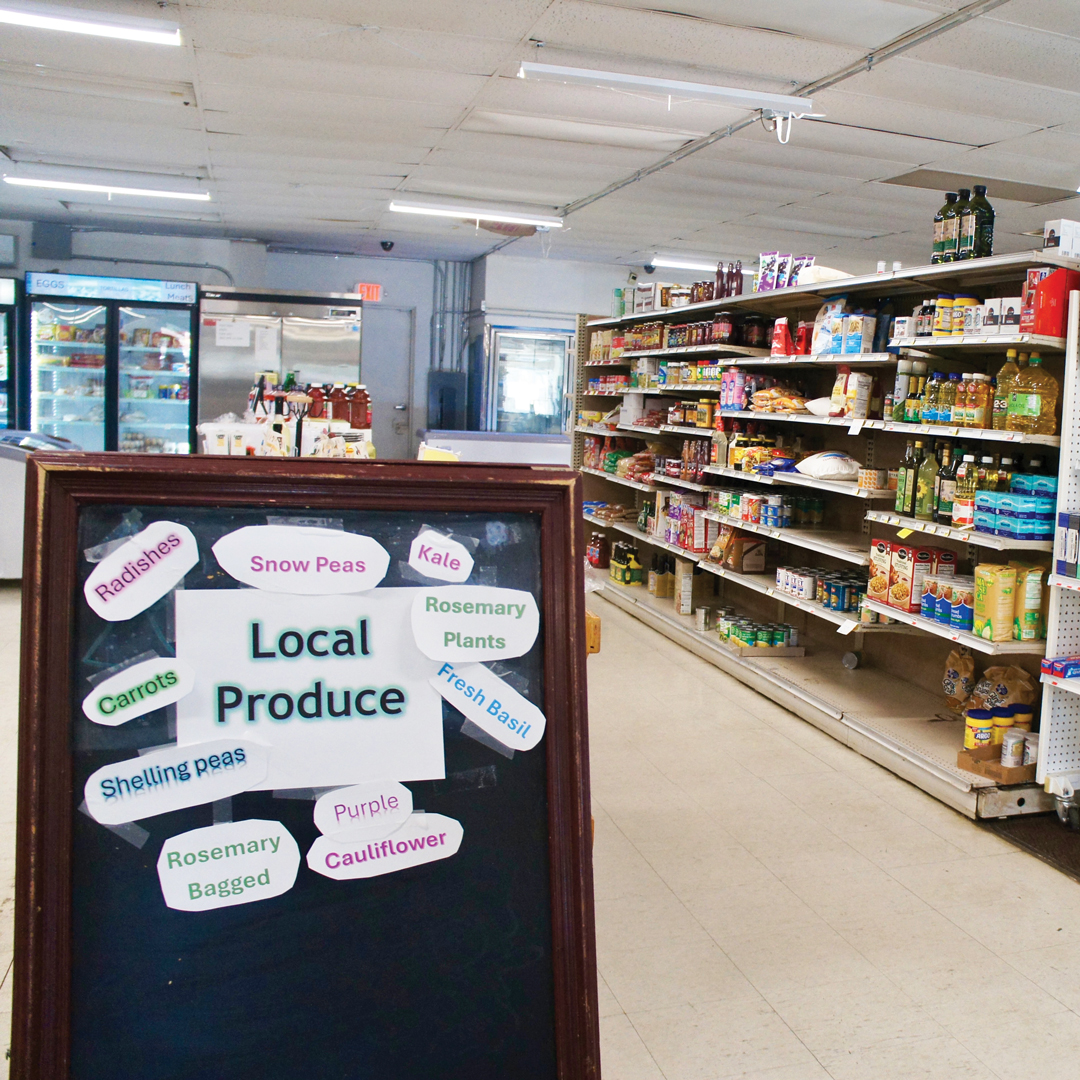
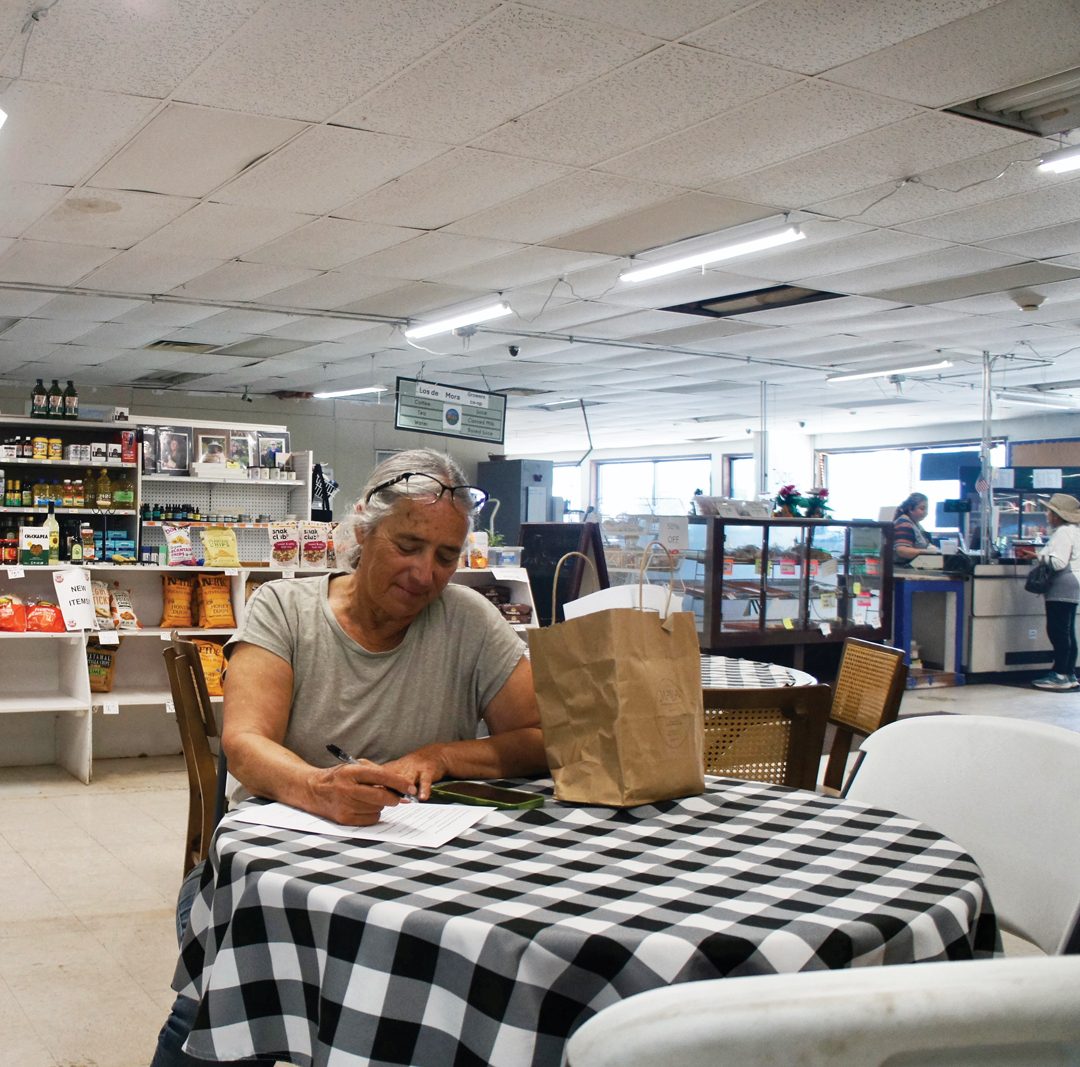
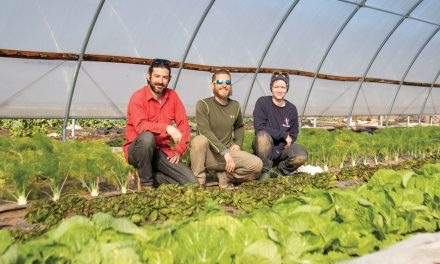
Los de Mora Local Grower’s Cooperative and board member Carla Gomez. Photos by Emily Arasim Beltrán.
Adelo’s Town and Country Store, Pecos
Adelo’s Town and Country Store in Pecos (San Miguel County) was originally established in 1892 as the Harrison General Merchandise Store, and then run by three generations of the Adelo family beginning in 1950. A full-service grocery store and deli, it also included a large back building that sold hardware, clothing, building materials, household appliances, and animal feed and other goods for local farmers. The store was a community hub and operated as part of a constellation of other local businesses along the Pecos main street, most of which began to close their doors in the 1980s and ’90s as more residents started commuting to work and shop elsewhere.
Adelo’s closed its doors in 2012, facing pressures including two new dollar stores (one just across the street), family dynamics, and generational change tied to the passing of elder generations who had been loyal to the store. While the closure of Adelo’s remains a major loss, Frank “Pancho” Adelo (son of George and grandson of Samuel, two of the family members who played leading roles in its history) is finding new ways to continue the family legacy and feed his community.
Directly adjacent to the historic store, he now runs Pancho’s Gourmet to Go, an unassuming gas station and convenience store that houses a deli and catering business serving New Mexican staples made with local beans and chile, organic vegetables, and grassfed beef. Pancho’s store has managed to integrate many of the vital functions of the historic business, including providing jobs and serving as a space to connect with neighbors. Pancho still dreams of reopening the historic market, and with the right type of support from community, local government, and family, it may again become a space to uplift community health and keep local wealth in Pecos.
Los de Mora Local Growers’ Cooperative, Mora
The Los de Mora Local Growers’ Cooperative in Mora County was started in 2012 by a group of farmers and ranchers who wanted to improve their livelihoods by aggregating and distributing their products. In their early years, they found that much of their food was continuing to leave the community to be sold at natural food stores in other towns, so in 2017 they opened a small storefront in neighboring Cleveland, where the growers could sell directly to their relatives and neighbors, with space for collective storage and processing. Five women members each invested $500 to start offering some national-brand groceries alongside local goods. In 2021, they moved into a larger space on the main street of Mora, which had served as Russell’s Discount Foods from the 1970s to 2016.
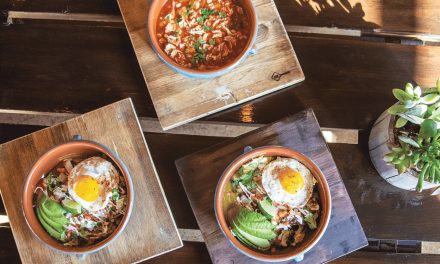
Today, Los de Mora specializes in offering high-quality lamb, pork, and beef from four dedicated local ranchers, local produce and dairy, and a selection of standard groceries. A local family also runs a popular restaurant, AJ’s Country Cafe, inside the store. Among many benefits, the market serves elders who are able to use their Seniors Farmers Market Nutrition benefits to purchase fresh produce.
On average, $8,000 to $10,000 per month is being paid out to the local producers whose products stock the shelves, a significant contribution to the valley’s agricultural economy. The cooperative is still working to recruit and retain more local growers, a big challenge in the wake of the Hermit’s Peak / Calf Canyon Fire. While running a cooperatively owned business isn’t easy, Los de Mora offers an inspiring model for rural communities looking to build food security for their people.
Emily Arasim Beltrán
Emily Arasim Beltrán is a farmer, organizer, and community planner who was born in Tesuque and works and lives in the Pojoaque and Española Valleys. She is passionate about building community health through work that centers land-based knowledge, environmental justice, and the needs of our young people. She holds a master’s degree in community and regional planning and runs her own small planning and facilitation business, Rooted Strategies NM.