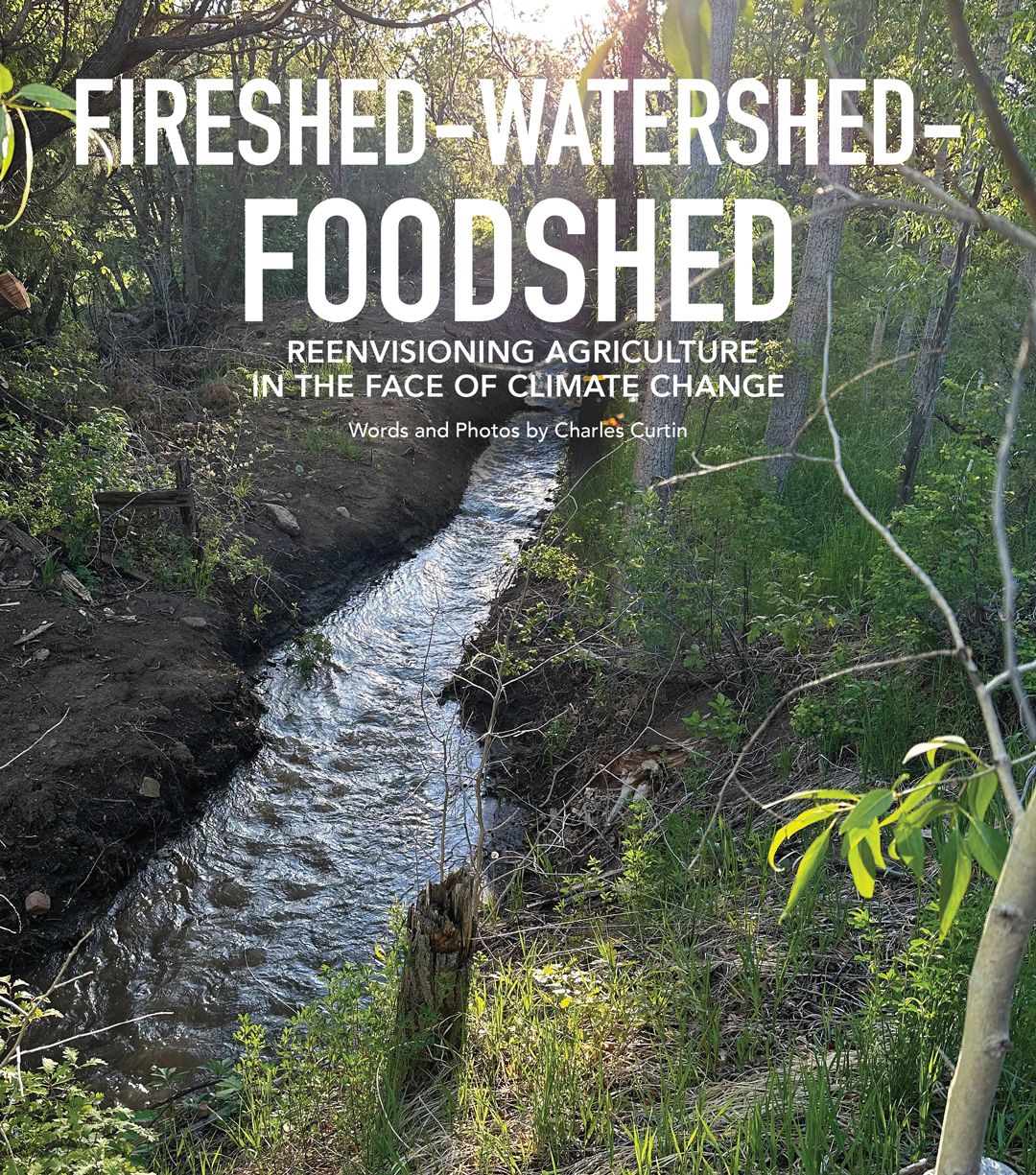
The two-hundred-year-old Cañoncito acequia near Mora flowing again after being clogged by debris following recent wildfires.
In New Mexico, our landscapes and communities are being transformed by climate change. The Pyrocene has arrived, where a warming and drying climate leads to repeated larger and hotter fires. The Jemez Mountains were once known as the asbestos forest—the place that rarely burned. Then at the turn of the century, the system appeared to pass a tipping point with the 1996 Dome and 2000 Cerro Grande Fires, followed by a series of larger conflagrations. Much of the Jemez has been transformed by fire from forest to shrubland. In the Sangre de Cristo Mountains, the 2022 Calf Canyon Fire burned over portions of forest that were previously burned by the Hermit’s Peak Fire. Last spring, more homes and livelihoods were lost to the Las Tusas Fire within the boundaries of the previous year’s burn.
Since the 1990s, across the Southwest, and especially in New Mexico, we’ve experienced the driest period in more than one thousand years, even while shorter-term climate cycles suggest we’re overdue for wetter times. The precautionary principle says, in essence, hope for the best and plan for the worst. We need to assume the pattern of frequent fire is here to stay.

Land managers use the term fireshed to delineate areas where fire can spread across landscapes to buildings, homes, and communities. As with the work of the Greater Santa Fe Fireshed Coalition, it’s a fire-based planning approach to land stewardship. In New Mexico, potential firesheds include everything that’s forested, and many grasslands too.
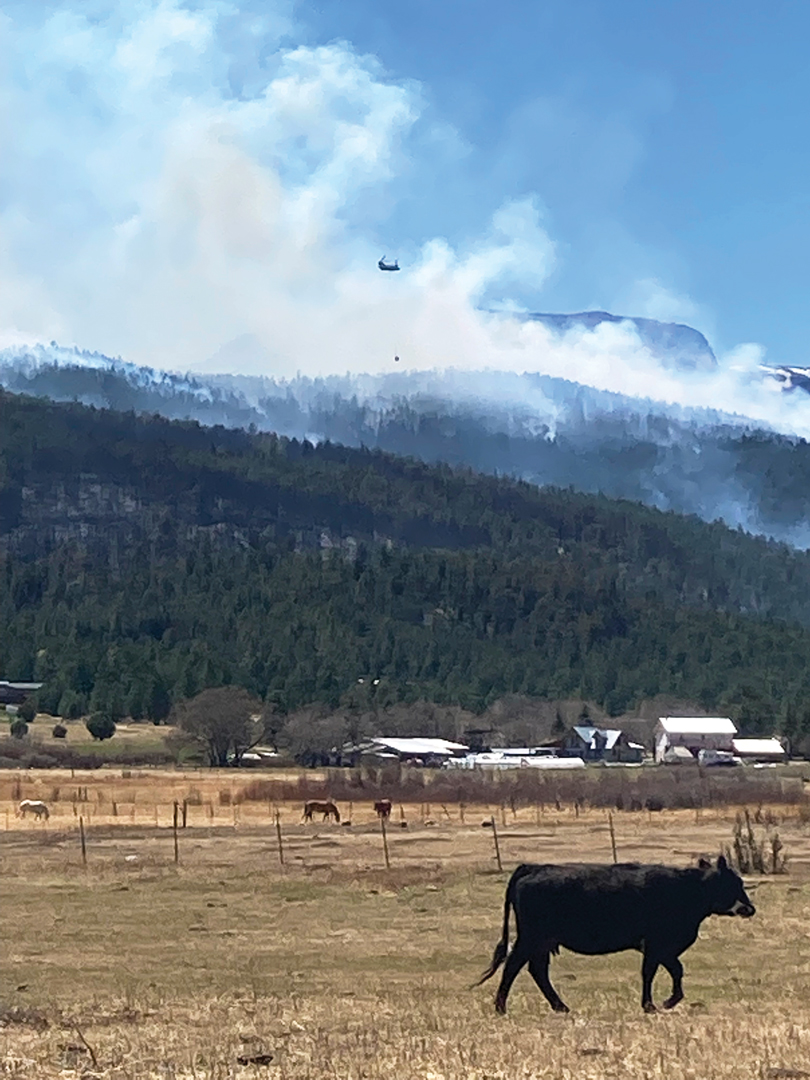
From the vantage point of my home on a farm in the Mora Valley, I’ve experienced firsthand the impacts of the Pyrocene. As a landscape ecologist and former burn boss in New Mexico, I’ve planned and implemented prescribed burns and observed the behavior of numerous wildfires since the 1990s. But what we’re seeing since about 2010 is a radical departure from the past. During the Hermit’s Peak / Calf Canyon Fire, I watched in amazement as a seventy-foot wall of flame ripped past the farm, leaping valleys and spotting out miles ahead of the flaming front due to high winds and low humidity. Under these extreme conditions, traditional fire management strategies such as forest thinning and fuel breaks frequently don’t work. We need to rethink landscape-level fire adaptation.
An increased fire cycle threatens ecosystems, homes, and communities—as well as hundreds of years of culture. Northern New Mexico is an agrarian society; even the homes were built from the earth. The region’s tribal lands, land grants, and acequias revolve around long-standing land-based cultures and traditions, all of which are under threat. It is not only a matter of losing forests but a matter of losing lifeways if fire, floods, fallen trees, and a transition from forest to shrubland limit communal traditions.
El agua es vida (water is life) is a commonly heard phrase in New Mexico, and a watershed approach centered around managing water is vital to the economy and culture. However, almost paradoxically, fire, fed by drought, leads to too much water. For years after a wildfire, flooding is the biggest threat to land, lives, and livelihoods in and around the affected area. Soils become hydrophobic (water repelling) after a hot fire, and fewer living trees and less surface vegetation exist to take up the water. In 2022, almost every afternoon during the monsoons, floods inundated our valley and much of the region, a situation that could continue for years. In the wake of fire, much of land management becomes about managing too much water.
However, increased fire can also be beneficial for watersheds and agricultural communities.
Forests collect and hold water, then release it slowly into downslope parts of the watershed. A tree can take up one hundred gallons or more a day. However, at present, conifer forests in northern New Mexico are often a hundred times as dense as in the past, and too little water reaches the farms, settlements, rivers, and riparian areas below. A loss of trees due to fire is leading to more water downslope; already, streams and acequias that have been dry for decades are being renewed.
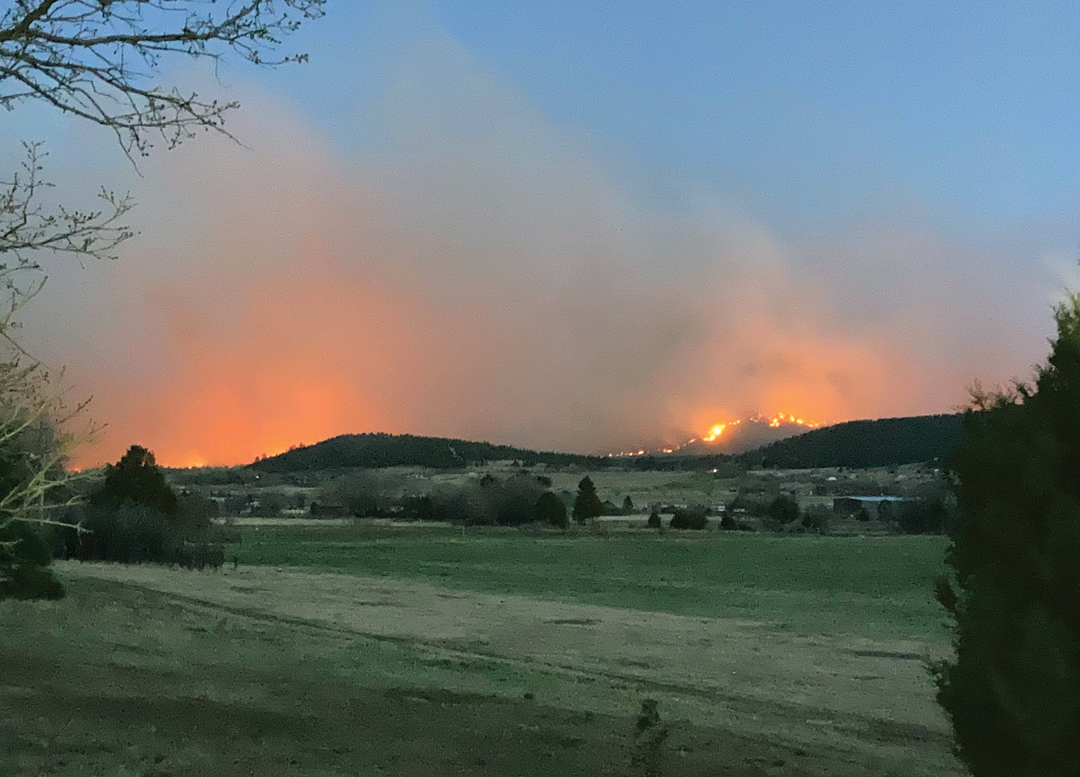
Flames ring the agricultural fields of the Mora Valley during the Hermit’s Peak / Calf Canyon Fire.
Local landscapes are being transformed through the Pyrocene, but that does not mean they’ll be diminished. A watershed event is also a turning point, a historic period of transition. And we are in a watershed moment regarding the future of our lands and communities.
For decades, the predominant response to fire has emphasized recovery. The process of the Federal Emergency Management Agency (FEMA), tasked with assisting communities after disasters, is essentially a congressionally mandated insurance program whose goal is to return things to how they were. The logic of recovery may have worked back when a flood or fire, tornado or hurricane, and other personal and environmental tragedies were isolated and random events. The problem is that under climate change, there no longer is a normal, so there’s no normal to go back to.
At its core, the disaster relief system is geared toward rapid response and singular solutions—not holistic, long-term strategic thinking. In Mora, for instance, FEMA-funded contractors restored our acequia following the fires, but not the old culvert under our road because that was not part of their mandate. Following the first storm, the culvert, plugged with rocks, trees, and other debris, overflowed, destroying our farm entrance road. FEMA subsequently funded replacement of the culvert (with a new one of exactly the same size), but eight months later, the road is yet to be fixed. Meanwhile, the landscape up-valley has not been stabilized, causing the acequia to again become clogged and degraded.
A comparable issue plays out at a much larger scale around reforestation. We’re spending millions on new nurseries and forest restoration efforts, which are crucial to reviving our land and ecosystems. But trees grow slowly, and they burn. What will the community do for the next fifty years as they wait for the trees to grow? What will agencies do if another fire comes and burns the trees?
Given the realities of the Pyrocene, planting trees must be accompanied by an integrated landscape and community recovery strategy that creates fuel breaks and helps sustain people while the trees grow. The problem is that no agency is tasked with doing this, and it is outside the mission of most funders, resulting in viable long-term strategies falling between the cracks.
Then there’s the issue of equity. Under an insurance-style FEMA approach, large landowners stand to make millions from recovery dollars that they are not mandated to spend on their land. So after past fires in places like Paradise, California, the big landowners built larger homes or bought more real estate while the poorer ones packed up and left. Meanwhile, many contractors become millionaires almost overnight. There are also looming concerns about a land grab by out-of-state investors interested in water rights, a shift in land tenure that would further devastate the culture and community.
But there are solutions. In northern New Mexico, the foodshed is key to a holistic response. A foodshed is not simply a geographic location that produces food for the benefit of the local population; it’s a regional strategy based on creating cultural renewal and abundance.
In any good design, you work back from what you’ve got, what you need, and your constraints. What’ve we got? We’ve got more fire, more water, and, for a while, a bunch of state and federal funding and the national political spotlight. What do we need? We need integrated fire planning, landscape recovery, and sustainable livelihoods. What constraints do we face? Workforce, land, housing, and a declining and aging population. How do we combine all these elements? We combine them through a foodshed approach focusing on food sovereignty, economic independence, social justice, and the integrated long-term renewal of communities and ecosystems. In contrast to a short-sighted, insurance-style approach favoring large landowners and contractors, an approach rooted in community-based regenerative agriculture serves the whole community’s interests, works with natural processes, and thinks deeply about adapting to a changing world.
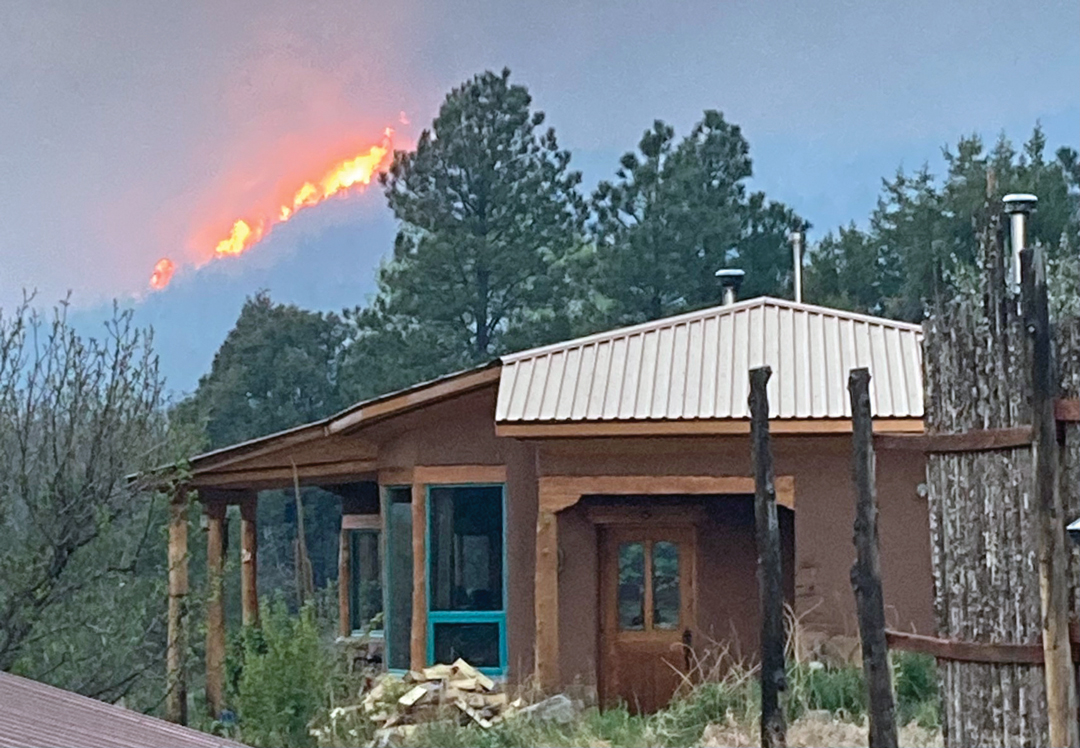
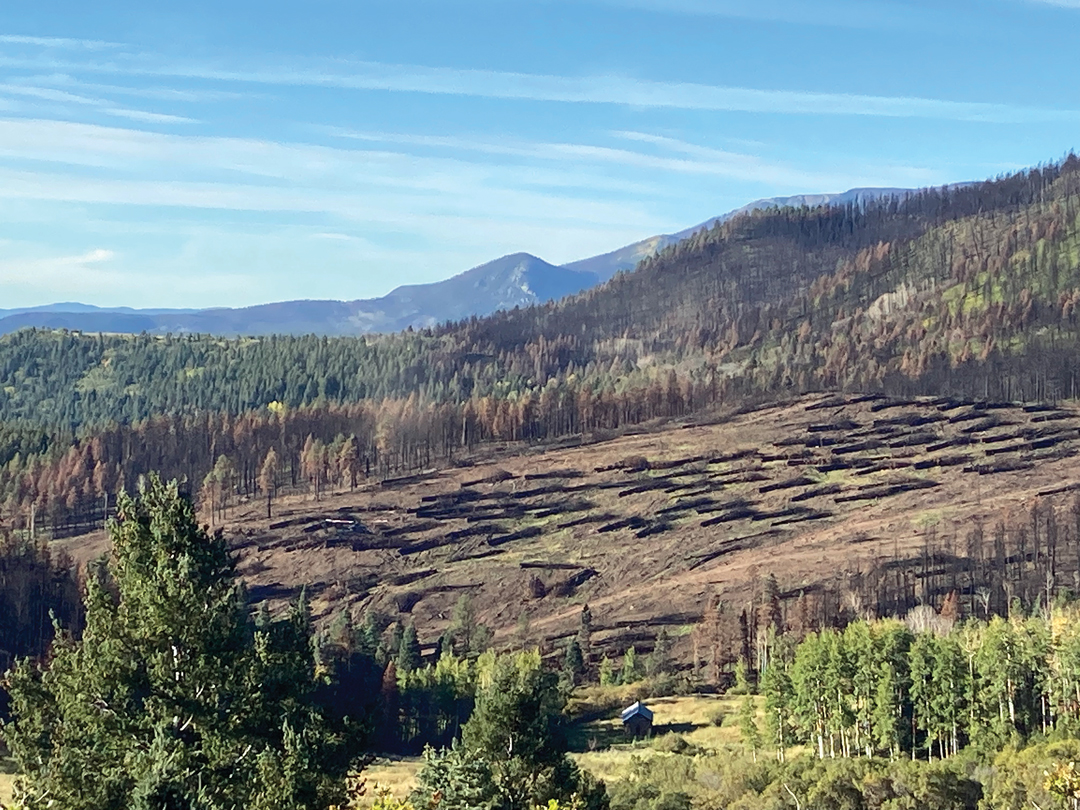
Top: Flames roar past a home near Mora. Bottom: The clearing of fire-burned timber presents opportunities to increase landscape diversity while establishing fuel breaks.
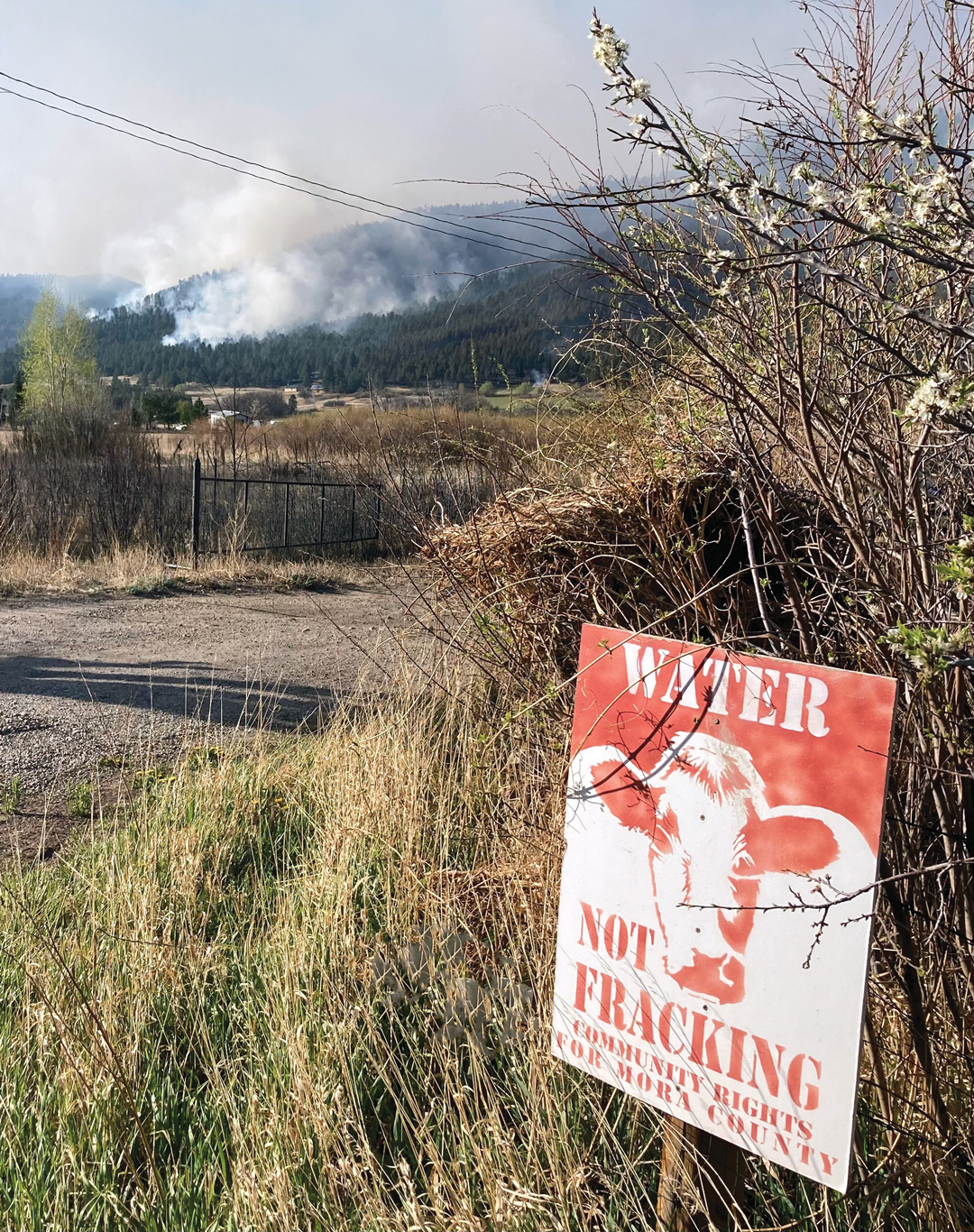
Mora was the first county in the US to pass an anti-fracking ordinance; now new threats impact community water resources.
Developing a foodshed takes vision and a sense of purpose, so let’s imagine this: landscapes where healthy, large stands of timber are in the draws, the north slopes, and the places protected from fire. Those lands that are not defensible from fire or where shrubs make trees hard to grow and sustain become pasture and grazing areas comprised of native vegetation. Rotationally grazed cattle keep the grass short, serving as firebreaks, while folivores such as goats reduce the incursion of shrubs, which further reduce fire threats. Meanwhile, biochar created from the burned trees improves the productivity of the forests and provides additional income streams for local landowners, while heat from woody biomass can warm greenhouses and fuel other agricultural and community-based endeavors.
This vision is not a fantasy. It reflects most of New Mexico’s past. Historically, Indigenous and Hispano communities lived in a highly fire-adapted landscape of their creation. As a result, the land was a matrix of different habitats that provided ecological diversity while sustaining local livelihoods.
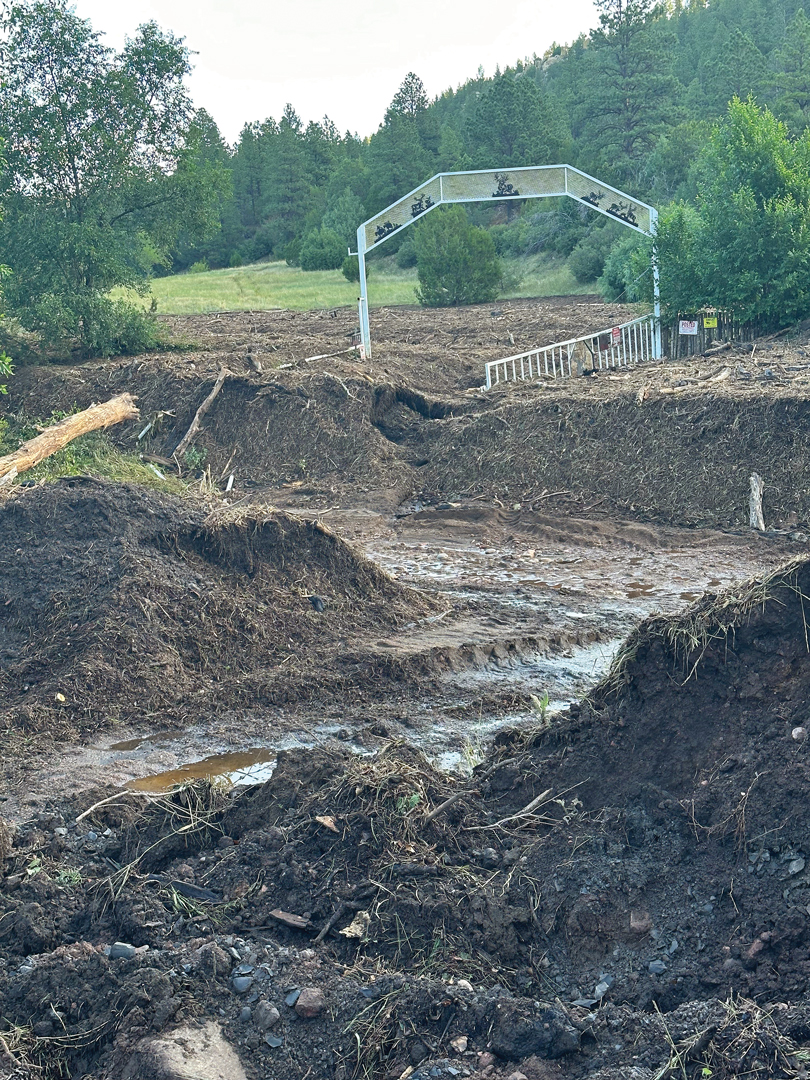
Left: Debris flow near Las Vegas following a summer 2023 downpour. Right: Pasturelands can provide an opportunity to improve rural livelihoods while buffering communities from fire threats.
Most of the pieces we need exist, but they’ve not been applied in an integrated approach. In Mora and across northern New Mexico, a region with a long history of subsistence farming and raising cattle and sheep, food co-ops are developing alternative markets and growing strategies. Carbon-negative or -neutral forest recovery systems have been used elsewhere; we need to find ways to apply them here. Mountain communities like Mora are unique in that most of the population are landowners, but many old adobes are no longer habitable. The workforce has considerable expertise in the building trades, and places like Luna Community College offer adobe building courses, providing another source of land-based housing and jobs. We have communities with a strong sense of culture and pride. Now we need a strategy that creates the collective will to invest in a recovery system focused on empowering and improving the whole community’s health.
What we do in places like Mora and San Miguel Counties matters not just for its implications for these communities but also because it sets the stage for what we do regionally. According to scientific assessments, such as recent reports in the Proceedings of the National Academy of Sciences, most of our forests will burn in the coming decades. The Pyrocene and recent wildfire relief and infrastructure improvement programs are an opportunity to proactively develop community-based agriculture, food systems, and fire-adapted landscapes. But this requires working with our community, agency, and philanthropic leaders to support a fireshed-watershed-foodshed vision where we combine science and Indigenous wisdom to craft a more viable future that works with, rather than against, the emerging realities of climate change.
Charles Curtin
Charles Curtin has decades of experience working with communities on climate adaptation in New Mexico and across the globe. He is the author of nearly a hundred articles, monographs, and books, including The Science of Open Spaces, Complex Ecology, and the forthcoming Beyond Resilience. He holds an MS in restoration ecology, a doctorate in landscape ecology, has cofounded programs in adaptive management at MIT, and has taught at MIT, Harvard, and elsewhere. Find him at charlescurtin.com.