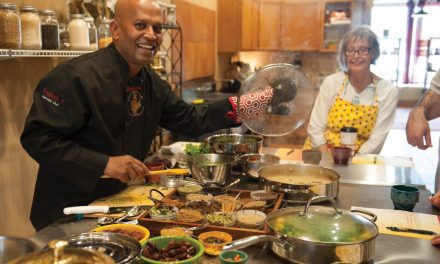
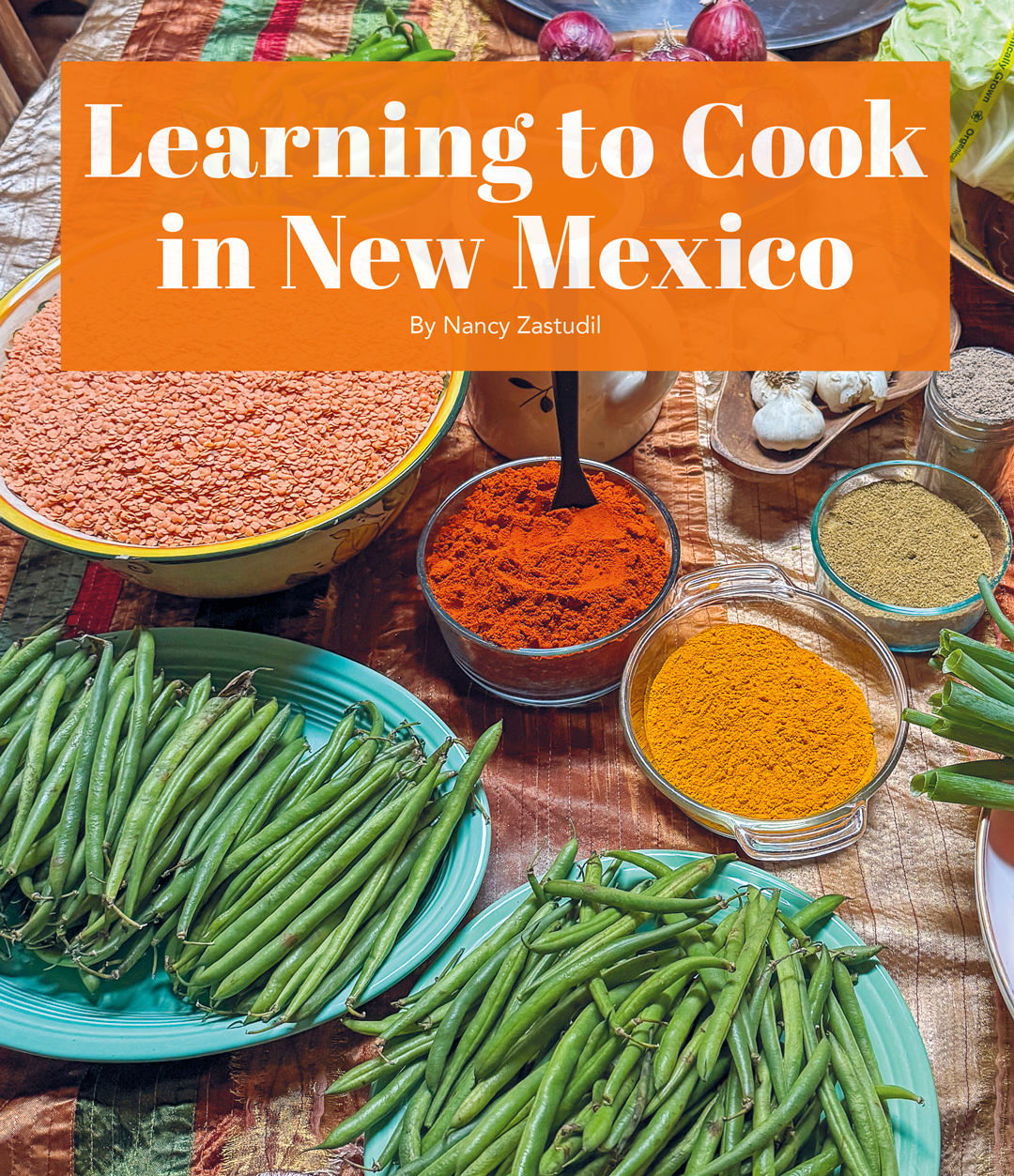
Table piled high with red lentils, spices, peppers, garlic, green beans, cabbage, ginger, tomatoes, and green onions for Ethiopian cooking class. Photo by Stephanie Cameron.
In 2025, I was lucky enough to snag a spot in Isaan Cuisine: The Food of Northeastern Thailand, a cooking class held at Alkemē as part of a series of classes and pop-up dinners. Located in Santa Fe and owned by Chef Hue-Chan Karels, the restaurant features a menu rooted in Asian heritage cuisine.
Standing outside the entrance to Alkemē, I felt a flush of nerves. I had chosen a 2024 James Beard Awards semifinalist for Best New Restaurant as the setting for my first-ever cooking class. There was no turning back.
Once inside, my anxiety dissolved. It was late morning, prior to the restaurant’s operating hours, and the place hummed with quiet preparations. I made my way to the back of the restaurant, passing under dozens of illuminated paper lanterns suspended from the ceiling that made the intimate main dining room feel magically expansive. The back dining room had been transformed into a teaching kitchen. Each cooking station was tablescaped with cutting boards, a sharp knife, a vegetable peeler, disposable gloves, a plastic bin, and a small stack of black aprons. I saw printed recipes lying on each table and breathed a sigh of relief. Cheat sheets.
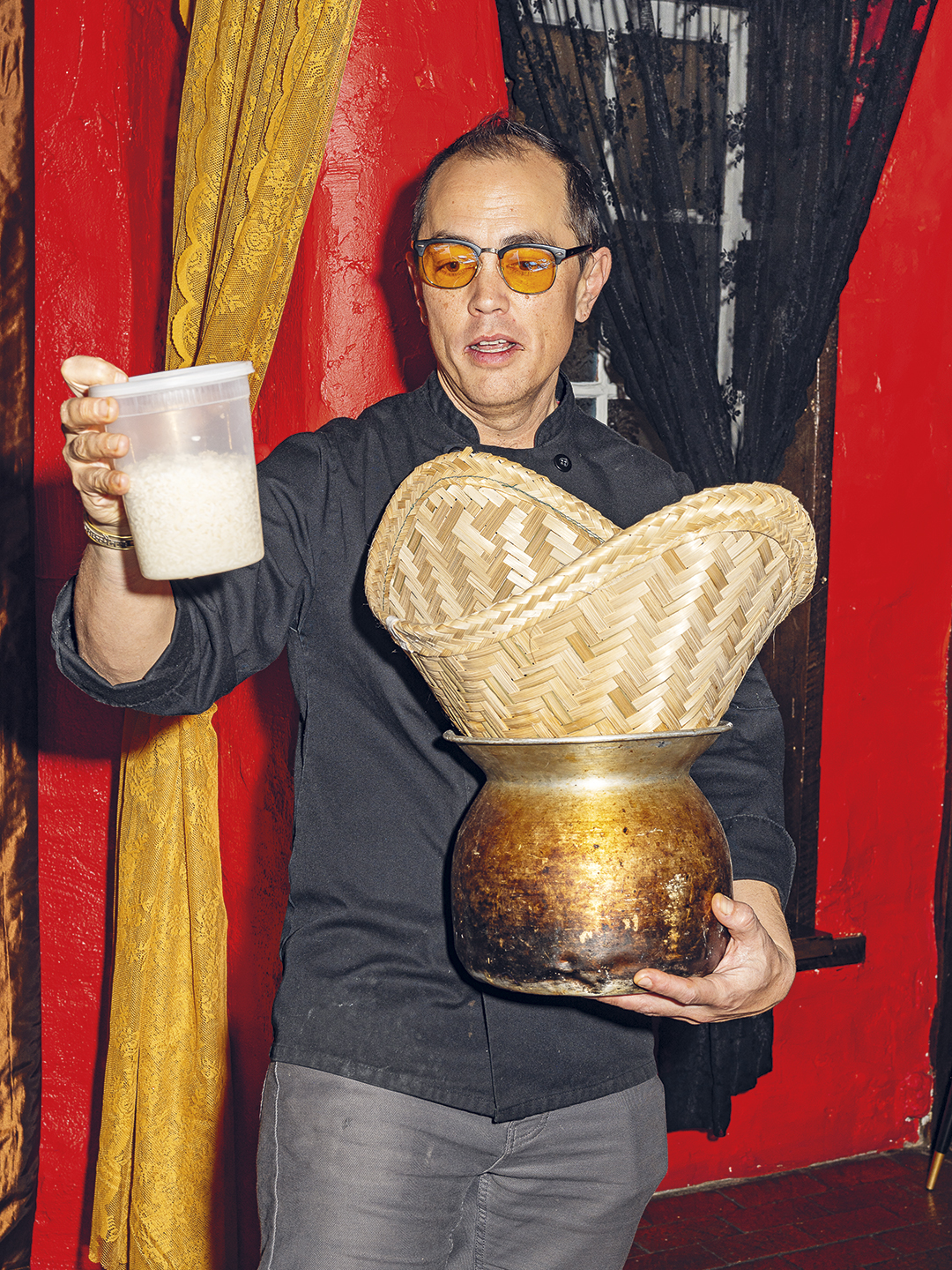
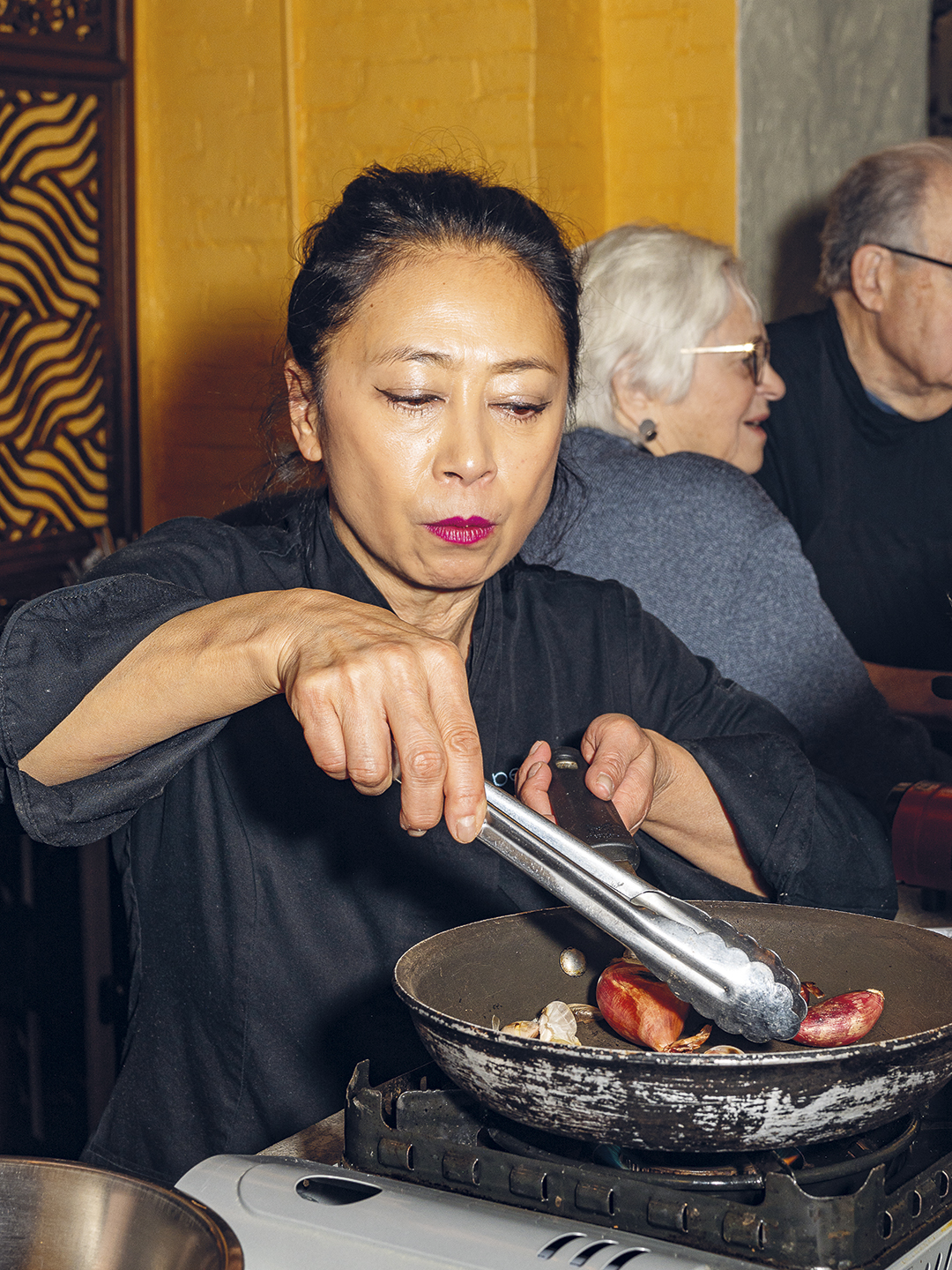
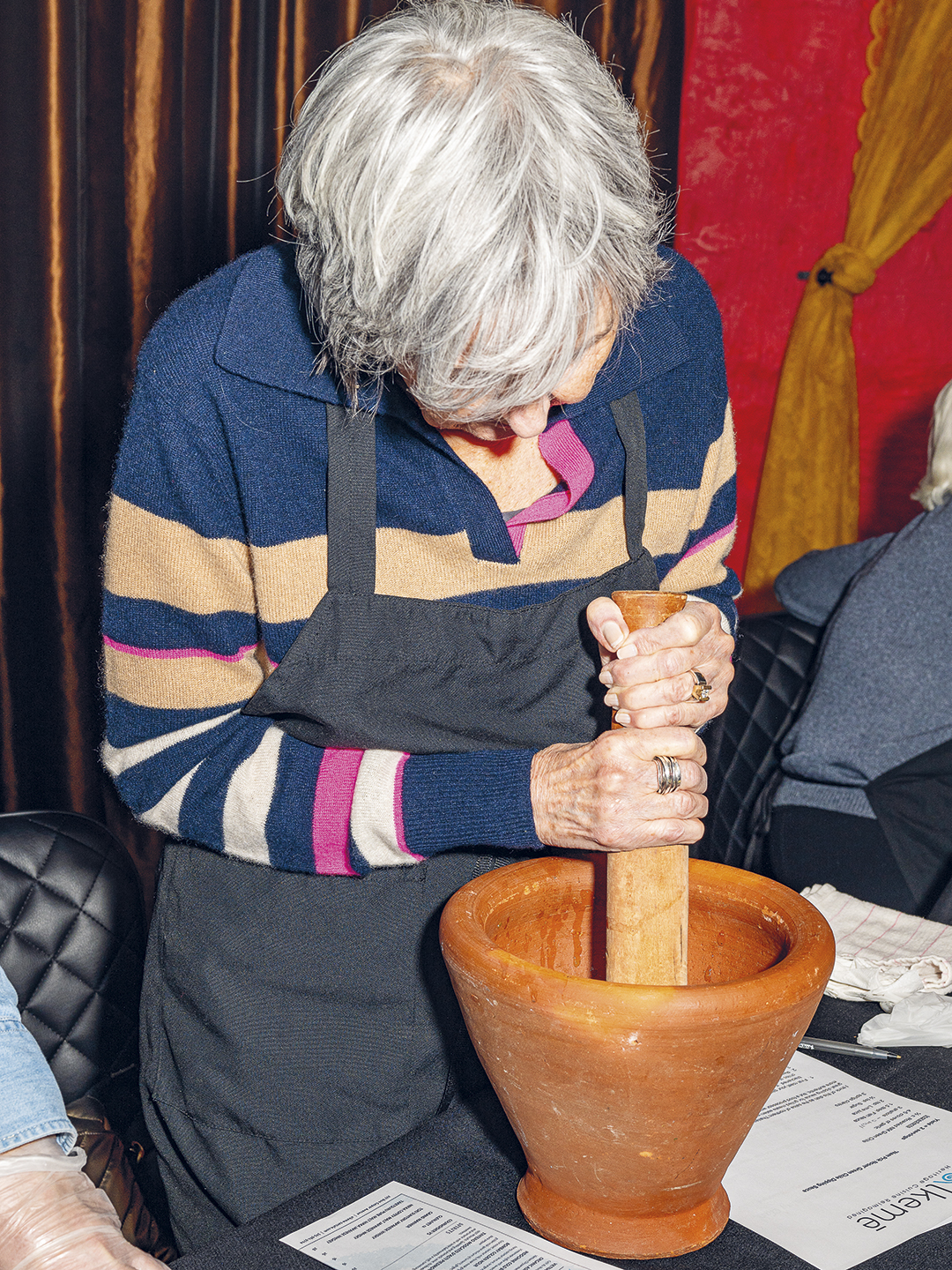
Left: Derek Rugsaken teaching Isaan cuisine cooking class. Middle: Hue-Chan Karels guiding students at Alkemē. Right: Student using mortar to crush chiles. Photos by Allison Ramirez.
We divided into small groups, chose our stations, and listened intently as guest chef Derek Rugsaken introduced us to the staples of Isaan food: sticky rice, fresh herbs, grilled meats, and deep umami flavors. Rugsaken, who is of Thai and Laotian heritage, learned about food from his father, a first-generation immigrant, and his father’s family.
In my group, some people began chopping carrots, tomatoes, cilantro, Thai chiles, New Mexico green chiles, and green papaya. I headed to the kitchen to help fire up small portable propane grills for the class. The mere thought of exposing my lack of knife skills in public was enough to make me want to flee to my car and head back to Albuquerque. Turning on a flame and tossing a few shallots and garlic cloves into a wok? That, I could handle. I watched as the bulbs’ skins tightened and crisped on the hot, dry surface of the pan. Once they were partially blackened, I removed them from the wok and peeled back the skins, revealing the soft, pungent vegetal flesh inside. Never had I thought to cook onions or garlic this way, but the process made sense. Contained in their own natural packaging, the flavors and aromas concentrate as the heat builds.
Back at my station, we worked together to combine ingredients in a large wooden mortar and pestle while Chef Rugsaken taught us about connections between Southeast Asian food and the food of Mexico and Latin America. Each of us took turns letting the weight of the pestle do the work of crushing vegetables, herbs, chiles, and peanuts to release and marry the flavors of som tum (papaya salad) and nam prik noom (green chile dipping sauce). We tasted as we went, adjusting with an additional splash of fish sauce, squeeze of lime, and a bit of sugar until we achieved the classic balance of salty, sour, and sweet. Even I could tell when we nailed it.
Chef Karels moved through the room, weaving in and out of the tables, offering instruction and answering questions. As a Vietnamese American who grew up in Michigan, she learned to cook from her grandmother and fell in love with it. “My passion is to get people excited about food,” she said, “and for them to have a sense of entertainment, self-renewal, and self-care through food because that has been the case for me.” Over the years, first through Open Kitchen and now at Alkemē, Karels has worked to share the adventure of cooking, from communal dinners to catered events to this series of classes to Open Kitchen’s annual Culinary Escapades, exploring the foods and cultures of eight cities in three regions of Vietnam. After all, as I’d learned (or not learned) from too many drab meals at home, it’s hard to get excited about cooking if you’re not excited about eating in the first place.
My own excitement for the day peaked when Karels announced that the gai yaang (grilled chicken) was ready. Celebratory glass of wine in hand, I opened my banana leaf–wrapped sticky rice as my tablemates did the same, and we ate together as a group. The delight I felt savoring the results of our shared cooking experience was something I hoped to replicate in my own kitchen
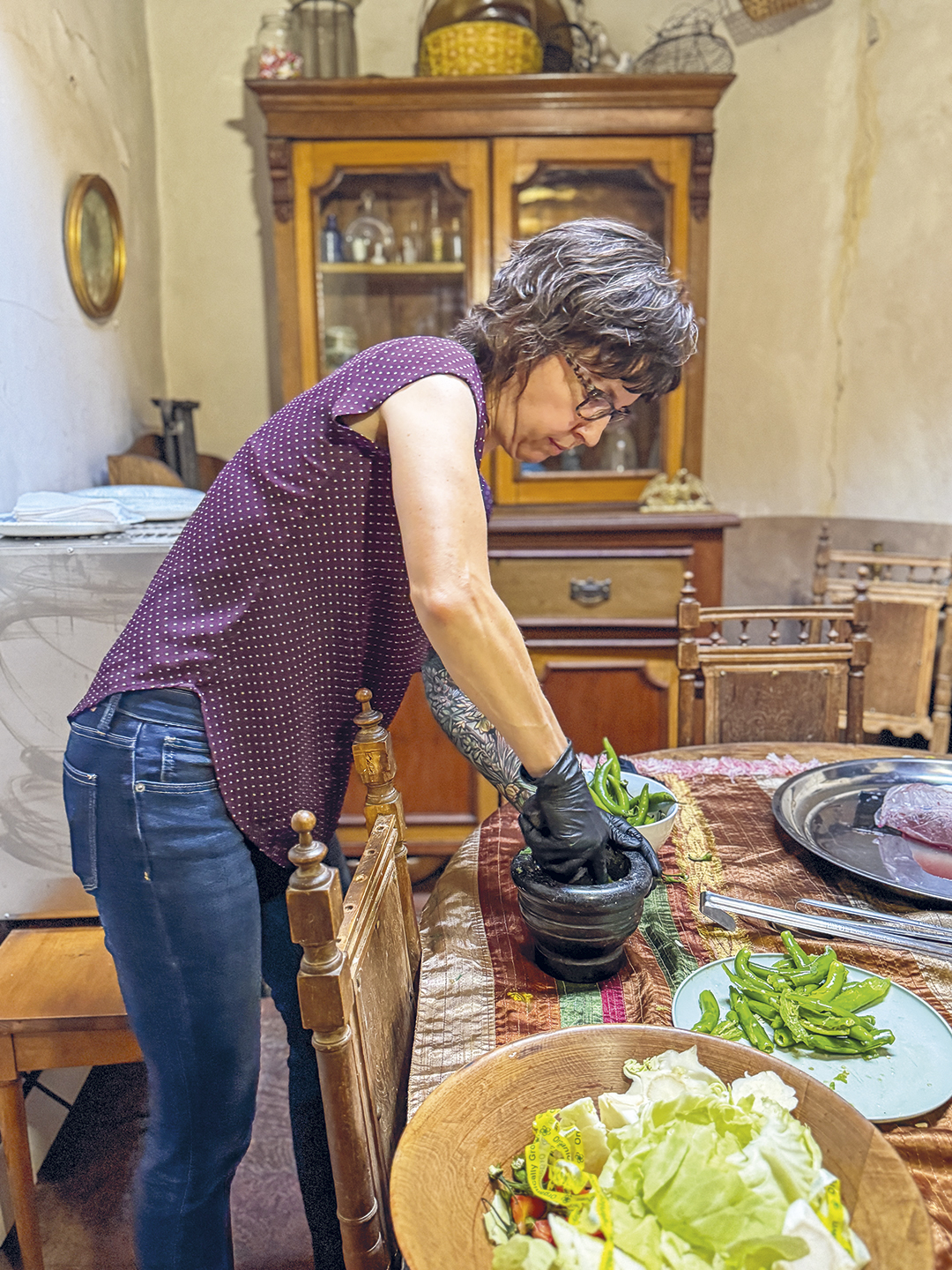
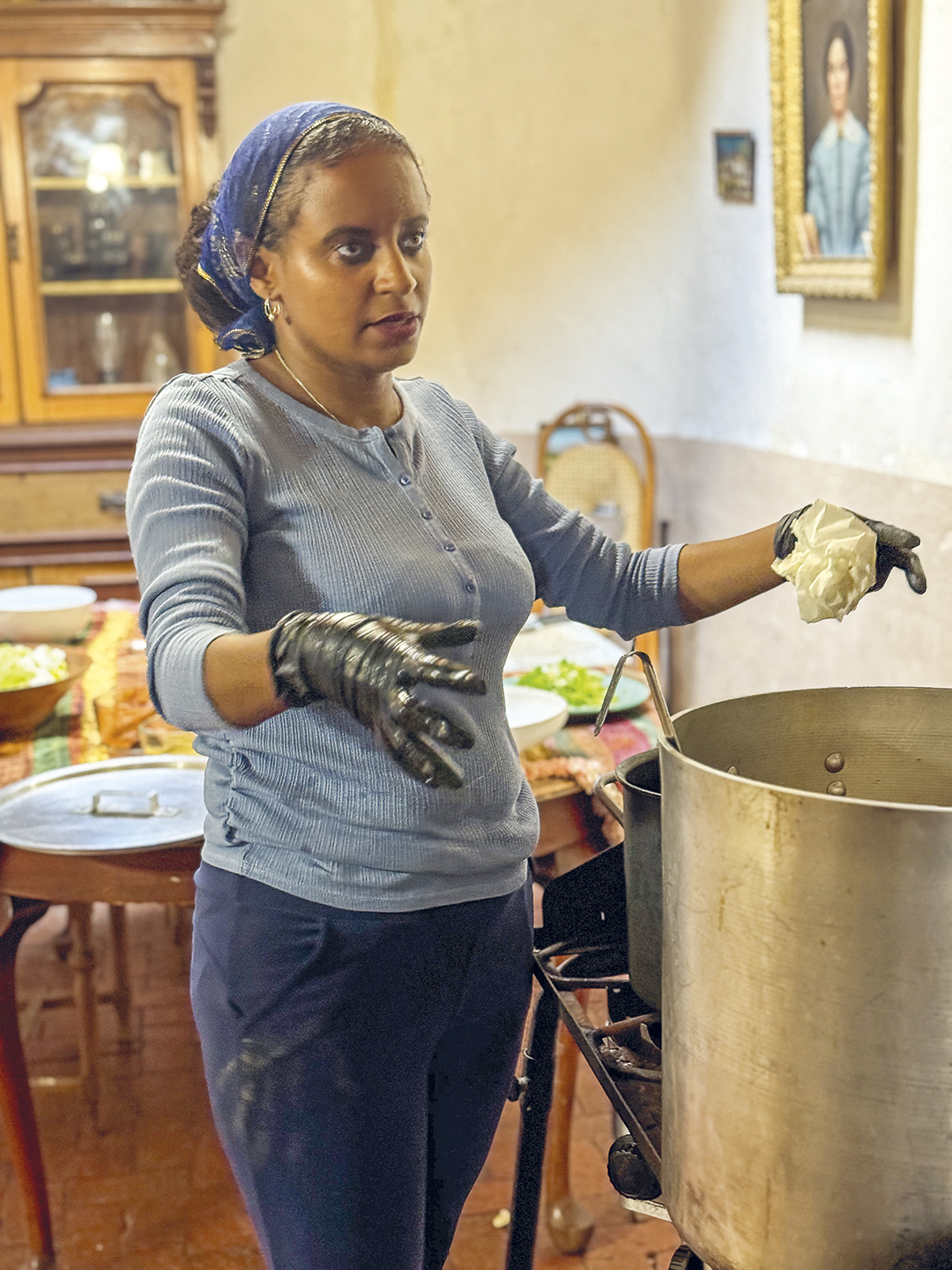
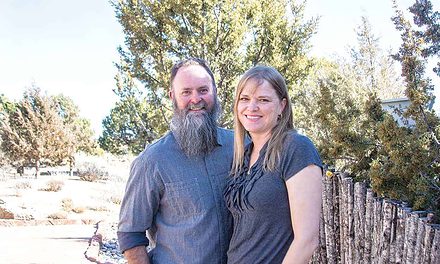
Nancy Zastudil prepping ingredients for Ethiopian cooking class. Seble Yemenu, owner of Clay Pot Ethiopian Cuisine. Photos by Stephanie Cameron.
Sharing experiences played an even more central role in the next class I took, which was offered through the Raindrop Foundation Albuquerque, a cultural and educational nonprofit founded in 2010 by Turkish Americans with a mission to promote dialogue and yield understanding among people from diverse cultural and faith backgrounds.
When I arrived at the Raindrop Foundation Turkish Cultural Center, the large multipurpose room was prepped for the cooking demonstration: long tables arranged in a U shape with a camp stove at the front of the room. I found a seat with a good view and a printed recipe. The instructors for the three-hour class were coordinator Tugba Akca, who has taught the foundation’s cooking classes for some eight years, and assistant cook Kerime Sari. Both women learned to cook by watching and helping family members in the kitchen when they were growing up. “In Turkey, depending on your family, you eat at home, your mom cooks, your aunt, your grandma. That’s how you grow up, you watch them,” said Sari. “You want to get your hands in it, so that’s how you start—experimenting, practicing, mimicking how your mom makes it.”
Each class features a different menu, but this demonstration began with kazandibi tatlısı (caramelized milk pudding dessert), its beautifully browned but not burnt sugar layer drawing admiration from the class. As Akca and Sari combined sautéed onion, meat, and spices for patates oturtma (potato casserole), they explained that sitting at the same table, eating together, and sharing stories are valuable things in Turkish culture. While adding tomato paste, mint, salt, and pepper to beef broth for yeşil mercimekli erişte ḉorbasi (green lentil noodle soup), they also talked about which ingredients they can and cannot get in New Mexico. For example, pepper paste is not so common in American culture, so they buy it from Talin or another international grocery store. Often family members will bring Turkish phyllo dough when they come to visit.
After class, I learned that Akca’s favorite food to make is lahmacun. “It’s not hard to make it but it’s hard to cook because you need an old char stove, like with wood-fired pizza,” she said. “We try to teach things you can make in Albuquerque, so, many times, we use tortillas instead of rolling dough. You just put some ground beef and top spice on the top.” Sari’s favorite food to make is manti, or Turkish dumplings, a labor-intensive dish that is most famous in Kayseri. She told me of the legend: If a woman can make forty manti fit in a spoon, she will make a good wife. “It was something that I grew up watching my mom make and I helped,” said Sari. “My mom would throw the dough and cut it into little squares, then she would place the tiny, pea-sized filling of ground meat, and we would help by closing the dough around the meat. The more people that help, the easier it gets.”
Feeling confident in my newfound cooking sensibilities (although certain I was not Kayseri bride material), I signed up for an Ethiopian cooking class taught by Seble Yemenu, owner of Clay Pot Ethiopian Cuisine, who started offering cooking classes in her home in late 2020. “I decided to teach things that are not super complicated to make. I also specifically chose ingredients that people eat day-to-day,” she said. “We do have dishes that are more difficult to make, for example, beef liver or other culturally intense dishes, but I don’t teach those. I want to teach something that people can cook and eat right away.”
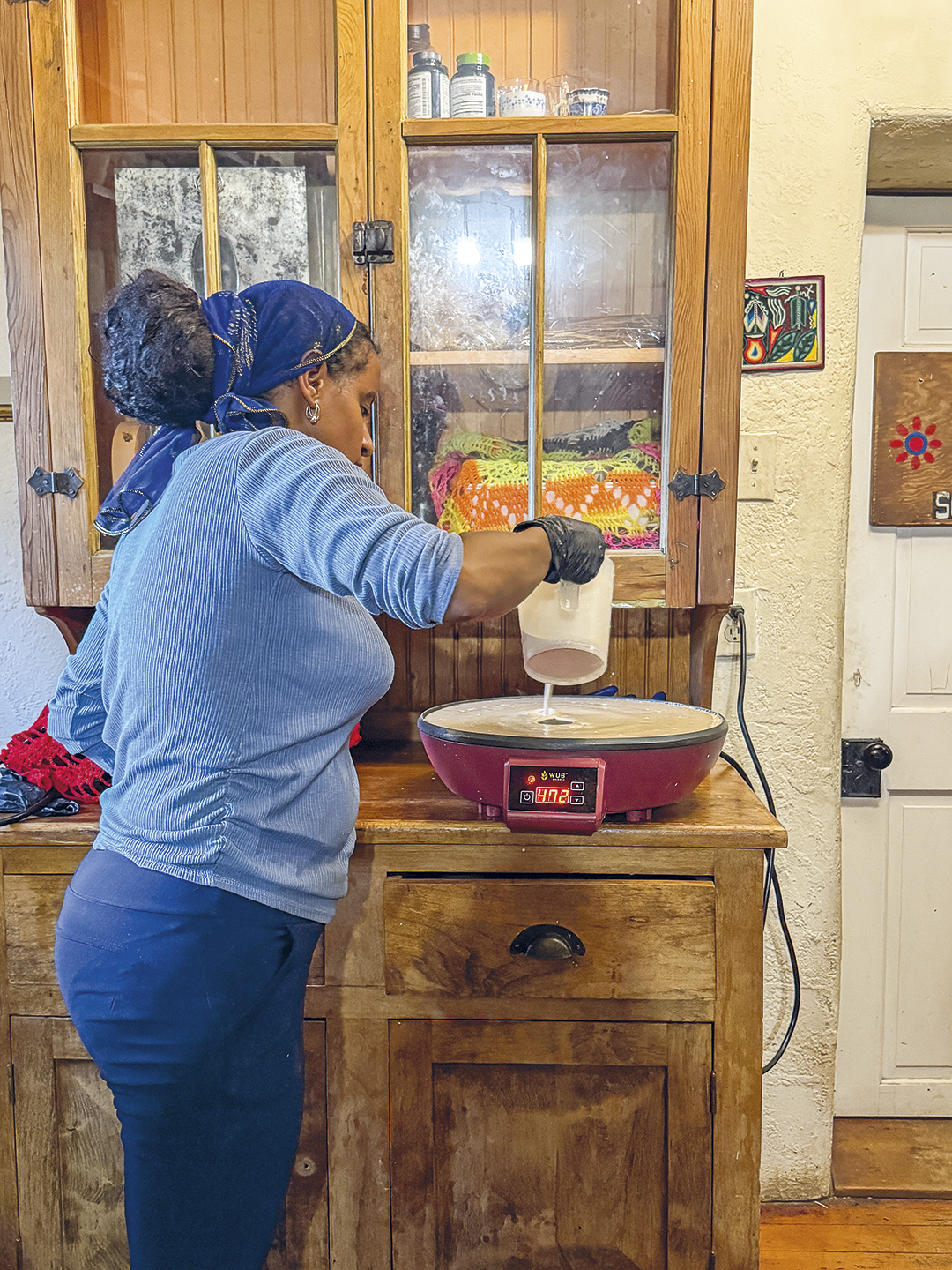
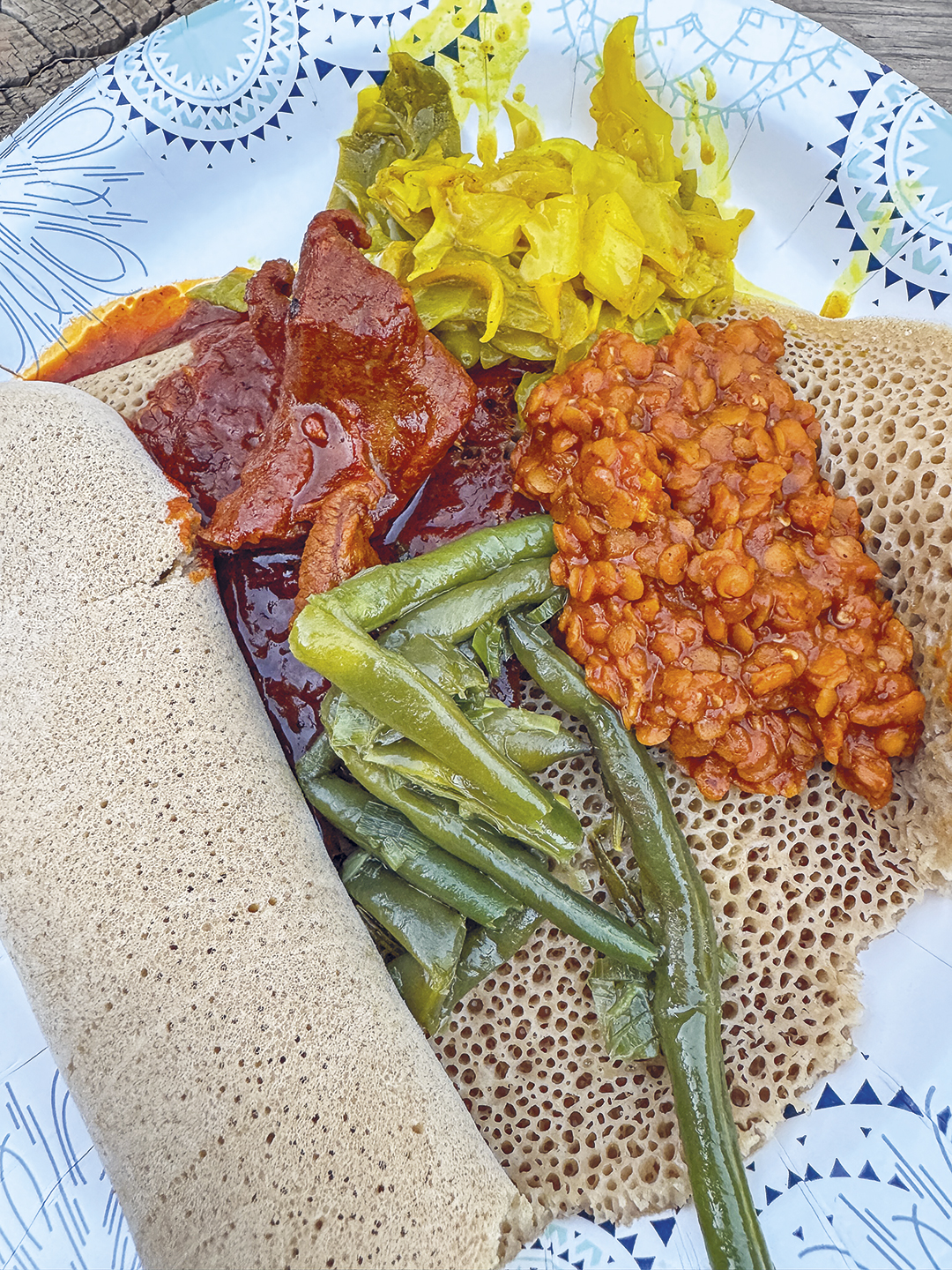
Yemenu preparing injera. Final result from Ethiopian cooking class: Red lentils, cabbage, red chile lamb, green beans, and injera. Photos by Stephanie Cameron.
The class I took was held at Yemenu’s home in Corrales; today she offers classes of ten to twelve people at least once a month at Clay Pot House, the restaurant she opened in 2025 in Paradise Hills. When I arrived, her dining table was piled high with serving platters of onions, peppers, New Mexico chiles, potatoes, ginger, and more. Before I could scan the room for a printed recipe, she had already started putting everyone to work preparing our meal of beg wot (red chile lamb), tikil gomen (cabbage), and misir wot (red lentils). Some people chopped vegetables; others peeled countless cloves of garlic. I washed pounds of dry red lentils. “They foam,” she told me. “Rinse until there’s no foam. Scrub them between your hands. Rinse it twice.” As I stood at the sink and scrubbed, I could feel the temperature in the kitchen rising. The late-afternoon August heat had combined with the steam emanating from the stove behind me that held two large stockpots. I tried to get the beads of sweat on my forehead to behave as I added the lentils to the boiling water in one pot and stirred the simmering onions and cabbage in the other.
I watched with a mix of exhaustion and awe as Yemenu added mounds of spices to the pots—cumin, turmeric, black coriander—and told us to always add ginger and garlic when using red chile. “Growing up, I learned to cook from the women around me, close relatives and older women,” she told me. “I’ve always liked to cook, and I’m the oldest of many kids, so that plays a part in it. Learning happened informally. I would see how they cut something, how they peeled something, and helped them do it.”
Near the dining room table, a propane stove held a pot of lamb meat already simmering in a red chile broth fragrant with ginger, garlic, black coriander, and cardamom. Yemenu told us that in New Mexico, she can find nearly any chile needed for Ethiopian cooking. The spice blends, however, are harder to source locally in the quantities required; the same goes for teff flour, used for injera, the spongy sourdough flatbread that is the foundation of an Ethiopian meal. About that injera: Its creation happened so quickly that I almost missed it. While we were in the other room checking out the bubbling pot of lamb stew, Yemenu had poured the fermented batter from an enormous plastic tub into a large, round electric skillet. Note to self: Always keep the chef within eyesight.
The class ate together in different corners of Yemenu’s home, our paper plates heavy with lentils, cabbage, and tender lamb meat, all of which we scooped with injera in the traditional way. This may not have been the food I imagined steaming on my neighbors’ stovetops as a kid, but it comprised all the components of cooking (not to mention flavor) that once felt so mysterious and out of reach.
At $35 to $99 per class, the cost of a cooking class isn’t much more than a regular meal out. But for me, the real value comes from applying what I learn. I keep in mind what Karels told me: “It’s not just teaching people about a recipe, but getting them to feel that they can approach this recipe with confidence.”
My own home has become more of a test kitchen these days, whether it’s overcooking sticky rice or undercooking lentils, successfully burning sugar or hunting for banana leaves at Talin (hint: they’re in the freezer). Flavor and texture are my guideposts, and I’ve learned to trust my gut, both literally and figuratively. Too much garlic? My stomach will rumble all night. Lacking in umami? I’ll finish my meal feeling less than satiated. What Chefs Karels, Rugsaken, Akca, Sari, and Yemenu taught me is that we learn to cook by doing, which is a combination of observation and participation. Perhaps the seemingly elusive joy was always available to me; all I needed was to add the not-so-secret ingredient of connecting with other people by learning what they eat and how they cook it. Therein lies the satisfaction I’ve craved all along.

Nancy Zastudil
Nancy Zastudil is an editor, writer, and curator working toward equitable representation in and access to the arts. She has more than fifteen years of experience in arts administration, regularly edits artists’ books and exhibition catalogs, and has written for Arts and Culture Texas, Art Lies, Hyperallergic, Southwest Contemporary, and more. Find her at thenecessarian.com.